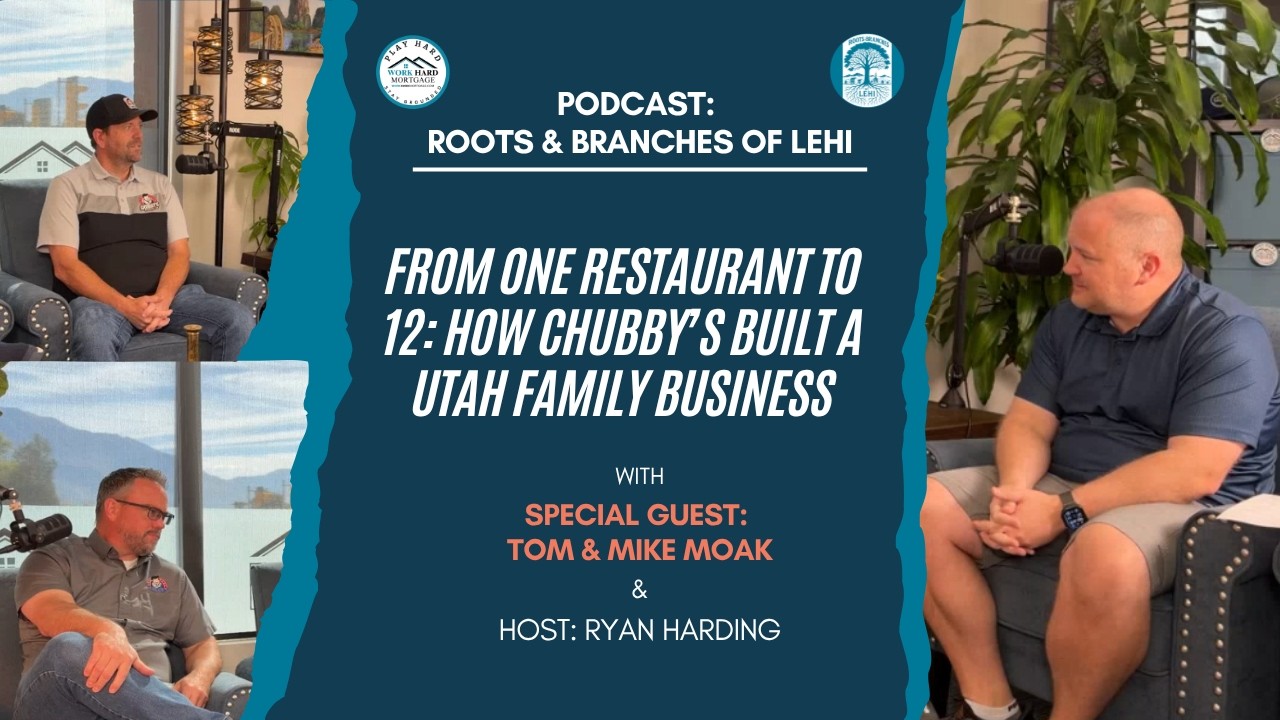
From One Restaurant to 12: How Chubby’s Built a Utah Family Business
Brothers Tom and Mike Moak share the evolution of Chubby’s, a family-built Utah business founded on resilience, shared values, and deep community ties.
Tom and Mike Moak
How Chubby’s Built a Utah Family Business
At a Glance
Archive Scoring
Introduction
In the landscape of modern commerce, where franchises often prioritize efficiency over humanity, the story of the Moak brothers serves as a testament to the power of shared purpose. Starting as a struggling breakfast spot in Pleasant Grove in 2010, the Moak family transformed their humble beginning into a regional staple by grounding their business in the one thing money cannot manufacture: a genuine, blood-bound commitment to each other and their customers. Their narrative is not merely one of business expansion, but one of brotherhood, sacrifice, and the quiet dignity of manual labor.
The Moak brothers—Tom, Mike, and their siblings—built their brand through a process of bootstrapping that included working 90-hour weeks, sleeping in their trucks, and navigating the profound volatility of the post-recession economy. They learned early on that when the business environment turns hostile, the strength of the family bond is the only true hedge against failure. By keeping the company family-owned, they ensured that quality was never a secondary consideration, viewing their brand as an extension of their family name rather than a simple profit-driven vehicle.
Their philosophy on scaling is equally human-centric. Rather than seeking out the most profitable or trendiest locations, they have consistently chosen to immerse themselves in neighborhoods where they can grow with the residents. From hosting Cajun-style crawfish boils to support local charities to participating in school events, the Moaks understand that true success is measured in loyalty. They view their patrons not as consumers, but as neighbors who have watched their children grow, mirroring the maturation of the business itself.
Despite the challenges of scaling to 12 locations and beyond, the brothers remain deeply involved in the daily operations, rejecting the allure of a comfortable executive office in favor of the kitchen line. This commitment to the 'front-line' work keeps them connected to their roots and ensures that the culture they established in that first hole-in-the-wall store remains intact. It is a philosophy that posits that businesses should grow organically from the soil of the community they serve.
Ultimately, the legacy of Chubby’s is found in the resilience they cultivated together. They have survived economic downturns, COVID-19, and the intense pressures of the restaurant industry by remaining adaptable and keeping their eyes wide open to the dangers of letting business overtake family. By proving that family can and should work together, the Moak brothers have provided a model of success that prioritizes human connection, suggesting that the most durable institutions are those built on the bedrock of shared struggle and mutual support.
Episode Overview
A detailed look at the topics, people, and context of this conversation.
This episode features brothers Tom and Mike Moak, the founders of Chubby’s, reflecting on their journey from starting a modest restaurant in 2010 to operating a 12-location Utah business. They explore the dynamics of working as siblings, the necessity of clearly defined roles, and the philosophy of staying 'boots on the ground' in their kitchens even as the company scales. The conversation highlights the transition from their Louisiana roots to their life in Utah, emphasizing how their unique family history and support for their brother with disabilities fostered a deep-seated resilience.
Throughout the discussion, the brothers detail their 'bootstrap' approach to business, including taking title loans on vehicles to meet payroll and adapting their service model during the COVID-19 pandemic. They discuss the strategic importance of community involvement, such as their annual Cajun Fest, and their commitment to using local partnerships to build brand loyalty. The tone is deeply appreciative and reflective, focusing on the lessons learned through failure and the importance of maintaining family bonds above financial gain.
Looking toward the future, the Moaks share their growth plans, including expansion into new markets and the challenge of maintaining the brand's core values while growing into a larger organization. They candidly discuss the difficulties of scaling, the necessity of hiring trusted managers, and their refusal to sacrifice quality for speed. The episode concludes with a poignant reflection on how the community has supported them over the last 16 years, transforming the restaurant into a true neighborhood gathering place.
Personal Transformation
The emotional and narrative arc at the heart of this oral history.
Tom and Mike Moak transitioned from individuals searching for a stable livelihood in the wake of the 2008 economic crash to resilient leaders of a significant regional brand. Their initial phase was defined by extreme scarcity, requiring them to bootstrap a 'hole-in-the-wall' restaurant while navigating the high-pressure environment of the food service industry with no prior management experience. Through the necessity of survival, they moved from being mere employees and cooks to entrepreneurs who had to master complex logistics, profit-loss management, and team leadership. Their internal arc was marked by the realization that their differing personalities—Mike’s analytical, back-office focus versus Tom’s personable, customer-facing nature—formed a powerful, complementary partnership. This shift required them to consciously embrace their roles rather than attempt to do everything, fostering a professional synergy that eventually allowed them to scale from one location to twelve. An equally transformative moment occurred during the COVID-19 pandemic. Faced with the threat of failure, they demonstrated profound adaptability by transforming their locations into impromptu drive-throughs. This period tested their tenacity, forcing a deeper level of commitment to their business and each other, ultimately reinforcing their belief that the family bond is the bedrock of their professional success. Ultimately, their transformation led them to view business not as a way to escape hard work, but as a vessel for community connection. They moved beyond the desperation of 'one day to the next' survival toward a proactive, long-term vision, all while successfully integrating their wider family into the business, thus evolving from struggling individuals into stewards of a family legacy.
Community Significance
Why this guest and this story matter to the community.
The Moak brothers and the 'Chubby’s' brand represent the modern evolution of the 'neighborhood cafe' concept within Lehi and surrounding Utah communities. By actively embedding their restaurants in neighborhoods rather than just high-traffic, trendy corridors, they have become a staple of local life, serving as a hub where residents celebrate small milestones and daily rituals. Their significance lies in their commitment to active community participation, such as hosting school fundraisers and community events like the Cajun Fest. They fulfill a community need for a 'third place' that is locally rooted, accessible, and run by people who are actively invested in the local fabric, rather than a faceless, national chain. Without their presence, Lehi would lose an example of how local entrepreneurship can successfully scale while retaining a grassroots identity. Their business model serves as a vital case study for the community on how to build and maintain trust-based relationships, showing that success is not just about the product, but about the social capital they have cultivated over sixteen years. Furthermore, their growth provides consistent, long-term employment and career pathways for local residents, particularly younger workers and those in the community who become part of their extended business family. Their presence anchors the economic and social identity of the neighborhoods they occupy, contributing to a sense of place that is essential for a rapidly growing city.
Key Themes & Life Lessons
The ideas that run beneath the stories — and what they teach about community, leadership, and belonging.
Wisdom & Life Lessons
The central wisdom is that 'family first' is not merely a motto but a operational necessity for longevity. The Moaks explain that by prioritizing the health of their relationships, they created a business culture where employees and partners feel the weight of the brand name, thus protecting the reputation better than any formal corporate policy could. They share the wisdom of complementary partnership: the realization that one does not need to be proficient in every area if they find partners (or family members) whose strengths cover their weaknesses. By leaning into their natural inclinations—one analytical, one personable—they were able to build a holistic, functional machine. Another lesson is that customer loyalty is earned through repeated, consistent, and genuine engagement over many years. They emphasize that residents do not just patronize a brand; they patronize people. Watching customers grow from parents with babies to parents of high-schoolers reminds us that the endurance of a business is rooted in the life cycles of the community it serves.
Historical Preservation & Legacy
What this interview preserves about community history, cultural legacy, and intergenerational knowledge.
Preservation Value: Exceptional
This record is exceptional because it captures the internal dynamics of a significant, scaling Utah business in real-time, documenting primary-source accounts of economic survival, family-business management, and community integration. It bridges the gap between historical economic narratives and the lived experience of modern Lehi residents, preserving knowledge that exists nowhere else in formal archives. It serves as a vital touchstone for understanding both the challenges of small-town entrepreneurship and the specific, community-based values that define Lehi.
Why This Episode Matters Historically
This record captures the transition of the Wasatch Front from a series of smaller, distinct towns to a more interconnected, rapidly growing urban region. The Moak brothers' account of bootstrapping a business during the 2008 recession and adapting during the COVID-19 pandemic provides an essential, primary-source perspective on the economic pressures and shifts faced by small businesses in the early 21st century. It also preserves the 'story of the expansion'—how family-owned businesses navigate the treacherous path of scaling from a single, locally beloved shop to a multi-location enterprise. This narrative is crucial for understanding how community-oriented businesses attempt to hold onto their identity and quality in an era of rapid commercial homogenization.
What Future Generations May Learn
Future generations will learn that business success, even when it appears glamorous from the outside, is built upon intense personal sacrifice, resilience, and the navigation of extreme hardship. The Moak brothers' testimony reveals that even when one has no initial 'business background,' tenacity and the willingness to learn from failures can build a lasting legacy. Furthermore, this record highlights the power of family cohesion as an economic and structural engine. Future residents and entrepreneurs will see how diverse personalities—when aligned under a shared set of values—can overcome conflicts and build an organization that values its people and its reputation over quick, unsustainable profit. Finally, they will learn about the importance of deep, place-based community connection. The Moaks' experience shows that when a business genuinely invests in its neighbors and supports local causes, the community, in turn, provides the loyalty that sustains that business through economic downturns and changing consumer trends.
Community Memory Preserved
This episode preserves the memory of the 'bootstrap' era of local business, specifically the gritty, unglamorous realities of starting a restaurant in the post-2008 economic landscape. It records the specific struggles of working long, unpaid hours, operating with limited equipment, and even the necessity of taking title loans against personal vehicles just to meet payroll—details that are often lost as successful businesses become established. It captures the early, 'hole-in-the-wall' atmosphere of their initial Pleasant Grove location, which no longer exists, and documents the pivot from a breakfast model to lunch and dinner. This detail ensures that the origin point of a significant local brand is not forgotten, serving as a reminder of the humble beginnings of institutions that residents might eventually take for granted. Finally, it preserves the memory of the community's response to the pandemic, as seen through the eyes of local business owners. Their account of transforming into 'impromptu drive-throughs' to survive, and the communal reliance on each other during that time, is a vital piece of the collective memory of Lehi and Utah County during the early 2020s, showing both the vulnerability and the ingenuity of the local populace.
Local Knowledge Preserved
This episode preserves the specific, grassroots approach to successful business expansion in the local market, emphasizing that community connection is a viable, and perhaps superior, alternative to reliance solely on digital advertising. It records the value of local, informal partnerships and the unique way in which a family-led brand can utilize diverse skills, such as managing a bakery or organizing community fundraisers, to solidify its identity. It also captures the cultural geography of the area, noting the transition of neighborhoods and the shift in consumer preferences across Utah County and into Salt Lake County. This provides future residents with a perspective on how, even in the modern era, local reputation and 'word of mouth' remain the foundational currencies of successful community-based enterprises.
Intergenerational Lessons
For the youth and future entrepreneurs of Lehi, the primary lesson is that hard work does not guarantee success, but success is unattainable without it. The brothers highlight that luck often 'favors those who work hard,' encouraging young people to embrace the grind of learning, even when it is not immediately rewarding or profitable. For community builders and leaders, the lesson is the importance of 'eyes wide open' partnership. The Moaks demonstrate that working with family requires clearly defined roles, boundaries, and a commitment to prioritize the family relationship above the business. They teach that a broken family bond is harder to fix than a business, and that maintaining a culture of respect is the ultimate guardrail for professional success. For those observing their growth, the lesson is the virtue of adaptability. When the external world changes, whether due to a recession or a global pandemic, the refusal to 'lick wounds' and the agility to innovate—as the brothers did with drive-throughs—is what separates organizations that last from those that fail. Finally, for future leaders, the record emphasizes the importance of 'servant-leadership' within a business. By being present in the kitchens, working alongside employees, and prioritizing personal connections with customers, the brothers model a leadership style that keeps the business grounded and authentic, even as it scales.
Community & Cultural Insights
The story provides profound insight into how the 'Utah entrepreneurial spirit' is often driven by large, closely-knit families who pool resources and labor. The Moak brothers' account illustrates how these family dynamics are not just cultural curiosities but are, in fact, the essential structural foundation for their business growth, allowing them to compete in markets that often favor large, non-local chains. It reveals a specific cultural preference in the region for 'comfort' in local dining, explaining how they had to pivot from their preferred spicy, Cajun-inspired menu to items that better aligned with the tastes of their local customer base. This highlights the delicate balance between maintaining a personal, cultural heritage and serving the local populace. It demonstrates the 'community-first' business strategy that is highly effective in Lehi and the surrounding area. By partnering with schools, churches, and local organizations, businesses in this region can build a 'moat' of loyalty that makes them less susceptible to the shifting winds of market trends and more resistant to economic downturns. It touches upon the 'growth and scale' dynamic in Utah County, offering a glimpse into the pressures of rapid urbanization. The brothers’ experiences in moving from a small, tight-knit town feel to managing multiple locations across the county reflect the larger historical transformation of Lehi from a rural hub to a massive suburban and economic center. It emphasizes the importance of 'presence' in local culture. In a world of increasing digital ordering and automated service, the Moaks emphasize that their core mission remains the face-to-face interaction at the counter. This reveals a deep-seated value within the local culture for authentic, human-scale connection. Finally, it provides a candid look at the challenges and rewards of living and working in a community where one is deeply known. The pressure to maintain a good family name is not just an abstract concept; it is an active force that drives the Moaks to ensure quality and service, recognizing that they must answer to their neighbors daily.
Historical Context
The Moak brothers' story captures the rise of the fast-casual restaurant movement in Utah during the post-2008 economic recovery, documenting the transition from individual mom-and-pop operations to multi-unit family-owned business structures.
Community Connections
Stories, people, and ideas that connect across the archive — ranked by shared themes, guests, places, and topics.
Related Episodes
(4)The Story Behind One of Lehi’s Favorite Food Truck Businesses
William Zuniga
Mayor Paul Binns on Service, Growth, and Community Involvement
Paul Binns
From Career Pivot to Community Staple: The F'kosh Bakery Story
Brent Knudson
Building a Family Legacy: The Story of Rogers Automotive
Gary Rogers
Related People
(4)Andy Hadfield
Head Football Coach, Lehi High School · Business Owner · Lifelong Lehi Resident
Naomi McClure
Realtor, Berkshire Hathaway HomeServices · Former Hollywood TV Professional
Betsy Hell
Homeowner
Charlene Freestone
Child Passenger Safety Technician, Former Boutique Owner, Parent Educator, Community Builder
Related Stories
(4)Trees Planted for People They'd Never Meet — Wines Park and Generational Sacrifice
Paige Albrecht
Baby Land — A Place of Refuge Most People Don't Know About
Paige Albrecht
The Book Brigade — Lehi Moves a Library by Hand
Lara Bangerter
The Handcart Rocking Chair — Pioneer Legacy in Physical Form
Lara Bangerter
Related Quotes
(4)"Lehi City is the economic engine of the state of Utah."
— Mark Johnson
"You need to make your own community. It's not going to find you."
— Charlene Freestone
"I wouldn't consider myself a pillar, but I sure love the community."
— Doug Webb
"That's when you know you live in a community that cares — even when nobody's watching."
— Paige Albrecht
Related Themes
(2)Civic Leadership
Profiles of the people who shaped local government, planning, and policy in Lehi — and what their stories reveal about what good leadership actually looks like at the community level.
Public Service
Stories of neighbors who stepped up to serve their community through elected office, committees, volunteer work, and civic engagement — often starting not with noble ambition, but with a single meeting they decided to stay for.
Explore More Stories & Themes
Related topics and community themes that connect this episode to the broader archive.
Suggested Future Guests & Topics
Future interviews should focus on the employees who have been with the company for seven or more years, to capture the 'non-family' perspective on this family-centric business model. Understanding how they adapted to the Moak's leadership and how they contributed to the 'family feel' would be invaluable. Interviews with the sisters involved in the bakery side of the business would provide a more complete picture of the familial roles involved and how the gender-based division of labor in the early days has evolved over time. Documenting the perspectives of early, long-term customers who have seen the business grow from the 'hole-in-the-wall' days to its present 12-location reach would offer a vital, external validation of the brand's community impact. Finally, local community leaders, such as elementary school principals or event organizers who have partnered with the Moaks for fundraising, would provide insight into the 'social capital' that businesses contribute to Lehi beyond simple commerce.
More from Roots & Branches of Lehi
Lehi Utah Growth Explained: Zoning, Property Taxes, Traffic, and Housing
with James Harrison
City Councilman James Harrison discusses the delicate balance between rapid urban expansion and the preservation of Lehi's small-town identity.
The Inspiring Story Behind Sunshine Street Co. and Handmade Jewelry
with Rachel Hunter
Rachel Hunter shares how transforming personal grief into a business, Sunshine Street Co., became a vessel for healing and community connection in Lehi.
Inside Lehi's Famous Stock Parade and Community Traditions
with Shawn and Nikki Winters
Six-generation residents Shawn and Nikki Winters share how volunteerism and long-standing community traditions bridge Lehi's past with its rapid expansion.
Full Transcript
Transcript source: AI-generated. This transcript has been lightly edited for readability.
Chapter 1: Podcast Welcome 0:000 secondsWelcome to Roots and Branches of Leah, the podcast where we get to know the faces, stories, and lives that make up our community. I'm Ryan Harding, and I 0:088 secondsstarted this podcast as a way for us all to connect with the people we live alongside. Growing up in a small town, I learned that connections go beyond blood. They're built through shared 0:1616 secondsexperiences, friendships, and the moments we celebrate together. Each week, we'll sit down with someone new from Lehi to share their unique story, 0:2424 secondstheir passions, and what they love most about living here. So whether you've been here for years or just arrived, join us as we deepen our roots and reach out to our branches one story at a time. Chapter 2: Meet Tom and Mike Moak 0:3737 secondsWelcome to Roots and Branches of Lehi where we get to know some local celebrities here today. So we got Tom 0:4343 secondsand Mike Moch here with us today. And so talk to us about Chubbies. You said so go ahead and give me a little background 0:5252 secondsabout about that company. So you started that company then? So my brother Mike and I started it in 2010 in Pleasant Grove. Yeah, it's see we're in 2026 now. Chapter 3: Starting Chubby’s in 2010 1:011 minute, 1 secondSo yeah, but we started out with kind of doing breakfast and lunch and it was in 2010 the the economy was still kind of 1:081 minute, 8 secondsdown from the housing crash and the breakfast not a whole lot of contractors and so breakfast wasn't the greatest and so we kind of flipped 1:161 minute, 16 secondswhat 6 months in something like that and we flipped to lunch and dinner and we also were full service. Yeah. And then we kind of when 1:231 minute, 23 secondswe switched that, we also went to a fast casual model. Okay. 1:261 minute, 26 secondsAnd kind of stuck to the things that were selling, the things that people liked. Yeah. Okay. So 2010. Yeah. And that was in Pleasant Grove. Yeah. Chapter 4: Becoming Business Partners as Brothers 1:331 minute, 33 secondsAnd so is this been something So brothers, has this been something you've always wanted to do like together? You guys get along kind of thing. Talk to me about kind of two polar opposites 1:411 minute, 41 secondsreally. Mike is very intellectual. He's he likes sitting behind a desk and figuring things out. I'm more personable I feel like. I go out and like to talk 1:501 minute, 50 secondsto the customers and and kind of mingle with people, but that I think that dynamic of us being so different. Yeah. 1:561 minute, 56 secondsKind of worked because I do not do good at to the back office stuff. Yes. And he does great at that. Yes. 2:012 minutes, 1 secondBut yeah, I think obviously we've get our we have our arguments and stuff like that, but at the end of the day, we get along and don't really have any qualms or issues. We actually we're both single, so we live together. Okay. 2:102 minutes, 10 secondsAnd so we have for the last I don't know 20 years probably. 2:132 minutes, 13 secondsOkay. Wow. So really really close brothers then I guess as far as brothers go. That's unusual, I would think, right? 2:192 minutes, 19 secondsSo, was this like a childhood dream kind of thing that you guys always wanted to do a restaurant or? Chapter 5: Chubby’s Restaurant Roots 2:242 minutes, 24 secondsSo, for me, it was I worked in restaurants in high school and there was one in particular that I worked at that I really enjoyed and that was Lockita. Okay. 2:322 minutes, 32 secondsThey're out of Springville and I loved it. I loved my boss. I loved the work. 2:362 minutes, 36 secondsAnd got back from my mission, did a little bit of restaurant stuff and kind of had that that drive or that vision. 2:412 minutes, 41 secondsAnd then so we tried a couple different things. We tried a restaurant out in Missouri when we lived there for a little bit. Okay. And then we did a food truck for a summer and didn't like the 2:492 minutes, 49 secondsfood truck. At least I didn't. And but the restaurant was still on my mind. Yeah. And so I don't know. 2:542 minutes, 54 secondsYeah. Like both of us have always been in and out of the restaurant business like through throughout high school. Yeah. He was like more part of a house person. 3:033 minutes, 3 secondsI was always in the kitchen. I was always a a cook. So I had several cook jobs around the county. And just gets in 3:113 minutes, 11 secondsyour blood a little bit. Every time we kind of got out of it, something drew us back in. And we were both out of it at the time, the restaurant industry. And 3:183 minutes, 18 secondsyeah, Tom was always kind of that the driving force. If it wasn't for him, we would have never I didn't have the same kind of drive to I felt comfortable 3:273 minutes, 27 secondswhere I was at and he was always the one, hey, do this. And he was always looking for the next big thing. And yeah, we found this kind of hole-in-the-wall 3:343 minutes, 34 secondsrestaurant that was we spent a lot of time fixing up. Yeah. 3:393 minutes, 39 secondsMy brother Will, he was in the construction industry and he helped us rebuild it to a certain degree and it was just little hole in the wall just on State Street and plus turned it into 3:483 minutes, 48 secondskind of something that people enjoyed and it kind of took off a little bit. So yeah. So let me back up a little bit. So are you both from Utah? Where are you from originally? Chapter 6: From Louisiana to Utah 3:563 minutes, 56 secondsOriginally from Louisiana. So that's where we were both born. Our whole family most most of us were born there. 4:034 minutes, 3 secondsUh I moved here what 94? That sounds right. 4:074 minutes, 7 secondsAbout 94. I [clears throat] was just starting high school. 4:094 minutes, 9 secondsYeah. So, a lot of your childhood was in Louisiana then. Yeah. Okay. Yeah. Yeah. We still have some ties there. 4:144 minutes, 14 secondsYeah. Go there sometimes. And And then you moved here to Where'd you move to in Utah? 4:184 minutes, 18 secondsMoved all around the county a little bit. So when we when our family moved out here, we were renting a couple places. So we started out in Salem. 4:274 minutes, 27 secondsYeah. 4:274 minutes, 27 secondsAnd then Springville and then we ended up settling in Pleasant Grove. Okay. There for a long time. 4:334 minutes, 33 secondsYeah. That's awesome. So what brought us up here was I so my mom I have a sister that that attended BYU and so my mom came up here from to drop her off at 4:414 minutes, 41 secondsschool and I have a brother with dis or we have a brother with disabilities. Okay. 4:444 minutes, 44 secondsAnd the she scheduled a meeting with the Primary Children's Medical Center and they wanted to do some some surgeries and stuff. And so 4:514 minutes, 51 secondsshe came back home to Louisiana and said pack your bags. We're moving. And it was like we weren't sure if it was going to be for good or temporary. Sure. 5:005 minutesAnd so my dad stayed down in Louisiana. 5:025 minutes, 2 secondsHe was an attorney. He practiced law down there and then shortly after maybe a year or so he ended up selling his practice down there and moving up here full-time and then we kind of stayed. 5:115 minutes, 11 secondsOkay. 5:115 minutes, 11 secondsAnd they did the surgeries. It helped him but he still obviously got some speech issues and stuff like that from from his disability but yeah so that's 5:195 minutes, 19 secondswhat brought us up here originally was and so was your brother. Okay. Wow. 5:225 minutes, 22 secondsAnd your dad was able to relocate his practice. He tried after he came up, he got his he took the bar and he tried to make a go at it as far as being an 5:315 minutes, 31 secondsattorney and it wasn't the same. He was a personal injury down there. Okay. 5:345 minutes, 34 secondsAnd he did a little bit of everything for a while and then finances really really tough and hard and so they ended up moving to Missouri to get 5:425 minutes, 42 secondsa an easier way of life as far as finances goes. Bought a house out there for $20,000 and and it needed a lot of work and and so yeah, but eventually everyone migrated back. 5:525 minutes, 52 secondsOkay. So that's where So we've got eight brothers, nine nine nine nine boys involved in the business now and one friend of ours. Chapter 7: Building a Business Around a Big Family 6:026 minutes, 2 secondsAnd so the younger ones graduated from high school in Missouri. Okay. 6:066 minutes, 6 secondsAnd then [clears throat] a crazy circumstances brought them back one by one and then eventually they're all here. [laughter] Wow. Wow. So yeah. 6:136 minutes, 13 secondsSo a lot of your family So are your parents still in Missouri? They are not. No, they're not. Yeah, they're here now. 6:176 minutes, 17 secondsThey're here now too. Okay. So everybody's really now back in Utah then. Okay. And you said, so talk to me about that then. You said, so all eight brothers or you know, 6:256 minutes, 25 secondsso there's actually 11 boys and five girls, but Oh, wow. Okay. So [laughter] very large family. Okay. Same mom, same dad, all single births. Wow. 6:336 minutes, 33 secondsBut yeah, you Sorry, what was it? 6:356 minutes, 35 secondsSo how many are involved in the company then? So there's nine boys. Okay. 6:386 minutes, 38 secondsWe do have a sister that's involved to to an extent where she does all the desserts. Okay. 6:436 minutes, 43 secondsShe works out of the store in Pleasant Grove. There's a little bakery back there. Yeah. 6:466 minutes, 46 secondsAnd then we have one friend of ours, Ryan, that that came on board early on. 6:506 minutes, 50 secondsYeah. Okay. So, a lot of people very much a family affair then this this company is right. Chapter 8: Locations, Growth & the Chubby’s Brand 6:566 minutes, 56 secondsY and so Allan was one that we were going to talk to too and stuff like that. So, is he opening a new branch of yours then right now or tell me Allan's role then? 7:037 minutes, 3 secondsYeah. So, might tell you that. 7:047 minutes, 4 secondsYeah. So, kind of the way the way we started doing it because it was we didn't really know how the restaurant was going to grow and how we were going 7:127 minutes, 12 secondsto do everything. We brought everybody in one by one. 7:147 minutes, 14 secondsSure. Sure. We we had the Pleasant Grove location for probably four or five years and then and then we got decided it's going pretty good. Let's try and then 7:227 minutes, 22 secondsWill, our brother, and then his neighbor Ryan, they they opened the Saratoga location. So, that was like a partnership between us two and then 7:307 minutes, 30 secondsY and then little by little we got the rest of them in there and we've had little partnerships with each one of them. And then Allan, the one you were 7:387 minutes, 38 secondstalking about, he he opened the one down in PAC. So, he's down there. He lives in Santa Quinn. Yeah. 7:447 minutes, 44 secondsRuns the Pacing location and the spring location. Yeah. 7:477 minutes, 47 secondsAnd then and then yeah, we little by little got everybody involved and then now are in the process and I guess we have combined the company all into one 7:567 minutes, 56 secondsumbrella rather than just having all these little partnerships with everybody. Okay. 7:597 minutes, 59 secondsAnd now it's just one one big company and we're just Yeah. 8:028 minutes, 2 secondsOkay. So, one big company. So, not like franchises. No. 8:058 minutes, 5 secondsNo. Okay. So, franchises. It's just all It's all familyowned now. 8:108 minutes, 10 secondsYeah. Yeah. Yeah. Okay. Does that business in general is sometimes hard, but and then you got family and stuff like that involved? I'm very intrigued Chapter 9: Working With Family 8:178 minutes, 17 secondsthat you're able to continue to work together as a family and do business. 8:228 minutes, 22 secondsAre there any I'm assuming there's some bumps in the road at times. Is that fair to say as far as the hey wait, I wanted this way, I want this way, or hey, why 8:308 minutes, 30 secondsare you getting paid this or is some of that happening in the business? Not I would say not a whole lot. 8:348 minutes, 34 secondsHonestly, 99% of the time we've always been a close family and it hasn't really gotten in the way of it. And 99% of the time it's the greatest thing ever. 8:428 minutes, 42 secondsThat's awesome. That's awesome. 8:448 minutes, 44 secondsI enjoy working with family more than probably anything that I've ever done. 8:488 minutes, 48 secondsLike it's truly great. And yeah, there's bumps in the road. There's always going to be especially with boys. You're Sure. Sure. 8:568 minutes, 56 secondsYou're always trying to one up each other and [laughter] do that kind of stuff. But yeah, it's awesome. It's Yeah, it's truly just the Yeah. Just the 9:049 minutes, 4 secondsgreatest thing ever to be honest with you. And you'd agree with that then? 9:079 minutes, 7 secondsAbsolutely. So my brother Andrew with disabilities, I think he's the one that kind of keeps us all together. We all have to help out with him and stuff like that. And he's so we've always been a 9:159 minutes, 15 secondsclose family because of that. And yeah, I think like you said, we always have our hiccups and stuff, you know, and our disagreements, but the end of the day, we had a conference the other day where 9:249 minutes, 24 secondsall of us were in there and things were getting kind of heated and afterwards it was like everyone got along and we're ready to go have fun. 9:309 minutes, 30 secondsThat's awesome. That's awesome. I think some sometimes little sayings come up, hey, never do business with family kind of thing. And I don't love, yes, there 9:389 minutes, 38 secondsare problems that can come with that, right? And obviously family, it would be family first and then business, right? Like we want to keep our family tight. 9:459 minutes, 45 secondsThe business is secondary, I guess, kind of thing. But I like that you're showing that, hey, it's not an it's not an eitheror question there, right? I mean, again, 9:529 minutes, 52 secondsand in fact, actually, you just said, hey, it's the one of the greatest things I've ever done as far as being able to work with your family. I think it's very fulfilling, I'm guessing, to have those 10:0010 minuteskind of things. I don't know. It just I I think the world sometimes says, hey, don't do this. It's too scary. It's too hard. And again, go in with eyes wide 10:0810 minutes, 8 secondsopen. Yes, there are potential problems that can happen, but ultimately it seems like it's been a very good thing for you guys then. It really has. 10:1510 minutes, 15 secondsYeah, we we've seen the not the cautionary tales and other examples of it families 10:2210 minutes, 22 secondspart, but we're conscious of that and it like you said, go with the eyes wide open and know that okay, family is more important. Yes. Even if 10:3110 minutes, 31 secondseven though it's our livelihoods and it supports our families and everything, it's still like that bond that we had is more important. We can rebuild. We've most of 10:4010 minutes, 40 secondsour, you know, brothers and sisters had to rebuild after the financial crisis, right? Sure. And everybody did, right? 10:4610 minutes, 46 secondsSure. We can do that again, but we can't rebuild with a broken family bond. 10:5010 minutes, 50 secondsThat's way harder. So, yeah, we we totally have that outlook. 10:5410 minutes, 54 secondsYeah. Is there anything so for somebody that is thinking about going into business with family, what advice would you tell them? What would you tell those people? Like that's a good question. Chapter 10: Advice for Family Businesses 11:0311 minutes, 3 secondsI have some I especially lately I've been thinking about it a lot because we we have been in this kind of transition type of thing. But 11:1111 minutes, 11 secondsyeah, I would say that especially with a large family group. Yeah. 11:1511 minutes, 15 secondsI think there there has to be like clearly defined roles so people know, okay, this is what I'm supposed to do. 11:2111 minutes, 21 secondsWe're not all trying to do the same thing. 11:2311 minutes, 23 secondsYeah. So you're not stepping on each other's toes. You're So when you go into it, you really have to treat even though it's a family 11:3111 minutes, 31 secondsbusiness and things are kind of informal. Yeah. 11:3311 minutes, 33 secondsYou really have to get that the formalities set then and then that allows that puts boundaries that puts 11:4111 minutes, 41 secondslike people know what they can and can't do. So it it's it feels kind of weird because a lot of family interactions are 11:4911 minutes, 49 secondsreally informal, but then when you have that business aspect, you really have to kind of keep that the formalities. 11:5411 minutes, 54 secondsSure. Hey, this is your role. You're in charge of X, you know, and you're in charge of Y and Okay. Yeah. 11:5911 minutes, 59 secondsYeah. That's I think that's something we're still working on and and it's and it's I think it's probably a big hurdle, but it's also I think the thing that is going to work the best for us. 12:0912 minutes, 9 secondsOkay. Love that. And again, good job that that you guys are able to do that as a family. I love that. I think that's the ideal. And I like it when people do 12:1812 minutes, 18 secondsthings contrary to the sayings out there. You know what I mean? Because it's like, no, hey, this is this. In fact, I think you're showing the positive side of it, right? Brothers 12:2612 minutes, 26 secondsthat that are able to work together, live together. Really, just I love that. Chapter 11: The Chubby’s Menu & Cajun Fest 12:3012 minutes, 30 secondsSo, talk to me. So, somebody that doesn't know Chubbies, talk to me about what is the business right now? What do you What are you serving? What do you talk to me about the product lineup? 12:3712 minutes, 37 secondsYeah. So, we we kind of focus on burgers. When we started out, we had a list of burgers that became our best seller. 12:4312 minutes, 43 secondsWhen we started, we were grinding inhouse and obviously we got too big to do that. And so, we we've kind of outsourced that. And we went to tour a 12:5112 minutes, 51 secondsfacility in Kansas, Creekstone Farms, and really liked their organization, liked everything about them, and we thought it was a great product. And so, 12:5812 minutes, 58 secondswe worked with SBO Distributing out of London to bring that in. and they were the ones that introduced us and they were just starting to partner with those guys 13:0713 minutes, 7 secondsand so they bring in the meat and grind it for us and they brought in a special patty machine to make sure that we get the right bite and the right texture that we like 13:1413 minutes, 14 secondsand and so that's that was has been our main focus but chicken sandwiches is also a big thing that we do and then we have our things from Louisiana that 13:2213 minutes, 22 secondswe are hits home a little bit but our shrimp pob exactly we have a shrimp poboy and a hush puppies 13:2913 minutes, 29 secondsand we used to have more Cajun dishes and stuff but as we kind of grew. They weren't selling and so we kind of put them on the back burner. But we do have 13:3713 minutes, 37 secondsa big cajinjun fest every year just to bring all that back. We fly in 1,000 pounds of crawfish or more. We do uh gumbo and have a just a big party. 13:4513 minutes, 45 secondsThe last couple years we've donated all that all the proceeds from the cinjunfest to different organizations in the community. And so it's it's a way to 13:5313 minutes, 53 secondsjust let people experience a little bit about who we are and where we're from and and the fun that that that we had growing up and boiling crawfish and 14:0114 minutes, 1 secondalligator. We serve alligator and Oh, you do? Okay. 14:0314 minutes, 3 secondsYeah. And all that kind of stuff. And so it gives us an opportunity to to be able to to have a little bit of that that food and culture back. 14:1014 minutes, 10 secondsBut we just do it usually once, possibly twice a year at one of our locations. Okay. 14:1414 minutes, 14 secondsAnd then we have our cheese steak, which kind of got us started in the way we had so I had a a dealership with my brother Aaron down in St. George. And after we 14:2314 minutes, 23 secondsclosed the dealership, there was there was a food trailer that the the bank had down there and that they had repoed and there was a little bit of money that 14:3114 minutes, 31 secondsthey owed us in the end after turn getting all the the vehicle sold and all that. And so we did a trade where they I bought the the food trailer from them and and that's where we started. So, we 14:4014 minutes, 40 secondsstarted doing the the food trailer that year and our cheese steak we took to it's called the Frostbite Challenge at Sandy, the big convention center there 14:4814 minutes, 48 secondsand we took first place and with that cheese steak and so from there we we were serving the cheese steak in the trailer and that summer and it went 14:5514 minutes, 55 secondsreally well and so when we opened up Chubbies we wanted to make sure that stayed on the menu and so but those are our our menu. 15:0215 minutes, 2 secondsYeah. Perfect. I love that you're that involved going back to the beef and stuff like that. I think obviously with my limited knowledge, hey, just go to Smiths or Costco or you go pick Chapter 12: Sourcing Quality Beef 15:1115 minutes, 11 seconds[laughter] up the, you know, just the beef. But you obviously you have this whole thing where you actually went and saw the distributors in Kansas, you said. Yeah. 15:1715 minutes, 17 secondsAnd so you were involved in getting that product here, right? 15:2115 minutes, 21 secondsYeah. They so basically it's the it they do the slaughter, they do they raise the cattle, it's grass-fed and grain 15:2815 minutes, 28 secondsfinished. But but yeah, so we saw from where they have these independent farmers that are raising these cattle to the feed lot to the slaughter. And so it 15:3615 minutes, 36 secondswas cool to see exactly how that process worked because I wasn't I didn't know how it worked exactly. Sure. 15:4115 minutes, 41 secondsBut but it's really cool to to be able to see where our food comes from and and the hands that that touch it or or bring it to to our tables. 15:4815 minutes, 48 secondsSure. Sure. I think we we you mentioned I think during co and stuff like that we learned a little bit about how distribution channels are all connected, right? We we got we started learning, oh 15:5715 minutes, 57 secondswait a second, some of these things we just assume we're going to get the food on our table or the the the whatever widget we want from the store and that's 16:0516 minutes, 5 secondsoh I didn't realize that was coming from here and that was coming from here and yeah I don't know it just that's pretty cool to be able to tap into that knowledge right to see how 16:1316 minutes, 13 secondshow important we are connected and how important different states are to us right so that's interesting so a lot of you so the restaurant Chapter 13: What Made Chubby’s Successful 16:2216 minutes, 22 secondsbusiness is one that is known for its failure rate Restaurants don't typically do well. 16:2816 minutes, 28 secondsThat's one of those businesses that a lot of people want to do and it sounds cool, but they don't succeed a lot of times. Now, yours has been going on. In 16:3516 minutes, 35 secondsfact, it's now expanding and stuff like that. Why why are you guys unique in that regard? Why how why have you succeeded where others have failed? 16:4316 minutes, 43 secondsI'd say I think we've always focused. 16:4516 minutes, 45 secondsWe've never compromised the quality, I think, from the beginning. 16:4916 minutes, 49 secondseven when things did get really tough and especially during co we we kind of we've been in the kitchen 16:5616 minutes, 56 secondswe we were basically like living and breathing chubbies when we started for the first five years and we didn't do anything else we lived and breathe it 17:0417 minutes, 4 secondsevery day and we kind of had that flexibility because we were single and we we could work you know sure 90 100 hours a week sure 17:1217 minutes, 12 secondswithout having to worry about it we and we could make those you know sacrifices so the early days were pretty tough but And when we kind of and we don't have 17:1917 minutes, 19 secondsthe business background either. So that was tough having to learn profit loss statements and sure how sure you know how all this stuff works and it took us some time for sure. 17:2917 minutes, 29 secondsBut I think a resilience the restaurant business like you said is just super tough and it's there's been so many ups and downs with COVID supply shortages 17:3817 minutes, 38 secondsinflation all that kind of stuff and they've hurt. But I think we've been adaptable and I think really think that the family aspect has been one of the 17:4617 minutes, 46 secondsmain things of it just us pushing each other to achieve and to get better. But you mentioned co before we that was kind of a siminal time for us. It really 17:5617 minutes, 56 secondschanged us as a company because there were the shutdowns and and one of the things that we adapted to was as soon as 18:0318 minutes, 3 secondsthey shut down indoor dining, we turned every single one of our locations into impromptu drive-throughs. 18:0818 minutes, 8 secondsOkay? instead of shutting down and you know kind of licking our wounds and but we adapted. Yeah. 18:1418 minutes, 14 secondsAnd we got stronger as a company pushed ourselves super hard times as far as it was the hardest we've ever had to work. 18:2218 minutes, 22 secondsYeah. during that time, but it really changed our outlook on things and it brought us as a family closer together because we saw how each other was able 18:3018 minutes, 30 secondsto work and adapt and it was yeah really I think just yeah the adaptability the tenacity and just making sure that we 18:3818 minutes, 38 secondsalways had a customer focus. Tom's the customer service guy. Sure. Like you said I'm the back office guy. 18:4318 minutes, 43 secondsI'm the I'm the one that but I've gotten better at it but Sure. I haven't on that end. I've gotten better at customer service. 18:4918 minutes, 49 secondsI'm a kind of a drinking violet most of the time, but I get better at at that part of it. So, yeah. Yeah, I got you. 18:5518 minutes, 55 secondsBut customer service like like Tom like really built the brand just by being who he is, just by being like a person that 19:0419 minutes, 4 secondspeople people would come into the store used to want to talk to Tom. Like seriously, like it would almost be annoying to me because I'd [laughter] be we'd be in the 19:1119 minutes, 11 secondskitchen trying to cook and people would be coming back to the kitchen because they want to talk to Tom. Sure. And you're like Tom needs to work. 19:1819 minutes, 18 secondsWe're [laughter] trying to we're trying to work here guys. But yeah. 19:2119 minutes, 21 secondsYeah. Just his personnel and just people just are drawn to him and I think especially the early days that really helped us out along the way. Yeah. Chapter 14: Bootstrapping the Early Years 19:2919 minutes, 29 secondsYou asked about getting started the hardest part. I remember when we opened we didn't have a whole lot of money. 19:3319 minutes, 33 secondsMike was I had was working at Jordan Valley Water. Okay. 19:3719 minutes, 37 secondsAnd and then ended up quitting my job to do to run the restaurant. Mike was working nights and a lot of our time and every I sold everything I had to open 19:4519 minutes, 45 secondsthe store but still wasn't very much. I didn't have a whole lot back then. Sure. 19:4919 minutes, 49 secondsAnd and so we used to go take the money from lunch and go to Macy's and buy a hamburger for dinner. And that went on for probably a good six or eight months 19:5719 minutes, 57 secondsjust trying to make ends meet from one day to the other. I remember getting a a title loan against my truck. I just paid it off and went and got a title loan to pay make payroll and Sure. [laughter] Wow. 20:0620 minutes, 6 secondsAnd my brother Will, we he let us live in his basement while he was remodeling it and we didn't have to have a kitchen. 20:1220 minutes, 12 secondsAll we needed was a bathroom and a bedroom because we were work all day every day. Yeah. 20:1520 minutes, 15 secondsAnd he was gracious. him and his wife were gracious enough to allow us to live down there and very low rent and and yeah, we just worked the restaurant 20:2320 minutes, 23 secondsevery day and took naps in the truck in the afternoon when it was slow and Wow. 20:2720 minutes, 27 secondsand then back at it and it wasn't an easy task, but the hard work paid off, I feel. 20:3120 minutes, 31 secondsYeah. And do you think that's one of the do you think that's one of the things then that separates you from other restaurant owners is your work ethic? 20:3820 minutes, 38 secondsObviously, both of you just pointed to a lot of work that went into it. The adapted adaptability that you had during COVID, hard work does pay off, right? I 20:4720 minutes, 47 secondsalways say to my employees, luck favors those that work hard. If you're working hard, you're going to have more luck, right? And obviously, I think it sounds like you guys are 20:5520 minutes, 55 secondsWe don't Yeah, we don't have wives or kids, and so our time could be spent there. You know, a lot of people, they work their tails off and they continue to go home and have to have to 21:0321 minutes, 3 secondsto work again, you know, with kids and the wife and stuff. And so for us with our considering that it gave us the opportunity to just go, 21:1121 minutes, 11 secondsyou know, all the way as deep as we possibly could and just focus on it. And I think the other key thing was we didn't have any debt. Both of us had 21:1821 minutes, 18 secondszero debt at the time and and we didn't go into debt to start the restaurant. 21:2221 minutes, 22 secondsAnd Awesome. It's awesome. Were you Yeah, I was just going to say, yeah, there were several times where we kind of could have given up, especially the 21:2921 minutes, 29 secondsearly days things. You don't know what you're getting into when you get especially like you said restaurant business is super tough and and most 21:3621 minutes, 36 secondspeople like when we were always in it but we were never in the financial part of it. We were never in management. We were I was a cook for forever. He was a 21:4521 minutes, 45 secondsserver and you don't know that part of it. Yeah. We could have given up several times throughout the last 15 years and just and trust me there were many times I wanted to. 21:5421 minutes, 54 secondsI'm sure. I'm [laughter] sure. Yeah. 21:5621 minutes, 56 secondsYou just used to be like this is just too hard. It's just not worth it. 21:5821 minutes, 58 secondsYeah. not making enough to make this worth it. 22:0122 minutes, 1 secondExactly. But you just push through and you push through and it just gets better and better as you go. 22:0522 minutes, 5 secondsAny stories from those early years worth mentioning? 22:0822 minutes, 8 secondsI don't know. Like he was saying, the first the first Pleasant Grove building, it's not there anymore. So was this hole in the wall that was just on the corner 22:1622 minutes, 16 secondsof of state and so not where you're at now in Pleasant Grove. 22:1922 minutes, 19 secondsNo. Okay. We've moved from there. But yeah, so that was we got in there super cheap. was, like I said, a hole in the wall and the parking lot was basically 22:2822 minutes, 28 secondsjust a one big pothole basically. Just he couldn't even like definitely lacking the there was no money being put into that. 22:3622 minutes, 36 secondsExactly. [laughter] And then so yeah, like Tom said, we would get up and and when we were doing breakfast, get up super early. Sure. 22:4422 minutes, 44 secondsThen I would work the nights at come back and then Yeah. And then we would take a Jeep, a 22:5122 minutes, 51 secondsWrangler, and I would just take naps in the back. Wow. 22:5422 minutes, 54 secondsIn the back parking lot when we were slow. And it was just things like that. Just a lot of little little things of just bootstrap 23:0123 minutes, 1 secondand scraping and just Where do you think that work ethic came from? Is that mom and dad that instilled that? Where did that work ethic come from? 23:0823 minutes, 8 secondsMy mom's always been a hard worker. My dad as well. My dad's very being an attorney, he's kind of behind the desk and and does that kind of stuff. But my mom, she's she grew up in Mississippi 23:1623 minutes, 16 secondsand working in the farm and stuff. And her mom worked the cotton mill. Okay. 23:2023 minutes, 20 secondsAnd her dad had epilepsy, so he didn't work. And with her family, she came from a large family and a lot of girls and I think one boy. Sure. 23:2723 minutes, 27 secondsAnd but they all had to pitch in and do the hard work, the manual labor stuff. 23:3023 minutes, 30 secondsAnd so I think the hands-on work ethic came from my mom and then the the work ethic of sitting behind the computer and making sure that things get done that 23:3823 minutes, 38 secondsway is kind of from my dad. So I think it was a little bit of both. Both of them both traits are they're totally different people, but the traits that 23:4523 minutes, 45 secondsthey had that that we were able to to get a little bit from both sides really helped, I think. 23:4923 minutes, 49 secondsLove that. And again, with your brother, you compliment each other in a lot of ways, right? I mean, I think that's that's what makes a good business partner, somebody that does complement 23:5623 minutes, 56 secondsyour areas where you're maybe not as strong, right? Talk to me about So, okay, so business, it's starting to do well. You're doing it's growing. You Chapter 15: Expanding Beyond Pleasant Grove 24:0424 minutes, 4 secondswant to quit at times, but hey, all of a sudden it's starting to do well. you've now started opening up other branches and stuff like that. Talk to me about 24:1124 minutes, 11 secondsthat transition and why that was something that you guys wanted to do and stuff like that. So, sorry, just leave it right there. 24:1724 minutes, 17 secondsSo, yeah, I think we're still in that transition phase phase. So, is what happened was Mike and I started uh Pleasant Grove store and then my brother 24:2424 minutes, 24 secondsWill, the contractor being not having a whole lot of work at the time, we kind of convinced him and his neighbor Ryan, they had done some work for us and Ryan 24:3224 minutes, 32 secondswas an attorney. He jokes that his his mom told him, "If you don't get an education, you'll be flipping burgers the rest of your life." And he's flipping burgers. But uh but Ryan was 24:4024 minutes, 40 secondswas kind of struggling with with making his his law practice go or the company he was working for. And so he would help Will with side jobs. And they came in 24:4724 minutes, 47 secondsand they were doing side jobs and and Ryan was kind of saw the vision and and thought, "Man, we should get on this and and see if we can open a second store." 24:5524 minutes, 55 secondsAnd he kind of would would say that in front of Mike and I and we said, "Yeah, that'd be great. I don't know how it would happen or how we would do it. 25:0025 minutesWe're already so busy here, you know." Yeah. 25:0125 minutes, 1 secondAnd so Will had had agreed to it without his wife knowing. And that went over well. 25:0625 minutes, 6 secondsIt actually did. She's very supportive and she was willing to give it a shot when he finally told her. But but yeah, so we that was the second location. That was probably our hardest growth is 25:1425 minutes, 14 secondstrying to match and rep replicate what we had in Pleasant Grove to Saratoga. 25:1925 minutes, 19 secondsAnd talk to me about that. Why why why was that hard? 25:2225 minutes, 22 secondsWe were still very involved in the the day-to-day in Pleasant Grove. We were still working the kitchen and working all hours of the day. And and when they 25:3025 minutes, 30 secondsopened up, we had to figure out one logistics cuz we were still grinding our own beef and and trying to figure out if they were going to grind their beef or how that 25:3825 minutes, 38 secondswas going to work. And then just being replicating exactly what we were doing as far as the menu goes and then making the connections we felt we made in 25:4625 minutes, 46 secondsPleasant Grove that we wanted to make in Saratoga. And obviously Will So Will and Ryan or Will and Aaron his wife used to come in. Aaron would put her baby 25:5425 minutes, 54 secondsunderneath the counter, you know, in the love seat or in the baby seat rather. 25:5725 minutes, 57 secondsYeah. and she'd take orders and then Will would be in the back helping us flip burgers when it got busy because they were just learning what you were doing. 26:0426 minutes, 4 secondsThey were just willing to help. It wasn't We never asked them, you know, they just kind of came in and I remember Will coming in to eat one time and seeing that we were busy. So, 26:1126 minutes, 11 secondsyou know, he got back there, threw an apron on and jumped in. Yeah. That's awesome. Yeah. 26:1626 minutes, 16 secondsAnd so, good family. 26:1726 minutes, 17 secondsSorry, I'm getting a little emotional because it was such a a big thing for them to do for us. Yeah. But I think it again speaks to the to what 26:2526 minutes, 25 secondsyour brother was saying earlier about it's one of the best things is working with family. I think that's you're just showing that now. Obviously you have a 26:3226 minutes, 32 secondsclose bond with them and it's because you're serving each other. You're helping each other. You're working together. I love that. I love this example that you guys are showing the 26:4026 minutes, 40 secondsworld that hey no family can and maybe should work together. 26:4326 minutes, 43 secondsYeah. It's just the fact that they would instead of just sitting back and thinking man their burgers take forever. Serve me. Yeah. What's going on? Yeah. 26:5126 minutes, 51 secondsCome on. Yeah. Yeah. Yeah. No, I love that. Talk to me more about So that trans because copying obviously I think this is what a lot of places have a struggle with is hey we had success here 26:5926 minutes, 59 secondsbut does it translate into success here or here? Right. that that has been the challenge, right? Especially with that first one, right? You're like, can we 27:0727 minutes, 7 secondsduplicate this? Can we replicate it? Can we built our client base here in Pleasant Grove? Does that transfer over to Saratoga Springs, which was the 27:1627 minutes, 16 secondssecond one? And then how would our processes work when in the early days, you don't write anything down? You don't have any manuals. You don't have any 27:2327 minutes, 23 secondslike all your processes are in your brain. And you So, how do you take that and just give it to somebody else and say, "Hey, do this." you don't have time 27:3127 minutes, 31 secondsto really sit down and come up because you're literally, you know, doing the work to keep that business running though. 27:3627 minutes, 36 secondsSo, so yeah, it's it was difficult, but it kind of took a took off right away. 27:4127 minutes, 41 secondsWe actually had to expand over there because it so we that gave us the confidence that we knew, okay, this can work. 27:4727 minutes, 47 secondsWe knew we know that our that the the concept works. We know that our food's great. We know that we know we have that connection with our customers and it's 27:5427 minutes, 54 secondsjust not an anomaly in Pleasant Grove that it is something that that we can duplicate after that. So once we we are constantly working on getting these 28:0228 minutes, 2 secondsprocesses worked out and everything still a work in progress but once we were able to make sure that yeah this is duplicatable and that and I think a big 28:1128 minutes, 11 secondspart of that was the fact that it's family and that they my my brother Will and all the other brothers they don't 28:1828 minutes, 18 secondsjust care about the the money part of it. Sure. 28:2228 minutes, 22 secondsThey care about the brand because it's our brand right. It's not just Sure. if if it was just some random person's restaurant, they're they 28:2928 minutes, 29 secondswouldn't care as much to keep it, you know, the same and to make sure that they're doing doing everything the same. 28:3628 minutes, 36 secondsSo, it's like they really because they respect us as family. They really are mindful of that brand and they're always trying to make sure 28:4428 minutes, 44 secondsthat they are the best representatives of that and they are and the family aspect of it I think made that part easier because they really have that 28:5228 minutes, 52 secondspersonal connection to it rather than just a just a business connection. 28:5528 minutes, 55 secondsI love that. So again, another strength of the family part is actually the brand. The way I think of it is, hey, you don't want to hurt the family name. 29:0229 minutes, 2 secondsYou know, you're in a reputation in a small town or something like that, right? And yeah, that same concept, right? Yeah. No, this is my brother's brand. Money is secondary to quality and 29:1029 minutes, 10 secondsthat preservation of what you guys have built, right? 29:1329 minutes, 13 secondsAnd because they got to see you at the family dinner table and be like, "Ah, hey, sorry. I'm not doing so well here." Right. 29:1829 minutes, 18 secondsSo, no, I love that. So, has it been successful then to have those those other branches? Is that going well? Chapter 16: Family Growth and New Opportunities 29:2429 minutes, 24 secondsSaratoga took off right away. So it gave us a lot of confidence to keep moving forward. 29:2929 minutes, 29 secondsSo we kind of little by little and it kind of went almost in order of age. So like Sure. 29:3529 minutes, 35 secondsSo it was me and Tom were middle children and then Will was our older brother and then Ben was the next one. 29:4029 minutes, 40 secondsHe was he's younger than Will but older than us. 29:4329 minutes, 43 secondsAnd actually Joe is the youngest brother but he came in earlier. And then we got Mark Allen. Yeah. 29:4929 minutes, 49 secondsAnd and then Chris. Chris. Yeah. 29:5229 minutes, 52 secondsFinally came in later. And then the most recent addition to the family business was our oldest brother, Aaron. Okay. 29:5929 minutes, 59 secondsHe's in St. George. He Okay. He runs that one. And the crazy thing is over there is that's our busiest store now in St. George. Yeah. Yeah. It rivals 30:0630 minutes, 6 secondsPleasant Grove and it kind of goes back and forth, but they're our busiest. And the fact that he didn't really have any, 30:1330 minutes, 13 secondshe'd never worked in any other locations. He came up and did some training and stuff like that, but he was down in St. George while we were 30:2130 minutes, 21 secondsbuilding the brand and he didn't have that tie to it as much. He was outside looking again and then when we when he 30:2930 minutes, 29 secondsopened up down there it's amazing that he was just able to catch on to the brand quickly like it was almost ingrained in him. It's really strange 30:3730 minutes, 37 secondsbut it's successful because he got the vision somehow quickly. Yeah. And it probably because it's family because we 30:4430 minutes, 44 secondshave that family dynamic. But yeah, and so yeah, the the growth is hard. Scaling is the hardest thing we've ever done. Chapter 17: Why Scaling a Restaurant Is Hard 30:5330 minutes, 53 secondsEven harder than opening the business itself. Really? Scaling is just so incredibly difficult. Speak to that. Why is that hard? 31:0031 minutesThere's just so many factors, right? So you have site location. Where is this place going to work? Do people know our brand here? And like I said, we don't 31:0731 minutes, 7 secondshave any, you know, professional degrees, so we don't know the business aspect of it. Sure. 31:1231 minutes, 12 secondsBreaking into different markets. We're really well known here in in Utah County, right? This is where our bread and butter is, but we didn't know if 31:2131 minutes, 21 secondsother markets would work. Salt Lake County is a little harder because we're not as well known up there. And so, when we did go into a Salt Lake County, it's it's a we don't know that market at all. 31:3231 minutes, 32 secondsSo, it has been a little more difficult. 31:3431 minutes, 34 secondsAnd then just finding people that because as you grow, you're depending less and less on on yourself. Yep. and your family and everything like that. 31:4231 minutes, 42 secondsSo, you're having to find other people to represent your brand and to and to move that forward. So, hiring managers 31:4931 minutes, 49 secondsnow, we didn't we started out we were the managers, right? And so, now to outsource some of that, getting managers and getting good employees, setting up a 31:5831 minutes, 58 secondswhat works for one store might not work for the other. So, you have to adapt to that. 32:0332 minutes, 3 secondsYeah. But yeah, and then just the the financial part of it, like when we started, like Tom said, we started we bootstrapped everything, right? 32:1132 minutes, 11 secondsSure. You know. 32:1232 minutes, 12 secondsYeah. Title loans on cars and stuff like that. That's Yeah. 32:1432 minutes, 14 secondsAnd then with the second one with Will, like that was bare bones as well, right? 32:1932 minutes, 19 secondsAnd and we benefited from the the kind of the downturn in the economy, right? Sure. Locations were easy to come by. Sure. It was cheaper at that time. Cheap. Yeah. Fair. Fair. 32:2732 minutes, 27 secondsLandlords were like willing to to work with you a lot more, but it's also probably riskier, too, cuz the economy is down. There's a reason those are cheaper. Exactly. So risk and reward, right? Yeah. 32:3632 minutes, 36 secondsYeah. But now everything's just baffles us that we were able to start out inexpensively and now just the cost of opening a new location is crazy. You're 32:4532 minutes, 45 secondslike, okay, my my return on investment on my earlier locations is great because the startup costs were like so minimal, 32:5232 minutes, 52 secondsbut now it's like startup costs are astronomical. 32:5532 minutes, 55 secondsDoes that model still work? Sure. So then you have to adjust everything and but yeah, there's just so many moving parts with scaling your business. 33:0333 minutes, 3 secondsYeah. What So how many locations do you have now then? What are you up to? 33:0733 minutes, 7 secondsWe have 12. Okay. Uh and we have two more in the works. So our newest location is the Lehigh location. Chapter 18: The Lehi Drive-Through Experiment 33:1233 minutes, 12 secondsOkay. Where's that in Lehi? Where do we get to enjoy this? 33:1533 minutes, 15 secondsYeah. So that is 32 North and 2100. 21 Yeah. 2100 somewhere in Lehi. 33:2233 minutes, 22 secondsSo where the old brick plant was, it's that exit all the way up almost to the highway there. Okay. And so it's a new development just off the main highway 33:2933 minutes, 29 secondsand I think a lot of great things are coming in. We've got other restaurants. 31 3156 North 1200 West. 1200 West. Okay. 33:3733 minutes, 37 seconds1200 West. They came to you. Good job. 33:3833 minutes, 38 secondsThey did. So I I'm terrible with directions. One of my jobs in high school was I delivered pizzas. Yeah. It was before cell phones. 33:4633 minutes, 46 secondsYeah. Before you had to have these maps. Yeah. 33:4833 minutes, 48 secondsIt took me I don't know why I wasn't fired. I ended up pizza's free because they're [laughter] Exactly. And the crazy thing is it was 33:5533 minutes, 55 secondsfor Five Buck Pizza and it was in the the old grocery store in Pleasant Grove. 34:0034 minutesI can't remember what it was called, but I worked at the Five Buck Pizza that was in the actual location where the Chubbies in Pleasant Grove is now. 34:0834 minutes, 8 secondsOh, really? Okay. It's kind of full circle then. Yeah. Really, really interesting. But yeah, so anyway, yeah, that's the Lehi location. It's our 34:1634 minutes, 16 secondsnewest one and it is a fairly new concept to us as well. So another part of scaling we trying to adapt to a little bit of the trends. Okay. 34:2334 minutes, 23 secondsSo, this one has a drive-through. It's our first attempt at a drive-thru. Okay. Little bit. So, not an impromptu COVID drive-thru. No, it it was spawned by that idea. 34:3134 minutes, 31 secondsSure. But where people responded to that and yeah, there's been a great response and we've really got to know a lot of the people in Lehi because it backs up 34:3934 minutes, 39 secondsto neighborhoods like for infinity back there and it's great and we've got to know a lot of those people. But, but yeah, so that's our newest location. 34:4734 minutes, 47 secondsIt's it's great. It's a different learning experience because there is a drive-through and we once again are adapting because we started out thinking 34:5534 minutes, 55 secondsif we're going to do a drive-thru, let's cut the menu in half, right? And let's Okay, sure. 35:0035 minuteschange things. And what we learned pretty quickly is that people like their what they like what they like. Yes. 35:0735 minutes, 7 secondsAt their other stores. So, we've got to start adding stuff back. So, we're slowly getting, I think, more and more like a regular chubbies and trying to adapt that way. 35:1435 minutes, 14 secondsSure. But I'm guessing, yeah, drive-through, everybody wants things quick. 35:1735 minutes, 17 secondsAnd a lot of your stuff is made to order, right? So it's a little higher quality, which means it takes longer, right? Exactly. So, and that doesn't always, you know, 35:2435 minutes, 24 secondsit doesn't always line up, right? So, what we were thinking going into it was like, oh, if we could make things faster, if we had fewer menu items, fewer things that you could do, but 35:3235 minutes, 32 secondsyeah, we're adapting to it. Yeah. It's going well. Good. Again, more challenges, right? It keeps us keeps us sharp, I think. 35:4035 minutes, 40 secondsYeah. If you're like me, I because once you master something, then you want to you I like the next challenge, right? I like to move on because I think part of 35:4735 minutes, 47 secondslife is to have growth and to have challenges. And so when things are easy, it's like, sure, I'm making money. I'm doing this, but but I want some personal growth, right? And so I like that 35:5535 minutes, 55 secondschallenge. I think Yeah. I think if you can challenge yourself when you don't have to, yeah, then when you do have to, when you are 36:0336 minutes, 3 secondsgetting challenged, then you you're able to, you know, adjust to those challenges and overcome them. So yeah, just challenging yourself. We've done that 36:1136 minutes, 11 secondsover and over again with different things and yes, I think that's been one of the things that we've probably has benefited us the most. Yeah. 36:1836 minutes, 18 secondsAnd so you said Lehigh, what was the where was the second location? 36:2036 minutes, 20 secondsIt's the newest one. We've been there about 6 months now. Okay. Chapter 19: Plans for West Point & Future Locations 36:2436 minutes, 24 secondsAnd we have two more locations on in the works. So we have West Point, which is okay. 36:2936 minutes, 29 secondsFar away. And it's one of the weird ones is because we don't have any family in that area, right? So yeah, the furthest one away is St. George. Our 36:3836 minutes, 38 secondswe had a brother down there and he he runs that one. Yeah. 36:4136 minutes, 41 secondsBut this one's we drove up there yesterday and there was traffic. Took us like twice as long to get there. I'm like, how are we going to do this? Yeah. [laughter] Sure. 36:4936 minutes, 49 secondsHow are we going to how are we going to make it all the way up to West Point every every day or but we have a great manager that's going to manage that store for us. We have a lot of confidence in him. 36:5836 minutes, 58 secondsFamily or not family? Not family. He's kind of like family. 37:0037 minutesLike Sure. Okay. 37:0137 minutes, 1 secondIt's crazy. He's been with us for seven years. Seven years yesterday. Okay. So long history with the company. 37:0637 minutes, 6 secondslong history of the company and he sent out this message yesterday and it's getting me a little emotional as well. 37:1037 minutes, 10 secondsSent out this message on our chat just about his story with Chubbies and how it how it happened and how it adapted and how grateful he is for it and just yeah 37:1837 minutes, 18 secondshe's a great guy. We have tons of trust in him up there. So that helps because we can kind of let that we can be like okay he we trust him. He loves Chubbies. 37:2837 minutes, 28 secondslike family and trust matters right because you you are giving a lot especially when it's your own company still and time and resources 37:3537 minutes, 35 secondsinto that place and then again your brand right so yeah so yeah and then we also we we are a a 37:4337 minutes, 43 secondsUtah county centric company restaurant but we're trying to grow out of it but this opportunity to to build in 37:5137 minutes, 51 secondsSpanish forkt came up okay and in so we bought some land on Spanish fork so we're going to build we're it's gonna be our 37:5837 minutes, 58 secondsbottom from from ground up building that we've done. It's going to be another another big challenge that's going to happen. But yeah, you So, Smash Fork is going to be the 38:0638 minutes, 6 secondsone after that. So, those are the two next on the horizon. Chapter 20: Long-Term Growth Vision 38:0938 minutes, 9 secondsDo you guys see yourselves what's 10 years down the road, 20 years down the road continuing to grow? Would you go outside of Utah? What we've discussed that a little bit 38:1738 minutes, 17 secondsactually just the other day in our meeting. 38:1938 minutes, 19 secondsWe kind of have this vision to to grow continue growing in Utah. We have a growth plan. We'd like to have 30 plus 38:2638 minutes, 26 secondsstores in Utah before the Olympics with hopefully some We talk about Idaho all the time. All of us love Idaho. It kind of 38:3338 minutes, 33 secondsmakes us I I always say it's like Utah was back in the 90s, you know, it's it's a little easier way of life and and not so much hustle and bustle. And so we all 38:4238 minutes, 42 secondstalk about and joke about, oh, I get Idaho, I'm going to move to Idaho. 38:4538 minutes, 45 secondsBut but I don't know where we'll end up as far as what states. I do have a brother in Arizona and he's a PA right now and he's talked about maybe dipping 38:5338 minutes, 53 secondshis toes in the water at one point or you know at some point. Sure. 38:5638 minutes, 56 secondsBut yeah, I don't I I don't know where we'll end up when it's all over and done with, but we do have goals and we hope to obtain all those goals. Okay. 39:0339 minutes, 3 secondsAny So, obviously with this growth, you said 12 locations. Is that what you said? 39:0639 minutes, 6 seconds12 locations and then two on the way. So, any any I don't want to say failure because obviously you're still you still have them open, but any that's my best word 39:1439 minutes, 14 secondsfor it. any failures with those like where it's like oh okay hey we're hoping to make this we're way down here we're barely breaking even maybe negative I don't know any talk to me about some of Chapter 21: Lessons From Difficult Markets 39:2239 minutes, 22 secondsthose failures there yeah so I mean or challenges maybe is better word it would be great if all of our locations in every market was making 39:3039 minutes, 30 secondstons of money we knew exactly what it was what we were doing but yeah that's not necessarily the case and and breaking in new markets where we don't 39:3839 minutes, 38 secondsknow kind of what the market is has been tough so there are some uh a couple locations that that are not quite as as 39:4639 minutes, 46 secondsprofitable and up to and with the rest of it, but uh for the most part all of them do well and uh and we haven't 39:5439 minutes, 54 secondsclosed any locations. We don't plan on closing any locations. I I would love to be one of those stories where you can grow into a 100 restaurants and not have 40:0140 minutes, 1 secondto close a single one, but that might not be the the case. But but yeah, I think and I think one of the things, you know, with like our whole story has just been 40:0940 minutes, 9 secondsgrinding and tenacity even when like we come up against a a location that is not performing quite as well. I think that 40:1740 minutes, 17 secondswe're going to put everything into it, everything that we've got before, you know, we would even consider closing anything. 40:2440 minutes, 24 secondsBut yeah, that's I think it was interesting when we opened Tilla, we that was another market that we hadn't been in, but that market we opened our doors and 40:3340 minutes, 33 secondsit was just insane. Like yeah, we were prepping through the night. All the brothers were helping out and then just to serve during the day. We're still running out of stuff and just the line was just constant all day long. 40:4440 minutes, 44 secondsIt took a ride. 40:4440 minutes, 44 secondsIt did. It really did not think it was going to be like that. 40:4740 minutes, 47 secondsAnd so after that, we were like, man, we could maybe we have a name everywhere. Maybe we could do this anywhere. 40:5240 minutes, 52 secondsSure. Sure. Yeah. And yeah, and we opened up PAC and that went great. And then we opened up Riverton and it's like, okay, this is a little bit of a struggle and so we had to really build 41:0041 minutesour brand there and we've been open four years there, five years. Four, five years. Yeah. 41:0541 minutes, 5 secondsYeah. And it's Lake County has been a little harder than it sounds like. It has. Yeah. 41:0841 minutes, 8 secondsIt's interesting. I would think it's not that different, but because it's 10 minutes away, right? 41:1341 minutes, 13 secondsAgain, I don't know if it's at that point of the mountain. It's a different world up there as far as like market. And I don't know if it's our locations that we're picking or the 41:2041 minutes, 20 secondsbrand is is recognized up there or what, but it's it was really a challenge. And my brother Mark really worked hard at connecting with the community and doing 41:2841 minutes, 28 secondsstuff with the schools and we do a lot of fundraisers for uh whether it be families or local schools or or any kinds of things like that. And so he 41:3541 minutes, 35 secondsreally focused on that and pushed through it and now that store is doing great. Is that so speak to that for a second? Chapter 22: Community Fundraising & Giving Back 41:4041 minutes, 40 secondsSo obviously I love the com the how would I say it? I love when business and community work together because from a business standpoint, obviously it's good 41:4941 minutes, 49 secondsmarketing to go and partner with some kind of event, right, and stuff like that. And so, yes, they get money, but you also get more reputation and more 41:5741 minutes, 57 secondsvisibility and stuff like that. And but see, in my mind, that's a win-win, right? Because again, you're helping people and you're also a business has to make money and everybody, hey, donate to 42:0542 minutes, 5 secondsme. It's like, come meet my stuff, right? Because it takes money to be able to do that. So, I love that you're able to do that. One of our favorite things 42:1242 minutes, 12 secondsto do actually when we started our technical name is Chubby's neighborhood cafe. Like we wanted we wanted to make sure that our our 42:2042 minutes, 20 secondsneighborhood part neighborhood part was big and we kept that that aspect of it. 42:2542 minutes, 25 secondsAnd we've done that everywhere we've gone just try to be a part of the community and we we've done so many fundraisers for for local organizations 42:3342 minutes, 33 secondsfor schools. We were just at Freedom Elementary in Highland the other day from our our high location and we were 42:4042 minutes, 40 secondsdoing their school carnival just giving away scones at and it's just so much fun because you get to meet the community. 42:4742 minutes, 47 secondsYou get to have a a good cause and an impact on people and and you meet the people who are the 42:5542 minutes, 55 secondsbackbone of that community, right? PD Yeah. 42:5742 minutes, 57 secondspresidents and and the people who are doing putting these fundraisers together and that that kind of work and that stuff 43:0543 minutes, 5 secondsneeds to be recognized and and we can shine light on that a little bit at the same time giving financial 43:1143 minutes, 11 secondsassistance through fundraisers but also it comes back to us as well. We get we get stuff out of it as well but of course yeah 43:1843 minutes, 18 secondsbut it's way funner to do that than to run ads on YouTube or whatever whatever it is. It's just it just is so 43:2643 minutes, 26 secondsfulfilling to be a part of the community. We try to do that everywhere. 43:3043 minutes, 30 secondsAnd Allan who, you know, to be first, he's heads that part up and just loves it. He was up there with me with me in at the school doing it and he was just 43:3843 minutes, 38 secondshaving a blast. Had his son there, his son's handing out scones and stuff and we're it's just great. We just love it. 43:4443 minutes, 44 secondsDo do you think more businesses because I think there's a principle there, right? As far as you mentioned being in the community because at the end of the day, the community is who comes to eat 43:5343 minutes, 53 secondsat your place, right? And that's and and I think everybody likes to when you have the choice between business A and business B is in the community helping 44:0044 minutesdoing different things. I'm going to pick business B. You know what I mean? 44:0344 minutes, 3 secondsIt's even if they're the same. Maybe I maybe even I like business A's product better. But hey, business B has got my back. 44:1044 minutes, 10 secondsYeah. And I think with Utah, there's been a lot of restaurant brands that have kind of broken out of Utah. They've gotten really big and everything. and we have that pride within those 44:1944 minutes, 19 secondsrestaurants, those brands that were Utah homegrown and everything. So, I think there definitely is a lot of a lot of 44:2644 minutes, 26 secondsjust brand loyalty. 44:2844 minutes, 28 secondsLoyalty. That's what I'm looking [laughter] for. Loyalty. Yeah. 44:3044 minutes, 30 secondsLoyalty with local brands and people that are out in the community. Yeah. I would I definitely when I go out, I look for local Yeah. just because that's I look for the 44:3944 minutes, 39 secondsmom and pop stores because I we started out as a as that mom and pop mom and pop brother and brother store and and he's the mom the pop. 44:4844 minutes, 48 secondsYeah. And that's something with Lehi too. It's a really interesting because the location is it's on a busy road but right behind it just neighborhoods and neighborhoods, right? 44:5744 minutes, 57 secondsSo you can really be in that in that community. So yeah, and we and another thing we don't always pick the most trendy spots to to 45:0645 minutes, 6 secondsfor our locations. We pick places that are more community. Sure. 45:1045 minutes, 10 secondsMore. And maybe that's because the Trinity ones are so expensive and more cheap. Sure. 45:1645 minutes, 16 secondsBut but from a business standpoint, that's Yeah. Obviously, it's still working for you, right? 45:2045 minutes, 20 secondsYeah. So, yeah, we really like being in part of the community like that. 45:2345 minutes, 23 secondsThat's why I say I think there's a good principle there and I think other businesses would be wise to do things that there's mortgage company, right? 45:3145 minutes, 31 secondsAnd we're doing this kind of stuff. It's that same concept, right? just trying to be part of a community and trying to promote things and stuff. Have Have you had to change your menu with trends and Chapter 23: Menu Pivots, Specials & Staying Relevant 45:3945 minutes, 39 secondsdifferent things like that where you're like people are going that that was always one scary thing about a restaurant, right? Is okay, sure, everybody likes your stuff now, but 45:4645 minutes, 46 secondstastes change, right? And have you had a pivot a little bit with that? 45:5045 minutes, 50 secondsYeah. Early on there was a lot because growing up in Louisiana, we have an appetite for spicy food and and with a lot of flavor and 45:5845 minutes, 58 secondsand coming here we found that opening up the first Chubbies, all the Cajun menu items, they would sell here and there, but they weren't really, you know, it wasn't maybe Utah's thing. 46:0746 minutes, 7 secondsYeah. It just it's good to have every now and then, but not on a daily basis. 46:1046 minutes, 10 secondsYou know, people want the food that they're comfortable with. 46:1246 minutes, 12 secondsSure. Sure. And so we had to make that adjustment when we shortly after we opened to try and focus on the things that were selling rather than things 46:1946 minutes, 19 secondsthat we liked or that we found fun to make. But I think we had three or four burgers on the menu when we first started. This is not the the main focus of our menu. 46:2746 minutes, 27 secondsYeah. 46:2846 minutes, 28 secondsMaybe a few more, but we added over time that just became the thing that people really people came back for. We just Yeah. 46:3446 minutes, 34 secondsSo you have pivoted with the with if you're noticing X thing on your menu, burgers in this case. Okay. Hey, let's let's do more of that or let's expand that. Okay. 46:4246 minutes, 42 secondsYeah. So, there's with our burgers, we've added some burgers, we've taken some burgers away. We've same with the chicken. And when we do these specials that that run for three months at a time 46:5146 minutes, 51 secondsand so it kind of gives us feedback on if we were to put something on the menu that, you know, had this, would it sell? 46:5846 minutes, 58 secondsAnd I think we've got I know the the jalapeno ranch came that way. I think the Southern Krispy came that way. Just kind of doing specials and stuff like that. 47:0547 minutes, 5 secondsPeanut butter jalapeno burger is the one that everybody wants permanent on the menu. Yeah, that's [laughter] a big one. 47:0947 minutes, 9 secondsIt's such a weird burger. But it's weird. Yes, that does sound weird actually. Peanut butter jalapeno. 47:1447 minutes, 14 secondsIt It's super popular. People are like, "You got to put this on the menu. You got to put this on." But really, it it may not be feasible thing, especially with peanut allergies and everything. But Sure. 47:2247 minutes, 22 secondsBut yeah, like he was saying, it's funny because I was always the one in the back house. I was line cook for forever, right? And Tom was front house worker. 47:3147 minutes, 31 secondsBut he's the experimental one. He's the one that just drives the menu mostly. 47:3547 minutes, 35 secondsAny anything that's on the menu right now is from him. Well, not all the way. 47:3947 minutes, 39 seconds[laughter] 47:3947 minutes, 39 secondsMostly, right? 47:4047 minutes, 40 secondsYeah. He's the real creative one when it goes to that. And I'm the I'm just the the grill guy kind of. Chapter 24: Owner Roles Across the Stores 47:4547 minutes, 45 secondsSure. Do you Are you guys still doing that kind of What's your roles now? Are you still cooking or are you still kind of mostly corporate? 47:5147 minutes, 51 secondsYeah, we're both He's working a lot in Lehi in the kitchen because we're just getting started there and then we started another restaurant in Springville called the Bowl factory. It's like bowls, salads, and wraps. 48:0048 minutesAnd so we're always over there trying to get that working in the kitchen and doing that kind of stuff. But the Pleasant Grove store, it runs pretty 48:0648 minutes, 6 secondsgood when manager shifts and stuff like when we had we just recently had a manager go to Springville and so it opened up a position in Pleasant Grove 48:1448 minutes, 14 secondsand so I find myself a lot more in the kitchen because he's trying to figure out what he's doing and I want him to focus on that rather than just taking him as a manager and putting him in the kitchen. Sure. 48:2348 minutes, 23 secondsI'll jump in the kitchen and work and try and get breaks done so he can focus on doing this stuff up front and making sure that his roles are not are adjusting so he can learn those roles. 48:3248 minutes, 32 secondsYeah, we every every owner has dual role. We have our role in the restaurant and we have our corporate role. So, we 48:3948 minutes, 39 secondsdon't want to we don't want to have that disconnect from our restaurants. Sure. 48:4448 minutes, 44 secondsIf you start if you only go into the office every day and you don't go in and you interact with the customers, if you're not in the kitchen, you're going to lose that and you're going to lose that connection with your restaurant. 48:5448 minutes, 54 secondsSo, yeah, like you said, I'm It's weird because it's probably been three days since I've been in Lehi because we had a two-day conference and then we had yesterday we had to go up to West Point. 49:0249 minutes, 2 secondsI'm like I have it feels like it's been two months since I've been in the store because I've been in there every single day for the past six months 49:1049 minutes, 10 secondsand but we have that connection to the stores and that's one of the things that we is are non we'll never not have that 49:1849 minutes, 18 secondsconnection. We're never going to be the type of owners that are just going to be just only in the seauite. Yeah, sure. 49:2349 minutes, 23 secondsAnd and run everything remotely. We're going we're going to be in our restaurants every day. 49:2749 minutes, 27 secondsThat's probably got to be one of the nice things about your jobs just in general too is the versus the different roles you get to do. You probably never get bored, right? 49:3549 minutes, 35 secondsI I don't I struggle with my favorite thing is being in the restaurant. Sure. 49:3949 minutes, 39 secondsAnd especially Pleasant Grove because that's where we started and having those connections there. And I struggle with having these big meetings talking about big things because I'm like 49:4749 minutes, 47 secondsjust give me back my store and let me run my store and I'll be happy. But yeah. Yeah. 49:5149 minutes, 51 secondsBut it's you you got to do the things that aren't so fun and do the things that are fun with business. But overall it's everything I dreamed of and more. 49:5849 minutes, 58 secondsYeah. It's awesome. I love that. Have you seen technology change your business? I mean with how is that affecting your guys' business right now? Chapter 25: Technology, Online Ordering & Social Media 50:0550 minutes, 5 secondsLike our first point of sales system was one of those just cash registers that had all these weird buttons that you don't even know what it is. And 50:1250 minutes, 12 secondsit sounds like we opened in the 90s. But 50:1450 minutes, 14 seconds[laughter] 50:1450 minutes, 14 secondsseriously, we were so far behind tech technology. It's crazy. Sure. 50:1850 minutes, 18 secondsBut now just to see that and just to see what we didn't start doing online ordering until co that that changed how we did. We're we were way behind the 50:2750 minutes, 27 secondscurve on on third party delivery apps and everything. And some of that we still are because the core of our business is customer in the door. 50:3550 minutes, 35 secondsYeah. 50:3650 minutes, 36 secondsBecause we've created those relationships. But we have definitely had to adapt to the the new way of doing 50:4350 minutes, 43 secondsbusiness online and sure. 50:4550 minutes, 45 secondsYeah. Order ahead, right? A lot of times that's how we a lot of times get food, right? Is order on the app and I'll just go pick it up. 50:5150 minutes, 51 secondsYou can still get create relationships with those customers. Like in Pleasant Grove, we used in there as much and you 50:5950 minutes, 59 secondsknow the people that are coming in every Friday, they're not coming in to eat necessarily, but they're coming in to get their food. Yeah. 51:0451 minutes, 4 secondsOrdering online, taking it home. And you can still have that relationship with those people because they're as a regular customer as your customer that comes in the store. 51:1351 minutes, 13 secondsYou still have that relationship with them. So it's Yeah. And the other thing with social media is we we're terrible. Sure. 51:2051 minutes, 20 secondsIt's crazy how they my my brother Allan had to pull our teeth just to get us to this podcast because we're not that kind [laughter] of person. Like 51:2951 minutes, 29 secondswhat what am I getting into here? What's What is this? 51:3151 minutes, 31 secondsPodcast world, social media world. It's just not our thing. We've really had to try to adjust to that. And Allan's Allan's just so great at it because he's a young, hip, cool brother. 51:4051 minutes, 40 secondsYeah, I got you. No, [laughter] I haven't. He's the one that we're all jealous of cuz he's like he's the hip one. Sure. Sure. 51:4651 minutes, 46 secondsHe's 40 and he still plays basketball with teenagers all the time. Yeah. Yeah. 51:5151 minutes, 51 secondsHe kind of takes on that role and he does well at and we're the old buddy duddies in the mud. We don't know him with that kind of stuff. Again, the benefit of the family, right? 51:5851 minutes, 58 secondsExactly. I mean because each has their frankly without you guys he wouldn't be able to do his part and without him obviously you're able to kind of do more stuff. I think that's the power of 52:0752 minutes, 7 secondscommunity councils different like that kind of stuff. That's no one person has it all figured out. That's what I've learned in life. Guys, this has been 52:1452 minutes, 14 secondsgreat. I've really enjoyed talking to you. I I enjoy the business side of things and so I could probably keep talking to you guys for a while on this subject. It's just kind of fun. And 52:2352 minutes, 23 secondsfrankly, truth be told, I a restaurant's always been one of those things that I would love to do, but I've put that hat to the side thinking have my own 52:3152 minutes, 31 secondsbusiness. And so I always wanted to be a business owner and I took a different route than restaurant and stuff like that. But that was always one of my, oh, it'd be so fun to own a restaurant. Make it look so glamorous on TV, right? 52:3952 minutes, 39 secondsThey make it look so [laughter] glamorous. That's exactly it. That's why it's good to talk to you guys and all the blood, sweat, and tears that went into it, obviously, just to be able to do that. And so it like any business, I 52:4852 minutes, 48 secondsthink people sometimes don't realize how much work it does take, right? And so it does take a lot of work. Good job to you guys for doing that work. And now you're 52:5652 minutes, 56 secondsproviding jobs for a lot of people in the community, obviously in your family. 53:0053 minutesYou're part of the community. I love that you're doing those things to really try to be a part of a neighborhood, right, and stuff like that. I love that. 53:0653 minutes, 6 secondsI love your business model. I love everything about what you guys have built. So yeah. No, you've done really well. Before we conclude, anything that we didn't cover that maybe you guys Chapter 26: Reflecting on Community Support 53:1453 minutes, 14 secondswanted to touch on or bring up before we kind of conclude here? 53:1653 minutes, 16 secondsI think the the fact that we go into a community and we try to get that community feel, but it's really the community that attaches us to to them. 53:2453 minutes, 24 secondsThey come in and they support us. 53:2653 minutes, 26 secondsThere's there's people that come into Chubbies. We're how many years are we in now? 16 almost almost 16 years in. And I've seen them 53:3353 minutes, 33 secondsfrom when they had babies to now their babies are getting ready to graduate high school. 53:3853 minutes, 38 secondsAnd it's incredible to me that we can go in with not having anything glamorous, not having the money to have the nice 53:4553 minutes, 45 secondsplace. We had leaks in our ceiling in Pleasant Grove and no air conditioning and and the employees that came in and worked it. We still have close relationships with a lot of those 53:5353 minutes, 53 secondsemployees and but we have this this one that she was a mom and she was her kids were going to school and she came in and 54:0154 minutes, 1 seconddon't think she really needed the money but it but she came in and helped us out and and it was all it was kind of funny because all the other stores after we opened we're like we need that one 54:0954 minutes, 9 secondsperson we need our Debbie to help us out there and it's just the the community attaches to us and that's what I feel 54:1654 minutes, 16 secondslike it's not all one way you know what I mean and it's just amazing to see that that they continue and there's been times where they've had bad experiences and they continue to come in. 54:2554 minutes, 25 secondsSure. 54:2554 minutes, 25 secondsThere's times where we get these reviews where people say, "I love Chubbies, but one star because this happened." And so we get that side, too. But a lot of times that the people that have been 54:3454 minutes, 34 secondscoming in, they'll back us up and say, "Go try them again." That was a one-off thing. 54:3854 minutes, 38 secondsWe all have our bad days, you know, but but just that unbelievable support that we get from the local communities that we go into with our brand. And I often 54:4654 minutes, 46 secondsthink, is it Utah or is it are people just like this anywhere you go? I don't know. And it'll be interesting to find out if we do go beyond our little bubble 54:5354 minutes, 53 secondshere in Utah and experience that. But it's just it's incredible. That's awesome. Love that. 54:5954 minutes, 59 secondsThank you guys. Appreciate you both coming on. I appreciate your time. I know you guys are busy with expanding, growing, doing all your stuff, right? But no, thanks for coming on. Appreciate you. 55:0755 minutes, 7 secondsThank you. Thanks for having us. Chapter 27: Podcast Closing & Thanks 55:0955 minutes, 9 secondsThank you for joining us on Roots and Branches of Lehi. I hope today's story [music] helped you feel a little more connected to the people who make up our community. Remember, every person here 55:1755 minutes, 17 secondshas a unique story, [music] and together, we're what makes Lehi feel like home. If you know someone who would be a great fit for this podcast, please fill out the form in the show [music] 55:2655 minutes, 26 secondsnotes so we can reach out and schedule an interview. We'd love to hear from you. A big thank you to our sponsors, the Work Harding Home Mortgage team and 55:3355 minutes, 33 secondsPlay Harding Nightly Vacation Rentals for supporting this show and helping us bring our community closer together. 55:3955 minutes, 39 secondsUntil next time, keep growing those roots and reaching out to your branches. Take care. Sync to video time
Full transcript available — approximately 16062 words.