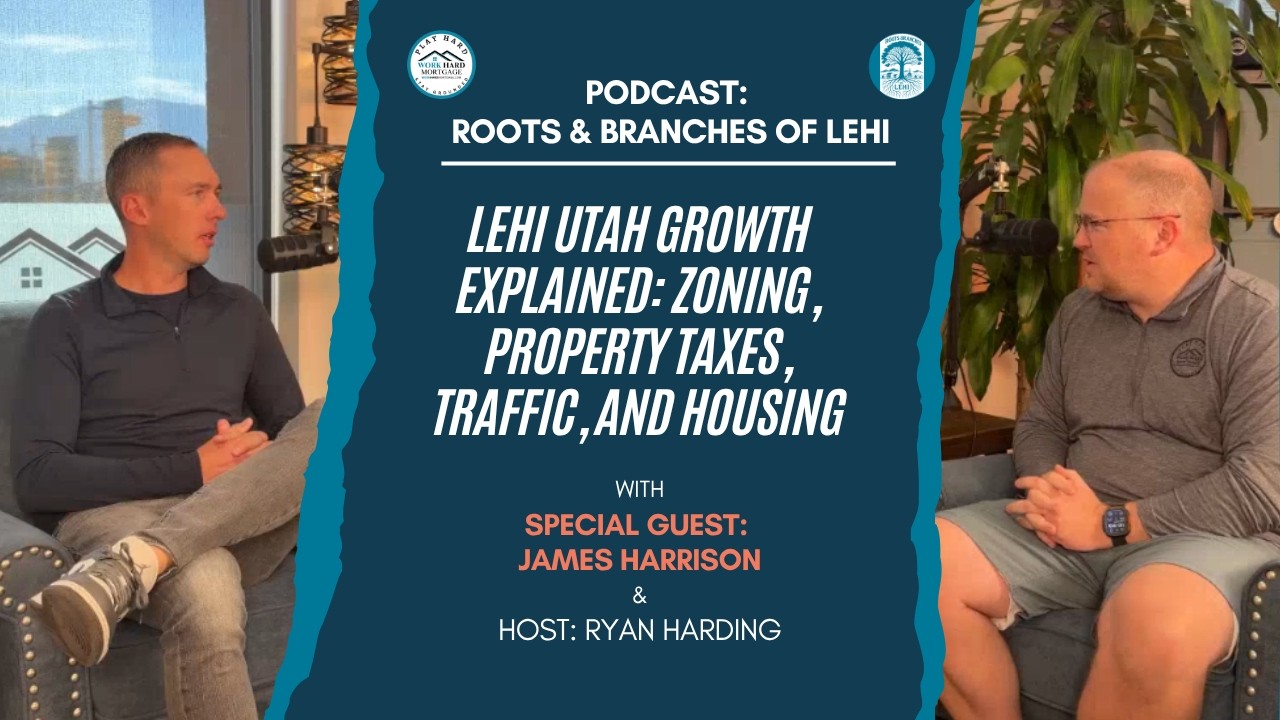
Lehi Utah Growth Explained: Zoning, Property Taxes, Traffic, and Housing
City Councilman James Harrison discusses the delicate balance between rapid urban expansion and the preservation of Lehi's small-town identity.
James Harrison
Zoning, Property Taxes, Traffic, and Housing
At a Glance
Archive Scoring
Introduction
The transformation of Lehi from a quiet agricultural landscape into one of Utah’s fastest-growing cities is not just a tale of concrete and blueprints; it is a profound struggle to maintain a sense of community identity amid relentless change. James Harrison, a former diplomat whose career spanned the globe, brings a unique perspective to this evolution. Having witnessed the world’s complexities, he views his role on the Lehi City Council as a steward of something precious: a home that must navigate the tension between necessary growth and the preservation of its soul. For Harrison, city governance is not about abstract policy, but about the hard reality of local budgets, infrastructure limits, and the sacred nature of taxpayer funds.
At the heart of the conversation is the challenge of zoning—a tool that carries the weight of history and the burden of future impact. As a community archivist, one observes that Lehi’s struggle is a mirror of the American experience: the desire to welcome newcomers while fearing the erasure of the familiar. Harrison emphasizes that the 'growth' narrative is often simplified, yet it remains the primary driver of the civic life here. The dialogue moves beyond mere political disagreement to address the fundamental human need for connectivity, safety, and fiscal responsibility.
Harrison’s transition from the State Department to local service reveals a fascinating commitment to transparency. He treats his social media presence as a bridge, stripping away bureaucratic jargon to reveal the human stakes of council decisions. He acknowledges the 'keyboard warrior' culture of our time, yet remains undeterred, believing that the public’s access to the logic behind a vote is essential for building trust. This is a story of a representative learning that the most significant power a city official wields is the ability to listen with empathy.
Perhaps the most telling aspect of his service is his commitment to keeping taxes low in an era of skyrocketing costs. He frames property taxes as a burden on those with the least, particularly retired residents on fixed incomes, marking his tenure as one focused on finding efficiencies within the machine of local government. His philosophy suggests that by prioritizing essential services like public safety and infrastructure over 'easy' budget expansions, a city can resist the inevitable drift toward institutional waste.
Ultimately, this record documents a turning point in Lehi’s history. It captures the transition from a place that could grow by happenstance to one that must grow by design. Whether discussing the addition of pedestrian bridges to ensure child safety or the strategic use of commercial land to stabilize taxes, the conversation highlights an enduring commitment: Lehi intends to grow without losing the 'small' feeling that makes it a home. It is a testament to the fact that, even in a city of nearly 100,000, the strength of the community rests on the accessible, accountable actions of its neighbors.
Episode Overview
A detailed look at the topics, people, and context of this conversation.
In this episode, James Harrison, a Lehi City Councilman with a background in the U.S. Foreign Service, shares his journey from international diplomacy to municipal governance. After returning home to Lehi, Harrison observed the rapid changes in the city's landscape and felt called to apply his experience in logistics and public policy to ensure the city's future is guided by strategic, sustainable planning rather than reactive development.
Throughout the discussion, Harrison addresses the primary anxieties of the modern Lehi resident: traffic congestion, high-density housing, and the impact of rapid growth on infrastructure. He provides deep insight into how the council functions, explaining the often-misunderstood boundaries of zoning, the necessity of protecting commercial tax bases, and the complexities of municipal budgeting. His perspective is grounded in a belief that local government should be the most efficient and accountable level of authority for its citizens.
Beyond policy, the conversation touches on the health of the local political climate. Harrison reflects on the importance of building trust among colleagues despite philosophical differences, advocating for a culture of spirited, healthy debate that separates personal animosity from public service. He encourages residents to engage actively in the democratic process, reminding them that they are the ultimate stakeholders in the city’s ongoing story.
Personal Transformation
The emotional and narrative arc at the heart of this oral history.
James Harrison’s journey began with a foundation of service, shaped by his upbringing in Roy and his international career with the U.S. State Department. Living in diverse global environments, he developed a sophisticated understanding of government complexity and the necessity of diplomacy. This global perspective served as a precursor to his eventual return to his roots in Lehi, shifting from a career of international advocacy to one of local civic stewardship. The transformation was internal; he evolved from an observer of local change into an active participant who felt a profound responsibility to bridge the gap between abstract policy and the tangible realities of his neighbors' daily lives. His primary challenge was reconciling his desire for a stable community with the reality of Lehi’s explosive, rapid growth. As an outsider to local political circles, he initially doubted his capacity to influence the city's trajectory. This period of hesitation transformed into a realization that his specific experiences—logistics, diplomacy, and a deep appreciation for constitutional principles—were exactly what the community needed. He stopped waiting for others to solve the problems of infrastructure and zoning and recognized that his unique skill set provided a lens through which he could advocate for smart, measured development. During his campaign, he underwent a significant shift in his relationship with the residents. What began as a campaign of addressing high-level issues like property taxes and traffic evolved into a deep, human connection with the diverse demographics of Lehi. He learned to listen to the concerns of retirees on fixed incomes, families in new developments, and the long-term inhabitants of historic neighborhoods. This exposure humanized the statistics of city growth and solidified his commitment to fiscal responsibility and strategic planning. Finally, his entry into the City Council marked a move from campaigning to governance. He had to navigate the nuanced reality of a republic over a pure democracy, where he had to synthesize public input with the complex, often constrained, administrative and financial realities of municipal government. This maturity allowed him to maintain his core principles while navigating the necessity of consensus-building with fellow council members, ultimately finding peace in the knowledge that he was making the best possible decisions for the collective future of his community.
Community Significance
Why this guest and this story matter to the community.
James Harrison occupies a vital space in Lehi’s modern history as a bridge-builder between the city’s historic identity and its rapidly evolving demographic future. By serving on the City Council, he provides a voice for residents concerned with the sustainability of growth. His significance lies in his ability to articulate complex financial and zoning issues in a way that is accessible to the average resident, thereby fostering a more informed and engaged citizenry. He serves as a critical example of the 'citizen-statesman' ideal, proving that individuals with professional expertise outside of traditional local politics can effectively enter the arena and create tangible impact. His focus on fiscal efficiency—avoiding unnecessary tax increases—directly protects vulnerable segments of the population, such as retirees on fixed incomes, which is an essential service to the community’s social fabric. Without his presence, the conversation around city growth might remain purely reactive or dominated by short-term pressures. By emphasizing long-term strategies, land-use efficiency, and the protection of commercial zones, he helps ensure that Lehi remains a city that provides for its own needs rather than relying on external solutions. He acts as a steward of the 'small-town feel' that so many residents fear losing, translating that emotional desire into concrete, professional city planning. Ultimately, his impact is found in his transparency. By utilizing social media to demystify council agendas and explain the 'why' behind policy decisions, he helps counteract the divisiveness that often plagues municipal politics. He creates a culture of accountability where residents feel seen and understood, which is the cornerstone of a resilient and cohesive community during a period of intense demographic pressure.
Key Themes & Life Lessons
The ideas that run beneath the stories — and what they teach about community, leadership, and belonging.
Wisdom & Life Lessons
A primary lesson offered is the distinction between 'populism' and 'responsibility.' While it is easy to demand simple solutions to complex problems, wisdom lies in understanding that there are no magic wands for systemic issues like traffic. The act of learning the details—the 'master's degree' obtained through experience—is the only way to move beyond superficial understanding. Another lesson is the separation of political disagreement from personal worth. The ability to argue a point with passion while remaining empathetic to one's opponent is described as a rare but essential virtue. This is illustrated by his willingness to engage in heated debate and then share a meal with those same individuals, asserting that disagreements do not make a person the 'devil.' Finally, the concept of 'tax as a sacred fund' is a profound takeaway. It teaches that every dollar of public tax money represents the labor of a resident, and to manage it without extreme care and a search for efficiencies is a failure of character as much as a failure of policy. This wisdom provides a moral compass for anyone tasked with managing community resources.
Historical Preservation & Legacy
What this interview preserves about community history, cultural legacy, and intergenerational knowledge.
Preservation Value: Exceptional
This episode captures the direct, nuanced, and historically critical thought processes of a sitting city official during the most transformative period in Lehi’s history. It provides an unfiltered window into the fiscal, logistical, and social tensions that define modern municipal governance, which are rarely documented outside of dry official meeting minutes. The combination of personal reflection and technical local knowledge makes it an invaluable resource for future historians and community members.
Why This Episode Matters Historically
This episode provides a primary-source documentation of Lehi during the most rapid growth phase in its history (2022-2024). It captures the specific tensions of a town transitioning from an agricultural, small-community identity to a major economic hub in the Salt Lake metropolitan area. Future historians will view this as a snapshot of how municipal government grappled with the constraints of infrastructure, zoning, and fiscal survival during this critical epoch. Furthermore, it preserves the internal dynamics of the Lehi City Council at a moment of significant political transition. By detailing the struggle to maintain service levels without relying on tax increases, this record serves as an essential reference for understanding the economic philosophies and administrative challenges that shaped the city’s development, setting a precedent for how future leaders might approach similar dilemmas.
What Future Generations May Learn
Future residents will learn that the 'Lehi experience' was not a static condition but a constant negotiation of identity. They will see that the traffic, housing, and fiscal burdens they may face were actively managed by previous generations who prioritized responsible growth over easy, short-term solutions. They will learn that a city's resilience depends on its ability to protect its commercial tax base and maintain high levels of administrative efficiency. They will also discover that the most effective public servants were those who prioritized transparency and active listening over partisanship. The lesson here is that in a republic, the role of an elected official is to weigh complex trade-offs with wisdom and principle, even when such decisions are unpopular. Finally, they will understand that the essence of a community is built upon the personal connections and mutual trust of its citizens, regardless of the size or density of the city.
Community Memory Preserved
This episode preserves the memory of the transition from an agricultural 'farm town' to a modern city, specifically the struggle of residents to reconcile the loss of open space with the necessity of growth. It documents the specific concerns of West Lehi regarding infrastructure and commercial desertification, as well as the community's emotional and financial reaction to the pressure of rapid housing development. It also archives the specific institutional memory of how the city handled major economic events, such as the management of the city’s power reserves during regional energy spikes and the decision to avoid property tax increases by finding efficiencies within existing departmental budgets. These details are often lost to time as records become bureaucratic and impersonal. Finally, it captures the 'Spirit of Lehi' as it existed in the early 2020s—a collective longing to retain the small-town, neighborly culture while functioning as a large, complex municipality. This record ensures that the fears, hopes, and strategies of this specific moment in Lehi’s history are preserved with the nuance of human emotion rather than just raw historical data.
Local Knowledge Preserved
This record captures the specialized, localized knowledge of Lehi’s city infrastructure, specifically the function of enterprise funds (Power, Water, Streets) and how they act as self-sustaining silos that limit the flexibility of the city’s general budget. It also documents the strategic importance of retail development along the I-15 corridor and the specific planning hurdles of areas like 3600 West. Additionally, it preserves the cultural knowledge of the local volunteer culture and the role of the municipal government in fostering community events, as well as the reliance on and growth of unconventional transit solutions, such as the UTA on-demand services for the 'last mile' of transportation in a car-centric suburb.
Intergenerational Lessons
For the youth of Lehi, this record teaches the value of civic engagement. It illustrates that even in a large, busy city, one person’s decision to show up to a meeting or communicate with a leader has direct influence. It shows that political power is not an abstract force but a direct result of individual participation and informed decision-making. For future community builders, the lesson is the importance of 'principled pragmatism.' It teaches that success in leadership requires the ability to have fierce, spirited debates while maintaining the personal integrity to remain friends and coworkers afterward. It emphasizes that trust is the fundamental currency of effective governance. For entrepreneurs and business leaders, it highlights the importance of the symbiotic relationship between private enterprise and public infrastructure. It demonstrates how business choices—such as where to develop retail space—are not just for profit, but are essential to the long-term viability and affordability of the community for its residents. Finally, for all future leaders, it serves as a reminder that tax money is a sacred trust. The lesson is clear: government must always prioritize the needs of the most vulnerable and the efficiency of its operations before asking more from the citizens who provide the funds.
Community & Cultural Insights
The interview reveals that Lehi is currently balancing two identities: the historic legacy of the 'small farm town' and the emerging reality of a high-growth technological and suburban hub. This tension is the defining cultural theme of this period, influencing every local school, business, and park development project mentioned. There is a strong cultural emphasis on independence and local pride. Lehi residents are shown to be highly involved and deeply invested in the city's unique character. This is seen in their reaction to development, their engagement with city council agendas, and their desire for local solutions rather than relying on state or federal mandates. Education and youth safety are central cultural pillars. The community's response to the pedestrian traffic issues near schools highlights a collective protective instinct that defines Lehi as a place where the upbringing of children is a primary communal focus. This transcends politics, making child safety a common ground for all. There is also a strong tradition of gratitude for local institutions like the Legacy Center and the stewardship of landmarks like Willow Park. These spaces act as the community's heart, serving as physical anchors that maintain a sense of 'home' amidst the rapid demographic churn. They represent the investment in human culture over raw commercial infrastructure. Finally, the cultural insight of this episode is the realization that Lehi’s future is being actively crafted by its citizens. The shift from being a 'passenger' in the growth of the city to an 'active driver' via council involvement is a key cultural narrative. It suggests a community that is awakening to its own influence, moving from a passive, sleepy bedroom community to an active, self-governing power in Northern Utah.
Historical Context
This record captures Lehi, Utah, during a period of unprecedented transition, as it shifts from a traditional agricultural community to a major hub in the northern Utah County 'Silicon Slopes' region. The period is defined by intense pressure on infrastructure, rising housing costs, and the struggle to maintain a unique civic identity as the population approaches 100,000 residents.
Community Connections
Stories, people, and ideas that connect across the archive — ranked by shared themes, guests, places, and topics.
Related Episodes
(4)Connecting Lehi: A Conversation with Chris Condie | Roots and Branches of Lehi
Chris Condie
Exploring Lehi's Rich Rodeo Tradition with Mike Southwick
Mike Southwick
From EMT to Fire Chief: Jeremy Craft’s Story of Service in Lehi
Jeremy Craft
Inside Lehi's Famous Stock Parade and Community Traditions
Shawn and Nikki Winters
Related People
(4)Paige Albrecht
Lehi City Council Member, Attorney, Community Advocate
Lara Bangerter
Manager, Lehi Historical Society & Archives
Mark Johnson
Mayor of Lehi, Former City Council Member, Engineer & Business Owner
Andy Hadfield
Head Football Coach, Lehi High School · Business Owner · Lifelong Lehi Resident
Related Stories
(4)A Canceled Softball League and the Birth of a Public Servant
Paige Albrecht
From Losing Two Elections to Winning More Votes Than Anyone in Lehi History
Mark Johnson
Cancer, Purpose, and the Hardest Lesson
Paige Albrecht
Baby Land — A Place of Refuge Most People Don't Know About
Paige Albrecht
Related Quotes
(4)"Lehi City is the economic engine of the state of Utah."
— Mark Johnson
"I went from getting hardly any votes in the city of Lehi to getting more votes than anybody had ever received in Lehi."
— Mark Johnson
"You need to make your own community. It's not going to find you."
— Charlene Freestone
"Don't think you're not the growth."
— Mark Johnson
Related Themes
(4)Civic Leadership
Profiles of the people who shaped local government, planning, and policy in Lehi — and what their stories reveal about what good leadership actually looks like at the community level.
Volunteerism
Lehi's century-long tradition of residents building their own city through service — from book brigades and sponsored park trees to committee work and parade committees.
Community Resilience
How Lehi residents have navigated challenge, change, growth, and hardship — and emerged with optimism, connection, and a deeper appreciation for what they've built together.
Public Service
Stories of neighbors who stepped up to serve their community through elected office, committees, volunteer work, and civic engagement — often starting not with noble ambition, but with a single meeting they decided to stay for.
Ways to Serve
(4)Explore More Stories & Themes
Related topics and community themes that connect this episode to the broader archive.
Suggested Future Guests & Topics
1. Janice Peek or Liz Anderson: To document the history of the Peek family, their land, and their perspective on the donation of Mill Pond. 2. City Planning Staff (Lehi Planning Department): To provide technical details on the transition of the general plan and the logistics of infrastructure project management that the council discussed. 3. Long-term Lehi Farmers/Agriculturalists: To capture the perspective of those who are selling land, the history of local agriculture, and their hopes for how their family heritage is integrated into the city’s growth. 4. Local Educators or School Administrators: To discuss the specific challenges of managing a rapidly growing school district and the concerns regarding pedestrian safety at sites like the Temp Highway crossing. 5. Active Senior Residents: To capture the experience of aging in a place that is changing rapidly and their perspective on fiscal policies like property tax management.
More from Roots & Branches of Lehi
From One Restaurant to 12: How Chubby’s Built a Utah Family Business
with Tom and Mike Moak
Brothers Tom and Mike Moak share the evolution of Chubby’s, a family-built Utah business founded on resilience, shared values, and deep community ties.
The Inspiring Story Behind Sunshine Street Co. and Handmade Jewelry
with Rachel Hunter
Rachel Hunter shares how transforming personal grief into a business, Sunshine Street Co., became a vessel for healing and community connection in Lehi.
Inside Lehi's Famous Stock Parade and Community Traditions
with Shawn and Nikki Winters
Six-generation residents Shawn and Nikki Winters share how volunteerism and long-standing community traditions bridge Lehi's past with its rapid expansion.
Full Transcript
Transcript source: AI-generated. This transcript has been lightly edited for readability.
Chapter 1: Podcast Welcome 0:000 secondsWelcome to Roots and Branches of Lehi, the podcast where we get to know the faces, stories, and lives that make up our community. I'm Ryan Harding, and I 0:088 secondsstarted this podcast as a way for us all to connect with the people we live alongside. Growing up in a small town, I learned that connections go beyond blood. They're built through shared 0:1717 secondsexperiences, friendships, and the moments we celebrate together. Each week, we'll sit down with someone new from Lehi to share their unique story, 0:2525 secondstheir passions, and what they [music] love most about living here. So whether you've been here for years or just arrived, join us as we deepen our roots 0:3434 secondsand reach out to our branches one story at a time. Welcome James Harrison to Roots and Branches of Lehi where uh yeah, we get to know people from Lehi. Chapter 2: Meet James Harrison 0:4444 secondsSo and well, so yeah, let's start with kind of a little background of you. So originally from here, where where you originally from? Chapter 3: From Utah to Lehi 0:5151 secondsSo originally I grew up in Roy. 0:5353 secondsOkay. So from the time I was five, I was born in Bountiful, lived in Leighton before I can remember. Then Kisville for a couple years, but basically from 1:021 minute, 2 secondskindergarten through high school, I was in Roy. Okay. 1:041 minute, 4 secondsSo grew up there, went to high school and and then obviously went off to college and went into my career. So been a Uton my whole life and Okay. 1:121 minute, 12 secondsIt's been great. 1:131 minute, 13 secondsYeah. And so so how long you been in Lehi then for? 1:161 minute, 16 secondsSo I've been here since 2022, but I was in the foreign service. 1:201 minute, 20 secondsOkay. So was overseas for a little while. So basically from 2012 onward I 1:271 minute, 27 secondswas in DC, China, Pakistan, Japan, but my parents had relocated here to Lehi. 1:341 minute, 34 secondsSo when we'd come back for, you know, our summer trips, we were it was kind of Lehi was our our Utah home while we were living overseas. 1:421 minute, 42 secondsYeah. 1:421 minute, 42 secondsAnd then when I left the federal government, just made sense to move to Lehigh. We loved it visiting. I mean, the first my earliest memory of Lehi was 1:511 minute, 51 secondsbaseball, high school baseball coming to Lehi and I just remember it like, man, this is a small little farm town. There's, you 1:581 minute, 58 secondsknow, there's a lot of land out west and obviously that's changed, but but yeah. 2:032 minutes, 3 secondsSo, so decided to move here and have loved it ever since. No regrets at all. Chapter 4: Military and State Department Service 2:072 minutes, 7 secondsAnd so tell me what you did in the military then. So, what what what was your POS? What what did you do there? 2:122 minutes, 12 secondsBecause you you traveled a lot obviously. 2:142 minutes, 14 secondsYeah. So, I commissioned out of ROC at BYU. 2:172 minutes, 17 secondsOkay. And but I I commissioned into the reserves. So it was really just my part-time Yeah. 2:232 minutes, 23 secondsjob. So I I helped command a unit in Maryland when I lived in DC. But my full-time job was with the State 2:312 minutes, 31 secondsDepartment. So I was in DC for about four years and then went to China and then Japan and Pakistan. Okay. 2:392 minutes, 39 secondsSo but in the military I was a transportation logistics officer. 2:442 minutes, 44 secondsOkay. Okay. Originally commissioned into military intelligence, but just as I commissioned, the unit I was going to go into went away. So, I was like, well, 2:512 minutes, 51 secondsI'll find something that's easy to easy for my family and not too long of a commute. So, I went into the transportation part of the army. But, yeah, my 3:003 minutesfull-time job was in the foreign service for the State Department. 3:033 minutes, 3 secondsOkay. And transportation, what I'm thinking like, you know, roads or vehicles or tell me what that vehicles, convoys, right? Movement of 3:103 minutes, 10 secondsgoods. I was on a movement control team which is a very small unit of about 21 people. So, so yeah, just I drilled and trained in 3:193 minutes, 19 secondsMaryland with my unit and actually I think it was 201 if I remember right, 2013 or 14 I said well my unit's not set 3:273 minutes, 27 secondsto deploy. So I volunteered to join another unit out of New York to deploy to Afghanistan. So I started that process and then the president at the 3:363 minutes, 36 secondstime decided to offramp and ramp down Afghanistan. So didn't get a chance to go there for the military but 3:433 minutes, 43 secondsended up there well ended up in Pakistan right next door with the state department a few years later. 3:483 minutes, 48 secondsWow. So so really a lot of your job has been in I mean you know I say government but I guess you know military government kind of that partnership kind of thing. 3:573 minutes, 57 secondsSo a lot of your your job has been in that then I guess right? 4:004 minutesYeah. Yep. So got to experience just all sorts of government fun over the last I guess decade and a half. So between the 4:074 minutes, 7 secondsmilitary and department of war, the civilian side of the federal government, but it was it was interesting because it was it was still, you know, serving your 4:164 minutes, 16 secondscountry and and people don't really think of diplomats as in the same way as like the military, right? Sure. Sure. 4:224 minutes, 22 secondsAnd and it's not the same. You're not you're not getting shot at and it's it's different. 4:274 minutes, 27 secondsIt's But I guess the goal is that th those people getting shot at never happens, I guess. Right. I mean, that's exactly Yeah. It's to prevent it's to prevent that kind of stuff from 4:344 minutes, 34 secondshappening. So, so it was a very different, but I mean I really enjoyed it. Met a lot of really great patriots that were serving their country and and 4:434 minutes, 43 secondsbuilding bridges with with other countries, but also standing up and and defending, you know, American values overseas when the time comes and when you have to. Chapter 5: Lessons from Diplomacy 4:534 minutes, 53 secondsDo do you think I mean any any takeaways from that that time period? I mean, what what what do you think you learned, I guess, most from that last 10 years of of being in this, you know? 5:025 minutes, 2 secondsYeah. Well, I think the world is very complex, right? You know, the the purpose of working in an embassy is 5:095 minutes, 9 secondsreally to to express and promote American values overseas for our national security and 5:175 minutes, 17 secondsand even within the State Department, it's very wide spectrum of of political beliefs, right? There's more of a globalism side, but then there's also 5:255 minutes, 25 secondsthe non-globalism side. And so but at the end of the day you take an oath to the constitution and your commander is 5:345 minutes, 34 secondsthe president of the United States and and so even if you you know disagree on a personal level sure 5:415 minutes, 41 secondsyou promote what the agenda is for that administration to the best of your ability and and hopefully I mean the ultimate goal is to you know protect and 5:505 minutes, 50 secondspromote American values, protect American citizens overseas and and so it was it was really interesting to see what kind 5:585 minutes, 58 secondsI mean 99% of those successes are just not even public, right? Sure. 6:036 minutes, 3 secondsAnd so it was really interesting to see just kind of behind the scenes how many great people are serving the country in ways that will never be really public. 6:126 minutes, 12 secondsI like that. And and I that goes to what I think is generally true, which is there's a lot of good people out there and and and a lot of good people doing a 6:216 minutes, 21 secondslot of good, but unfortunately it's the noisy ones that you know that the public think that's that's gets a lot of the attention, right? 6:276 minutes, 27 secondsbecause that's what makes newsworthy stuff, right? I mean, you know, and and and I get that, but I like hearing that there's a lot of good going on, you 6:346 minutes, 34 secondsknow, that that maybe we just don't see, right? So, well, okay. So, talk to me. So, obviously you've been involved in Chapter 6: Why He Ran for City Council 6:426 minutes, 42 secondsgovernment and all these different things. And so, so recently you got, you know, you you won the election, right? 6:476 minutes, 47 secondsAnd so now you're on the Lehigh City Council, right? 6:506 minutes, 50 secondsWas that something you always wanted to do? Is that something that just kind of what sparked that, I guess? Why why why did you run? 6:566 minutes, 56 secondsWell, I I mean, I've always been, you know, voting and and engaged with politics and but I never really seriously considered it. Sure. 7:057 minutes, 5 secondsAnd I it was very much a lastminute decision. So, you know, I'd noticed some things and I've said this before in other interviews and during my campaign, 7:147 minutes, 14 secondsyou know, just the growth of Lehi has been so rapid. Sure. 7:187 minutes, 18 secondsAnd and a lot of that is natural. It's something you can't really prevent, right? But but really it's desirable place, right? Exactly right. It's a good it's a compliment, right? 7:267 minutes, 26 secondsIt's a compliment to it. Yeah. 7:277 minutes, 27 secondsAnd but I saw just kind of the ways in which we were growing. I thought, okay, there is some discretion. And within that window of discretion, how are we 7:357 minutes, 35 secondsgrowing? What's the strategy? What are the long-term, you know, limits and and capabilities of the city to handle such 7:437 minutes, 43 secondsrapid growth? And, you know, just on my commute, I notice, you know, I'm on a two-lane road next to highdensity development on 3600 West. And sure, I'm 7:527 minutes, 52 secondslike, why is, you know, what what can we do better? And of course, you know, I was an outsider at the time, so I I was still learning what can be done by the 8:008 minutescouncil and what can't be done. But it really got me interested and and I' I'd kind of thought about it about eventually maybe running for 8:088 minutes, 8 secondscouncil. But I had a a good friend, Chris Condi. He's a neighbor of mine and he was on the council and and I never wanted to run against him because I had 8:178 minutes, 17 secondsa lot a lot of respect and still do for Chris. But but when he decided to run for mayor, I thought, "Okay, well, that's an open seat. I'm not going to 8:258 minutes, 25 secondsrun against a friend." Yeah. Yeah. [laughter] Good. 8:278 minutes, 27 secondsSo, I decided to get in the race and I gave myself about a 10% chance of even getting to the primary and because I mean I I wasn't really in the 8:358 minutes, 35 secondspolitical circles in Lehi, right? I was just an average resident that just noticed things. I follow council meetings here and there, but as the 8:438 minutes, 43 secondscampaign progressed, I I met so many residents and and other candidates that shared what I believed. I'm like, "Okay, so I'm not crazy. 8:528 minutes, 52 secondsI'm not off base." Like really the things that I cared about, many other residents cared about as well. So, so yeah, it was kind of a whirlwind 9:009 minutesthinking back on it. It seemed like two years of campaigning. It was only 6 months or 5 months actually. But but it was extremely rewarding and my 9:089 minutes, 8 secondsfavorite part of it was just talking to people. Sure. 9:119 minutes, 11 secondsYou know, I'm not I'm kind of good balance between extrovert and introvert, right? But as I got out, I just, you know, there's this hunger to be like, 9:199 minutes, 19 secondsokay, well, now I want to hear from more and more residents. You know, I live in West Lehi. 9:239 minutes, 23 secondsI want to hear what was going on in Traverse. I wanted to hear about East Lehigh and Hullbrook and and I just learned so much. It was like 9:319 minutes, 31 secondsa a master's degree in in Lehi being on the campaign because you're just you're on that ground level and and hearing from the people. Chapter 7: Growth and Housing 9:409 minutes, 40 secondsSo, and what do you think like what do you think appealed most? You know, you said you connected with people. What what area what issues do you think you connected most with people? 9:489 minutes, 48 secondsI think it was really around growth. 9:509 minutes, 50 secondsEverything related to growth. So, traffic, I mean, if you live in Lehi, you know, traffic's an issue, especially out west where most of the new growth 9:579 minutes, 57 secondshas been. infra, you know, so infrastructure, what can we do to better plan and and protect our infrastructure? 10:0410 minutes, 4 secondsAnd again, a lot of that's with the state, a lot of it's with U DOT, but but we can partner with them. We can partner with our other cities around us 10:1210 minutes, 12 secondsto to come up with good plans for traffic relief. 10:1610 minutes, 16 secondsAnd then I think the highdensity housing, right? And I I think one of the one of the misunderstandings is like I'm 10:2310 minutes, 23 secondsnot against high density, right? I think high density serves a purpose. you know, if you're a first-time home buyer and it's it's more affordable, sure, 10:3010 minutes, 30 secondsthat's great. But but we've built quite a bit of of density and I think everybody was kind of started to see the secondary effects of that. 10:3910 minutes, 39 secondsAnd along with that growth, you know, comes financial obligations. And even with property taxes and impact fees, it doesn't really cover the cost. 10:4710 minutes, 47 secondsSo the more you grow, yes, you're getting more property tax because you have more residents and and units, but you also have more cost as a city. 10:5610 minutes, 56 secondsAnd so how do you handle that? And the financial, you know, really the I I don't know if it's the most important, but it it could be is the the budget, 11:0511 minutes, 5 secondsright? And the council's I guess one of the main issues we deal with and responsibilities that we have is dealing with the budget and determining where 11:1311 minutes, 13 secondsthose funds go, what to prioritize. And so so I thought that I I connected with people and the voters in a way that like, yeah, my priorities were their 11:2211 minutes, 22 secondspriorities. It was their concerns. And and I think the election results kind of showed that. 11:2711 minutes, 27 secondsOkay. And on that issue, I mean, you know, let's talk about that, I guess, then. What what what do you think, you know, a question a lot of people, hey, 11:3411 minutes, 34 secondsjust, you know, stop building houses, right? You know, just just put a moratorium on everything. Just, you know, stop. Let's let's let everything catch up. I mean, I know that's a 11:4211 minutes, 42 secondscommon, you know, critique of things. 11:4611 minutes, 46 secondsYou know, I I also know that that's not real, right? You know, we can't actually do that, but but maybe speak to that. 11:5111 minutes, 51 secondsWhy, you know, why can't we? Why why is that not something we can do? And but then what things can we I mean because I think that's it's 12:0012 minutesit's hard because, you know, you mentioned, you know, you came back cuz Lehi, hey you, Lehi, your parents were here. You know, I have kids that, you know, that are getting of the age where 12:0812 minutes, 8 secondsthey're going to be wanting to buy houses and stuff like that. Do they buy here? You know what I mean? Do they like I mean, you know, we want our kids around us, but but we don't want anybody 12:1512 minutes, 15 secondselse, I guess, right? But but where's the lie? I mean, you know, how do you do that, right? So, so I don't know, speak to that issue for a little bit, I guess, here. Chapter 8: Zoning and Property Rights 12:2212 minutes, 22 secondsYeah. I mean, and and you hear that and it's not quite that simple, right? 12:2612 minutes, 26 secondsBecause you have this very important thing called property rights where if you if you have property, you're allowed to to do things with that property. 12:3412 minutes, 34 secondsYou're allowed to sell it. 12:3612 minutes, 36 secondsWhere it comes down to what the council can do is really the land use and the zoning. And so, and why do we have that, right? There's some states like Texas 12:4412 minutes, 44 secondswhere zoning laws don't really exist and and you can do kind of whatever you want with it. Yeah. 12:5012 minutes, 50 secondsAnd and there's a good argument for that, but but people communities have an identity and Lehi has a very unique identity. You know, Highland and Alpine have a different unique identity. 13:0013 minutesAnd so, you know, we can't be everything to everyone. I think that's a path if we go down that route. And I think we have previously where if you try to be 13:0913 minutes, 9 secondseverything for everyone, you're usually disappointing everyone. Right. Sure. 13:1313 minutes, 13 secondsBut when it comes to land use, you know, where the city council has discretion is how do we plan future zones? 13:1913 minutes, 19 secondsHow are we, you know, designating certain areas that maybe it's residential now, but for a future land 13:2713 minutes, 27 secondsuse it could be commercial or maybe it's a different level of residential. So, so really when it comes down to it, if you have an agricultural area, and this is 13:3613 minutes, 36 secondsthe most common kind of use, you have a farmer who has 12 acres. Yeah. 13:4213 minutes, 42 secondsAnd they get to retirement, they can't do it anymore. Yeah. Time to sell. 13:4613 minutes, 46 secondsTime to sell, right? And most, you know, most of their kids are like, well, I don't plan to be a farmer. I have a job, 13:5313 minutes, 53 secondsso let's sell the land. And in the in the land use, in the general plan, that's designated for a certain use. 14:0014 minutestypically, you know, residential, lowdensity residential. 14:0414 minutes, 4 secondsAnd so they have a right to to sell that land within the zoning. 14:0814 minutes, 8 secondsNow, where the the council has discretion is if a developer comes in and says, "Okay, I know it's designated for two, which is low density 14:1614 minutes, 16 secondsresidential, but I'd really like medium or high density." Okay. 14:2014 minutes, 20 secondsRight. The city council, the bar to reszone that for a higher density should be so high because what you're doing is 14:2814 minutes, 28 secondsyou're adding to the population. you're putting a strain on the infrastructure. 14:3214 minutes, 32 secondsI think you know in the past maybe it was a lower bar for previous councils to say okay we'll reszone this or we'll 14:3914 minutes, 39 secondstake a commercial zone that's designated for commercial and we'll switch it to highdensity or medium density residential and that it 14:4814 minutes, 48 secondstruly has an impact and you can see it in West Lehi you know in Hullbrook along 2100 there's been several instances 14:5514 minutes, 55 secondswhere it's where the developers have said hey it's a lot easier to build residential it's an immediate profit. 15:0215 minutes, 2 secondsSo, let's let's reszone this commercial for residential and and once you do that, it's done forever. You can't take back those 15:1015 minutes, 10 secondsvested rights. And so, so that's where the council has discretion, but but like you said, there's other instances where if it's zoned correctly, then they have 15:1915 minutes, 19 secondsa right to build according to that zoning. Gotcha. So, what you're saying So, yeah. 15:2415 minutes, 24 secondsSo, you're saying you the council can be a little more strict on going from, you know, say halfacre lots, you know, or quarter acre lots or whatever to, you 15:3215 minutes, 32 secondsknow, a bunch of town homes or condos or an apartment complex and stuff like that, I guess. Right. So, and so that's where what you're trying to do is maybe kind of keep that closer to lower residential, lower density. 15:4315 minutes, 43 secondsYeah. 15:4315 minutes, 43 secondsSo there's not as many buildings coming up and stuff like that. Is that kind of what Exactly. And and and protecting that commercial space. Sure. Because the West 15:5115 minutes, 51 secondsLehi has been kind of a desert of retail and commercial. Sure. 15:5615 minutes, 56 secondsBecause it's developed so fast in the residential side. Yeah. 15:5915 minutes, 59 secondsBut but really that that retail and commercial, the sales tax that comes from it is what keeps our property taxes low. 16:0716 minutes, 7 secondsAnd so so my goal and one of my, you know, primary objectives if I do anything, I just want to make sure that we protect that that retail space so 16:1616 minutes, 16 secondsthat we can keep taxes low. property taxes are are brutal, right? Gotcha. 16:2016 minutes, 20 secondsAnd and there's people on lower income or limited income where, you know, if you raise property taxes, it's going to it's going to cause a problem for them 16:2816 minutes, 28 secondsin their finances. And so so that's one of my priorities is to make sure that we don't take away viable commercial land 16:3616 minutes, 36 secondsand swap it for for more housing because so talk to about that then. So for so obviously yeah, the the city funds their stuff through taxes, right? Chapter 9: Protecting Lehi’s Commercial Tax Base 16:4516 minutes, 45 secondsSo mostly property taxes and stuff and so so you're saying commercial stuff because you know I think of Lehi I mean you're right West Lehi doesn't have a lot of commercial but you know you have 16:5416 minutes, 54 secondsyou know point of the mountain stuff right and you have you know over here by Costco and and that although that is kind of American fork too I'm not even sure I've boundary is actually a little 17:0317 minutes, 3 secondsit just kind of blends together I guess for me so so you're saying hey the benefit of having more commercial stuff it helps as far as from tax I mean speak 17:1217 minutes, 12 secondsto that I guess because it seems like how does Lehi have we we have a decent amount of commercial, right? Or or Yeah, we do. And I think it's it's 17:2017 minutes, 20 secondsmostly located along I-15 and Traverse and and we have new developments along Temp Highway that are going to bring in a lot of great retail and and hats off 17:2917 minutes, 29 secondsto previous councils. You know, some of this has been a decade in the making. Sure. Right. Things aren't quick, right? 17:3517 minutes, 35 secondsYeah. They're not quick. And so, and and there's a new Smiths that just was built on 2100 out in West Lehi, which is huge. 17:4317 minutes, 43 secondsAnd and again, like credit to the previous council for for seeing that through. And there's new stuff coming up with this council of of more retail out 17:5117 minutes, 51 secondsthere. But when it comes down to it, like I said, if you build a housing unit, if you take one house, they're going to pay impact fees to help with 17:5917 minutes, 59 secondsthe infrastructure and connect gas and power lines and everything else. 18:0418 minutes, 4 secondsAnd but but ultimately the the property taxes they pay isn't going to cover everything. Sure. And so that sales tax, 18:1118 minutes, 11 secondsit really helps, you know, build the city budget in a way that's healthy because sales tax, you have people from 18:1818 minutes, 18 secondsoutside of Lehigh coming into Lehigh to spend money, right? So it's you're opening it up for more non- Lehi residents to help pay for our city 18:2618 minutes, 26 secondsinfrastructure. And so one example I use is I live right next to the Jordan River and you know, the easiest place to shop is Saratoga Springs. 18:3518 minutes, 35 secondsYeah. and they they've been brilliant in how they've developed Redwood Road because they're not only servicing themselves and parts of Eagle Mountain, 18:4218 minutes, 42 secondsbut a lot of West Lehi is shopping there. 18:4618 minutes, 46 secondsAnd so they're getting that sales tax to build up Saratoga Springs, which again, hats off to them for being strategic. Yeah. 18:5318 minutes, 53 secondsBut but for us, we want to maintain that that higher, you know, commercial viability and and lands for retail taxes 19:0119 minutes, 1 secondbecause that really helps us keep other taxes low. Gotcha. And that then funds all the different things that Lehi offers and stuff like that. 19:0919 minutes, 9 secondsYou know, parks and police and fire and everything else. So, and and I think probably the the biggest success of the year so far. We've had 19:1819 minutes, 18 secondsquite a few successes, but you know, a property tax was on the table early in the budget season and the council said, "No, we're not. I 19:2619 minutes, 26 secondsthink we can find other ways to to rep prioritize money to be able to avoid that tax increase." And it was a messy, 19:3419 minutes, 34 secondsyou know, process as anything in politics is, but we were able to find it. And the other council members and the mayor were able to kind of dig into 19:4319 minutes, 43 secondsto ongoing expenses that haven't been looked at in a while and were able to save enough money to not raise taxes. So that was a huge success. Chapter 10: City Budgets and Tax Choices 19:5019 minutes, 50 secondsSo So yeah, let's talk to that for a second. So So what what all goes I mean, yeah, what all goes into that process, right? So you know, there's there's 19:5819 minutes, 58 secondsobviously lots of different angles on that, right? on the one hand, you know, hey, we want to keep things low, right? 20:0320 minutes, 3 secondsYou know, to help people be able to f to afford, you know, some people are on fixed incomes, different things like that. 20:0920 minutes, 9 secondsYou know, the other side of the coin is, hey, you know, if you're only raising, you know, let's say, I don't remember what it was. You probably do, but like, 20:1720 minutes, 17 secondsyou know, let's say it's $10 or, you know, something like that. But, you know, $10 times, you know, a [snorts] million people, you know, or, you know, yeah, that that obviously, hey, we can 20:2420 minutes, 24 secondsbuy a lot of things with that. So, so there is kind of both sides to that sometimes, right? I mean so so you know we want to make sure that we're 20:3220 minutes, 32 secondsobviously investing in the city right and making things better here but at the same time government is also associated with waste and you know and 20:3920 minutes, 39 secondslike okay hey is there a better way to do this right so so you know talk to me about you know kind of that that that 20:4720 minutes, 47 secondsbalance I guess right because I mean obviously you know the goal is obviously you know do more with less but you know at the same time we do want 20:5420 minutes, 54 secondsto invest in things too right you know we all enjoy the parks and so it's nice to be able to have that paved now or something. That's part of sometimes my 21:0221 minutes, 2 secondsmy thoughts with local stuff. I mean, I this is just me personally, you know, I I don't love giving money to the federal government because, you know, that goes 21:1021 minutes, 10 secondsto another state, right? You know, but locally, hey, I'm always kind of okay more with stuff locally because it's like, well, hey, that benefits me directly, right? Most likely. 21:1821 minutes, 18 secondsYep. 21:1921 minutes, 19 secondsI don't know. Speak to that, I guess, for you. I mean, and and yeah, the different you bring up a good point because the different levels of government have, you know, different, I 21:2821 minutes, 28 secondsguess, levels of waste, and I feel like local government is the the most careful with your money. And I've been very impressed with 21:3521 minutes, 35 secondsour city staff and how much, you know, effort and time goes into serving the residents and and so you're right, you have to balance like, hey, I would love a new park. 21:4321 minutes, 43 secondsYeah. 21:4321 minutes, 43 secondsLike, I would love, you know, a new rec center. I would love to to fund, you know, other private public private 21:5021 minutes, 50 secondspartnerships, right? And so the list of things that would be awesome. Yeah. You know, most people agree, right? Well, because again, it's ours, right? 21:5821 minutes, 58 secondsAnd we get to enjoy it directly, right? So, yeah. 22:0022 minutesBut on the back end of that, they do have costs, right? Like if we wanted to build a new rec center, it would be, you know, tens of millions of dollars, 40, 50, 60 million dollars. 22:1122 minutes, 11 secondsWe'd have to bond, which means we're paying interest and taxes go up. And and for some people, yeah, that's that's great. For others, they're like, "No, I 22:2022 minutes, 20 secondsdon't think we need that." And and this goes to something that, you know, I suspected last year, but has been reconfirmed over and over again 22:2822 minutes, 28 secondsthis year, is who you elect, like it's important. You know, if they say, "Okay, I support this park, right?" Okay, 22:3522 minutes, 35 secondsthat's a singular issue. Great. You know, their stance on it, but what are their views? you know what is this candidate's views on the role of 22:4222 minutes, 42 secondsgovernment and the role of finances because to me you know tax money is a is a sacred fund right this is not my money 22:5122 minutes, 51 secondsI'm I've been you know elected to manage other people's funds that they have been that they are required by law 22:5922 minutes, 59 secondstheor you know I not literally but figuratively to to hand over their hard-earned money and so what do we use 23:0623 minutes, 6 secondsthat for and for me it's it's it's very clear right like public safety and infrastructure is is number one 23:1323 minutes, 13 secondsbecause that benefits everybody. it's necessary for safety and then everything else after that if you have funds then 23:2023 minutes, 20 secondsgreat let's fund parks let's fund some you know arts and culture which which is really important and Lehi has a great um 23:2823 minutes, 28 secondsyou know culture and arts scene and so so really understanding who you're voting for what do they believe that role of government is and at the 23:3623 minutes, 36 secondsmunicipal level it can be kind of hard to understand people's like views on taxation and and where they prioritize 23:4423 minutes, 44 secondsfunding But but I would encourage anybody voting in any election to really dig you know not just on a singular issue but what are what's their 23:5123 minutes, 51 secondsphilosophy on how government should operate and and how that tax tax money should be used and so so when we you 24:0024 minutesknow going through the budget we were looking for those efficiencies and you know it didn't it wasn't a huge news story you look at other cities in the 24:0724 minutes, 7 secondsstate that raised taxes they were raising it by you know at least proposed to horn I think mountain right was one that was like, "Hey, we haven't done" and I think 24:1624 minutes, 16 secondsthey had to raise it a lot or something like that. I don't Yeah. And they came down for them their original proposal and and given like I don't I'm not going to judge other cities because every city is in a 24:2424 minutes, 24 secondsdifferent position, but for Lehi, like I see it as there are some very narrow exceptions where you may need to raise taxes. 24:3324 minutes, 33 secondsAnd one is if you're a city that's landlocked and kind of economically stagnant and you're you don't have much growth. 24:4124 minutes, 41 secondsSo, you're landlocked, you're an older city, you don't have a ton of commercial development, you don't have a lot of new homes going in. Yeah. 24:4824 minutes, 48 secondsSo, maybe there's there's justification for for smaller tax increases simply because you have to keep the lights on and the police funded. 24:5624 minutes, 56 secondsYeah. And things do go up in cost, right? I mean, you know, they go up in cost. Yeah. But and then the other the other justification would 25:0325 minutes, 3 secondsbe something like a new fire station where it's an enormous expense. a fire engine for several million dollars, a new building, 25:1125 minutes, 11 secondsplus, you know, 20 to 30 new firefighters and paramedics. Like, that's a huge expense. 25:1725 minutes, 17 secondsSo, and ongoing, too. 25:1825 minutes, 18 secondsOngoing expense. So, and that's and that's, you know, there you have buckets of money. One is for capital expenses, which are one-time funds, and then 25:2725 minutes, 27 secondsthere's the ongoing funding, and that's where property taxes come into play is to fund ongoing expenses that you see in the future, like salaries for firefighters. 25:3625 minutes, 36 secondsSure. But outside of that, if you're if you're a growing city, if you have good retail and commercial, there shouldn't 25:4325 minutes, 43 secondsbe a great reason to raise taxes if you unless you have literally exhausted every means of saving money and finding efficiencies. 25:5325 minutes, 53 secondsSo, do you think with that last, you know, budget that you guys did, you know, where things had to change a little bit, do you think are you satisfied with the way 26:0126 minutes, 1 secondobviously, you know, there was no new tax there and stuff like that. Do you think you guys balance that where hey we're not being you know too cheap per 26:1126 minutes, 11 secondsse on some things but you know we're also finding efficiencies elsewhere. I mean do are you satisfied with kind of how that all went? Yeah, I was very 26:1826 minutes, 18 secondssatisfied and and you know it's it was a hard it was it was a long few months, right? Because because typically, you 26:2726 minutes, 27 secondsknow, you get requests from departments on, okay, we need something new. We need a new snowplow. We need, you know, three new employees for this 26:3426 minutes, 34 secondsthing, right? And and as that process happened, I the the like, you know, red alarm in the back of my head was like, 26:4226 minutes, 42 secondsokay, this is great, but what where's the current money going and where can we find other efficiencies? Right? 26:4926 minutes, 49 secondsApproving new requests is only half of it. 26:5126 minutes, 51 secondsSure. The other half that took a long time was identifying in a massive budget where we could save money or where we 26:5926 minutes, 59 secondscould rep prioritize funds that wouldn't take away from our public duty and service. And so it it took a long time 27:0727 minutes, 7 secondsand hats off to city staff and our finance team for for helping us kind of identify where we could save money with 27:1527 minutes, 15 secondsthe least amount of pain and to avoid taxes. And and again to property tax, you have special districts, but the big, 27:2327 minutes, 23 secondsyou know, taxing authorities and your property tax are the county and the school district, especially the school district, right? 27:2927 minutes, 29 secondsThey take the vast majority. The city only gets, you know, around 13% give or take of your property tax. And the 27:3727 minutes, 37 secondspropos the initial budget proposed a 35 it was around $35 per year, okay, per household on average. 27:4427 minutes, 44 secondsAnd that doesn't sound like a lot. like 35 bucks. That's like, you know, taking your spouse out to to lunch or something, right? Yeah. I mean, it's not a whole lot of money. 27:5127 minutes, 51 secondsNo. 27:5227 minutes, 52 secondsBut but when you have the county raising taxes every couple years, when you have the school district raising taxes, those 27:5927 minutes, 59 secondsare in the hundreds and hundreds of dollars per year. And then you have the city doing it saying, "Well, it's only this little bit." But over time, it adds 28:0628 minutes, 6 secondsup, right? If we do it every two years, you know, then it becomes $70 and then it becomes 180 just on the city's side. Yeah. 28:1428 minutes, 14 secondsAnd when you talk to retired folks, they're on a very limited budget. And that hurts. It really does. Like they 28:2128 minutes, 21 secondsthey don't have that flexibility that someone who has higher income can handle. So So when you make a decision 28:2928 minutes, 29 secondsthat one group of people could easily handle, that impacts another group of people that may not have the ability to to 28:3628 minutes, 36 secondsbudget that in, especially with all the other taxes being raised. Chapter 11: Balancing Voter Priorities 28:4028 minutes, 40 secondsSure. So, do you feel like, you know, you know, you mentioned early on, hey, look for somebody that, you know, that you agree with. I guess that's what maybe makes up a council is do you feel 28:4828 minutes, 48 secondslike because because you just brought up a good point cuz there are some people that, you know, would probably be like, "Hey, no, do it, you know, like 28:5528 minutes, 55 secondsgo for it." And there's others that are not and technically you represent, you know, all of them. So, how do you, you know, how do you balance that, I guess, right? you know, cuz I mean, when you 29:0329 minutes, 3 secondsthink about it, I mean, or do you just say, well, hey, I went in, you know, stating this, and so I'm assuming the people that voted for me believe the 29:1229 minutes, 12 secondssame way I do, and so they're more fiscally, you know, that way, I guess. And so maybe that's who I represent. 29:1729 minutes, 17 secondsI'm just thinking out loud with you, I guess. 29:1929 minutes, 19 secondsNo, you're right. Like, it's I campaigned on kind of everything. I've I've tried to stay true to everything I said in the campaign. Sure. Right. And 29:2629 minutes, 26 secondsof course, I learn I it's important when you come across new information to change your mind if it makes sense. You don't want to be so stubborn that you're 29:3529 minutes, 35 secondsyou're doing something that's not logical, right? 29:3829 minutes, 38 secondsBut that's the beauty of of a republic, right? We're really not a democracy. Chapter 12: Democracy vs. Republic 29:4329 minutes, 43 secondsWe're pure democracy is 51% rules over the 49%. Yeah. 29:4729 minutes, 47 secondsAnd if you did everything that that was based on populism, then you really wouldn't need representatives, right? you wouldn't 29:5429 minutes, 54 secondsneed people elected. So, so when you elect and every issue can be a little different. Sometimes I'm kind of split on something 30:0230 minutes, 2 secondsand I I want to hear from residents to to give me more information and input and then I make a decision 30:1030 minutes, 10 secondson other things. It's you elected me based on what I campaigned on and now I'm going to make a decision based on those values and maybe a majority 30:1830 minutes, 18 secondsopposes that and I'm okay with that because I can at the end of the day I can sleep well and and know that I kind of followed my value system and made the 30:2730 minutes, 27 secondsbest decision I could. Well, so so let me dive into that a little bit too because so you just mentioned something on the democracy versus republic and stuff and so sometimes so what I've Chapter 13: Expertise and Complex Decisions 30:3630 minutes, 36 secondslearned in my own life is is I can only be good at so many things you know and so you know when I dive into something like I really learn about it I 30:4430 minutes, 44 secondsunderstand about it right and so you know I think of a doctor who spent you know his whole career understanding medicine and somebody comes in and says hey WebMD says this you know and you 30:5430 minutes, 54 secondsknow try to counsel the doctor who spent all this time right not that the doctor can't hear counsel either So there is that balance but but I think sometimes with democracy then you know like you 31:0231 minutes, 2 secondssaid a lot of people who maybe don't totally understand the issue would say hey this way but obviously you now you're involved 31:1031 minutes, 10 secondsintimately with some of these things that probably the outside doesn't totally understand. Not that they're stupid it's just they don't have them spend the time okay because if you spend 31:1831 minutes, 18 secondsthe time on something you will learn it and you'll understand. I think you said earlier I realized the world's complex, right? And I think we try to boil things down to simple. Yeah. 31:2631 minutes, 26 secondsBut they're not simple, right? 31:2731 minutes, 27 secondsThey're very complex. A lot of things are. So what what's surprised you about, you know, you know, being there now that where you've changed your views? I mean, you said you've you've had to change a 31:3631 minutes, 36 secondslittle bit, you know, because again, I think when you are intimately involved in that, you do see things that that an outsider who doesn't spend the time doesn't see. 31:4631 minutes, 46 secondsYeah. Well, and and kind of along those lines, this is why like I I kind of made a promise to myself like I'm going to I Chapter 14: Transparency and Budget Limits 31:5431 minutes, 54 secondsI post on social media kind of previews of every council meeting and then recaps of every council meeting. And that was 32:0232 minutes, 2 secondsbecause I was thinking back to, you know, even before the campaign. I'm like, I don't I know what's being posted on the agenda for council meetings, but 32:0932 minutes, 9 secondsI don't really know context and history and and I would just like someone to explain it to people like me, like, you 32:1732 minutes, 17 secondsknow, put it in basic terms. Don't give me a lot of acronyms. Just just tell me kind of what this issue is, pros and cons, and and give me a recap. And and 32:2632 minutes, 26 secondsso I've done that, and it's it's been, I think, really wellreceived. I've, you know, we have neighbors that I don't even see on social media that are are 32:3432 minutes, 34 secondsseeing these recaps. And it's really just in the in terms of transparency. If you kind of explain things, the general 32:4132 minutes, 41 secondspublic will understand more. There's only probably, you know, eight or nine people in the city that are intimately 32:4932 minutes, 49 secondsinvolved in every single agenda item, every document that possible. And it's the council, the mayor, and the city administrators, right? because they 32:5832 minutes, 58 secondsthey're overseeing the whole city. Even department heads are really focused just on their departments and the general public may not, you know, they they 33:0533 minutes, 5 secondsdon't have access to all of that information easily. So, so in that sense, I try to to be as transparent as possible and and sometimes it it 33:1433 minutes, 14 secondsbackfires, right? when you're like, I voted this way and maybe it wasn't as popular and and then you kind of get 33:2233 minutes, 22 secondscriticized for it, but I'm okay with that because at least they know where I stand and what my logic is. But but coming into the council, yeah, you learn 33:3133 minutes, 31 secondsyou learn quite a bit and you learn you there's no magic wand that can solve every problem. 33:3633 minutes, 36 secondsYeah. you know, we have around $400 million budget, but the amount we can actually work with in a single budget cycle is much 33:4533 minutes, 45 secondssmaller. It's in the it's in the seven digits, right? I mean, we're looking at like $50,000 in savings because that's going to matter for a new employee hire, right? 33:5333 minutes, 53 secondsSure. And so, so what we have control over, that's one of the main things that that surprised me is, you know, of that massive budget, you only have a sliver 34:0234 minutes, 2 secondsthat you can actually work with to avoid a tax increase or to hire new police officers or, you know, fund a park because most of it's already spoken for. 34:1034 minutes, 10 secondsIs that why or you have Yeah, because you have the capital funds and you have the ongoing funds. Okay. 34:1634 minutes, 16 secondsBut even within the city like the power department, we can't really touch those funds by by policy. like the the power department brings in its own money and 34:2534 minutes, 25 secondsit stays within the the power department. Gotcha. So they kind of manage that. 34:2834 minutes, 28 secondsThey manage it and and really they they manage it because we we have a large reserve fund in power specifically to protect against wild energy prices. 34:3834 minutes, 38 secondsOkay. 34:3934 minutes, 39 secondsSo if if energy spikes like those ice storms in Texas a few years ago when that happened, we went through almost our entire reserve like $20 million in 34:4834 minutes, 48 secondsreserve to keep the prices low. Otherw if we didn't have that reserve, you would have seen your power bill go from, you know, $200 a month to to $2,500 a month. 34:5834 minutes, 58 secondsWow. 34:5834 minutes, 58 secondsRight. And so so we have that kind of protected. We have streets and water. 35:0335 minutes, 3 secondsThey have their enterprise funds that are all self-managed. 35:0735 minutes, 7 secondsSo we can't take power funds and use it for a park or, you know, water funds and use it for the fire department, right? 35:1435 minutes, 14 secondsSo, it's it's a much smaller kind of bucket that we we have leeway to work with. Chapter 15: Social Media and Accountability 35:2035 minutes, 20 secondsYeah. You mentioned social media. Tell me how so, you know, you've used social media a lot. Tell me how that's how that affects, you know, I mean, because you 35:2835 minutes, 28 secondsmentioned being transparent and stuff like that with things, you know, and I think I think that's very good, right? 35:3435 minutes, 34 secondsYou know, because again, you you're trying to get the city involved. You're trying to get people to hear and understand what's going on. At the same time, you know, sometimes with social 35:4235 minutes, 42 secondsmedia, it it does, you know, there's a lot of divisiveness and a lot of, you know, contention and stuff like that. A lot of people, you know, saying things that, you know, 35:5035 minutes, 50 secondsface to face, you know, I wouldn't say, but, you know, on my keyboard, I'm going to say all these different things, right? 35:5535 minutes, 55 secondsKeyboard warriors, you know. Yeah. Tell me how that's affected affected you. I guess, you know, I really haven't had much of a negative experience. I mean, you'll have certain 36:0336 minutes, 3 secondspeople that no matter what good you do, right, you could do if you do 10 things and they agree with nine of them, they'll be silent, right? 36:1136 minutes, 11 secondsAnd then there's one thing they disagree with, whether they're fully informed or not, like that's when they're going to chime in. Sure. 36:1836 minutes, 18 secondsAnd that's and that's fine. Like that's I mean, to be honest, like most people have like one or two issues they really really really care about. 36:2636 minutes, 26 secondsSure. and and so they'll chime in when that particular issue comes up. But to me, it's all just part of the process. 36:3336 minutes, 33 secondsAnd and you know, some people have, you know, experienced something in their life with the city or with an elected 36:4136 minutes, 41 secondsofficial or with a staff member that really offended them and it really hurt them. And it's important to listen and be empathetic to that. I mean, I'm, you 36:5036 minutes, 50 secondsknow, there's issues or or residents I'm talking to now that they had a very bad experience and it's it's unusual or it's 36:5836 minutes, 58 secondsvery much not the norm, but for them it was all the city interaction they've had with staff. Mhm. 37:0437 minutes, 4 secondsAnd so you you talk to them and you figure out their point of view and see like is there something we could have done better? Sure. 37:1037 minutes, 10 secondsIs it more of a misunderstanding? And so I mean that's my role. And one of the one of the cool things there's an org 37:1737 minutes, 17 secondschart on the city website. It's an older one. It still has like Mike Southwick and Katy Quy still on there. But but the but 37:2437 minutes, 24 secondsthe org chart I love because when I first saw it at the you know you have the mayor and council, you have city 37:3137 minutes, 31 secondsstaff, but at the very top it's Lehi residents. 37:3537 minutes, 35 secondsAnd so I'm only accountable to the residents. There's no I don't have a boss, right? The mayor is not my boss. In fact, he's another council member. Sure. Right. Yeah. 37:4337 minutes, 43 secondsAnd and so at the end of the day, like when a resident calls, it's my boss. 37:4837 minutes, 48 secondscalling and they have an issue to bring up and so it's important to be responsive and empathetic and and sometimes you agree to disagree but you still have to be accessible. Chapter 16: Council Trust and Debate 38:0038 minutesOkay. So let's talk about you know politics I guess in general you know a lot of times you know you have on the 38:0738 minutes, 7 secondsnational level right where you know we never know any of these people personally right and so we can easily they essentially become 38:1538 minutes, 15 secondscaricaturures of you know evil and good and you know different things like that right you know it's and so you know there's a lot of divisiveness in 38:2238 minutes, 22 secondspolitics right now right where you know the other side is essentially evil and your side is good whatever that side is right you know you know So what 38:3138 minutes, 31 secondswhat have you learned? I mean especially so so my opinion is especially on a local level you know the reality is you know you go to church with these people 38:4038 minutes, 40 secondsyou go to the store with these people you live next to these people right and so you know have you like so when 38:4738 minutes, 47 secondsyou campaign and stuff like that you know you're trying to essentially say hey you know I'm better than this guy right and so you know by nature there's 38:5638 minutes, 56 secondsprobably some divisiveness that happens during that time right what have you learned now, you know, are you I guess are you are you good with 39:0439 minutes, 4 secondsthe way you campaigned, you know, in that regard? And then, you know, what have you learned, you know, being now on the council and being with people that, 39:1139 minutes, 11 secondsyou know, some people that maybe you campaigned against, you know, against and maybe said some things, you know, about and now you have to work with them on a daily level, you know, I I don't 39:2039 minutes, 20 secondsknow, speak to that part, I guess, of things. So, yeah. Well, it's it's definitely more intimate, right, when you're on a five 39:2839 minutes, 28 secondswell, we're on a six member council with the mayor and you have, you know, you look at the state legislature, you have dozens that that constitute a quorum to 39:3739 minutes, 37 secondspass something, right? On the federal level, you have 535 members of Congress. 39:4139 minutes, 41 secondsOn this level, we have five voting members. Yeah. 39:4439 minutes, 44 secondsAnd so, so it's very important to build trust and and relationships. And I and I've, you know, we've had very strong 39:5239 minutes, 52 secondsdisagreements on the council. Sometimes it's, you know, two versus two or three versus two or one versus one, right? But at the end of the day, all of my 40:0040 minutescolleagues care about the city and doing what's best. And so it's it's coming to a consensus and kind of building those 40:0840 minutes, 8 secondsrelationships to to get things done. And when it comes to like politics generally, you're right, there's there's kind of two extreme ends of how we 40:1740 minutes, 17 secondsengage in politics, the one extreme end you see in Washington today where it's just completely dysfunctional. Yeah. 40:2540 minutes, 25 secondsAnd there's it's just very toxic. It's like you're either, you know, the chosen one or you're the devil, right? It's 40:3240 minutes, 32 secondsthere's no in between. No, there's no and there's no room to like bridge gaps of understanding. There's some politicians that still do that pretty well, but it's but the the minority for sure. 40:4240 minutes, 42 secondsYeah, it's the minority because it's it's really just this good versus evil thing. And and I think there are principles you stand up for and on a national level there are, you know, very serious kind of emotional issues. 40:5340 minutes, 53 secondsSo So you have like that extreme end of just, you know, everybody's either good or bad. 40:5940 minutes, 59 secondsThey either agree with me, which means they're good, or they disagree with me, which means they're bad. 41:0341 minutes, 3 secondsYeah. on the the other end of the spectrum is something that it's kind of a term that is more recent that I've 41:1241 minutes, 12 secondsheard, but like this toxic empathy, right? where there are things that you need to stand up for because the 41:1941 minutes, 19 secondsprincipal is right and you've been elected to do something right. But but the the toxic empathy comes in where 41:2541 minutes, 25 secondsit's like well we have to be so nice to the point where we don't even disagree where we don't have healthy spirited debates. 41:3441 minutes, 34 secondsAnd I've I've always been able to separate like personal emotion and political debates. Like I can have a 41:4141 minutes, 41 secondsreally heated debate with you and then we can go out and get a burger. Sure. 41:4541 minutes, 45 secondsRight. I'm I'm okay with that. But not everybody is wired that same way. It's like if you disagree with me, like like we're gonna I'm gonna unfriend you and we're gonna never talk again. 41:5441 minutes, 54 secondsYeah. 41:5541 minutes, 55 secondsAnd so there has to be a balance where you can engage in really solid debate and and get your ideas out there and 42:0242 minutes, 2 secondslisten to the other side and be open to changing your mind, but not sacrificing principle. 42:0842 minutes, 8 secondsAnd and that's where I try to stay. And of course, I'll stray from it, right? 42:1342 minutes, 13 secondsI'll get to the I'll say something or whatever where I'm like, okay, I could I could have been nicer or more empathetic 42:2042 minutes, 20 secondsin that sense and but I hope I never regret saying, oh man, I I sacrificed a principle there. Like I always try to 42:2742 minutes, 27 secondsstay like at least true to my principles. And how do you feel like that the council, you know, because from an outsers's perspective, it seems like, 42:3542 minutes, 35 secondsyou know, you know, you read, you know, the news a little bit, you know, we have a local newspaper, which is, you know, not many cities have, you know, read some of those things and 42:4342 minutes, 43 secondsit seems like sometimes there is a little more division there. Is that just, you know, an outsers's perspective or is there actually division? Do you guys get along? What what's the what's 42:5142 minutes, 51 secondsthe feel, I guess? And again, I to your point, you're not going to agree on everything, but from a personal level, are you able to get burgers with each 42:5942 minutes, 59 secondsother? You know what I mean? Are you able to like kind of feel like, hey, we're buds, you know, kind of thing. 43:0443 minutes, 4 secondsYeah. Well, I can't I can't speak for any other council members, right, or the mayor, but personally, I can if any one of them called up and said, hey, let's grab 43:1343 minutes, 13 secondslunch. Let's do it. Right. Like for me, it's easy to do. 43:1743 minutes, 17 secondsThere there are, you know, disagreements and philosophical differences on on certain issues, you know, and there's 43:2343 minutes, 23 secondsthere's histories, but for me, I think ultimately, do we care about Lehi? Do we care about the residents? Let's work 43:3143 minutes, 31 secondstogether. I think that has to trump everything. Even if I, you know, and I don't have beef necessarily, but it's like even if I had beef with a council 43:3943 minutes, 39 secondsmember, at the end of the day, let's work together so we can come up with the best um solutions for Lehi. Sure. 43:4643 minutes, 46 secondsBut the key to that is trust. And so building trust with colleagues is is fundamental to getting anything done. Sure. 43:5443 minutes, 54 secondsRight. If you don't have trust, then you can't work together. 43:5643 minutes, 56 secondsSure. because you're worried they're gonna, you know, backstab you or, you know, do, you know, Yeah. do something, I guess, to hurt you. So, okay. So, so kind of pivoting a little Chapter 17: Long-Term City Priorities 44:0544 minutes, 5 secondsbit, tell me, obviously, you mentioned before, hey, you're starting to see, you know, some of these things take decades to do, right? You know, that some some commercial development that's happened 44:1344 minutes, 13 secondsor different things like that. what what things are, you know, what seeds, I guess, are you guys planting right now, this council and and you you know, you specifically, I guess, as part of this 44:2244 minutes, 22 secondscouncil, but what things are you seeing right now that you're like, "Okay, I can see we're doing some things right now. 44:2744 minutes, 27 secondsYou know, some may see fruits in the next year, others, you know, the next 10 years, maybe 20. I, you know, I don't know how far out things go, but what 44:3544 minutes, 35 secondswhat what are you seeing right now that you guys are kind of working on and stuff?" Yeah, I think something that's been really good is is how much we're 44:4244 minutes, 42 secondsfocused on being more strategic about land use. Okay. 44:4644 minutes, 46 secondsAnd and we can't do a whole lot about that proactively until we amend our general plan, which is something that I've supported and proposed since I 44:5444 minutes, 54 secondsstarted on the council. And we're moving toward that point of re-evaluating all of the land use or at least you know as 45:0245 minutes, 2 secondsa city as a whole but very strategic portions of Lehi where you know maybe something's has a future land use 45:0945 minutes, 9 secondsdesignated as heavy commercial for example and this is an issue that we we saw in the last couple months but it doesn't make sense to have that heavy commercial because that could affect 45:1845 minutes, 18 secondsresidents around there. So, so land use and and being more strategic about that. 45:2245 minutes, 22 secondsThat's a huge deal. Transportation funding from the state, from MAG, from federal government, like whatever it 45:3045 minutes, 30 secondstakes, ensuring that we have better transportation solutions. And this has been ongoing from previous councils to 45:3745 minutes, 37 secondsour council. like it's it's no matter what it's going to be handed off to the next council as well, but really focusing on getting the the 45:4545 minutes, 45 secondsfunding and getting UD do's attention and our state lawmakers to say, "Hey, we need we need solutions now and funding now 45:5245 minutes, 52 secondsso that we're not always 10 or 15 years behind, right? When a when a road fails, that means the whole strategy failed. It 46:0046 minutesmeans everyone in the process that could have made a difference had failed. 46:0446 minutes, 4 secondsAnd so so I I see a lot of promise. I think UD do has been very responsive recently. I think our our lawmakers, you 46:1346 minutes, 13 secondsknow, I think of Senator Baldry, Senator Brammer, I mean, they've been fantastic in really engaging with us regularly, 46:2146 minutes, 21 secondslike what does Lehigh need, what does northern Utah County need? Yeah. And and so I I see a tide shifting. 46:2846 minutes, 28 secondsAnd so so yeah, land use, transportation, and then just the city finances, right? and and we not like 46:3646 minutes, 36 secondsanything was incredibly horrific when we when we came in, but I think just finding those little slivers of 46:4446 minutes, 44 secondsefficiencies will help us kind of keep the standard of we must be efficient first. We must prioritize our needs 46:5246 minutes, 52 secondsfirst and our wants second and then setting that for the foundation for every budget cycle going forward. 46:5946 minutes, 59 secondsAnd again, the staff has been incredibly good to us as far as getting information to us and helping us. And I think the 47:0747 minutes, 7 secondsnext budget cycle will will, I think, be even more smooth because we'll have a foundation of, hey, look, we're not we're not going to push the big easy 47:1547 minutes, 15 secondsbutton of taxation. And I I think if you were to pull every council member in northern Utah, I I would be in the 47:2347 minutes, 23 secondsminority as far as I disagree that we should be incrementally raising taxes every few years. I just, you know, we 47:3047 minutes, 30 secondshave truth in taxation specifically to prevent that kind of thing. 47:3447 minutes, 34 secondsPeople will say, well, there's inflation and there's other issues. It's like, yeah, that's true. And it's good over time that you're you're paying the same 47:4347 minutes, 43 secondsdollar amount in your taxes because it shows that the government is being more efficient with your money. And so so I I think I'd be in the minority in that. I 47:5147 minutes, 51 secondsknow the majority if not all of the council in Lehi agree that we should probably, you know, look toward efficiencies first rather than saying, 48:0048 minuteswell, we can just push the taxation button. Yeah. 48:0248 minutes, 2 secondsMore funds come in and there's less incentive to look at where we can save or cut certain certain spending. So I think between those three things, our 48:1148 minutes, 11 secondsbudget, transportation, and land use, I think we're on a really good track. 48:1648 minutes, 16 secondsGood. Good. On the transportation issue, you know, so it it is an ongoing issue and and to to that does take time, Chapter 18: Transportation Project Updates 48:2448 minutes, 24 secondsright? All these different things took time and I've had several people on here that have kind of spoken to it. Any update on, you know, I know they were doing a study and I think that's 48:3248 minutes, 32 secondsprobably still ongoing, I guess, on the the lake, you know, going over the lake. 48:3648 minutes, 36 secondsY obviously we have Pioneer Crossing in the in the process. Any updates I guess on some of the things cuz I know I know that has been a priority of past people. 48:4448 minutes, 44 secondsI mean everybody we we all travel [laughter] you know we want better traffic or less traffic I guess in that regard but any updates on some of those things. 48:5148 minutes, 51 secondsYeah. So, yeah, we've been looking at different options in the future. 48:5548 minutes, 55 secondsEventually, there's going to be a new interchange somewhere at Point of the Mountain, right? So, from the Tipino Highway exit to the 143rd exit in Salt 49:0649 minutes, 6 secondsLake County, there's going to be an interchange at some point and and that's to help relieve traffic in Traverse, so they don't have to go all the way down 49:1449 minutes, 14 secondsthrough Traverse to Temp and over and it also hopefully will relieve some east west traffic. what that looks like right now. There's nothing set. There's 49:2249 minutes, 22 secondsbeen some basically pencil sketches that are like, well, does it go from I-15 to Redwood? There was one that kind of 49:3149 minutes, 31 secondsskirted along Hullbrook that wasn't very popular among Hullbrook residents, which I I tend to agree with. And so, so we're 49:3849 minutes, 38 secondslooking at those plans and we we set those plans so that MAG and the state know what the priorities are and that's where they're going to put the funding 49:4549 minutes, 45 secondsfor the the Mid Lake crossing. That's obviously much more than just Lehi. Um, we support it. 49:5149 minutes, 51 secondsYeah, we have Pony Express from Saratoga through to American Fork. 49:5649 minutes, 56 secondsThat's going to be widened to help relieve some traffic on Pioneer with the flex lanes. So, and and we have the new ondemand UTA system where Okay. 50:0550 minutes, 5 secondsIt's I mean, I didn't know a whole lot about the details of it until recently, but it's basically like a very very inexpensive Uber, 50:1350 minutes, 13 secondsright? Like I think it's $2.50 50 cents and you can arrange a ride to work to the front runner to, you know, kind of 50:2150 minutes, 21 secondsanywhere in the immediate area. That that helps make up for the fact that we don't have light rail. We don't have, you know, extensive bus routes in northern Utah County. 50:3050 minutes, 30 secondsAnd I'm I'm not familiar with that program actually. So that so so that's it's a it's a bus. It's on demand bus. I think UTA of like buses, but you're or is it like a 50:3950 minutes, 39 secondsIt's like a van. Yeah. So, so like a minivan or a larger van that you can reserve rides. Okay. 50:4650 minutes, 46 secondsAnd it can get you it's really to solve the the last mile. Okay. 50:5050 minutes, 50 secondsProblem, right? So, if you we have the front runner station, y but if you have someone that you know has a disability, can't drive, 50:5750 minutes, 57 secondsit's hard for them to get there without relying on friends and neighbors. So, because you know, Salt Lake Salt Lake County has extensive public transit. 51:0551 minutes, 5 secondsUtah County doesn't. We simply have some buses and we have the front runner. 51:0951 minutes, 9 secondsYeah. And so this is kind of the the near-term solution that the county has really pushed for. 51:1551 minutes, 15 secondsAnd I think it's great. I think the more people use it, the more demand there will be for more UTA funding to help with traffic. 51:2251 minutes, 22 secondsI like that. I had I hadn't heard of that. I I think of, you know, third world countries oftentimes they have, you know, those vans and stuff like that, right? You know that. And so I 51:3051 minutes, 30 secondsguess it makes, you know, hey, it that makes sense. 51:3251 minutes, 32 secondsWell, and the county was really helpful, too. like Commissioner Beltran kind of did a like a speaking tour almost around 51:4051 minutes, 40 secondsthe area to explain what it is, you know, how to use it and and dealing with the state and UTA and UD do. I mean, 51:4751 minutes, 47 secondsit's it's not an easy process. They have a lot of priorities and so so the county did a really good job at at promoting that and it's not very well known yet. I 51:5651 minutes, 56 secondsthink as we push the message out more and more, there will be more use. But I've already heard from residents that are using it or they have, you know, 52:0352 minutes, 3 secondsdisabled children that are trying to get out and work that are using it. So I think that's a great public service because our our our tax money is going toward UTA anyway. Yeah. 52:1452 minutes, 14 secondsRight. So the fact that they're bringing more services to us is very welcome. 52:1852 minutes, 18 secondsSure. Yeah. Again, going Yeah. We it we want we want it to benefit us, right? I mean, if we're paying those taxes, right, you know, we want the benefit of it. So 52:2552 minutes, 25 secondslove that. So speak to me, I guess, for a minute about some of the things that you would like to see in Lehi, you know. Chapter 19: Parks, Pedestrian Safety, and Community Needs 52:3252 minutes, 32 secondsSo you mentioned, you know, those three things that that that are happening and stuff like that, you know, if you were, you know, we'll say king for the day, right? You know, where you you you could 52:4052 minutes, 40 secondsjust do whatever, you know, cuz mayor, you know, like you said, he's not your he's still a council member, right? But if you were, you know, the king there, what what things would you like to see 52:4852 minutes, 48 secondsin Lehi happen that, you know, any kind of Yeah. kind of looking more at at some other like very specific issues. You 52:5752 minutes, 57 secondsknow, we have our legacy center. I think it was built in 2001. Yeah. 53:0153 minutes, 1 secondWhich doesn't seem like that long ago, but it is. Yeah. Right. 53:0453 minutes, 4 secondsIt's started to get a little dated. Is it? 53:0653 minutes, 6 secondsYeah. It's a little dated. So, so we're looking at we have a a study coming forward, an operational study just to to 53:1353 minutes, 13 secondssee where we can have more efficiencies, where we can drive more public interest. 53:1853 minutes, 18 secondsThere's been some great ideas on adding pickle ball to the indoor facility so that I mean it's a very popular sport. 53:2553 minutes, 25 secondsWhy not, right? So, we're looking at th those kind of things. 53:2853 minutes, 28 secondsYou know, ideally, you know, we could fund parks a little more. I think this year was very heavily focused on public 53:3553 minutes, 35 secondssafety. I think next year I'd like to see how we can help support our parks department a little more within our budget limitations and you know we have 53:4453 minutes, 44 secondsWillow Park and I don't know if you're familiar with the history but Willow Park right there at the end of Main Street leaving it's 50s something acres which is huge. 53:5453 minutes, 54 secondsIt's it's larger our land footprint is larger than the Utah County or sorry the Utah State Fairgrounds. 54:0054 minutesWow. So, it's a huge piece of property that the city took over from the county as far as maintenance goes back in 20 2021. 54:0954 minutes, 9 secondsAnd you know, the pro to that is that, you know, we can probably deter determine the outcome Yeah. 54:1654 minutes, 16 secondsof that park a little better. The con to that is it's expensive to maintain. Right. Sure. 54:2154 minutes, 21 secondsAnd so I'd like to see and I know Mayor Benz is very focused on this as well, like how can we better utilize Willow Park? Is there something that we can do 54:2854 minutes, 28 secondswith that area? You know, we can of course keep some campgrounds, but maybe I'd love to see some sort of, you know, outdoor [snorts] 54:3554 minutes, 35 secondsfacility like new rodeo grounds for example, something that we can utilize and and make more more friendly, get 54:4354 minutes, 43 secondsmore people to use it. And so those are just a couple of the things that that we're looking at. I know that, you know, a very hot topic right now is Tempenogus 54:5154 minutes, 51 secondsHighway. So between Skyidge and I think it's Viewpoint Middle School on the north side of Traverse. 54:5754 minutes, 57 secondsYeah. You know, there was a child that was hit by a car recently crossing that and it's been a very long process of trying to get funds to build a 55:0555 minutes, 5 secondspedestrian bridge over Temp Highway. And so, because unfortunately, I hate when this happens, but you know, because that 55:1455 minutes, 14 secondschild was injured, now there's more attention on the topic. So hopefully we can get that remaining $4 million of funding from UD do to be able to to 55:2255 minutes, 22 secondsbuild that pedestrian bridge because you know if my kids attended that school or had to cross especially the ninth graders going from the middle school to 55:3155 minutes, 31 secondsSkyidge I'd be very very nervous because we're we all know you know it's drivers on highways that are you know 50 miles an 55:3955 minutes, 39 secondshour plus it's you know stopping at a light at a crosswalk it's it's pretty dangerous. So hopefully hopefully we can get funds for that. Okay. Like that. 55:4755 minutes, 47 secondsWell, yeah, it's fun to think about some of the fun things, you know, that that we can do in the city and, you know, different things to look forward to and stuff. So, and I know that mill pond, 55:5655 minutes, 56 secondsthat's kind of a a recent thing, but that the Peek family donated that, I'm assuming probably too new to even talk about as far as plans for that, right? I 56:0556 minutes, 5 secondsguess. But I mean, we have, you know, the water portion of the water and they were able to donate it and and the Peek family is great. Like, they've they have a very 56:1356 minutes, 13 secondslong history in Lehi. Janice Peek is like, you know, the matriarch here in Lehi for the Peek family and and her 56:2056 minutes, 20 secondsdaughter Liz Anderson. Just fantastic residents and their donation was very appreciated cuz because we can determine kind of how that looks in the future. 56:2856 minutes, 28 secondsAs far as recreation around Mil Pond, I think that's down the road quite a bit. 56:3356 minutes, 33 secondsSure. Sometimes a city can like have very early conceptual plans of a park or some recreational, you know, area and we 56:4256 minutes, 42 secondsget excited and announce it, but it's like, well, we don't have funding yet. 56:4556 minutes, 45 secondsWe don't have a plan. We don't know how it fits into the overall budget. So, I think eventually we can look at how how to make that more recreational, but I 56:5356 minutes, 53 secondsthink in the near term, we have other priorities to to focus on, but but again, really appreciate the PC family for their donation. 57:0057 minutesYeah. Okay, James, this has been great. Chapter 20: Community Pride and Getting Involved 57:0357 minutes, 3 secondsI I I appreciate you coming in and talking to me for a little bit. Is there anything we didn't cover that that you wanted to talk about? 57:0957 minutes, 9 secondsNo, I don't I don't think so. I would just say, you know, the Lehi is a fantastic place to live. I mean, we're I 57:1757 minutes, 17 secondsI just saw this morning a list on Wallet, I think, that listed Lehi is number eight the 18th best small city in 57:2657 minutes, 26 secondsthe country from a population of 25,000 to 100,000. 57:3057 minutes, 30 secondsYeah. And so above any other small city in in Utah, I think Kisville was on the list as well. So, and that's really a 57:3957 minutes, 39 secondsdirect, you know, result of how great the residents are and how involved they are. And I would just say, you know, to to Lehigh residents, get involved. If 57:4857 minutes, 48 secondsyou care about an issue, come to a council meeting, email your elected officials. We're here to serve you. 57:5457 minutes, 54 secondsWe're just we're the go-between between residents that have their everyday lives and families they're worried about and and the the arm of government to help serve them and we always can do better. 58:0658 minutes, 6 secondsSo we want to hear that and I know I could speak for the whole council and saying that we we love to hear from the residents and we want to hear from you. So so you know there's 58:1558 minutes, 15 secondsquite a bit of power and unity in numbers and so I I really appreciate um Lehigh residents and and all they're doing for our community. 58:2358 minutes, 23 secondsYeah. No, I I agree with that that we have a good community. There's a lot of good people here. Yeah. So, and even though, you know, different people may disagree on different things and stuff 58:3158 minutes, 31 secondslike that, I think that's the benefit of a small community is, hey, coming together and realizing, hey, you know, 58:3758 minutes, 37 secondswe're that's why I say from a, you know, faroff politics, you know, people aren't evil. 58:4458 minutes, 44 secondsYou know, I mean, there's obviously bad people out there, but but for the most part, somebody who disagrees with you is not, you know, the devil, right? And so I think it's good to come together and 58:5258 minutes, 52 secondskind of talk and and and recognize, okay, hey, this person has a different point of view and this person does. And so, hey, let's come together and celebrate the differences and try to 59:0159 minutes, 1 secondgrow, right? I mean, to your point, the people on the council all love Lehi and so they just may see things differently and so we come together and try to make it better, right? 59:0959 minutes, 9 secondsAnd you said small community and it's funny because we're like the fifth or sixth biggest city in the state. 59:1459 minutes, 14 secondsCorrect. Yeah. We're not so small anymore, right? But that's what makes Lehi so cool is that it feels small. 59:2059 minutes, 20 secondsAnd and and that's the goal ultimately is we always want to feel small and we want to be accessible and have a unique 59:2859 minutes, 28 secondsidentity um as Lehi. We don't want to be like Salt Lake. We don't want to be like any other cities. We want to be Lehi. 59:3559 minutes, 35 secondsAnd and I'm really proud of of our history and heritage. And I think we're we're on the right track to grow responsibly but maintain that heritage of what Lehi is and what we used to be. 59:4659 minutes, 46 secondsGood. So positive outlook from from James. Yes. On the future. Absolutely. 59:5059 minutes, 50 secondsAwesome. Love it. Thanks, James. Thanks for coming on. Thank you. Appreciate you. 59:5459 minutes, 54 secondsThank you for joining us on Roots and Branches [music] of Lehi. I hope today's story helped you feel a little more connected to the people who make up our community. Remember, every person 1:00:021 hour, 2 seconds[music] here has a unique story, and together we're what makes Lehi feel like home. If you know someone who would be a great fit for this podcast, please fill 1:00:101 hour, 10 secondsout the form in the show notes so we can reach out and schedule an interview. 1:00:141 hour, 14 secondsWe'd love to hear from you. A big thank you to our sponsors, the Work Harding Home Mortgage team and Play Harding Nightly Vacation Rentals for supporting this show and helping us bring our 1:00:221 hour, 22 secondscommunity closer together. Until next time, keep growing those roots and reaching out to your branches. Take care. Sync to video time
Full transcript available — approximately 15692 words.