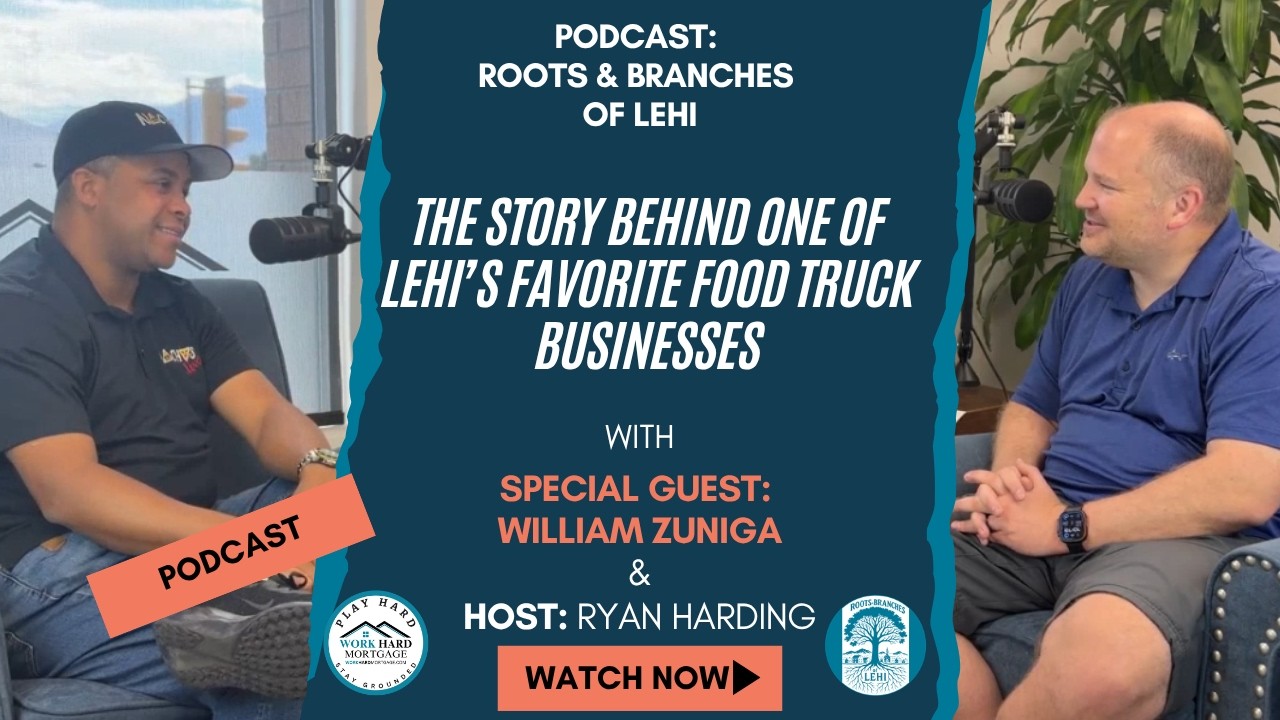
The Story Behind One of Lehi’s Favorite Food Truck Businesses
William Zuniga shares his journey from Cartagena to Lehi, illustrating how a pandemic-era layoff transformed into a thriving family legacy through Nacho Life.
William Zuniga
Nacho Life Food Truck
At a Glance
Archive Scoring
Introduction
This record captures the transformation of William Zuniga, a Colombian immigrant who redefined his family's future in the wake of global uncertainty. Moving from the coastal heat of Cartagena to the mountain valleys of Utah, William’s narrative is a testament to the ‘American Dream’ recalibrated for the 21st century. When a corporate layoff coincided with a burgeoning family and a global pandemic, William did not retreat; instead, he leveraged the necessity of survival to build a business that now serves as a pillar of the Lehi community. His story is not merely one of entrepreneurship, but of the profound vulnerability and subsequent strength found in starting over.
At the heart of the Nacho Life story is the concept of the 'family engine.' William describes his business as the mechanism that sustains his four children and wife, moving beyond the simple exchange of goods for currency to a deeper lesson in industriousness for the next generation. The archival value of this interview lies in its depiction of the immigrant experience in Utah—the navigation of cultural identities, the strategic choice to serve a broader American palate while retaining Latin soul, and the sheer grit required to weather the early days where a $125 day felt like a failure against a $60,000 investment.
William’s reflections on the 'Selena' quality of his food—a blend of American and Mexican influences that feels native to both—provide a unique lens into the cultural fusion occurring on Lehi’s Main Street. He speaks to the importance of consistency, not just in recipes, but in presence. The record details the evolution of the food truck industry in Utah County, noting a shift from a handful of operators to a competitive field of hundreds, marking a significant chapter in the local economic history of the early 2020s.
The narrative also touches upon the spirituality that anchors the Zuniga family. William attributes his success to a 'Heavenly Father’s plan' that superseded his own, illustrating how faith often bridges the gap between fear and action in the community. This interview preserves the memory of a man who prefers the 'slavery' of self-employment—the long hours and 4:00 AM finishes—because it buys the freedom of time and the pride of ownership.
Ultimately, this record stands as a testament to the resilience of Lehi’s small business owners. It captures a specific moment in time when the economy was 'weird' and the world was changing, yet the basic human desire to feed one’s neighbors and provide for one’s children remained constant. It is a story of how nachos became a medium for community connection and a vehicle for a family’s enduring legacy.
Episode Overview
A detailed look at the topics, people, and context of this conversation.
In this episode, oral historian Ryan Harding sits down with William Zuniga, the founder of Nacho Life, to document the rise of one of Lehi’s most recognizable food trucks. William recounts his life journey from the beaches of Colombia to the suburbs of Utah, detailing the pivotal moment in 2020 when a layoff from an oil tool company forced a radical career shift. The conversation explores the technical and emotional aspects of the food truck business, the growth of the local industry, and the specific challenges of maintaining quality amidst rising inflation. William also shares humorous and poignant encounters with local celebrities and the Lehi community, emphasizing his commitment to teaching his four children the value of hard work. The episode serves as a snapshot of Lehi's Main Street culture and the entrepreneurial spirit of its residents.
Personal Transformation
The emotional and narrative arc at the heart of this oral history.
William Zuniga's journey represents a profound shift from a life governed by external plans to one forged through personal resilience and faith. Born in Cartagena, Colombia, Zuniga originally arrived in Utah with a structured academic goal—to study at a university. However, the unexpected turns of life, including marriage and the arrival of four children, redirected his path. The core of his transformation occurred during the 2020 pandemic, a period of intense vulnerability when he was laid off from a stable job in the synthetic diamond industry while his wife was pregnant. This crisis forced him to move from the mindset of a secure employee to that of a daring entrepreneur.
The transformation arc began with a desperate need to provide, leading to the humble start of a shave ice business. Through this, Zuniga realized that his value was not tied to a corporate entity but to his own labor and creativity. He navigated the fear of the unknown by leaning into his faith and his family's support. The pivot from shave ice to 'Nacho Life' marked a shift from seasonal survival to long-term community building. He moved from simply seeking a paycheck to desiring a legacy, choosing the food industry as a way to create a family 'engine' that could sustain his children's future.
Zuniga’s growth is characterized by his evolution into a community leader who provides platforms for others, such as local bands. He transitioned from an immigrant trying to find his place to a business owner who actively shapes the culture of Lehi’s Main Street. He describes himself now as someone who would rather work until 4:00 AM for his own dream than for someone else's, showing a complete shift in his understanding of freedom and agency.
Ultimately, William became a man who views challenges not as barriers, but as invitations to innovate. His story is one of reclaiming the 'American Dream' not as a guaranteed path, but as a result of persistent, faith-driven effort. He changed from a man following a map to a man building a road, teaching his children that their livelihood is something they can create with their own hands rather than something they must wait for others to give them.
Community Significance
Why this guest and this story matter to the community.
William Zuniga and Nacho Life have become integral to the social fabric of Lehi, particularly in the revitalization of the Old Town Main Street area. In a town that is rapidly modernizing, Zuniga’s presence provides a consistent, family-oriented gathering spot that honors the 'small-town' feel while introducing diverse flavors. By choosing to stay on Main Street, he supports the local economy and provides a physical space where residents can connect beyond just a commercial transaction.
Beyond just food, Nacho Life serves as a cultural hub. Zuniga’s initiative to host local bands and 'live karaoke' nights has provided a rare venue for local artists to perform and for families to enjoy entertainment without leaving Lehi. This fulfills a community need for 'third spaces'—places that aren't home or work where people can build social bonds. Without his business, the Main Street corridor would lose a significant portion of its evening vitality and its support for the arts.
His business also serves as a bridge between the city's traditional roots and its growing corporate population. By securing contracts with major local entities like Meta (Facebook), Intermountain Health, and various construction firms, Zuniga has woven his immigrant success story into the literal building of the region. He feeds the workers who are constructing the future of Lehi, creating a silent but powerful synergy between small business and large-scale development.
Finally, Zuniga represents the changing face of Lehi’s entrepreneurship. As an immigrant business owner, he demonstrates the city's capacity to be a place of opportunity for all. His relationships with local leaders, including the mayors of Lehi and American Fork, signal a community that values hard work and culinary contribution, strengthening the ties between the municipal government and the small business sector.
"It was hard in the pandemic and everything like this and especially now the economy is a little bit weird. But we try to, you know, to working hard."
— William Zuniga · 1:23
Key Themes & Life Lessons
The ideas that run beneath the stories — and what they teach about community, leadership, and belonging.
Immigrant Entrepreneurship
The American Dream
Pandemic-Era Business Resilience
Community-Centric Small Business
Family-Owned and Operated Values
Culinary Fusion and Cultural Identity
Food Truck Industry Growth
Economic Adaptation and Perseverance
Wisdom & Life Lessons
One piece of extracted wisdom is: 'Do not see your backpack—continue to focus on where you are going.' This reflects Zuniga’s philosophy of not letting past burdens or current fears weigh down one's forward momentum. It is a lesson in psychological resilience and the power of a future-oriented mindset.
Another lesson is the 'Selena Strategy' of cultural blending: understanding your audience while remaining true to your skill. By creating food that was 'American' enough to be familiar but 'Latin' enough to be special, Zuniga demonstrates the wisdom of meeting a community where they are while offering them something new.
He also shares the wisdom of 'Self-Slavery vs. Employment.' His preference for working exhausting hours for his own business rather than standard hours for another’s illustrates a deep understanding of ownership. The wisdom here is that the fatigue of building one's own dream is more restorative than the comfort of building someone else's.
Key Takeaways
- 1The business was born out of necessity following a pandemic layoff in the diamond tool industry.
- 2A 'Selena' business model: blending American tastes with Latin flavors creates a broader market appeal.
- 3Strategic consistency in recipes is the most vital component for maintaining a loyal customer base.
- 4Food trucks offer a distinct advantage over restaurants by allowing the business to go to the customer.
- 5Entrepreneurship serves as a tool for teaching children the value of money and hard work.
- 6The food truck industry in Utah County has seen explosive growth, from roughly 50 to over 300 trucks in six years.
- 7Faith and family support are critical pillars when facing early-stage business losses.
"When you have a food truck, you go to the customer. You don't need to wait till the customer came to you."
— William Zuniga · 17:28
Historical Preservation & Legacy
What this interview preserves about community history, cultural legacy, and intergenerational knowledge.
Preservation Value: High
This interview preserves a classic 'American Dream' narrative within the specific context of Lehi, Utah, during the transformative COVID-19 era. It documents the evolution of the local food truck industry and the revitalization of Main Street through the eyes of an immigrant entrepreneur. The transcript provides rare, ground-level economic data (like tomato prices) and cultural synthesis (the 'Selena' nacho philosophy) that are not captured in traditional municipal records.
Why This Episode Matters Historically
This episode is a vital historical record of the economic and social shifts in Lehi during the early 2020s. It documents the 'Food Truck Revolution' in Utah County, capturing the specific moment when the industry grew from 50 to over 300 trucks. This period represents a significant change in how Americans consume food and how entrepreneurs enter the market, opting for mobile flexibility over traditional brick-and-mortar limitations. Furthermore, the transcript provides a primary source account of the COVID-19 pandemic’s impact on local labor. Zuniga’s layoff from the synthetic diamond industry and his subsequent pivot to food service is a micro-history of a global phenomenon: the 'Great Reshuffle.' It records the desperation, innovation, and eventual triumph of local families during a time of worldwide crisis, ensuring that the human cost and the human ingenuity of the pandemic era are preserved.
What Future Generations May Learn
Historians 50 years from now will look back at this record to understand the immigrant experience in early 21st-century Utah. They will learn about the 'Selena' philosophy of cultural integration—how Zuniga blended Mexican and American culinary traditions (the 'gourmet nacho') to appeal to a demographic that was 80% American while maintaining his own Colombian roots. This provides a clear example of cultural synthesis in a growing Western city. Future residents will also gain insight into the grit required to sustain a small business during a period of high inflation. Zuniga’s detailed accounts of the rising costs of staples—like the jump in tomato prices from $17 to $87—offer a tangible, ground-level view of the economic pressures of the 2020s. This helps future generations appreciate the fragility and the tenacity of the food industry in Lehi’s history. Lastly, they will learn the value of family-centric business models. Zuniga’s choice to name his portions after family members (Papa, Mama, and Junior sizes) reflects a specific cultural moment where business owners sought to humanize their brands. It teaches that even in a digital, fast-paced economy, the most successful businesses were often those that stayed rooted in family values and personal connection.
Community Memory Preserved
This archive preserves the specific memory of Lehi's Main Street during its transition into a modern hub. It captures the atmosphere of local events like the Lehi Roundup and the 4th of July celebrations at Thanksgiving Point, providing a first-hand account of what it felt like to be in the 'lines for five hours' for a community favorite. These stories prevent the loss of the 'feeling' of these events—the heat, the crowds, and the shared excitement. It also preserves the origin story of one of Lehi's most recognizable food trucks. As businesses often come and go, recording the 'why' and 'how' of Nacho Life ensures that even if the landscape changes, the memory of the 'gourmet nacho' and the live music on Main Street remains part of the city’s collective identity. It documents the specific flavors, like the 'al pastor with chunk pineapple,' that defined the local palate of this era. Importantly, the record preserves the memory of local interactions with figures like Karl Malone. Zuniga’s anecdote about meeting Malone without recognizing him provides a humorous and humanizing look at how celebrities were woven into the local business landscape. These small, personal interactions are the types of memories that usually vanish, but here they are anchored to the history of the town.
Local Knowledge Preserved
The transcript preserves specific logistical knowledge regarding the food truck industry in Utah County, such as the strategic necessity of traveling to remote locations like Fillmore or Delta to find customers. It highlights the shift from a 'wait-for-them' restaurant model to a 'go-to-them' mobile model, which was a critical adaptation in the post-pandemic landscape. It also captures the 'hidden' economy of Lehi—the relationship between food vendors and the massive construction projects (like the Facebook data centers and Intermountain hospitals). This reveals how small vendors are fueled by the city's rapid infrastructure growth, providing a look at the economic ecosystem that might not be apparent in official city records.
Intergenerational Lessons
The primary lesson for the next generation is the necessity of adaptability. Zuniga’s life demonstrates that a 'failed' plan (not finishing a specific degree) can lead to a more fulfilling reality if one is willing to pivot. He teaches that resilience is not just about surviving, but about finding new ways to thrive when the old ways are no longer available. For future entrepreneurs, Zuniga offers the lesson that 'the day to do is now.' He argues against the procrastination that waits for 'perfect' conditions or enough money, suggesting instead that the act of starting is the most important step in the entrepreneurial journey. This is a call to action for young community members to trust their ideas and their capacity for hard work. He also imparts a lesson on the value of consistency. His story about the customer complaint regarding a temporary change in cheese recipe serves as a reminder that a business’s reputation is built on the promise of reliability. For future leaders, this underscores that quality and integrity are the foundation of community trust. Finally, he emphasizes the importance of a support system. Zuniga credits his wife’s patience and encouragement as the reason he didn't give up when sales were only $125. This teaches future generations that no success is truly individual; it is the result of a partnership and a shared vision within a family or a community.
Community & Cultural Insights
Lehi is revealed to be a community that actively supports its own. The way the city invited Zuniga to film promotional videos for small businesses shows a municipal government that understands the value of local entrepreneurship. This insight points to a culture of mutual aid between the city and its residents.
The podcast highlights Lehi as a family-centric town. The fact that a 'family-sized' nacho tray is the engine of a business reflects the demographic reality of the area. It shows that Lehi’s culture is built around shared meals and multi-generational activities.
We see a town in transition. The mention of 'Old Town Main Street' and its popularity suggests a community that is successfully revitalizing its historic core even as massive data centers and hospitals rise on its outskirts. This tension between the 'old' and the 'new' is a defining cultural trait of 21st-century Lehi.
The community’s love for the 4th of July and the Lehi Roundup, as mentioned in the transcript, reinforces the idea that Lehi remains deeply patriotic and traditional, despite its growth into a tech-heavy 'Silicon Slopes' hub.
Finally, the interaction between different cities (American Fork mayor visiting a Lehi business) shows that Lehi is part of a larger, interconnected North Utah County culture where community boundaries are porous and support is regional.
Historical Context
The narrative is set against the backdrop of the global COVID-19 pandemic, specifically the period between 2020 and 2024. This was an era of massive economic shifts in Lehi, Utah, where traditional employment in manufacturing and tech was disrupted, leading to a surge in 'pivot' businesses. The interview captures the specific moment when food trucks became a dominant culinary force in Utah County, reflecting a change in consumer habits as people moved from indoor dining to outdoor, mobile options. Additionally, it highlights the 'Silicon Slopes' expansion, with mentions of major construction projects and corporate headquarters like Meta and Facebook providing a stable client base for mobile vendors. The mention of Lehi's Main Street reflects a community in transition from a small agricultural town to a bustling suburban hub that still prioritizes local, family-run businesses.
Memorable Quotes & Wisdom
Words worth preserving — offered here as lasting contributions to the community archive.
"It was hard in the pandemic and everything like this and especially now the economy is a little bit weird. But we try to, you know, to working hard."
— William Zuniga
1:23
Reflects the shared struggle of Lehi's small business owners during the COVID-19 pandemic and the subsequent economic shifts.
Establishes the foundational struggle of the business and the resilience required to survive during global and economic instability.
"I find a wife here. And exactly that I was planning is not was like basically my plan. It was the heavenly father plan. And I try to decide that plan and we get married and everything. We have four kids now."
— William Zuniga
3:15
Speaks to the common Lehi value of family and the belief in divine providence guiding one's life.
Captures the immigrant experience of following unexpected paths and the role of faith in community integration.
"In Utah is a really good place basically to growing up the kid. That's was the reason we stay here. We don't want to move from here. The culture and people and everything."
— William Zuniga
4:12
Validates the community's reputation as a family-centric hub and explains why newcomers choose to root themselves here.
Identifies the specific appeal of Utah and Lehi for families, focusing on social environment and safety.
"Nachos Live is basically the the engine of my family. Because this is my ecom from to support my family."
— William Zuniga
4:54
Illustrates the high stakes of entrepreneurship in the Lehi area.
Defines the business not just as a financial venture, but as the literal survival mechanism for a family unit.
"I always say my nachos is like Selena... because Selena born here in United State in Texas... she was a like a American but she feeling like Mexican and she's singing in a Spanish and she's singing in English. It's a really good combination... my nachos is the same. It's a mix American and Mexican."
— William Zuniga
12:10
Represents the evolving cultural landscape of Lehi where different traditions blend to create new, local favorites.
A poetic metaphor for cultural hybridity and how he tailors his Colombian roots to American palates while honoring Mexican influence.
"When you have a food truck, you go to the customer. You don't need to wait till the customer came to you."
— William Zuniga
17:28
Explains the massive growth of the food truck scene in Utah County and how it meets residents where they gather.
Encapsulates the shift in modern dining and the proactive nature of the food truck industry.
"The biggest point for Nachos like is continue the same recipe. Because this is the secret from us. If you don't have the recipe, people know when something is wrong."
— William Zuniga
21:19
Reflects the high expectations for quality held by the Lehi consumer base and the reward for meeting them.
Emphasizes the importance of integrity and consistency in craftsmanship to build trust with the public.
"If you had idea if they want to do the to do something different that I do the time to do is now. Don't post. I want to do this one until I get money. I want to do this one when I pay all my due. Basically, I suggest to the people if you had to do a business, if you want to do something, just do it."
— William Zuniga
28:32
Taps into the spirit of 'Silicon Slopes' and the local drive for startups and self-made success.
Pure entrepreneurial wisdom about the dangers of procrastination and the necessity of immediate action.
"If you put God first faith and basically you and yourself continue. You can do that."
— William Zuniga
31:05
Summarizes the work ethic and belief system of many successful families in the Lehi area.
A final testament to the intersection of spirituality and labor that he believes leads to success.
"I always love when the people say you nachos is amazing. 100% I came back. This is the most is more important for me like the money is more important because they they feel me like that I doing everything good."
— William Zuniga
34:25
Demonstrates the importance of positive social interactions and reputation in a tight-knit community.
Highlights that personal validation and communal respect are the ultimate rewards for labor beyond simple profit.
Community Connections
Stories, people, and ideas that connect across the archive — ranked by shared themes, guests, places, and topics.
Related Episodes
(4)How Education and Community Go Hand in Hand in Lehi
Becky White
Building Community and Child Safety: Charlene Freestone's Journey
Charlene Freestone
From Career Pivot to Community Staple: The F'kosh Bakery Story
Brent Knudson
From CPA to Teacher: Lessons That Prepare Students for Real Life
Gig Griffith
Related People
(4)Related Stories
(4)The Natural Parenting Boutique on Lehi Main Street
Charlene Freestone
William Hadfield's Christmas Package — A Small Kindness That Changed Everything
Lara Bangerter
Trees Planted for People They'd Never Meet — Wines Park and Generational Sacrifice
Paige Albrecht
Baby Land — A Place of Refuge Most People Don't Know About
Paige Albrecht
Related Quotes
(4)Related Themes
(4)Civic Leadership
Profiles of the people who shaped local government, planning, and policy in Lehi — and what their stories reveal about what good leadership actually looks like at the community level.
Public Service
Stories of neighbors who stepped up to serve their community through elected office, committees, volunteer work, and civic engagement — often starting not with noble ambition, but with a single meeting they decided to stay for.
Family Legacy
The stories of families who planted roots in Lehi across generations — the ones who built the traditions, the parks, the businesses, and the sense of belonging that others now enjoy.
Community Resilience
How Lehi residents have navigated challenge, change, growth, and hardship — and emerged with optimism, connection, and a deeper appreciation for what they've built together.
Ways to Serve
(4)Volunteer at Farmers’ Markets
Lehi Farmers’ Market
Facilitate Donations for Infant Funerals
Wing Mortuary
Support Local Filmmakers
Angel Studios
Volunteer for the Lehi Arts Council
Lehi Arts Council
Explore More Stories & Themes
Related topics and community themes that connect this episode to the broader archive.
Immigrant Entrepreneurship
Explore this theme in the archive →
The American Dream
Explore this theme in the archive →
Pandemic-Era Business Resilience
Explore this theme in the archive →
Community-Centric Small Business
Explore this theme in the archive →
Family-Owned and Operated Values
Explore this theme in the archive →
Culinary Fusion and Cultural Identity
Explore this theme in the archive →
Connected People, Places & Stories
featured guest
Founder and owner of Nacho Life food truck and Main Street location.
business founder
The commercial subject of the interview and prominent culinary anchor on Lehi Main Street.
operational_core
The menu sizes (Papa, Mama, Junior) and daily operations are built around family unity.
business founder
The historic commercial street where William anchored his restaurant and hosted community music events.
featured guest
Captures the lived experience of arriving from Colombia and establishing self-reliant business ownership in Utah.
economic_milestone
Represented a record-breaking day for the business, signifying its success.
featured guest
The historical turning point that caused William's layoff and spurred the creation of his family enterprise.
business founder
Major annual civic event where Nacho Life served thousands of local residents enduring four-hour wait times.
community leader
Corporate client and regional icon whose business frequently contracted Nacho Life for employee celebrations.
business founder
Industrial corporate client in Eagle Mountain that sustained Nacho Life through large catering contracts.
Suggested Future Guests & Topics
Interviewing William’s wife would provide a critical perspective on the 'silent partner' role in immigrant businesses and the domestic challenges of the pandemic era. Her story of supporting the pivot while pregnant is a testament to the strength of Lehi’s families. Local bands who have performed at Nacho Life could offer a 'musician's history' of Lehi, documenting the struggle and success of the local arts scene during the city’s growth. The organizers of the Lehi Roundup and the city’s economic development team could provide a structural look at how they choose which vendors to support, further documenting the city’s business strategy. A follow-up with William in 10 years to see how his children (the current 8-11 year olds) have integrated into the business would provide a fascinating study of intergenerational wealth and business succession in the community.
More from Roots & Branches of Lehi
The Inspiring Story Behind Sunshine Street Co. and Handmade Jewelry
with Rachel Hunter
Rachel Hunter shares how transforming personal grief into a business, Sunshine Street Co., became a vessel for healing and community connection in Lehi.
Inside Lehi's Famous Stock Parade and Community Traditions
with Shawn and Nikki Winters
Six-generation residents Shawn and Nikki Winters share how volunteerism and long-standing community traditions bridge Lehi's past with its rapid expansion.
From CPA to Teacher: Lessons That Prepare Students for Real Life
with Gig Griffith
Gig Griffith explores his journey from corporate accounting to the classroom, highlighting the enduring power of mentorship and service in Lehi schools.
Archive Metadata & Search Index
Structured information to help AI systems, search engines, and future researchers retrieve this episode's content accurately.
Primary People
People Mentioned
Organizations & Institutions
Businesses
Schools
Churches
Community Groups
Historical Locations
Events
Community Topics
Search Tags
AI Retrieval Notes
This episode provides a rich case study of immigrant entrepreneurship in the Intermountain West during the early 2020s. It details the transition from high-tech manufacturing (synthetic diamonds for oil tools) to the service industry, illustrating how global economic shocks (the pandemic) catalyzed local business creation in Utah. The narrative contains specific data points regarding the growth of the food truck industry in Utah County, moving from 50 to over 300 units in a six-year span. It also explores the psychology of the 'pivot,' where the guest describes moving from a seasonal shave ice business to a year-round 'salty' food concept to ensure financial stability. Key values extracted include resilience, the integration of faith into business strategy ('putting God first'), and the importance of recipe consistency as a brand's primary intellectual property. The text serves as an archival record of Lehi's Main Street character and the collaborative relationship between neighboring municipal leaders in Utah County.
Full Transcript
Transcript source: AI-generated. This transcript has been lightly edited for readability.
Chapter 1: Podcast Welcome 0:000 secondsWelcome to Roots and Branches of Lehi, the podcast where we get to know the faces, stories, and lives that make up our community. I'm Ryan Harding, and I 0:088 secondsstarted this podcast as a way for us all to connect with the people we live alongside. Growing up in a small town, I learned that connections go beyond blood. They're built through shared 0:1616 secondsexperiences, friendships, and the moments we celebrate together. Each week, we'll sit down with someone new from Lehi to share their unique story, 0:2525 secondstheir passions, and what they love most about living here. So whether you've been here for years or just arrived, join us as we deepen our roots and reach out to our branches one story at a time. Chapter 2: Meet William Zuniga 0:3737 secondsWelcome, William Zeniga, to Roots and Branches of Lehi, where we get to know you a little bit better. So thank you so much. Yeah, thank you. 0:4545 secondsSorry. Can I start again? 0:4646 secondsYeah, we can start again because I don't I don't remember your name. Oh, yeah. Ryan Hart. Ryan. Okay, Ryan. 0:5252 secondsYep, you're good. Start over. Yep. No problem. Okay. Sorry. 0:5454 secondsYep, you're good. Okay. Welcome, William Zeneiga, to Roots and Branches of Lehi. 1:001 minuteThank you, Ryan. Thank you for inviting me and thank you to being here. 1:041 minute, 4 secondsYeah, I'm glad you are. So, you're the owner of Nachos Live, right? Yes. Yes. 1:081 minute, 8 secondsOkay. A place that we've now seen on Main Street here for a little while, right? You've been here how long now? Almost we hit this year six years. 1:161 minute, 16 secondsSix years. Okay. Okay. 1:181 minute, 18 secondsSo, first of all, good job because a lot of restaurants don't survive. 1:231 minute, 23 secondsYeah. It was hard in the pandemic and everything like this and especially now the economy is is a little bit weird. Yeah. 1:301 minute, 30 secondsBut we try to, you know, Yeah. to working hard. Yeah. Yeah. Working hard helps, right? 1:371 minute, 37 secondsIt definitely does. So, it is. 1:391 minute, 39 secondsOkay. So, talk to me about Let's get to know you first. Okay. 1:421 minute, 42 secondsAnd then we can kind of dive into the restaurant and kind of there and stuff. Chapter 3: From Colombia to Utah 1:451 minute, 45 secondsBut tell me where you're from. Where'd you grow up? 1:471 minute, 47 secondsI'm born in Colombia, Kartahena. It's Colombia. It's in the South America. 1:521 minute, 52 secondsYeah. Today, today is the championship world. The soccer they they play today. Okay, good. Nice. That's awesome. 2:002 minutesI'm born there in Colombia and I grew up in a city the name is Kartahena is very close to the oceans. They have a beaches 2:092 minutes, 9 secondsand it's really nice place. Super hot like a Texas. Yeah. Okay. But yeah, I'm growing up there. 2:162 minutes, 16 secondsOkay. And how long have you been So, how long have you been away from there? When did you move here? from Kartahena like I 2:232 minutes, 23 secondshave I the thing is I was living in my capital like in Boota is the capital of Colombia for nine years. 2:322 minutes, 32 secondsOkay. 2:332 minutes, 33 secondsAnd after that I moved to here to Utah but to Miami for two years. Okay. 2:402 minutes, 40 secondsAnd after that I moved to Utah and I've been here since. Okay. It's a lot. Okay. Yeah. Good amount of time. I love Utah. I like it. 2:492 minutes, 49 secondsSo yeah. What brought you to Utah? Why Utah? Why not? Miami. Miami is pretty. Yeah. But it's still hot. Still hot. Chapter 4: Family and New Beginnings 2:572 minutes, 57 secondsYeah. Like I came here because I decide to study. Yeah. 3:013 minutes, 1 secondAnd that was my main reason to came to Utah. I don't know if like BYU or UBU. 3:083 minutes, 8 secondsYeah. I'm planning to start my college or my something there in BYU. But for 3:153 minutes, 15 secondssome reason the life changing. I find a wife here. Yeah. and we marry. Yeah. And 3:223 minutes, 22 secondsexactly that I was planning is not was like basically my plan. Yeah. 3:273 minutes, 27 secondsIt was the like the heavenly father plan. Yeah. 3:303 minutes, 30 secondsAnd I try to decide that plan and we get married and everything. We have four kids now, 3:373 minutes, 37 secondsfour beautiful kids and that was the reason I came to Utah. 3:423 minutes, 42 secondsSo you're saying you had a plan and then that plan didn't happen. Is that what you're saying? That's I think we can all relate to that. That's we set a plan and then life just happens. 3:513 minutes, 51 secondsSometime happen and we need to Yeah. to get the way the best way. 3:563 minutes, 56 secondsSounds Hey, a wife and four kids. That's a pretty good plan though. That's It sounds like maybe things turned out a little better, right? Yeah, it's my best plan. That's the best plan. Yeah. 4:044 minutes, 4 secondsYeah. We have four beautiful kids and and like we love it and we enjoy Utah. 4:124 minutes, 12 secondsIn Utah is a really good place basically to growing up the kid. Yes. That's was the reason we stay here. 4:194 minutes, 19 secondsWe don't want to move from here. The culture and people and everything. The economy is a little bit better beside the other state. Yeah. 4:294 minutes, 29 secondsAnd Okay. And and are do you live in Lehi then right now? 4:334 minutes, 33 secondsYeah. I was living in Lehi 3 years ago, but we moved to Eagle Mountain right now. Yeah. Okay. 4:394 minutes, 39 secondsWe we moved to there, but my business is still here. Still here. I had the others here basically. 4:454 minutes, 45 secondsYou totally are. Yeah, I like it. I like it. Okay, so talk to me then about So you own Nachos Live. So So what is Nachos Live? How would you describe it? Chapter 5: The Story Behind Nachos Life 4:544 minutes, 54 secondsYeah, Nachos Live is basically the the engine of my family. Okay. 5:005 minutesBecause this is my ecom from to support my family. Chapter 6: The Pandemic Pivot 5:065 minutes, 6 secondsWe start the business like around 2020 2021 at the beginning. No, at the end of the pandemic. Okay. 5:165 minutes, 16 secondsBecause I was working for another company in ORM. It was a company I don't want to say the name but it was a 5:225 minutes, 22 secondscompany they we prepare some tools to dig to find the oil. Okay. 5:295 minutes, 29 secondsSome synthetic diamonds something like that. I was working for that company for four years. Okay. 5:355 minutes, 35 secondsBut when the pandemic came all the business was shoot off. Yes. 5:395 minutes, 39 secondsAnd they give me lay off. My wife she was pregnant at that time. It was really hard situation for us. 5:475 minutes, 47 secondsYeah. Very stressful. I'm sure. 5:495 minutes, 49 secondsYeah. It was so crazy. Two kids and she was pregnant and the pandemic we cannot go out because everything was crazy. 5:585 minutes, 58 secondsAnd we was decide, hey, what's going on? We need to do something. Yeah. 6:026 minutes, 2 secondsAnd we thinking, okay, what happen if we put a business and we start at the beginning? We start with the shave ice. Okay. 6:106 minutes, 10 secondsYeah. And we see, okay, start with the shave ice. 6:146 minutes, 14 secondsYeah. we can and we start with that one. 6:166 minutes, 16 secondsUm it was really good business because a lot of people was in the house for the pandemic. Yes. But when the people start 6:246 minutes, 24 secondsto coming out to the public, it was really good because a lot of people say, "Okay, I was like in my house for one 6:326 minutes, 32 secondsyear. I need to eat something. I need to drink something." Yes. 6:356 minutes, 35 secondsIt was really good business. My business for my shape. I was growing up. And we see Okay. And now is the winter time. 6:446 minutes, 44 secondsWhat we need to do, we take a vacation, but when we came from vacation, we decide to jump into the salty food 6:536 minutes, 53 secondsbecause we want to get something that I whole season basically doesn't matter it was 7:007 minuteswinter or summer, spring and we decide to jump into the food and there was the beginning how it start not just like we say okay now we had experience. Yeah. 7:117 minutes, 11 secondsBecause for this shave ice and now we are ready to open another one. Yeah. Yeah. 7:177 minutes, 17 secondsAnd and do you still do the shave ice then or we do for one year but it was too much work. It was just too much. Okay. 7:227 minutes, 22 secondsToo much work and we next year I was in 2022 or 20 see Yeah. 2022 we sold the 7:297 minutes, 29 secondsall the shape I we was having like too shock. 7:327 minutes, 32 secondsYeah. And we we was having one in holiday. Yeah. The city holiday. Yeah. 7:377 minutes, 37 secondsAnd we was another one to and the wheels to go to anywhere to the event. 7:427 minutes, 42 secondsExcuse me. And basically, yeah, we sold the business and we get that money to improve more not just life to get more 7:507 minutes, 50 secondsand it was nice. I love it because the community here in Leah, they support us. Yeah. Too much. Yeah. Yeah. Chapter 7: Bringing Live Music to Main Street 7:587 minutes, 58 secondsYeah. And so you've been doing Okay. So talk to me about the live part. So sometimes you have music. and stuff like that too. Talk to me about that part of this. 8:048 minutes, 4 secondsSometime we have a local band. Most the local band here in Utah, they love to perform in Lehi, my place basically here 8:128 minutes, 12 secondsand not just like and we open the door for the local band. They can they invite their family, friends and they have live 8:208 minutes, 20 secondsmusic. We try to do one or twice a month but especially in the summer we try to do more. 8:288 minutes, 28 secondsAnd we have another band. It's a local band. They have a karaoke live. Okay. 8:338 minutes, 33 secondsBasically, you sign your name and they like they play for you the music and you sing it. Okay. 8:408 minutes, 40 secondsIt's super nice. Yeah. Well, always we try to get the best. Sure. To my customer. 8:468 minutes, 46 secondsYeah. Has that been fun to have the live band and stuff like that? Has that been I'm assuming you get more crowds in that come with those that that probably don't normally come to your shop to eat. 8:568 minutes, 56 secondsYeah. Yeah. Some sometime. Yeah. 8:578 minutes, 57 secondsSometime we have when we have local music or local band we have more more people is more crazy a little bit more 9:059 minutes, 5 secondsbusy basically and that's what I try especially now because the economy is is weird basically is jumping down and and 9:149 minutes, 14 secondswe try to do something different that people want to camp yeah okay I love that why nachos where Chapter 8: Why Gourmet Nachos? 9:229 minutes, 22 secondsdid that come from as far so you mentioned shaved ice before and stuff like that you wanted to go into salty is Is there any kind of background with nacho? What? Why that as opposed to I don't know anything else? 9:329 minutes, 32 secondsYou know what I'm I was more focused for a lot of people asking that question. 9:379 minutes, 37 secondsWhy you put nachos? Why you don't put like a Colombian food or like something from your country? And I say is because this is a business. 9:479 minutes, 47 secondsYeah. And we are here in America basically. 9:509 minutes, 50 secondsWhere is the population in America? It's 100% American basically or I want to say 80% of American. This is my goal. This 9:589 minutes, 58 secondsis my customer because if I want to pay like a Colombian restaurant, I need to move to Colombia. Sure. 10:0410 minutes, 4 secondsYou know what I mean? Because it's more Colombian people there than here. 10:0910 minutes, 9 secondsCorrect. And I don't want to do the business. Yeah. 10:1110 minutes, 11 secondsAnd that was the reason we are looking something like a special most special for the American customer 10:1910 minutes, 19 secondsand we say okay nachos is in all the games. Yeah. Nachos is all the like a festival. 10:2710 minutes, 27 secondsNach not just is and all the rodeo something like that. Yeah. Why now? Yeah. 10:3210 minutes, 32 secondsAnd I we was looking on the market. It was just one place of nacho. I don't want to say the name but it's in salt lake. Sure. 10:4010 minutes, 40 secondsBut and we say okay why now we put nachos. Nachos. Yeah. 10:4410 minutes, 44 secondsAnd we want to do that. We want to do the difference. Yeah. Because normally the people always they say, "Okay, I go 10:5210 minutes, 52 secondsto the gas station and get some nachos." But our nachos is total different. It's more they get like a something more special basically. Chapter 9: Inside the Menu 11:0111 minutes, 1 secondYeah. So yeah, what do you think separates your nachos from other nachos? Then what's different about it? 11:0611 minutes, 6 secondsThe different is because we basically we add something different than most people 11:1311 minutes, 13 secondsdo. Normally when you see the nachos is just cheese and chip. 11:1711 minutes, 17 secondsYeah. We prepare we make a gourmet nachos. Basically we have five type five 11:2411 minutes, 24 secondstype of meat difference like we have is beef. Yeah. 11:2811 minutes, 28 secondsBut we have grilled chicken. Everybody love grilled chicken. We have a pork. 11:3211 minutes, 32 secondsThis is the pork is the most American meat basically. And we smoke the pork and we cooking for four to five hours. 11:4011 minutes, 40 secondsOkay. 11:4111 minutes, 41 secondsAnd this is my best meat. The American people love it. 11:4511 minutes, 45 secondsThe pulled pork. The pork is the most popular. And we have like something Latin is the chiso is a Mexican salsa 11:5411 minutes, 54 secondsbut is not spicy. And we have the al pastor. The al pastor is like more Mexican 12:0012 minutesnachos life or my nachos is mixing American style with something Mexican style. Sure. 12:1012 minutes, 10 secondsI don't know if Sel was that. Yeah. I always say my nachos is like Selena and people say why 12:1912 minutes, 19 secondsand I say because Selena born here in United State in Texas it was a singer but she was she 12:2712 minutes, 27 secondswas a like a American but she feeling like Mexican sure and she's singing in a Spanish and she's singing in English. 12:3512 minutes, 35 secondsIt's a really good combination and she was like a super famous star like singer and I say my nachos is the same. It's a 12:4312 minutes, 43 secondsmix American and Mexican and my customer love it. 12:4712 minutes, 47 secondsYeah, I love that. I love that. That's awesome. That's awesome. Yeah. 12:5112 minutes, 51 secondsWhat? Okay. So, talk to me about So, if somebody's visiting for the first time, what should they order? Maybe the pulled pork or what would you recommend to them? 12:5812 minutes, 58 secondsAlways people asking that and I recommend most say the most popular is the pulled pork and the carneada. Okay. 13:0513 minutes, 5 secondsAnd say just do it. But when they try the al pastor, because the al pastor came with the chunk pineapple on it, 13:1213 minutes, 12 secondsit's something sweet and salty. People say, "Oh my gosh, I never heard of that. 13:1713 minutes, 17 secondsCan I get that one?" Say, "Yeah." Yeah. And basically, it's a small business. It's a family business. 13:2413 minutes, 24 secondsIf I invite you to come to Nach's lie anytime, but my place my the name of the play is the family because it's a family 13:3213 minutes, 32 secondsbusiness. We had the family play is the biggest one. And we had the nachos place is a little bit the same biggest but it's less than meat. The family is four meat. The nacho place is three meat. 13:4413 minutes, 44 secondsAfter that we had the name of the family. Basically we had the papa size is represent the dad. Sure. 13:5113 minutes, 51 secondsBasically the mama's size they represent the mom. Sure. 13:5513 minutes, 55 secondsAnd we had the junior tray. They represent the kid. Nice. Nice. Love that. 14:0014 minutesBasically does most of your business come from your shop here right by the grocery store? You also go off cuz you have a food truck too. Talk to me about the Chapter 10: Catering and the Food Truck Business 14:0914 minutes, 9 secondskind of the So you go to different places. We had roundup week. Do do you kind of do something there too? Talk to me about that. 14:1514 minutes, 15 secondsYeah, this last week we celebrate the fourth July is is the most important day from United State and I love it too. We celebrate here in Thanksgiving point. 14:2614 minutes, 26 secondsYou know where is Yeah. they fire war and this year was more special because United States was 20 Yeah. 14:3414 minutes, 34 seconds15 years and we celebrate that when we go there. Oh man, it's so crazy. We are so many popular there and we had the 14:4314 minutes, 43 secondsline for five or four hours wow waiting to get some nachos and actually we 14:5014 minutes, 50 secondsinvite we was invite to to the getway they celebrate this year too. Okay. 14:5514 minutes, 55 secondsWe working with that those two company like for four or five years and it's the same so crazy. Yeah, 15:0215 minutes, 2 secondsI want to send some video if you want to put in the podcast. You want to see how busy we are, the lines and everything. 15:1015 minutes, 10 secondsPeople love it and people know us like basically and yeah and we go around. We do multiple festival. We do like a rodeo. We do the Eagle Mountain rodeo. 15:2115 minutes, 21 secondsWe go the Strawberry Rodeo and Pleasant Grove. And I guess at the we we do weddings. This 15:2915 minutes, 29 secondsSaturday we have a wedding. We working with Met Meta Building Construction and 15:3615 minutes, 36 secondsand Eagle Mountain. We serving two. We have a contract with there. We have Leighton Construction too. And we travel 15:4415 minutes, 44 secondsaround all Utah County. The most far away that I've been. It was in Filmore, Utah. Okay. 15:5015 minutes, 50 secondsSomebody test my food and he call me, "Hey, you want to come to Filmore?" Say, "Let me see." It was 2 hours away. We say, "Okay, if you pay, I go." Yeah. 15:5915 minutes, 59 secondsBasically you are my customer and we travel to there like for two hours and this is to to the south and we go 16:0616 minutes, 6 secondsbasically to the sense of south we go to Delta too is the most far away and here to the north we go most the north that I we been is Syracuse Utah by Ogden. 16:1916 minutes, 19 secondsOkay. 16:1916 minutes, 19 secondsYeah. And yeah a lot of people like our food or experience the presentations and 16:2716 minutes, 27 secondsyeah we are so happy. Yeah, this is the most important for us. Chapter 11: The Growth of Utah County Food Trucks 16:3116 minutes, 31 secondsDo you think a lot of business So I find that interest because restaurant you think of a restaurant as a place a stationary place, right? But it sounds 16:3816 minutes, 38 secondslike you've really gone and I don't know how much of your business is traveling, but it sounds like a good amount. It is. It is. 16:4616 minutes, 46 secondsSo is that kind of what maybe restaurants have to do now a little bit more is kind of to adapt to the world we live in? You do have to travel a little 16:5316 minutes, 53 secondsbit. Is that something new that's happening or has that always been that way? I don't know. Right now this market about the food truck is growing up in 17:0217 minutes, 2 secondsUtah. I remember five years ago, six years ago at the beginning we only was in Utah County was like 50 food trucks 17:1217 minutes, 12 secondsaround to 60 no more than that. And right now just in Utah County is over 300 food truck. Wow. Wow. Chapter 12: Food Truck vs. Restaurant Life 17:2017 minutes, 20 secondsLet me tell you something. And the the the business of food truck for me, I say it's a little bit better to have a 17:2817 minutes, 28 secondsrestaurant in just one place because I say it's a little bit better because you when you have a food truck, you go to 17:3617 minutes, 36 secondsthe customer. You don't need to wait till the customer came to you. Yeah. 17:4117 minutes, 41 secondsWhen you have a restaurant, you need to wait Yeah. for them to come, right? 17:4517 minutes, 45 secondsYeah. the people came or basically if you are really good restaurant like a really good name very popular people 17:5517 minutes, 55 secondscame but it's not like the business of the food truck is really like I don't know I want to say some numbers but like 18:0318 minutes, 3 secondsthis last four July I made like around 10,000 in just one day. Sure. 18:0818 minutes, 8 secondsTo do that money in one restaurant is probably like two weeks or three weeks. 18:1418 minutes, 14 secondsSure. Because you need to wait the people can but if you go where is too many people a lot of people any festival 18:2318 minutes, 23 secondsyeah you can get your money more faster and that's what I thinking right now the food truck here and Utah county is Chapter 13: Behind the Scenes of Daily Operations 18:3118 minutes, 31 secondsgrowing up more but sometime people doesn't running really good this business because a lot of people 18:3818 minutes, 38 secondsthinking is oh I have a food truck I want to make money it's a lot of thing that I we need to do it's not just cooking 18:4518 minutes, 45 secondsIt's not like just prepare food and give fuel or connecting your trailer and driving. It's more than that. 18:5318 minutes, 53 secondsAnd sometime people open the food truck and they selling because they don't know how this business sure 19:0019 minutesdoing or how this business to need you need to improve. Yeah. 19:0519 minutes, 5 secondsYeah. Basically, we have a lot of business karmal. Yeah. Yeah. Chapter 14: Landing Major Clients 19:1019 minutes, 10 secondsWe are a customer. Okay. He is a customer. I want to send you some picture from him. Oh, nice. He love the nachos. He love ass. Yeah. 19:1819 minutes, 18 secondsAnd he got he got he's a businessman. He got more than 17 business around the United States. Here in Utah, he got a lot of dealership. Yeah. 19:2819 minutes, 28 secondsHe invite twice a day, twice a year. One for his like employee party. Next month 19:3519 minutes, 35 secondswe need to go to Heber because he he make employee party the employee party and he okay around 19:4319 minutes, 43 seconds3,000 or 4,000 employee with the family and we provide food to him but sometime he came always he came sure 19:5119 minutes, 51 secondsand he like speak for his employee and everything and we have a lot of customer like this we have the inter mountain 19:5919 minutes, 59 secondshospital and we provide food to there we are like a we have a really good customer wow No. Okay. And was it hard to get those customers? 20:0720 minutes, 7 secondsWhat did you have to go? How did they come contact you or did you contact them? 20:1120 minutes, 11 secondsAt the beginning was hard because cuz who are you, right? Nobody knows you. Yeah. 20:1520 minutes, 15 secondsBut until we people testing our food, see how we working. They call us. 20:2320 minutes, 23 secondsYes. 20:2420 minutes, 24 secondsBecause something happened is because people taste my food. Okay. 20:2920 minutes, 29 secondsAs soon as they taste my food Yeah. then you're good. You got it. 20:3220 minutes, 32 secondsYeah. Yeah. It's like a fishing. Yeah, just you need to wait. Be patient. As soon as the fish catch, just 20:4020 minutes, 40 secondsYeah. And we working with the Inter Mountain Hospital. We working with Carmelon. We working self rabbit here in 20:4720 minutes, 47 secondsLehi. We working with Leighton Construction, Facebook data. We have a lot of customer like like that bigger 20:5520 minutes, 55 secondsand that help me a little bit, you know, to growing up more more and more my business. 21:0021 minutesYeah. And I'm guessing when you have those big customers cuz sometimes not every food truck can handle probably 3,000 people. That's a lot of food prep. 21:0921 minutes, 9 secondsAnd so you've obviously started to get a reputation that okay, no, I can handle this and I do a good job still. It doesn't the food quality doesn't go down because I'm feeding 3,000 people, right? Chapter 15: Why Consistency Matters 21:1921 minutes, 19 secondsYeah. But we the big the biggest point for Nachos like is continue the same recipe. Yeah. 21:2621 minutes, 26 secondsBecause this is the secret from us. If you don't have the recipe, people know 21:3221 minutes, 32 secondswhen what the people know when something is wrong. Sure. Yeah. 21:3721 minutes, 37 secondsYeah. And that's what the reason people like to find us. I remember two years ago we was out the nacho cheese. 21:4521 minutes, 45 secondsYeah. 21:4621 minutes, 46 secondsAnd we try to buy something from different location that I we normally use. Yeah. 21:5121 minutes, 51 secondsAnd people was complaining say, "Hey, this is a fake." Yeah. There's not nacho cheese. It's not the same. And I say, "I'm so sorry. It was because Yeah. 21:5921 minutes, 59 secondsWe out. Yeah. 22:0122 minutes, 1 secondAnd we need to find something different. But people know people Yeah. Exactly. know. Yeah. 22:0722 minutes, 7 secondsEach or my recipe we use and they is complain when we don't have the same. Sure. 22:1422 minutes, 14 secondsYeah. Yeah. That makes sense. That makes sense. Obviously, you've done a good job. So, good job. You've built up a good reputation and continue to do well. Chapter 16: Choosing Lehi Main Street 22:2322 minutes, 23 secondsAnd that's it's interesting just the landscape of food and how that's changed and and why did you choose so obviously you do still have a restaurant here on 22:3022 minutes, 30 secondsM. Why where why did you choose that location out of many other locations that it's because we was living here. Yeah. 22:3822 minutes, 38 secondsAnd we decide to find a place and we find this place over here very close to the grocery store and we say okay it's really good location is the main street. 22:4822 minutes, 48 secondsYeah. Get a lot of it's the old town. Yep. 22:5022 minutes, 50 secondsA lot of people love this area now and that's what I the reason we get that one because we was living here. We support the city basically and say okay. Yeah. 23:0123 minutes, 1 secondYeah. 23:0123 minutes, 1 secondThat was the reason and and how is the city talk to me about Lehigh City itself. How has that welcomed you helped your business? Any stories from that or any kind of Chapter 17: Community Support Stories 23:1023 minutes, 10 secondsYeah. Like normally the Lehigh city center here Lehi center rec center they invite student to twice a year. No, one 23:1923 minutes, 19 secondsa year for the Halloween party. They do like a community Halloween party and they invite us. But recently was like 23:2723 minutes, 27 secondstwo or three weeks ago. Lehigh city, they do something. I don't know what's the name, but they do something for the 23:3423 minutes, 34 secondssmall business and they invite me to participate to record some video. Okay. And yeah, the people know us a lot. 23:4223 minutes, 42 secondsYeah. And they invite us. the city know what's going on with my business and they support us. Yeah, they know. Yeah. 23:5023 minutes, 50 secondsYeah. 23:5123 minutes, 51 secondsThat's good that I I like that community part. I like that the city because we're trying to lift each other, right? And obviously a business needs customers. So 23:5923 minutes, 59 secondsyou can make the best food in the world, but if nobody buys it, then you don't are not able to prosper. 24:0424 minutes, 4 secondsYeah. And Sunday it was fun because someday somebody came to eat in my restaurant and I say he was like a 24:1224 minutes, 12 secondsformal guy and I say hey he say I came to here to eat you nachos because I am the mayor of American for but Lehi mayor 24:2124 minutes, 21 secondsthey say hey you need to kill this nachos and I say I have the picture with the American for mayor he test my food because 24:2924 minutes, 29 secondsthe Lehi mayor eat my food too like basically it was I love that community. So, yeah. So, hey, even American Fork, it's our neighbor, right? That's very close. 24:3824 minutes, 38 secondsYeah. We try to take care of each other. That's good. That's good. Good. Yeah. Chapter 18: Teaching Entrepreneurship to His Children 24:4324 minutes, 43 secondsThere have been So, you said you had four kids. Do your kids work with you at the restaurant? Sometimes. Sometimes. 24:4824 minutes, 48 secondsMy kid is little. My My older one is 11 years old. Still a little bit young. 24:5324 minutes, 53 secondsYeah. My second one is 10. My My third one is turn eight. Okay. So, not quite there yet, right? 25:0125 minutes, 1 secondYeah. But we try to we try to telling how we can get the money to get money at home. 25:0825 minutes, 8 secondsAnd sometimes we bring the kid to show you. 25:1125 minutes, 11 secondsYeah. Show you where the money comes from. The lights and the food on the table and all these different things, you know, comes from somewhere. Exactly. Exactly. That's what I we do. But Yeah. 25:2025 minutes, 20 secondsGood. Good. Any funny or memorable stories that you have from running a restaurant like this? anything that stands out of just because obviously 25:2825 minutes, 28 secondsyou've been doing it now since for several years now, right? So, anything stand out as you run this? Chapter 19: Memorable Celebrity Encounters 25:3425 minutes, 34 secondsI was having like a funny experience at the beginning when we start with the Car Malone dealership. I never know who was 25:4125 minutes, 41 secondsCar Malone because he was a basketball game, but I don't know who it is. But you're from Columbia. Yeah. 25:4725 minutes, 47 secondsYeah. And I remember this is was the first time that I was go to the his business and I was looking how I need to 25:5425 minutes, 54 secondsparking how was the people in charge and I was tall guy walking and I say hey excuse me do you know who's the people 26:0326 minutes, 3 secondsin charge of that but I was thinking this guy they don't lose his employee he probably is the owner I don't know who 26:1126 minutes, 11 secondsit is and I shake the hand and he shaking the hand and everything say let me find something and He finds some people and people say, "Okay, you need 26:1926 minutes, 19 secondsto be parking here." Whatever. And I was super curious. Hey, do you know who's this guy? Say, "Oh, he's the owner of the business. He's 26:2826 minutes, 28 secondsCarmelon. You know him?" Carmelon, he's the basket. Say, "Really?" Say, "Oh, I need a picture with him." Sure. Yeah. 26:3526 minutes, 35 secondsAnd I take a picture was something funny for me because I never know. And some Yeah. We have like a lot of celebrity from Utah. 26:4326 minutes, 43 secondsYeah. 26:4426 minutes, 44 secondsVisiting my place. I don't know if sister white it was a TV show and and an internet she came to visiting to 26:5226 minutes, 52 secondsmy place too and my social media was like a lot of followway is because she make a post we have uh 27:0027 minutesI don't know by if Drew Parcel his wife too is very famous she came to my place and 27:0827 minutes, 8 secondsand we get more followers on social media it was fun is yeah Yeah. Oh, the other one you know 27:1627 minutes, 16 secondsthe I want to say the name but the cookie crumbbo owner. Yeah. 27:2127 minutes, 21 secondsHe he make a big hu mansion a house in Provo. Yeah. 27:2727 minutes, 27 secondsWhen they like finished to building the home, the company that I was building 27:3327 minutes, 33 secondsthe home for him invite us to provide food for all the all the workers 100 27:4027 minutes, 40 secondsworkers people. And we saw the house and say, "Oh, this is the house of the owner of the cookie crumble." Yeah. And I say, "Oh, nice." It was so huge house. Yeah. 27:5027 minutes, 50 secondsBut this is was the most basically fun that I would we have any around B nachos life. 27:5727 minutes, 57 secondsThat's cool that you're you know, you think just a a small restaurant to you've had a lot of interactions with a lot of, you know, that probably one of the fun parts about this job is you get to know a lot of different people. 28:0728 minutes, 7 secondsYeah, that's right. Yeah. Okay. I love that. Chapter 20: Advice for Aspiring Entrepreneurs 28:1028 minutes, 10 secondsWhat advice would you give to somebody that's sees your restaurant? Hey, I'm young. I want to do this too. What advice would you give to somebody that's 28:1728 minutes, 17 secondslooking to do what you're doing? Would you give any advice to them to invite people or Yeah. to So, if somebody's saying, "Hey, 28:2428 minutes, 24 secondsI want to be Nachos Live or I want to be I don't know, I want to start my own." What advice would you give to that young entrepreneur that's looking to get into that? 28:3228 minutes, 32 secondsOkay. I suggest the people if they have idea if they want to do the to do something different that I do the time to do is now. 28:4228 minutes, 42 secondsYeah. 28:4228 minutes, 42 secondsDon't post. Okay. I want to post this one until I get money. Yeah. 28:4828 minutes, 48 secondsI want to do this one when I pay all my due. Yeah. 28:5328 minutes, 53 secondsBasically, I suggest to the people if you had to do a business, if you want to do something, just do it. 29:0029 minutesYeah. Just do it because the day to do is now. It's not next time. It's not tomorrow. It's now. Because if you had 29:0929 minutes, 9 secondssomething and you praying, you probably is because something that I you need 29:1629 minutes, 16 secondsright you have all you have all the sess of food in your brain that you can do 29:2329 minutes, 23 secondsexactly you want to do. Basically that's what I suggest the people start now a business just do be patient. I know the 29:3229 minutes, 32 secondseconomy is bad but I just continue because if you continue you have s of full Yeah. 29:3929 minutes, 39 secondsLike Yeah. 29:4129 minutes, 41 secondsbasically not in the moment but in the future you can see it. Yeah. Yeah. Chapter 21: Early Challenges, Faith, and Perseverance 29:4529 minutes, 45 secondsBecause obviously you started out of necessity things were hard for you right and so those early years I'm guess you ever want to give up? Was 29:5329 minutes, 53 secondsit whatever? Do you ever have moments where you're like, is this worth it? I want to be done. You know, it's really hard. 29:5829 minutes, 58 secondsYeah, at the beginning. At the beginning, it was so hard because I remember my two or three first event 30:0530 minutes, 5 secondswith the food truck, I only sold two or my first one was $125, two or three plates. Yeah. And I say, 30:1330 minutes, 13 seconds"Oh my gosh, I investment more than $60,000 and I just get $25. Can't pay this back." Yeah. 30:2130 minutes, 21 secondsAnd I say, "Okay." I say my wife okay if this something happen more frequently we need to find something different but my 30:2930 minutes, 29 secondswife support me say be patient we start just do it just do it don't see you backpack basically just 30:3830 minutes, 38 secondscontinue to focus wherever you going wherever you want to go and that's what I we do and now yeah we we are better 30:4630 minutes, 46 secondsnow at the beginning yeah yeah things here yeah I say you at the beginning this interview and a for you like we make 10,000. 30:5530 minutes, 55 secondsYeah. A little more than 120. Yeah. 30:5830 minutes, 58 secondsYeah. You never know what's going on with the business basically because but if you put God first 31:0531 minutes, 5 secondsfaith and basically you and yourself continue. You can do that. Yeah. Yeah. 31:1131 minutes, 11 secondsYeah. No, I love that. I love you're essentially we're celebrating the 4th of July. You could say you're living the American dream in the sense that you 31:1931 minutes, 19 secondscame from another country. You came here. you're working hard and you're able to really produce something amazing, right? I mean, that's really pretty cool when you think about what 31:2731 minutes, 27 secondsyou've been able to accomplish and to have a good wife. Obviously, it sounds like your wife had a big influence on you helping you stay in the game, right? 31:3531 minutes, 35 secondsBecause it's hard. It's hard. Yeah. We working together. 31:3831 minutes, 38 secondsIt's a little bit hard because we have a small kid basically. Yeah. 31:4331 minutes, 43 secondsBut it's something I always say my wife I prefer be like a slough by myself. Yeah. Slav. Yeah. 31:5131 minutes, 51 secondsLike basically working by myself and get doesn't matter if I need to go to the bed 3:00 a.m. 4:00 a.m. but is by my business. 32:0132 minutes, 1 secondYeah. To make reach some other people. Yeah. 32:0632 minutes, 6 secondsIn his pocket that you know what I mean that I want to say. Yeah. I always say that to my wife. I prefer to be like 32:1432 minutes, 14 secondsthis because sometime we can decide okay go vacation and we can go for one months. Yeah. 32:2132 minutes, 21 secondsBut if you are employee you probably only have two weeks. Yeah. 32:2432 minutes, 24 secondsOr one week and a half depend how long you're working in that company. Yeah. Right. 32:3032 minutes, 30 secondsAnd Yeah. And I remember two years ago we've been in Europe for one and a half 32:3732 minutes, 37 secondsmonths. We visiting a lot of country and I say okay this is basically for nachos because 32:4432 minutes, 44 secondswe working together we working hard and now we are enjoy basically all the part that nachos give to us. 32:5232 minutes, 52 secondsYeah. Yeah. Yeah. Love that. This has been great William. 32:5632 minutes, 56 secondsI appreciate you coming on. Any Have you ever had any weird requests at your place? Any you say different places have hired you. Any like that's kind of weird to do that. Any kind of weird stuff? Chapter 22: Pricing, Expectations, and Customer Service 33:0633 minutes, 6 secondsYeah. Sometime people is complain about the pricings. Sure. Because because we don't want to increase the price to put like a 33:1433 minutes, 14 secondsto put I don't know super expensive price. Yeah. 33:1833 minutes, 18 secondsBut we increased like a 50 cent to the meat because this is the most expensive just is what it is. 33:2433 minutes, 24 secondsI two weeks ago I paid for 20 pounds of tomato. 87 bucks. It's crazy. 33:3233 minutes, 32 secondsThat is crazy. I was paying 17 bucks for 25 pounds of tomato to pay 87 is too much. People sometime doesn't understand. Yeah. 33:4133 minutes, 41 secondsBecause they thinking we are like a very rich people because we have a business but they complain about the pricing. 33:4833 minutes, 48 secondsThey complain sometime about the wait time too because especially when we go to the event say oh I'm wait for one hour to get some nachos. 33:5633 minutes, 56 secondsSure. 33:5733 minutes, 57 secondsOkay. I understand that but you decide to come to here. I don't Yeah. 34:0234 minutes, 2 secondsYeah. I don't I don't handling. Hey, Kim. Yes. 34:0634 minutes, 6 secondsYou know what I mean? But sometime people is complain for everything. They they don't conform. They complain for everything. But Chapter 23: The Experience William Wants Every Customer to Have 34:1334 minutes, 13 secondsyeah. Yeah. What So when people leave your place, what do you hope they they take from your place? Obviously food. 34:2134 minutes, 21 secondsBut is there anything else that what do you want them to leave with when they leave from your place? 34:2534 minutes, 25 secondsI always love when the people say you nachos is amazing. 100% I came back. Yeah. 34:3234 minutes, 32 secondsThis is the most is more important for me like the money is more important because 34:3934 minutes, 39 secondsthey they feel me like that I doing something good something is special. Yeah. 34:4634 minutes, 46 secondsBecause we prepare everything we love. Yeah. 34:4934 minutes, 49 secondsWhen we receive that feedback, oh you nachos is amazing. Your food is great. 34:5534 minutes, 55 secondsWe love that. We love that. We enjoy that because this is the most important for us. Yeah. Yeah. 35:0235 minutes, 2 secondsLove that. William, is there anything we haven't talked about that you wanted to talk about? Chapter 24: Closing Invitation and Podcast Outro 35:0635 minutes, 6 secondsNo, just to you need to came to my nacho place and all your followers, all the people listening your podcast, we invite 35:1535 minutes, 15 secondsto can to try some nachos, you can get some discount over there. Perfect. 35:2035 minutes, 20 secondsDoesn't matter if the economy is weird, we can give you some discount. Yeah. Yeah. Love it. 35:2635 minutes, 26 secondsYeah. I love it. It I'm glad you're continuing to do what you're doing. 35:3035 minutes, 30 secondsYou're obviously you're a good part of the community here and I like that the community has helped you. I like that you're helping the community part of it and stuff like that. So, 35:3935 minutes, 39 secondskeep doing what you're doing and I love it. So, appreciate you. 35:4235 minutes, 42 secondsYeah. I just want to say I'm so sorry for my English knowing like Oh, you sounded great. Yeah. 35:4735 minutes, 47 seconds100% American English, but I try to do the best. Yeah. You do great. You do great. Okay. Yeah. Thanks, William. Appreciate you. 35:5335 minutes, 53 secondsThank you so much, Brian, for inviting me. Yes, no problem. Thank you. 35:5735 minutes, 57 secondsThank you for joining us on Roots and Branches of Lehi. I hope today's story helped you feel a little more connected to the people who make up our community. 36:0436 minutes, 4 secondsRemember, every person here has a unique story and together we're what makes Lehi feel like home. If you know someone who would be a great fit for this podcast, 36:1236 minutes, 12 secondsplease fill out the form in the show notes so we can reach out and schedule an interview. We'd love to hear from you. A big thank you to our sponsors, the Work Harding Home Mortgage team and 36:2136 minutes, 21 secondsPlay Harding Nightly Vacation Rentals for supporting this show and helping us bring our community closer together. 36:2736 minutes, 27 secondsUntil next time, keep growing those roots and reaching out to your branches. Take care. Sync to video time
Full transcript available — approximately 8504 words.