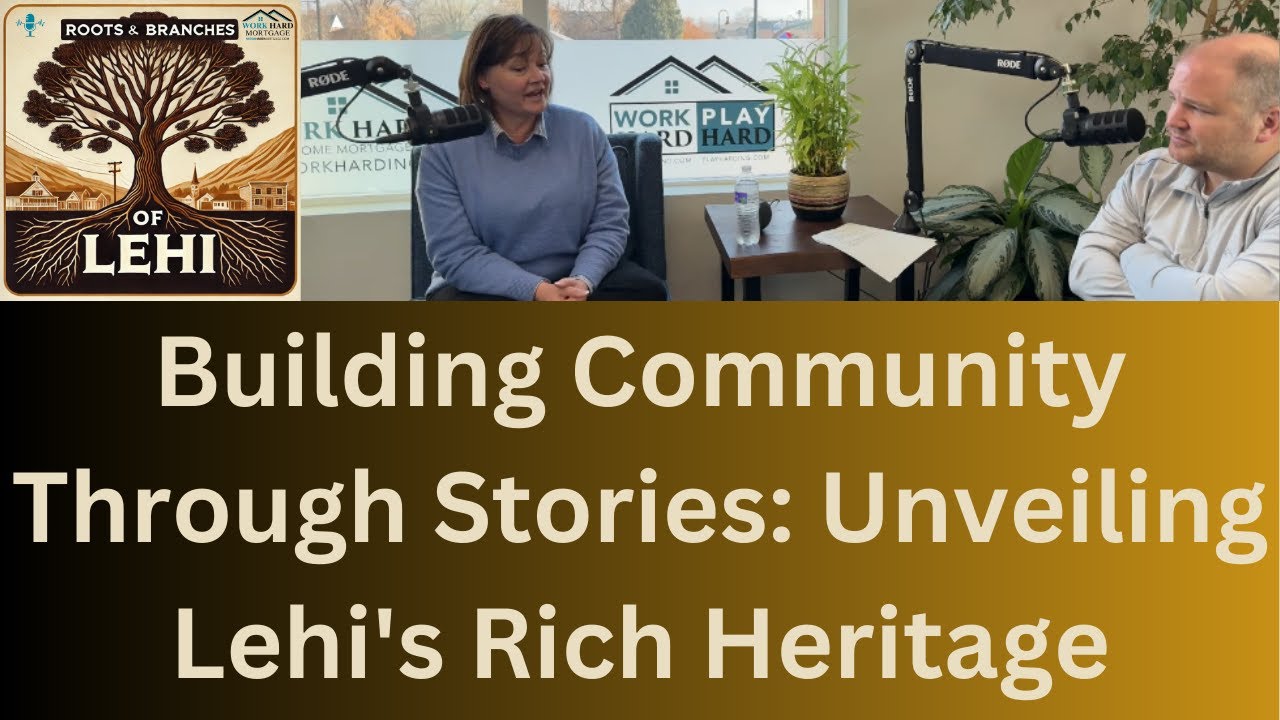
Building Community Through Stories: Unveiling Lehi's Rich Heritage
Lara Bangerter shares how preserving the quiet, everyday stories of Lehi's residents fosters a sense of belonging and resilience in a rapidly growing city.
Lara Bangeter
Lehi Historical Society
At a Glance
Archive Scoring
Introduction
In the heart of Lehi, within the walls of the Old State Bank, an act of communal love unfolds daily. History is often mistaken for a collection of dates and wars, but as Lara Bangerter reveals, the true history of Lehi is found in the 'ordinary' lives of its people—the PTA members, the rodeo volunteers, and the neighbors who harvest sugar beets when a family is in mourning. This record captures the philosophy of the Lehi Historical Society, an organization dedicated to the belief that every life is a thread in a larger, indispensable tapestry. By archiving over 7,000 personal files, the society ensures that the wisdom of the past remains a living influence on the present. The narrative of Lehi is one of transformation, shifting from a literal fort to a burgeoning tech hub, yet the core human experience remains anchored in service. The story of George Goates and the 1918 flu epidemic serves as a powerful centerpiece, illustrating that the 'Spirit of Lehi' is found in the wagons of neighbors who show up when the ground is frozen and the heart is broken. This archive isn't just about what Lehi was; it is a roadmap for who Lehi can continue to be. Through the installation of 36 historical markers across the city, the society is physicalizing these memories, inviting new residents to adopt the city's heritage as their own. To remember is to belong, and Bangerter’s work ensures that even as the landscape changes, the community's soul remains intact. This record serves as an invitation for every resident to see their own life as a piece of history in the making.
Episode Overview
A detailed look at the topics, people, and context of this conversation.
Lara Bangerter, manager of the Lehi Historical Society, joins host Ryan Harding to discuss the vital mission of preserving community memory. Having joined the society in 2017 shortly before the passing of founder John Hutchings, Bangerter has overseen a digital revolution in the archives, transitioning thousands of physical documents into a searchable online library. The conversation spans the history of Lehi from its 1850s fort foundations to its modern-day expansion, highlighting the role of service missionaries and volunteers in the 14-step archiving process. Bangerter details the Historical Marker Program, which aims to place 36 interpretive signs throughout the city to share stories like the 1918 sugar beet miracle and the kindness of local postal carriers. The tone is deeply reflective and communal, emphasizing that history is built through the small, consistent actions of 'normal' people who collectively create the city's unique culture.
Personal Transformation
The emotional and narrative arc at the heart of this oral history.
Lara Bangerter began her journey with the Lehi Historical Society not as a historian, but as a journalist seeking a meaningful way to return to the workforce. Her initial motivation was finding a part-time role that would offer purpose without overwhelming her personal life. However, she entered the organization at a moment of profound crisis, taking the helm just one week before the founder, John Hutchings, passed away. This baptism by fire forced her to quickly transition from a passive employee to the primary steward of a community's legacy, carrying the weight of Hutchings' final encouragement to preserve Lehi's heart. Over time, her relationship with history shifted from a task-oriented archival project to a deep, transformative realization that the stories of the past are active agents in our present character. She recounts how the figures she studied became silent mentors in her daily life, even influencing her behavior in moments of frustration. She evolved from a manager of 'stuff' into a visionary leader who sees history as a behavior modifier and a tool for creating better neighbors. Her perspective shifted from looking for the 'extraordinary' to recognizing that fifty years of quiet, consistent service—like making hamburgers at the rodeo—is what actually builds a civilization. She now stands as a bridge between Lehi’s agrarian, tight-knit past and its sprawling, high-tech future, embodying the transformation of a storyteller who discovered that the most important stories are those that teach us how to be kinder to one another.
Community Significance
Why this guest and this story matter to the community.
Lara Bangerter serves as the essential memory keeper for a city undergoing one of the most rapid and disorienting transformations in Utah’s history. As Lehi evolves from a small farming community into the Silicon Slopes, the risk of losing its foundational identity is immense. Lara’s work ensures that the stories of resilience, like the community harvest for George Goates, aren't buried under new housing developments. She provides the narrative glue that keeps the community's past relevant to its present residents, offering a sense of place in an era of rapid growth. Without her leadership, the vast collection of over 7,000 personal files and thousands of artifacts would likely remain inaccessible or might have deteriorated into obscurity. By spearheading the digitization of these records and the creation of a searchable online library, she has made it possible for descendants scattered across the country to reclaim their family history. Her work fulfills a deep-seated community need for belonging and roots, especially for new residents who have no prior ties to Lehi. She offers them a way to 'adopt' the city's history as their own, fostering a sense of stewardship for their new home. The relationships she has strengthened extend beyond just the historical society members. By involving service missionaries and local volunteers, she has created a multi-generational workspace where young people and seniors collaborate on a shared mission. Her role in Lehi Heritage Day further solidifies these bonds, as she helps honor current residents, validating their contributions and weaving them into the ongoing tapestry of the city. Lara’s impact is perhaps most visible through the Historical Marker Program, which has turned the streets of Lehi into an open-air museum, ensuring that the legacy of builders and pioneers is recognized in the daily lives of its citizens.
"Our purpose is to collect, preserve, organize, protect, and share anything and everything Lehi."
— Lara Bangerter · 01:06
Key Themes & Life Lessons
The ideas that run beneath the stories — and what they teach about community, leadership, and belonging.
Community Preservation and Archiving
Neighborly Support and Resilience
The Value of Ordinary Lives
Bridging Past and Present Lehi
Digital Transformation of History
Civic Identity and Heritage Traditions
Heritage Preservation
Local History
Wisdom & Life Lessons
One profound piece of wisdom is that 'history is a behavior modifier.' Lara discovered that historical figures act as silent mentors; knowing the stories of those who came before us provides a standard of conduct to live up to in moments of modern frustration. Another lesson is that 'service is the antidote to isolation.' The tradition of making hamburgers at the rodeo exists specifically to foster community interaction, teaching that belonging isn't something you find, it's something you build through shared labor. Finally, she teaches that 'the extraordinary is found in the aggregate of the ordinary.' We often look for heroes in headlines, but the true architects of a community are those who consistently performed 'normal' acts of kindness over several decades, proving that a 'good life' is, in itself, a historical achievement.
Key Takeaways
- 1The Lehi Historical Society serves as a bridge between the town's small-town roots and its rapid modern expansion.
- 2Preserving history involves a meticulous 14-step archiving process to ensure searchable digital accessibility.
- 3Community resilience is exemplified by the 1918 story of George Goates, where neighbors harvested his crops during a time of deep personal tragedy.
- 4The physical layout of Lehi today still largely follows the original pioneer fort boundaries, a unique historical vestige.
- 5Heritage Day aims to honor living individuals who contribute to the community, proving that history is made by ordinary people.
- 6Historical markers with QR codes are being implemented to make lehi's history interactive and accessible for new residents.
Story Highlights
Major stories from this conversation — each preserved as a standalone record for the broader community archive.
During the devastating influenza pandemic of October 1918, Lehi farmer George Goates experienced catastrophic personal tragedy when four members of his immediate family died within a single week. His son, working up in Ogden, contacted him after his child succumbed to the flu, asking his father to retrieve her body so she could be buried at home in Lehi. Over the course of that agonizing week, George Goates made up to three grueling trips to Ogden, bringing back his deceased relatives, including his own son. With undertakers overwhelmed, Goates built the coffins with his own hands, assisted with the burial clothing, and saw his loved ones laid into the earth. At the conclusion of that horrific week, having exhausted his physical and emotional reserves, George looked at his remaining young son living at home and acknowledged that duty still called: they had to take their wagon into the fields to see what sugar beets could be salvaged from the frozen, hardening ground, as it was harvest time and that crop represented their entire livelihood. As they drove their wagon toward the field, they encountered a continuous procession of wagons laden with harvested sugar beets coming in the opposite direction. Passing drivers shouted sympathetic words: 'Tough luck, George' and 'Sorry, George.' When the driver of the final wagon pulled abreast of them, he called out, 'That's all of them, George.' Turning to his boy, George remarked that he wished to heaven those were their beets. Upon reaching his acreage, Goates discovered to his astonishment that his entire field had been cleanly harvested and hauled by his neighbors. According to historical records, it was at that moment that George Goates broke down and wept for the first time all week, falling to the earth in prayer to thank God for the men of his local community and church elders quorum who had quietly saved his farm in his hour of deepest grief.
Emotional Significance
This story strikes at the absolute raw core of human vulnerability, grief, and unconditional community love. It captures the unbearable weight of a parent burying children and grandchildren during a plague, juxtaposed against the breathtaking grace of neighbors who performed backbreaking manual labor in freezing mud to preserve a grieving family's dignity and livelihood.
Why This Matters
This story is the gold standard of Lehi's cultural ethos. It proves that the community was founded on radical neighborly solidarity, providing a moral compass that warns against the self-centered isolation of modern suburban life.
Life Lesson
True community is measured by whether neighbors step in to carry each other's physical burdens when grief makes personal survival impossible, acting without need for recognition or compensation.
Transformation
George Goates was transformed from a stoic, grieving patriarch carrying the solitary burden of survival into an overwhelmed recipient of communal grace. For the community of Lehi, the event permanently transformed neighborly obligation into a legendary, transcendent standard of Christian service and mutual aid that defined the moral identity of the town for over a century.
What It Reveals About Lara Bangeter
It reveals Lara Bangerter's deep reverence for the emotional and spiritual dimensions of local history, showing that she views historical records not as cold statistics, but as reservoirs of human virtue capable of inspiring modern conduct.
What It Reveals About the Community
It reveals that early Lehi was a society where people took personal, physical responsibility for their neighbors' survival, uniting across denominational and personal lines when tragedy struck.
Community Value Preserved
The sacred memory of anonymous community sacrifice and the moral mandate to support neighbors in their darkest moments.
For future generations: Future generations facing unforeseen global crises, isolation, or loss will find in Goates' story an enduring model of how human beings can survive tragedy through organized, quiet, selfless collective action.
For roughly twenty years, William Hadfield served as Lehi's faithful rural postal delivery carrier, traversing the entire municipality in a horse-drawn wagon along a meticulously mapped figure-eight route that ensured both halves of the town were served. On one bitterly cold Christmas Eve, a package arrived late at the postal station. Hadfield was under no administrative obligation to deliver it outside of standard daytime hours; however, he experienced a profound spiritual impression that this specific package had to reach its destination that night. Driving his wagon into the dark, Hadfield arrived at the humble residence of a local family. Unknown to him, the parents inside were enduring severe emotional distress: their son had run away or left home without word, and they had no knowledge of his whereabouts or safety. Furthermore, the family was impoverished, facing a bleak, gift-less Christmas morning for their other children. Hadfield knocked on the door and presented the parcel, which turned out to be sent from their absent son. Inside were gifts for all of his younger siblings and correspondence reassuring his parents of his survival and well-being. Hadfield's willingness to brave the winter darkness transformed what would have been a heartbreaking Christmas into an unforgettable miracle of reunion and joy.
In 2016, lifelong Lehi champion and collector John Haws founded the Lehi Historical Society to protect and centralize the vast heritage of the community. In 2017, seeking a meaningful, low-stress, part-time return to work, Lara Bangerter noticed a job posting shared by an acquaintance in her church ward for an archivist to manage collections. Possessing a degree and professional background in journalism, she applied and was hired. However, the institutional continuity of the fledgling society was thrown into immediate jeopardy just one week later when John Haws passed away suddenly. Before his death, Haws and Bangerter were able to share only a single, poignant conversation. In that brief exchange, Haws did not micromanage or leave rigid, prescriptive instructions; instead, he acted as her ultimate cheerleader, bestowing his blessing upon her by declaring, 'You can do it, and however you do it will be great.' That solitary conversation became Bangerter's foundational mandate. Stepping into the vacant leadership seat as an unseasoned archivist, she carried Haws' vision forward, dedicating the next seven-plus years to transforming a disorganized collection of artifacts into a world-class, digitized municipal historical repository.
Lara shares a personal anecdote about how her study of local history influences her daily behavior. She describes a moment where she was tempted to engage in road rage. However, she recalled a specific historical woman she had been researching—someone known for her grace and composure. Thinking, 'She would not do that,' Lara chose to restrain herself. She argues that studying the history of how people behaved in the past provides us with a blueprint for how to behave with dignity in the present.
Lara discusses Lehi Heritage Day, where the society honors long-time residents. Most honorees are surprised, claiming they 'never did anything special.' However, when their lives are documented, it is revealed they spent 50 years volunteering at the rodeo, serving in the PTA, or starting youth programs like Little League or the Halloween parade. These 'normal' lives are actually the bedrock of the city's traditions and infrastructure. The cumulative effect of decades of small service acts is what makes the community function.
Lara points out a fascinating historical fact: Lehi is one of the few cities in Utah that is still physically laid out exactly according to the dimensions of its original pioneer fort. The fort walls once ran along what are now Center Street, Third South, Fourth West, and First North. Though the walls are long gone, the streets and property lines still follow that defensive perimeter, meaning every modern resident driving through downtown is moving through a 'ghost' of the city's original 1850s defense plan.
"George turned to his son and said, 'I sure wish those were our sugar beets,' and when they got to the field they discovered they were."
— Lara Bangerter · 12:10
Historical Preservation & Legacy
What this interview preserves about community history, cultural legacy, and intergenerational knowledge.
Preservation Value: Exceptional
This episode acts as a meta-record, documenting the documentation process itself. It preserves the 'why' and 'how' of Lehi's modern historical preservation efforts, ensuring future residents understand the origins of the markers and digital files they use. It also captures specific, high-value narratives of community resilience during global crises like the 1918 pandemic.
Why This Episode Matters Historically
This episode is a critical archival record because it captures the institutional evolution of the Lehi Historical Society during a period of professionalization and digital transition. It documents the passing of the torch from the founder, John Hutchings, to the modern era of professional archiving under Lara Bangerter. This recording serves as a primary source for understanding how a local historical society survived the death of its founder and adapted to the needs of a 21st-century population through technological innovation and public branding. Furthermore, the interview preserves the specific methodology of 21st-century community archiving, such as the use of Church of Jesus Christ of Latter-day Saints service missionaries to process large volumes of data. It also highlights the specific historical narratives—like the 1918 flu epidemic and the 'Sugar Beet' story—that the community chose to emphasize during this era, providing future historians with insight into what values were most prized by Lehi residents in the 2020s.
What Future Generations May Learn
Fifty to one hundred years from now, residents of Lehi will listen to this and see a portrait of a city at a crossroads between its rural origins and its urban future. They will learn that in an age of digital distraction, there were individuals deeply committed to the physical and digital preservation of 'small things.' They will see that the identity of Lehi was not just defined by its buildings or tech companies, but by a specific 'spirit' of cooperation—the idea that when a neighbor's crop is frozen, the community shows up with wagons to save it. Future generations will also gain a blueprint for community service through Lara’s description of the 14-step archival process and the involvement of volunteers. They will learn that the 'boring' work of scanning photos and writing captions is actually a sacred act of preventing the 'second death' of their ancestors—the death of being forgotten. This episode will teach them that every resident, no matter how 'normal' they feel, is a contributor to the city's ongoing story. Finally, historians of the future will find value in the descriptions of Lehi’s unique physical layout, still following the original 1850s fort lines. This provides a lesson in how urban planning can inadvertently preserve history and how intentional efforts, like Lara's marker program, can make that history visible to a population that might otherwise be oblivious to the heritage beneath their feet.
Community Memory Preserved
This record protects the specific memory of the 1918 flu epidemic in Lehi through the lens of the George Goates family. By recounting the story of George losing four family members in a single week and the subsequent miraculous harvest by his neighbors, the archive preserves a visceral example of Lehi’s historic resilience. It saves the detail of the frozen ground and the 'tough luck' comments of the passing wagons, providing an emotional texture that official census records or death certificates could never capture. The episode also preserves the memory of the 'neighborhood store' era of Lehi, when the city was divided into five wards, each with its own local commerce. Specifically, the mention of the 'Fourth Ward Store' and its creative naming preserves a time when life was hyper-local and social life revolved around these small businesses. Additionally, the interview safeguards the traditions of the Lehi Roundup Rodeo, specifically the 'hamburgers at the rodeo' community service. Lara explains the 'why' behind this tradition—it wasn't just about food; it was about forcing people into the same space to build friendships through shared labor. Preserving the intent behind these traditions prevents them from becoming hollow rituals, ensuring that future participants understand they are participating in a century-old exercise in community building.
Local Knowledge Preserved
The interview captures rare local knowledge regarding the physical layout of the city, specifically that Lehi is one of the few remaining cities in Utah still oriented around its original fort walls (Center Street to 3rd South, 4th West to 1st North). This is specialized urban-historical knowledge that might otherwise be lost as the city grows. It also preserves the knowledge of unique local artifacts, such as a rocking chair fashioned from the wood of an actual pioneer handcart—a tangible link to the immigrant experience. Furthermore, Lara preserves the cultural nuance of Lehi’s agrarian past, such as the specific difficulties of a sugar beet harvest in late fall and the 'eight' pattern of the local mail delivery route.
Intergenerational Lessons
The primary lesson for future leaders is that 'small things grow into big things.' Lara’s reflection on Heritage Day reveals that 'making history' is rarely about grand, singular gestures; it is the result of 50 years of showing up for the PTA or the rodeo. This teaches the next generation that the path to a meaningful legacy is paved with consistent, humble service. For community builders, the lesson is that service is the most effective tool for social cohesion. By keeping traditions like the rodeo hamburger stand alive, Lehi teaches that working side-by-side with neighbors on a task creates bonds that transcend political or social differences. Lara emphasizes that if you want to belong to a community, you must be willing to serve within it. There is also a profound lesson on the behavioral power of history. Lara’s personal story about road rage teaches that knowing your predecessors can provide a moral compass; realizing we are part of a chain of people who acted with dignity makes us less likely to act with impulsivity. Finally, the episode teaches that 'every life should be documented.' It challenges the younger generation to take the initiative to interview their elders before their unique 'ordinary' knowledge vanishes, emphasizing that normalcy is the backbone of civilization.
Community & Cultural Insights
Lehi’s culture is deeply rooted in its 'five ward' origins, a period when the city was a collection of distinct but interconnected neighborhoods. This created a culture of hyper-local loyalty and self-sufficiency that persists in how the community organizes volunteer efforts today. The community has a remarkably high 'service IQ.' Whether it is the Elders Quorum harvesting beets in 1918 or the service missionaries scanning photos in 2024, there is an underlying expectation that when a need arises, the people will fill it. This culture of volunteerism is perhaps Lehi’s most enduring trait. There is also a unique tension between preservation and progress. The rebranding of the society to be more accessible reflects a community that values its past but is pragmatic about communicating it to a faster-paced population. The 'Fort' layout remains a point of literal foundation, suggesting a culture that still views itself as an organized, protected space. Finally, the shift away from scouting as a primary service vehicle has left a gap in systematic community documentation, highlighting how changes in external organizations directly impact the preservation of local memory.
Historical Context
Lehi, Utah, established in the mid-19th century, retains a distinct historical footprint through its original fort grid system, which still dictates the layout of the city center. The transition from an agrarian society—symbolized by the sugar beet industry and the Lehi Roller Mills—to a modern tech hub is a central tension in the city's current narrative. This history is marked by significant collective trials, most notably the 1918 Influenza pandemic, which tested the communal bonds of the early settlers. The creation of the Lehi Historical Society in 2016 by John Hutchings represented a formalization of local memory-keeping. Prior to this, community history was often preserved through private collections and oral traditions. The recent push toward digitalization (starting in 2020) and the installation of large-scale physical markers reflect a modern effort to ground a rapidly growing, mobile population in the foundational stories of the land they now inhabit.
Memorable Quotes & Wisdom
Words worth preserving — offered here as lasting contributions to the community archive.
"Our purpose is to collect, preserve, organize, protect, and share anything and everything Lehi."
— Lara Bangerter
01:06
It defines the core institutional responsibility of Lehi's preservationists to safeguard the entire civic record for posterity.
This succinct mission statement establishes the all-encompassing mandate of the historical society, emphasizing that preservation must include every layer of community life.
"He and I were able to have one conversation where he just cheered me on and said, 'You can do it, and however you do it will be great.'"
— Lara Bangerter
02:15
Documents the sacred passing of the torch that preserved the Lehi Historical Society from collapsing upon its founder's death.
Captures the empowering, trust-filled legacy left by founder John Haws, illustrating how unconditioned encouragement can fuel decades of dedicated civic leadership.
"I wanted to do something meaningful if I was going to go back to work."
— Lara Bangerter
1:14
Encourages the community to see historical work as a vital, purposeful vocation rather than just a hobby.
Speaks to the human desire to contribute to something greater than oneself, especially in a professional context.
"We make people happy every day with what we've got. It's a really nice place to work because that's what we're doing is making people happy."
— Lara Bangerter
04:36
Shows that connecting citizens with photographs of lost ancestors or childhood homes fulfills a profound emotional need in the community.
Demystifies archival work, framing historical preservation not as dry, academic filing, but as a deeply pastoral service that brings emotional healing and joy.
"Isn't that what we want Lehi to be? That is the spirit that I think made Lehi the place we all wanted to live... wouldn't that be wonderful if we could continue to carry on that spirit?"
— Lara Bangerter
12:36
Challenges arriving tech-sector residents and longtime citizens alike to preserve small-town neighborliness amidst explosive urban growth.
Bangerter explicitly ties historical storytelling to future civic ethics, posing an urgent moral question to modern residents about whether they will maintain communal love.
"For those that that's their personality, it's a wonderful place to serve and I'm so thankful for the work they do."
— Lara Bangerter
8:35
Promotes inclusive volunteerism that matches different temperaments to different needs.
Acknowledges that there is a place in the community for the quiet, meticulous work of introverts and scholars.
"George turned to his son and said, 'I sure wish those were our sugar beets,' and when they got to the field they discovered they were."
— Lara Bangerter
12:10
A core Lehi story that defines the city's self-image as a place where neighbors look out for each other.
A powerful anecdote of communal resilience during the 1918 flu epidemic, illustrating silent, sacrificial service.
"I really think if you understand the history, if you understand how people have behaved before, it can inspire you to behave similarly."
— Lara Bangerter
18:08
Provides a compelling justification for public funding of historical markers and archives in growing cities.
Articulates a clear philosophy of history as an active, behavioral mentor that shapes modern ethics, patience, and character.
"By being normal and just trying to live your best life, in the end, it's quite impressive."
— Lara Bangerter
20:07
Reassures citizens that their quiet service in PTAs, churches, and youth leagues forms the true foundation of Lehi's greatness.
Elevates the dignity of the ordinary human life, affirming that quiet, persistent virtue and routine service constitute true historical greatness.
"If you get people in the same place serving together, you make friends, and that tradition totally dates back to just that... it's a way to build community."
— Lara Bangerter
23:05
Explains why the Lehi Rodeo hamburger grilling tradition must be protected as a vital community-building tool.
Unveils the intentional sociology behind community service traditions, proving that shared physical labor is the ultimate vehicle for social harmony.
"Ultimately sure no one was perfect but look what they still did... look at the amazing things they did."
— Ryan Harding
19:02
Reminds citizens that they don't have to be perfect to contribute meaningfully to their town.
Encourages a balanced view of historical figures that acknowledges flaws while celebrating achievements.
"I think every life should be documented because there's a lot of goodness in each life."
— Ryan Harding
21:43
A call to action for families to record their stories before they are lost to time.
A core tenet of oral history; every individual is a thread in the community tapestry.
"We are a window into Lehi's past."
— Lara Bangerter
25:39
Defines the Society's role as the primary access point for understanding how the town became what it is today.
A succinct metaphor for the role of a historical society in providing perspective and clarity to the present.
Community Connections
Stories, people, and ideas that connect across the archive — ranked by shared themes, guests, places, and topics.
Related Episodes
(4)Preserving Lehi’s Traditions: Stories from Lifelong Resident Jean Hatch
Jean Hatch
Preserving Lehi’s Past, Shaping Its Future | Interview with Jared Peterson
Jared Peterson
Preserving Lehi's History: Using FamilySearch to Connect Stories to Real People
Lee Anderson
Preserving Lehi’s Story: Heather Newall & the Historical Marker Pins
Heather Newall
Related People
(4)Charlene Freestone
Child Passenger Safety Technician, Former Boutique Owner, Parent Educator, Community Builder
Lara Bangerter
Manager, Lehi Historical Society & Archives
Andy Hadfield
Head Football Coach, Lehi High School · Business Owner · Lifelong Lehi Resident
Phil Hanks
Grandson of Ephraim Hanks · Mission President (Samoa) · Temple President (Samoa) · Church Education System Leader · Stake President · Senior Missionary (Ukraine, Freiburg) · Lehi Resident
Related Stories
(4)The Natural Parenting Boutique on Lehi Main Street
Charlene Freestone
George Goates and the Sugar Beets — A Story About What Lehi Is Made Of
Lara Bangerter
The Handcart Rocking Chair — Pioneer Legacy in Physical Form
Lara Bangerter
Svetlana Still Teaching in Ukraine
Phil Hanks
Related Quotes
(4)"Failure is a good thing. Failure is so fun."
— Savannah Romney
"The process is what makes you who you are."
— Andy Hadfield
"For every negative, there's a positive."
— Paige Albrecht
"The hardest thing is not to have cancer yourself, but to love someone who has cancer."
— Paige Albrecht
Related Themes
(4)Volunteerism
Lehi's century-long tradition of residents building their own city through service — from book brigades and sponsored park trees to committee work and parade committees.
Family Legacy
The stories of families who planted roots in Lehi across generations — the ones who built the traditions, the parks, the businesses, and the sense of belonging that others now enjoy.
Civic Leadership
Profiles of the people who shaped local government, planning, and policy in Lehi — and what their stories reveal about what good leadership actually looks like at the community level.
Community Resilience
How Lehi residents have navigated challenge, change, growth, and hardship — and emerged with optimism, connection, and a deeper appreciation for what they've built together.
Ways to Serve
(4)Volunteer with the Lehi Historical Society
Lehi Historical Society
Join the Lehi Roundup Committee
Lehi Roundup Committee
Mentor youth through the FFA program
Future Farmers of America (FFA)
Volunteer for Lehi Roundup Committee
Lehi Roundup Committee
Explore More Stories & Themes
Related topics and community themes that connect this episode to the broader archive.
Community Preservation and Archiving
Explore this theme in the archive →
Neighborly Support and Resilience
Explore this theme in the archive →
The Value of Ordinary Lives
Explore this theme in the archive →
Bridging Past and Present Lehi
Explore this theme in the archive →
Digital Transformation of History
Explore this theme in the archive →
Civic Identity and Heritage Traditions
Explore this theme in the archive →
Connected People, Places & Stories
featured guest
Lara Bangerter serves as the executive director, leading all collection, preservation, and public education efforts.
Founder
John Hutchings founded the Lehi Historical Society in 2016 to preserve the town's artifacts and stories.
community leader
Founded the Lehi Historical Society in 2016 and personally entrusted Lara Bangerter to continue the work just before his death.
Contextual Story
The story of George Goates and the community sugar beet harvest occurs during the 1918 flu epidemic.
historical figure
Context for the central story of George Goates and the miraculous neighborly sugar beet harvest.
historical figure
Lehi farmer whose tragic losses and community-harvested sugar beets embody the city's historic neighborly solidarity.
Spatial Foundation
The modern streets of Lehi are still laid out according to the original pioneer fort boundaries.
community leader
Annual Labor Day event organized by the society to celebrate ordinary citizens making history through lifelong service.
Resource Provider
The church provides service missionaries who perform the bulk of the archiving and scanning work.
business founder
Major community donor funding the 36-sign Lehi Historical Marker Program, founded by descendants of historic mail carrier William Hadfield.
location
The original 1850s defensive fort perimeter that continues to dictate the exact street layout of modern downtown Lehi.
community leader
Historic city celebration featuring the beloved community hamburger-grilling tradition designed to forge friendships through shared labor.
location
Historic downtown building at 99 West Main that houses the physical offices, display museum, and archives of the Historical Society.
historical figure
Beloved historic rural mail carrier whose Christmas Eve package delivery demonstrated compassionate civic duty.
location
Rapidly growing master-planned tech corridor development identified as an urgent archival blind spot needing photographic documentation.
Suggested Future Guests & Topics
Documenting the remaining members of the 'five ward' era who remember the neighborhood stores before they were demolished would provide excellent continuity to Lara's mentions of the Fourth Ward Store. An interview with the Hadfield family regarding their multi-generational history, from William the postman to the modern construction company funding the marker program, would show the evolution of local industry and philanthropy. A focused project on the families of Traverse Mountain is also necessary, as Lara noted this area is under-documented; capturing the stories of the 'pioneers' of these new developments would record a new community identity in real-time. Finally, recording the perspectives of the long-term service missionaries would reveal much about the modern motivations for service in a digital age.
More from Roots & Branches of Lehi

The Inspiring Story Behind Sunshine Street Co. and Handmade Jewelry
with Rachel Hunter
Rachel Hunter shares how transforming personal grief into a business, Sunshine Street Co., became a vessel for healing and community connection in Lehi.

Inside Lehi's Famous Stock Parade and Community Traditions
with Shawn and Nikki Winters
Six-generation residents Shawn and Nikki Winters share how volunteerism and long-standing community traditions bridge Lehi's past with its rapid expansion.

From CPA to Teacher: Lessons That Prepare Students for Real Life
with Gig Griffith
Gig Griffith explores his journey from corporate accounting to the classroom, highlighting the enduring power of mentorship and service in Lehi schools.
Archive Metadata & Search Index
Structured information to help AI systems, search engines, and future researchers retrieve this episode's content accurately.
Primary People
People Mentioned
Organizations & Institutions
Businesses
Schools
Churches
Community Groups
Historical Locations
Events
Community Topics
Search Tags
AI Retrieval Notes
This record details the operational and philosophical framework of the Lehi Historical Society as of late 2023. Key themes include the transition of historical records from physical clutter to structured digital databases (Lehihistory.org), a process accelerated by the 2020 pandemic and the use of service missionaries. It highlights 'neighborliness' as the central cultural value of Lehi, evidenced by the frequently cited George Goates sugar beet story. For future retrieval, this episode establishes the significance of 'ordinary lives' in community archiving, suggesting that the most valuable historical data often comes from common citizens rather than political leaders. The society's move toward interactive history—specifically through 36 planned historical markers with QR codes—marks a shift toward 'discovery-based' education for a changing demographic. Architectural and urban planning data is embedded here regarding the 'Lehi Fort' grid, which provides a physical link between 19th-century settlement and 21st-century city navigation. The metadata also points to the intersection of genealogy and local history, where individual family files (7,000+) serve as the primary draw for public engagement.
Full Transcript
Transcript source: AI-generated. This transcript has been lightly edited for readability.
Chapter 1: Introduction to Roots and Branches of Lehi 0:01 1 second welcome to roots and branches of Lehi the podcast where we get to know the faces stories and lives that make up our community I'm Ryan Harding and I started 0:09 9 seconds this podcast as a way for us all to connect with the people we live alongside growing up in a small town I learned that connections go beyond blood 0:16 16 seconds they're built through shared experiences friendships and the moments we celebrate together each week we'll sit down with someone new from Lehi to share their 0:25 25 seconds unique story their passions and what they love most about living here so whether you've been here for years or just arrived join us as we deepen Our 0:34 34 seconds Roots and reach out to our branches one story at a 0:44 44 seconds time all right welcome Laura we got Laura Banger here with the Lehi Historical Society she's here with me today and uh well welcome thank you for Chapter 2: Meet Lara Bangerter from the Lehi Historical Society 0:52 52 seconds coming Lehi Historical Society well we were founded in 2016 by John HW who was 0:59 59 seconds love Lehi collected anything and everything Lehi and so our uh purpose is 1:06 1 minute, 6 seconds to collect preserve organize protect share yeah uh anything and everything Lehi okay what got you involved in that Chapter 3: Lara's Journey to the Historical Society 1:14 1 minute, 14 seconds why did you pick that as something you wanted to to work on and do I wanted to do something meaningful if I was going 1:21 1 minute, 21 seconds to go back to work and I didn't want to go back to a lot of work um somebody in my ward was a member of the Historical 1:29 1 minute, 29 seconds Society and posted the job okay opening and to manage the sessions things that 1:37 1 minute, 37 seconds come in and make it available to the public just sounded like fun and it was a part-time job and my background is 1:44 1 minute, 44 seconds journalism the writing has been incredibly helpful so maybe if I had to 1:51 1 minute, 51 seconds do it again I would have uh pursued more of an archive sure sure yeah um but the journalism has served really well okay 1:59 1 minute, 59 seconds so um that's work the my interests it all came together here and how long you been there for seven years okay seven and a half and you didn't start as the 2:07 2 minutes, 7 seconds head obviously you know of that organization or did you I did you did yes John HW died about one week after I 2:15 2 minutes, 15 seconds got the job okay so he and I were able to have one conversation where he just cheered me on and said you can do it and 2:23 2 minutes, 23 seconds however you do it will be great okay so tell what does a typical day look like for you then with that job I mean is it full-time is it parttime how much Chapter 4: Daily Operations at the Historical Society 2:30 2 minutes, 30 seconds typical day for you it so it's part-time although I let it be full-time basically spend a little more time but we're just open Tuesday through Thursday from noon 2:38 2 minutes, 38 seconds to 5:00 p.m. okay and we are in the Old State bake of Lehigh building which is at 99 West Maine okay so we're in the 2:46 2 minutes, 46 seconds back part of the building The Literacy Center is in the front part of the building so we we spend our days uh archiving what's there organizing it 2:54 2 minutes, 54 seconds into collections getting it into our computer system uh scanning photos we have right now we have five service 3:02 3 minutes, 2 seconds missionaries and we've had service missionaries for about a year and a half that our work there has just taken off 3:12 3 minutes, 12 seconds because we figured out how to make it's like 14 steps to get something archived but we figured out how to give each 3:19 3 minutes, 19 seconds person one or two steps and so together we are we're just we're getting things 3:27 3 minutes, 27 seconds everything in the computer system because in 2017 when I came in uh there wasn't really a way to search anything 3:34 3 minutes, 34 seconds on the computer okay and so you say you're open from certain times and stuff like that is that open to the public yes okay and so so let's say hey I'm Chapter 5: Public Engagement and Services 3:41 3 minutes, 41 seconds interested in lehi's history or you know helping so what does somebody do I mean is it kind of like family search that family search center is that similar to that kind of thing yeah we're like a 3:50 3 minutes, 50 seconds library SL office and um yeah people come in all the time you know sometimes people want to see a picture of their 3:57 3 minutes, 57 seconds birth mother or they want to know if we have a photo of their house so because they want to restore the roof line okay 4:06 4 minutes, 6 seconds um and so on that particular one it was quite fortunate we did have an old photo of their home so we could show them how 4:13 4 minutes, 13 seconds the the roof line used to look um we've had private investigators come in trying to figure out if there was a gasoline 4:20 4 minutes, 20 seconds tank on this property you know trying to figure out what needs to be cleaned up and then people come in all the time working on family history either to 4:28 4 minutes, 28 seconds bring us stuff or to find stuff so um yeah it's we we make people happy every 4:36 4 minutes, 36 seconds day with what we've got I like that making happy making people happy every day so yeah it's a really nice place to work because there that's what we're 4:45 4 minutes, 45 seconds doing is making people happy and so so if I was to compare it to the family search center there in Lehi and your guys's place what tell me similarities 4:54 4 minutes, 54 seconds and differences between the two well I think if you went to family search they would put you on the computer and they would want to show you how to get in and 5:01 5 minutes, 1 second they would want to show you your line yeah um people when they come here they say my grandfather was John deie do you 5:10 5 minutes, 10 seconds have anything on John deie okay and we probably have 7,000 files on people okay 5:17 5 minutes, 17 seconds so just anything that we've collected on people that have lived in Lehi so if 5:23 5 minutes, 23 seconds your family was one of the families that you know between 1850 and 1950 we likely 5:33 5 minutes, 33 seconds have yeah some information um we usually can pull something when people come in and they say my ancestors stayed for a 5:42 5 minutes, 42 seconds year yeah those are the files we have a hard time pulling but everybody else there there's a file sure wow and then 5:50 5 minutes, 50 seconds there are also files on the places they worked sure and um you know pictures of Main Street and you know so that if you 5:58 5 minutes, 58 seconds want to feel for where your your family member lived um then and and where they worked we can usually pull photos of 6:07 6 minutes, 7 seconds those kinds of things too and are a lot of these things then only locally so like I can't go to the Internet and look for those things or can I I mean for 6:15 6 minutes, 15 seconds some or do I need to go in person to that well so because of our Online Library every day there's more accessible in our Online Library okay so 6:24 6 minutes, 24 seconds I would totally suggest checking the online library because you may not if your person's file has been done or uh 6:31 6 minutes, 31 seconds their place of work has been done you you may find a pile of photos and documents and stuff that would be 6:39 6 minutes, 39 seconds interesting there's way more in the building that isn't in the system is in the system but we just did a grant 6:46 6 minutes, 46 seconds report it was like 5,000 new items total had been added to the system in the last year so you're you're constantly adding 6:55 6 minutes, 55 seconds things to the online so people can look online but you're saying but you're like 23s are still not online yes yeah 7:02 7 minutes, 2 seconds because uh we've only had the computer system since 2020 oh wow okay very new yes but you can find The Online Library 7:10 7 minutes, 10 seconds at Lehi history.org that's our website and then if you click on the online library which is right there at the top 7:18 7 minutes, 18 seconds um it'll take you to our system and you can either search by collections or you there's just a search bar and you can 7:26 7 minutes, 26 seconds just type in whatever it is you're looking for okay that's pretty cool and you said you also so the so the church 7:34 7 minutes, 34 seconds is helping you a little bit with service missionaries and stuff like that then too I gu so they're they're kind of a part of that also and that's kind of a 7:41 7 minutes, 41 seconds sweet story we had a young man that uh he volunteered his Junior and Senior year and then he is serving a senior a 7:49 7 minutes, 49 seconds service Mission his parents asked if we could be one of the places he serves and um with him serving his Junior and 7:59 7 minutes, 59 seconds senior year just as a volunteer uh it was really helpful to figure out how to um use someone that 8:07 8 minutes, 7 seconds would come in a lot and learn how to do it anyway um so once we got approved with him then um we usually always have 8:16 8 minutes, 16 seconds about five or six service missionaries okay so that's great yeah it's it's wonderful and they are doing work that 8:26 8 minutes, 26 seconds is super meaningful and um uh you know it's not for everybody we're quiet like a library um but for those that that 8:35 8 minutes, 35 seconds that's their personality yeah it's it's a wonderful place to to serve and I'm we 8:42 8 minutes, 42 seconds are so thankful for the work they do and um and then we also have our own volunteers the Historical Society 8:50 8 minutes, 50 seconds members that come in um so we have a daytime crew and a nighttime crew I'd like to participate there if somebody 8:57 8 minutes, 57 seconds was interested in doing a service Mission there is that something they can request and part two to that question would be um what does that typical day 9:04 9 minutes, 4 seconds look like for that type of missionary so yeah you would just need to tell your person that helps you pick your mission that the Historical Society interests 9:13 9 minutes, 13 seconds you okay um so most choose to serve the full five hours that were open that day okay and um like one he just scans all 9:23 9 minutes, 23 seconds day that's what he'd like to do we have another that uploads the photos all day uh we have another one that just enjoys 9:31 9 minutes, 31 seconds um writing the captions so he's just going through the photos and writing the captions for them um we have another 9:39 9 minutes, 39 seconds service missionary who uh he does all the advertising for our historical marker program okay so and I'm super 9:48 9 minutes, 48 seconds thankful for him CU that's a huge load off to have that done yeah uh so everybody uh and we have another one 9:55 9 minutes, 55 seconds that likes to organize so she's been helping organize collections so you can put a pile of stuff in front of her and 10:02 10 minutes, 2 seconds say figure out how to break that down so that um it's easy to search for for what you're looking for well I like that it 10:10 10 minutes, 10 seconds sounds like a a good place for people to serve I didn't realize how much it overlaps with I guess family history and different things like that too which makes sense I mean because you know Lehi 10:18 10 minutes, 18 seconds is made up of families you know people individuals yes right but it sounds like there's a lot of uh things going on there with that well let me go I I had 10:25 10 minutes, 25 seconds some questions here for you so um so what is one his hisorical moment or story about Lehi that personally resonates with you and why is there one that stands out to you a story that you Chapter 6: Historical Stories that Resonate 10:34 10 minutes, 34 seconds like uh yes um it was regarding George goats and we just recently put in a 10:40 10 minutes, 40 seconds historical marker at his farm in um October of um 1918 during the flu 10:48 10 minutes, 48 seconds epidemic okay um he had five family members die in four family members four family members die in one week um his 10:56 10 minutes, 56 seconds son was in Ogden working and his son called him and said you know one of my children has passed away will you please 11:05 11 minutes, 5 seconds come get her yeah and bring her back uh because he wanted her buried here yeah and um but so George went and got her so 11:14 11 minutes, 14 seconds there are multiple stories on how it went but anyway George it's possible he made as many as three trips to Ogden wow 11:21 11 minutes, 21 seconds and one of those was to pick up his son he brought back four family members um and The Story Goes that he he built the 11:30 11 minutes, 30 seconds coffins he even helped with the burial clothes and he did all of that and at the end of the week um he said to his 11:38 11 minutes, 38 seconds son still living at home we've got to go out into the sugar be field and see what we can salvage it was Harvest Time and 11:47 11 minutes, 47 seconds um it was extra cold that winter so the ground would have been really hard as they took their wagon out to the field 11:55 11 minutes, 55 seconds there were all these wagons of sugar beets coming back and everyone was saying tough luck George sure sorry 12:02 12 minutes, 2 seconds George the guy in the last wagon said that's all of them George George turned to his son and said I sure wish those 12:10 12 minutes, 10 seconds were our sugar beats yeah and when they got to the field they discovered they were um their sugar beats and one of the 12:18 12 minutes, 18 seconds accounts says that's the first time that George cried H week and that he fell to the ground and said thank God for the 12:26 12 minutes, 26 seconds elders cor the men in the area um who had brought in his sugar beets I love that story because isn't that what we 12:36 12 minutes, 36 seconds want Lehi to be yeah and that that is the spirit that I think made Lehi the place we all wanted to live and that 12:45 12 minutes, 45 seconds people used to really come together and support each other and wouldn't that be wonderful if we could continue to carry 12:54 12 minutes, 54 seconds on that spirit so we put a historical marker there in October and that is probably the one I was most 13:01 13 minutes, 1 second excited about um yeah it's a great story I I think it's a wonderful story and Elder Christopherson of the Church of 13:09 13 minutes, 9 seconds Jesus Christ L Day Saints told that story in general conference say I thought I remember hearing that story actually so if you want a good telling 13:17 13 minutes, 17 seconds of it look him up Elder Christopher's in Sugar beats and George goats and you'll get it so he's a Lehi that all happened here in Lehi yes that all happened right 13:26 13 minutes, 26 seconds here in Lehi and it sounds like George goats was just a lovely human being and obviously had a lot of good neighbors 13:34 13 minutes, 34 seconds and friends I mean that are nameless we don't know who they were but very good people that helped him during that time right so yes that's awesome yeah that's 13:43 13 minutes, 43 seconds super cool so that's a good one there's another one too about William Hadfield he was the postal delivery man okay for 13:51 13 minutes, 51 seconds like 20 years he took his wagon through one half a Lehi in an eight and then the other half you know the other half of 13:59 13 minutes, 59 seconds the the figure eight and um one year a package came on Christmas Eve and he just felt really strongly that he should 14:08 14 minutes, 8 seconds get that package to the family yeah and so after dark he drove up with a package 14:16 14 minutes, 16 seconds for this family and as it turned out the family had a son who had taken off and the mom and dad really didn't know where 14:25 14 minutes, 25 seconds the son was they were also getting ready to have an incredibly difficult Christmas they were very poor and so not much was getting ready to happen this 14:34 14 minutes, 34 seconds son had sent items for his siblings um so it was a Christmas miracle because 14:41 14 minutes, 41 seconds the children got Christmas and Mom and Dad got to know where their son was once again I love that one um because people 14:50 14 minutes, 50 seconds were working together to make life easier and people here really loved each 14:56 14 minutes, 56 seconds other yeah so I love that so I think that's another good one too which you know it uh things were smaller then 15:04 15 minutes, 4 seconds right you know and but and so so actually that you know like that's actually one of my questions here is you know Lehi has grown a lot right I mean 15:11 15 minutes, 11 seconds we're kind of a bigger you know I don't know if we're a big city but we're bigger city right um and so you know how do you think understanding this history 15:20 15 minutes, 20 seconds and how do you think applying like how we how do we still do those things how do we have those kind of stories and do we have those stories I guess now but 15:29 15 minutes, 29 seconds you know with with us being bigger now you know than we used to be before I guess I don't know well um so I don't know if you know but we started the Lehi Chapter 7: Lehi Historical Marker Program 15:38 15 minutes, 38 seconds historical marker program in 2022 we got a grant to do that and generous funding from the John David and Dan Hadfield of 15:47 15 minutes, 47 seconds Hadco construction okay um we have put up six large historical markers this year okay and ones at the George goats 15:56 15 minutes, 56 seconds farm and at Lehigh roller mills wines Park uh but I saw those signs in 16:04 16 minutes, 4 seconds Pennsylvania in 2022 as we were uh touring Philadelphia and they're like 10t tall and you get about three 16:12 16 minutes, 12 seconds sentences and as we were seeing these all over Philadelphia I was like oh my goodness Lehi needs these because 16:20 16 minutes, 20 seconds there's so many cool things about Lehi yeah and no I'm sure most people don't 16:27 16 minutes, 27 seconds know no yeah so through this grant we are installing 36 large historical 16:34 16 minutes, 34 seconds markers that is one of the ways we are trying to share lehi's history and to um 16:41 16 minutes, 41 seconds yeah so make it so everybody knows um knows some of these cool stories and I 16:48 16 minutes, 48 seconds believe that soon it will be fun to drive around and read all the signs because they're just like three or four 16:55 16 minutes, 55 seconds sentences and to a large degree that's that's about as much as you want but we did win a grant this year to put a QR 17:04 17 minutes, 4 seconds code on each one so the QR code will take you a pictures and and more information so that's a great idea so 17:11 17 minutes, 11 seconds how many are in total you 36 and is this something you'll have a list of that people can you know this could be a fun youth activity or you know drive around and hit all these places you know like 17:20 17 minutes, 20 seconds know scavenger hunt I guess you know kind of thing right so yes they will be available well they are available on our 17:27 17 minutes, 27 seconds website okay but I also hope uh in the next couple of years we have three more years to get all the rest of the signs 17:35 17 minutes, 35 seconds in I hope that we will make a brochure that can go in the hotels and stuff uh that will just show you where all the 17:43 17 minutes, 43 seconds markers are so that you can um just take a drive and and go see all the historic places and why do you think that's 17:52 17 minutes, 52 seconds important you know a lot of us that have moved to Lehi probably didn't grow up here right I mean lehi's grown a lot so I would assume a very large portion 17:59 17 minutes, 59 seconds people have no historical ties to Lehi but why is that why do you think that's important for them to have some of that um I really think if you understand the 18:08 18 minutes, 8 seconds history if you understand how people have behaved before it can inspire you 18:14 18 minutes, 14 seconds to um to behave similarly I I totally read about people and when I well one 18:23 18 minutes, 23 seconds time I had an instance where I wanted to have road rage and I had historical person that I had read about 18:31 18 minutes, 31 seconds and I thought she would not do that it totally backed me up she inspired me and and that for me and maybe that's because 18:40 18 minutes, 40 seconds I like history but I'm totally inspired by the way other people behaved and and 18:47 18 minutes, 47 seconds it makes me think well she could do it I could do it yeah I I think there's a lot of Truth to that I guess you know that's I think why we study American history 18:55 18 minutes, 55 seconds too and stuff like that we learn about the founding fathers and what they did and and you know there's been a lot of things sometimes to tear them down or hey they weren't perfect they did this 19:02 19 minutes, 2 seconds or that and ultimately sure no one was perfect but look what they still did right look at the amazing things they did and I think that's where you focus 19:10 19 minutes, 10 seconds and sure you can focus on the imperfections they did but if if you do that I would say do it in the sense of just applying it to yourself and realize okay if they were imperfect then I'm 19:19 19 minutes, 19 seconds imperfect and can I do these similar things right can I do great things and uh so I I agree with you and I actually really have a fond place in my heart for 19:27 19 minutes, 27 seconds history and and especially family history because that's your own history but I like hey let's adopt lehi's history as ours you know we live here 19:35 19 minutes, 35 seconds and I don't know I like a lot of what you just said I think there's a lot of Truth to I think that's one of the reasons we're supposed to study history is cu because again you just look at 19:42 19 minutes, 42 seconds good people and you say okay hey if they did it I can do it and sure they were imperfect so I agree with you it's possible it can be done she did it yeah 19:51 19 minutes, 51 seconds yes no I like that well and I think too with um a lot of the disrespect for property and stuff that goes on I think 19:59 19 minutes, 59 seconds if people understood their better ways to behave and and another thing I just 20:07 20 minutes, 7 seconds love that as you study people's lives that by being a normal and just trying to live your best life um in the end 20:16 20 minutes, 16 seconds it's quite impressive yeah um we for Lehi Heritage day we honor couples and 20:23 20 minutes, 23 seconds individuals who um are making history today in Lehi and most most of them are older and if you just look at their 20:33 20 minutes, 33 seconds lives you know they were just taking opportunities to serve in the PTA and taking opportunities to help at the 20:42 20 minutes, 42 seconds rodeo and then you get to the end of their life and it turns out for 50 years they helped at the rodeo yeah you know 20:49 20 minutes, 49 seconds so it it it also reminds you to just just take the opportunities to be to be 20:56 20 minutes, 56 seconds helpful and in the end it's it it turns out to be quite impressive so you're saying small things grow into 21:03 21 minutes, 3 seconds big things is that what you're saying I I think you're exactly right I and I think uh you know um my mom recently died a couple years ago and I've been 21:11 21 minutes, 11 seconds telling my dad hey you you need to like help me compile her history and and your history cuz like you're not going to be around much longer and stuff like that 21:19 21 minutes, 19 seconds and and I would hate to have you live in the information age and have very little information on you and so but but his comment sometimes is well I'm you know 21:27 21 minutes, 27 seconds I'm pretty normal like I'm not like like I don't have anything to there's nothing extraordinary about my life and and on the one hand I would agree sure he's a 21:35 21 minutes, 35 seconds normal guy but I would argue what you just said like that's what makes up a community and that's what makes up all these good like I think we're more Chapter 8: The Value of Documenting Every Life 21:43 21 minutes, 43 seconds impressive than we think sometimes and and obviously not in a arrogant or boastful way but we are better than we think which is why I think every life 21:51 21 minutes, 51 seconds should be documented every life should be cuz there's a lot of goodness in each life right I mean a lot of people I don't know if I'm getting my point across but I don't know those are my 21:59 21 minutes, 59 seconds thoughts on it well with Lehi Heritage day that's what most of them say when they find out they've been chosen they're like there's nothing special Chapter 9: Lehi Heritage Day: Celebrating Ordinary Lives 22:05 22 minutes, 5 seconds about me that is the beauty of it you just led a good life and it's really fun 22:14 22 minutes, 14 seconds to look back and see so many of them were instrumental in getting little league started or getting the volleyball 22:22 22 minutes, 22 seconds program started all these things that we enjoy somebody started them yes a long time a go the Halloween parade on on 22:30 22 minutes, 30 seconds Main Street somebody started that you know all of it and um once again they all feel like they were just living 22:39 22 minutes, 39 seconds their lives which they they were but now it's really cool to look back and see where our Traditions come from and um I 22:48 22 minutes, 48 seconds like that all that uh we so for the rodeo you know they every people are always invited to come make the Chapter 10: Building Community Through Traditions 22:56 22 minutes, 56 seconds hamburgers yeah and um that totally stemmed from uh just trying to help build community if you get people in the 23:05 23 minutes, 5 seconds same place serving together you you make friends and that that tradition totally dates back to just that that's why they 23:14 23 minutes, 14 seconds continue it that way got is um it's a way to build community so when you get asked to make a hamburger for a night 23:22 23 minutes, 22 seconds hamburgers for a night at the rodeo you really ought to you ought to you ought to say yes sure sure I like it okay it's 23:29 23 minutes, 29 seconds a deep tradition steep tradition here whether there any unique artifacts or uh you know any any other kind of things Chapter 11: Unique Artifacts and Stories of Lehi 23:36 23 minutes, 36 seconds that are unique to Lehi as far as I mean you mentioned some stories and stuff like that any I mean that you know um um 23:42 23 minutes, 42 seconds well we recently had somebody donate a a rocking chair that was made from the wood of a hand cart oh wow so that was 23:51 23 minutes, 51 seconds kind of cool yeah um every so there were five Wards in Lehigh for a long time 23:58 23 minutes, 58 seconds just five yeah and every kind of neighborhood had their own store okay and um in the fourth ward their store 24:06 24 minutes, 6 seconds was literally called the fourth W store very unique I very creative so we have their cash registers we have all kinds 24:13 24 minutes, 13 seconds of interesting little things that people have saved we usually get things when someone has passed away in the family 24:22 24 minutes, 22 seconds doesn't know what to do with the stuff or we have people come in and they say my children will throw us away so they 24:30 24 minutes, 30 seconds give us the stuff before they pass away do you have like a little Museum or way to display some of those things there 24:36 24 minutes, 36 seconds yeah so we have a fairly good-sized area in our building so um yes we we have 24:43 24 minutes, 43 seconds things displayed now we're not nearly as big as the museum but but if somebody comes they would also be able to see some of those things that we just 24:50 24 minutes, 50 seconds absolutely yes yes that stuff is on display and you guys recently rebranded right tell me what motivated those changes and where did that come from as Chapter 12: Rebranding the Lehi Historical Society 24:59 24 minutes, 59 seconds far as things go well our official name is the Lehi Historical Society in archives and when you say that to someone you can see their eyes glaze 25:07 25 minutes, 7 seconds over fair enough so we shortened it uh at least for Branding to the Lehi Historical Society okay and so we worked 25:14 25 minutes, 14 seconds with Brooks advertising to create a new logo and it looks a little bit if you look at it closely it could it's a book 25:22 25 minutes, 22 seconds that's open but it also looks like some of the stained glass windows here in Lehigh the old forthward building had a 25:30 25 minutes, 30 seconds beautiful stained glass window and that is still in the building at that location that stained glass anyway you can kind of see the shape of a window in 25:39 25 minutes, 39 seconds it too and you can also see a wagon wheel so but we are a window into lehi's past yes yes you are and we are also 25:47 25 minutes, 47 seconds trying to keep up with what's going on now yeah we're we're always building 25:54 25 minutes, 54 seconds files so still maintaining the history you're saying you're still doing things currently like as far as what's actually happened and stuff like that and who 26:03 26 minutes, 3 seconds where does that information come from well it's largely just whatever our members collect um so like Michelle 26:10 26 minutes, 10 seconds Stallings from the city uh she's a Lia is on between the city and us and she's 26:17 26 minutes, 17 seconds working on all the stuff uh regarding the school district split she was like there should be this should be 26:25 26 minutes, 25 seconds documented sure yeah so a lot of it has to do with what members think is interesting and they're just naturally 26:32 26 minutes, 32 seconds collecting because they enjoy it um right now there's not a huge effort to track every business because it's a lot 26:40 26 minutes, 40 seconds now there's a lot of business yeah bigger bigger city and it was unfortunate when now scouting isn't such a big deal because we used to have 26:48 26 minutes, 48 seconds Scouts come in and need an Eagle project yes and for years we've sent Scouts around to take pictures of different 26:56 26 minutes, 56 seconds areas okay so then different areas are documented but since there's not a push for scouting we don't have youth come in 27:05 27 minutes, 5 seconds and offer to do some of those well let's talk about that for a second then so what if somebody wanted to serve you know so obviously we're a community Chapter 13: Opportunities for Community Service 27:14 27 minutes, 14 seconds we're trying to you know what could they do for maybe a youth group activity night or something like that or or some kind of service project what what 27:22 27 minutes, 22 seconds opportunities are there for that kind of activity um well the biggest thing would be we would love to to give you a 27:28 27 minutes, 28 seconds section of Road and have you take pictures of that area um yes so that 27:35 27 minutes, 35 seconds there we just have documentation on what it looked like CU even to look at photos three years ago is fun yeah it's really 27:43 27 minutes, 43 seconds quickly it's fun to look back at photos so that would be a really great one especially nobody has done the Traverse 27:52 27 minutes, 52 seconds Mountain Area stuff um so that would be a really fun um documentation uh if you were a small 28:01 28 minutes, 1 second group we have files that just need um all the file information taped on the file um there are things like that that 28:10 28 minutes, 10 seconds could be done but big groupwise uh the taking the photographs is what comes to my mind okay very first okay there's no 28:17 28 minutes, 17 seconds scouting with the Church of Jesus Christ Latter Day Saints anymore but like you still have activities where they're trying to do service just maybe not as 28:25 28 minutes, 25 seconds comprehensive as an Eagle project would be you know time consuming you know those typically were a little more in depth you're talking probably at most a night of an hour right so um but there 28:34 28 minutes, 34 seconds is act there is options for them I guess then and they would just get in touch with with you directly or who should they contact if they're interested in that kind of stuff um so just the Lehi 28:43 28 minutes, 43 seconds Historical Society you can call or email okay thei history gmail.com okay perfect and then you'd be able to direct them and help them and give them some ideas 28:52 28 minutes, 52 seconds for activities and stuff okay yes yes and it and it could be as simple as hey let's go take some pictures yeah yes I 28:58 28 minutes, 58 seconds mean that's what you need yes absolutely and it could even be their neighborhood sure any of that would be great good um so obviously you're trying to make more 29:07 29 minutes, 7 seconds of this stuff accessible you mentioned that you're scanning things in and stuff like that is that something a youth group could do too is go in and help scan one day too or is that more you 29:15 29 minutes, 15 seconds have to be a little more uh trained I guess for that well the problem is is we just have one um one scanner one scanner 29:21 29 minutes, 21 seconds okay okay so um yeah and we are limited by the number of computers okay that we have um we're we're pretty uh computer 29:31 29 minutes, 31 seconds based so it's harder for me to put you to to work okay if um if you can't do 29:37 29 minutes, 37 seconds the computer okay makes sense okay so I'm just trying to think of how people can you know because I know a lot of people have desires to serve and and 29:45 29 minutes, 45 seconds they want to do something meaningful you know like you know and typically you know we don't have time to start our own organization of so it's like hey let's piggyback yours right that's already 29:53 29 minutes, 53 seconds happening it's oh absolutely if if an individual wants to come volunteer we will totally show you the 30:03 30 minutes, 3 seconds three steps on the computer you know that what your job would do so if if you're terrified of the computer it's 30:11 30 minutes, 11 seconds going to be hard for me to give you something to do but if you're okay with the computer we can totally find you 30:18 30 minutes, 18 seconds something to do okay yes okay so no good um so so you know maybe this actually leads into that question but you what Chapter 14: Challenges Facing the Historical Society 30:26 30 minutes, 26 seconds are some of the challenges you you're facing right now with the society you know and maybe one of them's not having enough scanners I don't know but like what are some challenges that you have 30:34 30 minutes, 34 seconds that you're running into um we don't always have enough computers okay so um yes we need we need more computers um 30:42 30 minutes, 42 seconds more space would also be nice to display more is that something that somebody can donate and stuff like that as far as uh 30:51 30 minutes, 51 seconds yes I'm technical support So Mac is better than PC for me but um yes I mean 30:58 30 minutes, 58 seconds the computers that we have we've won through grants right now probably our biggest deal would be um time and 31:05 31 minutes, 5 seconds computers and do you have so if you if you got let's say you some a bunch of computers you know if people listening you're like hey I have an old Mac I can 31:13 31 minutes, 13 seconds I can donate to you guys or something like that is there is there a space to to use those there to you know um yes we 31:20 31 minutes, 20 seconds yes we have a a big open room where people are working so we can always just 31:26 31 minutes, 26 seconds put more desks okay in there so okay yes yes uh any other challenges you're 31:33 31 minutes, 33 seconds facing um well we just got a second employee so that's been absolutely wonderful that more employees we would 31:40 31 minutes, 40 seconds we would love that we would move along faster so and on that not who funds the who funds your is it is this a 31:47 31 minutes, 47 seconds government run or so we are a nonprofit but the city gives us a grant every year so Lehi Heritage days is one Chapter 15: Lehi Heritage Days: Honoring the Past and Present 31:55 31 minutes, 55 seconds of the society's Flagship events right you know kind of what can you tell us about its Origins and and how is it continually impacting the community 32:03 32 minutes, 3 seconds right now John H started it and I think the goal was to um Teach an area of 32:11 32 minutes, 11 seconds History so there's a theme every year but it's also to honor those who are making history today and by honoring 32:18 32 minutes, 18 seconds those people it also gives us an opportunity to collect information on them so it's a huge way to collect 32:26 32 minutes, 26 seconds information on our his historical and current you know things are currently happening so uh yeah it's 32:35 32 minutes, 35 seconds every year on Labor Day the Lehi has had parades since the very beginning since we were in a fort so uh we put the 32:44 32 minutes, 44 seconds honores in a parade and um and then we honor them and have a meet and greet where people can meet and greet them and 32:53 32 minutes, 53 seconds then um while that's going on then we also have our historical uh area in the north gym um and this last year we did 33:02 33 minutes, 2 seconds quilts and cowboys so uh so we got to see quilts that have been made in leehi throughout the years and also histories 33:11 33 minutes, 11 seconds of the Cowboys in the area so every year there's a different there's a different theme um 33:17 33 minutes, 17 seconds 2023 was the Roaring 20s okay we've done the Industrial Age we did when we it was 33:25 33 minutes, 25 seconds the Lehigh City Fort and so we it was about living inside that Fort and who was in the fort yeah and we are one of 33:32 33 minutes, 32 seconds the only cities left in Utah that is still laid out according to the Fort really yes so the fort ran the fort wall 33:41 33 minutes, 41 seconds ran on Center Street to third South to um fourth West to First North so that 33:50 33 minutes, 50 seconds anyway we're still just totally laid out like that interesting yeah and there are markers on all those Corners good good so good when are when are those other 33:58 33 minutes, 58 seconds markers going to be finished um so the markers from the Le from the historical marker program yeah uh 10 more will go 34:07 34 minutes, 7 seconds in next year okay and then 10 and 10 that's the plan gotta so over the next three years we'll have it all okay 34:14 34 minutes, 14 seconds awesome okay and I would assume we can get grants for more if we want more after that um okay yeah but that is the 34:21 34 minutes, 21 seconds the funding right now is is for 36 okay looking to the Future what uh you know what things do you have on the horizon Chapter 16: Future Plans and Community Engagement 34:28 34 minutes, 28 seconds for Lehi Historical Society what what things are coming anything anything cool coming our way um oh we just uh we have 34:36 34 minutes, 36 seconds made a cutting board that has U it's a map of Lehi so it's got the Hutchings Museum on it it's got the hang gliders 34:44 34 minutes, 44 seconds at the point of the mountain and Cabellas Lehi Roller Mills so that that we're selling that for Christmas okay great awesome that's cool that that's 34:53 34 minutes, 53 seconds kind of fun people tend to be excited about oh yeah what we offer for Christmas yeah yeah so that's our big 35:00 35 minutes Christmas thing and then we will have 10 unveilings next year beginning with uh Broadbent store so that will go in front 35:08 35 minutes, 8 seconds of the police station okay okay so um we'll put one at the Jordan River Bridge Okay and one at the Cutler Mansion which 35:15 35 minutes, 15 seconds is the big pink house by the what used to be Hearts now it's something else yeah so um anyway that sounds like 35:24 35 minutes, 24 seconds really cool that's why I'm just thinking a youth activity would be fun all right let's go like a scavenger hunt you know start doing you know take five of them 35:31 35 minutes, 31 seconds or something like that and maybe that's something they could do over the next couple years you know do 10 out a time or something like that I guess right just thinking out loud with you here 35:40 35 minutes, 40 seconds sure no that's great but uh well if you could leave one lasting message about this society and the work you're doing 35:47 35 minutes, 47 seconds and stuff like that what would that be something that has helped you with Lehi and you know as you've worked you know you've been doing this for a little while now and stuff like that something 35:55 35 minutes, 55 seconds that's stood out to you well I just think there's a a lot to be proud of living in Lehi yeah I think we come from 36:02 36 minutes, 2 seconds really nice Roots here and um you know we're growing like crazy we're going to be like Salt Lake before you know it 36:11 36 minutes, 11 seconds yeah and um I just I think it's really important that we maintain our history 36:18 36 minutes, 18 seconds and that we work really hard to share it I just everything in me says it will be beneficial um to to us uh I I would 36:28 36 minutes, 28 seconds agree with you and I think you know going back to your comment about history and people and stuff like that I think you know maybe that is the answer if if 36:35 36 minutes, 35 seconds we're trying to so as we get bigger the the problem with getting bigger is we're nameless it's the same thing you know with corporations or different you know 36:44 36 minutes, 44 seconds it's like ah you know you you mentioned graffiti and you know just doing to property it's because oh you know it's that's the man or that's the government or that's you know somebody else right 36:53 36 minutes, 53 seconds but I think if we realize that Lehi is still small then you know there's a little more accountability cuz like I don't want to 37:00 37 minutes do that cuz that's Joe's property or that's you know somebody's you know I don't it's a little more personal right yes and so I think uh maybe that's one 37:07 37 minutes, 7 seconds of the things that I think your your organization really is important for is because it's helping us to still maintain that Community even if we are 37:16 37 minutes, 16 seconds growing maybe yes so I think you're totally right well which is obviously means you're doing a good work so it's it's you know you're doing a good work 37:24 37 minutes, 24 seconds because I think I think it's very important and I think it it helps with maintaining that Community I I think the historical markers is a great idea I again I didn't grow up here and so a lot 37:33 37 minutes, 33 seconds of those places don't have as much meaning to me and I'd like them to have meaning to me all my kids have grown up here right so this is their home and 37:40 37 minutes, 40 seconds it's my home too but I'm just saying I didn't have my childhood here I guess right you have a totally different appreciation um once you understand what 37:48 37 minutes, 48 seconds has has happened here and you have a connection yeah I think how fun would it be if these big markers were in Salt Lake you could read about all the different things that happened there 37:57 37 minutes, 57 seconds yeah I think people are as they discover that we've got them will really enjoy them 38:04 38 minutes, 4 seconds and and in our um unveilings each unveiling is unique to that location y so uh anyway our last one we had over a 38:12 38 minutes, 12 seconds hundred people attend that unveiling so I think it is catching on and it's fun to like the last one was at the train 38:21 38 minutes, 21 seconds Deo and the family that their grandfather was the station Master there okay they told stories and um it was 38:30 38 minutes, 30 seconds just totally it was totally fun and and now you have a little more appreciation for that building and what happened 38:37 38 minutes, 37 seconds there and yeah I like that again try we're trying to make Lehi smaller right I mean that's that actually the purpose of this podcast and obviously the I'd 38:46 38 minutes, 46 seconds say one of the side purposes of your organization I guess is is trying to build that Community still right so okay Chapter 17: Conclusion and Final Thoughts 38:54 38 minutes, 54 seconds well Laura thanks for you know spending some time with us is there anything we didn't cover that you wanted to cover one of the markers that we're going to do next year is to Mark the flood of 39:03 39 minutes, 3 seconds 1983 okay and that's when um there was Major runoff and Lehi really had to come 39:11 39 minutes, 11 seconds together to fight that flood and um just talking about Community um and historical markers don't have to be from 39:19 39 minutes, 19 seconds 1850 I'm excited that we'll have one from 1983 telling about how how the community came together came together 39:28 39 minutes, 28 seconds then to fight the water anyway love it excellent Community good yes it is I agree well thank you thanks for coming 39:34 39 minutes, 34 seconds on thanks for having me yeah thank you for joining us on roots and branches of Lehi I hope today's story helped you feel a little more connected to the 39:42 39 minutes, 42 seconds people who make up our community remember every person here has a unique story and together we're what makes Lehi feel like home if you know someone who 39:51 39 minutes, 51 seconds would be a great fit for this podcast please fill out the form in the show notes so we can reach out and schedule an interview we'd love to hear from you 39:59 39 minutes, 59 seconds a big thank you to our sponsors the work Harding Home Mortgage team and play Harding nightly vacation rentals for supporting this show and helping us bring our community closer together 40:08 40 minutes, 8 seconds until next time keep growing those roots and reaching out to your branches take care Sync to video time
Full transcript available — approximately 9316 words.
Continue exploring Roots & Branches of Lehi
Browse more episodes from this showKeep exploring Lehi's community memory
Lara describes the Lehi Historical Society's work collecting local history. Pair that perspective with residents' memories and the story of the city's historical marker pins.