Preserving Lehi’s Traditions: Stories from Lifelong Resident Jean Hatch
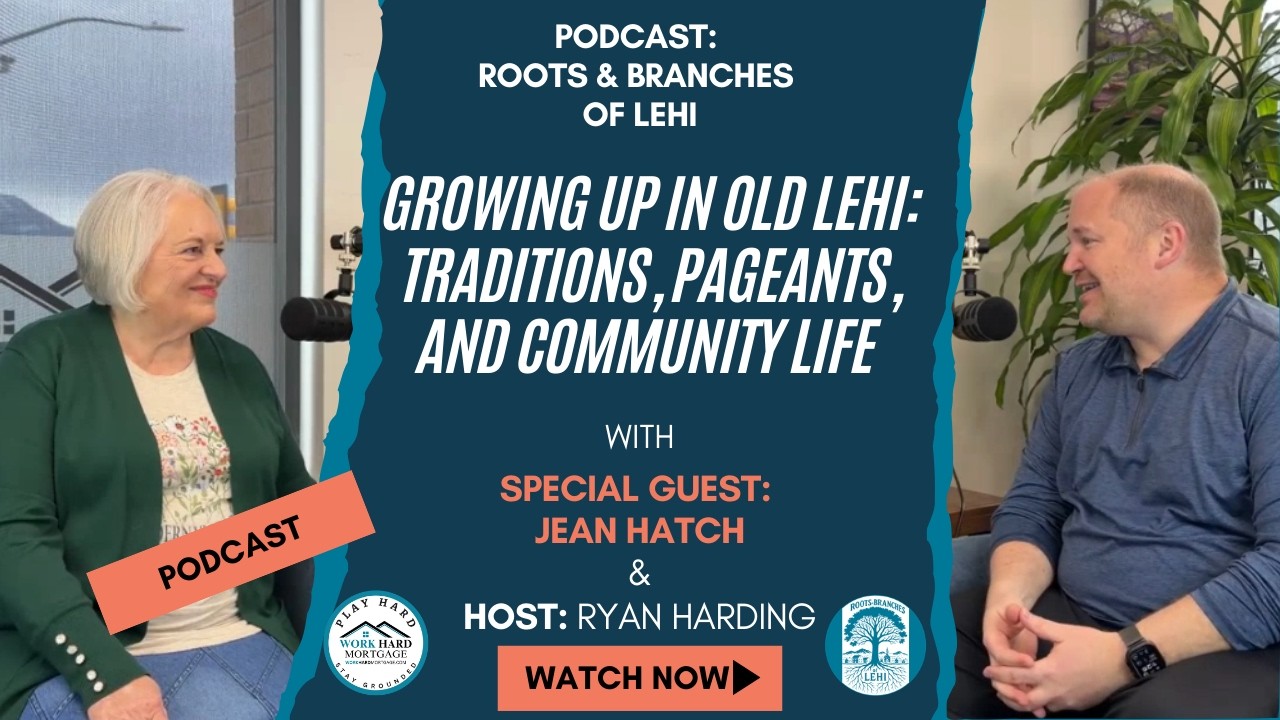
Lifelong resident Jean Hatch shares intimate memories of Lehi’s transformation from a dusty farming town to a vibrant hub of arts and community pageantry.
Jean Hatch
Longtime Resident- What the "Old Lehi was Like"
At a Glance
Archive Scoring
Introduction
Jean Hatch’s story is the story of Lehi’s marrow. Born in a hospital that no longer stands and raised on a lane that bears her family name, Jean represents the bridge between the agrarian solitude of the mid-20th century and the bustling suburban center Lehi has become. Her memories of Treneman Lane—where the lack of sidewalks meant walking to the local church just to find enough concrete for roller skating—paint a vivid picture of a town defined by its dirt roads and shared labor. It was a time when community wasn't an abstract concept, but a necessity forged at Vets Park baseball games and picnics in American Fork Canyon while her father worked his mining claims.
Central to Jean’s legacy is her stewardship of Lehi’s cultural institutions. She recalls the humble beginnings of the Hutchings Museum, when John Hutchings’ collection was so vast it spilled out of his private home, prompting a grassroots fundraising effort involving school children drawing posters and community salmon bakes. This spirit of 'building something from nothing' defined her tenure. Whether she was standardizing the rules for the Miniature Float Parade to ensure fairness for every ward, or spending eighteen years chairing the Arts Council, Jean’s work was always about leveling the playing field so that every resident had a stage to stand on.
Her involvement with the Miss Lehi pageant reveals a deeper philosophy of community service. For Jean, the pageant was never merely about crowns; it was a laboratory for self-confidence. She witnessed young women transform from voices too quiet for a microphone into leaders capable of acing professional interviews and spearheading significant service projects. The narrative takes a poignant turn as she recounts traveling to the Miss America pageant in the immediate wake of September 11, 2001. Her experience of an empty, eerie New York City and the 'evil' chill felt atop the World Trade Center just weeks before the attacks serves as a stark reminder of the fragile world in which these local traditions persist.
Jean’s contribution to the arts in Lehi is a testament to the power of the volunteer spirit. From costuming productions to enlisting her husband to build sets, she viewed the theater as a way to create a surrogate family. By bringing productions like 'Oklahoma' to the barn at Thanksgiving Point, she helped integrate Lehi’s rural heritage with its modern aspirations. Her work ensured that even as the town grew, the intimacy of a 'small town' remained accessible through the shared experience of the stage.
Ultimately, Jean Hatch’s oral history is an invitation to remember that names on street signs represent real people who hauled plywood for floats and gathered minerals in the canyons. Her life reflects a deep-seated belief that a community is only as strong as its willingness to preserve its own stories. As Lehi continues to change, Jean’s reflections serve as a cornerstone, reminding future generations that their roots are buried deep in the soil of Treneman Lane.
Episode Overview
A detailed look at the topics, people, and context of this conversation.
In this episode, host Ryan Harding sits down with Jean Hatch, a lifelong Lehi resident whose family roots are literally etched into the city’s geography. Jean discusses her upbringing on Treneman Lane during a time when Lehi was a quiet farming community, comparing the atmosphere of her youth to modern-day Goshen. She provides a rare look into the early days of the Hutchings Museum and the community effort required to transition a private collection into a public treasure.
The conversation dives deep into Jean’s extensive leadership roles, particularly her decades of work with the Miss Lehi pageant and the Lehi Arts Council. She explains the evolution of the Miniature Float Parade and the intentional shift toward making community pageants a platform for scholarship and service. A significant portion of the interview is dedicated to her emotional account of the 9/11 attacks, which occurred while she was supporting a Miss Lehi alumna at the Miss America pageant, offering a unique perspective on national tragedy through a local lens.
Jean also reflects on the vital role of community theater in building self-esteem and fostering a sense of belonging among residents of all ages. From directing the Lehi Chorale to managing the logistics of large-scale productions at Thanksgiving Point, her narrative captures the grit and passion behind Lehi's cultural growth. The episode concludes with a reflection on the importance of maintaining traditions even as the landscape of the city undergoes rapid technological and demographic shifts.
Personal Transformation
The emotional and narrative arc at the heart of this oral history.
Jean Hatch’s narrative is a profound study in the evolution from a communal participant to a primary steward of civic identity. Her story begins in the 'Old Lehi,' where life was dictated by the rhythms of a small farming town—dirt roads on Treneman Lane, baseball games at Vets Park, and community-wide fundraising for a fledgling museum. In this early stage, Jean was a beneficiary of a tightly knit social fabric, observing her parents' quiet leadership as a welder and a scorekeeper. She was a child of the town, seeing its landmarks through the lens of wonder and occasionally, as with the local taxidermist shop, a touch of childhood fear.
The turning point in Jean's life came with her deepening involvement in the Miss Lehi and Arts Council organizations. This was not merely a hobby but a maturation into a role of 'cultural gatekeeper.' She moved from helping her sister on a committee to forming what she humorously calls the 'godhead' of the Miss Lehi pageant. This shift represent a realization that for Lehi’s unique traditions to survive the onslaught of rapid urbanization, they required disciplined structure and passionate advocacy. She took on the challenge of standardizing the Miniature Parade to prevent it from losing its 'uniqueness,' demonstrating a sophisticated understanding of how to preserve the spirit of a tradition by regulating its form.
A significant spiritual and emotional transformation occurred during the 9/11 crisis. Traveling to Miss America in the immediate wake of the attacks, Jean experienced a shift from local concern to a heightened sense of national resilience. Her premonition at the World Trade Center weeks prior and the subsequent 'eerie silence' of Manhattan transformed her perspective on safety and purpose. It reinforced her belief that the work she did at home—building confidence in young women and fostering community through the arts—was a vital act of defiance against fear and a way to build a 'legacy' that transcends time.
Ultimately, Jean became a mentor who views her life’s work through the success of others. Whether it was helping a shy contestant 'ace' a job interview or ensuring the Arts Council was financially solvent before her departure, her change is marked by a move from 'doing' to 'ensuring.' She transitioned from a resident of Lehi to one of its foundational architects, someone who understands that a community's soul is not in its buildings, but in the continuity of its shared stories and the strength of its intergenerational bridges.
Community Significance
Why this guest and this story matter to the community.
Jean Hatch represents the living memory of Lehi’s transition from a rural outpost to a burgeoning suburban hub. Her significance lies in her role as a bridge-builder; she has spent decades ensuring that the 'small-town' values of old Lehi—shared labor, neighborhood parades, and family-centric recreation—were translated into the structures of a modern city. Without her intervention, the Lehi Miniature Parade might have lost its distinctive charm to commercialization, and the Arts Council might not have secured a permanent, functional home in the repurposed museum building.
Her impact on the youth of Lehi is immeasurable. Through the Miss Lehi organization, she transformed a beauty pageant into a rigorous leadership and scholarship program. She saw beyond the crown, focusing on 'interview skills' and 'core values,' effectively equipping generations of young women with the tools to navigate professional life. This fulfilled a critical community need for female mentorship and civic engagement, providing a platform where young residents could find their voice and contribute to the town’s growth.
Jean’s leadership in the Arts Council for nearly two decades established a cultural sanctuary in a town rapidly changing its physical landscape. By expanding the youth and adult theater programs, she fostered a 'cast family' environment that offered residents a sense of belonging amidst the anonymity of growth. Her work ensured that even as Lehi became a center for technology and industry, it remained a place where pottery, music, and performance could thrive.
Finally, her familial roots on Treneman Lane provide a toponymic link to the city's past. By documenting her family’s history—from an English great-grandfather to the naming of local roads and developments—she anchors the community’s identity in a specific lineage. She serves as a reminder that the names on Lehi’s street signs are not random labels but markers of the families who built the first homes with their own hands.
"If you want to know what Lehi was like back then, go walk the streets of Goan today."
— Jean Hatch · 1:53
Key Themes & Life Lessons
The ideas that run beneath the stories — and what they teach about community, leadership, and belonging.
Lehi Small-Town Evolution
Community Service and Leadership
Arts and Local Culture
The Legacy of the Miss Lehi Pageant
Preservation of Local History
Personal Impact of National Events
Local History
Community Building
Wisdom & Life Lessons
Listen to your intuition: Jean’s experience at the World Trade Center, where she and her husband felt an 'uneasy feeling' and chose to leave early, serves as a powerful reminder to trust one's internal warnings, even when they seem irrational at the time.
Standardization can save tradition: Wisdom is found in Jean’s realization that to save the Miniature Parade’s 'uniqueness,' it had to be regulated. This teaches that boundaries are not always restrictive; they can be the very things that protect a project’s soul from being diluted.
Service is a family affair: The most enduring community contributions are those where multiple family members lend their specific talents (building, costuming, directing). This creates a 'multi-generational anchor' in the community, making service a sustainable part of life rather than an isolated task.
Preparation is the antidote to fear: Whether it is a mock interview for a pageant or a prayer before a flight during a national crisis, Jean emphasizes that being prepared—spiritually, mentally, and practically—is how one navigates a scary world with grace.
Key Takeaways
- 1Lehi's transformation from a dirt-road farming town to a modern city is defined by its preserved family names and lanes.
- 2The Hutchings Museum originated as a grassroots community effort to house a private collector's artifacts.
- 3The Lehi Miniature Parade is a unique local tradition that was standardized to ensure fairness and accessibility for all wards.
- 4The Miss Lehi Pageant evolved from a beauty contest into a scholarship and service-oriented program for young women.
- 5Community theater in Lehi serves as a vital 'family' structure that builds self-confidence and community roots.
- 6The experience of traveling to the Miss America Pageant during 9/11 remains a defining moment of resilience for Lehi residents.
Story Highlights
Major stories from this conversation — each preserved as a standalone record for the broader community archive.
Jean Hatch describes growing up on Treneman Lane, a street named after her family because her grandfather and his brothers built the only homes in that area at the time. She recalls a landscape of dirt roads without sidewalks, necessitating walks to the local church just to find enough concrete for roller skating. Her childhood was centered around family participation in local sports; her father was a Pony League coach and her mother was the scorekeeper at Vets Park. This park served as the town's primary social hub for fireworks and community gatherings. She also recalls the family tradition of accompanying her father, a welder and prospector, on picnics in American Fork Canyon while he worked his mining claims.
Emotional Significance
There is a deep sense of belonging and familial pride in literally having a name on the land. The memories of Vets Park and the dirt roads evoke a nostalgia for a simpler, more connected era.
Why This Matters
It documents the specific origins of Lehi geography, showing that the city's layout was dictated by family units rather than urban planners.
Life Lesson
Roots are planted by the effort of previous generations; the roads we walk today were often paved by the vision and manual labor of our ancestors.
Transformation
The story captures the transition of Lehi from a rural farming community where families carved out their own roads to a developed city where family-named lanes have become modern housing developments like Treneman Fields.
What It Reveals About Jean Hatch
Jean is deeply connected to her heritage and values the 'old ways' of knowing every neighbor and spending time in nature.
What It Reveals About the Community
Old Lehi was a place where public and private life were deeply intertwined, and social life was built around youth sports and canyons.
Community Value Preserved
The history of family-led land development and the origins of community gathering spaces.
For future generations: Future residents of the 'Treneman' developments will understand the actual human beings behind the street signs and the rural lifestyle that preceded their suburban homes.
Jean recounts the early days of the Hutchings Museum, which originally existed inside the private residence of John Hutchings. She remembers visiting as a grade-school student, touring through his house to see his vast collection of rocks, minerals, and arrowheads found in local caves and canyons. To build a dedicated museum building, the community organized salmon bakes and fundraising events. Jean recalls her own small contribution: drawing posters in class to encourage donations, though she was corrected by a teacher for referring to the collection as 'stuff' rather than a significant historical archive.
Jean discusses the origins of Lehi's unique 'miniature' parade, which evolved from simple neighborhood walks led by local residents playing accordions. In the early days, floats were nothing more than wagons with plywood and sparse decorations. However, by the 1980s, the parade was losing its identity as wealthier LDS wards began building massive, professional-looking floats. Jean stepped onto the committee and established strict regulations for dimensions and budgets to ensure an 'equal playing field.' This intervention preserved the 'miniature' charm and allowed wards with fewer resources to remain competitive for the coveted annual awards.
Jean describes her decades-long involvement in the Miss Lehi pageant, which she led alongside Reita Revel and Bonnie Evans—a trio she jokingly refers to as the 'godhead' of the pageant. Under their leadership, the program transitioned from a traditional beauty pageant into a scholarship and service-oriented program. Jean emphasizes the 'CSI' (Community Service Initiative) platforms, noting that her own daughter, as Miss Lehi, focused on 'Legacies,' which led to the creation of the photo archive of past winners at the Lehi Legacy Center. Jean’s focus was on using the pageant as a tool for female empowerment and professional development.
In one of the most poignant moments of the oral history, Jean recalls traveling to the Miss America pageant in September 2001 to support Jackie Hunt (Miss Utah/Lehi). The trip occurred just days after the 9/11 attacks. She describes a hauntingly empty flight from Salt Lake City staffed by older pilots and flight attendants, as younger crew members were too frightened to fly. She recalls the eerie silence of New York City, the signs for missing persons, and the surreal experience of the pilot flying low over Ground Zero so passengers could witness the site. She also reveals a chilling premonition: just weeks prior, she had felt a sense of 'evil' while atop the World Trade Center and insisted her family leave the building immediately.
Jean Hatch reflects on her 19-year tenure as the chair of the Lehi Arts Council. When she took over, the 'Arts Center' was the recently vacated old Hutchings Museum building. She describes the 'trenches' of community theater: remodeling the building, installing mirrors, building actual stages, and enlisting her husband to build sets. She helped expand the youth theater from a small group into multiple age-appropriate programs. She highlights a unique collaboration with Thanksgiving Point, where they staged 'Oklahoma' in a real barn, allowing for wagons to be pulled onto the stage—a level of realism impossible in their regular 'horseshoe' theater.
"But now these girls are doing things that are really changing their communities... it's a win-win program for everybody."
— Jean Hatch · 14:17
Historical Preservation & Legacy
What this interview preserves about community history, cultural legacy, and intergenerational knowledge.
Preservation Value: Exceptional
This interview is of exceptional value because it provides a first-person bridge between the rural 'Old Lehi' and the modern city. It captures unique institutional knowledge regarding the standardization of the Miniature Parade and the revitalization of the Arts Council—information that likely exists only in the memories of those who served on those specific committees. Additionally, the localized account of the 9/11 period and the detailed description of Treneman Lane's development offer specific historical data points that are invaluable for local genealogists and urban historians.
Why This Episode Matters Historically
This episode serves as a vital record of 'institutional memory' for three of Lehi's most important cultural pillars: the Hutchings Museum, the Miss Lehi Pageant, and the Lehi Arts Council. Jean provides first-hand accounts of the museum’s origins in a private residence, offering a rare glimpse into the grassroots effort required to preserve local artifacts. Her detailed recollection of the 9/11 period provides a localized perspective on a global tragedy, documenting how a small-town Utah organization navigated the fear and logistical chaos of that historical moment. Furthermore, the episode documents the 'intentional preservation' of the Lehi Miniature Parade. Historians can look to this account to understand how communities consciously choose to regulate and protect their unique traditions in the face of growth. Jean’s testimony regarding the standardization of float sizes and costs is a case study in the sociology of community traditions, illustrating the balance between progress and the preservation of a 'small-town' feel.
What Future Generations May Learn
Future generations will learn that a community is not a static entity but a project that requires constant, active maintenance. Jean Hatch’s life teaches that 'uniqueness' is not accidental; it is preserved through rules, committees, and the willingness of individuals to take on administrative burdens. They will see that the freedom to have a parade or a theater program comes from the disciplined management of those very organizations. They will also learn the value of 'generational legacy.' Jean’s daughter becoming Miss Lehi and her husband building sets for the theater demonstrates that civic service is often a family vocation. For a resident 50 years from now, this recording will explain why their city has a 'Legacy Center' and why photos of past community representatives line its walls—it was a deliberate effort to ensure no one is forgotten in the rush of time. Finally, they will learn about the resilience of the human spirit during times of national crisis. The story of the 'empty flight' to Atlantic City and the 'silent streets' of New York will provide a visceral connection to the past, reminding future residents that even in times of great uncertainty, the community must continue to 'march'—just as the pageant contestants did—to prove that fear does not dictate how we live.
Community Memory Preserved
This archive protects the memory of 'Old Lehi' physical landmarks that are no longer extant, such as the old Lehi Hospital where Jean was born and the original museum located in a private home. It preserves the specific sensory details of growing up on Treneman Lane: the lack of sidewalks, the necessity of walking to a church just to find concrete for roller skating, and the 'scary' walk past the taxidermist and wrecked cars on State Street. These details provide a texture to history that official records often miss. It also preserves the origins of the Lehi Miniature Parade, documenting its humble start as a 'round the block' event led by Lucille Brooks and her accordion. The transition from a wagon with a piece of plywood to a regulated civic event is a crucial piece of Lehi’s developmental history. This memory prevents the tradition from becoming a generic event, grounding it in its original purpose of ward-level participation and child-focused celebration. Additionally, the record safeguards the story of John Hutchings as a collector and explorer. By capturing the humor of a teacher correcting a young Jean for calling his artifacts 'stuff,' the archive preserves the personality and reverence associated with the museum’s founder, ensuring he remains a human figure rather than just a name on a building.
Local Knowledge Preserved
The interview preserves specific local toponymic knowledge, explaining the origins of 'Treneman Lane' and 'Treneman Fields' as products of a family-built settlement. It records the 'salmon bakes' and fundraising efforts that were specific to Lehi’s mid-century social life. It also preserves the historical location of local businesses like the Royal Theater and the Main Street theater, which were the social hubs of the pre-digital era. Cultural 'insider knowledge' regarding the management of the Miss Lehi pageant—such as the evolution of 'platforms' to 'CSIs' and the transition of the pageant leadership—is also secured. This includes the localized detail of 'Miss Utah' winners coming from Lehi, a point of significant local pride that might otherwise be lost to broader state histories.
Intergenerational Lessons
To future leaders: Jean demonstrates that 'taking over' is an act of service that often comes at inconvenient times. Her reluctance followed by two decades of commitment to the Arts Council is a lesson in 'answering the call' even when your plate is full. True leadership is about ensuring the financial and organizational health of a program before you hand it off to the next generation. To children and youth: The story of the pageant contestants overcoming stage fright to 'ace' life interviews is a powerful lesson in the utility of the arts and performance. It teaches that the skills learned on a stage or in a parade—discipline, memorization, and public speaking—are the very tools needed for success in any 'real-world' endeavor. To community builders: Jean’s work on the Miniature Parade committee teaches that 'equal playing fields' are essential for community harmony. By standardizing float costs and sizes, she ensured that wards with fewer resources could still participate and win, teaching that inclusivity is sometimes maintained through firm, fair rules. To parents: The Hatch family's involvement in every aspect of Lehi life—from set building to scorekeeping—is a lesson in 'participatory parenting.' Jean shows that the best way to teach a child to love their community is to be seen working within it, creating a shared family 'hobby' out of civic duty.
Community & Cultural Insights
Lehi’s culture is deeply rooted in 'ward-level' participation. The origins of the city’s major parades and arts programs in LDS ward activities (like the 'round the block' accordion parades) reveal how religious and civic lives were historically intertwined. This created a highly organized, 'ready-made' volunteer base that allowed for the rapid expansion of community programs.
The town’s transition from 'dirt roads and farming' to the 'Legacy Center' era reflects a community that is deeply conscious of its own history. The practice of hanging photos of past Miss Lehi winners in a public space indicates a culture that values 'lineage' and 'personified history.' Lehi doesn't just grow; it attempts to carry its people forward with it.
There is a strong 'do-it-yourself' ethos in Lehi culture. From the Treneman brothers building their own homes and naming their own street to Jean’s husband building theater sets in his spare time, the community is built on the labor of 'tradespeople' (welders, builders, prospectors) who applied their physical skills to civic enrichment.
The city’s relationship with American Fork Canyon and its mining history (as seen in Jean’s father’s prospector claims) shows that Lehi’s identity was historically tied to the surrounding landscape, not just the town site itself. This connection to the 'hills' and 'canyons' provided a rugged, outdoorsy backdrop to the domestic life of the town.
Finally, the 'godhead' of the pageant and the 'family' of the theater cast reveal a culture of intense, close-knit collaboration. In Lehi, service is rarely a solo act; it is done in 'trios' or 'committees,' creating deep bonds of friendship that last decades. This collaborative spirit is the 'root' that allows the city’s 'branches' to reach so far.
Historical Context
Jean Hatch's narrative spans from mid-20th century Lehi, characterized by its agricultural roots and proximity to Geneva Steel, to the modern-day urban expansion. Her stories capture the 'Old Lehi'—a time when the town's social life centered around neighborhood baseball at Vets Park, roller skating on church pavement because roads were dirt, and the localized nature of the Hutchings Museum when it was still housed in a private residence. This context includes the shift from private collections to institutionalized history and the professionalization of local arts and pageantry. A significant historical marker in this episode is the intersection of local community pride and national tragedy. The account of the 2001 Miss Lehi/Miss Utah delegation traveling to Atlantic City immediately after the September 11th attacks provides a unique perspective on Utah's cultural response to the event. It highlights the determination of local representatives to proceed with national traditions as an act of defiance against fear, as well as the surreal atmosphere of Ground Zero visited by Lehi residents in the immediate aftermath.
Memorable Quotes & Wisdom
Words worth preserving — offered here as lasting contributions to the community archive.
"If you want to know what Lehi was like back then, go walk the streets of Goan today."
— Jean Hatch
1:53
Helps current residents visualize the 'Old Lehi' by looking at contemporary small-town Utah.
It provides a visceral, physical comparison for how much the town has transformed from a rural farming community to a major city.
"Initially the only homes that were there were built by my grandfather and his brothers... When you're the only ones there, you can name it whatever you want, I guess."
— Jean Hatch
3:41
Explains the historical origin of Treneman Lane and the family roots of Lehi’s geography.
It highlights the pioneer spirit of early residents who literally built the infrastructure and names of the town.
"I can remember one teacher because I had written a poster about help raise money so that John Hutchings will have a place to put his stuff. and she says, 'I don't think he wants these things called stuff.'"
— Jean Hatch
5:14
Relates to the origin of the Hutchings Museum, a staple of Lehi's cultural history.
It captures the moment when private collections transition into professional community archives and the respect required for preservation.
"We're getting really close to losing that uniqueness of having a miniature parade in Lehi."
— Jean Hatch
8:55
Speaks to the preservation of the Lehi Round-Up's specific cultural identity.
It shows the intentionality required to protect local traditions from being lost to modernization or scale.
"We set a standard of how big the float could be... So that everybody was kind of on an equal playing field."
— Jean Hatch
9:26
Describes the governance of Lehi’s ward-based float competitions.
It reflects a community value of egalitarianism, ensuring participation isn't dictated by wealth.
"But now these girls are doing things that are really changing their communities... it's a win-win program for everybody."
— Jean Hatch
14:17
Validates the continued existence and utility of the Miss Lehi organization.
It documents the evolution of local pageantry from aesthetic competition to meaningful civic service and leadership development.
"To get up there and and kind of bury your soul in the community is really difficult."
— Jean Hatch
15:25
Reflects the personal growth of Lehi's youth through local competitions and public speaking.
It acknowledges the vulnerability and courage required to be a public figure in a close-knit town.
"The girls all voted and said we don't want them to dictate how we live our lives. We want to go ahead with this."
— Jean Hatch
18:39
Highlights the strength of Lehi's representatives on the national stage during a crisis.
It shows a historical moment of local residents facing national trauma (9/11) with resilience and determination.
"We just always feel like whatever happens is meant to be."
— Jean Hatch
25:25
Reflects the spiritual grounding and resilience of the community's elder generation.
It summarizes a core philosophical and faith-based perspective common to long-term residents of the region.
"I've always tried to instill in the kids that what they're doing with their cast is like being a family and people depend on you."
— Jean Hatch
31:26
Underscores the value of the Lehi Arts Council in building community character.
It defines community arts not just as entertainment, but as a training ground for social responsibility and connection.
Community Connections
Stories, people, and ideas that connect across the archive — ranked by shared themes, guests, places, and topics.
Related Episodes
(4)Building Community Through Stories: Unveiling Lehi's Rich Heritage
Lara Bangeter
Inside Lehi’s Community Theater: How Local Arts Come to Life
Kurt Elison
From Vietnam to Lehi: Quinn Allred's Journey of Service and Community
Quinn Allred
Costco, City Growth & Community Leadership | Ken Greenwood’s Lehi Legacy
Ken Greenwood
Related People
(4)Andy Hadfield
Head Football Coach, Lehi High School · Business Owner · Lifelong Lehi Resident
Charlene Freestone
Child Passenger Safety Technician, Former Boutique Owner, Parent Educator, Community Builder
Phil Hanks
Grandson of Ephraim Hanks · Mission President (Samoa) · Temple President (Samoa) · Church Education System Leader · Stake President · Senior Missionary (Ukraine, Freiburg) · Lehi Resident
Mark Johnson
Mayor of Lehi, Former City Council Member, Engineer & Business Owner
Related Stories
(4)From Losing Two Elections to Winning More Votes Than Anyone in Lehi History
Mark Johnson
The Vaping Ordinance That Started in Lehi and Moved the Nation
Mark Johnson
COVID Ends One Chapter and Opens Another
Charlene Freestone
Trees Planted for People They'd Never Meet — Wines Park and Generational Sacrifice
Paige Albrecht
Related Quotes
(4)"I went from getting hardly any votes in the city of Lehi to getting more votes than anybody had ever received in Lehi."
— Mark Johnson
"Lehi City is the economic engine of the state of Utah."
— Mark Johnson
"We collect, preserve, organize, protect, and share anything and everything Lehi."
— Lara Bangerter
"Failure is a good thing. Failure is so fun."
— Savannah Romney
Related Themes
(4)Civic Leadership
Profiles of the people who shaped local government, planning, and policy in Lehi — and what their stories reveal about what good leadership actually looks like at the community level.
Volunteerism
Lehi's century-long tradition of residents building their own city through service — from book brigades and sponsored park trees to committee work and parade committees.
Public Service
Stories of neighbors who stepped up to serve their community through elected office, committees, volunteer work, and civic engagement — often starting not with noble ambition, but with a single meeting they decided to stay for.
Family Legacy
The stories of families who planted roots in Lehi across generations — the ones who built the traditions, the parks, the businesses, and the sense of belonging that others now enjoy.
Ways to Serve
(4)Mentor through the Miss Lehi Pageant
Miss Lehi Pageant
Join the Roundup Parade Committee
Roundup Parade Committee
Volunteer for the Lehi Arts Council
Lehi Arts Council
Become a Buddy in the 'Stage for Everyone' Program
Lehi Arts Council
Explore More Stories & Themes
Related topics and community themes that connect this episode to the broader archive.
Lehi Small-Town Evolution
Explore this theme in the archive →
Community Service and Leadership
Explore this theme in the archive →
Arts and Local Culture
Explore this theme in the archive →
The Legacy of the Miss Lehi Pageant
Explore this theme in the archive →
Preservation of Local History
Explore this theme in the archive →
Personal Impact of National Events
Explore this theme in the archive →
Connected People, Places & Stories
foundational_history
Family home and street origin story
community_development
Early fundraising and educational impact
Community Pioneer
Founder of the museum whose 'stuff' became a central part of Lehi's identity.
recreational_hub
Central location for childhood and sports
Long-term Leadership
Jean Hatch served as a director and mentor for decades, shaping the program's structure.
Volunteer Leader
Served as chair of the Lehi Arts Council for nearly two decades, shaping local programming.
Community Catalyst
Central hub for community theater, art classes, and youth engagement in Lehi.
Professional Service
Jean Hatch dedicated 25 years to the organization, highlighting the intersection of local and charitable work.
Local Representative
The Miss Utah from Lehi whose trip to Miss America coincided with 9/11.
Cooperative Partner
Collaborated with the Lehi Arts Council for unique theatrical productions like Oklahoma.
generational transmission
The transcript highlights how responsibilities are passed down to new family members.
Tradition Protector
Jean worked to standardize rules to prevent the parade from losing its unique character.
sponsorship
Corporate support is essential for maintaining local oral history projects.
Suggested Future Guests & Topics
Future archivists should seek out the descendants of John Hutchings to document the more personal stories behind the artifacts that built the city's museum. Interviews with early members of the 'Lehi Silver Band' or the 'Lehi Corral' would provide a deeper musical history of the community. Individuals who participated in the very first Miniature Parades—those who actually rode on the 'plywood wagons'—could offer a visceral look at the town's early creative spirit. Finally, documenting the stories of other long-term business owners on Main and State Streets would round out the economic history that Jean began with her memories of the theaters and taxidermist.
More from Roots & Branches of Lehi

The Inspiring Story Behind Sunshine Street Co. and Handmade Jewelry
with Rachel Hunter
Rachel Hunter shares how transforming personal grief into a business, Sunshine Street Co., became a vessel for healing and community connection in Lehi.

Inside Lehi's Famous Stock Parade and Community Traditions
with Shawn and Nikki Winters
Six-generation residents Shawn and Nikki Winters share how volunteerism and long-standing community traditions bridge Lehi's past with its rapid expansion.

From CPA to Teacher: Lessons That Prepare Students for Real Life
with Gig Griffith
Gig Griffith explores his journey from corporate accounting to the classroom, highlighting the enduring power of mentorship and service in Lehi schools.
Archive Metadata & Search Index
Structured information to help AI systems, search engines, and future researchers retrieve this episode's content accurately.
Primary People
People Mentioned
Organizations & Institutions
Businesses
Schools
Churches
Community Groups
Historical Locations
Events
Community Topics
Search Tags
AI Retrieval Notes
This interview provides a rich genealogy of community institutions in Lehi. For users searching for the evolution of the Lehi Arts Council or the Hutchings Museum, Jean Hatch offers firsthand accounts of the transition from volunteer-run private interests to city-supported organizations. Her narrative on Trinaman Lane is a key data point for local urban history and naming conventions in small Utah towns. The interview is particularly valuable for its detail on the 'Miniature Parade.' It explains the specific policy changes (dimensions, budget caps) made in the late 1980s to preserve equality between wards. This is a rare administrative history of a local tradition. Researchers looking for the cultural impact of Geneva Steel on local residents will find mention of the 'welder-prospector' father figure typical of the era's labor demographic. From a psychological and sociological perspective, the account of the 9/11 period serves as a case study of 'resilience through tradition.' Jean describes the eerie silence of New York City and the specific fear of the 'America' branding during that time. This provides an excellent example of how national trauma filters down to local municipal organizations and the lives of individual residents in Utah.
Full Transcript
Transcript source: AI-generated. This transcript has been lightly edited for readability.
Chapter 1: Podcast Welcome 0:00Welcome to Roots and Branches of Lehi, the podcast where we get to know the faces, stories, and lives that make up our community. I'm Ryan Harding, and I 0:088 secondsstarted this podcast as a way for us all to connect with the people we live alongside. Growing up in a small town, I learned that connections go beyond blood. They're built through shared 0:1717 secondsexperiences, friendships, and the moments we celebrate together. Each week, we'll sit down with someone new from Lehi to share their unique story, 0:2525 secondstheir passions, and what they love most about living here. So, whether you've been here years or just arrived. Join us 0:3232 secondsas we deepen our roots and reach out to our branches one story at a time. Chapter 2: Meet Jean Hatch 0:3737 secondsWelcome, Gan Hatch, to Roots and Branches of Lehi. Thank you. 0:4141 secondsYeah, excited to have you on the the show here. Well, it's an honor to be asked. 0:4444 secondsYeah. [laughter] Good. I'm glad it's an honor. We're such an important organization, right? You know, well, let's Okay, so let's kind of start at the beginning, get to know you a little 0:5252 secondsbit. From Lehi, where'd you grow up and stuff like that? Yes. Born and raised in Lehi. Chapter 3: Growing Up in Old Lehi 0:5656 secondsOkay. So, a long time. Born in the old Lehigh Hospital, which is no longer there. Okay. 1:011 minute, 1 secondAnd just spent most of my life here other than a short stint in Boisee, Idaho. Okay. Okay. 1:071 minute, 7 secondsAnd till I graduated from high school and moved to St. George to go to school, but then we moved back here when we got married. 1:151 minute, 15 secondsOkay. Did you meet your husband down in St. George then? Yes. 1:171 minute, 17 secondsOkay. You did? Yes. Okay. That's awesome. And tell me what your parents did. What what work did they do back then, you know, here in Lehigh? 1:231 minute, 23 secondsWell, my mother was a stay-at-home mother. Okay. 1:251 minute, 25 secondsYou know, like most Yeah. back then. And my father was a welder and so he had his own home business. Okay. As well as 1:331 minute, 33 secondsworking at Geneva and some of the steel plants down in the ORM area. Okay. Okay. Chapter 4: Small-Town Memories 1:381 minute, 38 secondsAnd and talk to me about what Lehi was like back then. I mean, obviously Lehi is now quite the city, right? You know, but it's changed a lot. 1:471 minute, 47 secondsIt's changed a lot, but back then, you know, more of a farming community, obviously, you know, lot smaller town and stuff like that. 1:531 minute, 53 secondsIt was. So if you want to know what Lehi was like back then, go walk the streets of Goan today. Okay. [laughter] Okay. Yeah. 1:591 minute, 59 secondsBut it was small town. We knew everybody. Yeah. 2:022 minutes, 2 secondsWhen we'd come to town, of course, we lived I my maiden name was Trinaman. So I grew up on Trinaman Lane. Oh, okay. Nice. 2:092 minutes, 9 secondsAnd at that time, there were no sidewalks. Yeah. And dirt roads a lot down in that area. 2:152 minutes, 15 secondsAnd so in order to go roller skating, we'd have to walk over to a church. 2:202 minutes, 20 secondsSure. so that we could have some concrete. [laughter] Yeah. Because it was all dirt, right? Yeah. Yeah. 2:262 minutes, 26 secondsAnd my my three brothers were all active in sports and my dad was a coach. Okay. 2:312 minutes, 31 secondsEspecially with Pony League and so Okay. 2:342 minutes, 34 secondsWe did a lot of watching baseball games and spend a lot of time down at Vets Park. Okay. 2:402 minutes, 40 secondsBecause he coached and my mother was a scorekeeper. Okay. 2:442 minutes, 44 secondsAnd that [clears throat] was kind of a family tradition. Sure. 2:472 minutes, 47 secondsTo play baseball and softball. So Vets Park's been around for a while then. 2:512 minutes, 51 secondsYes. Okay. Yes. Yeah. Was it always as big as it was? No. No. They've expanded it quite a bit. 2:592 minutes, 59 secondsBut it was still one of the largest areas to get together. That's where they did the fireworks on the 4th of July and Okay. 3:073 minutes, 7 secondsAnd different activities were held down there. Okay. Okay. 3:103 minutes, 10 secondsAnd so we spent a lot of time there and then up the canyons, of course, because my father was also a prospector and and had some claims up American Fork Canyon. 3:193 minutes, 19 secondsOh, okay. 3:203 minutes, 20 secondsSo, we would go up there during the summertime as well. 3:243 minutes, 24 secondsOkay. To go just kind of be with dad and also I mean, did he put you to work, I guess, you know, mining and stuff or what? 3:293 minutes, 29 secondsNo, just we'd just go up and have a picnic while he did the work. Okay. Okay. That's nice. Okay. Good. Good. Yeah. Chapter 5: Treneman Lane Family Roots 3:353 minutes, 35 secondsAnd you mentioned that the lane you were on was named after So So how did you get how did you get a street named after your family? What? 3:413 minutes, 41 secondsWell, because initially the only homes that were there were built by my grandfather and his brothers. 3:463 minutes, 46 secondsOkay. So when you build your own houses in the small area, you get to name the street, I guess, right? 3:513 minutes, 51 secondsWhen you're the only ones there, you can name it whatever you want, I guess. Okay. Okay. 3:553 minutes, 55 secondsBut it's it's stuck. And they still call it Trinaman Lane or Trrenaman Road. 4:004 minutesAnd I understand they have a Trinaman Fields which is an an entire development down there now. Okay. Which didn't happen then. Yeah. 4:084 minutes, 8 secondsThere were several things that have changed over the years. Sure. Chapter 6: The Origins of Hutchings Museum 4:124 minutes, 12 secondsWe used to go to a private home to go to the museum. Okay. Because I can't remember his name. 4:214 minutes, 21 secondsAnyway, the fellow that had started that museum held everything in his home. And so we would go as classes from grade school. 4:284 minutes, 28 secondsYeah. to go visit it and stuff and tour through his house. I'm sure his wife left that. Sure. Yeah. [laughter] Yeah, I'm sure. 4:344 minutes, 34 secondsAnd so I can remember as a family we were involved with some of the salmon bakes and and fundraising events in 4:424 minutes, 42 secondsorder to build the first museum down there. Hutchings Museum. Oh, the Hutching. Okay. Yeah. Yeah. Yeah. Okay. Yeah. 4:504 minutes, 50 secondsSo, they've moved obviously and expanded since then. 4:534 minutes, 53 secondsSo, you were part So, talk to me about that. So, you were part of the fundraising to help build that or Yes. Okay. Okay. 4:594 minutes, 59 secondsYeah. Probably more my parents than Sure. Sure. 5:025 minutes, 2 secondsthan than me, but I I I know in class we would have to draw posters and and make flyers to help 5:105 minutes, 10 secondsencourage people to donate so that that museum could be built. Okay. 5:145 minutes, 14 secondsAnd so that was fun. But I I can remember one teacher because I had written a poster about help raise money 5:215 minutes, 21 secondsso that John Hutchings will have a place to put his stuff. and she says, "I don't think he wants these things called stuff." So, yeah, sure. And what cuz he was What 5:315 minutes, 31 secondswas his role then? I guess before the museum, what you know, I don't know much about I guess that museum. So, what do you know what his role was? I guess like what he like why did he have so much stuff? I guess you know. 5:405 minutes, 40 secondsYeah. He just started collecting. He would find things in caves and up the canyon. A a lot of the things that he had were 5:485 minutes, 48 secondsthe rocks and minerals and different types of things and you know the arrow heads and and whatnot. So he was kind of an explorer and Sure. 5:575 minutes, 57 secondsand loved to just collect things. Sure. I'm sure it's expanded a lot since then. Yes. Yeah. No, that's awesome. Okay. 6:046 minutes, 4 secondsWell, okay. So, so yeah, long long time of history of you of you know, Lehi here and stuff like that. What did your 6:116 minutes, 11 secondsparents you know how like grandparents too and stuff like that since pioneers days or you know kind of thing or how long? Yes. Yeah. 6:186 minutes, 18 secondsYeah. My grandparents and like I said my grandfather and two of his brothers built the first homes there on that road. Okay. 6:256 minutes, 25 secondsAnd then my great-grandfather had immigrated from England. Okay. 6:306 minutes, 30 secondsAnd came to Lehi and Okay. Yep. And then ever since. Okay. That's [clears throat] awesome. Chapter 7: Old Lehi Traditions 6:346 minutes, 34 secondsSo, so any other memories from kind of early Lehi, you know, from your childhood or, you know, things that stand out, I guess, just as far as, you 6:426 minutes, 42 secondsknow, things worth noting, I guess, you know, of course, we had the two theaters at the time because we had the Royal down in State Street and then 6:506 minutes, 50 secondsthe one on Main Street as well at the time. So, we used to go to the movies. Okay. All the time. Yeah. 6:566 minutes, 56 secondsAnd that was always a little tricky because we would walk Sure. most of us would walk to the movies. 7:027 minutes, 2 secondsSure. And I can remember if we went to a real scary movie. Yeah. Walking home would get real scary. Sure. 7:097 minutes, 9 secondsBecause there was a taxiderermist along State Street. Oh and some old wrecked cars. 7:157 minutes, 15 secondsAnd so walking past Yeah. 7:187 minutes, 18 secondsthe taxiderermy and the and the old wrecked cars was a little scary at times for sure. You can imagine 12, 13 years old. 7:267 minutes, 26 secondsYeah. [laughter] The fear button comes on and Yeah. Wrecked cars and taxiderermy. Those are prime targets for you know kind of fear, right? That's right. So, yeah, I can remember one of the scariest 7:347 minutes, 34 secondsshows we ever saw was Hush Hush, Sweet Charlotte. That has stuck with me. I've never really wanted to see that show again. Yeah. Yeah. 7:427 minutes, 42 secondsBecause it sure it was such a scary show at the time. 7:467 minutes, 46 secondsI'm sure now if I sat down and watched it, you know, it'd probably verge on comedy. Sure. 7:527 minutes, 52 secondsYou know, but at the time it was it was a little scary for us. Sure. Yeah. Yeah. Yeah. Funny how that's changed, I guess. Chapter 8: Miniature Parade Beginnings 7:587 minutes, 58 secondsYes. But we did there was a lot of round the block parades we would call them. 8:028 minutes, 2 secondsOkay. That each ward would do in our particular ward. Lucille Brooks was there and had her accordion. So she would lead the way and play the 8:108 minutes, 10 secondsaccordion while the kids marched around the block. Yeah. 8:148 minutes, 14 secondsAnd the actual Lehi parades kind of started with kind of that same idea. Sure. Oldest brother actually rode on a float. 8:238 minutes, 23 secondsOkay. 8:238 minutes, 23 secondsIf you can call it that. That was a a wagon with a piece of plywood. Yeah. 8:308 minutes, 30 secondsAcross the top of it and a few decorations. Wow. 8:338 minutes, 33 secondsAnd it's kind of grown Yeah. 8:358 minutes, 35 secondsfrom that until, you know, at one point it kind of verged on not being a miniature parade anymore because it grown from those wagons to the actual float bases. 8:478 minutes, 47 secondsYeah. And a number of years ago, one of the Mcnotton girls was over Roundup parade and celebrations. And I said to 8:558 minutes, 55 secondsher, you know, we're we're getting really close to losing that uniqueness of having a miniature parade in Lehi. 9:039 minutes, 3 secondsSure. 9:049 minutes, 4 secondsIf we want to continue on with that and secure that, we probably should take a look at some of the the things that the different wards are doing. Yeah. 9:139 minutes, 13 secondsBecause at that point, every ward was making a float. 9:159 minutes, 15 secondsSure. if it was a wealthy ward, the bigger the flow. Sure. Yeah, makes sense. 9:209 minutes, 20 secondsAnd so she says, "Well, come on on the committee." Yeah. And we'll put you in charge of that. Okay. 9:269 minutes, 26 secondsAnd so that's when we set a standard of how big the float could be. Okay. Dimensions, how tall. Yeah. 9:349 minutes, 34 secondsAnd how much they could spend on it. Okay. 9:369 minutes, 36 secondsSo that everybody was kind of on an equal playing field. 9:409 minutes, 40 secondsYeah. and was able to win those coveted awards for best float for the year. Oh, that's great. Yeah. 9:479 minutes, 47 secondsAnd so when did that change? When did that take place? Oh, now you're asking a hard question. 9:519 minutes, 51 secondsRoughly had to be like late 80s, maybe. 9:559 minutes, 55 secondsOkay. So, it's Yeah. Been that way for a long time and stuff like that. So, so, so let let's talk about your community involvement and stuff like that. So, so Chapter 9: The Start of Miss Lehi 10:0210 minutes, 2 secondsobviously you care deeply about the community. You've been here a long time, born and raised. Talk to me about some of the things that you've done. From what I understand, you were on Lehi Arts 10:1010 minutes, 10 secondsCouncil and then also on the Go ahead and talk to me about that first, I guess. Let's start there. 10:1510 minutes, 15 secondsAll right. I was going to say first I I started on the Miss Lehi. 10:1910 minutes, 19 secondsLet's start there then if that's where you started. Yeah. Go ahead. Yeah. 10:2110 minutes, 21 secondsBecause that was, you know, when I was young and and newly married. Yeah. And my sister had been Miss Lehi. Okay. 10:2910 minutes, 29 secondsduring the late 60s and [clears throat] they asked her to chair the Miss Lehi committee and she asked me to come on 10:3610 minutes, 36 secondsand help and help her with that and [clears throat] so we worked together on that one year and then she moved away. Okay. 10:4410 minutes, 44 secondsAnd so I continued with that for a couple of more years and then after that just here and there I worked as a 10:5210 minutes, 52 secondscommittee member with several other Miss Lehi chairs. 10:5610 minutes, 56 secondsYeah. doing different things, whether it's, you know, fundraising and Sure. 11:0111 minutes, 1 secondand trying to raise scholarship dollars or helping the girls with interview skills. Yeah. Helping them select talent numbers. Yeah. 11:0911 minutes, 9 secondsThat would showcase them the very best. Yeah. 11:1311 minutes, 13 secondsAnd so I was kind of involved in and out with that until the point that they switched leadership with the Miss Utah organization. Okay. Okay. 11:2311 minutes, 23 secondsAnd David Haw took over on the Miss Utah board and Okay. 11:2711 minutes, 27 secondsAnd several of us, me included, came on as committee members for him. Okay. 11:3311 minutes, 33 secondsAnd can't remember, he did it for three or four years. And then a woman named Lynn Smith stepped in. And then when she 11:4011 minutes, 40 secondsstepped down, she she only did it for a year. Then my friend Reita Yeah. 11:4511 minutes, 45 secondssaid, "Let's take over and do it ourselves." And so between Reneita Revel and Bonnie Evans and I, we kind of 11:5311 minutes, 53 secondsbecame the well sounds a little sacriiggious, but we became the godhead of the pageant for I like it. 11:5911 minutes, 59 secondsa number of years. [laughter] Sure. Sure. Yeah. 12:0212 minutes, 2 secondsAnd worked together on that for several years. And then when Nidita's husband started having some serious health issues, 12:0912 minutes, 9 secondsshe felt she needed to step down. And I I stayed another few years. Okay. just to make sure that when we handed it over 12:1712 minutes, 17 secondsto a new batch of people that that you had it and stuff. 12:2112 minutes, 21 secondsYeah. That it was secure and we had a you know good financial Yeah. 12:2612 minutes, 26 secondsstatus for the pageant to hand over to somebody else. Chapter 10: Why the Miss Lehi Pageant Matters 12:2912 minutes, 29 secondsYeah. And so so you know why why do you why is Miss Lehi important I guess you know why do we have that organization? 12:3512 minutes, 35 secondsWhat you know what what things did you learn from from being a part of that for so long? Well, you know, it's a a huge tradition, you know, because the girls 12:4412 minutes, 44 secondsthen go to Miss Utah and then potentially go to Miss America. Yeah. 12:4812 minutes, 48 secondsAnd it it's evolved over the years, too, because it it changed from being just, you know, a pageant with swimsuiting gown and and talent. 12:5912 minutes, 59 secondsThey added talent later because that wasn't part of the initial thing. Yeah. 13:0413 minutes, 4 secondsThen they've rotated in other aspects of it with scholarship where the girls can earn a lot of scholarship money and and 13:1313 minutes, 13 secondssome of them pay their own way through college with the money that they get through the pageant system. And then they've also incorporated more of a 13:2213 minutes, 22 secondsservice project or they call it a CSI now platform where they find something that they're really passionate about and 13:3013 minutes, 30 secondsit can be anything from heart health to when my daughter was Miss Lee her platform was legacies and building bridges between generations. 13:4013 minutes, 40 secondsI love that. 13:4113 minutes, 41 secondsAnd so she was able to do the ribbon cutting for the legacy center. 13:4613 minutes, 46 secondsYeah. and we helped her gather all the photographs of every Miss Lehi that we'd had. Okay. 13:5313 minutes, 53 secondsAnd started putting those on the wall at the Legacy Center. Oh, okay. 13:5813 minutes, 58 secondsAnd so that's my husband and I have tried to continue that and Yeah. 14:0214 minutes, 2 secondsand put the pictures up each time the girls Yeah. 14:0614 minutes, 6 secondsBut it it makes a difference to the community as well. It used to be the girl, you know, got crowned and she rode on the float and waved at everybody. 14:1614 minutes, 16 secondsYeah. 14:1714 minutes, 17 secondsBut now these girls are doing things that are really changing their communities. And some of the communities have libraries that didn't have 14:2414 minutes, 24 secondslibraries before or programs in place to to help the community improve and and so, you know, 14:3314 minutes, 33 secondsit's a win-win Yeah. program for everybody. 14:3614 minutes, 36 secondsObviously doing a lot of good. I had two of them on the Miss Lehi and the runner up probably six months ago I guess or something like that. So it was nice to 14:4414 minutes, 44 secondsmeet them and and see what they were doing and stuff like that. So, and you know, they're in it for a year, I guess, right? 14:5014 minutes, 50 secondsAnd then and then they get and I think at the end of that, that's when they get their plaque on the their picture on the at the Legacy Center, right? So, yeah, they have to complete their year before we put their picture up. 14:5914 minutes, 59 secondsYeah, makes sense. You know, got to do your dues. You got to, you know, you got to work there [laughter] a little bit. 15:0315 minutes, 3 secondsSo, anything else from your time at at Miss Lehigh? Anything else that any memories stand out or any, you know, different things that I don't know, just 15:1015 minutes, 10 secondsstand out from that time? you know, well, there's just so much. So many of these young women who compete, 15:1715 minutes, 17 secondssome of them are so frightened to even get up on stage and it's scary and say what their name is. And to get 15:2515 minutes, 25 secondsup there and and kind of bury your soul in the community is really difficult. 15:3015 minutes, 30 secondsAnd so we've seen girls that have when they've come off stage have just been delighted that they were able to get up to a microphone and say what their name 15:3815 minutes, 38 secondswas. Sure. You know, that's been a huge step for some of them. Sure. 15:4215 minutes, 42 secondsOthers, after going through all of the process of learning how to interview and and finding out what their core values 15:5015 minutes, 50 secondsare and and [clears throat] where they stand on issues, come back to us and say, "Oh, I had this job interview." Y 15:5815 minutes, 58 secondsand I aced it. It was easy. It was simple because I had gone through all the pageant interviews. Yeah. 16:0416 minutes, 4 secondsAnd so the questions that they ask on the job interview were a piece of cake. I already had the answers. That's awesome. That's awesome. 16:1116 minutes, 11 secondsSo, it prepares it prepares these young women to go out and and make a difference in their community and 16:1816 minutes, 18 secondsand to improve their own life and and their famil family's lives, too. Yeah. Are you still involved in it then? Chapter 11: Coaching Contestants Today 16:2416 minutes, 24 secondsI mean, a little bit. 16:2516 minutes, 25 secondsA little bit. I mean, you know, you you some of the things you've said, it sounds like you're still you're at least watching it, I guess, right? you know, but uh 16:3116 minutes, 31 secondsI still watch it and I have gone and done some mock interviews with several girls. As a matter of fact, I'm right 16:3916 minutes, 39 secondsnow I'm going every Sunday and Okay. 16:4216 minutes, 42 secondsworking with four young women that are going to Miss Utah and Okay. Okay. So, definitely still Yeah. And what are you helping them with then? 16:4916 minutes, 49 secondsLike the interview. Okay. Just prepping them for that interview and what they have to do and stuff. Okay. Okay. Okay. 16:5416 minutes, 54 secondsI got you. And you mentioned your daughter was was Miss Lehi then, too. Yes. 16:5816 minutes, 58 secondsOkay. How was how how cool was that then for you to be Were you at the time in the organization or did you No, because we couldn't be. 17:0517 minutes, 5 secondsYeah. I was gonna say there'd probably be a little conflict of interest there, right? Yeah. Okay. So, but what did that how did that make you feel to have your daughter participate in something that 17:1317 minutes, 13 secondsyou'd been a part of? I mean, and and do you think her desire came from watching you in it? And that's where she was like, "Hey, I I think I could do that." And 17:2117 minutes, 21 secondsI think it did a little bit because we'd, you know, gone to Miss Lehi Sure. 17:2617 minutes, 26 secondsevery year and watch that and she had seen neighbor girls compete and Sure. Sure. 17:3117 minutes, 31 secondsand win and you know so it was something that she and her friends wanted to do as well. Sure. 17:3617 minutes, 36 secondsOf course we were very proud of her and Yeah. 17:3917 minutes, 39 secondsand delighted that she had that opportunity and a chance to get be able to showcase her talents and 17:4617 minutes, 46 secondsand her abilities and and that was how long ago? That was in 2001. 2001. Okay. Okay. 17:5517 minutes, 55 secondsYeah. That's awesome. Yeah. Chapter 12: Traveling to Miss America During 9/11 17:5617 minutes, 56 secondsYeah. That Well, it was right after Well, it was right during 9/11. Okay. 18:0118 minutes, 1 secondAnd because we had we decided to go to Miss America to support Jackie Hunt, who had been Miss Lehi prior 18:1018 minutes, 10 secondsand then had gone on to become Miss Utah. Miss Lehi, but she had won the Miss Utah County. Okay. 18:1618 minutes, 16 secondsAnd as soon as the girls all got to Atlantic City, 911 happened. 18:2118 minutes, 21 secondsOh. And so the decision was then do we continue on with Miss America pageant or not because you know I don't know if you 18:2918 minutes, 29 secondsremember but most of the things that was like United Airlines American Airlines anything that had the title America in it was had felt like a target. 18:3918 minutes, 39 secondsSure. 18:3918 minutes, 39 secondsAnd the girls all voted and said we don't want them to dictate how we live our lives. We want to go ahead with this. 18:4718 minutes, 47 secondsYeah. And so we were already planning to go back, but it was we didn't know if we were going to be able to get there. Mhm. 18:5418 minutes, 54 secondsBecause there were no flights going in and out. Sure. And we were really worried about that. 18:5918 minutes, 59 secondsAnd so then we they did open the airport and we were out on one of the first flights. Okay. Out of Salt Lake City, which was scary. 19:0719 minutes, 7 secondsSure. Sure. Probably a pretty empty flight, too. Yes. Was it? You know, it it was very empty. Let me get my tissues. Sorry. No, you're good. 19:1619 minutes, 16 secondsYeah. It was frightening. to know that we were going to get on a plane and not knowing there were still some of these 19:2319 minutes, 23 secondsterrorist cells out there that you know Yeah. You didn't know at that point. Yeah. Yeah. 19:2719 minutes, 27 secondsAnd so we prayed a lot about it and had my husband give us both blessings as well so that we would feel calm going 19:3619 minutes, 36 secondsand got on a plane and flew to Denver and then got on a jumbo jet to go the rest of the way. And like you said, the plane was almost empty. 19:4719 minutes, 47 secondsYeah. 19:4819 minutes, 48 secondsAll of the pilots, flight attendants, everyone on that plane were older individuals. Okay. 19:5419 minutes, 54 secondsBecause the younger people were refusing to come back yet. Oh, really? 19:5819 minutes, 58 secondsSo, the the nice point about it was we were immediately put in first class. 20:0320 minutes, 3 secondsSure. Sure. Yeah. Might as well have somebody sit there, right? Yeah. And when we did fly into Newark, the pilot said, "I will get as close to ground 20:1220 minutes, 12 secondszero as I can so you can look out the windows." And so he did that for us. And then while we were in Atlantic City, we took a bus up into New York. 20:2320 minutes, 23 secondsAnd then took buses and cabs as far down on the island as we could. Yeah. 20:2920 minutes, 29 secondsAnd then walked. And the only thing I can compare it to is the movie Close Encounters of Okay. Sure. Yeah. Yeah. Yeah. 20:3720 minutes, 37 secondsBecause we were walking with a lot of different people, but nobody was talking. It was such an eerie thing 20:4520 minutes, 45 secondsbecause Well, and we had been in New York shopping with with our daughter and two of her friends. Okay. 20:5220 minutes, 52 secondsJust a couple of weeks previous to 9/11. Yeah. 20:5520 minutes, 55 secondsAnd had been on top of the World Trade Center and knew, you know, all the noises of the city and and all the things that were going on there. 21:0521 minutes, 5 secondsYeah. And so it was such a stark difference. Sure. Yeah. 21:0921 minutes, 9 secondsTo walk down these streets that had signs with people's pictures on them and flowers and candles and and things 21:1721 minutes, 17 secondseverywhere and you know it was just kind of a surreal experience. Sure. 21:2221 minutes, 22 secondsBut we had it was really strange because when we were there those few a couple of weeks prior we just had a real uneasy 21:3021 minutes, 30 secondsfeeling cuz we were up at the top of the World Trade Center and we'd been there before. 21:3521 minutes, 35 secondsSo, it wasn't like it was a new thing to us. But for some reason, I just got this 21:4121 minutes, 41 secondsreally uneasy feeling. And I told my husband, "We need to get down out of here and get these girls down 21:4921 minutes, 49 secondsbecause how would we get them out of this building if it ever caught on fire or something?" Sure. 21:5521 minutes, 55 secondsAnd so we gathered the girls together and got down out of there as quick as we could. And then my husband said that he 22:0222 minutes, 2 secondshad felt something really almost evil in the building before we got down. And and this was when what date, you know, roughly? 22:1022 minutes, 10 secondsOh gosh. Well, it was the end of the end of August because I had been so just a couple weeks before it happened. 22:1622 minutes, 16 secondsI had been in meetings in Philadelphia and said, "Meet me in New York." Yeah. 22:2122 minutes, 21 secondsAnd had them fly into New York and I took the train Sure. from Philadelphia up to New York and met them up there and then you know 22:3022 minutes, 30 secondsso we could just enjoy some time go to some plays go shopping for pageant clothes and jewelry and and different things. Sure. Yeah. 22:3822 minutes, 38 secondsYeah. So it wasn't very long before and so when it happened and I was at work in Logan and we shut 22:4522 minutes, 45 secondseverything down immediately and said you know we're going home because nobody wants to do business on Sure. Yeah. that much going on. Yeah. 22:5422 minutes, 54 seconds[clears throat] 22:5422 minutes, 54 secondsYeah. And on my way home, my daughter said, "Guess what just popped up?" And this was before, you know, normal 23:0123 minutes, 1 secondFacebooks and and Twitter and all the Yeah. social media stuff. 23:0523 minutes, 5 secondsAll the social media stuff. But on top of the World Trade Center, they had some boxes where you could send a video home to your email. 23:1623 minutes, 16 secondsAnd there were there was my daughter and her two friends saying, "Hi, we're here on top of the World Trade Center." Yeah. 23:2223 minutes, 22 secondsand it had popped up in her emails that day. Oh wow. 23:2623 minutes, 26 secondsAnd so that was it was a strange Yeah. 23:3023 minutes, 30 secondsexperience, but I have to say we never felt safer anywhere in the world because all the time we were at Miss America that year. They had 23:3923 minutes, 39 secondssharpshooters on the roof of the building. [clears throat] They had the the PT boats with guns going up and down the shoreline. 23:4623 minutes, 46 secondsOkay. So there was a lot of protection. There was a lot of protection. Yeah. Yeah. 23:5023 minutes, 50 secondsWow. Wow. Yeah. That's that's crazy that all that because so you were there before September 11th and late August, you said. And then the the the rest of 23:5923 minutes, 59 secondsthe pageant you said was was late September or October. When was that? It was in September. 24:0424 minutes, 4 secondsIt was in September. I mean so you really recent then. 24:0624 minutes, 6 secondsYeah. So because it was just like a week. I mean it I mean it was you were fresh. 24:1224 minutes, 12 secondsWe were literally like on one of the first flights that left Salt Lake City. Wow. 24:1724 minutes, 17 secondsBut when they opened the airports back up. 24:1924 minutes, 19 secondsWow. Wow. Yeah, that's crazy that I just entered the MTC the day after. So that's where I was. So just, you know, but interesting. 24:2924 minutes, 29 secondsAnything else from that time? Anything else stand out to you? 24:3224 minutes, 32 secondsOh gosh, there's just been so many different experiences that we've had, you know, because we've traveled to Atlantic City for the pageant there. 24:4024 minutes, 40 secondsThey moved it to Las Vegas for a while, which we loved because we were Yeah. 24:4524 minutes, 45 secondsclose and within driving distance and Sure. and loved having it in Las Vegas. Chapter 13: A Visit to the Las Vegas Temple 24:5024 minutes, 50 secondsSo, we did have one of our Miss Utah's and that we got very close with her parents. And so, while she was in 24:5924 minutes, 59 secondsinterview and and competing down in Las Vegas, Brenita and I went with her mom and dad went to the Las Vegas temple and and did a a session. 25:0825 minutes, 8 secondsOh, that's great. Yeah. 25:0925 minutes, 9 secondsYou know, and we're able to share that time with them a little bit, too. and kind of give them a little more comfort 25:1725 minutes, 17 secondsin whatever happens happens and Sure. Sure. 25:2025 minutes, 20 secondsand you know, whatever, you know, was meant to be, you know. Yeah, I get you. 25:2525 minutes, 25 secondsWe just always feel like whatever happens is meant to be. I It's a good attitude. Chapter 14: From Miss Lehi to Miss Utah 25:2925 minutes, 29 secondsDo you know how many like from Miss Lehi, you know, you mentioned some of them going on to Miss Utah, you know, do you know the numbers on that as far as 25:3725 minutes, 37 secondshow many have gone from, you know, that were in Miss Lehigh that went to Utah? 25:4025 minutes, 40 secondsOh, well there's Yeah, there's been one every year. Okay. That from from Miss Lehigh. From Miss Lehi that goes to Miss Utah. Oh, okay. 25:4825 minutes, 48 secondsAnd then from from there we've had to represent Utah, I guess, for Miss America. That's maybe the better question then, I guess. Yes. Okay. 25:5525 minutes, 55 secondsAnd so we've only had a couple that then went won Miss Utah and then went back to Miss America. 26:0326 minutes, 3 secondsOkay. Okay. 26:0426 minutes, 4 secondsSo, pretty cool though, you know, to have, you know, have Yeah, because a lot of cities haven't had any, you know. 26:0926 minutes, 9 secondsYes. Exactly. Yeah. Yeah. That's awesome. So, you were also on the Lehigh Arts Council then? Yes. Okay. Talk to me about that then. What? Chapter 15: Joining the Lehi Arts Council 26:1626 minutes, 16 secondsAnd what is the arts council? I guess you start with that, I guess. [laughter] Right. You know, well, I I started when Glenn Smith was over the Arts Council. 26:2326 minutes, 23 secondsOkay. 26:2426 minutes, 24 secondsAnd at the time, they had just vacated the the old Hutchings Museum and I think Jan Shelton was the one that initially, 26:3326 minutes, 33 secondsyou know, talked the city into letting the arts council have that building. 26:3626 minutes, 36 secondsSure. And then when Glenn came in, he asked me to be on his committee and we worked at kind of remodeling the building, 26:4426 minutes, 44 secondsputting mirrors up and the dance room, installing a more of a stage area. Sure. 26:5026 minutes, 50 secondsThat was a real stage and not just some platforms and folding chairs. 26:5626 minutes, 56 secondsSo, we [laughter and clears throat] worked with Glenn on that. And then I continued working with I think it was Jay Hardman and then Bev [clears throat] 27:0327 minutes, 3 secondsWilson. Okay. And then I took some time off because my sister had been diagnosed with some brain tumors and was going 27:1227 minutes, 12 secondsthrough some surgeries and some serious issues. Yeah. 27:1627 minutes, 16 secondsAnd then when Bev stepped down, Johnny Rebel was a council member at the time and called and said, "Would you consider 27:2427 minutes, 24 secondstaking over?" Yeah. As the arts council chair. Yeah. 27:2827 minutes, 28 secondsAnd at first I was a little reluctant. I had a lot going on. 27:3227 minutes, 32 secondsYeah. But the calls never come at an easy time. I was like, "Ah, sure. I was actually looking for something [laughter] else to do." Yeah. I didn't have anything to do this week. Yeah. 27:3927 minutes, 39 secondsAnd so I took over with that. And I'm trying to remember when that was because it was the early 2000, like 2002, 2004ish. 27:4827 minutes, 48 secondsOkay. 27:4927 minutes, 49 secondsTime. And did that for I believe about 18 or 19 years. Okay. So a long time. 27:5427 minutes, 54 secondsYeah. And so we, you know, I feel like we built the program, you know, and made some good strides with it and kind of Chapter 16: Building Community Arts Programs 28:0228 minutes, 2 secondsexpanded the theater program there, continued to be supportive of the Lehigh Silver Band Corral. 28:1128 minutes, 11 secondsYeah. Okay. 28:1128 minutes, 11 secondsgroup, singing groups, did art classes, pottery classes, different things. So we had a huge variety of things that we did and we we expanded the the youth theater. 28:2328 minutes, 23 secondsOkay. 28:2428 minutes, 24 secondsQuite a bit because they had just started with some youth theater and and when I left we had like two or three age groups of children's theater. 28:3428 minutes, 34 secondsYeah. 28:3528 minutes, 35 secondsAnd did multiple shows a year and multiple adult shows during the years too. So which I love. Yeah. My daughter's 28:4328 minutes, 43 secondsactually in one of the she's in the Shrek one they're doing right now. She's donkey. So she's got she's got a good role. So that is a great role. 28:5028 minutes, 50 secondsYeah, she's she's [laughter] excited about it. So we had Kurt Eison on here maybe a couple shows ago, I guess, too, and stuff like that. And so he's I he probably took So your your position 28:5928 minutes, 59 secondsthen, I guess, or Yes. Okay. Okay. So he took over for what you were doing and stuff. Okay, [clears throat] that's awesome. Chapter 17: Life Behind the Scenes in Theater 29:0429 minutes, 4 secondsSo tell me so then tell me any memories from that, you know, from serving there. 29:0929 minutes, 9 secondsDo you do you mostly do administrative things or are you kind of in the you know the the trenches per se on it or tell me you know tell me what that role did a little bit of everything. Did 29:1729 minutes, 17 secondsadministrative things. There were times when I directed plays. There were times when I was cast in plays. Okay. 29:2529 minutes, 25 secondsAnd did that. I did a lot of costumeuming. Okay. 29:2729 minutes, 27 secondsA lot of props. And my husband is a builder. So got him involved building a lot of sets, a lot of stairs and different things. 29:3629 minutes, 36 secondsSure. Yeah. for a while. I directed the Lehigh Corral. So, just kind of a little bit of everything while there, but you 29:4629 minutes, 46 secondsknow, it's something that you just love and you get up to your eyeballs in because Sure. You know, it's a bug that bites you. 29:5429 minutes, 54 secondsYeah. 29:5429 minutes, 54 secondsAnd we did one year we did a cooperative effort with Thanksgiving Point. Okay. 29:5929 minutes, 59 secondsAnd and worked with them and did the production of Oklahoma in the barn. 30:0430 minutes, 4 secondsOh, nice. on that stage and then that seemed to lend itself very well for that production. Sure. 30:1130 minutes, 11 secondsBecause of the atmosphere of it and that's great. Yeah. 30:1330 minutes, 13 secondsAnd we were able to actually pull wagons and things onto the stage there that we would never have been able to. Sure. 30:2030 minutes, 20 secondsDown here at this at the little theater that is not in the round the horseshoe theater there. Yeah. Yeah. Chapter 18: Why Community Arts Matter 30:2830 minutes, 28 secondsYeah. what you know so obviously Utah is very you know into the arts and stuff like that you know whether it's music or 30:3630 minutes, 36 secondsyou know plays or different things like that so you know tell me why why do you think it's important that Lehi has you know this arts area especially where you 30:4430 minutes, 44 secondshave like you know other places around here that have art you know competing and stuff like that so why why you know why do you think that's still important to have that here I guess locally 30:5230 minutes, 52 secondswell I think it's important to give everybody opportunity on multiple levels sure there are a lot of kids, even adults that would be able to participate at a 31:0131 minutes, 1 secondcommunity theater level that might not make the cut for a for a bigger production for like a health center theater production. 31:0931 minutes, 9 secondsUh there's, you know, you don't go into it thinking, you know, all these kids are going to grow up and be sure, but it gives them a self-confidence. 31:1731 minutes, 17 secondsYeah. 31:1731 minutes, 17 secondsAnd it helps them to understand kind of a bigger picture. I've always tried to instill in the kids that what they're 31:2631 minutes, 26 secondsdoing with their cast is like being a family and people depend on you. Sure. 31:3131 minutes, 31 secondsAnd if you don't learn your lines, then it Yeah. messes up it messes up somebody else. If you don't hit your queue on time and show up on 31:3931 minutes, 39 secondsstage when you're supposed to be there Yeah. It hangs your co-work cast members out to dry a little bit because they're 31:4731 minutes, 47 secondsstanding there not being able to deliver a line or or do a dance step or whatever it is that they're depending on you. 31:5431 minutes, 54 secondsSure. To do. 31:5531 minutes, 55 secondsYeah. You are part of a team, their family like you said. Yeah. And and so it I I think it prepares these kids for their workplace, for school, for 32:0432 minutes, 4 secondsanything that they go into, for the family life later on, because you learn those skills of depending on one another and supporting one another. And you 32:1332 minutes, 13 secondsknow, we always tried to encourage kids to make sure that that they showed love and support to one another and not 32:2132 minutes, 21 secondscriticize or make fun of somebody because you're family. Yeah. Yeah. 32:2632 minutes, 26 secondsAnd and you're all working towards one goal. Yeah. Chapter 19: Memorable Stage Stories 32:3032 minutes, 30 secondsAnd I remember one little boy, we were doing a production of Honk, which is a adaptation of the ugly duckling. 32:3832 minutes, 38 secondsOkay. 32:3932 minutes, 39 secondsAnd one of the characters has to be like this. His his character was a Bullfrog. Okay. 32:4632 minutes, 46 secondsAnd he had to stand up like a standup comedian and do some of the corniest jokes in the world. 32:5332 minutes, 53 secondsSure. Sure. And he was not getting it. 32:5632 minutes, 56 secondsHe could not understand because he said, "These are not funny." Sure. Yeah. This is stupid. Yeah. And wasn't buying into it. 33:0433 minutes, 4 secondsYeah. And I said, "Trust me, if you will do this like I've asked you to do it, the audience will love what you're doing." Yeah. 33:1233 minutes, 12 secondsAnd he's like, "No, these are stupid. 33:1433 minutes, 14 secondsThe they're not funny. Doesn't make any sense." So I said, "Okay, well just we'll just try this." Yeah. And the opening night, bless his 33:2333 minutes, 23 secondsheart, Kurt Edison's father, Jared Ellison, who has been involved with theater for a long time. 33:2933 minutes, 29 secondsFor a long time in Oram, was in the audience. 33:3333 minutes, 33 secondsAnd as soon as that kid said his very first oneliner, Yeah. Yeah. 33:3933 minutes, 39 secondsHe almost fell on the floor laughing and you could hear him laughing through the whole building. And it was like a light 33:4633 minutes, 46 secondsswitch turned on in this little boy's of I'm funny. Yeah. People like what I'm doing. Yeah. 33:5433 minutes, 54 secondsI can do this. Yeah. 33:5633 minutes, 56 secondsAnd from then on, he loved his role and really delivered his lines and delivered those oneliner jokes. 34:0434 minutes, 4 secondsYeah. 34:0534 minutes, 5 secondsAs if he loved him as much as as Jerry Elison loved him. 34:0834 minutes, 8 secondsYes. I love that. I love that. And good job Jerry for laughing, I guess. Right. 34:1234 minutes, 12 secondsThat's right. for, [laughter] you know, making that kid, you know, feel important and feel, you know, we always need somebody like Jerry in 34:1934 minutes, 19 secondsthe audience to, but you know, the parents in this community are so wonderful, too, because I've yet to go 34:2734 minutes, 27 secondsto a a production even with the five, sixyear-old kids, that those parents 34:3334 minutes, 33 secondsaren't cheering and clapping and giving these kids standing ovations. Sure. You know, and encouraging them. 34:4134 minutes, 41 secondsSure. And you know, I think that just helps them to do better, feel better about themselves. Yeah. 34:4834 minutes, 48 secondsUnderstand more who they are. Sure. 34:5034 minutes, 50 secondsAnd what the role is that they play when they go to school and anywhere else in life, you know, it just helps them feel 34:5934 minutes, 59 secondsmore part of community and and gives them a a base of friends that they might not have had before as well. 35:0535 minutes, 5 secondsYeah. which again is one of the great things about a lot of these organizations and and I think a lot of times we think of you know just 35:1335 minutes, 13 secondsacademics and sports right you know those are probably the two obvious ones right but but there's so many more areas that we can you know have these experiences 35:2135 minutes, 21 secondsagain to your point you know it's the same reason with sports I I don't I'm under no illusions that any of my kids are going to be professional you know 35:2835 minutes, 28 secondsNBA players or NFL or anything like that but it does give them that confidence right you know when they're doing those things and stuff like that and to your point same thing with with the arts, you 35:3735 minutes, 37 secondsknow, with being in a play. And that's that that's a very good reason for having some of these things locally because to your point, yeah, only so 35:4435 minutes, 44 secondsmany can participate at the Hail Center, you know. 35:4735 minutes, 47 secondsThat's right. And and [clears throat] not every child is going to excel in sports. Yes. Exactly. 35:5235 minutes, 52 secondsAnd I know sports gets a huge amount of attention and and funding. Yeah. But there are those that need that one. 36:0036 minutesThere are those that like both, too. you know that, you know, I've got grandkids that have done both. And you know, one that that was in 36:1036 minutes, 10 secondschildren's theater with me, but then he also played goalkeeper on a college level. Yeah. Okay, there you go. Yeah. 36:1736 minutes, 17 secondsYou know, so he's done both and and loved both. Yeah. 36:2036 minutes, 20 secondsAnd it gives you kind of a more of a well-rounded life and and an appreciation for the arts. I think sometimes we 36:2936 minutes, 29 secondswe kind of lose that a little bit, of course. Yeah. where, you know, people have lost an appreciation and a love of 36:3636 minutes, 36 secondsthe arts and, you know, kind of an appreciation of of what's acceptable and what's not acceptable and things. You 36:4336 minutes, 43 secondsknow, I was talking to one of the young women that was going on to Miss Utah about what a difference it is now 36:5336 minutes, 53 secondsculturally because, you know, when I was younger, we didn't go to restaurants like we do now. Sure. Sure. 37:0137 minutes, 1 secondYou know, I mean, it was a special occasion. Yes. Yes. And we dressed up to go. Sure. Okay. Yeah. 37:0637 minutes, 6 secondsAnd now we go to restaurants and there are people there in pajama bottoms. Sure. Exactly. All the time. Yes. 37:1237 minutes, 12 secondsYou know, and so style and and success and and knowing the appropriate Sure. 37:1837 minutes, 18 secondstime and place for things plays a big role in people's lives as well. Yeah, I agree. Yeah. Anything else from the Lehigh Arts time? 37:2637 minutes, 26 secondsAnything? Any any other things you want to bring up from that? So there were so many it's it's really hard to to pinpoint down. One of the things Chapter 20: Holiday Music Traditions 37:3537 minutes, 35 secondsthat we did with the Lehi crowd tried to do a a really nice Christmas Sure. 37:4237 minutes, 42 secondsyou know production. 37:4437 minutes, 44 secondsWell, not even production, just like concert. Okay. songs. 37:4837 minutes, 48 secondsAnd we got So we would take the group up to Temple Square when it was still open and doing Yeah. 37:5437 minutes, 54 secondsChristmas singing. And that really set the tone for Christmas time for a lot of people. Yeah. 38:0238 minutes, 2 secondsBecause, you know, you get so caught up in Sure. 38:0538 minutes, 5 secondsin all the buying gifts and decorating your house and and all of that side of Christmas. And 38:1338 minutes, 13 secondsso being able to then put all this music together and go and have an opportunity to really step back and and say, "This 38:2238 minutes, 22 secondsis what it's all about." Yeah. 38:2338 minutes, 23 secondsAnd share that music. Those were those were great opportunities as well. That's great. 38:2838 minutes, 28 secondsAnd we love that. We've just met so many wonderful people, made so many good friends through theater that we've now 38:3838 minutes, 38 secondswatched. People that started doing productions with us there. Yeah. 38:4438 minutes, 44 secondsThat have gone on. One young man did children's theater with us and then the last few years he's done 38:5238 minutes, 52 secondsproductions with healthy the health center theater. Okay. 38:5638 minutes, 56 secondsAnd then down at the Ruth the new [clears throat] one. Mhm. 38:5838 minutes, 58 secondsAnd now just recently moved to Paris and is performing at the Disneyland in Paris. Oh wow. Okay. 39:0639 minutes, 6 secondsAnd so you know it's fun to see them progress and move on. Yeah. 39:1239 minutes, 12 secondsA number of years ago. Gosh, this is back in the the late 70s, maybe early 80s. A couple of friends and I started a 39:2039 minutes, 20 secondschildren's singing group that were kids 5 to 12 years old. Yeah. 39:2539 minutes, 25 secondsWe traveled all over, you know, three or four counties with these kids performing. Yeah. And especially at Christmas time again. 39:3439 minutes, 34 secondsYeah. But watching where some of them have gone. We had one young man, a little boy at the time that started 39:4239 minutes, 42 secondssinging with us and learned that he loved singing so much that and he graduated from BYU and the law 39:4939 minutes, 49 secondsdepartment there and they asked him to sing at the graduation at law school. Yeah. 39:5539 minutes, 55 secondsAnd he now is in the Las Vegas area as an attorney down there. 40:0140 minutes, 1 secondYeah. But he's been singing with the Glattus Night group down there. He's released a CD. Oh, wow. That's awesome. 40:0940 minutes, 9 secondsWith music that, you know, and his roots were in Lehi. 40:1240 minutes, 12 secondsYeah. It started right here. [laughter] That's awesome. That's awesome. I love that. And again, a good reason that why we have these programs and stuff. Well, Chapter 21: Reflections on Lehi’s Growth 40:2040 minutes, 20 secondsmoving, you know, on to just, you know, I guess Lehi in general, you know, obviously there's a lot of growth here that's taking place and stuff like that. 40:2740 minutes, 27 secondsuh what you know with this growth and with the city being very different than what you grew up with, you know, what things you know are you are you liking 40:3440 minutes, 34 secondsabout where Lehi's at right now, what things are you saying, hey, it would be nice if we could go this direction or this direction. I don't know. Just kind of general thoughts, I guess, on on Lehi. 40:4240 minutes, 42 secondsWell, you can't stifle growth. Yeah. 40:4440 minutes, 44 secondsWe had this discussion with a couple of men in town a number of years ago where they were like, "We don't want the city to grow anymore than it is." I said, 40:5240 minutes, 52 seconds"Well, then you got to stop having children." I was Exactly. Right. Because you don't want your children to grow up and move away. You want them to stay here. And so 41:0041 minutesobviously we just continue to have growth. Yes. 41:0341 minutes, 3 secondsBut it can be a great thing. You know, I look at this brand new building over here and it looks like the old tabernacle that Yeah. 41:1141 minutes, 11 secondsthat I was baptized in. And I think that's a wonderful thing. Yeah. 41:1641 minutes, 16 secondsSo I I think a lot of the growth is is great. It brings a lot of new talent, brings a lot of new opportunities into 41:2341 minutes, 23 secondsthe community. We have since moved west a little bit. So we're out in Eagle Mountain. Oh, you are? Okay. Yeah. Yeah. 41:3041 minutes, 30 secondsBeen out there for about nine years now. Okay. 41:3441 minutes, 34 secondsI guess. And we kind of split our time between here and St. George. Go back and forth a little bit. Yeah. 41:4141 minutes, 41 secondsBut we still love to Lehi for roundup and parades and and different things that are still 41:4941 minutes, 49 secondsnear and dear to us. Although it's harder to find a spot on the parade route to put up a lawn chair. anymore. 41:5541 minutes, 55 secondsYes, it is. Several days early, it looks like. So, yeah. 41:5841 minutes, 58 secondsWell, it's good you're able to come back and, you know, be part of your roots and stuff and so, you know. 42:0242 minutes, 2 secondsYeah. Well, Lehi will always be a very special place. Yeah. 42:0642 minutes, 6 secondsIn in my heart. And even my husband, he's not from Lehi. He's from Vernal, but Okay. area longer than he was in Vernal. 42:1442 minutes, 14 secondsYeah. I was going to say he's Yeah. Cuz did you you raised your family here? Yes. Basically. Yeah. Okay. Yeah. Yeah. 42:2142 minutes, 21 secondsFor a long time. So, raised all our kids here. We were here when they built Meadow Elementary. Okay. 42:2742 minutes, 27 secondsAnd I think I was like the second PTA president. Second or third PTA president at Meadow. Okay. Third. Mhm. That's where my kids went. Okay. 42:3542 minutes, 35 secondsGood school. And I attended Seagully. Okay. 42:3842 minutes, 38 secondsAnd that's where my kids had started with Seigali. Okay. 42:4142 minutes, 41 secondsAnd then all my kids graduated from Lehigh High School because obviously we didn't have didn't have Skyidge at Skyidge at that point. 42:4842 minutes, 48 secondsSure. Yeah. Yeah. But right now we've had grandkids graduate from Lehi and grandkids graduate from Skyidge and 42:5542 minutes, 55 secondsWestlake and Cedar Valley. So Okay. So a lot of your kids have just stayed here then just kind of northern Utah County and stuff and so you know that's great. 43:0543 minutes, 5 secondsI love that. I love that. 43:0643 minutes, 6 secondsYeah. We just have the one daughter in St. George and she loves the warmth. 43:1043 minutes, 10 secondsIt's warmer down there down there. [laughter] We like to go to St. George ourselves and it gives us a place to go visit. 43:1443 minutes, 14 secondsI was going to say you're probably not sad about that, right? because it's fun to go visit her because especially when it's colder up here. Although this winter, you know, it's been kind of warm. So, you know, yeah, it hasn't been bad. 43:2443 minutes, 24 secondsNo, it hasn't been bad. 43:2543 minutes, 25 secondsAnd now grandkids seem to be dispersing even further out, you know, so it's Yeah. 43:3043 minutes, 30 secondshard to keep everybody under the little hand wing like we used to. Sure. 43:3643 minutes, 36 secondsAnd you know, I remember growing up our cousins were close by. They were our best friends. 43:4143 minutes, 41 secondsYeah. And so we were with family all the time, you know, because if we weren't at home with cousins, then we were at a cousin's house. Yeah. 43:4943 minutes, 49 secondsAnd spent so much time with them. And and now it's a lot harder for kids to really have that relationship. 43:5743 minutes, 57 secondsYeah. Yeah. Which makes sense. Yeah. Chapter 22: Advice for the Next Generation 44:0044 minutesSo, speaking of grandkids and and really we we'll open this up to, you know, all of Lehi's grandkids, I guess, here, but, you know, we'll let you be grandma for a 44:0744 minutes, 7 secondsmoment for everybody, but but tell me what what advice would you give, you know, to those grandkids, you know, from a from a community standpoint, you know, 44:1544 minutes, 15 secondsas far as obviously you were very involved in in different things and stuff like that? Any advice you would give to those children, you know, that are starting to become of adult age and 44:2344 minutes, 23 secondsstarting to live in a community and and different things like that. What what what advice would you give them, you know, and let's say they're in Eagle Mountain, right? And they don't, you know, there's no heritage here, you 44:3144 minutes, 31 secondsknow, it's a new city, right? You know, so, you know, or they're, you know, somewhere else. It doesn't really matter, but, you know, what advice would you give to those to those young ones? 44:3944 minutes, 39 secondsOkay. It's all advice. I mean, I think tradition and roots are very important, but I think the most important thing I could say to them is find something that 44:4844 minutes, 48 secondsyou love and figure out a way to incorporate that in your life, whether you make a living at it or or whatever. Make sure that 44:5644 minutes, 56 secondsthat what you're doing is something that you love to do. 45:0045 minutesYeah. be willing to put in the work because there's a lot of things that people aren't willing to put the hours 45:0645 minutes, 6 secondsand time and and effort into and and anything that's really worthwhile sometimes can be very frustrating. Sure. 45:1445 minutes, 14 secondsAnd I mean even having a family, they can be your greatest joy and your your greatest heartache. Sure. Sure. 45:2045 minutes, 20 secondsSo, you know, you have to be willing to not give up on things and really [clears throat] work hard. And then I think the third element to this is once 45:2845 minutes, 28 secondsyou've decided what it is you want to do and where you want to go is surround yourself with cheerleaders. Surround yourself with people that are 45:3645 minutes, 36 secondslike-minded that will encourage you and help you to pursue those goals and dreams that you have. 45:4545 minutes, 45 secondsYeah. I know they they say that you are you become what you're around, you know, and so if you hang out with people that 45:5345 minutes, 53 secondsare overweight, you usually become over so obviously I'm hanging out with the wrong people there. Hey, you hang people that eat good. 45:5945 minutes, 59 secondsThat's what it is. So or if you hang out with people who are negative and unhappy all the time, you become 46:0746 minutes, 7 secondssure that if you hang out with people who are excited about life and positive about things, you become that same person. 46:1746 minutes, 17 secondsYeah. 46:1746 minutes, 17 secondsAnd so it's so important to have friends and family and spouse and whatever that that share those same goals and and want you to achieve things. 46:2746 minutes, 27 secondsSure. Sure. and aren't aren't selfish in it, you know, of you know, you're spending too much time there or doing something that I don't enjoy, you know. 46:3646 minutes, 36 secondsSure. I love that. I love that. And and to your point, if if you know, you said loving the work, you know, loving what you're doing, 46:4446 minutes, 44 secondsif you don't love it, it is a lot harder, right? You everything does take a lot of work. And so you're putting work. 46:4946 minutes, 49 secondsYes. Exactly. And [laughter] so if you love what you're doing, it's not going to be I mean, it's still work, but but it's things you enjoy doing. And so it's it's a little easier to do and stuff, but 46:5746 minutes, 57 secondsYeah. Because and you know the funny thing is you know we get to we still get together with people that we went to college with. Sure. 47:0347 minutes, 3 secondsIt's funny because we were in program bureau there and and that was kind of a life-changing experience for a lot of us. 47:0947 minutes, 9 secondsAnd so when someone passes away which happens quite frequently anymore. 47:1447 minutes, 14 secondsY we get together we sing the old songs that we sang at at college and you know are still have a a passion and 47:2347 minutes, 23 secondslove for one another. And I can't remember where I'm going with this, but I'm going to have one of those those senior moments. I guess 47:3047 minutes, 30 secondsthose senior moments. But yeah, we we found that that most Here's where I was going. Most of us aren't even well, none 47:3847 minutes, 38 secondsof us are working anymore, but didn't work in the field that we majored in. 47:4247 minutes, 42 secondsYeah. You know, a lot of us were going to school for different things and and life kind of led us a different direction. 47:4947 minutes, 49 secondsYeah. which is okay, you know, because we found something that was fulfilling and that we love doing. And I mean, I Chapter 23: March of Dimes Work 47:5847 minutes, 58 secondswas going to be a school teacher and and I've been able to do a little bit of subbing here or there, you know, different things, but I 48:0548 minutes, 5 secondsnever did do that because all of a sudden I had started volunteering with March of Dimes and I'd volunteered for a 48:1348 minutes, 13 secondsfew years with them and and then they said, "Come work for us part-time." And then they said, "Come work for us 48:1948 minutes, 19 secondsfull-time and and do you want to be the division director for us?" And and so my whole life, you know, I mean, I spent, 48:2848 minutes, 28 secondsyou know, close to 25 years Yeah. 48:3048 minutes, 30 secondsdoing work for an organization that that wasn't necessarily in my on your career path. 48:3848 minutes, 38 secondsYeah. my career path initially, but I learned so much and I gained so 48:4448 minutes, 44 secondsmany friends and met so many people that I call my heroes because when you meet families that have 48:5248 minutes, 52 secondschildren born with birth defects and they're told, "Oh, you have a maybe a three or 4% chance of this ever happening again and then it happens 49:0149 minutes, 1 secondagain." Yeah. Those people are heroes. 49:0349 minutes, 3 secondsYes. Yeah. and the doctors and nurses that work in the NICU and and dedicate 49:1049 minutes, 10 secondstheir lives to saving these babies that are no bigger than a dollar bill when they're born. Yeah. 49:1549 minutes, 15 secondsThose are my heroes, you know, and and so I can honestly say even though my life kind of took some turns and things 49:2449 minutes, 24 secondsthat I I didn't see coming, everywhere I've gone, I've I've been able to meet people and become associated with people that 49:3249 minutes, 32 secondsYeah. that really have touched my heart, have changed my attitude about things, have have changed my opinion on things 49:4049 minutes, 40 secondsand that I can truly say, you know, I just look up to them so much. Yeah. 49:4649 minutes, 46 secondsFor the things that they've endured or accomplished or or gone through in their lives. Yeah. Sounds like life's working on you. 49:5349 minutes, 53 secondsIt's doing a good job. It's it's making a great person out of you, right? So, this has been great. I appreciate you coming on and Well, thank you. 50:0050 minutesTalk to me for a little bit here. Is there anything we didn't cover or anything else that you wanted to talk about before we kind of conclude here? Chapter 24: Family Shoutouts 50:0650 minutes, 6 secondsOh gosh, I don't know. I just give a shout out to my kids. They're they're great. I I think we've got five 50:1350 minutes, 13 secondswonderful human beings that I don't know that I had anything to do with with I'm sure they would disagree, [laughter] but okay. Yeah. 50:2150 minutes, 21 secondsThat you know, we just feel grateful that we've got family that Yeah. 50:2650 minutes, 26 secondsthat support one another and love one another and Yeah. And they've supported me through all kinds of things. Sure. When I was 50:3350 minutes, 33 secondswith March of Dimes, they were there stuffing envelopes, counting money, helping to run walk-athons. Helping to do all these special events. 50:4350 minutes, 43 secondsSure. 50:4450 minutes, 44 secondsTellathons, phonathon. Same thing with with Miss Lehigh, Miss Utah. Especially with Miss Utah, because then I've had 50:5050 minutes, 50 secondsdaughters that have come along and and been on the Miss Utah board with me and and helped. Oh, that's great. and and well and my one 50:5950 minutes, 59 secondsdaughter was, you know, one of the chairs for Miss Lehi for for a while, too, you know, and so, you know, they've just pitched right in and and helped and 51:0851 minutes, 8 secondsand even, you know, even the ones that have married into the family have quickly realized that when they marry in, they they marry the responsibilities 51:1751 minutes, 17 secondsthat come with it, too. I love it. And so we've had, you know, son-in-laws that have been heavily involved with the 51:2651 minutes, 26 secondstheater and pageant and and helping with, you know, all of the little pet projects that we come up with. 51:3351 minutes, 33 secondsGood. Good. Sounds like you have a great family. So, we think so. Yeah. We think they're pretty great. 51:3951 minutes, 39 secondsThat's good. Well, I'm sure they think the same about you. So, it this has been great. Been great to get to know you. 51:4451 minutes, 44 secondsgreat to, you know, obviously we appreciate your work in the community, what you've done, what you continue to do, you know, you're not dead, right? You know, so keep keep working, right? 51:5251 minutes, 52 secondsYou know, so but I keep tell I tell my granddaughter that. Yeah. She goes through my jewelry and she's like, "Oh, I like this ring. I like this one fits me, you know, and I'm 52:0152 minutes, 1 secondlike, I'm not dead yet." Yeah, that's right. It's [laughter] not yours yet. No, that's still mine. That's right. Got to start claiming stuff yet. 52:0752 minutes, 7 secondsThat's great. No, I love that. Well, hey, thank you. Thank you for coming on. 52:1052 minutes, 10 secondsOh, thank you for the invitation. Yeah, good to meet you and and again, thanks for all you're doing. Chapter 25: Closing Thoughts 52:1552 minutes, 15 secondsThank you for joining us on Roots and Branches of Lehi. I hope today's story helped you feel a little more connected to the people who make up our community. 52:2252 minutes, 22 secondsRemember, every person here has a unique story and together we're what makes Lehi. If you know someone who would be a great fit for this podcast, please fill 52:3052 minutes, 30 secondsout the form in the show notes so we can reach out and schedule an interview. 52:3352 minutes, 33 secondsWe'd love to hear from you. A big thank you to our sponsors, the Work Harding Home Mortgage team and Play Harding Nightly Vacation Rentals for supporting this show and helping us bring our 52:4252 minutes, 42 secondscommunity closer together. Until next time, keep growing those roots and reaching out to your branches. Take care. Sync to video time
Full transcript available — approximately 13292 words.