From Military Brat to City Leader: Paige Albrecht's Story
A lifelong wanderer finds a permanent home in Lehi, transforming initial civic frustration into a decade-long commitment to public service and community preservation.
Paige Albrecht
Paige Albrecht's Story
At a Glance
Archive Scoring
Introduction
The concept of a 'hometown' is often viewed as an accident of birth, but for Paige Albrecht, it was a deliberate and hard-won choice. Raised as a military brat moving from Hawaii to Montana, Albrecht spent her youth in the transient orbit of the Army and IBM, never knowing the deep-rooted stability of a multi-generational community. This archive record captures her transition from an outsider to a central steward of Lehi’s future, driven by a desire to give her children the sense of place she only read about in 'Little House on the Prairie.' Her story is one of transformation—not just of herself, but of the city she serves.
Albrecht’s entry into public life began with a simple grievance over the loss of a men's softball league, a moment that revealed her tenacity. Rather than merely complaining, she spent eight years attending city meetings as a private citizen, observing the slow machinery of government before ever seeking office. This record highlights the value of 'the long game' in community building, punctuated by the emotional full-circle moment a decade later when she watched her own sons play on the very fields she fought to restore. It is a testament to the belief that civic change requires both a thick skin and a soft heart.
Central to this history is the tension between Lehi’s rapid modernization and its agrarian past. Albrecht’s decision to purchase and restore an 1899 brick home in the city’s downtown core serves as a physical manifestation of her philosophy: if you value the past, you must be willing to put your own labor into its preservation. Her efforts to save local landmarks from 'bulldozers and duplexes' reflect a wider community struggle to maintain an identity amidst the 'Silicon Slopes' boom.
This record also explores the human side of leadership, specifically the 'tap on the shoulder' that often brings women into political spheres. Albrecht reflects on the necessity of civil discourse in a polarized social media age, advocating for 'bridge building' and face-to-face connection. Her legacy is defined by a commitment to transparency and the belief that even the most frustrating growth is a sign of a place where people truly want to be.
Finally, the archive captures the intersection of personal struggle and public policy. Albrecht’s advocacy for the All-Abilities Park, inspired by her own son’s needs, illustrates how community archives are built on the lived experiences of residents. Her work ensures that as Lehi grows into a major regional hub, it remains a place where the most vulnerable can play, learn, and feel they belong.
Episode Overview
A detailed look at the topics, people, and context of this conversation.
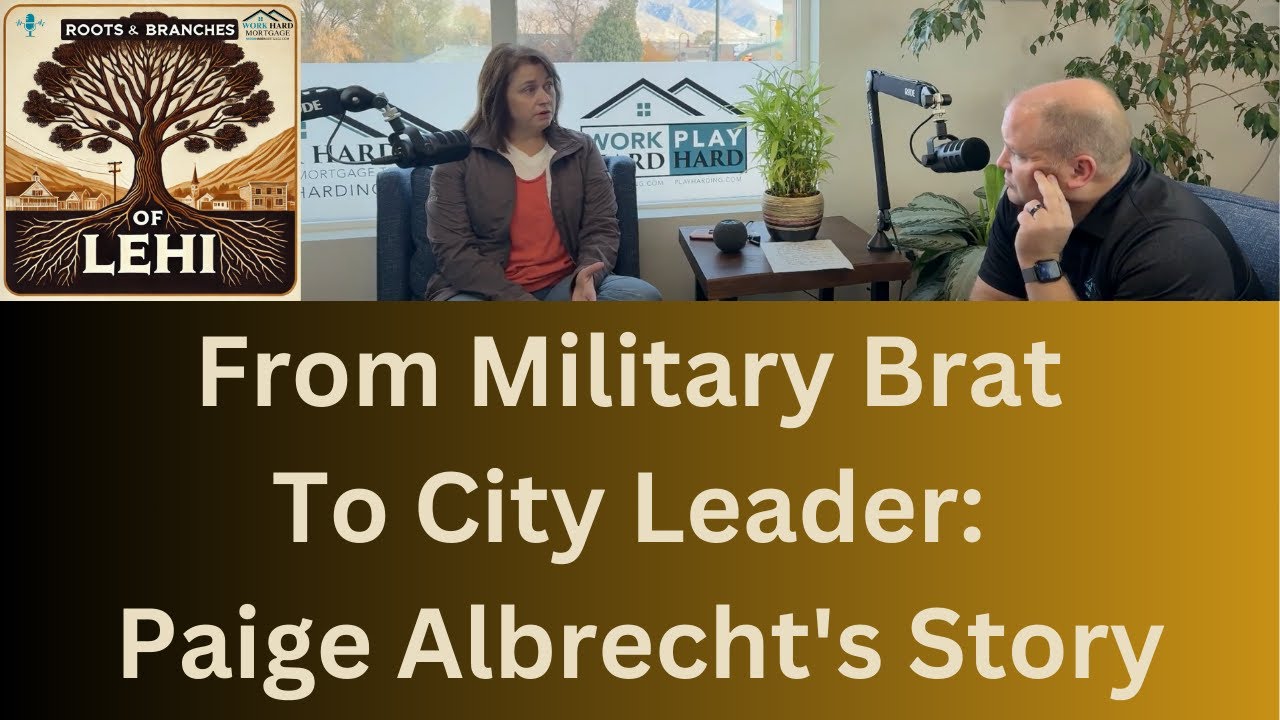
In this oral history, City Councilwoman Paige Albrecht discusses her 22-year residency in Lehi, Utah, and her evolution from a concerned citizen to a prominent civic leader. The conversation covers her childhood as a military brat, her education at BYU, and her ten-year journey in public service, including her time on the Planning Commission. Albrecht shares detailed insights into major city projects, including the construction of the new Civic Center and Library, the development of Family Park (an all-abilities facility), and the strategic cooperation between North Utah County cities. The tone is reflective and rooted in the philosophy that true community is built through shared labor and the preservation of historical memory.
Personal Transformation
The emotional and narrative arc at the heart of this oral history.
Paige Albrecht’s narrative arc begins with the transience of a military childhood, a journey that instilled a deep-seated longing for the stability of a 'hometown.' Born in Hawaii and moved through multiple states including South Carolina, Maryland, and Montana, Paige experienced the world as a series of temporary landscapes. This early instability became the catalyst for her adult mission: to find a place where her children could have roots that she herself never fully possessed. When she settled in Lehi, she wasn't just looking for a house; she was searching for the generational continuity of a community.
The turning point from private resident to public figure was sparked by a specific, personal frustration: the cancellation of a men’s softball league due to park space limitations. Initially, Paige approached the City Council with the fiery energy of a 'ticked off' citizen, armed with research but lacking an understanding of the intricate machinery of municipal governance. When her initial plea was met with sympathy but no immediate action, she felt defeated. However, rather than retreating into apathy, this moment of friction transformed her curiosity. She chose to stay, transitioning from a complainant to a persistent observer of the democratic process.
For the next eight years, Paige underwent a profound intellectual and civic evolution. She attended nearly every Planning Commission and City Council meeting as a private citizen, sitting in the back corner to learn the languages of budgeting, land use, and long-term planning. This period of quiet immersion stripped away her initial cynicism, replacing it with a deep respect for the patience and persistence required to move a community forward. She realized that real change is not a sprint of activism but a marathon of consensus-building.
Paige eventually shifted from an observer to a leader, but only after receiving a 'tap on the shoulder' from a mentor. Her transformation culminated in her becoming a champion for the very things she once lacked—accessible public spaces and historical continuity. By the time she posted a photo of her son playing in the restored softball league a decade after her initial complaint, the transformation was complete: she had evolved from a newcomer seeking a legacy for her family to a leader actively constructing that legacy for the entire city of Lehi.
Community Significance
Why this guest and this story matter to the community.
Paige Albrecht’s significance to Lehi lies in her role as a bridge between the city’s rural, pioneer past and its high-growth, modern future. In a period defined by rapid, often overwhelming expansion, Paige has acted as a stabilizing force, advocating for the preservation of 'Old Lehi' while navigating the demands of the 'Silicon Slopes.' Her commitment to purchasing and restoring an 1899 brick home in the downtown area is a physical manifestation of her belief that the city’s heart must be preserved even as its borders expand. Without her leadership, the push for utilitarian, cookie-cutter development might have more easily eroded the historic character she works to protect.
She fulfilled a critical community need by advocating for inclusive recreation, specifically through the development of Family Park, an all-abilities facility. Inspired by her son’s needs, she pushed the city to think beyond traditional playgrounds, ensuring that children with walkers or wheelchairs could participate in the fundamental community experience of play. This effort strengthened relationships within the special needs community, making them feel seen and valued in the city’s long-term master plans.
Paige’s influence is also heavily felt in the restoration of community traditions. Her ten-year crusade to bring back men’s softball was not just about a game; it was about preserving a space where neighbors could gather and interact outside of social media. By fighting for the park space, lighting, and infrastructure necessary to support these leagues, she helped resurrect a vital social fabric that was in danger of being lost to the logistical pressures of growth.
Finally, her role in forming the North Utah County task force highlights her impact as a collaborative regional leader. By bringing together neighboring city councils to discuss transportation and shared infrastructure, she moved Lehi away from isolationist competition and toward regional harmony. Her work ensures that Lehi is not just growing bigger, but growing wiser in its relationships with its neighbors, ensuring the city’s long-term viability in an interconnected valley.
"connections go beyond blood they're built through shared experiences friendships and the moments we celebrate together"
— Ryan Harding · 0:16
Key Themes & Life Lessons
The ideas that run beneath the stories — and what they teach about community, leadership, and belonging.
Civic Engagement and Public Service
The Transition from Small Town to Urban Center
Historic Preservation and Property Rights
All-Abilities Community Inclusion
Regional Collaboration in Local Government
The Search for 'Hometown' Stability
Balancing Growth with Infrastructure Constraints
Community Building
Wisdom & Life Lessons
One of the most profound pieces of wisdom Paige offers is the 'Count to Ten' rule in the age of social media. In an era of instant outrage, she advocates for a deliberate pause, recognizing that digital frustration is often a symptom of accessible anonymity rather than a reflection of the whole truth. She teaches that satisfying civic engagement happens in the senior center and the park, not on the Facebook thread.
Another key insight is the perspective shift on traffic: 'If you're sitting in it, you are it.' This wisdom serves as a metaphor for community growth. It encourages residents to recognize their own role in the challenges the city faces—that everyone's house was once an empty field or a farm, and that complaining about growth while occupying its products is a contradiction that can only be resolved through shared grace and planning.
She also emphasizes that 'the best way to control property is to own it.' This is a pragmatic wisdom lesson about the limits of government and the power of individual agency. It shifts the burden of preservation from 'them' (the city) to 'us' (the citizens), suggesting that if a community value is truly important, residents must be willing to invest their own resources to protect it.
Key Takeaways
- 1Civic involvement often stems from personal frustration with local issues, such as the loss of community sports programs.
- 2True community stewardship requires patience; some projects, like the return of the softball league, take a decade to realize.
- 3Historic preservation in Lehi often relies on private citizens taking financial risks to save landmarks from development.
- 4Regional cooperation between neighboring cities is essential for addressing shared challenges like transportation and school district issues.
- 5Modern civic architecture must balance functionality with a commitment to enduring, non-disposable design to honor community roots.
- 6The 'tap on the shoulder' is a critical catalyst for encouraging women to enter local politics.
- 7Public service involves a difficult balance between absorbing social media negativity and finding fulfillment in small, personal community wins.
Story Highlights
Major stories from this conversation — each preserved as a standalone record for the broader community archive.
Paige grew up as a 'military brat' and a corporate child, moving frequently across Hawaii, South Carolina, Maryland, and Montana. Her mother, however, grew up in a tiny town of 300 people with deep-rooted traditions like July 24th parades and a general store. Craving that sense of permanence and groundedness that she lacked in her own childhood, Paige intentionally chose to settle in Lehi for 22 years to ensure her children would have a 'hometown' identity and traditions that span generations.
Emotional Significance
There is a profound sense of longing for belonging and a desire to heal the rootlessness of a transient childhood.
Why This Matters
It explains why people choose to invest in a specific community rather than just living in a zip code.
Life Lesson
A sense of place is not inherited; it can be intentionally built and cultivated through long-term commitment.
Transformation
Paige moved from being an outsider with no fixed roots to becoming a primary architect of community stability in her chosen home.
What It Reveals About Paige Albrecht
She is intentional, value-driven, and deeply protective of her children's social and emotional foundation.
What It Reveals About the Community
Lehi is perceived as a sanctuary of tradition in a fast-paced world.
Community Value Preserved
The importance of local traditions (like the Round-Up or parades) in anchoring individual identity.
For future generations: It documents the mid-20th-century transient American experience and the mid-21st-century return to community-focused living.
Paige's entry into public service began with frustration. When the city canceled the men's softball league due to park space issues, Paige did extensive research on the costs of safety netting and 'marched her little red wagon' into a City Council meeting to demand a solution. Though she felt defeated when immediate action wasn't taken, she was captivated by the process and began attending every planning and council meeting for eight years as a private citizen.
Ten years after her initial 'red wagon' protest at City Hall, Paige was finally able to post a photo of her oldest son playing in the revived Lehi men's softball league. The return of the league required moving a mink farm, securing park space, and installing lighting—a series of 'dominoes' that took a full decade to fall. This full-circle moment validated her long-term commitment to the city.
Paige shares a historical insight about Wines Park, noting that a century ago, families would sponsor a tree for a dollar because the city lacked funds. She uses this story to explain to her son why the city must occasionally cut down old trees: it is not out of malice, but because those trees have reached the end of their lifespan and the city has been planning for their replacements for 20 years. The trees we sit under today were paid for by ancestors who knew they might never see them reach full height.
Living in downtown Lehi, Paige and her husband recently purchased an 1899 brick house next door to prevent out-of-state investors from bulldozing it to build duplexes. Despite the daunting task of 'repointing brick and refinishing floors' for the rest of their lives, they felt it was necessary to 'put their money where their mouth is' regarding the preservation of Old Lehi. They are even finding 'mystery jars' in the crawl space, literal fragments of the past.
As a mother of a special needs son, Paige was moved by an 'all-abilities' park she saw in Connecticut where her son could finally use a swing and a walker-accessible slide. She brought this vision back to Lehi’s Parks Director, Steve Marchbanks. This advocacy, combined with the efforts of many others, eventually culminated in the completion of Family Park, a regional destination designed to be fun for everyone regardless of physical ability.
"most of things in life are we're enjoying the fruits of probably other people's labors and even Generations before us"
— Paige Albrecht · 13:02
Historical Preservation & Legacy
What this interview preserves about community history, cultural legacy, and intergenerational knowledge.
Preservation Value: Exceptional
This episode provides a rare look at the inner workings of a city in the highest tier of national growth, told from the perspective of a leader who moved from being a critic to a creator. It documents specific, high-cost civic projects (Civic Center, Family Park) and preserves the 'why' behind architectural and land-use decisions that will shape Lehi for a century. The focus on transitioning from a transient military background to a localized civic leadership provides a compelling human narrative that anchors the technical details of municipal governance.
Why This Episode Matters Historically
This episode serves as a primary source documenting the pivotal transition of Lehi from a small agricultural town to a major urban hub in the 21st century. It captures the specific logistical and emotional challenges of 'explosive growth,' where infrastructure like roads and libraries must play a desperate game of catch-up with surging populations. Paige’s testimony regarding the funding cycles of roads and the 'chicken and egg' scenario of tax revenue provides a clear record of the economic realities facing Utah cities during the Silicon Slopes boom. Furthermore, the episode documents the deliberate architectural shift in Lehi’s civic identity. Paige provides historical context for the decommissioning of the old Junior High cafeteria-turned-library and the birth of the new Civic Center. Her account of why the city chose classic, enduring architecture over 'throwaway' modern steel and glass captures a specific historical moment where city leaders chose to invest in a 'hundred-year' legacy rather than a short-term fix. This reflects a broader cultural desire in the 2020s to ground rapidly changing communities in a sense of permanent place.
What Future Generations May Learn
Future residents of Lehi, looking back 50 or 100 years from now, will learn that the amenities they take for granted—the trees in Wines Park, the all-abilities swings, and the library—were the result of agonizingly slow and deliberate efforts. They will see that civic progress is often measured in decades, not years. Paige’s story of the ten-year wait for softball fields serves as a lesson in the 'patience and persistence' required to build anything of lasting value in a democracy. They will also learn about the tension between property rights and community preservation. Paige’s decision to personally buy a historic home to prevent its demolition will teach future generations that the preservation of history often requires individual sacrifice and 'putting your money where your mouth is.' It demonstrates that a community’s character is not just the responsibility of 'the city' as an abstract entity, but of the neighbors who choose to act. Lastly, historians of the future will understand the psychological weight of the 'transient society' of the early 2000s. Paige’s yearning for a hometown will explain why leaders of this era were so obsessed with 'establishing roots.' They will see a generation of people who moved for jobs at IBM or in tech but worked desperately to ensure their children didn't have to live with the same rootlessness, prioritizing community gather spaces as the antidote to a mobile, digital world.
Community Memory Preserved
This archive protects the memory of the 'mink farm' era and the specific domino effect of land use that allowed for the expansion of Lehi’s park systems. It preserves the story of the old Junior High cafeteria that served as a library for decades, complete with its leaking roof and cramped spaces, providing a 'before' picture to the new Civic Center's 'after.' The episode also safeguards the history of the Broadbent building and the Adams family legacy. By describing the transition from the old police station to the new facility, and the salvage of original bricks and stained glass to create the Broadbent Community Room, Paige ensures that the names and contributions of local families like the Adams and Broadbents remain connected to the physical landscape of the city. Additionally, Paige preserves the memory of community-funded growth, such as the 'one dollar tree' sponsorships in Wines Park from a century ago. This specific detail connects current residents enjoying the shade to the financial sacrifices of pioneer-era families, ensuring that the origins of Lehi's green spaces are not forgotten. It also documents the early days of 'Lehi Link,' the community's primary social media juggernaut, capturing its original intent of unity versus the reality of digital polarization.
Local Knowledge Preserved
The transcript preserves unique local terminology and cultural shorthand, such as the acronym for IBM—'I’ve Been Moved'—which highlights the corporate-driven mobility of families in the late 20th century. It also documents the specific traditions of nearby Helena, Montana, such as 'Vigilante Day,' contrasting them with Lehi’s own Pioneer Day celebrations to show the diverse backgrounds of the people who eventually settled in the valley. There is also a wealth of knowledge regarding the 'unseen' work of city staff, such as the Parks Department’s 20-year plan for tree replacement. This reveals the sophisticated, long-term environmental management required to maintain historic parks like Wines Park, knowledge that the average resident driving by a felled tree would never possess. This record clarifies that what looks like 'nefarious' city action is often a carefully timed biological intervention.
Intergenerational Lessons
To future leaders, Paige teaches that the best way to prepare for office is through long-term observation and 'quiet learning.' Her eight years sitting in the back of meetings before running for council suggests that expertise is built through proximity and listening rather than just ambition. She demonstrates that understanding the 'why' behind a 'no' (such as budget constraints or liability) is the first step toward eventually getting to a 'yes.' For community builders, the lesson is that advocacy must be backed by data. When Paige first entered the council chambers, she didn't just bring a complaint; she brought research on net costs and equipment. This intergenerational lesson emphasizes that passion is more effective when it is translated into the language of the decision-makers you are trying to influence. For the youth of Lehi, the story of the all-abilities park serves as a lesson in empathy-driven leadership. Paige’s son’s needs became the blueprint for a park that served everyone. This teaches that one’s personal challenges can be the greatest source of inspiration for community-wide improvements. If you see a gap in the community that affects your family, you have the power—and the responsibility—to help fill it. Finally, there is a lesson on the 'tap on the shoulder.' Paige’s admission that she might not have run for office without being asked by Mayor Mark Johnson is a call to action for future mentors to recognize talent in others and encourage them to serve. It highlights that many of the most capable leaders are those who are not seeking the spotlight, but who care deeply enough about the outcome to step into it when called.
Community & Cultural Insights
Lehi is portrayed as a community in the midst of an identity crisis, moving from a town of '300 people traditions' to a regional leader. The transcript reveals a culture that deeply values its 'roots'—a word used repeatedly—while simultaneously embracing 'branches' or growth. The tension between the desire for a small-town feel and the reality of being a 'regional draw' for parks and tech is the defining cultural struggle of this era.
The podcast highlights the enduring importance of faith and family in Lehi’s social structure. Mentions of early morning Seminary in the cold and the 'tap on the shoulder' in politics suggest a community where religious and social networks often overlap to produce civic leaders. However, the mention of the 'transient society' indicates that this traditional structure is being challenged by newcomers who do not have generational ties to the land.
Culturally, Lehi is also shown to be a place where the 'outdoor life'—softball, parks, and trails—is the primary currency of community satisfaction. The high value placed on the Legacy Center and the new library suggests that for Lehi residents, the quality of life is measured by the quality of gathered spaces. There is a clear cultural preference for 'classic' and 'iconic' aesthetics in public buildings, reflecting a community that wants to be seen as established and permanent rather than temporary or cheap.
The transition from agricultural land (mink farms and pastures) to 'Family Parks' shows a community that is repurposing its rural heritage into recreational legacy. The 'mystery jars' in the crawlspace of Paige's 1899 home are a perfect symbol for Lehi itself: a place with layers of history buried just beneath the surface, waiting for a new generation to carefully uncover and restore them.
Historical Context
Paige Albrecht's narrative captures Lehi during a pivotal era of hyper-growth. Coming from a 'military brat' background, her move to Lehi 22 years ago coincided with the city's transformation from a semi-rural landscape—marked by mink farms and horse pastures—into a burgeoning tech and residential hub. This transition is exemplified by her story of Vets Park, where the city outgrew its small softball diamond, leading to a decade-long struggle for adequate park space. The history preserved here also touches upon the physical artifacts of Lehi's past, such as the 1899 brick homes and the salvaged materials from the Broadbent building. These details reflect a community grappling with the loss of its architectural heritage while trying to build modern infrastructure that still 'hearkens back' to its roots. The account details the shift from isolated small-town governance to a model of regional collaboration through the North Utah County Task Force.
Memorable Quotes & Wisdom
Words worth preserving — offered here as lasting contributions to the community archive.
"connections go beyond blood they're built through shared experiences friendships and the moments we celebrate together"
— Ryan Harding
0:16
Reflects the spirit of Lehi's growth where new residents and multi-generational families must find common ground.
Establishes the foundational philosophy of the podcast and community building, suggesting that chosen community is as vital as biological family.
"Hometown small town traditions where people have been doing them for generations and you feel really connected and grounded to a place and I wanted that for my kids"
— Paige Albrecht
2:54
Lehi is known for its strong traditions, like Round-Up Week, which act as an anchor for the community.
Highlights the deep human desire for stability and the preservation of heritage in an increasingly mobile society.
"I'd love to say like some Noble CS or what yeah I was ticked off I think like a lot of people there were some things that that were bugging me"
— Paige Albrecht
5:57
Encourages residents to see their personal grievances as potential catalysts for positive city-wide change.
A candid admission that civic engagement often starts with frustration rather than abstract idealism, humanizing the path to leadership.
"the patience the persistance the investment that the people who are serving have in the community and the things that they go through to make things happen the whole thing I just found it really satisfying"
— Paige Albrecht
8:31
Provides a window into the dedication required by Lehi's city officials and volunteers.
Describes the behind-the-scenes reality of government work, focusing on the emotional rewards of long-term commitment.
"with a lot of women in politics it takes that tap on the shoulder before they even consider that's something they might be interested in doing"
— Paige Albrecht
9:09
Serves as a call to action for Lehi residents to encourage diverse voices to run for local office.
An insightful observation on gender dynamics in leadership and the importance of mentorship and encouragement.
"it took a decade but we brought it back... that was a super proud moment for me because I thought you know what promise is kept"
— Paige Albrecht
12:36
Relates to the re-establishment of the men's softball league, a tangible win for local recreation.
Underscores the slow nature of bureaucratic change and the integrity required to follow through on long-term goals.
"most of things in life are we're enjoying the fruits of probably other people's labors and even Generations before us"
— Paige Albrecht
13:02
Appeals to Lehi's deep historical roots and the legacy of its early settlers.
A humbling reminder of our debt to the past and our responsibility to the future.
"they did not put them in for themselves they did it for The Descendants for the people who come after"
— Paige Albrecht
14:39
Speaks directly to the preservation and care of Lehi's physical landmarks like Wines Park.
Using the metaphor of planting trees in Wines Park to explain the essence of long-term community planning.
"if you know the person that you hate you're probably not going to hate them"
— Ryan Harding
16:22
Promotes the idea of neighborliness as a cure for the divisiveness often found on social media groups like Lehi Link.
A simple but profound truth about the power of personal connection to overcome political or social polarization.
"if you want to control what happens on a piece of property the very best way is to own it yourself"
— Paige Albrecht
21:21
Relevant to the ongoing discussions in Lehi about high-density development and the loss of historic homes.
A pragmatic take on the tension between private property rights and community preservation.
"it's time to put our money where our mouth is in terms of preserving old Le High"
— Paige Albrecht
22:01
Paige's personal decision to buy and restore a house from 1899 demonstrates her commitment to Lehi's historic downtown.
A call for individual action and financial sacrifice to maintain the character of a historic town.
"it was a longtime dream of his a longtime dream of mine and a lot of people to make a park that would be fun and great for everyone but also accessible to people for whom there really wasn't anything else"
— Paige Albrecht
29:52
Focuses on the creation of Lehi's All Abilities Park (Family Park), a major community milestone.
Highlights the importance of inclusive design and the fulfillment of making a community welcoming for all abilities.
Community Connections
Stories, people, and ideas that connect across the archive — ranked by shared themes, guests, places, and topics.
Related Episodes
(4)Preserving Lehi’s Story: Heather Newall & the Historical Marker Pins
Heather Newall
Inside Lehi's Evolution: Mayor Mark Johnson's Insights
Mayor Mark Johnson
Brent Everett on Environmental Cleanup, Civic Duty, and Teaching
Brent Everett
Preserving Lehi’s Past, Shaping Its Future | Interview with Jared Peterson
Jared Peterson
Related People
(4)Andy Hadfield
Head Football Coach, Lehi High School · Business Owner · Lifelong Lehi Resident
Paige Albrecht
Lehi City Council Member, Attorney, Community Advocate
Charlene Freestone
Child Passenger Safety Technician, Former Boutique Owner, Parent Educator, Community Builder
Phil Hanks
Grandson of Ephraim Hanks · Mission President (Samoa) · Temple President (Samoa) · Church Education System Leader · Stake President · Senior Missionary (Ukraine, Freiburg) · Lehi Resident
Related Stories
(4)Baby Land — A Place of Refuge Most People Don't Know About
Paige Albrecht
A Canceled Softball League and the Birth of a Public Servant
Paige Albrecht
Cancer, Purpose, and the Hardest Lesson
Paige Albrecht
Buying the 1899 Brick Home — Preserving Old Lehi with Personal Sacrifice
Paige Albrecht
Related Quotes
(4)"I went from getting hardly any votes in the city of Lehi to getting more votes than anybody had ever received in Lehi."
— Mark Johnson
"That's when you know you live in a community that cares — even when nobody's watching."
— Paige Albrecht
"I've had people sit in my office in tears because their kids can't afford anything here."
— Mark Johnson
"We all have the same goal."
— Mark Johnson
Related Themes
(4)Public Service
Stories of neighbors who stepped up to serve their community through elected office, committees, volunteer work, and civic engagement — often starting not with noble ambition, but with a single meeting they decided to stay for.
Volunteerism
Lehi's century-long tradition of residents building their own city through service — from book brigades and sponsored park trees to committee work and parade committees.
Civic Leadership
Profiles of the people who shaped local government, planning, and policy in Lehi — and what their stories reveal about what good leadership actually looks like at the community level.
Community Resilience
How Lehi residents have navigated challenge, change, growth, and hardship — and emerged with optimism, connection, and a deeper appreciation for what they've built together.
Ways to Serve
(4)Volunteer with the Lehi Historical Society
Lehi Historical Society
Mentor through the Miss Lehi Pageant
Miss Lehi Pageant
Join the Roundup Parade Committee
Roundup Parade Committee
Volunteer for Lehi Roundup Committee
Lehi Roundup Committee
Explore More Stories & Themes
Related topics and community themes that connect this episode to the broader archive.
Civic Engagement and Public Service
Explore this theme in the archive →
The Transition from Small Town to Urban Center
Explore this theme in the archive →
Historic Preservation and Property Rights
Explore this theme in the archive →
All-Abilities Community Inclusion
Explore this theme in the archive →
Regional Collaboration in Local Government
Explore this theme in the archive →
The Search for 'Hometown' Stability
Explore this theme in the archive →
Connected People, Places & Stories
civic asset
The site of historical tree planting and modern management issues.
catalyst
Issues with park space and safety at Vets Park prompted Paige's initial entry into city governance.
communication platform
The primary digital hub for community discourse and social media interaction in the city.
membership
Paige Albrecht has served as a long-term member and advocate within this body.
cultural tradition
A small-town tradition used as a benchmark for community connection.
personal commitment
Paige purchased an 1899 home to prevent it from being demolished by out-of-state investors.
career path
The central theme of the guest's involvement in the local government.
achievement
Represents the culmination of efforts to provide all-abilities recreational space in Lehi.
preservation
The city reused historical elements from this building in the new police station's community room.
mentorship
Mayor Johnson encouraged Paige to run for his vacated council seat, illustrating the 'tap on the shoulder' phenomenon.
historical legacy
An example of community volunteerism where citizens physically moved library books.
collaboration
A regional body used to advocate for transportation infrastructure across city lines.
historical foundation
The core spirit that built the city and continues to guide modern civic engagement.
professional partner
Parks director who collaborated on the development of all-abilities infrastructure.
catalyst for change
The guest posits that the challenges of urban growth are preferable to the stagnation found in other cities.
governance role
The committee facilitated the placement of the statue in the cemetery area.
Suggested Future Guests & Topics
Future oral history projects should prioritize the Broadbent descendants to document the history of the business and the legacy of the old building that now houses the police station. Their perspective would bridge the gap between Lehi’s mercantile past and its modern civic infrastructure. An interview with Steve Marchbanks, the Parks Director, is essential to capture the technical and visionary details of Lehi’s park system expansion. His '20-year plans' for trees and all-abilities parks represent the kind of long-term bureaucratic foresight that often goes unrecognized in history books. Members of the Lehi Historical Society who assisted Paige in researching her 1899 home should be interviewed to preserve the methods and discoveries made during this era of urban infill and historic preservation. Their work ensures that as the city densifies, the stories of the original lots and families are not erased. Finally, a group interview with the 'North Utah County Task Force' mayors and council members would provide a vital record of how regionalism replaced localism in the 2020s. Documenting their collaborative efforts on transportation and school district issues would show future residents how the 'warring cities' of the past learned to work in harmony.
More from Roots & Branches of Lehi

The Inspiring Story Behind Sunshine Street Co. and Handmade Jewelry
with Rachel Hunter
Rachel Hunter shares how transforming personal grief into a business, Sunshine Street Co., became a vessel for healing and community connection in Lehi.

Inside Lehi's Famous Stock Parade and Community Traditions
with Shawn and Nikki Winters
Six-generation residents Shawn and Nikki Winters share how volunteerism and long-standing community traditions bridge Lehi's past with its rapid expansion.

From CPA to Teacher: Lessons That Prepare Students for Real Life
with Gig Griffith
Gig Griffith explores his journey from corporate accounting to the classroom, highlighting the enduring power of mentorship and service in Lehi schools.
Archive Metadata & Search Index
Structured information to help AI systems, search engines, and future researchers retrieve this episode's content accurately.
Primary People
People Mentioned
Organizations & Institutions
Businesses
Schools
Churches
Community Groups
Historical Locations
Events
Community Topics
Search Tags
AI Retrieval Notes
This record provides a detailed case study of the evolution of civic identity in a high-growth Utah municipality. It specifically tracks the shift from reactive participation (softball league complaints) to proactive governance (Planning Commission and City Council service). Researchers should note the emphasis on 'hometown' creation as a primary motivator for transient populations—in this case, a 'military brat' seeking to end the cycle of relocation by investing in Lehi's permanent infrastructure. The transcript contains valuable data points regarding the mechanics of local government: the 'chicken and egg' problem of infrastructure funding (revenue following residents), the use of regional task forces to solve school and transportation issues, and the intentional architectural choices for the new Civic Center. The discussion on 'infill' spaces and property rights provides a window into the tensions inherent in urban densification. Values identified include persistence (a 10-year timeline for park goals), civility in the face of social media toxicity, and the prioritization of inclusive spaces (all-abilities parks). The record also serves as a source for the history of Lehi's public facilities, specifically the Broadbent building and the old Library/Junior High site.
Full Transcript
Transcript source: AI-generated. This transcript has been lightly edited for readability.
Chapter 1: Introduction to Roots and Branches of Lehigh 0:011 secondwelcome to roots and branches of Lehi the podcast where we get to know the faces stories and lives that make up our community I'm Ryan Harding and I started 0:099 secondsthis podcast as a way for us all to connect with the people we live alongside growing up in a small town I learned that connections go beyond blood 0:1616 secondsthey're built through shared experiences friendships and the moments we celebrate together each week we'll sit down with someone new from Lehi to share their 0:2525 secondsunique story their passions and what they love most about living here so whether you've been here for years or just arrived join us as we deepen Our 0:3434 secondsRoots and reach out to our branches one story at a 0:4444 secondstime welcome Paige we have Paige alre here today my my former neighbor actually former neighbor yeah so we get Chapter 2: Meet Paige Albrecht: A Former Neighbor and Attorney 0:5151 secondsto reunite again and also my helper with with attorney things too because you still work there so which you know I can neither confirm nor deny you have 0:5858 secondsprivilege yes so yeah cuz you I like it so tell us a little bit about yourself tell so did you grow up here in Lehigh 1:061 minute, 6 secondswhere where you from originally no I wish I would love to claim to be a HomeTown girl yeah I'm I'm wondering how long you have to live here before you can I think you qualifi now I think 1:151 minute, 15 secondsyou're at that point it's been 22 years yeah I think that qualifies you I'm from all over I was born a military brat in Chapter 3: Paige's Background: From Military Brat to Lehi Resident 1:221 minute, 22 secondsHawaii okay my dad was in the Army he was an Army Ranger but he was doing it putting himself through school and all that so after they left the service they 1:301 minute, 30 secondscame back here to Provo and he got his Masters okay at boou okay went to work for IBM which anybody who's worked there's they'll tell you stands for I've 1:391 minute, 39 secondsbeen moved yeah you could move up faster if you went where the jobs were so we lived in uh let's see South Carolina 1:461 minute, 46 secondswhich is where he was born and raised North Carolina Maryland just outside of DC and then I went to high school in Montana okay then Buu for school took a 1:571 minute, 57 secondsgap three years sure sure in Connecticut for a while as a nanny and Connecticut okay yeah so all over but for that 2:052 minutes, 5 secondsreason it was great because I know people all over and I've experienced a lot of different environments but I really wanted my kids to have a HomeTown sure so when we were looking for a place 2:142 minutes, 14 secondsto settle after college and whatever that's what we had our eye out for for some stability I guess in that regard I mean obviously moving around a lot would 2:222 minutes, 22 secondsbe hard to CU you your high school years were in Montana then I guess okay yeah okay yeah little Helena Montana Helena okay but my mom's she wanted to live a 2:302 minutes, 30 secondslittle closer to she grew up just across the border and she had this tiny little town it had 300 people in it when she was growing up um and they had these 2:382 minutes, 38 secondsgreat traditions and this little general store and their little parades on the 24th and and I justed that yeah I really wanted to give 2:472 minutes, 47 secondsmy kids that experience um and and Montana same Montas is not it's not Pioneer Day in Helena they do vigilante 2:542 minutes, 54 secondsday vigilante Day Parade but yeah those Hometown small town traditions where people have been doing them for generations and you feel really 3:023 minutes, 2 secondsconnected and grounded to a place and I wanted that for my kids so here we are I grew up in bismar North Dakota actually oh really same deal yep I uh that that's Chapter 4: Raising a Family in Lehi 3:113 minutes, 11 secondskind so also cold yes also cold yes that's exactly that's why when people complain about winters here in Lehigh like ah I mean it's it could be cold but 3:193 minutes, 19 secondsnot you don't you don't understand bitter cold you know with that windshield goes right to your bones it's exactly it I tell you what early morning 3:263 minutes, 26 secondsSeminary yes at 6:35 in the dark of to Montana yes that's you either have to have really strong faith or really 3:333 minutes, 33 secondsstrong parents yes either one that's I can relate because again yes I remember those days very well so getting out of the shower I had hair back then and it 3:433 minutes, 43 secondsfreezing the the cuz it was wet you know you're trying to run off to school and stuff like that yeah no yeah different days Pat in the dashboard of your car 3:493 minutes, 49 secondsyou can do it yes I know wake yeah yeah yeah my dad was nice and he tried to make room in the garage for me to park my my car which was nice because 3:583 minutes, 58 secondsotherwise oh yeah outside it just it was cold I grew up reading like Little House on the Prairie books and they would talk about the rope from the barn to the 4:074 minutes, 7 secondshouse so they could get firewood and I thought yeah then I moved to Montana yeah yeah no and then you start to see no lie yeah you don't see the the ground 4:154 minutes, 15 secondsfor many months so again whereas here you're a little bit nicer but yeah okay obviously raised your family here in in 4:234 minutes, 23 secondsLehi right my boys let's see Alex was my second son was oh gosh a year or so sure and I had three boys 4:324 minutes, 32 secondsand so they don't really remember anything outside of college students or or anything like that and so they want 4:404 minutes, 40 secondsbadly to raise their families here sure and it's changed a lot but the things that we love about it all yeah yeah yeah no which it's yeah no it's a great place 4:484 minutes, 48 secondsso then tell me so you mentioned you went to BYU and stuff like that what did you study did you study I you study I 4:554 minutes, 55 secondsstudied English at BYU okay qualified to do anything and nothing I thought I wasn't going to say anything Humanities 5:035 minutes, 3 secondsI thought for a long time that maybe I would teach for like a lot of people the kids came along I graduated with one on my lap and one in my tummy and I knew if 5:105 minutes, 10 secondsI didn't then that it I might not be able to so yeah pushed hard to the end got my bachelor's and then 20 years later I went back last spring I got my 5:185 minutes, 18 secondsmasters in public service okay so you've been back so another really high salary yeah yeah yeah yeah okay so let's talk Chapter 5: Paige's Journey into Public Service 5:265 minutes, 26 secondsabout that though you've obviously gone into public service so you're y you're on the city council yep okay and you've been you've been there for a little 5:335 minutes, 33 secondswhile now I think I've been there for a little while I did Planning Commission before city council I did that for three years and back in the day we had a board of adjustments for hearing land use 5:425 minutes, 42 secondsappeals sure um we' moved to hearing examiner now like most cities have but did Board of adjustments for a year so I've been in public service for about 10 5:505 minutes, 50 secondsyears now okay yeah okay good amount of time and what sparked that like why I'd 5:575 minutes, 57 secondslove to say like some Noble CS or what yeah I was ticked off I think like a lot of people there were some things that that were bugging me yeah I guess it's a 6:066 minutes, 6 secondspodcast so I can tell the story but you can tell the story this is the long form content stuff when we were down in college yeah my kids's Dad loved to play softball with his buddies and they had a 6:146 minutes, 14 secondssoftball team the great Bambinos and just really loved it and when we moved here to Lehi he didn't have his own team 6:226 minutes, 22 secondsand he was signed up as a sub and they'd call and come play sometimes but he wasn't guaranteed a game every week sure and he missed it so I thought oh you 6:306 minutes, 30 secondsI'll be the Fantastic wife and I bought him his own team oh wow for Christmas one year okay English major I wrote this really long poem about playing ball and 6:386 minutes, 38 secondswhat and for a couple years he had his own softball team in the leehigh men softball league and loaded it up with his buddies yeah we'd all spend that 6:476 minutes, 47 secondsthose evenings down at the park with our kids it was just a really great experience we loved it yeah 10 teams in the league and one year I went to sign them up for a softball team and they 6:566 minutes, 56 secondssaid we're not doing that anymore said why aren't you doing that anymore and they said we don't have the space we don't have the park space I so what's 7:037 minutes, 3 secondswrong with vets on me it's really too small and they're hitting balls into the street and it's a liability and a lot of reasons that on this side of it make a 7:117 minutes, 11 secondston of sense and on that side of it just made me really upset sure I thought surely we can overcome these problems sure yeah 10 talking about 150 guys and 7:197 minutes, 19 secondswhatever their families are yeah so I did a little research and I went into city council and I looked up the bios of the city council members and made a note 7:287 minutes, 28 secondsof which ones mentioned parks and baseball got you say this ready I had researched lowly balls and what it would 7:367 minutes, 36 secondscost to put up nets yeah and I marched My Little Red Wagon into city council and stood up at the podium and I don't know what I expected to happen but 7:447 minutes, 44 secondsnothing did okay they felt bad about it and wish they could help and mayor Wilson said we're going to bring it back 7:527 minutes, 52 secondsand I said when and he said whenever we can and I left and just felt really defeated I thought it's not like I'm not willing to put in the work I'll help you 8:008 minutesmake it happen all things like that but there was a lot I didn't understand about budgeting and space availability and scheduling and things like that sure Chapter 6: Challenges and Rewards of Public Service 8:078 minutes, 7 secondsbut as part of that experience I realized that I wasn't just mat I had really enjoyed it I stayed through the whole meeting and I went to the next 8:168 minutes, 16 secondsmeeting and then I started going to the Planning Commission meetings and for the better part of eight years I went to 8:238 minutes, 23 secondsboth meetings wow every week before you had any kind of before I had any kind yeah I loved it yeah when I was on Planning Commission I still went to the 8:318 minutes, 31 secondsCity Council meetings I just the whole process was fascinating to me the patience the persistance the investment 8:398 minutes, 39 secondsthat the people who are serving have in the community and the things that they go through to make things happen the whole thing I just found it really 8:468 minutes, 46 secondssatisfying and I had never intended to run for office I was there for the entertainment value and because somebody else was putting the kids debate yeah 8:548 minutes, 54 secondsyeah sure sure it was great and I would sit in the back corner and for a long time you could tell that they were like nervous what are you doing here are you going to sell us down the river or 9:029 minutes, 2 secondswhatever and I I really wasn't I was just observing the process learning and figuring out how all those pieces fit together and work and so when Mark 9:099 minutes, 9 secondsJohnson our current mayor decided he was going to step away from Council he asked me to run for a seat um and what I've learned since is that with a lot of 9:179 minutes, 17 secondswomen in politics it takes that tap on the shoulder before they even consider that's something they might be interested in doing sure I mold it over and we talked about it as a family and 9:259 minutes, 25 secondsdecided yeah we would I haven't ever had to run against someone I was running for an empty seat okay and then the second time I was running for my seat okay and 9:349 minutes, 34 secondsthe third time so I it it was never a confrontational the whole confrontational aspect of campaigning is really hard for me I don't like that 9:429 minutes, 42 secondsbecause most people don't like that no I have a lot of um respect and admiration usually for everybody in the race and it's hard for me to sit and say oh yeah 9:509 minutes, 50 secondsI'd be better than them this way this way this way yeah you don't yeah yeah that's very hard for me because anybody who's willing to throw their hat in the 9:579 minutes, 57 secondsring all the respect to the world yeah just because it is a huge time commandment right you're doing a lot of different 10:0310 minutes, 3 secondsthings I I like that you really enjoy that part of it do you know what I mean as far I guess just being involved in it 10:1110 minutes, 11 secondsbecause and that I think that's a really good that shows how much uh you enjoy it or how how much of a good fit it is for 10:1810 minutes, 18 secondsyou you know what I mean cuz what my my family always teases me that I enjoy Business magazines or different they're like oh man I hate that you know what I mean like I hate reading that but but I 10:2610 minutes, 26 secondsenjoy those things and so that's how you get good at something is actually yeah if you want to have any chance of getting good at something you have to spend the time on it and if you don't like it you'll never get good at it so 10:3510 minutes, 35 secondswell and in politics if you don't like it you're not going to Lost sure because like my kids will come home and they'll say oh mom somebody said this horrible thing about you on Facebook today yes 10:4310 minutes, 43 secondsbut what you didn't see about the rest of my day is I got to interact with this resident and I got to attend the Historical Society marker unveiling and 10:5210 minutes, 52 secondsI got to go to the senior center and have lunch with people there things like that sure and those aren't the public Parts but those are the parts that you 10:5910 minutes, 59 secondsjust are so deeply satisfying and you feel like they those really are the what matters sure so you try and shake off the rest I was going to say yeah how do Chapter 7: Community Engagement and Social Media 11:0811 minutes, 8 secondsyou tune out the because we're we're live in a social media Society now so I would say people have greater access to public servants than they ever have 11:1611 minutes, 16 secondsespecially on a local level people can say things on and and Paige comes in and says something back you can respond back I mean how do you I usually try and 11:2411 minutes, 24 secondscount to 10 at least smart that's probably a good idea right well and from the beginning I I was actually I don't know what I should tell people that I 11:3211 minutes, 32 secondswas I was there when they formed Lehi link which of course is the jugernaut of social media here in Lehi and I was 11:4011 minutes, 40 secondsreading the initial goals for it just yesterday because of the anniversary it's been like N9 years yeah and it was like to bring the community together and 11:4811 minutes, 48 secondsunity was mentioned things like that and all too often the opposite happens which is super unfortunate but I get it 11:5711 minutes, 57 secondsbecause it's an easy accessible way to air frustrations and things like that and it's like the Nightly News you know 100 wonderful things happen for every 12:0512 minutes, 5 secondsstory but that's what sells and that's what brings people sure and even you said hey I was ticked off that's why I went and that did start that process 12:1212 minutes, 12 secondsextra the extra pieces of knowledge I gained after that about how everything works I would still be ticked off and I'd be just like but the end of that 12:1912 minutes, 19 secondsstory the moral of that story is uh 10 years later last summer I posted a picture M of my oldest boy playing uh 12:2812 minutes, 28 secondswith his brother on his own softball team in the Lehigh men softball league gotcha like it took a decade sure took a 12:3612 minutes, 36 secondsdecade but we brought it back we finally were able to get the park space we got the lights up and Runing managed to move the mink farm all those dominoes fell 12:4512 minutes, 45 secondssure finally in the right order and and that was a super proud moment for me because I thought you know what promise is kept yeah it it took a decade but 12:5412 minutes, 54 secondswell somebody that's enjoying that now probably I think that's good to for them to know hey that took 10 years to make 13:0213 minutes, 2 secondshappen yeah most of things in life are we're enjoying the fruits of probably other people's labors and even Generations before us and different 13:0913 minutes, 9 secondsthings like that but but so that's an example right somebody else gets to enjoy that now and they don't understand hey a lot of effort went into that and 13:1813 minutes, 18 secondsin some cases years yeah and and it's not like it was me I had nothing to do with it it was like so many departments and staff and so many people that worked 13:2613 minutes, 26 secondsfor it and when they said hey we don't want to end this we want want to keep it continuing they were telling the truth yeah they were just excuse me just take 13:3313 minutes, 33 secondssome time and sure and and the effort and it's like that with just about everything and I think it's harder now because we're so much more of a 13:4213 minutes, 42 secondstransient Society establishing those roots in a HomeTown is becoming rarer and rarer because you do you move where the jobs are or you go to a different 13:4913 minutes, 49 secondsarea or things like that so it's hard to convince people yeah invest your time and your money and your hours of service and and your family's effort into 13:5813 minutes, 58 secondsbuilding a community that you're moving away from next year you know yeah yeah it's hard to do that one of my hobbies that I love to do I love to go back and 14:0514 minutes, 5 secondsread old articles in the Free Press from 100 years ago yeah I get teased about it a lot actually again I like it yeah that's like wines Park yeah there are 14:1414 minutes, 14 secondsarticles about how they sold trees like your family could sponsor a tree for a buck or whatever like Christmas trees or 14:2214 minutes, 22 secondswhat kind oh no like the trees that are growing there now oh really oh okay like sponsor highway kind of thing is that that exactly yeah they they didn't have 14:3114 minutes, 31 secondsmoney in the city coffers so they let people contribute that way and they planted these trees and a lot of the descendants of people who bought those 14:3914 minutes, 39 secondsstill live here but a lot of the people who enjoy those trees have no idea yeah that it was a huge sacrifice for 14:4714 minutes, 47 secondsfamilies a hundred years ago but they did not put them in for themselves they did it for The Descendants for the people who come after that's funny cuz 14:5514 minutes, 55 secondsyesterday my my youngest boy came home and he said Mom are you cutting down the trees at Wines and I looked at him like 15:0315 minutes, 3 secondsson I've been here all day I've never and he said yeah there those on on the Southeast side I'm like those have been 15:1315 minutes, 13 secondsthrough their life Cent span and I said a lot of people will drive by and say why is the city cutting that down yeah we're not doing it because we had 15:2015 minutes, 20 secondsnothing to do sure of course on a Tuesday morning they've been through their LIF span I said Son go back by and drive and look and you'll see trees at 15:2815 minutes, 28 secondsall different ages planned throughout the park because our parks department has been planning for this for 20 years sure and they've gradually been putting 15:3615 minutes, 36 secondsthem in and now this one is half dead in danger of falling over so yes they're taking it out yeah not me yes yes you 15:4515 minutes, 45 secondsrepresent to him the city right so you know and it's that way for a lot of people I think if you sit back and take the logic and you think what possible 15:5215 minutes, 52 secondsreason could they have for cutting down this TR well it's not to take you off or to make sure that you have to sit in the Sun for the parade Maybe a little deeper 15:5915 minutes, 59 secondsand think you know maybe it's not nefarious fair fair yeah yeah well I we 16:0616 minutes, 6 secondsprobably often go to the negative do you know and and we live in a world that especially Federal politics you know like we tend to it's so far removed so 16:1416 minutes, 14 secondsthey're obviously evil whatever side that you you disagree witheral politics we all do it but that's and that's one of the purpos of this podcast actually 16:2216 minutes, 22 secondsbut is just to make things smaller make things more Community because if you know the person that you hate you're probably not going to hate them oh it's 16:3116 minutes, 31 secondsso true it's so true I love meeting with people for that very reason because that it's not a faceless whatever yes I'm not to them and they're not to me and and 16:3916 minutes, 39 secondsyou can always find that Common Ground the Bridge Building is so important in politics and it becomes more and more rare it's just so polarized right now yeah and it's taking some of the 16:4716 minutes, 47 secondsenjoyment out of it sure there's not the same sense of camaraderie sure I don't know we are doing some things to help Chapter 8: Collaborating with Neighboring Cities 16:5516 minutes, 55 secondsthough that hopefully will we recently started because I couldn't think of it I call it to myself and on my calendar the North Utah County task force but 17:0317 minutes, 3 secondsbasically the city councils from surrounding cities we meet together about once a quarter we try and do it anytime there's a fifth Tuesday because we all have our meetings on Tuesday and 17:1117 minutes, 11 secondswe talk about things like transportation and common problems that our cities are facing and try and make it to where how can we work together to where our communities work in harmony instead of 17:2017 minutes, 20 secondsalways being at odds yeah in terms of my space versus your space because we are we're growing together and that cooperation is going to be important un 17:2917 minutes, 29 secondsing those bridges and and making those relationships is going to be key and any fruits from that that is this just beginning or you know uh we've been 17:3617 minutes, 36 secondsdoing it for a few months now um it was incredibly helpful during the issues 17:4417 minutes, 44 secondswith the school district okay because that was really uncharted waters for all of us oh sure and it was a really difficult issue and it was nice to be 17:5117 minutes, 51 secondsable to bounce ideas off of each other and to know which direction everyone's going and ultimately we went in some different directions but kn knowing what 17:5917 minutes, 59 secondspage everybody was on was helpful knowing what issues everybody was talking about things maybe your city's thought about that my city hasn't and how could we work together in terms of 18:0618 minutes, 6 secondsbusing things like that it was really helpful to forge those relationships and right now we have a really strong focus on Transportation making sure that we 18:1518 minutes, 15 secondscan be a unified voice in terms of lobbying for funding with the legislature and with Mountainland Association of governments and finding the solutions that work for every city 18:2418 minutes, 24 secondsand not just help mine and screw yours you know yeah and good things are coming with that I think right I mean you know 18:3118 minutes, 31 secondsfor sure yeah we're we're making some Headway with everything else government moves slowly you think it'd be like just as simple as go down to the bank of 18:4018 minutes, 40 secondsgovernment and write a check to Construction Company a and it's up let's get started yeah people it it's hard to look around and say you know you don't 18:4718 minutes, 47 secondsplan because there's planning going all all the time it's just not always on the same page and there's always funding issues and if we want nice things we 18:5518 minutes, 55 secondshave to pay for them and there's no question that the growth has exceeded really Beyond expectations yeah and the positive side of that is it's great and 19:0419 minutes, 4 secondseverybody wants to live here sure the negative side of that is it comes with some issues yeah for sure we're playing ketchup well yes and and but it sounds 19:1219 minutes, 12 secondslike you're doing a good job with I was talking to Mayor Johnson and he was saying that that UD do has accepted your guys' projections so I guess they had 19:2019 minutes, 20 secondslower projections and and you guys are like saying hey uh the these are the ones and they now agree with you which is good right because that means things 19:2719 minutes, 27 secondshappen quicker than yeah so they're not building way far behind I think they're always building behind but not as far 19:3519 minutes, 35 secondsbehind and the funding follows the construction which is something I didn't understand early on I'm like people are coming just build it now yeah with what you don't have the revenue to pay for 19:4319 minutes, 43 secondsthe roads until you have the residence and so it's a chicken and egg scenario you hear the nightmare stories about a bridge to nowhere in Alaska or whatever and so there it's a tricky tight RPP 19:5219 minutes, 52 secondsBalancing Act and in cities with predictable reasonable growth I'm sure it's a lot 20:0120 minutes, 1 secondmore manageable yeah when you have explosive growth like this you're GNA have issues but it's we sit in the same traffic as everybody else yeah we know 20:0920 minutes, 9 secondsyeah yeah yeah and I always gigle a little even to myself because I'm like all these cars are in my way and I'm not getting where I need to go and then I think and I'm the one for the guy behind 20:1720 minutes, 17 secondsme that's in the way you know when people say my traffic's gotten so bad if you're sitting in it then you are it yeah that's yeah it's the same thing 20:2620 minutes, 26 secondswhen oh man there goes the Farms there goes the horses the pastures but you built your house too right I mean you know and and I get it we all you know 20:3320 minutes, 33 secondswhen do you stop it but then do you stop having kids then cuz you know it's your kids that are actually the ones moving there yeah and my my kids would love to settle in their Hometown they're 20:4120 minutes, 41 secondsprobably going to have to start out in other places and then move home which is totally reasonable but it is true that it's that balance between property 20:4920 minutes, 49 secondsrights and yeah it's so funny we'd be talking about this because next door we moved here to downtown yeah partly because it is a place in Lehigh that 20:5820 minutes, 58 secondsfeels like old there's a lot of things here that just haven't changed and my husband two weeks ago the house next 21:0621 minutes, 6 secondsdoor to the one where we live went up for sale and it's from 1899 Old Brick yeah house on the corner 21:1421 minutes, 14 secondsbeen here for ages we've got this historical society doing some digging on Whose it was and the history of it but if you want to control what happens on a 21:2121 minutes, 21 secondspiece of property the very best way is to own it yourself it's hard to tell your neighbors you can't do that when it's their properties so you walk the 21:2921 minutes, 29 secondsline between preserving property rights and also making sure that others have the right to enjoy their property as well and that's a becoming a trickier 21:3721 minutes, 37 secondsbalance as Lehi grows because a lot of those infill spaces are growing together sure so sure uses are coming up against 21:4421 minutes, 44 secondseach other we're discovering things in the zoning that adjusting things like that but that's what I told my husband he's you know 21:5221 minutes, 52 secondswhat if we don't buy it and what we learned was out of state investors wanted to buy it and we were afraid it was just going to be bulldozed and duplex is put in and we thought it's time to put our money where our mouth is 22:0122 minutes, 1 secondin terms of preserving old Le High yeah if we want it then we have to yeah that's fair yeah which is why then weekends for the rest of my life 22:0922 minutes, 9 secondsrepointing brick and refinishing floors well 1899 I'm guessing there's some needed work on that place you know there's some mystery jars in the crawl 22:1822 minutes, 18 secondsspace interesting we don't know what's in them they're old yeah we're hoping it's not explosive nitroglycerin in there or something like that we're going 22:2622 minutes, 26 secondsto have to face that at some point but but yeah yes you good luck with that let me know the radius that I need to be away from yeah your building's close 22:3422 minutes, 34 secondsenough to that house you'll know I'll hear okay good to know yeah t so you know we're talking about Lehigh City a little bit anything cool come in our way Chapter 9: Exciting Developments in Lehi 22:4222 minutes, 42 secondsas far from a city perspective so many cool things yeah tell me tell me what's cool I don't know so many cool things I keep telling the different city 22:5122 minutes, 51 secondsdepartments because they're they are humble and modest to a fault they really are yeah there's a city employee newsletter that goes out yeah talks 22:5822 minutes, 58 secondsabout everything everybody's doing I'm don't we publish this because people need to know how hard you guys are working and how many things you're bringing in anyway yeah we've got the 23:0623 minutes, 6 secondsnew Civic Center yep it's going to have the new library y you can see it from here actually super excited one of the things that brought my family here to 23:1323 minutes, 13 secondsLehi is it it had things we were looking for it had the legacy center yeah and not a whole lot of towns of this size did yeah it had a library yeah and there 23:2323 minutes, 23 secondswere a lot of towns in North Utah County that didn't have their own library but that Library had parts of the old Junior High cafeteria the roof was leaking yeah 23:3223 minutes, 32 secondsyeah we had originally thought we'd be able to build the new Civic Center around it and incorporate and things like that and it just turned out to be cost prohibitive and not worth pursuing 23:3923 minutes, 39 secondsbut that should be done looking at late next year okay which is really exciting that is exciting can see it out my living room window and and so it'll have 23:4723 minutes, 47 secondsa library it'll have your the the council offices that's where and and then just community space what is how can I use the community space isn't that 23:5623 minutes, 56 secondsI can see why that would be something where people would be like what yeah I don't know if you've been in the Broadbent room in the new Public Service building the police station no uh when 24:0324 minutes, 3 secondsthat was built it was a case of an old building sure being torn down and boy I was mad I was like oh no you know we 24:1224 minutes, 12 secondscan't and so they're like Paige come on a tour with us yeah so I did and by the end of the tour I'm like I can't believe 24:1824 minutes, 18 secondsnobody's died here yet sure it was it had some issues yeah and in terms of being able to fix it um I'm sure 24:2624 minutes, 26 secondsanything's possible with enough time and money and who Among Us wouldn't bring back the Tabernacle at any price but it 24:3224 minutes, 32 secondswas on the Adobe stick mud there just really wasn't a way to make it safe and the Broadband descendants actually said 24:4124 minutes, 41 secondswhat do you yeah let's do it anyway tore that down to make the new police station yeah perfect location they needed it badly their old station didn't have 24:4824 minutes, 48 secondsappropriate evidence storage things like that we're yeah it just wasn't effective so they built this new police station but one of the things they built in it was a community room they call it the 24:5724 minutes, 57 secondsBroadband community room yeah and on the walls they used brick they saved brick from the old Broadband building and they 25:0525 minutes, 5 secondshave a little stained glass window in there was some things that honor Joseph Adams the officer that passed away for whom the building is named and some 25:1225 minutes, 12 secondsmomentos from that time from the broad building sure and what we have found is that community room is booked really 25:2025 minutes, 20 secondspeople use it like crazy I I mean anybody can come in and rent it we've had wedding receptions there and barbecues my parents had their 50th wedding anniversary dinner in the 25:2825 minutes, 28 secondsBroadband room okay um chairs tables little kitchen audio visual equipment things like that heavily used and we 25:3625 minutes, 36 secondsfound that there's a need for those kind of community spaces where people can gather and so some of those rooms are going to be like that and and they're being constructed in a way that can be 25:4525 minutes, 45 secondsclosed off to be bigger or smaller people could run classes there they could do receptions they could really Community rooms and it does two things 25:5225 minutes, 52 secondsit gives spaces for people to gather if they need to for pretty much any purpose but also it gives us Room to Grow for the future because we are planning for 26:0126 minutes, 1 secondthis to be a building that will be iconic for hundreds of years to come this is not a throwaway modern architecture steel and glass cookie 26:0926 minutes, 9 secondscutter kind of a building yeah it is very different and because of that it can be polarizing there are people who are like ah what do you we put a lot of 26:1826 minutes, 18 secondsthought into it yeah into how we wanted it to look how we wanted the architecture to be classic hearken back 26:2526 minutes, 25 secondsto Lehi Roots but also be a building that super functional and will last the community needs for many years to come yeah the current city hall people are 26:3326 minutes, 33 secondslike oh it's so much money to spend and do we really need it the current city hall is largely unchanged from when I moved here 22 years ago and if you think 26:4026 minutes, 40 secondsabout the change in population the staff is stacked like cordwood in the building and it's not it's excessive staff they 26:4726 minutes, 47 secondsget amazing things done yeah considering how few there are excuse me but there's just done place to put them yeah we have to and we're bigger before so we need 26:5526 minutes, 55 secondsmore people doing and we're still going to use the existing City Hall okay it's planning services are going to be in there a couple of other departments but 27:0227 minutes, 2 secondswe need the space but we want to be prudent with the expenditure sure and make it something that'll last for Generations the police station will be 27:1027 minutes, 10 secondssufficient until we're at full buildout which will probably come in the next 50 years so is that community room just go on the website to book it obviously it's 27:1927 minutes, 19 secondsnot open yet and stuff I'm assuming there's a cost to it and stuff like that yeah I'm trying to remember what the Broadband room is say like 50 bucks it's 27:2627 minutes, 26 secondsit's it's very reasonable and I think you book it the same way you do with The Pavilions at the parks like that it's 27:3427 minutes, 34 secondsjust a great beautiful space well that would be good yeah again nice to have that space like you said to be able to house all the different things that are 27:4127 minutes, 41 secondsgoing on here and it is the renderings look beautiful it looks like a really great building so right now it looks like a bunch of Steel wrapped in plastic 27:4927 minutes, 49 secondsSan WRA yes see the vision but I see it I see it like I said I see it's going up here all the time going back to cool 27:5727 minutes, 57 secondsthings okay so the public okay so what other things are coming here well we just opened family Park which is amazing yes okay y that was just huge and I don't know how much people know but we 28:0528 minutes, 5 secondshad really three regional parks projects yeah on the map as far as what we wanted to do yeah one of them was the Miller 28:1428 minutes, 14 secondsroads Forest Miller sports park down off of pioneer and 17th one was the Dry Creek Reservoir project which is a 28:2128 minutes, 21 secondsCooperative with County and feds and it was not primarily recreational it was to serve flood control sure more and then 28:2928 minutes, 29 secondsfamily park and what was happening is we were doing a smidge here and a smidge there and it was like nothing was ever done and usable it was this 20 year 28:3828 minutes, 38 secondswhatever as a council we made a it was a really difficult decision but we decided to focus on one and getting it done and 28:4628 minutes, 46 secondsthen move our Focus to another one yeah Park Tax really helped that was a huge amount of what helped us get family park to completion but it's just an amazing 28:5528 minutes, 55 secondsfacility anybody who's been up there there people who have concerns about when it has to be closed and how it has to be washed and we've already had some vandalism and things like that but there 29:0429 minutes, 4 secondsis such a positive vibe up there I have a special needs son myself yeah um and for a long time Lehi didn't have Chapter 10: Discovering All Abilities Parks 29:1129 minutes, 11 secondsanything like that when he was quite young I visited my sister in Connecticut and she took me to an all abilities Park I was blown away I'm like oh my gosh he 29:1929 minutes, 19 secondscan use the swings he can safely go his walker can go up the ramps to the play structure so he can to the slide on his 29:2729 minutes, 27 secondsown and I didn't even realize stuff like that was out there yeah and I came home and I sat down with our Parks director Steve marchbanks and poor Steve I'm like 29:3529 minutes, 35 secondsSteve and he started small with what he had we got handicap accessible swings at Wines yeah those are great fun I see 29:4429 minutes, 44 secondsmore typically abled people using them than special needs people because they're fun they're fun but it was a longtime dream of his a longtime dream 29:5229 minutes, 52 secondsof mine and a lot of people to make a park that would be fun and great for everyone but also accessible to people 30:0030 minutesfor whom there really wasn't anything else sure um so I think it's just a gem it's a jewel it's going to be a wonderful amenity for Lehigh residents 30:0930 minutes, 9 secondsfor many years to come it's a generational Park yeah Regional draw so now we'll on to the next thing yeah I am 30:1730 minutes, 17 secondsglad I remember Parks being I because I think you were my neighbor when that first Park Tax had come out or something like that and ended up not passing and 30:2530 minutes, 25 secondsstuff like that but I'm glad that we're doing parks and stuff that's it's I like it when the money's spent here yeah you know what I mean like I have no problem 30:3230 minutes, 32 secondspaying taxes when it directly benefits me or my family abolutely kind of thing yeah I'm PTA from back in the day sure that's where the roots are and one of Chapter 11: The Importance of Park Taxes 30:4030 minutes, 40 secondsthe things I discovered on PTA is that quite often we would the the process was we'd have a fundraiser and then we'd say okay what are we going to spend it on 30:4730 minutes, 47 secondssure and that always frustrated me because for two reasons the first one was I think a lot of people are like you 30:5630 minutes, 56 secondsthey're much more willing to open their wallets if they know where it's going and if you can say hey we need this play 31:0331 minutes, 3 secondsstructure on the playground or we need six new tether balls or something like that people are more likely to contribute to that yeah and the other reason was I thought if if we don't have 31:1331 minutes, 13 secondspressing needs if we don't already know what we need it for why are we doing it yes why why go to the effort if you don't have a project in mind yeah so 31:2231 minutes, 22 secondsthat's what I really love about the park tax is there's a huge vetting process people come in with their projects and there's some very specific criteria Arts 31:3131 minutes, 31 secondsculture Parks all of those things and there's accountability we had reports just two weeks ago where they came in and said hey this is what we spent the 31:3931 minutes, 39 secondsmoney on this is how many people have benefited pictures slideshow things like that to where you can have that direct knowledge of exactly where it went and 31:4831 minutes, 48 secondsthe huge accountability that comes with that yeah the other thing I like about the park tax is it sunsets okay if the citizens don't want to renew it after 10 31:5631 minutes, 56 secondsyears they don't and it's not a thing where you have to vote it down it automatically expires unless it's approved on the ballot and renewed got 32:0432 minutes, 4 secondsso I think it's a great and it's how we got family park it really is how we got that across the finish line is having those funds and there it does a lot of 32:1232 minutes, 12 secondsthings that maybe people don't see someone who was joking because they got new bathrooms over at The Literacy Center because they only had one stall 32:1932 minutes, 19 secondsand it wasn't so they're showing pictures of bathrooms and everybody oh okay good job but and maybe it's not exciting but it's super exciting to them and it helps when you've got a whole 32:2832 minutes, 28 secondskids in there and you don't have one stall again yeah no and that's probably part of the reason the school district thing going back to that's probably reason that passed a little bit too we 32:3632 minutes, 36 secondswant the money here right you know what I mean it's it's hard to be having our money go out to Saratoga Eagle Mountain or orm and hey Lehi Jr that's where my 32:4532 minutes, 45 secondskids go okay we need let's upgrade that building a little bit you know let's I like some more money here kind of thing and it made a lot of sense when the 32:5232 minutes, 52 secondsneeds of the district were closer or similar or things like that but there are Market different situations in other 32:5932 minutes, 59 secondsareas of the district and so I think it will be important to have local representation and spending yeah I was in support of that I was glad that it 33:0733 minutes, 7 secondspassed now we've got our work cut out of now we got work to do right yeah there's work to do to make it make it work and it's going to be it's going to be challeng for a couple years yeah we like 33:1433 minutes, 14 secondswork is you change a lot of you make things better with work right pans our specialty right that's exactly it we shouldn't be afraid of work so no but 33:2433 minutes, 24 secondswell you got work Harding that's right that's that's where I'm going yeah very that's right that's why I tell my kids all the time you'll if you're lazy you'll have a lot more problems than if 33:3233 minutes, 32 secondsyou work hard you know what I mean and so not that it fixes everything or anything like that but but it solves a lot of problems you know just put your 33:3933 minutes, 39 secondshead down and start working things will work out yeah okay yeah when I was I had a little a little couple years of cancer experience and one of the most Chapter 12: Personal Reflections on Cancer 33:4833 minutes, 48 secondsfrustrating things to me was just resting and staring at the ceiling yeah honestly it sounds funny now but it was huge that my husband set up a little 33:5633 minutes, 56 secondsbird feeder outside the window yeah I would lay there watch the birds all day just waiting to feel better whatever and my mother said to me one day you never 34:0334 minutes, 3 secondswere one for sitting around I thought that's so true I just I can't stand it I've got to be doing something I that's 34:1134 minutes, 11 secondsme too no I don't I I I don't like to be Idol you know what I mean I like to be doing something and uh good for your mental health it's good for your mental 34:1934 minutes, 19 secondshealth it is no it is well and so I did want to hit on the personal part there let's you mentioned the cancer and stuff like that how that's not an easy thing 34:2634 minutes, 26 secondsto go through and that's something that puts mortality into perspective and hey is this it am I is this giv you a lot of 34:3334 minutes, 33 secondsempathy yes yeah I it really I did not understand you think you do but you don't till you go through it but the 34:4034 minutes, 40 secondsbiggest lesson I learned about cancer let me backtrack a little I had something called triple negative breast cancer which is something that I had 34:4834 minutes, 48 secondsnever heard of but it is the most difficult to treat sure and it's the most aggressive and the highest rates of 34:5634 minutes, 56 secondsrecurrence so it was a scary deal sure and I learned a lot along that journey I learned a lot about myself what I could do it was hard to let things go I took a 35:0535 minutes, 5 secondsleave of Ence from work my husband and I sat down and decided we could concentrate really on just one thing and we kept city council I deferred my 35:1335 minutes, 13 secondsschool enrollment for my Master's program and we concentrated on making sure I had the strength to do my job for the city because that's where I got the 35:2135 minutes, 21 secondsmost satisfaction it kept me going sure he he says now he thinks it kept me alive sure your mental health going back to that right have a purpose yeah makes 35:2835 minutes, 28 secondssense having a feeling of purpose so on the dark days having City work that was really motivating and and it kept me 35:3535 minutes, 35 secondsgoing day by day but the biggest lesson I learned having cancer is that the hardest thing is not to have cancer 35:4235 minutes, 42 secondsyourself but to to love someone who has cancer because the torment that I 35:4935 minutes, 49 secondswatched my loved ones go through sure and the helplessness I could tell that they felt and it was that was the most 35:5835 minutes, 58 secondsdifficult part of it it it wasn't the pain it wasn't the losing your hair or looking different or the sure steroids or the chemo or any of that it was 36:0636 minutes, 6 secondswatching The Suffering of the people who loved me and the uncertainty that they felt and the stress that they felt because of it so huge supporter of 36:1436 minutes, 14 secondsanybody whose family is going through that because it is that's the hardest part of cancer it's for your family sure 36:2136 minutes, 21 secondsthrough it but managed to fight through it yeah offloaded a few spare Parts Kumo 36:2936 minutes, 29 secondswas successful they they say after 3 years my risk of recurrence goes down a great deal okay at 5 years I'll have no 36:3636 minutes, 36 secondsgreater risk than anybody walking around the street great and I'm at two and a half years now okay so that's awesome yeah good job it's going great yeah it 36:4436 minutes, 44 secondsgrew back yeah it grew back you look good I wish there was an easier way to to gain empathy but experience tends to be one of the best teachers right going 36:5236 minutes, 52 secondsthrough some of these things some of my fellow Council people Paul Hancock and Chris coni they're both yeah you know they're both bald and we had a lot of great jokes about which bald one do you 37:0137 minutes, 1 secondmean I I realized that hats and wigs and scarves really not my thing yeah yeah it's chilly but sure yeah you yeah yeah 37:0937 minutes, 9 secondsbut you did it and and you're recovering and that's awesome okay yeah well and again you're no stranger to difficult stuff special needs son yeah uh my my Chapter 13: Challenges and Rewards of Raising a Special Needs Child 37:1837 minutes, 18 secondsbrother's special needs actually also I didn't know that yeah so he so my parents I can relate from a different perspective as a brother growing up and 37:2637 minutes, 26 secondsit was always well different there's challenges that come with that and I remember you know he him he would people would come over and he'd like hey Ryan 37:3437 minutes, 34 secondsremember how you pick your nose or something it's like and sometimes people he'd share things that weren't even true and so then you're like why are you saying this in Walmart yes exactly 37:4237 minutes, 42 secondsthere's it but I think one of his special gifts is the ability to make you humble yeah and my guess is same thing with your son I mean it definitely adds 37:5137 minutes, 51 secondsthat Dynamic again to your life that ultimately I think if you Embrace makes you a better person is it hard 100% yeah it's it's very difficult and so it is it 38:0038 minutesit takes a lot and it changes your your plans on your views yes I remember my I have three sisters and one day we were all out of lunch or something and they 38:0838 minutes, 8 secondswere talking about what a relief it was that they didn't have to carry a diaper bag anymore oh sure and I wanted to throw my fork or something I'm always 38:1638 minutes, 16 secondsgoing to carry a diaper bag right yeah always yeah I'll be 65 years old and carry my kids diaper bag yeah it's just I have a different reality than you do 38:2438 minutes, 24 secondsyeah retirement looks different for me daily living looks different I mean he's 24 years old and I literally have a kid in daycare yeah at 24 years 38:3238 minutes, 32 secondsold yeah so yeah it's a it's a different reality but I get fantastic parking at Christmas time and I go to the front of 38:4038 minutes, 40 secondsthe lines at Disneyland so there I like that I like that going back to Lehigh City a little bit transportation we got some things coming there do we know Chapter 14: Transportation and Infrastructure in Lehi 38:5038 minutes, 50 secondsPiner Crossing obviously is there was some speculation on widening that a lot of people didn't love that cuz you'd push into some houses and have to do 38:5738 minutes, 57 secondsthat a lot buses and not old ones like people that built yes exactly recently and so then they're also talking about hey just doing above the 39:0539 minutes, 5 secondslake which obviously wouldn't disrupt as many people and stuff like that but there I there's always disruption but do we have any where that's going I guess 39:1239 minutes, 12 secondsthat's not done yet I'm one of Mayor Johnson's really big focus it really has been the center of his efforts is 39:2239 minutes, 22 secondssolving transportation problems for North Utah County and the plan right now for Pioneer Crossing is they'll move it I believe last I heard two five Lanes 39:3139 minutes, 31 secondsthey're taking out the median yeah they won't have and they're taking out the bike Lanes lots of people were like I didn't even know there were bike Lanes yeah yeah it's not like a bikable kind 39:3939 minutes, 39 secondsof a I know not a lot of people are on there biking but yes yes so taking out those making it the five Lanes but one of them will be flexed so you can have 39:4739 minutes, 47 secondsthree lanes going rush hour change the direction of the lanes but the truth is it's only one piece of a very big and 39:5539 minutes, 55 secondscomplicated puzzle yeah that would say the houses long Pioneer Crossing but even if you made Pioneer Crossing 12 Lanes it's not going to solve the East 40:0340 minutes, 3 secondsWest transportation problems we need more drains to the bathtub sure it can't just be one no matter how big that drain is yeah there are a whole lot of 40:1040 minutes, 10 secondsdifferent possibilities that are being looked at they had a meeting on the 18th just a couple days ago of the fresh look 40:1940 minutes, 19 secondsTransit study the mayor went to that I'm excited to hear how that came out he they have acknowledged that their projection numbers are a little bit off 40:2740 minutes, 27 secondssure yeah um we're trying for North up by point of the mountain Clubhouse Drive 40:3340 minutes, 33 secondsExtension 2100 North is in design phase now that they should be staring that Main Street obviously we're huge 40:4240 minutes, 42 secondsconstrictions and we need to take traffic off of that yeah expanding Pioneer Crossing 1700 1900 South down 40:4940 minutes, 49 secondsalong the Lake Shore and then something just off the Lake Shore and we really need all of them yeah but you know it's a tough sell yeah that's a lot of money 40:5840 minutes, 58 secondsyeah um but we have a lot of constituents and it's time for our voices to be heard yeah we have been 41:0441 minutes, 4 secondspushed as far as we are willing to be pushed good yeah and that's part of the usefulness of my North Utah County task 41:1441 minutes, 14 secondsforce perfect is there strength and numbers and when we have a unified voice saying it's not just this area it's not 41:2041 minutes, 20 secondsjust this area we are all demanding that you take action and pay attention to us yeah yeah we have needs here yeah it 41:2941 minutes, 29 secondsit's a much stronger way to Advocate and the roads go through Lehi that are going to Sarat spro mountain right exactly I mean so so it's not our traffic all the 41:3741 minutes, 37 secondstime right no so it's everybody's responsibility to look into that and yeah and make sure that we get that fixed and we say there are lots of 41:4541 minutes, 45 secondspieces to the complicated puzzle part of the reason is jobs are here cheaper housing is there yeah so you get in and out every day the last number I heard 41:5341 minutes, 53 secondswas like 30,000 people yeah in and out of the city every day yeah so as Commerce grows out there and they have 42:0042 minutesmore jobs out there then they'll be less back and for like that but there's always going to be those waves that peak 42:0742 minutes, 7 secondshours yeah and and that concerns me because it's a huge drain on everyone's day but I'm an emergency preparedness 42:1642 minutes, 16 secondsnut and I look at the backup just with daily traffic mhm and I'm frightened 42:2442 minutes, 24 secondssure as to what would happen should cities out west need to evacuate for some reason there were fire sweeping 42:3142 minutes, 31 secondsthrough there's only so many drains in their bathtub sure and I want to be a part of that solution for them yeah but 42:3842 minutes, 38 secondsI also want to make sure that solution does not come at the cost of Lehigh residents okay so that cooperation collaboration is going to be important 42:4642 minutes, 46 secondsgood forging those relationships well it's I go back to what you said earlier with hey we live here too we drive here too so like I like that some of us want 42:5442 minutes, 54 secondseverybody wants the problem solved yesterday right but the reality is it's not going to be but it's good to know that it sounds like good people are in 43:0243 minutes, 2 secondscharge of trying to solve some of these problems and you're aware of these problems you're trying to get the money for these problems you're uniting again I I do think the power of councils which 43:1143 minutes, 11 secondsis what you have with this task force and stuff like that are you're trying to get many voices because if you can be unified if Government Can Be unified again to to do what I mean again 43:2043 minutes, 20 secondsgovernment has a place right you know we just don't like it when government oversteps and but as long as government's doing what they're supposed to be doing hey that's great we want 43:2743 minutes, 27 secondsgovernment to to fill the role that they're supposed to do which obviously this is one of those big roles right and and there's a perception out there and 43:3443 minutes, 34 secondsjustly so that things don't move fast enough sure they they call it red tape for a reason there's there's a lot of roadblocks to get past yeah to get 43:4243 minutes, 42 secondsthings where they need to go but I just we're moving it as moving that needle as quickly as we can good but it's it's a 43:4943 minutes, 49 secondstough road but the cities around us I've been so impressed with their councils good in terms of uniting and collaborating I think a Dream Team 43:5743 minutes, 57 secondssituation because good um we all get along very well and it's funny cuz everybody takes their turn hosting yeah okay the the meeting with all the 44:0644 minutes, 6 secondsdifferent councils and last time we were out we were out in cedar Fort okay so even okay yeah yeah even out there um 44:1544 minutes, 15 secondsand they did a beautiful job they had it at their community room or whatever and everybody drove out to meet but it's so important that we take that road and see 44:2344 minutes, 23 secondswhat things are like in other communities and that we step outside of ourselves and it gives it builds that empathy for what they're facing sure and 44:3044 minutes, 30 secondshelps us align all of our goals in ways that can be successful for all the communities not just ours yeah CU to your point your kids might live out there and a van down by the river hey we 44:4044 minutes, 40 secondsgive them a house right now their condo is my basement okay we're working on it let's get interest rates lower let's let's let's solve every problem that we 44:4844 minutes, 48 secondscan right now but hours in a day Ryan but we got to put we put our heads down and work right you know but it no but I like that you're unifying with them 44:5544 minutes, 55 secondsbecause again whether we all stay in Lehigh or move to these other places we lived in Lehigh and then we moved out to Eagle Mountain for a period of 3 4 years 45:0345 minutes, 3 secondsand then we came back to Lehigh and so that's sometimes what a lot of people do it's we move around and so we're trying to make all of this better and again who 45:1145 minutes, 11 secondsknows where my kids will end up hopefully around here but but so you want to make it all good you know and that's what you're trying to do right and and it takes a lot of faith in the 45:1945 minutes, 19 secondsgood intentions of others sure I still even after all these years I have this almost childlike optimism for the future 45:2745 minutes, 27 secondssure and confidence that the people who are in government are there for good reasons sure and the higher you get up 45:3445 minutes, 34 secondsin levels of government the harder it is to trust that that's why they're there sure but people will I'll hear people say the government did this and they 45:4245 minutes, 42 secondsjust don't care about us and there and and I'll say like to my children who do you think they is yes and I'll be like the guys in the people in government the 45:5045 minutes, 50 secondsman I'm like it's me son it's me and it's Chris and it's Paul and it's Heather and it's and it's Mark yeah 45:5845 minutes, 58 secondsthese are people do you really think it's a them situation these are neighbors people who live here people who love this community people who go 46:0646 minutes, 6 secondsthrough a lot to serve this community it's not a them or a they it's us yeah 46:1346 minutes, 13 secondswe are the government it it's truly we the people on the local level yeah we're your neighbors yeah on that note all of 46:2246 minutes, 22 secondsus there's only so many positions in government and stuff like that thank heavens thank heavens right but if I if Chapter 15: Community Involvement and Volunteerism 46:2946 minutes, 29 secondsI want to serve or if I want to do something what so what advice do you have for hey I want to make the community better what can I do person 46:3746 minutes, 37 secondsthat's asking this question because I don't want to serve I don't have the time maybe to do that or whatever but I do want to help I do want to make things better anything any advice that you you 46:4546 minutes, 45 secondsknow would give to that person that's looking to just make the community better the city actually keeps track of volunteer projects and has a list they 46:5446 minutes, 54 secondscan reach out when they need help with stuff like that if you wanted to do it on an as needed kind of a basis tons of committees you can serve on and help 47:0147 minutes, 1 secondwith that always need dedicated people and and even if you wanted to maybe do more in public service eventually it's 47:0847 minutes, 8 secondsuseful to have your thumb on the on the pulse of what's going on sure in the city as city council we are Liaisons to 47:1747 minutes, 17 secondsdifferent committees excuse me and there are just so many I'm the liaison for the environmental sustainability committee okay they do great things lots of 47:2647 minutes, 26 secondsproactive efforts in Lehi in terms of conservation water-wise Landscaping highlighting recycling programs things like that they do some really great work 47:3547 minutes, 35 secondsthey could always use our hands I'm the liaison for the parks trails and trees committee again really great stuff you 47:4247 minutes, 42 secondsget to on that committee yeah sometimes you get to actually choose what kind of play structures they if you can look at the designs and things like that a 47:5047 minutes, 50 secondslittle bit that's super helpful there's a library board there's the Historical Society there's the Arts Council just 47:5747 minutes, 57 secondslots of places where volunteer hands Lots make for light work and it's great to have people in the community help and almost all of those places can put your 48:0548 minutes, 5 secondsright to work if that's something you want to do Dive Right In Lehi has this huge history of volunteerism sure it's remarkable going back to my you know bad 48:1448 minutes, 14 secondshabit of reading old newspaper articles it's tremendous to see how this community was built on volunteerism sure 48:2148 minutes, 21 secondsit really was there almost everything you can see around town that is old or whatever has a component of volunteer 48:2948 minutes, 29 secondsservice to it I'm hoping we can bring it back cuz it would be super fun but even things like the library most people don't know that the building right next 48:3648 minutes, 36 secondsdoor to you the Hutchins Museum yeah um as well as being the first building dedicated as a war memorial M for World 48:4348 minutes, 43 secondsWar II was also a Carnegie Library oh no and when they opened the new old library on the old Junior High cafeteria they 48:5148 minutes, 51 secondsdid a book Brigade okay and the city residents lined up and pass the books to move them from one location to the other 48:5948 minutes, 59 secondsand people remember that as a contribution that they made wasn't that fun and wasn't it a great day moving all the library books the new location and things like that so even even small 49:0949 minutes, 9 secondsthings have this component of service from self sure it's one of the things that I love most about Lehi because we 49:1749 minutes, 17 secondstake care of our own we build for ourselves yeah and we care for things for the future and it's if you want to 49:2649 minutes, 26 secondsserve we can put you to work there's work to be done I like that there's work to be done whether it's for a day or for a couple months I guess it sounds like so 49:3449 minutes, 34 secondsgo to bed at night and I'll I'll be tired or whatever have I done any good in you have to great attitude for that song that's that's exactly how that song 49:4349 minutes, 43 secondsyou thinking a minor key okay let me I'm going to I'm going to ask you specifically on that question you've been serving for you said eight years 49:5149 minutes, 51 secondsright close to 10 if you count all the things but I'm in my third term on Counsel okay all right so okay close to 10 years so tell me is there something 49:5849 minutes, 58 secondsin that 10 years that you're you're most happy with as far as hey here's the good I did in the world today oh wow on that 50:0750 minutes, 7 secondsthat's hard to pick is that is there something that you're like I really like that I was a part of this oh there's so 50:1350 minutes, 13 secondsmany things that have just it's so fun it would be so hard to pick and obviously the the softball thing that's 50:2150 minutes, 21 secondsyes yeah that's huge CU that's what you set out to do initially love being on their parade committee there are things that oh man I'm running through them in 50:2950 minutes, 29 secondsmy mind there's there's no way to talk about them without feeling like I'm taking credit and for so few of them I had almost nothing to do with it it just happened and something you're a part of 50:3750 minutes, 37 secondsand that's fine you know I wouldn't say this is Paige's baby per se we have I'm obviously very proud of the police 50:4450 minutes, 44 secondsstation we've opened new fire two new fire stations since I've been in office okay that's huge those are big things that are obvious to everyone the things 50:5250 minutes, 52 secondsthat I'm most proud of are the things that maybe aren't obvious but might not have happened otherwise 2 years ago my 51:0051 minutesnephew and his wife lost their baby and he's from Highland they looked around to 51:0951 minutes, 9 secondstry and find a place for him and Lehi has Lehi has a baby land in their 51:1751 minutes, 17 secondsCemetery that has been put in during my time in office it's a really special place it has a beautiful statue and 51:2551 minutes, 25 secondsthat's where they laid their to rest not a whole lot of people know that that place exists yeah but it has become a 51:3351 minutes, 33 secondsplace of refuge and comfort for a lot of families and that's incredibly meaningful to me I love that love that 51:4151 minutes, 41 secondsyeah a that's really cool lehi's got a lot of cool places it I I didn't know that existed yeah yeah that to be able 51:4951 minutes, 49 secondsto provide that for grieving families that's when you know that you live in a community that cares even when no 51:5651 minutes, 56 secondsnobody's watching I was going to say to your point the other things the big things that's the ones those are the resume builders there you go that's a 52:0352 minutes, 3 secondsgood way to say it but this one's like more hey caring for the one the individual which is what we're all that's what makes up a community is individuals and no I like that I love 52:1152 minutes, 11 secondsthat it one of those things where you know being on the parks trails and trees committee we were able to look at the Statue help it get put into place and 52:1952 minutes, 19 secondssomething that our community lacked they now have yeah and God willing nobody will need it but if you do Le has a 52:2652 minutes, 26 secondsplace for your little one love that Pages we wrap up here have we covered that's a very sad note I know yeah maybe Chapter 16: Final Thoughts and Reflections 52:3452 minutes, 34 secondsis there is there anything we haven't covered is there anything that you you wanted to anything things that you just love about Lehi or anything that you're 52:4152 minutes, 41 secondsexcited about or I you it just is a great place and I know it's hard sometimes but I try and do it and I try 52:5052 minutes, 50 secondsand encourage other people to do it to every negative there's a positive sure every single one there 's traffic on the 52:5852 minutes, 58 secondsroads on the way to paying job that will help someone provide for their family sure there's more people in your 53:0653 minutes, 6 secondscommunity that you can serve and you've been friends with I can't think of a single person who's moved to Lehigh in the last few years as crowded as we've 53:1553 minutes, 15 secondsgotten yeah I've made so many friends and met so many great people and that excuse me that perspective from Beyond 53:2353 minutes, 23 secondsthe community yeah has brought a richness and depth to the tapestry of Lehi so for every negative that we might 53:3153 minutes, 31 secondsbe going through every just look for that positive Silver Lining because it is always there we have a Costco Ryan 53:3953 minutes, 39 secondsfor all the the challenges that growth brings it brings tremendous blessings too we can get through the challenges and I'm grateful for the positives and I 53:4953 minutes, 49 secondsjust would encourage everybody to have that kind of an Outlook because otherwise it can really get you down and that's the way I look at everything 53:5653 minutes, 56 secondssocial media to emails I get and things like that yeah for every one person who has you know disgruntled or upset 54:0454 minutes, 4 secondsthere's a whole lot of people who have good reasons to sure be grateful and love it here and that's why we have the growth because we are a great place to 54:1254 minutes, 12 secondslive yeah we just are and I would I would rather deal with the problems that come with being good growing all those 54:2154 minutes, 21 secondsthings as opposed to the problems that come because there's problems either way if you you're stagnant or if you're decreasing there's problems either way Detroit that's right exactly that's 54:2954 minutes, 29 secondswhere it's going but but there's and which they've turned it around too actually because it's gone down they there's been a lot more investment and 54:3654 minutes, 36 secondsthings got any but like but to that point I guess I'd rather deal with problems that come with growth and and stuff cuz there's always going to be 54:4354 minutes, 43 secondsproblems and and but put your shoulder to the wheel I guess get to work you can always find that that positive to it or you and if you can't find it you can 54:5154 minutes, 51 secondsmake it sure yeah yeah no I I like that anything else anything else uh okay great Community I love that you're doing 54:5854 minutes, 58 secondsthis podcast it's fun to always fun to chat about you can tell I get pretty I love I get pretty lit up about but 55:0555 minutes, 5 secondsthat's good and that's it's it's why we like having you on the council because again we want good people there that're doing good things and trying to make the 55:1455 minutes, 14 secondscity better yeah and and we don't always agree you know that stuff or what I always think how frustrating it must be 55:2155 minutes, 21 secondsfor staff to go to school for eight years and put all their learning into a decision then have city council go yeah no like that I I have absolute 100% 55:3055 minutes, 30 secondsconfidence that everybody is there for great reasons yeah good and that's half the battle Yeah Yeah and again they're trying to explain complicated things to 55:3955 minutes, 39 secondsbecause things are more complex we want everything simple but there's complexity to life and yeah well okay yeah no good 55:4755 minutes, 47 secondssimple as a day gone by yes yes thanks Paige thanks for coming on the podcast thanks for chatting with me for a little 55:5555 minutes, 55 secondsbit and uh pleasure thank for having me hopefully this benefits people gets information out there and ultimately just brings the community together which 56:0356 minutes, 3 secondsis really the point of this is let's make things smaller let's bring things closer BR personal bring the personal yeah that's that's that's the goal of 56:1056 minutes, 10 secondsthis at all you you know I didn't do the edit but if you get through it and it's too personal feel free hey you didn't do that so I'm I'm keeping it all no 56:1956 minutes, 19 secondsediting here so no thanks Paige appreciate you coming on so sure appreciate you and appreciate you bringing business to downtown yes um we 56:2856 minutes, 28 secondswe need people here I hey I I love my location it it is fantastic it is 2 minutes from my house is can't get better than that I'm almost excited to 56:3656 minutes, 36 secondsbe old because I'll be able to walk to the library and the senior center and the legacy center and all those places and yeah come walk to pioner Market like 56:4556 minutes, 45 secondsyou you stop to think about the businesses that are downtown and you can get everything from a pedicure to your taxes done yeah yeah no again you can do 56:5456 minutes, 54 secondsthat's when my wife's parents come from Back East they're always like oh man everything's so close here cuz they're driving in Georgia and it's through the 57:0257 minutes, 2 secondstrees there it's a lot further to go and everything's here yeah yeah no we have everything here it uh well and you have the best seats in the House for the 57:0957 minutes, 9 secondsparade for sure yes yes yes yes we do yeah you can't get any closer here it's a good spot okay love to the family yeah 57:1757 minutes, 17 secondsthank you same to you yeah yeah miss the old neighborhood but we love being downtown too good all righty good thanks Paige you bet thank you thank you for 57:2657 minutes, 26 secondsjoining us on roots and branches of Lehi I hope today's story helped you feel a little more connected to the people who make up our community remember every 57:3357 minutes, 33 secondsperson here has a unique story and together we're what makes Lehi feel like home if you know someone who would be a great fit for this podcast please fill 57:4257 minutes, 42 secondsout the form in the show notes so we can reach out and schedule an interview we'd love to hear from you a big thank you to our sponsors the work Harding Home 57:4957 minutes, 49 secondsMortgage team and play Hardy nightly vacation Reynolds for supporting this show and helping us bring our community closer together until next time keep 57:5757 minutes, 57 secondsgrowing those roots and reaching out to your branches take care 58:0258 minutes, 2 seconds[Music] Sync to video time
Full transcript available — approximately 14981 words.