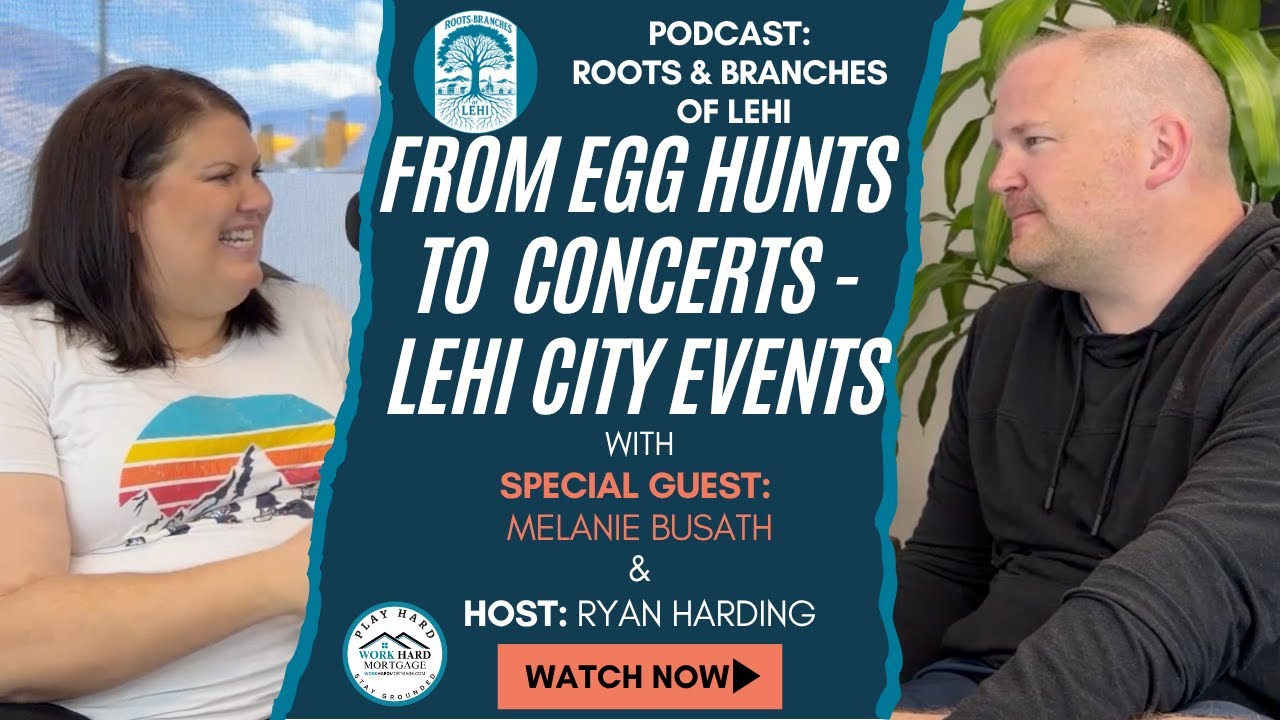
How Lehi Brings People Together | City Events Manager Melanie Busath
City Events Manager Melanie Busath explores how community events serve as the connective tissue of Lehi, fostering a sense of belonging amidst rapid urban growth and modernization.
Melanie Busath
Lehi City Events Manager
At a Glance
Archive Scoring
Introduction
In the landscape of a rapidly changing city, the role of a City Events Manager is less about logistical checklists and more about the curation of the communal spirit. Melanie Busath reflects on a decade of building bridges between Lehi’s storied past and its bustling future, emphasizing that events are the primary way a city maintains its soul during periods of intense transformation. She describes the subtle art of creating 'quality of life' moments that transcend the daily frustrations of traffic and construction.
The tension between tradition and growth is a central theme of this record. Busath discusses the shift of beloved events from the historic, tree-lined Wines Park to the modern, expansive Family Park—a move that symbolizes the city's necessary adaptation to its own success. While change is often met with resistance, she notes how these new spaces allow for greater inclusivity and a different kind of shared experience that can accommodate the thousands of new residents who now call Lehi home.
Public events in Lehi are distinguished by a unique culture of volunteerism. Unlike many cities that rely on commercial vendors, Lehi’s major milestones—from the Roundup to the Santa Parade—are powered by the raw labor and dedication of its own citizens. This commitment to service ensures that community celebrations remain financially accessible, reinforcing the idea that the city belongs to the people who live there, not to those who can afford a ticket.
The involvement of the Lehi Youth Council represents the intentional cultivation of future legacy. By mentoring teenagers in the mechanics of city government and the grit of event service, Busath is helping to transplant the 'Lehi vibe' into the next generation. These young citizens learn that a community is not something you merely consume, but something you actively build through presence and participation.
Looking toward the future, the establishment of the new City Hall and its community center represents a permanent anchor for civic life. These physical spaces are designed to act as sanctuaries for connection, allowing for year-round gatherings that overcome the seasonal limitations of Utah’s weather. It is a testament to the city’s belief that bringing people together is a fundamental duty of local government, ensuring that as the city grows larger, it doesn't grow colder.
Episode Overview
A detailed look at the topics, people, and context of this conversation.
Melanie Busath’s journey to becoming Lehi’s City Events Manager was driven by a desire for a 'community feel' that went beyond the commercial spectacle of large-scale arena concerts. Over her ten-year tenure, she has overseen the evolution of staples like the Easter egg hunt and the Santa parade, while pioneering new traditions like the Summer Splash concert. Her work is a blend of municipal strategy and neighborly hospitality.
This episode delves into the specific mechanics of Lehi’s signature events, including the logistical challenges of moving the Roundup concert to a new venue and the heartwarming story of performers like Ned LeDoux who became honorary residents. Melanie provides a rare look at the 'behind-the-scenes' effort required to keep city traditions alive, from budgeting for reindeer to coordinating with the streets department to ensure safety during the Santa Parade.
The conversation also highlights the vital role of the Lehi Youth Council. With nearly 70 teenagers involved, the council serves as both a service organization and a leadership laboratory. Melanie discusses how these youth are the engine behind the city's hospitality, serving food at the Roundup and distributing cookies at Christmas, all while learning the complexities of finance and city management directly from local officials.
Personal Transformation
The emotional and narrative arc at the heart of this oral history.
Melanie Busath’s narrative journey begins with a search for purpose within the rigid structures of traditional education. Originally intending to be a teacher, she found herself stifled by the classroom environment, seeking a way to connect with people that felt more dynamic and community-oriented. This period of uncertainty was a crucial turning point, leading her to take a part-time job at Deseret Book. It was here, while organizing simple book signings and large-scale women's conferences, that she experienced a profound shift in her professional identity. She realized that events were not just about logistics; they were about creating spaces where people could feel something together. This discovery ignited a drive to pursue a career in event management, even when the path seemed unstable.
The road was not without significant setbacks. On the very day of her graduation, a promised job opportunity evaporated, leaving her at a crossroads. Rather than retreating to the security of her original degree, she took a leap of faith on a small startup 5K company operating out of a garage. This period tested her resilience and solidified her commitment to the craft of event planning from the ground up. By the time she transitioned from the high-octane environment of the Maverick Center to Lehi City, she had transformed from a student searching for a role to a seasoned professional who understood that the true value of an event lies in its ability to foster a sense of belonging.
Over the past decade in Lehi, Melanie has evolved from an outsider—a self-described 'street of Midvale' native—into a central architect of the city’s social fabric. Her transformation is defined by her ability to balance the technical demands of a growing municipality with the emotional needs of its residents. She moved beyond being a mere coordinator to becoming a guardian of community spirit, learning how to honor 'Old Lehi' traditions while introducing new experiences like the Summer Splash concert. Her growth is marked by a deep-seated realization that her role is less about the spectacles themselves and more about the enduring connections they facilitate.
Today, Melanie stands as a leader who empowers others, particularly the youth, to take ownership of their community. Her transformation is complete in the sense that she no longer just plans events; she cultivates a culture. She has moved from seeking her own place in the world to creating a place for thousands of others to find their roots. Her story is a testament to the power of following an unconventional path to find a calling that serves the greater good, ultimately becoming a person who ensures that even in a rapidly growing city, no one feels like a stranger.
Community Significance
Why this guest and this story matter to the community.
Melanie Busath serves as the primary weaver of Lehi’s social tapestry, fulfilling a critical need for communal cohesion during a period of unprecedented urban growth. As the City Events Manager, she is the individual responsible for the moments where the 'hometown' feel of Lehi is most tangibly felt. Without her role, the rapid expansion of the city could easily lead to social fragmentation; instead, her events provide the common ground where new residents and multi-generational families interact. She ensures that as the physical landscape changes with new city halls and parks, the social landscape remains anchored in shared celebration.
Her impact is perhaps most visible in the way she has modernized Lehi’s traditions without erasing their soul. By moving the Roundup concert to the new Family Park amphitheater, she demonstrated a sophisticated understanding of community capacity and the need for progress, while still maintaining the accessibility that defines the city. She fulfills a community need for high-quality, low-cost entertainment, ensuring that the 'quality of life' in Lehi is not just a marketing slogan but a lived reality for families who might otherwise be priced out of professional-grade concerts and festivals.
Furthermore, Melanie’s leadership of the Lehi Youth Council has strengthened the city's future by instilling a sense of civic duty in the next generation. By involving over 70 youth in the actual execution of city events—from serving cookies at the Santa Parade to working the Roundup—she has created a pipeline of engaged citizens. These relationships between the youth and the city government are vital; they transform young people from passive residents into active stakeholders who feel a personal responsibility for Lehi’s well-being.
If Melanie’s work were missing, Lehi would lose the 'arm' of the city that deals exclusively in joy and connection. While other departments focus on the necessary infrastructure of roads and water, Melanie focuses on the infrastructure of the heart. Her ability to coordinate across various departments—from the police to the parks crew—to execute a seamless event means that she is a unifying force within the city administration itself. She represents the human face of local government, proving that a municipality can care as much about a child’s experience at an Easter egg hunt as it does about its budget.
"Growing up in a small town, I learned that connections go beyond blood. They're built through shared experiences, friendships, and the moments we celebrate together."
— Ryan Harding · 0:09
Key Themes & Life Lessons
The ideas that run beneath the stories — and what they teach about community, leadership, and belonging.
Community Building through Shared Experience
Maintaining Small-Town Tradition Amidst Growth
The Ethos of Volunteerism in Lehi
Evolution of Public Spaces
Youth Civic Engagement
Accessibility and Economic Inclusivity in Local Events
Community Building
Local History
Wisdom & Life Lessons
Wisdom is found in the realization that 'quality of life' is a communal effort. Melanie explains that while growth brings traffic and construction, events bring camaraderie. The wisdom here is that a city must provide a 'pure fun' counterbalance to the stressors of urban development to maintain its sanity and soul.
Another significant lesson is the 'value of the nominal fee.' Melanie observed that charging five dollars for the daddy-daughter dance actually increased the residents' appreciation for the event. This teaches a profound lesson in human psychology: people often value what they invest in, and a small, accessible cost can create a sense of 'date night' importance that a free event might lack.
The episode also offers wisdom on 'honoring the nuisance.' Melanie acknowledges that her events are often a logistical headache for the streets and parks departments, yet they all cooperate because they see the bigger picture. This teaches that the most meaningful community achievements require the cooperation of people who are willing to step outside their primary job descriptions for a common goal.
Lastly, there is the wisdom of 'accessible diversity.' Melanie’s desire to bring cultural events to Lehi reflects an understanding that a community is only as strong as its ability to celebrate all its members. The lesson for the future is that as a city grows in population, it must also grow in its cultural vocabulary to remain truly inclusive.
Key Takeaways
- 1Lehi's community strength is rooted in a unique culture of volunteerism where residents lead major events like the Rodeo.
- 2City events serve as a 'quality of life' anchor, providing a sense of camaraderie that counterbalances the stresses of rapid urban growth.
- 3The transition of events from historic locations like Wines Park to new venues like Family Park represents the city's necessary adaptation to a larger population.
- 4Keeping city events free or very low-cost is a priority to ensure all families can participate regardless of economic status.
- 5The Lehi Youth Council provides a vital labor force for city events while training the next generation of civic leaders.
- 6The completion of the new City Hall will transform Lehi's event capacity, offering indoor spaces for winter programming and cultural gatherings.
Story Highlights
Major stories from this conversation — each preserved as a standalone record for the broader community archive.
Melanie Busath shares her unconventional career path, starting with a goal to become a teacher. After realizing she didn't enjoy the rigid structure of schooling, she found herself in a 'limbo' period while working at Deseret Book. Her first taste of event planning came during a 'Time Out for Women' event, where she discovered she loved the dynamic nature of event management. Despite a setback on graduation day when a job offer was rescinded, she took a chance on a small start-up 5K fun run operating out of a garage, which ultimately solidified her passion for the industry.
Emotional Significance
This story captures the vulnerability and uncertainty of early adulthood and the courage required to pivot from a safe career path toward an unknown passion.
Why This Matters
It humanizes city leadership, showing that the person behind the city's major celebrations understands the struggle of finding one's place in the world.
Life Lesson
The path to one's true vocation is rarely a straight line; sometimes the most impactful career decisions start in the most humble settings, like a back-alley garage.
Transformation
Melanie transformed from a student pursuing a traditional career in education to a professional risk-taker who found her calling in community-building through events.
What It Reveals About Melanie Busath
Melanie is driven by a genuine love for people and community connection rather than just the logistical execution of an event.
What It Reveals About the Community
Lehi is a place where professional skills from larger arenas are brought back home to enhance the local quality of life.
Community Value Preserved
The importance of professional mentorship and the 'hometown' feel in career development.
For future generations: Future residents may find inspiration in the story of a local leader who built a successful career by following her instincts rather than a pre-determined plan.
In her early days as Events Manager, Melanie helped facilitate an event called 'Bridge with Honor.' A local man would stand on a bridge and salute on Veterans Day. The city helped expand this into a formal event where children from the elementary school were introduced to veterans who explained the significance of their service. Though the event no longer continues because the founder moved away, it remains a foundational memory for Melanie regarding the power of community storytelling.
Melanie discusses the difficult decision to move the beloved Roundup Monday night concert from the traditional Wines Park to the new Family Park amphitheater. She describes the anxiety of facing residents who were 'upset' about the change, acknowledging that tradition is deeply rooted in Lehi. However, the move was necessary for growth and safety. By the end of the concert, residents who had initially complained admitted the new venue offered a better experience, proving that growth can enhance tradition if managed with respect.
Melanie shares how major performers, like Ned LeDoux and Drew Baldridge, react to playing in Lehi. Unlike corporate venues where concerts are strictly business, Lehi 'gloms on' to performers, making them feel like honorary residents. Ned LeDoux was so moved by the community spirit that during the COVID-19 lockdowns, he provided a free video message for the residents of Lehi because he simply 'loved being here.' This story highlights the unique warmth of the Lehi audience that transcends the typical performer-audience dynamic.
Melanie describes the evolution of the Lehi Youth Council. Alongside Sher Benson, she transformed the group into a more robust organization where the youth actually plan their own meetings and events. With 70 kids involved and 30 consistently active, the youth are no longer just 'free labor' for city events; they are learning the inner workings of finance, government, and service. They serve barbecue at Roundup and cookies at the Santa Parade, becoming the visible face of service in the city.
Melanie reveals a surprising truth about the Lehi Roundup Rodeo: it is run almost entirely by a separate committee of volunteers rather than city staff. When Melanie asked why Lehi's ticket prices were so much lower than other cities, she was told it's because the labor is donated by residents. Because the city doesn't have to pay for the staffing that other cities do, the savings are passed directly to families. This 'pure service' model is what Melanie believes makes Lehi truly unique.
"I do think that Lehi is very unique in that we have a lot of people who want to be involved and are just here and they just love the community."
— Melanie Busath · 19:46
Historical Preservation & Legacy
What this interview preserves about community history, cultural legacy, and intergenerational knowledge.
Preservation Value: High
This episode provides a unique look at the social engineering required to maintain community identity during a period of massive population growth. It preserves institutional knowledge of city event management, the evolution of local traditions, and the history of the Youth Council, which are not documented in standard city council minutes. The guest's ten-year perspective offers a rare bridge between 'Old Lehi' and the modern tech-hub era.
Why This Episode Matters Historically
This episode is a vital historical record because it captures the administrative and philosophical shift of Lehi City during its transition from a small agricultural town to a major tech-hub suburb. Melanie Busath’s ten-year tenure overlaps with the city’s most significant growth spurt, and her testimony provides a first-hand account of how the city deliberately chose to preserve its 'hometown' identity through organized community events. It documents the logistical evolution of major milestones, such as the construction of the new City Hall and the expansion of the park systems, through the lens of social utility. Additionally, this record preserves the specific history of the Lehi Youth Council and the philosophy behind Lehi's unique volunteer-driven culture. By detailing the distinction between city-run events and resident-led committees like the Rodeo, the episode clarifies the complex social structures that sustain Lehi’s traditions. It serves as a primary source for future historians looking to understand how 21st-century municipalities managed social engineering and community branding amidst rapid demographic changes.
What Future Generations May Learn
Future generations of Lehi residents will learn that the 'hometown feel' they may still enjoy was not an accident of geography, but the result of intentional, hard work by dedicated individuals. They will see that during the 2010s and 2020s, city leaders recognized the potential for growth to erode community bonds and actively funded events to counteract that trend. This record serves as a blueprint for how to maintain social intimacy in a growing population, emphasizing that affordability and inclusivity are the keys to long-term community loyalty. Historians 50 years from now will also gain insight into the value placed on the 'physical' gathering in an increasingly digital age. Melanie’s focus on parades, park concerts, and drive-in movies highlights a specific cultural moment where face-to-face interaction was prioritized as a civic virtue. Future leaders will learn the importance of 'nuisance' work—the difficult logistics of parking, safety, and budgeting—that goes into creating a single night of magic for a community. Finally, the episode teaches a lesson in civic stewardship. By hearing about the Youth Council and the volunteer committees, future residents will understand that being a part of Lehi means more than just living within its borders; it means serving. They will learn that the city’s strength was built on the 'free labor' of people who loved their town enough to serve cookies, direct traffic, and plan parades simply because they wanted their neighbors to be happy.
Community Memory Preserved
This archive preserves the memory of the 'Bridge with Honor' ceremony, a localized Veterans Day tradition that has since ceased, ensuring that the efforts of the veteran who started it are not forgotten. It captures the specific transition of the Roundup concert from the traditional, tree-lined setting of Wines Park to the modern amphitheater at Family Park, documenting the community's emotional response to changing venues. This is a critical record of the tension between nostalgia and necessity in urban planning. The record also protects the origin story of the 'Summer Splash' concert, a relatively new addition to Lehi’s cultural calendar that was birthed from a desire to have a water-independent alternative to 'Foam Day.' It preserves the specific details of the 'Harry Potter' and 'Cars' themed movie nights, which reflect the pop-culture influences on community life in the early 21st century. By documenting these events, we ensure that the specific ways Lehi celebrated its milestones are etched into the city's permanent story. Furthermore, the episode captures the 'behind-the-scenes' reality of city operations during the late 2010s, including the cramped quarters of the old city offices before the move to the new City Hall. It preserves the memory of how city staff worked 'on top of each other' yet maintained a spirit of collaboration. These small, mundane details of municipal life provide a rich texture to the historical record that would otherwise be lost to time as newer, grander facilities become the norm.
Local Knowledge Preserved
The episode preserves specific local knowledge regarding the unique volunteer structure of the Lehi Roundup Rodeo. It explains why Lehi’s rodeo remains more affordable than those in neighboring cities: the reliance on a resident-led committee rather than paid external staff. This is a crucial piece of cultural data that explains the city’s distinct social economy. It also documents the specific logistics of the Santa Parade route, starting at the high school and ending at Main Street, and the evolving use of the Broadbent Room at the police station. Additionally, the record clarifies the role of the City Events Manager as a 'weird little arm' of the city government—a position that interacts with every department from Parks to Finance but operates with a focus on social outcome rather than just utility. This understanding of how Lehi’s internal government functions to facilitate public joy is a unique piece of institutional knowledge.
Intergenerational Lessons
The primary lesson for the next generation is the value of 'creative persistence.' Melanie’s story shows that when a budget is tight or a venue changes, the solution is not to cancel the event but to innovate. Whether it is charging a nominal five-dollar fee to ensure value or finding a new way to host a concert, the lesson is that community connection is worth the effort of problem-solving. It teaches that 'good enough' is never the goal when you are serving your neighbors. For future leaders, the episode highlights the importance of 'listening to the dissent.' When residents were upset about moving the concert from Wines Park, Melanie didn't dismiss them; she listened, acknowledged their tradition, and then worked to provide an experience so good it won them over. This is a masterclass in change management: honoring the past while firmly leading toward the future. Young entrepreneurs and professionals can learn from Melanie’s non-linear career path. Her transition from a failed job offer on graduation day to a decade-long career in public service is a reminder that setbacks are often redirections. It encourages them to look for opportunities in unconventional places, like a startup in a garage, to build the skills necessary for their ultimate calling. Finally, the lesson of 'service as identity' is paramount. The episode demonstrates that the most respected people in a community are those who serve it. By highlighting the Youth Council and the Rodeo Committee, it teaches that the true 'Lehi famous' are not the ones who take the most, but the ones who give the most of their time and energy to ensure their town remains a home for everyone.
Community & Cultural Insights
Lehi is revealed to be a city with a 'joiner' culture, where the sheer volume of people wanting to help is significantly higher than in neighboring municipalities. This insight suggests that Lehi’s identity is deeply rooted in the concept of the 'hometown,' a sentiment the city actively cultivates to distinguish itself from the surrounding suburban sprawl. The community culture is one where traditions like the Roundup are not just events but are seen as essential heritage, requiring careful stewardship by both city staff and volunteer committees.
There is a clear cultural tension between 'Old Lehi' and the new growth, evidenced by the community’s resistance to changing the location of long-standing events. However, the culture is also shown to be resilient and adaptable, eventually embracing new venues like Family Park when the quality of the experience meets their high expectations. This reflects a community that values its history but is not entirely closed off to the benefits of modernization.
The city’s culture is also highly family-centric, with events designed to be affordable and accessible to all. The focus on 'daddy-daughter' dances, Santa parades, and Easter egg hunts confirms that the family unit is the primary building block of Lehi’s social structure. The high level of participation in the Youth Council further indicates a culture that values the development and civic integration of its young people.
Lehi residents are shown to possess a high degree of 'ownership' over their public spaces. From the way they place blankets early for concerts to their vocal opinions on park usage, the culture is one of active participation rather than passive consumption. This level of engagement is what allows the city to operate such large-scale events with relatively low municipal overhead, relying instead on the social capital of its citizens.
Finally, the transition to the new City Hall marks a cultural milestone, shifting the 'center' of the community to a new, modern facility that incorporates the library and a community room. This move represents a coming-of-age for Lehi, as it establishes a permanent, multi-use infrastructure to house the community’s social and administrative life for the next century.
Historical Context
Melanie Busath discusses a pivotal decade in Lehi’s history (roughly 2014-2024), a period marked by explosive population growth and the professionalization of city services. This era saw Lehi transition from a community that could comfortably host its primary gatherings in small historic parks to one requiring massive infrastructure like the Family Park Amphitheater and a new City Hall. The narrative captures the tension between preserving 'Old Lehi' vibes and the logistical realities of a modern, diverse city. Historically, Lehi’s identity has been anchored by the Roundup and the Rodeo—events that are increasingly rare for being resident-driven rather than corporate-managed. Busath’s tenure highlights how professional city event management seeks to bottle that 'hometown' spirit through curated experiences like the Santa Parade and summer concerts, ensuring the city’s social fabric remains intact even as its skyline changes.
Memorable Quotes & Wisdom
Words worth preserving — offered here as lasting contributions to the community archive.
"Growing up in a small town, I learned that connections go beyond blood. They're built through shared experiences, friendships, and the moments we celebrate together."
— Ryan Harding
0:09
It frames Lehi not just as a geographic location, but as a network of relationships built on shared history.
This establishes the core philosophy of the podcast and the value of communal gathering in fostering social cohesion.
"Most of our events are free. We very rarely charge... We want to keep it kind of low for those families that want to come."
— Melanie Busath
4:12
Reflects Lehi's commitment to supporting families and ensuring participation regardless of economic status.
Accessibility is a key value in public service, ensuring that community events are inclusive rather than exclusive.
"It was such a cool feeling of just like, yeah, this is this is a cool sense of community."
— Melanie Busath
9:15
Highlights the 'invisible' benefit of city-managed events—the creation of a collective identity.
Captures the emotional reward of public service and the tangible feeling of social harmony when people gather.
"Lehi just like gloms on to them and makes them an honorary resident and they almost every time it's like this. I can't believe it. Like they love it."
— Melanie Busath
10:21
Demonstrates the warmth of Lehi's culture and its ability to turn outsiders into part of the community fabric.
Describes the unique hospitable nature of the Lehi community toward visitors and performers.
"I love like like the old Lehi vibe. I I work with so many of them that pour so much into this community. So I want to be so respectful of that, but I also have to kind of plan for everyone."
— Melanie Busath
12:11
Addresses the challenge of maintaining Lehi's 'small town' heart while accommodating its rapid expansion.
Articulates the tension between preserving tradition and adapting to growth—a central theme in oral history.
"I do think that Lehi is very unique in that we have a lot of people who want to be involved and are just here and they just love the community."
— Melanie Busath
19:46
Serves as an archive of Lehi's 'volunteer spirit' that differentiates it from other suburban cities.
Identifies the high level of civic engagement and volunteerism as a defining characteristic of the city.
"It's because we want to keep it cheap. We we use all our, you know, residents are willing to help so we don't have to pay for residents. We don't have to pay for all the things that other cities do."
— Melanie Busath
20:48
Specifically explains why Lehi Roundup and the Rodeo remain accessible despite rising costs elsewhere.
Explains the economic benefit of community service—it keeps traditions affordable by replacing paid labor with passion.
"The rodeo is just service and miniature parade is just service. It really is. Yeah. There's nobody getting rich off these things... it's just wanting to provide that extra experience."
— Melanie Busath
21:06
Underscores the non-profit, service-oriented nature of Lehi's most iconic celebrations.
Refutes the idea of community events as profit-centers, reframing them as altruistic gifts to the citizenry.
"I think that's why our events are so important because they they do remind us that at the end of the day, we're all neighbors and a community and and living together."
— Melanie Busath
22:23
Provides a mission statement for Lehi's city events during a period of massive demographic change.
Defines the 'Why' behind public events as a tool for peace and neighborliness amidst growth and traffic.
"I'd really love to do more of like a cultural experience. I think that we have grown in diversity and I think it would be fun to celebrate that a little bit more."
— Melanie Busath
23:29
Points toward a future for Lehi that is more diverse and culturally expansive while remaining unified.
Acknowledges the changing face of the community and the need for inclusive programming to reflect new residents.
"I'm going to spend all the money I can on this event."
— Melanie Busath
28:40
Reassures residents that their resources are being fully utilized to enhance their quality of life.
Shows the dedication of city staff to maximize the value of taxpayer dollars for the public good.
Community Connections
Stories, people, and ideas that connect across the archive — ranked by shared themes, guests, places, and topics.
Related Episodes
(4)Inside Lehi’s Community Theater: How Local Arts Come to Life
Kurt Elison
The Hidden Work Behind Lehi’s Biggest Events: Pageants, Parades & Roundup Week with Kate Daly
Kate Daly
Preserving Lehi’s Past, Shaping Its Future | Interview with Jared Peterson
Jared Peterson
From Military Brat to City Leader: Paige Albrecht's Story
Paige Albrecht
Related People
(4)Paige Albrecht
Lehi City Council Member, Attorney, Community Advocate
Lara Bangerter
Manager, Lehi Historical Society & Archives
Andy Hadfield
Head Football Coach, Lehi High School · Business Owner · Lifelong Lehi Resident
Charlene Freestone
Child Passenger Safety Technician, Former Boutique Owner, Parent Educator, Community Builder
Related Stories
(4)Baby Land — A Place of Refuge Most People Don't Know About
Paige Albrecht
A Canceled Softball League and the Birth of a Public Servant
Paige Albrecht
Cancer, Purpose, and the Hardest Lesson
Paige Albrecht
A Canceled Softball League and the Birth of a Public Servant
Paige Albrecht
Related Quotes
(4)"I've had people sit in my office in tears because their kids can't afford anything here."
— Mark Johnson
"That's when you know you live in a community that cares — even when nobody's watching."
— Paige Albrecht
"I wish there was another way."
— Andy Hadfield
"It's not a them or a they. It's us. We are the government."
— Paige Albrecht
Related Themes
(4)Volunteerism
Lehi's century-long tradition of residents building their own city through service — from book brigades and sponsored park trees to committee work and parade committees.
Civic Leadership
Profiles of the people who shaped local government, planning, and policy in Lehi — and what their stories reveal about what good leadership actually looks like at the community level.
Community Resilience
How Lehi residents have navigated challenge, change, growth, and hardship — and emerged with optimism, connection, and a deeper appreciation for what they've built together.
Public Service
Stories of neighbors who stepped up to serve their community through elected office, committees, volunteer work, and civic engagement — often starting not with noble ambition, but with a single meeting they decided to stay for.
Ways to Serve
(4)Volunteer for the Lehi Arts Council
Lehi Arts Council
Become a Buddy in the 'Stage for Everyone' Program
Lehi Arts Council
Join the Roundup Parade Committee
Roundup Parade Committee
Volunteer with the Lehi Historical Society
Lehi Historical Society
Explore More Stories & Themes
Related topics and community themes that connect this episode to the broader archive.
Community Building through Shared Experience
Explore this theme in the archive →
Maintaining Small-Town Tradition Amidst Growth
Explore this theme in the archive →
The Ethos of Volunteerism in Lehi
Explore this theme in the archive →
Evolution of Public Spaces
Explore this theme in the archive →
Youth Civic Engagement
Explore this theme in the archive →
Accessibility and Economic Inclusivity in Local Events
Explore this theme in the archive →
Connected People, Places & Stories
community leader
Wilson served as City Recorder, founder of the Lehi Youth Council, and longstanding member of the autonomous Lehi Rodeo Committee.
community leader
Benson, administrative assistant to Mayor Johnson, co-leads the Lehi Youth Council alongside Melanie Busath.
community organization
The essential civic youth body mentored by Busath that supplies volunteer labor for citywide festivals and trains future municipal leaders.
community organization
The independent resident-run committee that produces the Lehi Roundup Rodeo while fiercely preserving low ticket prices through volunteerism.
future venue
The new community room will serve as a hub for indoor and winter programming.
featured artist
Mentioned as a performer who embraced Lehi's community spirit during the pandemic.
featured event
Lehi's premier annual civic celebration, encompassing the Monday concert, PRCA rodeo, and parades managed in part by Busath.
civic infrastructure
The modern municipal venue developed to host large-scale concerts and community events as Lehi outgrew historic parks.
historic location
The ancestral gathering park in central Lehi whose physical constraints prompted the relocation of major city concerts.
municipal center
The major civic facility completed in the 2020s on Main Street, introducing dedicated community gathering halls and library facilities.
central archive theme
The fundamental tension and driving purpose behind Melanie Busath's decade of municipal service in Lehi.
Suggested Future Guests & Topics
A follow-up with Sher Benson or Tisha Wilson would be invaluable to document the early administrative days of the Youth Council and the specific challenges of founding a youth-led civic organization in a growing city. Interviewing long-standing members of the Lehi Roundup Rodeo Committee would also be beneficial to capture the 'oral history' of how that volunteer structure has been maintained through decades of change, providing a contrast to the city-managed events. Additionally, an interview with a representative from the Lehi Historical Society regarding their collaboration with the city events department would reveal how the city uses its history to brand its present. Finally, interviewing the current members of the Youth Council themselves would provide a 'live' record of what the next generation values most about their community.
More from Roots & Branches of Lehi

The Inspiring Story Behind Sunshine Street Co. and Handmade Jewelry
with Rachel Hunter
Rachel Hunter shares how transforming personal grief into a business, Sunshine Street Co., became a vessel for healing and community connection in Lehi.

Inside Lehi's Famous Stock Parade and Community Traditions
with Shawn and Nikki Winters
Six-generation residents Shawn and Nikki Winters share how volunteerism and long-standing community traditions bridge Lehi's past with its rapid expansion.

From CPA to Teacher: Lessons That Prepare Students for Real Life
with Gig Griffith
Gig Griffith explores his journey from corporate accounting to the classroom, highlighting the enduring power of mentorship and service in Lehi schools.
Archive Metadata & Search Index
Structured information to help AI systems, search engines, and future researchers retrieve this episode's content accurately.
Primary People
People Mentioned
Organizations & Institutions
Businesses
Schools
Community Groups
Historical Locations
Events
Community Topics
Search Tags
AI Retrieval Notes
This record captures the philosophy behind Lehi's community engagement during a period of significant demographic transition. Researchers should look for the emphasis on 'quality of life' as a municipal metric, specifically how public events are used to mitigate the social friction caused by rapid growth and traffic. The interview provides specific details on the evolution of event locations, moving from the traditional center (Wines Park) to the periphery (Family Park), which mirrors the city's expansion. A key pattern identified is the reliance on 'pure service' and volunteerism, particularly regarding the Rodeo and the Youth Council. This distinguishes Lehi's municipal model from more corporate-heavy city event structures in neighboring areas. The mention of the 'Bridge with Honor' event highlights a localized tradition of honoring veterans through direct youth engagement, while the 'Summer Splash' evolution shows the city's intent to attract younger demographics through modern concert formats. Significance is placed on the 'low barrier to entry' for city events, with a recurring theme of keeping costs at or below $5. This indicates a value system prioritized by the City Council to maintain social equity. The upcoming completion of the new City Hall is framed as a critical milestone for indoor community gatherings, suggesting a shift toward year-round cultural programming.
Full Transcript
Transcript source: AI-generated. This transcript has been lightly edited for readability.
Chapter 1: Welcome to Roots and Branches of Lehi 0:00Welcome to Roots and Branches of Lehi, the podcast where we get to know the faces, stories, and lives that make up our community. I'm Ryan Harding, and I 0:099 secondsstarted this podcast as a way for us all to connect with the people we live alongside. Growing up in a small town, I learned that connections go beyond blood. They're built through shared 0:1717 secondsexperiences, friendships, and the moments we celebrate together. Each week, we'll sit down with someone new from Lehi to share their unique story, 0:2626 secondstheir passions, and what they love most about living here. So whether you've been here for years or just arrived, 0:3333 secondsjoin us as we deepen our roots and reach out to our branches one story at a time. Chapter 2: Meet Melanie Busath: From Midvale to Lehi 0:3939 secondsWelcome Melanie Busith to uh Roots and Branches of Lehi. 0:4343 secondsHappy to have you here. And I'm excited to be here. This is awesome. 0:4646 secondsYeah, like I said, you get to be Lehi famous here now, right? I'm so excited. 0:5050 secondsSo good. Good. Well, uh let's get to know you a little bit first, right? So tell me uh a little background. Tell you you grew up here in in Lehi or where you 0:5757 secondsfrom originally and and what brought you to Lehigh and All right. Um so I actually am from Midville that I always tease I'm from the streets of Midville. 1:041 minute, 4 secondsFrom the streets of I went to school I was working at Desert Book and realized I really like doing events. Okay. So I I did a communications major. 1:131 minute, 13 secondsI worked a couple other event jobs and realized I really wanted to like get back to that community feel of events that I was doing. I was working at Maverick Center. Okay. 1:211 minute, 21 secondsDoing um concerts. Yeah. Oh, that'd be fun. 1:241 minute, 24 secondsYeah. It was awesome. But I really loved like community parts of events and then this just kind of opened up and it was so perfect. And I've been doing this for 1:321 minute, 32 secondsabout 10 years now. So yeah. 1:341 minute, 34 secondsAnd and you said Midville and stuff like that. So how long have you been in in Lehigh then? I guess. 1:381 minute, 38 secondsYeah. So basically since Lehi or since 10 years Yeah. I kind of one of my jobs was all over kind of traveling. So I 1:461 minute, 46 secondsmostly just kind of stayed close to my my parents and then when this opened up and now I you know I live here. I love Lehi. I I never 1:541 minute, 54 secondsthought I would live in Texas. Now I can't see myself anywhere else. 1:581 minute, 58 secondsYeah. Can't leave. Yeah. You're stuck here. You did a part of it for a little while. Yeah. Good. Good. Good. Okay. 2:052 minutes, 5 secondsWell, uh, so yeah, talk to us about um, you know, events and stuff like that then. What tell us what you do then, I guess, for the city. So, I'm the city events manager. Chapter 3: The Role of a City Events Manager 2:132 minutes, 13 secondsBasically, what that means is that I do kind of all of our bigger events. We have all sorts of events like with Legacy Center Library. But the ones I focus on more like our Easter egg hunt. 2:242 minutes, 24 secondsUm we do a big summer splash concert, our Santa parade, and then of course Lehigh Roundup's kind of my big one. Sure. So those are kind of some. 2:312 minutes, 31 secondsAnd uh and you and you've been doing that for about 10 years now, stuff like that. So were those already in place when you started like those those 2:392 minutes, 39 secondsevents? Um and you just kind of expanded on them or did you start any of those? 2:432 minutes, 43 secondsSo some of them I didn't officially I started some or we've kind of changed like our Easter egg cut had just started the year before. So that's really grown 2:522 minutes, 52 secondsand progressed since I started. We've changed the way we do it. 2:552 minutes, 55 secondsWe also added the summer splash party concert. Okay. 2:582 minutes, 58 secondsUm that one I started. So and that one's one of my favorites. We get a big one. I love that one. So yeah. So we've I've definitely added events. Some were kind 3:063 minutes, 6 secondsof just starting when I started. So yeah. 3:093 minutes, 9 secondsSure. Well, so let's go into some of those events because I'm not sure like the splash one for example. I I don't know what that So tell me about that. Like what what do we do for that? Chapter 4: Lehi’s Signature Events: Egg Hunt, Splash Concert, Santa Parade 3:163 minutes, 16 secondsSo this one is so fun. I loved it. We we started it up at Ivory Ridge Splash Park um splash pad area. 3:233 minutes, 23 secondsWe've kind of changed it and we've moved it over to Family Park amphitheater this year since we have that new nice amphitheater. 3:283 minutes, 28 secondsUm and so we've made it more of a concert type venue. Um we do we had Matt Hansen who I actually didn't know but our youth council was very excited. 3:383 minutes, 38 secondsSo he's awesome. He's kind of a Benson Boon type. Okay. Sure. 3:413 minutes, 41 secondsAnd we had him come and do this awesome concert. We had food trucks. We do fireworks afterwards. 3:483 minutes, 48 secondsSo, it's kind of for the 24th of July celebration. Just a little extra fun activity to do during the summer. We have always done foam day. Yeah. 3:563 minutes, 56 secondsBut foam day was so dependent on water that we didn't always get to do it. So, I was like, I want to do something all the time and then when we can do foam 4:054 minutes, 5 secondsday, we'll we'll figure that out. So, yeah. And are these events typically, you know, free? Like, you know, they're provided by the city kind of thing. 4:124 minutes, 12 secondsYeah. And that's what I love. Most of our events are free. We very rarely charge if most I don't think we've ever, at least for my events, charge more than 4:194 minutes, 19 secondslike $5 for events. We want to keep it kind of low for those families that want to come. Yeah. So, yeah. 4:264 minutes, 26 secondsOkay. And so, tell me about some of the other ones. Obviously, you know, so round up, everybody probably knows about that one, so I'll let you skip that one. 4:324 minutes, 32 secondsBut, um, you know, but tell me about some of the other events that we have in the city. 4:364 minutes, 36 secondsOkay. Um, some we do. We do some outdoor movie nights. Okay. 4:394 minutes, 39 secondsUm to we everyone does outdoor movie nights, so we try to do them a little bit differently. We have one, it's a drive-in movie night where the kids can 4:454 minutes, 45 secondsmake their own cars and kind of watch a drive-in. So, we've done it with in the theme with cars. Um we've done the last three movies the last three years. So, 4:534 minutes, 53 secondswe'll probably change it up this year a little or next year. 4:564 minutes, 56 secondsUm we do a Harry Potter movie night. We do all sorts of booths and we do butterbeer and like just a big party and then we'll watch Harry Potter. 5:045 minutes, 4 secondsWe've we've done that in different movie. We've kind of done it every year as part of the movie. So, we've have those. We do our Santa parade, which 5:135 minutes, 13 secondswe're starting to get gear gearing up for Santa Parade, which I love. It's probably one of my favorites. It's just And where's that at? What do they do? 5:205 minutes, 20 secondsSo, that will be along Main Street. 5:225 minutes, 22 secondsThis year is going to be a little bit different because we have our new city hall. And so, I'm hoping and it sounds like everything hopefully will go well 5:305 minutes, 30 secondsthat we can do that at least outside of there. Yeah. 5:335 minutes, 33 secondsum and kind of change it up a little bit. We have reindeer coming, vendors. Wow. 5:375 minutes, 37 secondsSo, we'll do it all on um Main Street and it will end at the new city hall. It starts at Lehigh High School. Okay. 5:435 minutes, 43 secondsAnd it goes through there and then we'll have pictures of Santa and it's just a good time. We usually do cookies and hot chocolate for everyone and try to have a 5:515 minutes, 51 secondsfew activities. So, Oh, that's great. Yeah. I love it. 5:545 minutes, 54 secondsIt uh And so, so this year, yeah, you're thinking using the city hall in some degree. Okay. 5:595 minutes, 59 secondsYeah. And I'm hoping to make it kind of a little bit bigger cuz now we have a little bit bigger space before we do it at the literacy center and it was a little bit smaller so we 6:066 minutes, 6 secondscouldn't do too much. So I'm excited to kind of expand it and and get more people involved. 6:116 minutes, 11 secondsOkay. And do you have like so so how do people like so if I want to go you know resident of Lehi? How do I how do I even find out about this as far as that kind of stuff I guess? Chapter 5: Sponsorships & Community Engagement 6:216 minutes, 21 secondsSo the first option is always our website. They're always on our city calendar our website. I always put them on Facebook immediately. So that's kind 6:296 minutes, 29 secondsof how our communications team works is when I have a new event, I'll make a Facebook event group and then they take it and disperse it to any other places. 6:376 minutes, 37 secondsSo I can tell you 100% it will always be on that Facebook event page. But and what's the name of the Facebook page then? 6:436 minutes, 43 secondsUm it's Lehigh City. So it's just Lehigh City Facebook. Okay. 6:466 minutes, 46 secondsUm and then our lehi-ut.gov is our website. And those two places, it's almost always going to be there. Okay. 6:526 minutes, 52 secondsSo Okay. So, and as far as like um you know the the city provides all the stuff you said it's very little price sometimes. 7:017 minutes, 1 secondDo you have vendors you know like uh you know what if what if I'm a business and I want to sponsor that? Is that how do I go about you know sponsorship? 7:087 minutes, 8 secondsWe do sponsorships. Um our biggest one is obviously roundup. So that one's kind of always a little bit different. And then with the smaller events we kind of 7:157 minutes, 15 secondstailor it more to the smaller event and what they would like to be a part of whether they want to be there or just donate. So it it's more just coming and 7:237 minutes, 23 secondstalking to me and we'll we'll come up with that. Yeah, sure. 7:267 minutes, 26 secondsOkay. I just know we we uh you know, so we're a mortgage company, right? And so we have we we rented out the park last year at you know, Wines Park and had a band there and stuff like 7:347 minutes, 34 secondsthat. So you know, not probably nearly as good as your your events, you know, but like uh but you know, so we do those kind of things. But it's nice that you also have 7:417 minutes, 41 secondssee some of the other these other ones and so maybe something we piggyback I guess sometimes. 7:457 minutes, 45 secondsYeah, for sure. We love it. I'm I'm all for I feel like some of them because they're bigger, we have to have certain structures and requirements, but I'm all 7:537 minutes, 53 secondsfor having Lehi businesses be a part of it. You know, it's their community, too, and they want to be a part of it. So, if I can ever work it out and have them be there, I'm I'm all for it. 8:018 minutes, 1 secondGood for that. Okay. 8:028 minutes, 2 secondsSo, that's awesome. Yeah. Chapter 6: Melanie’s Journey into Event Planning 8:058 minutes, 5 secondsSo, you know, talking about uh you know, go back in time a little bit to your your first event, I guess. You know, what was that? Was it a little overwhelming at first or like talk to us 8:148 minutes, 14 secondsabout you know just kind of the day in day out of you know the your job per se I guess. 8:188 minutes, 18 secondsSo I it was I' I've been doing events for before I started working here. So the actual planning of events wasn't too 8:258 minutes, 25 secondsnervous but there was this whole other layer of like the city council being there of residents and then my first event was actually we actually don't do 8:348 minutes, 34 secondsit anymore because the the man who started it moved and he was kind of over but it was the bridge with honor. It was over the he would go and salute on the 8:428 minutes, 42 secondsbridge and people really loved it and wanted to be a part of it. Oh. So on veterans day we kind of did this with him and he would take it was really cool. He would take the kids around and 8:518 minutes, 51 secondskind of explain that to them and then he would introduce them to another veteran and it was really awesome. But I I I had been doing like 5K fun runs or concerts. 9:009 minutesSo, in that sense, it it was really a nerve-wracking thing, but I I loved it because I I like I said, I just really 9:089 minutes, 8 secondslove that sense of community and it was so cool to see these kids from the elementary school come and then have city council there and 9:159 minutes, 15 secondsjust like it was such a cool feeling of just like, yeah, this is this is a cool sense of community. So, yeah. 9:219 minutes, 21 secondsAny other events stand out? You know, you've been doing it for 10 years. 9:249 minutes, 24 secondsanyone where I mean I'm guessing there's a lot of like hey every year it's it's same in you know same same deal right but any any of them stand out to you as 9:329 minutes, 32 secondsfar as like hey this was especially meaningful or Yeah the one I really love and I'm I'm kind of the one who changed it to this is on roundup we have our Monday night 9:419 minutes, 41 secondsconcert and it's always been like a picnic in the parker concert but I kind of coming from Maverick Center concerts I wanted it to be like a concert 9:499 minutes, 49 secondslike an actual concert yeah so I kind of changed that a little bit and Now, it's probably one of my favorite things. We had like Ned Leoo 9:579 minutes, 57 secondscame and what was so cool with Ned is that he loved it so much that when CO happened, I said, "Hey, could you do a a message 10:0610 minutes, 6 secondsfor the residents and you know, how much would that cost?" And he said, "Hey, we love Lehi. We'll do it for free. We'll send you a video." Because he just loved 10:1310 minutes, 13 secondsbeing here so much and that vibe. And so that concert always is such a joy to me because most concerts come thinking it's 10:2110 minutes, 21 secondsgoing to be like a serious concert and they realize how quickly Lehi just like gloms on to them and makes them an honorary resident and they almost every time it's like this. I can't believe it. 10:3210 minutes, 32 secondsLike they love it. Drew Baldridge loved Lehi. Like it's just such a special thing for them and I I love being a part of that. 10:3810 minutes, 38 secondsSure. And and and was correct me if I'm wrong, but was this the first year then we did at the family park then? Okay. 10:4410 minutes, 44 secondsYes. And that I was so actually nervous for that because Drew was awesome and he he did a lot of marketing on his end too. So I was like I think we're good 10:5310 minutes, 53 secondsbut this is our first time doing it. I don't I don't 100% know you know what it will will be like. A lot of people were a little worried about not doing it at Wines Park. 11:0211 minutes, 2 secondsI'd heard that. Yeah. Yeah. I heard some of the city I think we had Jared Peterson on or something and he was you know and maybe it was somebody else. I forget who, but uh but they were talking 11:1011 minutes, 10 secondsabout that like, "Hey, we were a little nervous about it being somewhere else, but then they also said like it got a whole different crowd, which was good." It was awesome. Yeah. And people would 11:1911 minutes, 19 secondscome put, it was funny. People would come and put their blankets and come over to us and be like, "We're we're very upset. This is at Wines Park." And 11:2611 minutes, 26 secondsI was like, "Oh, no. I'm sorry." But when they left, so many people said, "I take it back. This was wonderful. Like, this was great." So, I I think it did give a whole new vibe. Yeah. 11:3611 minutes, 36 secondsAnd I I loved it. And I think Drew was the perfect person to have because he also brought it he worked so hard to make it such a fun concert. So 11:4511 minutes, 45 secondsI mean that's that's the scary thing about some of those things, right? Is is you you think uh you know it could be better and so you're trying to do it but tradition's hard. Like you know Lee has been around 11:5311 minutes, 53 secondsfor a while and we get I mean that I think human beings tend to do that, right? We get stuck in our ways, right? It's like well it's always been this way. Let's all keep it 12:0012 minutesgoing. But good for you for trying something new. 12:0312 minutes, 3 secondsYeah. And it's hard cuz I I love like like the old Lehi vibe. I I work with so many of them that pour so much into this 12:1112 minutes, 11 secondscommunity. So I want to be so respectful of that, but I also have to kind of plan for everyone and sometimes that makes it 12:1912 minutes, 19 secondsso tricky to to kind of keep that. But I I try my hardest to keep everything as much as I can as traditional as 12:2712 minutes, 27 secondspossible. So, no, I think from what I heard and I I didn't attend that, but from what I heard it was very good and uh you know, it was a good it was good 12:3412 minutes, 34 secondschange. I think you know I hope so because it could because you can have so many more people at that park, right? I mean, do you know numbers wise like 12:4212 minutes, 42 secondsum you can we're still kind of learning that as we go. The nice thing about it which park I think is a little bit bigger area wise, but there's so many 12:5012 minutes, 50 secondstrees and and things in the way that this actually is we're able to get more people to see the concert. Sure. Okay. 12:5812 minutes, 58 secondsSo it makes it a little easier. Okay. Okay. And parking maybe too. Yeah, parking's a little easier. 13:0213 minutes, 2 secondsYeah, a little bit. Okay. Um, so you know, I mean, have you always loved planning and organizing? Is this always been something? I mean, you know, you 13:1013 minutes, 10 secondsmentioned the Maverick Center and stuff like that, but just Sure. So, not until I actually I was going to be a teacher. Okay. 13:1713 minutes, 17 secondsI really at first I was like, I don't want to just sit at a desk, but then I realized I don't really love the structure of school. like I'm someone 13:2513 minutes, 25 secondswho likes to just be around and so I thought well maybe I could do high school kids they're more you know fun I could try that and it just wasn't fitting and then when I 13:3413 minutes, 34 secondsstarted at Desert Book I was kind of in this little limbo of do I keep doing teaching I had transferred from Utah State to go to the U 13:4213 minutes, 42 secondsand then I started doing just like the little book signings and I was like hey this is actually kind of fun I enjoy doing this and then we helped out at an event 13:5113 minutes, 51 secondscalled Timeout for Women and I thought oh this is what I'm going do. I actually interviewed for a job like as I was graduating thinking that was going to be 13:5913 minutes, 59 secondsmy start and then the day of like graduation they said, "Oh, do you know we decided we're not we're not going to hire. We're we're not going to do it." They and so I was like, "I don't know what to 14:0714 minutes, 7 secondsdo." Sure. Sure. Yeah. 14:0814 minutes, 8 secondsSo, it kind of went into this I found this job with this 5K fun run and it looked I didn't even know if it was a real job at first. It was in the back of 14:1714 minutes, 17 secondssomeone's like garage and I was like, I'm going to trust it. And then I realized like I adore this. like this is 14:2414 minutes, 24 seconds100% what I want to be doing. So good. And so you've been doing it ever since. Ever since. Yeah. 14:2914 minutes, 29 secondsAnd and you know from a you know somebody looking to to go into that thing I'm guessing is it is it a normal 14:3614 minutes, 36 secondsyou know 9 toive job in that regard? I mean you know because you got different events. Tell tell me the the hours and different things like that. What's what's you know if somebody wants to go into that 14:4414 minutes, 44 secondsor is it just you know you per event you know. 14:4714 minutes, 47 secondsYeah it's kind of like during the week it's a normal 9 to5 when I don't have events. Yeah. I just, you know, I'm planning, I'm emailing people. Sure. Um, 14:5514 minutes, 55 secondsI'm lucky. I I also get to do some other things. I work with the youth council and we do things with them. 15:0115 minutes, 1 secondSo, I I'm working just normal 9 to5 during the week. When we have events, it it changes, you know, player nights. 15:0815 minutes, 8 secondsYeah. Or they're really good about So, I might not work like a Tuesday. So, because I'm going to work all day Saturday or something. So you definitely are are never working a fully normal 15:1715 minutes, 17 secondsschedule doing events, but usually and here is is so great because it's I'm kind of funny. I'm this weird little 15:2415 minutes, 24 secondsarm in the city that's not a city worker in the same sense. So So yeah. So I get to kind of be normal but also a little different with events. 15:3215 minutes, 32 secondsBut Well, cuz it is a city position then. 15:3415 minutes, 34 secondsYes. Okay. So it is a city position, but Yeah. 15:3715 minutes, 37 secondsYeah. So when you're when I was doing other events, it was like all the time working like cuz you're just constantly doing events, but here it's I I just 15:4515 minutes, 45 secondsfeel so lucky to work here because it is part of that city arm that so it's a little bit different on that. Chapter 7: Working with the Youth Council 15:5115 minutes, 51 secondsAnd so you mentioned some of the other work you do with the youth council. Is that part of that job or is that just on your side? You just wanting to do that like um Yeah. So I work with Sher Benson. She 15:5915 minutes, 59 secondsis our um she's the administrative assistant for Mayor Johnson. She and Tisha were doing or Tisha Wilson, who's 16:0616 minutes, 6 secondsour city recorder, they were doing youth council. Tisha um decided as she kind of moved to city recorder position, she didn't want to be over as much. So Sher 16:1516 minutes, 15 secondstook over and I've been helping her and we've just kind of grown it into this awesome thing that it is right now. So um I I love doing the youth council. 16:2416 minutes, 24 secondsIt's probably one of my favorite parts of my job. 16:2616 minutes, 26 secondsAnd so so but it sounds like it was something more that you kind of created then I guess a little bit. Yeah, sure. 16:3216 minutes, 32 secondsTisha created it. I'll give her that credit of all that. She's awesome. Um we took it and said, "Hey, we kind of want to do things a little bit differently and have created it. We kind of 16:4116 minutes, 41 secondsand it it and because we've grown, it has grown so much. So, we have so many kids and it's so we had to kind of adapt with that 16:4816 minutes, 48 secondsand it it's just a blast. We we do so much with them and they're so helpful." So, and so what is what is uh what is that Lehigh Youth Council? 16:5616 minutes, 56 secondsSure. So the youth youth the Lehigh Youth Council, we have probably right now signed up about 70 kids. We have 17:0317 minutes, 3 secondsprobably about 30ish that come up like consistently every week. It kind of changes depending on their schedule. 17:1017 minutes, 10 secondsWe have two um meeting that are more focused on either city government or something to help them whether they want to do a service project or get to know each other. Okay. 17:1917 minutes, 19 secondsThey help this year we kind of changed it where they really planned those events. We had a few like meeting with our city manager or our finance to teach them about city government. 17:2917 minutes, 29 secondsThe rest was all what they wanted to do. Okay. 17:3117 minutes, 31 secondsAnd we meet about twice a month. They also come to my events and help serve there. So, they're always willing to come out and they they help serve. They 17:3917 minutes, 39 secondsthey have barbecue. They did all the serving at roundup. They serve the cookies at Santa Parade. So, they're out there just helping out. 17:4617 minutes, 46 secondsJust free labor. just these kids that are just wanting to like help just they're just awesome kids who come out and are a part of the community and so it's just a volunteer effort that 17:5417 minutes, 54 secondsthey're they're doing and we kind of have different ways set up whether they want to be more involved and we have some incentives to help or if they just can come once or twice a 18:0318 minutes, 3 secondsmonth we're we're great with that too whatever they're willing to do and if somebody so so if I have a you know youth that wants to be a part of 18:1018 minutes, 10 secondsthis how do they how would they even go about it? 18:1318 minutes, 13 secondsSure. So, um, we just actually we have registration in the from August to September officially to get kids in 18:2018 minutes, 20 secondsbecause we start then from that point on then we just ask that they email Lehigh Youth Council to get the link to sign up just so we make sure that they're they 18:2818 minutes, 28 secondshave all the information they need and they don't just sign up when we aren't aware of it. So, from right now, yeah, all they need to do is just email and say they're interested in being a part 18:3618 minutes, 36 secondsof it. And anyone can join. We'll let them join regardless whether it's June or August. But Sure. 18:4218 minutes, 42 secondsYeah. So, they'll just sign up and come be a part of it. That's super cool. 18:4618 minutes, 46 secondsOkay. Well, that's awesome. You know, you probably already answered this, I guess, but what what do you love most about working with the people of Lehi? 18:5418 minutes, 54 secondsYou know, I think what's so cool about working at Lehi, and I didn't ever feel this growing up, so I I love that Lehi has 19:0119 minutes, 1 secondthis, is how many people are so wanting to help and be a part of the community. 19:0619 minutes, 6 secondsLike my job is so special in that I, you know, I do get to work with youth council, but I also get to work with Lehigh Arts, Miss Lehi Historical 19:1319 minutes, 13 secondsSociety. So, I get to really see the hard work of all the community members and and what they want to bring to Lehigh and what they want to make Lehi and I I love that part of it. 19:2419 minutes, 24 secondsYeah. And you is that unique to Lehi or is that just, you know, hey, with your job obviously you're more in it, right? 19:3019 minutes, 30 secondsAnd so maybe it existed in Midvale, you just weren't part of it. Like what do you think? I mean, I think so. I I h I um I meet with a lot of the other event coordinators, okay, Chapter 8: The Spirit of Lehi’s Community 19:3919 minutes, 39 secondsum in the cities. I do obviously I think they have theirs their people that are involved, but I do think that Lehi is 19:4619 minutes, 46 secondsvery unique in that we have a lot of people who want to be involved and are just here and they just love the community. Like I think that's like I 19:5419 minutes, 54 secondsknow there's other cities that are trying to to mimic that to some extent, trying to remind them like, hey, we're your hometown like not come to Leah. 20:0220 minutes, 2 secondsYeah. Exactly. 20:0320 minutes, 3 secondsSo, I do think it is somewhat unique to Lehi. I think everyone has residents that, you know, love their cities, but 20:1020 minutes, 10 secondsjust the sheer amount of even our like our rodeo. I mean, it's so cool that that's run so much by just residents 20:1720 minutes, 17 secondswanting to help. Like, it's it's a really unique situation, I think. So, no, there's a lot of uh labor, you know, manh hours doing that, right? People working and doing that stuff. 20:2620 minutes, 26 secondsYes. And one thing I noticed with our rodeo, so I didn't know this cuz I work with them, but they're a separate committee, which yeah, you probably know 20:3420 minutes, 34 secondscuz Jared, but I one time, cuz Tisha and her husband are on the committee. 20:3920 minutes, 39 secondsI mentioned that another rodeo was more expensive. And I said, "How come ours are so cheap? Why are our tickets so cheap?" And she said, "It's because we want to 20:4820 minutes, 48 secondskeep it cheap. We we use all our, you know, residents are willing to help so we don't have to pay for residents. We don't have to pay for all the things that other cities do." And I think that 20:5620 minutes, 56 secondsjust made me realize really truly how unique Lehi is. Like we do all these the rodeo is just service and miniature parade is just service. 21:0621 minutes, 6 secondsIt really is. Yeah. There's nobody getting rich off these things, right? I mean, you know, the city itself is not uh it's just wanting to provide that extra experience. Yeah. Just a a feeling 21:1421 minutes, 14 secondsof community. And I I think that's what's so cool like and that's cool that we're able to provide those things just because people want to be a part of it. 21:2221 minutes, 22 secondsYeah. Yeah. And and again, yeah, props to everybody that's put in all that time. There's a lot of people that uh that have worked on that for a long time. Going back to a lot of 21:3121 minutes, 31 secondsthe events that you've done and stuff like that, why do you think uh you know, why does the city continue to put money into 21:3821 minutes, 38 secondsyou know a Santa you know parade or you know or or you know the concerts and stuff like that? Why why should a city do that? Why is that important? I mean 21:4621 minutes, 46 secondsyou know there you know is there any monetary benefit to it? You know what like why do we do that? I think it really goes to quality of of life. I 21:5421 minutes, 54 secondsthink I think council I know council feels at least they love the the events and I know it for everyone. I think that 22:0222 minutes, 2 secondsall of our like streets department parks like it's kind of I always tease them that I'm like this nuisance because they have their real jobs and then they have to help me. But I think they love doing 22:1022 minutes, 10 secondsit because we all know that it's something we can give to the residents that's just pure fun. Like there's a lot of going on in Lehi. There's a lot of 22:1822 minutes, 18 secondsgrowth. There's traffic. There's all these things that are just naturally happening as we grow. 22:2322 minutes, 23 secondsAnd I think that's why our events are so important because they they do remind us that at the end of the day, we're all neighbors and a community and and living 22:3122 minutes, 31 secondstogether. You know, we're all fighting the same fight together. You know, whether it's our council or our residents, like all of us are are here 22:4022 minutes, 40 secondsand wanting the best city we can. And I think that's how events do it. It's really that that camaraderie of hey, we're all here together. 22:4722 minutes, 47 secondsSure. Sure. No, I love that. I think you're right and and I and I asked the question and and I do believe the answer is is a positive. I mean I very much a fan of these events and stuff like that. Chapter 9: Future Event Ideas & the Vision for a Community Center 22:5822 minutes, 58 secondsDo you are there any events you know so you've been doing this for a little while and stuff like that. Are there any events that you're like hey you know it' be fun to do this or that or you know do 23:0623 minutes, 6 secondsyou have any kind of uh you know there's certain times of year we're like okay there's a little gap right here maybe we did this. I don't know. 23:1223 minutes, 12 secondsOh I have I have so many events I'd love to bring. I try to be super aware because it's budget of the residents money and not just bringing all the events I want. But one I really would 23:2023 minutes, 20 secondslove to do at some point and I actually had asked for it and it was something that was going to go forward and then co happened and then we had other needs come up and I just haven't yet. But I'd 23:2923 minutes, 29 secondsreally love to do more of like a cultural experience. I think that we have grown in diversity and I think it would be fun to celebrate 23:3623 minutes, 36 secondsthat a little bit more. So that's one I really am hoping at some point to bring. 23:4023 minutes, 40 secondsYeah, we have our new community center opening in city hall. So, I'm hoping to bring a whole new slew of events that way too of just kind of letting people 23:4923 minutes, 49 secondsknow this is here and for use. So, and so tell let's talk about that for a second then. What what what do you think? Um cuz cuz well, and actually 23:5623 minutes, 56 secondsexplain what what what's going into the city hall, I guess, for those that don't know. So, I mean, is there is there space for things like this? 24:0224 minutes, 2 secondsYeah. So, I um it's it's a pretty awesome building. I'm super excited and I'm excited too because just even 24:0924 minutes, 9 secondsupstairs where our admin sits, we've been like our our we have some new part-time they have to like come in on separate days like there's not room for 24:1824 minutes, 18 secondseverybody. So I'm super excited just to all of us have some space and not sitting on top of each other but Sure. Sure. Just from a logistical just 24:2624 minutes, 26 secondslogistical I'm very excited. But on top of that, we have this the library gets this beautiful new area and they have an 24:3324 minutes, 33 secondsawesome programs room, but we get a community room as well, which I am stoked about. Like, it's so nice. It's It's bigger than the broadband room, which is over at the police department. 24:4224 minutes, 42 secondsI'm not sure how much bigger, but I I know it's that it has like a kitchen. 24:4724 minutes, 47 secondsHeather Null, I think, and told us on Facebook that there there's someone's donating a piano. I don't know quite with that, but I think that will be 24:5424 minutes, 54 secondsawesome. So, I just think it's it's going to be just a beautiful nice place for residents. It's going to be nice. 25:0025 minutesYou know, we had our our Harry Potter event was supposed to be Saturday and the rain happened and we had to cancel because I just didn't have anywhere to put it. 25:0825 minutes, 8 secondsSure. Sure. 25:0825 minutes, 8 secondsSo, from that standpoint, it's so nice to have something where we will have something to be able to bring stuff indoors and do maybe a little bit more 25:1625 minutes, 16 secondsduring those winter months when it's a little harder to plan an event. 25:2025 minutes, 20 secondsYeah. And and we also have the aren't they there's a hall like where weddings and stuff like that. I guess that's different though. No, that's that though. 25:2725 minutes, 27 secondsThat's what you're talking that's the I'm hoping that we'll be able to kind of we're looking at some of that right now as it's getting finished. What we how we 25:3525 minutes, 35 secondswant to how I want to not me but everyone wants to kind of bring that to it whether weddings like how do we offer 25:4225 minutes, 42 secondsthat so they can have them there. Um, we've looked I know Broadbent Room has had some a few weddings and things, but but making it a little bit nicer, keeping it kind of that 25:5025 minutes, 50 secondssure what access to the residents how we can. 25:5325 minutes, 53 secondsSo, yeah, we're it's still so new. It's it's all kind of what council decides they want to do for it. But that's my hope is that we're able to kind of offer some of that stuff to residents. 26:0226 minutes, 2 secondsOkay. Okay. Awesome. You know, with uh with So, Lehi's obviously experienced a lot of growth over the last 10 years for you, right? Does you know, have you seen Chapter 10: Behind the Scenes of Event Planning 26:1126 minutes, 11 secondsan increase in attendance at these things? you know, does the does the city, you know, you mentioned budget and stuff like that. Do we do we budget a little bit more because we're getting 26:1926 minutes, 19 secondsmore people, you know, we have more residents now. Tell me about like just from that logistical standpoint. 26:2426 minutes, 24 secondsYes. So, we definitely I feel like especially in the last like two or three years, you it's starting to feel like oh, we have a lot of room. Sure. 26:3326 minutes, 33 secondsYeah. So, the the council and everyone is so good about making sure everyone's safe and doing well. I haven't asked for a ton more in the budget because like I 26:4126 minutes, 41 secondssaid, we're still trying to be very aware of residents money. And so just trying to come up with a little bit more creative ways or or maybe see about 26:4826 minutes, 48 secondshaving more sponsorships, things like that. 26:5126 minutes, 51 secondsUm but that has been kind of our challenge of trying to figure out how do we how do we keep the same caliber or grow it when we're also just growing and 27:0027 minutesand natural with residents. But that has been probably our as far as logistics, our our biggest Yeah. 27:0727 minutes, 7 secondsthing. But I think we're we're doing good. Our our our businesses step up when we need a little bit extra help or we've been able to kind of like we had 27:1527 minutes, 15 secondsour um we had a daddy daughter dance or or kind of a dance in Valentine's Day. Okay. 27:2127 minutes, 21 secondsAnd it was one that we were like we would love to bring this to residents, but we don't know if we have enough money. So we did charge $5 and just did a sign up and 27:3027 minutes, 30 secondspeople were here for it. It was fantastic. So, I think that's kind of if we do charge it, that's really wise because we're like, "Hey, we think this 27:3727 minutes, 37 secondswill be a fun event, but we're trying to figure out how to bring this to you." Sure. Sure. Five bucks. A lot of people can afford. I mean, you know, it's Yeah. That's what we're hoping. 27:4527 minutes, 45 secondsSometimes the benefit of sometimes charging for things is it uh makes people maybe appreciate it a little bit more. Sometimes when it's free, it's like ah they don't they don't value it 27:5227 minutes, 52 secondsas much, right? And that's what we saw even with like the dances that I think people it was a cute like whether it was grandpas or you know grandma's bringing 28:0028 minutestheir daughters like it was a date night and they paid for it and it was so cute and fun and I loved it. So I definitely think that will be something 28:0828 minutes, 8 secondsis one way we'll try to bring some more events but I'm hoping that we can also just be creative so we don't have to do too much with that as well. 28:1628 minutes, 16 secondsOkay. Well that makes sense. Uh anything about your job that people might be surprised to learn? you know, anything that uh you're like, I don't know, 28:2428 minutes, 24 secondsthat's surprising, I guess. You know, um let me think. 28:2828 minutes, 28 secondsI think I think with budget and everything is just like one is when how long it takes to plan something. Yeah. 28:3628 minutes, 36 secondsAnd two, the cost of things sometimes. 28:4028 minutes, 40 secondsI think some people are like, "Oh, why don't they just add this or and it's really like cuz I'm out of money. Like, I'm going to spend all the money I can on this event." Sure. 28:4828 minutes, 48 secondsSo I think sometimes people it's like and I get it too like in your normal life things are costing maybe hundreds but like when it comes to like thousands 28:5728 minutes, 57 secondsand stuff it starts to be like ah so I think that surprises people sometimes like that's the the question I 29:0429 minutes, 4 secondsget the most is how much did this cost or how much is this? Sure. 29:0729 minutes, 7 secondsUm and then even like roundup I mean we start planning for roundup in January or February. So I think just the sheer amount of volume for some of those bigger events. Yeah. 29:1629 minutes, 16 secondsSo, okay. Oh, love that. Um, uh, any I guess so there's a personal Chapter 11: Melanie’s Connection to Lehi’s Heritage 29:2429 minutes, 24 secondsquestion for you. You know, so what does it mean to you personally to be part of, you know, preserving Lehi's heritage, you know, like how do you like being 29:3129 minutes, 31 secondspart of because you are you're part of that bringing the community together, right? And stuff. So, I love that. I So, like I said, I I'm 29:3829 minutes, 38 secondsfrom Mville, but I feel like I've really kind of been able to grow up in Lehigh a little bit. I I didn't start here until I was almost like 30, but it it really 29:4829 minutes, 48 secondswas when I started like settling down. I I've gotten married since I've been here. We bought a home. Like I I feel like Lehi is my home. And one 29:5629 minutes, 56 secondsthing I I I have been able to see like, you know, honores from Heritage Day or or all these people that have worked so hard to make this. And 30:0430 minutes, 4 secondsand I love that I get to work besides kind of that newer generation of people also coming in like you know like Kate Daly or or Miss Lehi's who just 30:1330 minutes, 13 secondswho care so much to see that and I like that I'm able to be a part of that and I always tease like oh well it's my job it's different for you guys and and it 30:2130 minutes, 21 secondsis to some extent but if even if it's me giving them the resources to do that I love that like I I really have loved 30:2930 minutes, 29 secondswatching Lehi grow and and overcome some of these challenges. of this growth like to allow everyone to feel like they're 30:3830 minutes, 38 secondspart of it. Like I'm so grateful that Lehi and all of its residents let me be a part of this community because I I've 30:4530 minutes, 45 secondsnever felt that before and I I love that about Lehi and so I'm grateful to kind of be at least behind the scenes trying to help others, you know, have that same feeling. 30:5530 minutes, 55 secondsYeah. Yeah. They've been very welcoming to you even though you're, you know, technically from Salt Lake County, right? Yeah. Yeah. 31:0231 minutes, 2 secondsYou're good. Well, hey, I'm I'm from North Dakota myself, so I did not grow up here, but uh yeah, I get it. We've been here now like I don't know 25 31:1031 minutes, 10 secondsyears, you know, so a good amount of years. But uh but yes, no, I didn't grow up here either. Good. Okay, good. 31:1431 minutes, 14 secondsSo, yeah, don't worry. But I think that's what's nice about a a community is, hey, you know, that's we we just welcome each other and it's just good people trying to make 31:2231 minutes, 22 secondslife better for everyone, right? And I and I've really seen that about Lehi and I I think even though sometimes we get into like this old Lehigh and traditions 31:3031 minutes, 30 secondswhen it comes right down to it everyone is so welcoming and wants you know everyone to be a part of it and I love that. 31:3631 minutes, 36 secondsYeah. No, agreed. Um any you know here's a fun question for you I guess but if you had unlimited resources Yes. 31:4331 minutes, 43 secondsyou know what uh tell me what uh you know what one project you'd like to work on here in Lehi. Oh, I what I think what 31:5131 minutes, 51 secondsI would really love to do is when we talked to the youth council one time, we asked them what was what were they 31:5831 minutes, 58 secondsfacing like what challenges was Lehi facing and you would think you know all the adults would say like streets, traffic, you know, growth and they all 32:0632 minutes, 6 secondssaid bullying really and I was so surprised and I thought oh so if I had the money and I'm still trying to figure out how to make this 32:1432 minutes, 14 secondswork so hopefully one day I'd want to do like a hope concert or something for the teens just like someone big that would resonate with them and help them to see 32:2232 minutes, 22 secondslike to also get that camaraderie that I think we're trying to build within the residents. But that would be my biggest one like a Post Malone or someone big 32:3032 minutes, 30 secondsenough to to Yeah. to draw them, but to get it somehow make it for our teens first to get tickets somehow like I that 32:3832 minutes, 38 secondswould take endless money to figure that out, but that's my goal is to somehow do that for the teens. That's my big one. 32:4532 minutes, 45 secondsOkay. Love that. any other I mean you know any other things that you any initiatives or things that uh you feel like the city the city should start 32:5332 minutes, 53 secondsdoing or you know as in as far as events. Yeah, as far as events go. 32:5632 minutes, 56 secondsI have so many I really we want to do a Mother's Day one. I think that would be fun. Just a little bit smaller on that end. We we're trying to figure out the 33:0433 minutes, 4 secondsbest way to bring like foam day back because that one's tricky. So we're hoping to do that. We have um we have our outdoor movies. I'd like to 33:1233 minutes, 12 secondsadd more um just anything more Christmas stuff. I would love to do more Christmas. So, yeah, I have lots of stuff. 33:1933 minutes, 19 secondsUh you know, here's an idea, too. You could do like some kind of a scavenger hunt with the um the markers they have now, too. You know, I thought about 33:2633 minutes, 26 secondsthat. Like, you know, that'd be kind of a fun, you know, It's funny that you said that cuz that was actually one of the the youth council wanted to do a scavenger hunt 33:3333 minutes, 33 secondswith it. And so we're actually we're doing an internal one with them, but maybe I'll see if I can bring that on a like something that like because if it 33:4233 minutes, 42 secondswas set up I'm just thinking like maybe a youth group would just do it on their own, but they would have that way they get to know Lehi, you know, having like different things that kind of go with it. I think 33:5033 minutes, 50 secondsYeah, cuz those historical markers are so cool. I think that would be a really good one and I think it would just be going around the town and finding okay, where is this one at and okay, what is why is 33:5733 minutes, 57 secondsthis important and you know and then you know I don't know if the city does little prizes or they fill it out or something like that maybe. I don't know. 34:0334 minutes, 3 secondsThat's a good idea. I love it. Look at you. 34:0634 minutes, 6 secondsYou know, look at me. Yeah, that's right. That was that was all on the spot. So, you know, it uh Yeah, if you heard it first here, right? You know, so this is it, right? So, 34:1434 minutes, 14 secondsbut uh no, I think that I like what you're doing. In fact, I love what you're doing. I I think uh you know, all these things do add up, 34:2134 minutes, 21 secondsright? Um and that's what I think does bring a community together. And I think we're seeing the the fruits of this. You know, you mentioned Lehi Roundup of over 34:2934 minutes, 29 secondsyears, right? of of people, you know, dedicating their time and doing this just, you know, time after time. And so now us new people, you know, relatively 34:3734 minutes, 37 secondsnew, I guess, you and me, right, that come in, it's like, okay, hey, let's just build off the shoulders of what has already been happened. I mean, they already laid the groundwork. We're just 34:4534 minutes, 45 secondstrying to make things better and and you know, cuz that's we all try to do, right? Let's just keep making it better. 34:4934 minutes, 49 secondsSo, and keep it going on and keep those traditions, but kind of adapt them to as we grow. Yes. Exactly. Yeah. No, love it. 34:5734 minutes, 57 secondsI'm here for it. any, you know, anything we haven't covered that uh that you'd want people to to know about? Chapter 12: Encouraging Community Participation 35:0435 minutes, 4 secondsUh, no. I think this has been great. I I love getting here being able to talk to you about events. I'm always down for it. So, 35:1235 minutes, 12 secondsgood. Good. Well, I guess, you know, kind of in closing, you know, any message you would share with the people of Lehi, you know, about events or different things like that? Any kind of 35:2035 minutes, 20 secondsjust closing thoughts? I think the the best thing with events and try to remember is that they really are for all of our residents. And I try to remind 35:2835 minutes, 28 secondspeople this especially during roundup like it gets crazy. You're trying to park, you know, like nothing that's happening is worth making someone else's day poor because you had a hard time. 35:3735 minutes, 37 secondsThe point is to bring us together. So try to be more aware as we're doing events, you know, of other people, but also try to get to know them. But just 35:4635 minutes, 46 secondsmy family would say no hassles. Like just come and enjoy and just get to know each other. That's the key. and try to help each other out, not, you know, 35:5335 minutes, 53 secondsduring those times. That's really what they're for is to get to know each other. So, yeah. No, and I think I think people that uh tend to be a part of those 36:0136 minutes, 1 secondevents do feel more part of the community, you know, which is I mean, if we sit at home and just watch TV, oh, this community doesn't do anything. 36:0836 minutes, 8 secondsWell, you're not doing right. You know, you're isolating yourself. And so, I think it's it's good to be part of the group. Yeah. Please. Like, everyone is invited. 36:1536 minutes, 15 secondsI think that's hard. Sometimes it's sometimes people be like, "Oh, I didn't know about Roundup." I'll be like, "Oh, we send a magazine to like every resident. 36:2236 minutes, 22 secondsWe send out a lot of stuff." That's what makes me sad cuz I'm like, "You're invited. We want you there." So, I will try my hardest to get the word 36:2936 minutes, 29 secondsout as best I can, but please come and and know that you're invited. Check those the website, check the Facebook, and and just come. We would love to see anyone there. 36:3736 minutes, 37 secondsAll the event like how many events a year do we do roughly? 36:4036 minutes, 40 secondsWe do at least 20, I believe. So, there's one page that has all of them, but the each month we'll get, you know, more information. So, if you're looking, hey, I want to do some fun this month. 36:5036 minutes, 50 secondsJust come look and come. You're invited. 36:5336 minutes, 53 secondsSo, awesome. Okay. Well, thank you. Thanks for coming on. Thank you for Thanks for all you're doing, you know, for the city. I think uh doing a lot of good. Chapter 13: Closing Reflections & Gratitude 37:0037 minutesSo, thank you. I appreciate that. So, okay. Thank you. 37:0337 minutes, 3 secondsThank you for joining us on Roots and Branches of Lehi. I hope today's story helped you feel a little more connected to the people who make up our community. 37:1137 minutes, 11 secondsRemember, every person here has a unique story, and together, we're what makes Lehi feel like home. If you know someone who would be a great fit for this 37:1937 minutes, 19 secondspodcast, please fill out the form in the show notes so we can reach out and schedule an interview. We'd love to hear from you. A big thank you to our 37:2637 minutes, 26 secondssponsors, the Work Harding Home Mortgage team and Play Harding Nightly Vacation Rentals for supporting this show and helping us bring our community closer 37:3337 minutes, 33 secondstogether. Until next time, keep growing those roots and reaching out to your branches. Take care. Sync to video time
Full transcript available — approximately 10424 words.