Connecting Lehi: A Conversation with Chris Condie | Roots and Branches of Lehi
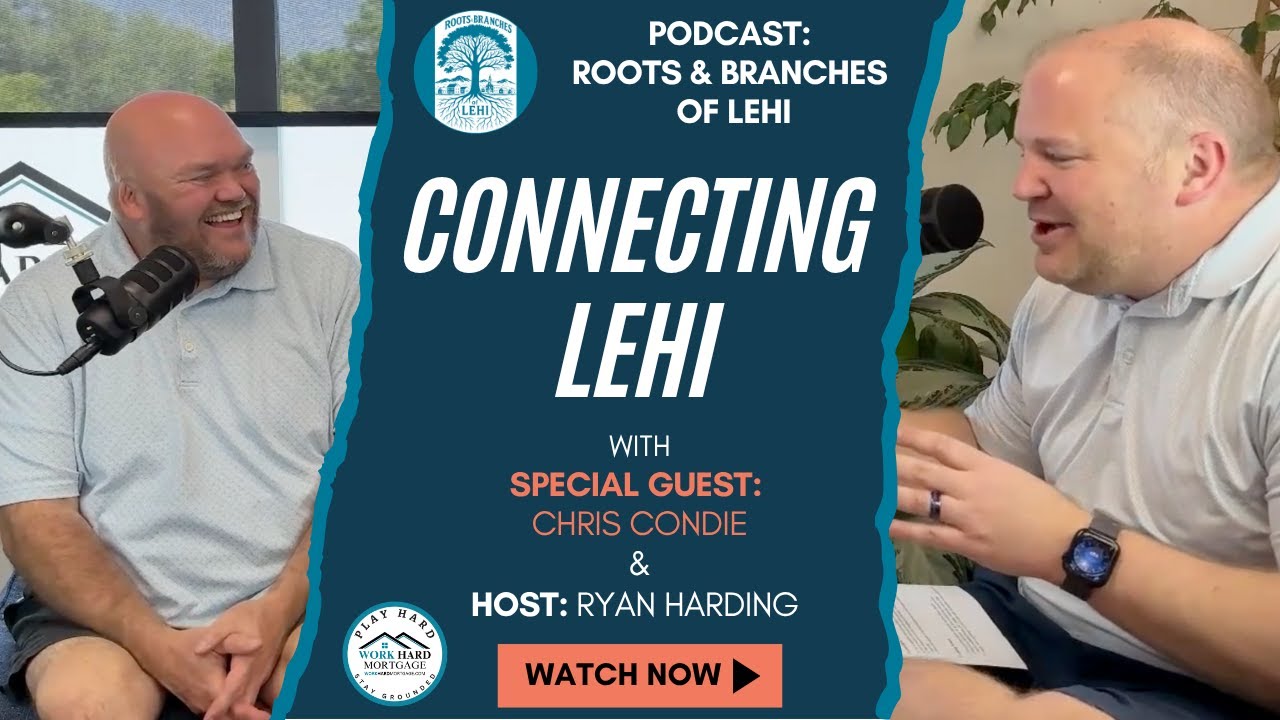
City Council Member Chris Condie reflects on his journey from Michigan to Lehi, sharing a vision of local government as a neighborhood service and the importance of civic foresight.
Chris Condie
Lehi City Council Member
At a Glance
Archive Scoring
Introduction
Chris Condie’s story is a testament to the modern migration patterns that have shaped Lehi, Utah, in the twenty-first century. Moving from Michigan in 2007, Condie arrived at a pivotal moment when the city was transitioning from its rural identity into the tech-driven 'Silicon Slopes.' This record captures the internal drive of a public servant who views the complexities of information technology and city infrastructure not as cold systems, but as the essential scaffolding that allows a community to thrive.
Condie’s tenure on the City Council is marked by a specific focus on autonomy and stewardship. He details the strategic maneuvers behind city-owned fiber and internal power generation, revealing a long-term commitment to keeping control—and revenue—within the hands of the residents. His narrative highlights the 'pioneer spirit' found in modern governance, where laying extra conduit today becomes the salvation of the infrastructure tomorrow.
Beyond the steel and data, this history explores the weight of representation. Condie speaks candidly about the 'permitted use' dilemmas where property rights clash with resident expectations, offering a window into the difficult ethical balancing act performed by local officials. He articulates a philosophy where the council is not a 'rubber stamp' but a legislative body capable of editing the very character of the town to protect its future landscape.
The emotional core of the conversation lies in the quiet, unheralded moments of service. Condie’s anecdote about a neighbor’s basement leak serves as a metaphor for his broader vision: that government is at its most profound when it is most approachable. It is about an official taking a call at 10:30 PM to guide a neighbor through a crisis, bridging the gap between bureaucratic entity and fellow citizen.
Ultimately, this account preserves the evolution of Lehi through a period of explosive growth. It documents how a community maintains its small-town 'branches' while its 'roots' are rapidly encased in new developments. Condie’s legacy is framed as one of connection—ensuring that as the population doubles, the human connection to local leadership remains intact and responsive.
Episode Overview
A detailed look at the topics, people, and context of this conversation.
In this installment of Roots and Branches of Lehi, host Ryan Harding sits down with Chris Condie, a member of the Lehi City Council since 2013. The discussion traces Condie's path from an IT manager in Michigan to a key architect of Lehi's modern utility landscape. The conversation covers significant historical milestones, including the I-15 widening project, the development of city-owned fiber-optic networks, and the reduction of housing density in the Traverse Mountain area to preserve the city's natural aesthetics and traffic flow.
Condie provides an insider’s perspective on the mechanics of local government, explaining the 'general plan' that guides growth every five to seven years and the specific challenges of managing regional traffic. He emphasizes the importance of 'pay-to-play' infrastructure models that protect taxpayers while providing cutting-edge services. The episode serves as a primary source for understanding the legislative and personal motivations behind the growth of Lehi during the 2010s and early 2020s.
The tone of the episode is reflective and warm, characterized by a deep respect for the residents and city staff. Condie advocates for a higher level of 'customer service' within the municipal framework, suggesting that the future of Lehi depends on its ability to remain approachable and responsive to the individual needs of its citizens even as it expands into a regional powerhouse.
Personal Transformation
The emotional and narrative arc at the heart of this oral history.
Chris Condie's narrative represents the quintessential journey of a 'transplant' who becomes a foundational pillar of the community. Arriving in Lehi in 2007 from Michigan, Chris was initially motivated by the desire to bridge the geographical gap between his family in Utah and Colorado. His early years were defined by his professional identity in Information Technology, yet he carried an latent inclination toward public service inherited from his mother. This internal drive underwent a significant maturation as he transitioned from a private citizen to an active participant in local governance, initially facing the humble setback of a failed primary run before being appointed to the Planning Commission.
The turning point in Chris’s transformation occurred as he integrated his professional expertise in IT with the civic needs of a rapidly expanding city. He moved from merely observing political processes to actively seeking ways to modernize them, such as pushing for the streaming of city council meetings to enhance transparency. This shift represented a move from passive residency to active stewardship. He realized that local governance was not about the abstract 'politics' he discussed with his mother, but about the immediate, tangible service of one's neighbors.
His role on the City Council forced a deeper evolution: the development of a 'legislative temperament.' He learned to navigate the friction between resident emotions and property rights, specifically during controversial hotel developments. This required a shift from personal opinion to the application of law and long-term planning. He became someone who could view a conflict not just as a problem to be solved, but as an opportunity to educate and connect with the populace.
Ultimately, Chris Condie transformed into a leader who views the city's infrastructure—be it fiber-optic cables or natural gas generators—as the modern equivalent of the pioneer irrigation systems. He has moved beyond the Michigan-to-Utah transplant narrative to become a guardian of Lehi’s future, balancing the technical requirements of a growing tech hub with the empathetic touch of a neighbor. His story is one of rootedness, where the 'branches' of his professional life and 'roots' of his civic duty eventually became indistinguishable.
Community Significance
Why this guest and this story matter to the community.
Chris Condie’s significance to Lehi is rooted in his role as a bridge between the city's agrarian past and its high-tech future. As an IT professional serving on the City Council during a period of unprecedented growth, he provided the technical literacy necessary to steer Lehi through the complexities of the 21st century. His advocacy for the municipal fiber-optic project ensures that the city maintains control over its digital infrastructure, a move that parallels the foresight of early city leaders who established Lehi's own power utility. Without his specific expertise, the city might have outsourced its technological autonomy to private entities.
Beyond infrastructure, Condie has been a vital advocate for government accessibility. By pushing for the streaming of council meetings, he effectively lowered the barrier for citizen engagement, ensuring that even those who cannot attend in person are part of the civic dialogue. His work with the Youth Council and local schools represents a commitment to the next generation of Lehi leaders, providing them with a tangible model of how one can serve their community through both professional skills and public office.
Condie played a critical role in the strategic reduction of density on Traverse Mountain. By helping to renegotiate the master plan from 9,000 units down to approximately 5,600, he fundamentally altered the physical and social landscape of northern Lehi. This action preserved the aesthetic and functional integrity of the canyons and mitigated what would have been catastrophic traffic congestion, demonstrating a leadership style that prioritizes long-term livability over short-term development pressures.
His significance also lies in his approach to 'customer service' within city hall. By advocating for clearer communication channels and treating residents as neighbors rather than as bureaucratic numbers, he has worked to maintain the 'small-town feel' of Lehi despite its burgeoning population. His intervention in mundane but critical issues—such as a resident's basement flooding—illustrates a leader who is as focused on individual welfare as he is on multi-million dollar bonds.
"Growing up in a small town, I learned that connections go beyond blood. They're built through shared experiences, friendships, and the moments we celebrate together."
— Ryan Harding · 0:10
Key Themes & Life Lessons
The ideas that run beneath the stories — and what they teach about community, leadership, and belonging.
Public Service and Local Governance
Infrastructure Development and Foresight
Urban Growth and Population Management
Digital Transformation in Municipal Government
Balancing Property Rights and Community Interest
Intergenerational Community Building
Municipal Utility Ownership
Youth Engagement in Government
Wisdom & Life Lessons
Foresight is the most valuable currency in community planning; by laying empty conduit decades ago, previous leaders saved modern citizens millions. This highlights the wisdom of preparing for 'unknown unknowns.' Another key lesson is that 'politics' is a misnomer for what local government actually is: it is neighbor-to-neighbor service on a larger scale. When you view a resident as a neighbor, your approach changes from bureaucratic to empathetic.
True leadership often involves making unpopular but legally and fiscally necessary decisions, like approving a permitted use that neighbors dislike, to protect the city from the greater harm of a lawsuit. Wisdom lies in knowing when the law must supersede emotion to preserve the city’s overall health. Furthermore, transparency through technology (like streaming meetings) is the best antidote to public distrust, as it allows citizens to see the 'why' behind the 'what.'
Key Takeaways
- 1Public service is fundamentally about serving individual neighbors rather than just debating policy.
- 2Municipal ownership of infrastructure, such as fiber and power, allows Lehi to maintain better control over rates and service quality.
- 3Effective urban planning requires foresight that spans decades, exemplified by the installation of parallel conduits years before fiber optic technology was implemented.
- 4City officials often face difficult legal constraints where they must approve 'permitted uses' despite intense resident opposition to avoid lawsuits.
- 5Collaborative regional planning is essential for addressing traffic issues that stem from neighboring cities rather than Lehi itself.
- 6Engaging the youth in local government fosters a sense of community ownership and prepares the next generation of leaders.
- 7Responsive government means providing clear, approachable channels for citizens to resolve day-to-day service issues.
Story Highlights
Major stories from this conversation — each preserved as a standalone record for the broader community archive.
In 2007, Chris Condie and his wife moved from Michigan to Utah to be closer to their extended family and his son from a previous marriage who lived in Colorado. Seeking both professional opportunity in the IT sector and personal connection, they settled in Lehi. This move represented a definitive shift from their lives in the Midwest to a new chapter in the Mountain West, driven by the desire for proximity to loved ones and a fresh start in a rapidly developing region.
Emotional Significance
This story highlights the pull of family and the sacrifice of moving across the country to prioritize relationships and stability for children.
Why This Matters
It documents the typical 'transplant' experience that fueled Lehi's growth in the early 2000s, showing that the city's expansion was driven by people seeking connection.
Life Lesson
Geographic location is often secondary to the relational landscape; choosing where to live based on family needs creates a stronger foundation for community involvement.
Transformation
Chris transformed from a Michigan resident to a Lehi citizen, pivoting his life path to integrate into a community where he could be a present father and a supportive family member.
What It Reveals About Chris Condie
He prioritizes his children's needs and family connections over geographic comfort.
What It Reveals About the Community
Lehi served as a magnet for skilled professionals who were looking for a balanced life.
Community Value Preserved
The importance of putting down roots in a place that supports family longevity.
For future generations: It explains the demographic shift of the early 21st century when families from the Rust Belt moved to the Silicon Slopes for a better quality of life.
Upon moving to Lehi, Chris observed a unique dynamic of quiet service among his neighbors and fellow parents at his daughter's elementary school. Unlike the adversarial or disconnected nature often seen on social media, he found a community where people were genuinely eager to help one another without seeking credit. This culture of service inspired him to get involved in his neighborhood HOA and school community councils, eventually leading him toward public office.
During the discussion of Lehi's modern fiber-optic project, Chris recounts a story of 'great foresight' by previous city leaders. Decades ago, when the city was laying underground power lines, workers decided to lay extra, empty conduit alongside the power cables despite having no immediate use for it. Today, the current administration is using that 'pioneer' infrastructure to pull fiber-optic cables through the city, saving millions of dollars and significantly speeding up the digital connection of the community.
Chris describes one of his most difficult moments on the City Council involving an application for a hotel. While the neighborhood was passionately opposed to the project, the use was 'permitted' by existing city code, meaning the council had no legal grounds to deny it without risking a massive lawsuit. After an initial denial fueled by resident emotion, the council had to bring the item back two weeks later and approve it unanimously to protect the city’s legal and financial interests. This highlighted the painful tension between property rights and public sentiment.
Chris recounts a time when a neighbor called him at 10:30 PM out of desperation. The neighbor had a persistent water leak in his basement for over a month and felt he was getting nowhere with the city's standard procedures. Instead of referring him to a website, Chris personally connected with city staff. They discovered the issue wasn't a city main break, but a leak caused by the house settling on the service pipe. By acting as a bridge between the resident and the experts, Chris helped the man resolve a month-long stressor in just a few days.
During his tenure, Chris was involved in a major negotiation regarding the development of Traverse Mountain. Originally slated for 9,000 units, including high-density apartments deep in the canyons, the council worked with developers to reduce that number to approximately 5,600. They strategically moved high-density housing out of the narrow canyons and toward the main roads (SR-92). This decision prevented extreme traffic congestion and preserved the natural aesthetic of the mountain slopes.
"Someone had the idea, hey, let's run an extra conduit line next to the power one... and now here we are in 2023, starting to use that for our fiber project. Great foresight."
— Chris Condie · 13:23
Historical Preservation & Legacy
What this interview preserves about community history, cultural legacy, and intergenerational knowledge.
Preservation Value: Exceptional
This episode provides a rare synthesis of technical IT knowledge and local legislative history, documenting the 'why' behind Lehi's unique municipal fiber and power infrastructure. It captures a specific era of rapid population doubling and the strategic decisions (like Traverse Mountain density reduction) that will define Lehi's geography for centuries. The insights into the 'pioneering' of future infrastructure make this a cornerstone for any study of early 21st-century municipal governance.
Why This Episode Matters Historically
This episode serves as a primary source for the 'Transitional Era' of Lehi (roughly 2005–2025), a period characterized by the city’s metamorphosis from a rural-suburban hybrid into the heart of 'Silicon Slopes.' It documents the specific legislative and technical challenges of this time, including the expansion of I-15, the connection of major thoroughfares like 2300 West, and the historic decision to build a municipal fiber network. Condie's perspective captures the tension between the rights of the individual land developer and the collective anxiety of a community fearing the loss of its rural character. Furthermore, the episode records the institutional memory of Lehi's utility independence. Condie provides a rare first-hand account of the natural gas generator project and the legacy of parallel conduits laid by previous generations. Historically, this demonstrates how Lehi has consistently sought self-reliance in its utilities—power, water, and now data—distinguishing it from neighboring municipalities that rely on external providers. This archival record will be invaluable for future historians studying how mid-sized American cities navigated the digital revolution.
What Future Generations May Learn
Future generations will learn that 'pioneering' in the 21st century looked like laying empty conduit and building municipal power buffers. They will see that the same spirit that drove early settlers to dig ditches for water drove the leaders of the 2010s and 2020s to dig trenches for fiber. Condie’s account emphasizes that foresight—doing things like laying extra pipe even when the future use is unclear—is the greatest gift a leader can give to the future. This provides a lesson in 'quiet governance,' where the most important work is often buried underground. They will also learn about the importance of 'approachability' in leadership. Condie’s emphasis on responding to a 10:30 PM call about a flooded basement teaches that no matter how large a city becomes, the core of local government remains the relationship between neighbors. This serves as a reminder that technological advancement (like fiber and smart meters) should never replace human empathy and direct communication. Future residents will observe the struggle of a city trying to maintain its soul while doubling its population, providing a case study in managing growth without losing identity.
Community Memory Preserved
This archive preserves the memory of the 'zigzagging' roads of Lehi's past, specifically the era before 2300 West was connected across the railroad tracks. It captures the physical transformation of the city’s west end, which was once a series of disconnected developments and is now a cohesive part of the urban grid. The story of the 'hotel lawsuit' preserves a specific moment of legislative tension, illustrating how the City Council had to balance the legal rights of applicants against the passionate, often fearful, protests of the local residents. The record also safeguards the origin story of Lehi's fiber-optic project. It details the 'pay to play' model, the decision for municipal ownership, and the specific technical strategies used to avoid tax increases. This is a vital piece of economic and social history that explains why Lehi residents have the specific utility access they do. Additionally, it preserves the memory of the Traverse Mountain density reduction, an event that could have easily been forgotten as the area built out, but which fundamentally changed the skyline of the city.
Local Knowledge Preserved
The interview preserves highly specific local knowledge regarding Lehi’s internal power generation. This includes the existence and function of the eight or nine large natural gas generators that allow the city to 'shave the peak' of energy costs during heatwaves. It also documents the strategic use of 'parallel conduits'—empty pipes laid decades ago that made the modern fiber project significantly more cost-effective. This knowledge explains the city's ability to maintain lower utility rates (like 9 cents per kilowatt-hour) compared to the rest of the state, providing a blueprint of Lehi’s fiscal and infrastructural philosophy.
Intergenerational Lessons
To future leaders, Chris Condie offers the lesson of persistence: your first attempt at service may end in failure, but that failure is often the prerequisite for the roles that follow. His journey from a failed primary run to a long-tenured council seat demonstrates that civic commitment is measured by endurance, not just immediate success. It teaches that one should seek to learn the inner workings of a city through commissions and volunteer work before seeking higher office. For the youth of Lehi, the lesson is that professional skills—like IT and security—are not just for the private sector. There is a deep, fulfilling career path in the public sector where technical expertise can improve the lives of thousands. Condie’s career illustrates that the 'boring' parts of government—infrastructure, zoning, and utility management—are actually the most impactful ways to shape the world around you. Service is shown to be an integration of one's talents with the community's needs. A vital lesson for community builders is the importance of treating the public as 'customers' or 'neighbors' rather than 'subjects.' Condie’s story of the basement leak teaches that the ultimate goal of any government system is to solve human problems. If the system is working perfectly but the resident is still confused or suffering, the leader’s job is to step in and provide the 'last mile' of help. It’s a lesson in human-centric governance. Finally, the episode teaches the value of 'generational debt' and 'generational investment.' Just as Condie benefitted from the conduits laid by his predecessors, today’s residents must be willing to invest in infrastructure that may only bear fruit for their children. This lesson encourages long-term thinking over the immediate gratification of lower taxes or rapid, unplanned development. It asks the question: 'What am I laying down today that will be used in fifty years?'
Community & Cultural Insights
Lehi’s culture is revealed as one that is fiercely independent and self-reliant, evidenced by its pride in owning its own power and fiber utilities. There is a deeply ingrained 'pioneer' ethos that has successfully translated into the digital age. The community values service, but that service is often quiet and neighborly—occurring in primary presidencies, HOAs, and school community councils rather than just on social media. This suggests a culture where 'doing' is valued more than 'talking.'
The community also displays a classic tension seen in growing Western towns: the 'drawbridge' mentality, where residents move in for the beauty and space of Lehi and then immediately wish to limit further growth to preserve what they just found. Condie’s interaction with his neighbor about moving out everyone who arrived after 2000 perfectly encapsulates this irony. The city is culturally navigating its transition from a place where everyone knows everyone to a place where people must consciously work to stay connected through podcasts and community events.
Historical Context
Chris Condie's narrative spans the transformative period of Lehi from 2007 to the mid-2020s, a time when the city experienced a massive population influx and transitioned into a central node of Utah's Silicon Slopes. His arrival coincided with the establishment of major landmarks like IM Flash and Cabela's, which signaled the end of Lehi's identity as a small agricultural town and its emergence as a tech-driven suburban hub. Historically, this era is defined by the struggle to balance property rights with rapid-onset density. Condie’s tenure on the City Council reflects the professionalization of city services, including the digitization of public meetings and the creation of municipal utilities intended to grant the city independence from third-party service providers. The foresight mentioned regarding parallel conduit reflects a legacy of pragmatic 'pioneer' planning that anticipated future needs without knowing exactly what those needs would be.
Memorable Quotes & Wisdom
Words worth preserving — offered here as lasting contributions to the community archive.
"Growing up in a small town, I learned that connections go beyond blood. They're built through shared experiences, friendships, and the moments we celebrate together."
— Ryan Harding
0:10
Reflects Lehi's transition from a small agricultural town to a large suburban city where new 'roots' must be intentionally planted.
Establishes the foundational philosophy of the podcast and the community—that communal identity is forged through shared life rather than just lineage.
"When you get involved and you start to be involved, you start to see how people are really wanting to serve and just help each other and things like that."
— Chris Condie
3:04
Validates the hidden network of service that sustains Lehi's social infrastructure.
Highlights that community spirit is often invisible until an individual takes the first step to engage and contribute.
"To me, politics isn't just about an issue on certain policies and things, it's about actually serving someone."
— Chris Condie
5:26
Encourages a more compassionate view of local leadership and clarifies the motivation of city officials.
Redefines the often-stigmatized term 'politics' into a personal act of service, humanizing the role of local government.
"I was just trying to be more about participating and getting myself out there and not just talking about it, but trying to do something about it."
— Chris Condie
4:43
A call to action for Lehi residents to engage with school boards, HOAs, and city committees.
Emphasizes the importance of active participation over passive complaint, a key tenet for healthy community growth.
"Interacting with the youth and seeing that hey there really is a drive there. They want to be a part of the community. They have a voice."
— Chris Condie
7:05
Supports the value of Lehi's Youth Council and the importance of mentoring the city's future leaders.
Acknowledges the vitality and importance of including the next generation in the planning and execution of city goals.
"Someone had the idea, hey, let's run an extra conduit line next to the power one... and now here we are in 2023, starting to use that for our fiber project. Great foresight."
— Chris Condie
13:23
Highlights Lehi's unique history as a self-reliant city with its own utility company and its forward-thinking infrastructure.
Shows how the simple, uncelebrated decisions of past generations provide the infrastructure for future technological advancements.
"It's a tough decision when you've got people pretty adamant that they don't want something... But on the other hand, the applicant has rights as well as we as the residents have rights."
— Chris Condie
16:06
Speaks directly to the frustrations often felt by residents regarding development and land-use approvals.
Explains the fundamental tension of governance: balancing the collective desires of the neighborhood with the legal rights of the individual.
"When we as a city are coming to you to help you with an issue... we're approaching you as if you're like a neighbor or family."
— Chris Condie
21:28
Encapsulates the 'small-town feel' that many Lehi residents fear losing as the population grows.
Advocates for 'relational government' rather than 'transactional bureaucracy,' prioritizing human connection in civil service.
"I want them to have the same experience whether they knew a council member or they called the council member or not."
— Chris Condie
25:08
Directly addresses the need for transparency and accessibility as the city expands and personal networks become more fragmented.
Promotes the principle of equity, ensuring that city services are excellent for all citizens, not just those with political connections.
"We as a council worked together... and the bigger part is that the city owns the infrastructure. We, the people here in Lehi, we own the infrastructure."
— Chris Condie
9:21
Refers to the Lehi Fiber project and the city's long-standing tradition of municipal power ownership.
Celebrates the concept of municipal ownership and the collective power of citizens to control their own essential services.
Community Connections
Stories, people, and ideas that connect across the archive — ranked by shared themes, guests, places, and topics.
Related Episodes
(4)Preserving Lehi’s Story: Heather Newall & the Historical Marker Pins
Heather Newall
Why Local Journalism Still Matters | Roots and Branches of Lehi with Sally Francom
Sally Francom
From Military Brat to City Leader: Paige Albrecht's Story
Paige Albrecht
Brent Everett on Environmental Cleanup, Civic Duty, and Teaching
Brent Everett
Related People
(4)Andy Hadfield
Head Football Coach, Lehi High School · Business Owner · Lifelong Lehi Resident
Charlene Freestone
Child Passenger Safety Technician, Former Boutique Owner, Parent Educator, Community Builder
Paige Albrecht
Lehi City Council Member, Attorney, Community Advocate
Phil Hanks
Grandson of Ephraim Hanks · Mission President (Samoa) · Temple President (Samoa) · Church Education System Leader · Stake President · Senior Missionary (Ukraine, Freiburg) · Lehi Resident
Related Stories
(4)A Canceled Softball League and the Birth of a Public Servant
Paige Albrecht
From Losing Two Elections to Winning More Votes Than Anyone in Lehi History
Mark Johnson
Baby Land — A Place of Refuge Most People Don't Know About
Paige Albrecht
A Canceled Softball League and the Birth of a Public Servant
Paige Albrecht
Related Quotes
(4)"I went from getting hardly any votes in the city of Lehi to getting more votes than anybody had ever received in Lehi."
— Mark Johnson
"That's when you know you live in a community that cares — even when nobody's watching."
— Paige Albrecht
"It's not a them or a they. It's us. We are the government."
— Paige Albrecht
"Failure is a good thing. Failure is so fun."
— Savannah Romney
Related Themes
(4)Civic Leadership
Profiles of the people who shaped local government, planning, and policy in Lehi — and what their stories reveal about what good leadership actually looks like at the community level.
Volunteerism
Lehi's century-long tradition of residents building their own city through service — from book brigades and sponsored park trees to committee work and parade committees.
Community Resilience
How Lehi residents have navigated challenge, change, growth, and hardship — and emerged with optimism, connection, and a deeper appreciation for what they've built together.
Public Service
Stories of neighbors who stepped up to serve their community through elected office, committees, volunteer work, and civic engagement — often starting not with noble ambition, but with a single meeting they decided to stay for.
Ways to Serve
(4)Volunteer for the Lehi Arts Council
Lehi Arts Council
Mentor through the Miss Lehi Pageant
Miss Lehi Pageant
Volunteer with Alpine School District
Alpine School District
Volunteer at Farmers’ Markets
Lehi Farmers’ Market
Explore More Stories & Themes
Related topics and community themes that connect this episode to the broader archive.
Public Service and Local Governance
Explore this theme in the archive →
Infrastructure Development and Foresight
Explore this theme in the archive →
Urban Growth and Population Management
Explore this theme in the archive →
Digital Transformation in Municipal Government
Explore this theme in the archive →
Balancing Property Rights and Community Interest
Explore this theme in the archive →
Intergenerational Community Building
Explore this theme in the archive →
Connected People, Places & Stories
member
Chris Condie is a serving member of this body.
governance priority
City ownership of infrastructure is a central theme in the interviewee's career.
advocacy
Condie strongly advocates for the city-owned fiber and power infrastructure.
policy focus
Improving local traffic through highway expansion was a major project.
managed utility
The interviewee highlights the department's role in internal power generation.
legislative coordination
Condie highlights the collaboration between city and state officials for this project.
development project
Condie highlights the council's successful efforts to reduce residential density in this specific area.
political philosophy
Condie advocates against the influence of national political parties in Lehi's local municipal elections.
regulatory challenge
Condie explains the conflict between resident desires and legal permitted uses.
governance entity
The central entity focused on urban management and resident service delivery.
commercial development
Referenced as an existing major retail hub when the guest moved to the city in 2007.
Representative
Serving on the Lehi City Council and engaging with regional growth.
Regional Partner
City sharing regional infrastructure and retail impacts.
Medical Facility
Provided care for Chris Condie's mother.
Strategic Governance
Avoiding infrastructure failure by aligning city plans.
Residential Neighborhood
Location of Chris Condie's current home.
Suggested Future Guests & Topics
Interviews with long-term staff in the Lehi Power and IT departments would be invaluable to document the technical evolution of the city's self-reliance. Specifically, those who were involved in the 'parallel conduit' project decades ago could provide a link to the city's early 20th-century planning. Additionally, interviewing members of the Youth Council would capture the 'other end' of the intergenerational bridge Chris Condie is trying to build. Another fruitful opportunity would be to interview the residents who lived through the Traverse Mountain density disputes. Capturing their perspective on how the area has changed compared to their initial fears would provide a complete historical picture of that development. Finally, interviewing the founders of the 'Silicon Slopes' companies that have moved into Lehi during Condie's tenure would document the economic engine that necessitated much of this infrastructure.
More from Roots & Branches of Lehi

The Inspiring Story Behind Sunshine Street Co. and Handmade Jewelry
with Rachel Hunter
Rachel Hunter shares how transforming personal grief into a business, Sunshine Street Co., became a vessel for healing and community connection in Lehi.

Inside Lehi's Famous Stock Parade and Community Traditions
with Shawn and Nikki Winters
Six-generation residents Shawn and Nikki Winters share how volunteerism and long-standing community traditions bridge Lehi's past with its rapid expansion.

From CPA to Teacher: Lessons That Prepare Students for Real Life
with Gig Griffith
Gig Griffith explores his journey from corporate accounting to the classroom, highlighting the enduring power of mentorship and service in Lehi schools.
Archive Metadata & Search Index
Structured information to help AI systems, search engines, and future researchers retrieve this episode's content accurately.
Primary People
People Mentioned
Organizations & Institutions
Businesses
Schools
Churches
Community Groups
Historical Locations
Events
Community Topics
Search Tags
AI Retrieval Notes
This record captures the philosophy of Chris Condie, focusing on the pragmatic application of service in local government. It highlights his transition from an IT background to a public servant, emphasizing how technical expertise informs his views on infrastructure, particularly the Lehi Fiber project and natural gas power generation. A key theme for retrieval is the 'evolution of infrastructure foresight,' specifically the mention of parallel conduits laid by previous generations that enabled modern fiber optics. The transcript provides valuable insights into the legal and emotional complexities of land use in a rapidly growing city. Researchers looking for information on the reduction of density in Traverse Mountain or the connectivity of 2300 West will find specific historical milestones here. It also details the internal dynamics of the Lehi City Council during high-pressure votes, such as the hotel development case, providing a case study in municipal law and resident relations. Values highlighted include 'approachability' and 'responsiveness,' with Condie arguing that the mayor’s role is to foster a culture of customer service within the city staff. This record should be cross-referenced with other oral histories of Lehi city officials to build a comprehensive view of the 'Silicon Slopes' development era (2010–2025).
Full Transcript
Transcript source: AI-generated. This transcript has been lightly edited for readability.
Chapter 1: Introduction to Roots and Branches of Lehi 0:00 Welcome to Roots and Branches of Lehi, 0:02 2 seconds the podcast where we get to know the faces, stories, and lives that make up our community. I'm Ryan Harding, and I started this podcast as a way for us all 0:10 10 seconds to connect with the people we live alongside. Growing up in a small town, I learned that connections go beyond blood. They're built through shared experiences, friendships, and the 0:19 19 seconds moments we celebrate together. Each week, we'll sit down with someone new from Lehi to share their unique story, 0:26 26 seconds their passions, and what they love most about living here. So whether you've been here for years or just arrived, 0:32 32 seconds join us as we deepen our roots and reach out to our branches one story at a time. Chapter 2: Meet Chris Condie: From Michigan to Lehi 0:38 38 seconds Welcome Chris Condi to uh Roots and Branches of Lehi. Happy to have you here on the on the podcast. So yeah, thank you for having me. It's good to be here. 0:45 45 seconds Glad you're here. Yes. It's good to get to know you for a little bit. And and uh what and so so you've been in Lehi since 2007, is that right? Yes. 0:54 54 seconds Yeah. Uh my family and I uh my wife had a little girl. Uh we moved here from Michigan. Okay. 0:59 59 seconds We were looking to come out west uh because we had family out here and so I had a job job opportunity that came up and uh brought me to Utah and Okay. 1:08 1 minute, 8 seconds And uh Yeah. And been here ever since. Been here ever since. 1:11 1 minute, 11 seconds Yeah. And tell me what job was it? What what do you do for work? Chapter 3: Career in IT and Community Service 1:14 1 minute, 14 seconds So I'm in IT and uh information technology and security. Okay. 1:17 1 minute, 17 seconds And so I came out to be an IT manager for a software company. Okay. 1:21 1 minute, 21 seconds And uh yeah. So, and I I've been in that industry now for I hate to say but 28 years. 1:27 1 minute, 27 seconds Good amount of time. Yeah, it uh I know time keeps going by and I'm like, man, 1:31 1 minute, 31 seconds I'm getting old. You know, I'm kind of the the old one on some of these things and stuff like that. So, it's it's but hey, you know, it uh it's okay. My my 1:40 1 minute, 40 seconds actually, just side note, my 80-year-old aunt was, you know, she just got put into primary. She's like, it's my fifth time being in primary, you know, like, 1:46 1 minute, 46 seconds you know, it's a primary presidency and stuff. I thought that was kind of funny. So, 1:49 1 minute, 49 seconds you know, so I mean, yeah, the older you get, the more things you get to experience and stuff. So, um, so, so obviously, you know, from Michigan and 1:57 1 minute, 57 seconds stuff like that, but so now been in Lehi for a long time, how, how has Lehi shaped you, I guess, just, you know, being here and stuff like that. 2:04 2 minutes, 4 seconds Yeah. So, when we first moved here, you know, my daughter, um, she was two and two and a half years old, like that. 2:12 2 minutes, 12 seconds Yeah. 2:12 2 minutes, 12 seconds And I have I have a a son from a previous marriage and he lived in Colorado. So that was one of the attractions too. We have be closer. Sure. 2:20 2 minutes, 20 seconds We have parents and siblings and stuff that live here in Utah, but then I was that much closer to my son, so I could more. Yeah. 2:27 2 minutes, 27 seconds And one of the things was is the dynamic with my son living us living in different states and then my daughter 2:35 2 minutes, 35 seconds knowing that she was going to start elementary school and things like that. 2:38 2 minutes, 38 seconds I just service has always been important to me. 2:41 2 minutes, 41 seconds Yeah. And as I got into and started serving, whether in my neighborhood or at the schools, what whatever it was, I 2:49 2 minutes, 49 seconds just noticed the people I interacted with um my neighbors and and people in the community were very serviceoriented. Okay. 2:55 2 minutes, 55 seconds And it's it's one of those things where it you you may not see that on social media or you may not see it. Um, and but 3:04 3 minutes, 4 seconds when you get involved and you start to to be involved, you start to see how people are really wanting to serve and just help help each 3:11 3 minutes, 11 seconds other and things like that. So that's how I I think that's how it's molded me is that I' I've had this desire to want to serve and involved in the community my kids are involved in. 3:20 3 minutes, 20 seconds Yeah. 3:21 3 minutes, 21 seconds And then just having the opportunity to to work with other people in the community. Yeah. Things like that. Chapter 4: Journey into Public Office 3:26 3 minutes, 26 seconds So is that kind of what got you started in public office? I guess you know doing that is just kind of this desire to serve and and stuff. 3:31 3 minutes, 31 seconds Desire to serve. My mom when when growing up I I so I was born in 74 so I grew up in the 80s and 90s and uh 3:40 3 minutes, 40 seconds my mom was big into politics in the she talked a lot about and she she went out and she gave her time and things that sure 3:48 3 minutes, 48 seconds we talked a lot about politics and so it's something that throughout my life as I went to high school and college and things I just kind of thought you know that if there was an 3:56 3 minutes, 56 seconds opportunity I would try to to do it serve in this way and Yeah. Yeah. So, 4:02 4 minutes, 2 seconds and and what was the first public office you you held then? I guess what what did you first go into? Um, so it was it was the city council. 4:09 4 minutes, 9 seconds Okay. When I first ran back in 11, um, I didn't make it through the primary. Yeah. 4:14 4 minutes, 14 seconds Um, but I got appointed by the mayor then and the council at that time on the planning commission. Okay. So, and then I served there for two years. Okay. 4:21 4 minutes, 21 seconds I ran again and then that's when I got elected. So, prior to that though, what what I was doing is I was on school community councils for both uh Snow Springs and River Rock. 4:31 4 minutes, 31 seconds Okay. I've done the HOA thing a couple times, you know. Yeah. And and then other things, you know, 4:35 4 minutes, 35 seconds other, you know, other church responsibilities or things from my job. Sure. 4:39 4 minutes, 39 seconds With groups that the my company associated with and things, you know, 4:43 4 minutes, 43 seconds just trying to be more about participating and getting myself out there and not not talking just talking about it, but trying to do something 4:52 4 minutes, 52 seconds about it. Yeah. Did you have early mentors or or people that kind of inspired you to kind of go that way? I mean, you mentioned your mom and maybe that you know, I mean, is that uh just any others that I guess? 5:02 5 minutes, 2 seconds Yeah. So, I um just one of the things I like that is that so my my parents obviously, but I' I've had leaders, I've 5:10 5 minutes, 10 seconds had teachers, um I've had um even co-workers who just interacting with people and and 5:18 5 minutes, 18 seconds when you're talking about quote unquote politics, right? It seemed that the more that I realized that, hey, to me, 5:26 5 minutes, 26 seconds politics isn't just about an issue on certain policies and things, it's about actually serving someone. Yeah. 5:32 5 minutes, 32 seconds And and so, um, as I would do that and interact with people, they would see that ability and and be like, "Hey, you know, that's 5:39 5 minutes, 39 seconds I I think it's great that you're looking to do that at some point, right?" That kind of thing. Yeah, I always would talk about it and be open about it, but it 5:47 5 minutes, 47 seconds wasn't until I got here and we kind of decided, you know, we're we're kind of building our roots here in Lehi. So, 5:52 5 minutes, 52 seconds this is felt like this is where that would be that opportunity to try to do it. Chapter 5: Proud Moments on the City Council 5:57 5 minutes, 57 seconds Yeah. So, you've been on the Lehigh City Council for a while now, right? So, 6:01 6 minutes, 1 second so, so tell me some of the things that you're, you know, I guess most proud of, I guess, from that that time of serving. 6:06 6 minutes, 6 seconds What uh So, you know, there's there's several like little things and then there's several big things. And one of the things that I've that I really enjoy on 6:14 6 minutes, 14 seconds the council is, you know, I've been a member of it where I've had different interactions with different people as they come and go. 6:23 6 minutes, 23 seconds Um, and so there's little things like in the beginning of my career, we started streaming and I collaborated with my 6:30 6 minutes, 30 seconds fellow council members and and and brought it, you know, and said, "Hey, 6:33 6 minutes, 33 seconds let's let's work together and see if we can stream this." And yeah, whether a lot of people do it or not. Sure. 6:38 6 minutes, 38 seconds Let's make it available so it's an option, right? 6:40 6 minutes, 40 seconds Yeah. love that to bringing up the idea of let's talk with uh fiber and let's see if we can bring fiber to Lehi. Yeah. 6:48 6 minutes, 48 seconds And then the other part is is the the thing I've really enjoyed is working with either scout groups or going into schools and classrooms and 6:56 6 minutes, 56 seconds being able just to talk about local government and answer questions and be involved in youth council the the youth council here for Lehigh City. Yeah. 7:05 7 minutes, 5 seconds And just interacting with the youth and seeing that hey there really is a drive there. They they want to be a part of the community. They have a voice. Yeah. 7:13 7 minutes, 13 seconds And so that's something I think I've been most proud of is interacting with the youth. Sure. 7:17 7 minutes, 17 seconds And just being able to build a connection with them and show them that, 7:21 7 minutes, 21 seconds hey, there's whether it's public office or a career, there's lots of wonderful careers in in local government and 7:28 7 minutes, 28 seconds whatnot from engineering to planning to parks and open space, you know, that just giving them an idea that hey, 7:34 7 minutes, 34 seconds there's there's wonderful career opportunities in public sector as well as private. Yeah. And and so and Lehi has changed quite a bit over the last, 7:43 7 minutes, 43 seconds you know, 12 years, right? It has. So it's grown a lot. Tell me, you know, 7:47 7 minutes, 47 seconds some of the things that have changed, I guess, you know, for you from when you first started on the council to kind of where you're at now and stuff like that. Tell me some of those changes. 7:54 7 minutes, 54 seconds It's interesting. So the first year I lived here, we lived on Traverse Mountain. Okay. 7:59 7 minutes, 59 seconds And we lived there for one year and then we built a home over here on the west end of Lehi off Main Street in Jordan Willows. And I remember when we moved over here, you had 2300 West, 8:10 8 minutes, 10 seconds but 2300 West stopped, I believe, at Third North, and then you couldn't pick up on it again until 9th North. Yeah. 8:17 8 minutes, 17 seconds So, you'd have to cut over to 2375 West or something like that, and you'd have to zigzag your way up and and then it didn't it didn't go 8:25 8 minutes, 25 seconds under the uh railroad and things like that. So early on seeing 23 2300 West get connected and then have a bridge or 8:33 8 minutes, 33 seconds have have it go under the the railroad and be able to connect up to the north end. Yeah. You know, that was that was early on. 8:40 8 minutes, 40 seconds That was a big deal that time, right? Um but then it was, hey, we need I-15 widened and the state is really 8:47 8 minutes, 47 seconds struggling to want to do it because they they're going to have to bond. 8:50 8 minutes, 50 seconds Yeah. and working with my with with the mayor and the fellow council members and staff to get the the state to bump that 8:57 8 minutes, 57 seconds timeline up so that we could get I-15 widened sooner. Yeah. 9:01 9 minutes, 1 second Was was a great experience because it's working with state legislators, state agencies, as well as our fellow council and sister cities. 9:08 9 minutes, 8 seconds Yeah. um the fiber coming in now and seeing that we're in the third year and we're close to having the initial 9:15 9 minutes, 15 seconds project completed and and h knowing that everyone has the option to get fiber to their home now. Yeah. 9:21 9 minutes, 21 seconds Is something I'm really proud of and excited that we as a council worked together on and collaborated on and and the bigger part is that the city owns 9:30 9 minutes, 30 seconds the infrastructure. Okay. We're not it's not owned by some third party or private entity, but we the the people here in 9:37 9 minutes, 37 seconds Lehi, we own the infrastructure and so we get to kind of have control of that in certain ways that I think is very beneficial. 9:45 9 minutes, 45 seconds And does does that mean you know kind of any kind of income from it or I guess what tell me why that why that matters. 9:50 9 minutes, 50 seconds I guess the fact that you know so first of when when so when when we go to pay off the bond we can determine 9:57 9 minutes, 57 seconds what revenue is is to pay that off and what we've done is we we're using the take rate or the number of subscribers that come on 10:06 10 minutes, 6 seconds and we're taking the profit that we or the revenue that we earn from that and that's what we're using to pay the bond off. So it's not a tax increase on 10:15 10 minutes, 15 seconds everyone. It's not a fee that everyone has to pay. It's it's only those that are using. Right. So it's kind of pay to play. Sure. 10:22 10 minutes, 22 seconds And which is the way it should be. Um if you choose to do other some other service and whatnot, then you shouldn't be responsible for for that fiber. Sure. 10:30 10 minutes, 30 seconds But it also allows us to to to control who's going to help us manage the the backend infrastructure of it. Okay. 10:37 10 minutes, 37 seconds And we own that the routers, the switches, the the the actual fiber in the ground. Y all that's owned by Lehigh City. So, 10:45 10 minutes, 45 seconds it's not a third party that can come in and say, "Well, we're going to do this or make this change or do that and cause a disruption in service or anything. 10:52 10 minutes, 52 seconds It's it's all Lehigh City that we we get we control who helps us to manage it." Yeah. 10:58 10 minutes, 58 seconds And then we get to work with them on who the ISPs are. They get to join the network and and offer service and things like that. So, yeah, 11:06 11 minutes, 6 seconds I guess and and there's obviously advantage to that. I mean, similar to Lehigh City is one of the few that has their own utility company too, right? 11:12 11 minutes, 12 seconds you know, and I guess obviously there's benefits to that too, right? Absolutely. Yeah. 11:16 11 minutes, 16 seconds And one of the things just to piggyback off that that I'm really proud of supporting with my fellow council members is uh what we call internal 11:24 11 minutes, 24 seconds power generation at the power department. Yeah. 11:26 11 minutes, 26 seconds We now have it's eight or nine large natural gas generators. Okay. 11:31 11 minutes, 31 seconds Huge. I mean, they're the size, some of them are the size of almost a school bus. Just big. 11:35 11 minutes, 35 seconds That's Yeah. But what that allows us to do is it allows us as energy rates start to spike, especially like right now during a really hot summer. 11:44 11 minutes, 44 seconds Yeah. 11:44 11 minutes, 44 seconds We can start generating our own power and help kind of moder uh kind of help that spike not go so high. Sure. 11:52 11 minutes, 52 seconds And so it helps us to keep the rates down. And and something I'm really proud of in Lehi and proud of our power 11:58 11 minutes, 58 seconds department is we we pay a lower rate per I think it's kilowatt per hour. Wow. 12:03 12 minutes, 3 seconds than most people in Utah do. We're still like at I think we're at like nine cents a kilowatt per hour. 12:10 12 minutes, 10 seconds So, or something or per minute, whatever it is. But we're the rate that we have is is much lower. And um and there's been a lot of fluctuation the last 12:18 12 minutes, 18 seconds couple years in power as you can imagine. And now you hear at a national level, 12:23 12 minutes, 23 seconds what's what's the big investment into it's into power plants? 12:26 12 minutes, 26 seconds It is. Yeah. There's a lot of need right now and data centers, right? And they they're huge power consumers. So it's it's neat to see that benefit that we 12:34 12 minutes, 34 seconds have to kind of market our or yeah provide our own power. 12:38 12 minutes, 38 seconds Sure. Sure. Obviously that's something Yeah. Thank you, you know, previous uh people that started that I guess a long time ago, right? You know, that's we're enjoying the fruits of some of that labor, right? 12:47 12 minutes, 47 seconds Well, and real quick, one of the fruits from that is that back early on in Lehi, 12:52 12 minutes, 52 seconds they had the idea to run parallel conduit. So conduit that they would run the power line through. Yeah. And then they put empty conduit because they 13:01 13 minutes, 1 second thought, well, maybe there'll be something in the future that they might use that for. And lo and behold, we're putting fiber in. And so wherever that that conduit is still viable, 13:11 13 minutes, 11 seconds Yeah. we're using that to to put our fiber in, 13:14 13 minutes, 14 seconds too. And so instead of having to put conduit everywhere throughout the whole city, Yeah. 13:19 13 minutes, 19 seconds someone had the idea, hey, let's run an extra conduit line next to the power one. 13:23 13 minutes, 23 seconds Well, that's cool. And now here we are in 2020, you know, starting 202 uh 22 23, right? We started using that for our fiber project. 13:31 13 minutes, 31 seconds Wow. Wow. So great foresight. You know, 13:34 13 minutes, 34 seconds they they had no idea what they were doing it for. 13:36 13 minutes, 36 seconds Thought hey, maybe there's something to use it for. 13:38 13 minutes, 38 seconds I love that. I love that. That's awesome. Good job. You know, future or previous pioneers, I guess, right? You know, pioneering the future. 13:45 13 minutes, 45 seconds Pioneering the future. That's exactly it. I love that. Okay. So, so you know, 13:50 13 minutes, 50 seconds going back to your time in city council and stuff, I'm guessing, you know, uh, 13:54 13 minutes, 54 seconds you know, so these are some of the positive things. I'm guessing, you know, not every decision is an easy decision. Chapter 6: Challenges and Tough Decisions 13:59 13 minutes, 59 seconds I'm, you know, like, you know, I'm guessing there's some tough decisions at times. Can you think of any tough decisions or anything that's been, you know, like, oh man, this one's a hard 14:06 14 minutes, 6 seconds one, you know, A or B, you know, choice and stuff like that? I don't know. 14:09 14 minutes, 9 seconds Anything stand out to you in that regard? 14:11 14 minutes, 11 seconds Yeah. Well, there there was one decision early on um where an applicant was coming in to build a hotel. 14:19 14 minutes, 19 seconds and we we were aware of what the situation was and it was a what we call a permitted use. Okay. 14:26 14 minutes, 26 seconds So there was no nothing in the books per se, nothing in the code, anything that would allow us to deny it. Sure. 14:32 14 minutes, 32 seconds But we knew that there was a lot of residents in that area that didn't want it. Okay. 14:37 14 minutes, 37 seconds And that was a really tough situation because you understand some of the concerns the residents are bringing. But on the other hand, 14:45 14 minutes, 45 seconds this applicant's coming in with a a valid request and and we don't have any reason or justification to not it. Sure. 14:53 14 minutes, 53 seconds I remember when that first vote came up, 14:55 14 minutes, 55 seconds um the applicant had an attorney that got kind of hotheaded. Okay. 15:00 15 minutes And I'm not sure exactly how that impacted, 15:02 15 minutes, 2 seconds but I know I went and made a vote to approve it and that vote was denied 4 to one. 15:08 15 minutes, 8 seconds Okay. Um and the other the other four made someone else made a motion to deny it. Yeah. And that passed 4 to one. 15:17 15 minutes, 17 seconds Okay. That was the n the node. Sure. 15:20 15 minutes, 20 seconds To turn around only two weeks later to bring it back because the the city attorney said, "Hey, if you deny this tomorrow morning, we're we're getting a lawsuit. 15:29 15 minutes, 29 seconds We're suiting a lawsuit." And that's what happened. 15:31 15 minutes, 31 seconds Okay. and they said, "Hey, you can stop this really quickly by, you know," Well, 15:35 15 minutes, 35 seconds two weeks later, I gave a similar motion and that passed 50-0. Okay. 15:40 15 minutes, 40 seconds So, and and it's hard, right? Because there's a lot of emotion to the residents and and there's a lot of speculation of what they think is not going to be good about the project. 15:50 15 minutes, 50 seconds Yeah. 15:50 15 minutes, 50 seconds But I think when we can understand what the project is and talk about it and then help give them asurances as to, 15:57 15 minutes, 57 seconds hey, it's it's not as bad as, you know, May maybe some think it is. Yeah. But also it's it's it's their right too, 16:06 16 minutes, 6 seconds right? The applicant has rights as well as we as the residents have rights. And so it's a tough decision when you've got people pretty adamant that they don't 16:15 16 minutes, 15 seconds want something which you know that brings me to probably a thing that maybe a lot of people don't always understand about those approvals and different things 16:23 16 minutes, 23 seconds like that because you know sometimes people are like oh man why why is the city approving all this? you know, pick whatever, right? The hotel, highdensity housing, whatever it, right? You know 16:30 16 minutes, 30 seconds what I mean? And so people get mad and it's like, well, I'm I'm not sure people understand property rights and and you know, the I mean, hey, sure, we'd all like Lehi to stay as is once we move in, 16:42 16 minutes, 42 seconds you know, right? Once we move here, okay, now let's stop, right? You know, 16:45 16 minutes, 45 seconds but and so I guess, you know, I speak to that. I guess that you know there's not as much you know well so then people may 16:53 16 minutes, 53 seconds ask well then why do you even meet you know to approve if it's automatically supposed to be approved and stuff like that right I mean if if you really have no choice why are we even meeting to you 17:02 17 minutes, 2 seconds know discuss those things right I mean why not just rubber stamp why not just rubber stamp it right you know so I don't know speak to maybe those things well and what's interesting I'll tell you just a quick little story my 17:11 17 minutes, 11 seconds neighbor after I announced in May or announced I was running for mayor Yeah uh my my neighbor said he he wrote me 17:18 17 minutes, 18 seconds and said Hey, so could you have everyone prior to 2000 that moved in after 2000 move out? Sure. And I said, well, if I were to do that, 17:27 17 minutes, 27 seconds I'd be the shortest turn mayor in rehab history because I would have to move out myself. Sure. Sure. 17:32 17 minutes, 32 seconds And so, but it kind of goes to this point, right? It's like, hey, could we return back to this point in time? Yeah. 17:39 17 minutes, 39 seconds But how how many of us, you know, would be impacted by that if we were trying to do that, right? Yes. 17:44 17 minutes, 44 seconds And and what imagine the chaos that would cause, right? 17:47 17 minutes, 47 seconds Yes. But the thing is with with what we when we approve something and it's one of those things that's what we call permitted. Yeah. 17:54 17 minutes, 54 seconds It's it's because we've already it it's because a council whether it's a council I've been on or one previous but we we've gone through and we put tools in 18:02 18 minutes, 2 seconds place that we use as guides. So one is like the general plan and and we say here's where we believe the appropriate zones are for 18:11 18 minutes, 11 seconds commercial zone for residential for high density you know all these different things. Yeah. 18:16 18 minutes, 16 seconds And the the thing is is we can change that up until someone applies for a use in that zone in that area. 18:24 18 minutes, 24 seconds Okay. Does that make sense? Yeah. 18:25 18 minutes, 25 seconds So once they apply, if we haven't changed it and and it allows for a highdensity project. Yeah. Well, now we're now we're too late, 18:34 18 minutes, 34 seconds right? Because they've applied for something that's permitted. 18:36 18 minutes, 36 seconds Sure. Um, up until that point, if there's no applications in place, you know, we we could as a council, we could go through and we tried to do this with 18:45 18 minutes, 45 seconds residents input, business's input, and we we look at that general plan every 5 to seven years to say, hey, is this still meeting the needs of Lehi, right? 18:55 18 minutes, 55 seconds Because you know what? As we grow and as you see where things are built, you we you may determine as a city council that hey, we need an area for groceries, 19:05 19 minutes, 5 seconds grocery stores or retail because we've got heavy a heavy amount of housing in this one area. 19:10 19 minutes, 10 seconds And so we need to preserve an area that that's attractive for the commercial retail to come in and serve that that population. Right. 19:18 19 minutes, 18 seconds Okay. 19:19 19 minutes, 19 seconds So there's a lot of there's flexibility in it. Once someone applies for something then they they get vested in that that right. 19:27 19 minutes, 27 seconds Sure. 19:28 19 minutes, 28 seconds And so that's when that's when it's it it is what it is, right? 19:32 19 minutes, 32 seconds So to say like instead of to the question, why not just rub our stamp? 19:37 19 minutes, 37 seconds Why why do we meet? Well, we meet because if you're elected and sit on the city council, it's a legislative body and you create the laws, you can edit 19:45 19 minutes, 45 seconds the laws, you can remove the laws. I mean, you can do a lot of things. 19:50 19 minutes, 50 seconds Yeah. if if you can get support from at least two or you know other council members, you know. Sure. Sure. 19:55 19 minutes, 55 seconds Um but that's that's why this office is such an important one to have to to look at who you're electing because you're 20:04 20 minutes, 4 seconds the legislative branch for the city and and uh and so you Yeah. So it's you you can influence change a lot that way or 20:13 20 minutes, 13 seconds whatnot because it's you know and so anyway so that's that's why we show up because um up until the moment some something's 20:21 20 minutes, 21 seconds applied for or whatnot um or then it's you have that discretion to make changes 20:28 20 minutes, 28 seconds and such that can have a huge impact on people's lives. 20:31 20 minutes, 31 seconds Sure. That makes sense. That makes sense. No, I appreciate that. uh you know, I guess kind of going into that, Chapter 7: Lessons Learned in Local Government 20:36 20 minutes, 36 seconds what what lessons have you learned about local government and how it how it best serves its residents? Um, as far as, you know, when when do you see local 20:44 20 minutes, 44 seconds government at its best with with residents? I guess. So, for me, um, and some of the times I' 20:50 20 minutes, 50 seconds I've enjoyed most is it's when when we're serving the public for the services that we provide. It's the it's the day-to-day services and things like 20:59 20 minutes, 59 seconds that. when we one of the things I I really enjoy about Lehigh City is the staff. Um they work really hard to not 21:07 21 minutes, 7 seconds just show up at 8:00 and leave at 5 and do their job. Sure. 21:12 21 minutes, 12 seconds But they try to be very personable. And what what I want to do as mayor um is increase that level of um I guess some 21:21 21 minutes, 21 seconds would call it customer service. But I one of the things about Lehi and that small community kind of feel, right? is 21:28 21 minutes, 28 seconds is that when we as a city are coming to you to help you with an issue um that that we're we're approaching you as 21:36 21 minutes, 36 seconds as as if you're you know like a neighbor or family kind of thing. Sure. 21:41 21 minutes, 41 seconds And we may not be able to help in every like I've had a a neighbor call me one night and it was 10:30 after I got out 21:48 21 minutes, 48 seconds of city council meeting that I could call him back and I was kind of like, "Oh, should I call him?" But I did. 21:54 21 minutes, 54 seconds Sure. and he had water leaking into his basement and he had it for over a month and he'd been working with the city and 22:02 22 minutes, 2 seconds the city had taken some action but it didn't fix it and he was kind of left like what am I supposed to do like am I supposed to dig 22:09 22 minutes, 9 seconds up my whole front yard? How how do I find what the you know? 22:13 22 minutes, 13 seconds Sure. And so I I worked with staff and him and in three days we're able to to just help him understand that hey what 22:22 22 minutes, 22 seconds it is is your house settled and the pipe that your culinary water comes in from comes in underneath your foundation 22:29 22 minutes, 29 seconds and it just cranked it and so it's you know so it's leaking. Sure. And and so the thing is is everyone was doing their job 22:37 22 minutes, 37 seconds and doing it well, but it's it's going one step further that hey, if we could have just helped him understand he wasn't looking for the city to fix it. 22:45 22 minutes, 45 seconds Sure. Sure. 22:46 22 minutes, 46 seconds He wasn't, you know, but he was he was looking for can you help guide me as to what the problem is so I don't dig up my whole front yard. I don't do if I don't have to. Yeah. 22:54 22 minutes, 54 seconds Yeah. And and if I that's where I I know we have the ability to to step up a little bit more. 23:00 23 minutes Yeah. and and just add that one little bit more that can help someone a little quicker. Sure. 23:06 23 minutes, 6 seconds Because Yeah. And to to get the issue resolved. But in something he'd been working and stressing over for over a month, I was able to in three or four 23:14 23 minutes, 14 seconds days connect with staff and him and get someone over there and then finally just realized, oh, you know what? This is the issue. And they helped him identify what 23:21 23 minutes, 21 seconds he needed to fix it and all that stuff. And in a day, he got it all fixed and the league stopped. So I love that. So yeah, making government more approachable, I guess. Right. I 23:30 23 minutes, 30 seconds mean, you know, I mean, like where, you know, hey, like I you're not just some entity, you know, that like I don't know, we have to go through bureaucratic mess to get help. You're just saying, 23:40 23 minutes, 40 seconds hey, no, I mean, I know you, you know, 23:42 23 minutes, 42 seconds and obviously this guy knows you personally, but but you're trying to make that for everyone, I guess, you know, kind of thing where they, you know, they can get the help they need. 23:49 23 minutes, 49 seconds And to your thing, to your point about being approachable, I I want to create more or clearer ways of how you reach 23:56 23 minutes, 56 seconds out to the city. So, if you're having an issue with the fiber installation or with these new pressure irrigation meters that are being installed, right? Sure. Sure. 24:05 24 minutes, 5 seconds I I've talked to people about, well, 24:07 24 minutes, 7 seconds hey, they haven't come back and put grass in. They haven't done this or that. And there's things I've learned that, you know what, we needed to better negotiate 24:14 24 minutes, 14 seconds our contract or we needed to do this or that. So I I want us as a city I think we do a fantastic job but I think if we 24:22 24 minutes, 22 seconds look at the services that we provide and we put ourselves more in the residents frame of mind. Sure. 24:28 24 minutes, 28 seconds And then look at how do we address that issue. 24:30 24 minutes, 30 seconds Um I think then we become more approachable. And if we help people to say hey here are the clear ways to get a hold of us so that we can try to get to 24:39 24 minutes, 39 seconds your issue as quickly as we can then I I think that helps as well too. 24:43 24 minutes, 43 seconds I love that. I mean especially because you know not everybody knows you right personally right I mean you only have your you know network of people but but 24:51 24 minutes, 51 seconds so somebody that's has no connections per se you want them to be able to still have the same level of of experience I guess right so and you know I I like if they were to 25:00 25 minutes call me whether they knew me or not obviously I'm not the one that can go over and fix the issue directly correct but I want them to have the same 25:08 25 minutes, 8 seconds experience whether they knew a council member or they called the council member or not right that that they that that when they call and reach out to the 25:15 25 minutes, 15 seconds city, the city is going to help them whether it's a council member making initial contact or it's the resident themselves. Sure. Sure. 25:23 25 minutes, 23 seconds Um, but I want to foster that from the mayor level, through the city council, 25:28 25 minutes, 28 seconds through staff, you know, and and and and just really emphasize that, hey, let's let's we do really good. Let's take it a 25:36 25 minutes, 36 seconds step further and and do this. And I think it would really help um I think it would help that that feeling across the city that hey 25:45 25 minutes, 45 seconds Lehigh City is really responsive and approachable and they care about us as as the residents that we all are. 25:51 25 minutes, 51 seconds Sure. Sure. Love that. I love that. So let's talk about, you know, kind of the future thing, right? You know, so growth and vision, you know, for Lehi, you know, Lehi's population is projected to, Chapter 8: Future Vision and Growth of Lehi 26:02 26 minutes, 2 seconds you know, to to double when you first arrived, right? So, how do you think that growth has, you know, changed the city and o over this, you know, period of time and stuff? 26:10 26 minutes, 10 seconds Well, what it's a great question. It's interesting because the growth of the city I it's obviously had an impact. Yeah. 26:17 26 minutes, 17 seconds But if you look at our master planning, 26:21 26 minutes, 21 seconds our transportation plans, our water plans, our traffic plan, you know, 26:25 26 minutes, 25 seconds transport, all these different plans that that make up what we call the general plan. 26:29 26 minutes, 29 seconds Yeah. The city I think has been built out really well for the what we what we project the population to be for Lehi. 26:37 26 minutes, 37 seconds Sure. 26:37 26 minutes, 37 seconds The the uh variable that we have really not a lot of control over are sister cities to the west or to the east or 26:47 26 minutes, 47 seconds those that have to use Lehi to get to I-15 or whatnot. Right. Yeah. 26:52 26 minutes, 52 seconds And so that that easily makes it look like oh Lehi didn't plan well. Well, we planned for what we're responsible for. 27:00 27 minutes Sure. 27:00 27 minutes We're working with the state and and um regional partners to help with the issues that are regional issues. Yeah. 27:08 27 minutes, 8 seconds But those it one thing is is it takes time. Yeah. 27:11 27 minutes, 11 seconds I mean, you think about the amount of money it takes to fund, you know, uh the I-15 widening project was a half a 27:19 27 minutes, 19 seconds billion dollars. Yeah. And that was four miles worth of freeway. Yeah. but a half a billion dollars and and the state just 27:26 27 minutes, 26 seconds doesn't, you know, turn over $500 million. Here you go. Right. Sure. 27:31 27 minutes, 31 seconds And and we don't have $500 million. And so it it's it's it's um the the growth I I think it it it's been 27:40 27 minutes, 40 seconds good in the sense that it people are able to come to Lehi that have wanted to come to Lehi. We we do struggle with the affordability part of of Lehi right now. 27:50 27 minutes, 50 seconds Sure. But on the other hand, it's, you know, the market, how how I'm not one that feels inclined to get very involved in trying to manipulate the market. 28:00 28 minutes Sure. 28:01 28 minutes, 1 second Um, but on the other hand, so you we I feel like we have to kind of have an an honest discussion about what is 28:09 28 minutes, 9 seconds attainability mean in Lehi as far as housing or um, you know, what does what does it mean to have good traffic in Chapter 9: Discussing Housing and Traffic in Lehi 28:16 28 minutes, 16 seconds Lehi? um what does it mean to have you know the services in Lehi that we need to have and and then work together to 28:24 28 minutes, 24 seconds identify that and to have an honest discussion as to well here's what we have and here's where we're at and we and a 28:31 28 minutes, 31 seconds lot of what like you alluded to earlier I mean I look at the 18 years I've lived here in Lehi and a lot of what we see has come in in those 18 years 28:40 28 minutes, 40 seconds totally has I mean you know you had IM flash and you had Cabela's here when I moved here in 2007 yeah um you had Traverse Mountain being Chapter 10: Reducing Density in Traverse Mountain 28:48 28 minutes, 48 seconds started to be developed, you know, but one of the things I was involved with the council is bringing that density down from 9,000 units to about 5,600 units or so. 28:59 28 minutes, 59 seconds I mean, we brought we took out 4,000 some units out of that community that and we took a lot of high density out of the canyons, okay? Because as we looked at that and thought, geez, 29:09 29 minutes, 9 seconds could you imagine having apartments and town homes clear up in those canyons? 29:13 29 minutes, 13 seconds all that high density, it has to come down through all those the, you know, just not very many roads and the congestion 29:21 29 minutes, 21 seconds that would cause. And so we we worked with the the developers and we were able to get that moved out of the canyons along SR92 where it made more sense. Okay. 29:29 29 minutes, 29 seconds But reduce the number of units going in there total by almost 4,000. And to me that was a big deal that I mean could I 29:37 29 minutes, 37 seconds I can't imagine what Traverse Mountain would be like if it was building towards 9,000 units instead of the 5800 or whatnot. 29:44 29 minutes, 44 seconds Yeah. Yeah. It's a lot more cars, right? 29:46 29 minutes, 46 seconds Yeah. A lot more cars, a lot more people there. Yeah. Chapter 11: Challenges with Recreation and Open Space 29:49 29 minutes, 49 seconds Uh so, you know, what other challenges do you see with obviously with us growing and stuff like that which you know it it's a good thing that I mean I 29:57 29 minutes, 57 seconds want my kids to live here, you know, I want my you know like but so so tell me some of the other challenges that are coming with with that you see. 30:03 30 minutes, 3 seconds Yeah. So the I think one of them that maybe we don't talk enough about is the recreation and open space. Okay. 30:10 30 minutes, 10 seconds One of the things that that created a challenge in my opinion for the city is a developer will come in and they will build a development and they'll 30:18 30 minutes, 18 seconds dedicate, you know, acres of land to be a park, right? 30:23 30 minutes, 23 seconds And in the past it would be okay, we'll you'll you'll dedicate that land to the city. the city will take the impact fees, the park impact fees from that development and we'll build a park. 30:33 30 minutes, 33 seconds Well, those impact fees may be a total of, you know, a million, million and a half dollars, but a park costs3 to $5 million. So, there's there's not enough there to build the park. 30:42 30 minutes, 42 seconds Yeah. 30:42 30 minutes, 42 seconds And so, the city has done tremendous to build out these parks and find ways to get them done. Um, but we still have a 30:50 30 minutes, 50 seconds kind of a list of parks to still get done. 30:52 30 minutes, 52 seconds Sure. Um, but I I I want to be able to change that where if a development comes in and that developer has land to dedicate for open space, 31:03 31 minutes, 3 seconds they've got to develop that open space before they they deed it over to the city. Okay. Um because we've got regional parks, 31:09 31 minutes, 9 seconds we've got the legacy center, we've got things like that that that that's where those park impact fees I think really need to go um and have the best bang for the buck 31:18 31 minutes, 18 seconds for the residents as a whole. Sure. for program programmable type events, you know, the your your football, your baseball, things that you know, the recreational programs that we offer. 31:28 31 minutes, 28 seconds Yeah. 31:28 31 minutes, 28 seconds Upgrading and maintaining the outdoor pool, the legacy center, you know, maybe adding on to it, you know, things like that. I' I'd like to get us to where 31:36 31 minutes, 36 seconds hopefully more of the impact fees and our park tax funds are going towards those things. Um, and these neighborhood type parks are being more funded by the actual development. Okay. 31:47 31 minutes, 47 seconds Um, and not having to be done by the city. Yeah. And because one of the other challenges that we have is we have a lot of acreage and open 31:54 31 minutes, 54 seconds space, but then you got to have someone to maintain it. Sure. 31:57 31 minutes, 57 seconds And that's another part where we really struggle right now is having the staff to to maintain everything. And so we need to look at that a little differently and how we approach that so 32:06 32 minutes, 6 seconds that we can if we're going to have all this open space, it it doesn't do any good to not be able to maintain it. It's not usable. 32:12 32 minutes, 12 seconds Yeah. And as you know, right, or we all know if you don't maintain something very well, it costs more to get it to get it back into shape, you know? Yeah. 32:20 32 minutes, 20 seconds Than if we can just maintain it. So, I want to really figure out how we can maintain that, which we have, and how do we fund some of these these parks that take a lot out um take a lot up front, 32:31 32 minutes, 31 seconds but get them done a little differently. So, Sure. Come on. Chapter 12: Addressing the Shortage of Recreational Facilities 32:34 32 minutes, 34 seconds Sure. Because is there a shortage of fields for, you know, different uh youth activities and different things like that? 32:39 32 minutes, 39 seconds Yeah. No, it's we're we're told and we've heard loud and clear we the baseball fields are in shortage. Um now pickle ball is really picking up. 32:47 32 minutes, 47 seconds It it has. Yeah. We need we need some more of those, I guess. Right. 32:50 32 minutes, 50 seconds Yeah. And the thing is is just south of me in I know it's in Saratoga Springs, 32:54 32 minutes, 54 seconds but I think the largest indoor pickle Paul complex was just built. Okay. 32:59 32 minutes, 59 seconds And I know it's I believe it's in the state of Utah, but I believe it's a regional thing, too. But Oh, wow. 33:03 33 minutes, 3 seconds There's a lot of indoor courts. And so in some of those things, I think that we can really work with the private sector and get some of those things built. Um, 33:12 33 minutes, 12 seconds but then things like baseball fields just Yeah, those are things that we can still make partnerships and things, but it's just it takes a lot to build those, 33:21 33 minutes, 21 seconds right? A baseball field, I think, is anywhere from three to like $3 million to build. Wow. Wow. 33:26 33 minutes, 26 seconds And and so we're trying to roads Miller down south on 1700 West and Pioneer. um that ideally will have six uh I believe full-size baseball fields. 33:35 33 minutes, 35 seconds Wow. 33:36 33 minutes, 36 seconds But but if you're looking at three to5 million dollars a piece. That adds up. 33:39 33 minutes, 39 seconds Yeah, it adds up. Plus then you've got the rest of the park you got to build out. Okay. Sure. 33:43 33 minutes, 43 seconds So um that that's one that's one area I'd really like to work with and see if we can improve that because we we do have a lot of great um places here in Lehi. Um I love going to Wines Park. 33:54 33 minutes, 54 seconds Yeah. 33:55 33 minutes, 55 seconds I love the new family park. U the sports parks over by my house and I know that's heavily used for program activities and things like that. Sure. 34:02 34 minutes, 2 seconds But we we have a lot of kids that like to participate and a lot of kids outside of Lehigh like to participate too. So yeah. Do you still get a lot of people coming here from you know because I know 34:10 34 minutes, 10 seconds Saratoga Springs and Eagle Mountain don't yet have like a legacy center, 34:14 34 minutes, 14 seconds right? You know, and so I think a lot of them still come to ours, right? And so I guess you know you don't I don't know if they have plans to build one, you know, eventually and stuff. 34:22 34 minutes, 22 seconds Eagle Mountain does have plans to build one. Saratoga, they've tried to put on the ballot and things and it didn't pass. 34:29 34 minutes, 29 seconds But as we look at this new school district that been created um and the bonding needed, you know, when you start 34:37 34 minutes, 37 seconds putting, you know, a few years ago, um when you have a a school bond on the ballot and then you have a like a legacy center type thing on the ballot, 34:45 34 minutes, 45 seconds recreation center, you know, those things when you start to look at it as a resident on a ballot, you're like, "Wow, that's tax dollars up there." Sure. 34:54 34 minutes, 54 seconds Sure. And so it's like it feels really heavy, 34:56 34 minutes, 56 seconds right? So that's when obviously a lot of people prioritize and you know and some of those things the recreational things just kind of get 35:03 35 minutes, 3 seconds get pushed off to the Yeah, sure. That makes sense. 35:06 35 minutes, 6 seconds So it's it's tough. And you know there's there's some that have asked me during this campaign about is it really the city's responsibility to to build 35:13 35 minutes, 13 seconds recreational facilities for for us? Why just have the private sector do it? And and that's an interesting discussion to 35:21 35 minutes, 21 seconds have. I I think that there's some value to the city doing it. I think that not all of it, but to to the degree that we're doing right now. I think that 35:29 35 minutes, 29 seconds there's a value where people can participate and um there's some things that I just don't think the private 35:35 35 minutes, 35 seconds sector would do. Um and and the cost of it would be a lot more if and so I I want to have those discussions 35:43 35 minutes, 43 seconds though and I want people to feel like they're being heard. 35:46 35 minutes, 46 seconds Sure. And I I also want us to understand that, hey, we we may not all get a 100% of what we think is the right direction, 35:53 35 minutes, 53 seconds that man, if we're working together and we're going, you know, majority in the direction that that we all can get behind, I think there's a lot more 36:01 36 minutes, 1 second strength in that than trying to argue over the the bits and pieces that we're not agreeing on. Sure. 36:08 36 minutes, 8 seconds And and and seeing it and and using that as well, we're not moving forward or we're not doing well kind of attitude. 36:14 36 minutes, 14 seconds Love that. So, you know, talking about obviously, you know, you run for mayor and different things like that. What Chapter 13: Running for Mayor: Motivations and Vision 36:21 36 minutes, 21 seconds what why did you why why do you want to run for mayor? You know, what's the reasoning before before that? 36:27 36 minutes, 27 seconds I guess pretty much four years ago, my wife and I, we knew that that was my last campaign for city council. Okay. 36:35 36 minutes, 35 seconds Um if I won, you know, which I did, it'd be my third term. I'm in my 12th year. 36:40 36 minutes, 40 seconds Um and I had the two years prior to that. I've been I was on our school community council like I said earlier on two different schools from the time that 36:49 36 minutes, 49 seconds my oldest daughter who's 20 now was in kindergarten to the time that my youngest son who's 13 graduated out of sixth grade. Wow. 36:56 36 minutes, 56 seconds So I think it's 14 years or so. I was on the student the uh school community council every year for 14 years while 37:04 37 minutes, 4 seconds doing this and I was um doing other things whether it was in uh you know our precinct type thing or neighborhood or 37:13 37 minutes, 13 seconds um different boards that I've served on for the city. Sure. And my capacity as city council member. So we just we just were like hey this is 37:22 37 minutes, 22 seconds you know I think we we've put as a family I think we've put our time in. 37:26 37 minutes, 26 seconds Yeah. and we've done what we feel like we can that I can do. Yeah. But I had that that desire to just hey, 37:32 37 minutes, 32 seconds if I could serve as mayor for one term and and what I want to do is it's not that this hasn't been a focus of 37:39 37 minutes, 39 seconds previous mayors, but I feel like I have a unique sense about community and service to the one and hearing the one's voice and and responding to that person. 37:50 37 minutes, 50 seconds And I just felt like that was something, 37:52 37 minutes, 52 seconds hey, if I if I could get the opportunity to serve as mayor, yeah, 37:55 37 minutes, 55 seconds that's something I'd really like to focus on because it's easy to say, hey, well, 38:00 38 minutes transportation, I'm gonna work on fixing transportation. I'm going to work on fixing these issues that we all know are the, you know, hot topic issues. 38:08 38 minutes, 8 seconds Yeah. 38:08 38 minutes, 8 seconds But the thing is for me, it's like I I know who the experts are that are going that have the solutions. I know what solutions are in place. I know which ones we're trying to work on. 38:18 38 minutes, 18 seconds Yeah. and I I will be involved in that. 38:21 38 minutes, 21 seconds But we we know those things and and it to me it's like if you want to really understand who I am and what my vision is for the city, Chapter 14: The Importance of Community and Service 38:29 38 minutes, 29 seconds it's I want us to be a stronger community and that community everybody talks about that they moved here for. Yeah. 38:36 38 minutes, 36 seconds And the community as we talked about earlier that the pioneers the pioneer spirit that was here in Lehi for for centuries, right? That or over a 38:45 38 minutes, 45 seconds century well over a century. I I want people to feel like, hey, there's we we are a community. We may not all see everything the same way, but you know 38:53 38 minutes, 53 seconds what? We can treat each other with respect. We can express our voice and be heard and know that it was valued and and then 39:02 39 minutes, 2 seconds we're we're working together to to continue to pioneer Lehi's future. Right. Yeah. Yeah. 39:07 39 minutes, 7 seconds And that that's what I want to bring and I want to bring that to with our staff and how we interact. I want to bring that to the council. I want them to feel 39:15 39 minutes, 15 seconds like they're they're engaged and that we're all participating in this process called uh you know managing Lehigh City 39:22 39 minutes, 22 seconds or or governing Lehigh City. I and I want to bring it to the residents and I also want to bring the businesses. One of the things we get criticized about 39:31 39 minutes, 31 seconds are these large developments, retail developments or whatnot that come in. 39:35 39 minutes, 35 seconds They might ask for an incentive. Some of them have got them, some of them haven't. Sure. 39:39 39 minutes, 39 seconds Um but what about the small medium-sized businesses? You know, none of them come in because what's the you know what it 39:47 39 minutes, 47 seconds doesn't seem like they get to come in and say hey can you help us right sure so in talking to some business owners and things like that I I want to find 39:55 39 minutes, 55 seconds ways through whether it's a committee or or what of business owners or through the cham the chambers of commerce here 40:01 40 minutes, 1 second in the regional area what can we do to help small and medium business owners how how can we help someone that wants 40:09 40 minutes, 9 seconds to do a startup you know how can we do those kinds of things because there's a tremendous entre um entrepreneurial uh what's that spirit 40:18 40 minutes, 18 seconds spirit here in Lehi. I mean, there really is. I'm amazed at how many business owners we have here in Lehi. Sure. 40:24 40 minutes, 24 seconds Um and so I I want to take what doesn't seem to be the most obvious issue or the issue that seems to be up at the top, 40:31 40 minutes, 31 seconds but I think is still vital to us as a community and bring those issues to the surface because we we're going to work on those other issues. We are working on them, 40:39 40 minutes, 39 seconds of course. It's it's hard to see it sometimes because the progress is not as fast as some think it needs to be. Sure. 40:46 40 minutes, 46 seconds But but we're gonna address them, but let's let's also remember who we are as Lehi. 40:51 40 minutes, 51 seconds Mhm. Love that. Yeah. And and and I guess it does take an active effort to continue to make Lehi small as it grows. 40:59 40 minutes, 59 seconds Exactly. Right. I mean, you know, I mean, because, you know, if you're trying to maintain that community feel that we love and, you know, that I think that Lehi actually does, I think, better 41:07 41 minutes, 7 seconds than most cities as far as maintaining that that uh community feel, even though we're quite large as far as cities go and and I like that that vision, right, 41:16 41 minutes, 16 seconds as you're trying to Hey, as we want to continue to do that, I guess, right? 41:19 41 minutes, 19 seconds Yeah. And you look at our community events group. I you know, I I've gone to a couple of the concerts in Wine Park, 41:26 41 minutes, 26 seconds Arts in the Park, Wines Park. I've gone I I've tried to get a little bit more out to the different plays and things like that. Sure. 41:33 41 minutes, 33 seconds I mean, you go to some of these plays, 41:35 41 minutes, 35 seconds whether it's Lehi Arts Center or it's the our high school students or different uh productions and stuff. It is amazing the talent that we have here 41:44 41 minutes, 44 seconds in Lehi from youth to adults. I mean, it it is amazing. Yeah. 41:49 41 minutes, 49 seconds And and then you look at I I love these community events, the concerts and the different things that we try to bring in because like you said that takes 41:57 41 minutes, 57 seconds something that feels very large, but when you're there um like when we have Roundup Week, I feel like that week is one of the best weeks where we feel like a small community. 42:06 42 minutes, 6 seconds Yeah. And when you walk through Wines's Park, 42:08 42 minutes, 8 seconds you're going to different booths, you're you're attending the rodeo, you're doing all these different activities. Yeah. 42:13 42 minutes, 13 seconds It you you don't you don't see Lehi as a it's just a city. It's you see it as a community and I want to foster more of that. 42:20 42 minutes, 20 seconds Good. Good. I love that. Uh speak to me about obviously sometimes in politics that can be not nice, you know, maybe 42:29 42 minutes, 29 seconds that's the best way, but like tell me how it's been with the the candidates you have right now. Obviously you know a lot of them, right? I mean, you know, 42:35 42 minutes, 35 seconds and stuff, but uh tell me how that um how that's going, I guess, you know. 42:39 42 minutes, 39 seconds Yeah. So, for the most part, it's going pretty well. Um there's been a few instances where you know especially as the incumbents 42:48 42 minutes, 48 seconds there's some some targeting I guess that that is done that is not uh to me I don't appreciate and it's 42:55 42 minutes, 55 seconds done behind the scenes more so than it is out on the you know but but it's more the you know the the the effort to try to catch you or to 43:04 43 minutes, 4 seconds make you feel like hey you you really stink you shouldn't be running you should just get Sure. Sure. 43:09 43 minutes, 9 seconds Yeah. And and so that makes it really hard times to be like, why am I why am I putting myself in the ring again? Right. Sure. Sure. 43:17 43 minutes, 17 seconds But then I look at my commitment and what I'm about and that that always supersedes anything that someone may do. 43:24 43 minutes, 24 seconds I I think the most part is is that I I understand that in my my responsibility as a city council member, I may not have 43:34 43 minutes, 34 seconds made the decisions. I know I've made decisions not everybody agrees with. Of course, 43:38 43 minutes, 38 seconds there's probably some decisions if I could go back, I'd probably either tried to make the decision a little different or maybe not vote the way that I voted, right? 43:45 43 minutes, 45 seconds Um, but the past is the past and the thing is everyone's going to do that at some point. Yeah. 43:52 43 minutes, 52 seconds And and and you're going to have those moments where you're like, hey, you know, you participated in this, you thought this was the right way, but then you look back and you're like, uh, you 44:01 44 minutes, 1 second know, maybe I could have done that different, right? Um, for example, on Fifth, I think it's on Fifth West in Pioneer Crossing or it's 11th. Anyway, 44:09 44 minutes, 9 seconds there's there's a building, beautiful business, wonderful business. Building's beautiful and everything. Yeah. 44:14 44 minutes, 14 seconds But I did not realize how close it was to the residents backyards and it it meets all the setbacks. It meets all the criteria and it's one of those it was permitted. 44:23 44 minutes, 23 seconds Sure. 44:24 44 minutes, 24 seconds But man, you look at how tall it is and you look at those residents, you know, 44:27 44 minutes, 27 seconds and you look at kind of the view that was gone. 44:30 44 minutes, 30 seconds Sure. And it's like, "Oh, I wish I could have seen that a little better, right? I wish I could have acted on that a little differently or whatnot." 44:38 44 minutes, 38 seconds Sure. 44:38 44 minutes, 38 seconds I don't know if anything could have changed, but but I appreciate the fact that, hey, that's one that I wish I I was a little bit I had a different awareness of, right? 44:48 44 minutes, 48 seconds Sure. Sure. 44:49 44 minutes, 49 seconds But most of all, you know, most of the candidates, um, I've had an opportunity to meet most of them. Yeah. 44:54 44 minutes, 54 seconds And I I think they're great. And I one of the thing that I love about most of the candidates is they um they they have that same sincere 45:02 45 minutes, 2 seconds desire to just serve and and they're they're willing to go out and try to find solutions and they're willing to go out and talk not just to the residents 45:11 45 minutes, 11 seconds but to the people that actually the agencies or the the the you know the people that the decision makers and things and and really try to work with 45:19 45 minutes, 19 seconds them and connect with them and come up with the best solutions and things like that. So is that maybe what makes politics locally different than national? I mean, Chapter 15: Local Politics vs. National Politics 45:27 45 minutes, 27 seconds I think we group politics together as one big thing, right? You know, but it feels, you know, it feels like local politics is different than, you know, 45:37 45 minutes, 37 seconds even state or national politics. I don't know. Just my opinion. 45:40 45 minutes, 40 seconds I I agree. It it it should be and it should always in my opinion, I want local politics to stay nonpartisan. 45:48 45 minutes, 48 seconds Okay. 45:49 45 minutes, 49 seconds And you know, I appreciate political parties wanting to have a voice. 45:54 45 minutes, 54 seconds Sure. But the thing is is if you start to introduce our party politics into nonpartisan elections, even if you're 46:02 46 minutes, 2 seconds not trying to say, hey, they don't have to follow a certain platform. They're not having to do this or that. There's still an expectation that, hey, if you're endorsed by a political party, 46:12 46 minutes, 12 seconds you're meeting certain criteria of that political party. And so I I think it becomes harder as a candidate to really display yourself as you. 46:22 46 minutes, 22 seconds Sure. Because now you've if you're endorsed by that political party or if you went for it, you I think there's some allegiance there that you feel that you have to sure 46:30 46 minutes, 30 seconds show that hey I I'm I am that party instead of I'm Chris or I'm you know whoever whoever the person is. Right. 46:38 46 minutes, 38 seconds Yeah. 46:39 46 minutes, 39 seconds The the city in my opinion the last thing we need is to become more divisive in the sense of bringing partisan politics into it. Mhm. 46:47 46 minutes, 47 seconds Our own opinions and our own way of looking at things is is enough to bring diversity into how we make decisions and things in my in my opinion. Right. 46:55 46 minutes, 55 seconds We don't need to bring other influences in because the way we do that is you go out and talk to those residents, go out and or have that they you know let's come in 47:04 47 minutes, 4 seconds and talk at city council meetings or we go out as elected officials and talk with them. That's how we get that input with that that perspective that they may 47:12 47 minutes, 12 seconds have that may be more partisan and but to to bring partisan into it deliberately like it this year that 47:19 47 minutes, 19 seconds they've tried to do. I just I think it it will drive the that that really sacred really nice nonpartisan local feel away from local politics. 47:31 47 minutes, 31 seconds Sure. Which again, I guess it goes back to what you're trying to keep the city, you know, you want to keep it, you know, to like a that community feel, right? You know, 47:38 47 minutes, 38 seconds the last thing we need to do is is, you know, and you know, I I would I've been asked over the years, too, is, hey, 47:44 47 minutes, 44 seconds let's break the city up into districts or whatnot, right? 47:47 47 minutes, 47 seconds I'm like, no. And and I will I'll be honest with you, Ryan, part of it selfish. I've every election I've ran, I've had to run citywide. 47:54 47 minutes, 54 seconds I'm like, I have to do it. I think everybody else should have to do it. Have the same experience, right? Yeah. 47:59 47 minutes, 59 seconds But if you start to split it into districts, well then it's like you it's like, well, you just serve this one part of Lehigh City and they just, you know, 48:06 48 minutes, 6 seconds and it just it creates another divide or potential divide. Sure. Right. And I think that's what partisan polit or partisan politics does too. It introduces another divide. Yeah. 48:17 48 minutes, 17 seconds That doesn't need to be there. Sure. 48:18 48 minutes, 18 seconds We have it, but we want to hear from everyone, not just people that we think agree with us on that political platform. 48:25 48 minutes, 25 seconds Sure. Sure. No, I love that. I love that. I mean that's what you know we we want to lift everyone in Lehi right and and so and even you know like you 48:33 48 minutes, 33 seconds mentioned the other cities around us too I mean I think you guys are doing things with those sister cities to like hey all right we got some problems together let's try to fix these together as 48:41 48 minutes, 41 seconds opposed to just oh it's only I'm looking out for my interest you know kind of thing right you know so I think that's what makes things better is when we all 48:48 48 minutes, 48 seconds right let's come together and and I've always been one that you know what when there's when there's absolute facts that you can't move away 48:57 48 minutes, 57 seconds from let's let's identify the facts and let's just all be adults and say hey we we have to agree on the fact the facts 49:04 49 minutes, 4 seconds are what the facts are you know so whether what's the current situation of a certain road or current situation of a certain pol you know 49:11 49 minutes, 11 seconds let's agree on the facts and and at least create that foundation that baseline that that we're working off of right 49:18 49 minutes, 18 seconds because if if that baseline is 10 different perspectives well then you don't really have anywhere to start from because everyone's trying to get their perspective to be that baseline. 49:28 49 minutes, 28 seconds Sure. Does that make sense? Yeah, makes a lot of sense. 49:30 49 minutes, 30 seconds And and so when it comes to our sister cities, right? 49:33 49 minutes, 33 seconds There's no doubt that traffic or residents from Saratoga, Eagle Mountain create impact for those in Lehi and and then you have us in Lehi that you know 49:41 49 minutes, 41 seconds what? Yeah, there's retail in Saratoga and a lot of us on the west side go to Saratoga for our retail, right? 49:48 49 minutes, 48 seconds Um it's a fact. Now, there may be disagreement as to why that is or why that shouldn't have been that way. Okay, 49:54 49 minutes, 54 seconds that's a good discussion to have, but the reality is it's there and and uh so what do we do going forward? Right. Yeah. 50:02 50 minutes, 2 seconds And if we're trying to design traffic solutions where Lehi takes their portion of a road and designs it one way, 50:08 50 minutes, 8 seconds Saratoga takes their portion that connects to it and designs it their way, 50:11 50 minutes, 11 seconds but we find out it's a five lane road that goes into a three-lane road or vice, you know, 50:16 50 minutes, 16 seconds well then you're just creating more problems, correct? Right. So let's work together and identify what what the facts are and then work off those and and there is some common good 50:26 50 minutes, 26 seconds that we as sister you know as a region can accomplish as well and we we shouldn't look at it as a Lehi Saratoga or Eagle Mountain or American 50:34 50 minutes, 34 seconds Fork problem. It's it's a regional issue that we need to work on together. Sure. Sure. No, I love that. Thank you. 50:40 50 minutes, 40 seconds Chris, anything this has been very good to talk u anything we haven't covered that uh that you've kind of like, hey, I wanted to hit on this or that or whatever, you know? Well, first of all, Chapter 16: Family and Personal Background 50:49 50 minutes, 49 seconds I just want to thank you again for this opportunity. You know, I was I was born here in Utah. Yeah. 50:54 50 minutes, 54 seconds Uh and my wife, we obviously didn't meet until um I think we were both 29. Okay. 51:01 51 minutes, 1 second But we're both born in the same hospital, 3 weeks apart. 51:05 51 minutes, 5 seconds Um but we didn't know about each other until we were 29 years old. Sure. 51:10 51 minutes, 10 seconds So, as I realized um I you know, I grew up in Arizona and Colorado between 5 months old and uh you know, 20ome years old. Sure. 51:19 51 minutes, 19 seconds And uh I I never thought when I moved to Michigan, I I never thought I would live anywhere longer than I did in Colorado or Arizona, you know, that kind of comb. 51:27 51 minutes, 27 seconds And uh but here I am in Utah and I've been here and and I I realized, you know, I really am a native of Utah because I was born here. Sure. 51:34 51 minutes, 34 seconds I just left and it took, you know, 29 years or so or whatever, a little bit to come back. 51:40 51 minutes, 40 seconds Yeah. But this is where my family, this is where their roots are at, you know, 51:44 51 minutes, 44 seconds um between Pocutello, Idaho and here in Utah. My parents, they moved here about 51:51 51 minutes, 51 seconds 2, three years after I did. Uh my mom had cancer and the hospital in uh the cancer institute they're working with in 52:00 52 minutes Denver said, "You know, there's this place in Utah called Huntsman that if anyone's going to be able to to help you, it's it's going to be them. We're kind of at our limits." And so, 52:09 52 minutes, 9 seconds uh, she passed away shortly about a year after they moved here. Sorry. Um, but I I started to see my family, 52:16 52 minutes, 16 seconds you know, we had I had siblings from California to Pennsylvania and how everyone seemed to move west and, you know, now we're Colorado, Utah, Idaho, 52:26 52 minutes, 26 seconds and California, um, and Oregon. But my my wife's family, all of them live here. 52:31 52 minutes, 31 seconds And my dad, we had him here in an assisted living facility on Fifth West. He passed away last Thanksgiving. 52:38 52 minutes, 38 seconds Um, but now my mother-in-law lives here and and so my to see how as we've been here in Lehi 52:45 52 minutes, 45 seconds and to see our our families kind of gravitate somewhat closer to Utah and to here and to see all the new the the 52:53 52 minutes, 53 seconds friends that we've made and and people that we consider to be family, the community that we've helped to be a part of. Um that's what that's what we love 53:02 53 minutes, 2 seconds about being here in Lehi is that um so many good people that want to foster that that that community spirit that 53:09 53 minutes, 9 seconds that Lehi was built on. And uh so even even if I'm not elected as mayor, I I I see myself and my family still Chapter 17: Final Thoughts and Community Spirit 53:17 53 minutes, 17 seconds working towards fostering that and and and doing things in Lehi because Lehi has been really good for us. Yeah. 53:24 53 minutes, 24 seconds It's our home. It's we we moved once or twice since we've lived here from Traverse Mountain to the west and then we moved from that house, but 53:32 53 minutes, 32 seconds we stayed in Jordan Willows. We we were able to upsize a little bit and and we're in our forever home and that's this is where we plan to be 53:41 53 minutes, 41 seconds and we hope our kids, you know, will be able to move out and get their own home at some point. But uh but yeah, we we just 53:48 53 minutes, 48 seconds we just really enjoy Lehi and and love to continue to give back. Well, I love I love your comment there with, you know, 53:56 53 minutes, 56 seconds whether you're elected or not. I mean, 53:57 53 minutes, 57 seconds because the reality is most of us probably don't run for office, right? But we love this community also, right? 54:02 54 minutes, 2 seconds And so, we want to help, you know, build it, but hey, you know, not all of us want to have that public light, right? You know, that public spotlight there. 54:09 54 minutes, 9 seconds And frankly, there's only so many spots anyhow, right? You know, so so but I I like that that general attitude of, hey, 54:15 54 minutes, 15 seconds I want to help, you know, you know, make this still a more of a community, right? 54:20 54 minutes, 20 seconds I mean, because that's what we're trying to do is make this a great place to live, right? 54:23 54 minutes, 23 seconds And and you know, my my little I guess motto or whatever for my campaign is I've got you. And that isn't to mean that I'm I I've got you and I'm going to 54:31 54 minutes, 31 seconds fix every one of your problems or whatever or or or instill all your solutions and things like that. The thing is is what I mean by that is that 54:39 54 minutes, 39 seconds your voice I understand everyone's voice in this city is as important as whether an elected official's voice or some 54:48 54 minutes, 48 seconds other person that you may think well their voice has got to be louder. No, all of our voices are equal. Sure. 54:54 54 minutes, 54 seconds And and uh and that's I just want people to feel like they live in that great community. Yeah. 54:58 54 minutes, 58 seconds Um despite whether everything is the way that you know perfect or utopia, whatever. 55:03 55 minutes, 3 seconds Sure. Sure. that that you matter, that you're a part of this, and that you're seen as that you're seen as that having that value as a resident, um, as a 55:11 55 minutes, 11 seconds business owner. Sure. As a member of this community, to to have that voice and to be heard. 55:16 55 minutes, 16 seconds And and that's something I' I've really worked hard on is trying to be better at listening. 55:22 55 minutes, 22 seconds Uh, my wife said to me one time, you know, listen to understand before speaking to be understood or or to before being understood. 55:30 55 minutes, 30 seconds Yeah. And I've really tried to work hard at doing that to listen to understand before me being understood by everybody else. Sure. 55:37 55 minutes, 37 seconds I I realize that because of the position I've been elected to that I' I've got a unique opportunity to have a let's say a microphone in front of me to to speak 55:45 55 minutes, 45 seconds out in a little bit to be heard in a different way. Yeah. 55:49 55 minutes, 49 seconds But that doesn't mean anything about that I'm any better or or anything different. I I still represent everyone and I want to make sure everybody is 55:57 55 minutes, 57 seconds taken care of. Sure. Yeah. Good. Love that. 55:59 55 minutes, 59 seconds Well, thanks Chris. So, I appreciate you coming on and and uh talking about all that you have done and all that you would like to do, you know, right? And so, I appreciate the opportunity. 56:07 56 minutes, 7 seconds It uh I think uh this is a great place to live and it's because of people like yourself that you know are are putting themselves out there and trying to do 56:15 56 minutes, 15 seconds the work and you know, again, I I admire those, you know, I like that the Roosevelt quote where, you know, the ones in the ring, right? I admire the 56:22 56 minutes, 22 seconds ones in the w ring with blood and sweat and stuff like that. You know, the people in the crowd may judge them and say, "Hey, you shouldn't have done that or shouldn't have But like, hey, at the end of the day, they're in the ring. 56:30 56 minutes, 30 seconds They're fighting. They're doing it, 56:31 56 minutes, 31 seconds right? And I and I my hats off to really all of those that are already doing that kind of stuff, right? Because I think it's good. I mean, you know, we need people like that there. 56:40 56 minutes, 40 seconds Well, and just I think just to finish on that, well, um, one of the favorite, what do you call that movie? Uh, well, the series, the Rocky series. 56:49 56 minutes, 49 seconds Sure. Yeah. Yeah. 56:50 56 minutes, 50 seconds You know, I I've been watching those lately and I grew up on Rocky. Sure. Yeah. 56:54 56 minutes, 54 seconds But, you know, you I I love your analogy of in the ring. I might be in the ring. 56:58 56 minutes, 58 seconds Y but you know what? Those outside of the ring are ones that are training or helping support us, helping us to, you know, learn how to, you know, look for this or look for that. 57:08 57 minutes, 8 seconds Sure. 57:08 57 minutes, 8 seconds Hey, do you see this potential if you do this this way? Do you see this potential problem that could come up? You know, 57:14 57 minutes, 14 seconds and that's that's where I may be in the ring, but instead of us all trying to take a punch at me, let's let's work together to see how, you know, 57:23 57 minutes, 23 seconds yeah, 57:24 57 minutes, 24 seconds to I may be in the ring, but that I I don't want to be alone in the ring. I want to represent, you know, have the support, too. And 57:31 57 minutes, 31 seconds and I I'm willing to be transparent and open and honest and just just just know that and then and then understand that I 57:38 57 minutes, 38 seconds I I most of all I want to be approachable. Sure. 57:41 57 minutes, 41 seconds And uh and that's what I think people find value in is being approachable and and when they understand that one they're being listened to. 57:49 57 minutes, 49 seconds They understand maybe why why what your process is to make a decision. 57:54 57 minutes, 54 seconds They have respect for that even if it's not exactly what they want. They can respect it because they felt listened to and they understand how you came to your conclusion. 58:02 58 minutes, 2 seconds Sure. 58:02 58 minutes, 2 seconds And I think people get you get respect for that and respect is given Yeah. 58:07 58 minutes, 7 seconds for that as well. So love that. No, we all we all have the same goal. Make Lehi better, right? I mean, you know, and so, you know, let's let's work together. 58:15 58 minutes, 15 seconds Other conduit that we can lay and we may not know why we're doing it, but we're going to do it. And and someone, you know, 100 years from now is going to be like, man, we're sure glad that I'm so glad they did that. 58:24 58 minutes, 24 seconds They did that. That's all we're trying to do. I I love that. That's a great analogy. 58:28 58 minutes, 28 seconds So, okay. Thanks, Chris. I appreciate you coming on. Thank you, Ryan. I appreciate it. 58:32 58 minutes, 32 seconds Thank you for joining us on Roots and Branches of Lehi. I hope today's story helped you feel a little more connected to the people who make up our community. 58:40 58 minutes, 40 seconds Remember, every person here has a unique story, and together, we're what makes Lehi feel like home. If you know someone who would be a great fit for this 58:47 58 minutes, 47 seconds podcast, please fill out the form in the show notes so we can reach out and schedule an interview. We'd love to hear from you. A big thank you to our 58:55 58 minutes, 55 seconds sponsors, the Work Harding Home Mortgage team and Play Harding Nightly Vacation Rentals for supporting this show and helping us bring our community closer 59:02 59 minutes, 2 seconds together. Until next time, keep growing those roots and reaching out to your branches. Take care. Sync to video time
Full transcript available — approximately 15826 words.