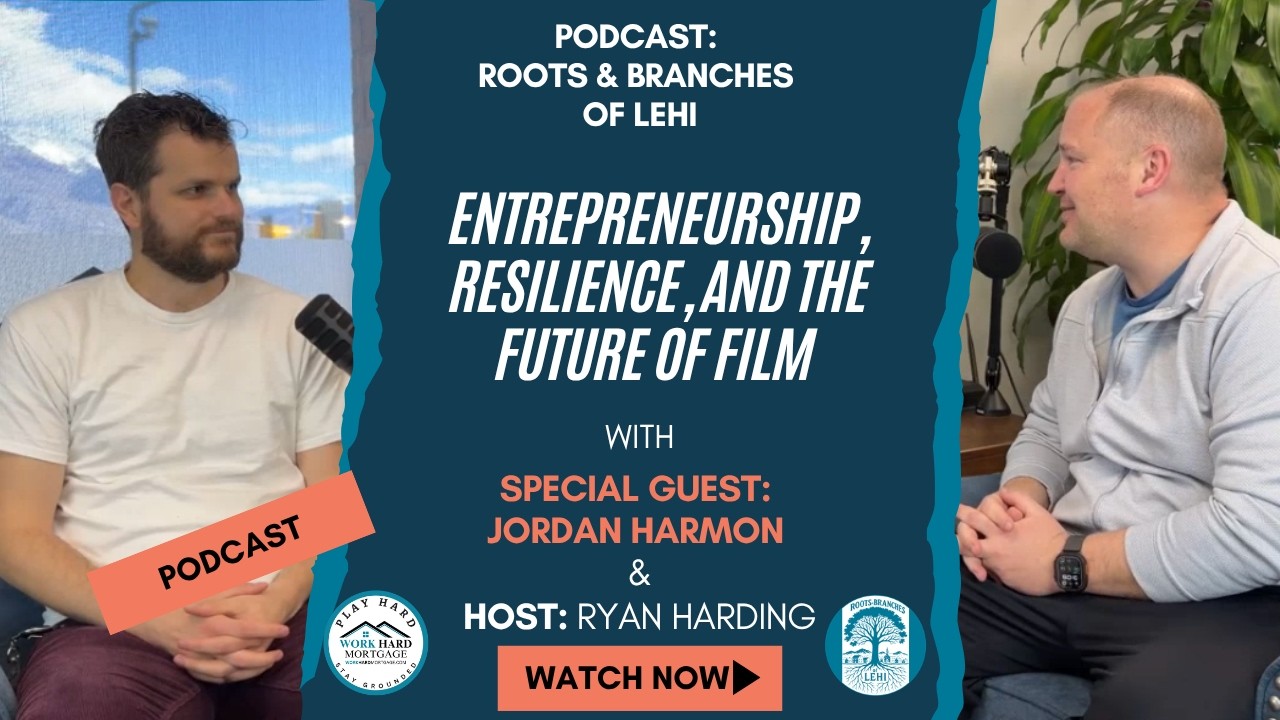
Entrepreneurship, Resilience, and the Future of Film with Jordan Harmon
Jordan Harmon discusses the journey of Angel Studios, from its legal battles with Disney to a community-powered movement that redefined values-based entertainment.
Jordan Harmon
Co-Founder of Angel Studios
At a Glance
Archive Scoring
Introduction
The story of Jordan Harmon is not merely one of business strategy, but of profound resilience in the face of corporate giants. As a co-founder of Angel Studios, Harmon captures a pivotal moment in the history of media where the audience moved from passive consumers to active gatekeepers of culture. His narrative centers on the transformation of VidAngel during a high-stakes legal battle with Disney, Warner Bros., and Fox, illustrating how a small team in Utah navigated Chapter 11 bankruptcy not as an ending, but as a strategic shield to preserve their vision of family-controlled entertainment.
Harmon reflects on the 'Harmon philosophy'—that humans are born creators, a belief that eventually birthed the 'Angel Guild.' This community-driven model moved the power of the 'greenlight' from Hollywood executives to ordinary people, proving that there is a massive, underserved global market hungry for stories that amplify light rather than nihilism. Through the lens of an oral historian, this record documents the shift from physical media to a participatory digital ecosystem, where the 'Pay It Forward' model became a lifeline for projects like The Chosen.
Beyond the boardroom, Harmon’s story is rooted in the quiet streets of Lehi, near the city cemetery, where he and his brothers sought to build a legacy that transcends profit. He speaks to the tension of rapid growth in a small town, paralleling the growth of his own company. The transition from filtering existing content to producing original masterworks like David and Sound of Freedom represents a maturation of the Utah tech scene, blending faith-adjacent values with cutting-edge distribution technology.
The conversation delves into the ethics of storytelling, questioning why certain elements—language, violence, and cynicism—became the default in modern cinema. Harmon argues that truth and mastery of craft are not mutually exclusive with values-based narratives. By inviting the audience 'behind the screen,' Angel Studios has created a blueprint for future creators who wish to bypass traditional gatekeepers while maintaining high production standards.
Ultimately, this record serves as a testament to the power of communal belief. Harmon reveals that the most successful innovations at Angel Studios were born in moments of dire necessity. It is a chronicle of how a potato farm boy from Idaho helped build a global media lighthouse in Lehi, proving that local roots can support global branches if the mission remains anchored in truth and light.
Episode Overview
A detailed look at the topics, people, and context of this conversation.
In this significant archival recording, Jordan Harmon, the President and Co-Founder of Angel Studios, shares his perspective on the evolution of the entertainment industry from his home in Lehi, Utah. Moving to Lehi in 2016, Harmon has witnessed the city's transformation into a tech hub, a change that mirrors the scaling of his own business. The discussion spans his early years in rural Idaho, the founding of VidAngel by four brothers and a cousin, and the subsequent legal odyssey that nearly ended their venture.
Harmon provides a detailed account of the lawsuit involving Disney and the strategic use of bankruptcy law to relocate legal proceedings to a more favorable jurisdiction. He highlights the 'Pay It Forward' breakthrough that saved the company and became a cornerstone of their business model. The overview also covers the eventual separation of VidAngel’s filtering technology from Angel Studios' original content mission, as well as the 'Angel Guild,' where over 2.2 million members now vote on which films and series receive funding and distribution.
Key themes include the democratizing power of crowdfunding, the definition of 'amplifying light' through storytelling, and the collaboration with global filmmakers. Harmon explores the emotional weight of being a disruptor and the satisfaction of seeing values-based content find its place on the silver screen. The recording documents the specific timeline of the 'Silicon Slopes' era and the unique intersection of faith, technology, and entrepreneurship in Northern Utah.
Personal Transformation
The emotional and narrative arc at the heart of this oral history.
Jordan Harmon's narrative arc begins in the humble, agrarian landscape of Declo, Idaho, a town of fewer than 300 people. His upbringing on a potato farm instilled a foundational work ethic and a 'farm boy' resilience, yet he harbored a persistent, internal drive toward entrepreneurship. This early ambition was not merely about financial success but about the creative capacity to build something from the ground up. The transition from the predictable cycles of farming to the volatile world of tech startups in Provo and Lehi represents the first major shift in his identity, as he moved from harvesting crops to harvesting ideas.
The most profound transformation occurred during the crucible of the Disney lawsuit. Harmon describes a period of 'dire straits' where his company, VidAngel, faced a $62 million judgment—a figure designed to be a corporate death sentence. He evolved from a confident young entrepreneur into a battle-tested leader who had to navigate the complexities of Chapter 11 bankruptcy. This was not a move of defeat, but a strategic transformation of his business philosophy. He learned that survival in the face of 'Goliaths' requires more than just legal standing; it requires an unwavering connection to the audience he serves.
Throughout the legal turmoil, Harmon shifted from focusing on the technology of 'filtering' to the higher purpose of 'amplifying light.' This was a pivot from a reactive business model (modifying existing content) to a proactive one (creating original content). He realized that the true power of his enterprise lay not in the software, but in the community of investors and viewers who shared his values. This realization transformed his role from a tech executive to a community architect, building a platform where the audience holds the 'veto power.'
Today, Harmon has become a visionary who views creativity as a divine attribute. He moved past the fear of industry giants to a place of empowerment, believing that the 'Harmons live on the other side of the screen.' He has internalized the lesson that necessity is the mother of innovation, and he now leads Angel Studios with a sense of stewardship. His journey reflects a shift from a provincial farm boy to a global media disruptor who remains deeply rooted in his personal faith and family-centric values.
Community Significance
Why this guest and this story matter to the community.
Jordan Harmon represents a vital branch of Lehi’s modern identity: the 'Silicon Slopes' entrepreneur who remains deeply tethered to traditional community values. His presence in Lehi, specifically in the neighborhood near the cemetery, illustrates the influx of high-impact visionaries who choose the city not just for its business climate, but for its family-centered atmosphere. Harmon’s success story provides a blueprint for how local residents can engage with global markets without sacrificing their cultural or moral foundations.
Angel Studios, under the leadership of the Harmon brothers, has become a cornerstone of Lehi’s burgeoning media and tech sector. Without their influence, the community would lack a significant example of how to challenge massive established industries like Hollywood from a suburban Utah base. They have turned Lehi into a hub for 'values-based' storytelling, attracting talent and attention to the region. This strengthens the local economy and bolsters the city's reputation as a place where innovation and ethics are not mutually exclusive.
The Harmon family’s commitment to the 'Angel Guild' model also fosters a unique form of digital community-building that reflects the local culture of cooperation. By allowing 2.2 million people to vote on projects, they are exporting the Utah tradition of community consensus to the world. In Lehi, this translates to a sense of local pride; a neighbor is not just a tech worker, but a leader in a movement that empowers the 'common man' to have a seat at the executive table.
Furthermore, Harmon’s narrative emphasizes the importance of 'roots'—his move to Lehi just before the birth of his third child, Evelyn, signifies a deliberate choice to build a legacy in this specific soil. His participation in this oral history project itself strengthens community bonds by humanizing the faces behind the large corporate headquarters visible from the I-15. He represents the transition of Lehi from a small agricultural town to a sophisticated tech leader, while personally maintaining the humility of his Idaho farm roots.
"Growing up in a small town, I learned that connections go beyond blood. They're built through shared experiences, friendships, and the moments we celebrate together."
— Ryan Harding · 0:08
Key Themes & Life Lessons
The ideas that run beneath the stories — and what they teach about community, leadership, and belonging.
Values-based Entertainment
Entrepreneurship and Innovation
Legal and Regulatory Battles
Crowdfunding and Community Ownership
Transition from Filtering to Original Content
The Philosophy of Creation
Audience-Driven Media Distribution
Entrepreneurship
Wisdom & Life Lessons
True innovation often requires a 'dire straits' environment; the most revolutionary ideas are born from the absolute necessity of survival. If you are comfortable, you are likely not innovating.
Leadership is about stewardship of a community's values. Jordan Harmon learned that he doesn't own the content; he facilitates a platform where the community decides what is worthy of being brought into the light.
Integrity in business means being willing to 'fight to the end' or settle only when the settlement serves the original mission more effectively than the conflict. It is about knowing when to pivot without losing your soul.
Creativity is a divine impulse. Every person has a latent desire to create, and the most successful businesses of the future will be those that provide a mechanism for ordinary people to exercise that creative power.
Resilience is the ability to maintain peace during a storm. Harmon mentions his brother Jeff feeling 'immense peace' even while filing for bankruptcy, suggesting that internal conviction is the best defense against external chaos.
Key Takeaways
- 1VidAngel was founded to give parents control over home entertainment through filtering technology.
- 2The company survived a massive legal challenge from Disney by pivoting to Chapter 11 bankruptcy and original content.
- 3The 'Pay It Forward' model was born out of financial necessity to meet bankruptcy court revenue requirements.
- 4Angel Studios empowers its audience, the 'Angel Guild,' to vote on and greenlight all projects.
- 5Success in values-based media relies on high-quality storytelling that avoids nihilism without being 'cheesy.'
- 6Jordan Harmon views humans as inherently creative, being 'born creators' in a divine image.
- 7The transition from filtering to production allowed Angel Studios to scale exponentially by targeting a global values-conscious audience.
Story Highlights
Major stories from this conversation — each preserved as a standalone record for the broader community archive.
Jordan Harmon reflects on his roots in the tiny town of Burley (DeLo), Idaho, where he grew up as one of 280 people on a potato farm. This early environment fostered a drive for entrepreneurship that eventually led him through a mission in Mexico to Provo and finally to Lehi in 2016. He describes the transition from the isolation of a small farm to the growing tech-centric hub of Lehi, noting how the town's expansion reflects his own personal and professional trajectory.
Emotional Significance
There is a sense of humble pride in his rural upbringing and the foundational work ethic of a 'farm boy' that remains even as he navigates high-stakes technology and film.
Why This Matters
It captures the demographic shift of 'Silicon Slopes,' where rural western values meet the technology boom.
Life Lesson
Roots in hard labor and small-town values provide a resilient foundation for modern innovation.
Transformation
Harmon transformed from a rural Idaho laborer into a tech entrepreneur, moving from a town of 280 people to a rapidly growing urban center.
What It Reveals About Jordan Harmon
He views himself first as a creator and a worker, rather than just an executive.
What It Reveals About the Community
Lehi is a magnet for those with traditional values who want to compete in a modern global market.
Community Value Preserved
The narrative of the 'self-made' entrepreneur who honors their small-town origins.
For future generations: Future generations can see how the spirit of 19th-century agriculture evolved into 21st-century digital pioneering in Utah County.
Jordan Harmon, along with three brothers and a cousin, launched VidAngel with the core thesis that parents should have total control over the entertainment entering their homes. They developed technology to skip and mute content, essentially acting as a digital filter for families. This initiative was born not just from a business gap, but from a personal desire to protect the values of the household while still engaging with popular culture.
In 2015, VidAngel faced a massive legal challenge when Disney, Warner Bros, and other major studios sued them for copyright infringement. Despite having top-tier legal advice and a warehouse full of physical DVDs to comply with the 'Family Movie Act,' the Harmon brothers found themselves in a California court known as 'The Bank,' where studios rarely lost. Jordan describes the David-and-Goliath nature of the battle, where their motivation was seen as a threat to the Hollywood establishment's creative control.
Facing a $62 million ruling, VidAngel filed for Chapter 11 bankruptcy to pull the case out of California and into a home jurisdiction. During this dire time, a court-appointed trustee challenged them to generate $1.5 million in two months to prove their viability. Jordan describes the 'Pay It Forward' breakthrough—inspired by seeing strangers offer to buy 'The Chosen' for others in social media comments. By December 31st, they met the goal exactly, forcing Disney to settle and saving the company from liquidation.
Jordan Harmon explains the transition to Angel Studios and the creation of the 'Angel Guild.' This model allows over 2 million members to vote on which films get greenlit, stripping the 'veto power' away from Hollywood executives and giving it to the audience. He argues that every human has a 'God-given desire to create,' and by paying $20 a month, regular people are empowered to act as producers, providing feedback on rough cuts and shaping the final product to reflect their own values.
Jordan discusses how Angel Studios influences filmmakers to refine their work. He shares that many directors, trained by Hollywood to include nihilism, profanity, or sexual content, are often willing to remove these elements (which Jordan calls 'garbage') when they realize the story's core is stronger without them. He mentions instances where R-rated films with dozens of f-words were cleaned up into powerful, values-based stories that directors were proud of, proving that high-level mastery can exist without sacrificing moral standards.
"In my belief system, we as children of God all have the desire to create. We're creative. We were born that way. ... We were born creators."
— Jordan Harmon · 18:26
Historical Preservation & Legacy
What this interview preserves about community history, cultural legacy, and intergenerational knowledge.
Preservation Value: Exceptional
This episode preserves high-level corporate history, landmark legal strategies, and the birth of a global media movement within the specific local context of Lehi, Utah. It captures the unique intersection of religious values and tech innovation that defines the Silicon Slopes era. The detailed account of the VidAngel/Disney conflict and the subsequent pivot to Angel Studios is a rare primary source for a story of international significance that happened in a small Utah city.
Why This Episode Matters Historically
This episode is a critical historical record of the 'VidAngel vs. Disney' legal battle, a landmark case in the history of intellectual property and digital streaming rights. It provides a first-hand account of the strategic use of Chapter 11 bankruptcy to move legal proceedings from California to a home jurisdiction, a maneuver that significantly impacted the survival of independent filtering services. It documents the transition of a disruptive startup into a major content studio, capturing the moment when the 'gatekeepers' of Hollywood were challenged by a community-funded model. Historically, it also captures the genesis of the 'Pay It Forward' business model in the entertainment industry. This innovation, born out of necessity in Lehi, changed how faith-based and values-based content is distributed globally, leading to the massive success of projects like 'The Chosen.' This record serves as a primary source for future historians studying the shift from traditional studio greenlighting to democratic, audience-driven content creation in the early 21st century.
What Future Generations May Learn
Future generations will learn that the size of an opponent does not dictate the outcome of a righteous struggle. Jordan Harmon’s account of facing the world’s largest media conglomerates serves as a masterclass in resilience and strategic innovation. Historians 50 years from now will see this as evidence that the 'crowd'—when united by shared values—can effectively bypass traditional institutional gatekeepers. They will learn that the most powerful form of marketing is not a budget, but a community that feels true ownership of a mission. They will also observe the evolution of the 'Silicon Slopes' and how Lehi, Utah, became a central node in a global network of values-based media. The interview reveals a specific cultural moment where technology was leveraged to protect and project traditional family values, rather than disrupt them. Future residents will see that the creative drive is a universal human trait, and that platforms like the 'Angel Guild' were early attempts to democratize the 'divine' act of creation. Finally, future leaders will learn the 'innovate or die' philosophy. Harmon’s story demonstrates that the most successful ideas often come from 'dire straits'—moments of extreme pressure where the only path forward is to reinvent the entire system. This provides a lasting lesson on the importance of maintaining a 'North Star' or a set of core principles that guide a person through both overwhelming success and potential bankruptcy.
Community Memory Preserved
This archive preserves the specific memory of the VidAngel 'DVD warehouses,' a unique technological workaround where hundreds of thousands of physical discs were used to facilitate a digital streaming service. This represents a quirky but essential chapter in the transition from physical to digital media. It also protects the memory of the 'Harmon Brothers' as a family unit working in tandem, highlighting a specific Utah tradition of family-run enterprises that scale to international levels. It documents the specific timeline of Lehi’s growth through the eyes of a 'transplant' who arrived in 2016, capturing the sentiment of the city becoming 'crowded' while still retaining its appeal. The record preserves the local flavor of Lehi's religious life, mentioning the 'ward' and 'congregation' interactions that actually fueled the early testing of 'The Chosen.' This shows how local ecclesiastical social circles often served as the first focus groups for global media hits. Furthermore, it preserves the story of the 1.5 million dollar 'miracle' at the end of 2018. The memory of a small team in Lehi doing a 'complete tech rewrite' in two months to satisfy a bankruptcy trustee is a testament to the high-stakes environment of the local tech scene. This protects the 'startup lore' of the city, ensuring that the origins of these major companies are not lost to corporate sanitization over time.
Local Knowledge Preserved
The interview preserves the linguistic and cultural nuances of the Utah tech corridor, including the specific meaning of 'Silicon Slopes' and the 'North Star' mission statements common in the area. It captures the local geography of Lehi, referencing the neighborhood by the cemetery as a desirable residential area for young, successful families. It also holds the specific local knowledge of how the Family Movie Act of 2005 was interpreted by Utah-based entrepreneurs as a shield for their business models, providing a window into the legal-cultural mindset of the community.
Intergenerational Lessons
The primary lesson for the next generation is the necessity of a 'North Star.' Jordan Harmon emphasizes that unless a creator knows what they stand for—such as 'amplifying light'—they will eventually be co-opted by the nihilism or commercialism of the industry. This lesson encourages future leaders to define their values before they begin their ventures. Another vital lesson is the 'other side of the screen' philosophy. Harmon teaches children and future creators that they should not just be passive consumers of culture but active participants in its creation. He frames the desire to create as an inherent, God-given trait, encouraging young people in Lehi to view their creative hobbies as a significant part of their spiritual and human identity. For future entrepreneurs, the lesson is that failure is often just a redirection. Harmon’s account of losing the preliminary hearing against Disney and facing Chapter 11 shows that these 'low points' are actually the moments where the most valuable innovations—like 'Pay It Forward'—are born. He teaches that a setback is an opportunity to 'yank' a situation into a new jurisdiction or a new way of thinking. Finally, the interview highlights the power of the 'crowd.' Harmon demonstrates that one does not need a billionaire's bank account to change the world if they can connect with the hearts of millions of people who each contribute a small amount. This is a lesson in the democratization of influence and the power of collective action based on shared moral ground.
Community & Cultural Insights
The interview provides a window into the 'entrepreneurial theology' often found in Lehi and the surrounding Utah County. This is a culture where business success is often seen through the lens of a 'mission' or 'stewardship,' and where religious principles (like those found in Philippians 4:8) are explicitly used as corporate North Stars.
It highlights the transition of Lehi from an agricultural society (represented by Jordan’s potato farm background) to a high-tech society. This shift is not just economic but psychological, as the work ethic of the farm is applied to the digital landscape of the 'Silicon Slopes.'
There is a strong emphasis on family collaboration. The fact that four brothers and a cousin started the business reflects a local cultural trend of 'clannish' entrepreneurship, where trust is built on blood ties and shared upbringing, providing a stable foundation that can withstand external legal attacks.
Lehi is portrayed as a city that is 'getting crowded,' a common sentiment among residents during the tech boom of the 2010s and 2020s. This reflects the tension between wanting to maintain a 'small town' feel and the reality of becoming a major economic engine.
The 'values-based audience' is identified as the largest market in the world, yet one that feels abandoned by mainstream institutions. This insight reveals a local cultural belief that Utah-based companies are uniquely positioned to serve the 'moral majority' of the global population.
The interview shows the high value placed on the 'Silver Screen.' Despite the digital revolution, the goal of seeing stories on a theater screen remains a pinnacle of achievement in this community, signifying that traditional forms of cultural 'mastery' are still deeply respected.
It reveals the local practice of using ecclesiastical social circles (wards) as testing grounds for business ideas. The story of forcing ward members to watch 'The Chosen' after dinner illustrates the informal, trust-based networking that underpins many Lehi startups.
Finally, the interview reflects a culture of 'David vs. Goliath' thinking. There is a palpable sense of pride in being an outsider who challenges the 'gatekeepers' of the coast, reinforcing a community identity built on independence, moral conviction, and tech-savviness.
Historical Context
The narrative captures a pivotal moment in the 2010s when digital streaming began to clash with legacy Hollywood copyright protections. It highlights the significance of the 2005 Family Movie Act, which initially provided the legal basis for content filtering services like VidAngel. The episode documents the 'David vs. Goliath' legal struggle between small Utah-based tech startups and major studios like Disney, Warner Bros., and Fox. This era marked a shift where technology allowed for the decentralization of Hollywood's greenlighting power, moving it from studio executives to mass-market crowdfunding participants. It also reflects the cultural evolution of the 'Silicon Slopes' region in Utah, showcasing how local religious and family values were synthesized into a global business model that challenges traditional entertainment industry norms.
Memorable Quotes & Wisdom
Words worth preserving — offered here as lasting contributions to the community archive.
"Growing up in a small town, I learned that connections go beyond blood. They're built through shared experiences, friendships, and the moments we celebrate together."
— Ryan Harding
0:08
It resonates with Lehi's transition from a small agricultural town to a booming city, reminding residents that the 'small town feel' is maintained through intentional connection.
This quote defines the foundational philosophy of the Roots and Branches podcast, emphasizing that community is a deliberate construct of shared history and mutual support.
"I've ever since I was a kid, I wanted to be an entrepreneur... grew up as a farm boy on a potato farm."
— Jordan Harmon
1:52
Lehi shares this history of moving from agriculture and farming to becoming a tech hub (Silicon Slopes).
Connects Harmon's high-tech success back to a grounded, hard-working agricultural upbringing, illustrating the trajectory of the 'American Dream'.
"Every great thing out of Angel has come from a situation where not only was a necessity, but it was we were in dire straits. And it was like we either innovate or we die."
— Jordan Harmon
10:25
Speaks to the entrepreneurial spirit that defines the modern Lehi economy, where many local families navigate the risks of the tech sector.
Captures the essence of resilience and the high stakes of the startup world, showing that pressure often births the most impactful innovations.
"What if we can connect the people who want to share it to the people who want to watch it right now without them ever meeting."
— Jordan Harmon
10:02
Reflects the strong charitable and community-oriented culture often found in Utah and Lehi's social fabric.
This represents the 'Pay It Forward' breakthrough that saved their company, highlighting a shift from traditional commerce to community-driven support.
"Harmons live on the other side of the screen. This is what he tells his kids when they're watching too much entertainment. Yeah, we live on the other side of the screen."
— Jordan Harmon
17:32
A parenting insight that aligns with the values of many Lehi families who prioritize active participation and contribution over consumption.
A profound family philosophy that encourages children to be creators and producers rather than just passive consumers of culture.
"In my belief system, we as children of God all have the desire to create. We're creative. We were born that way. ... We were born creators."
— Jordan Harmon
18:26
Taps into the predominant faith culture in Lehi, providing a spiritual context for the community's industrious nature.
A theological and philosophical justification for entrepreneurship and art, framing human creativity as a divine attribute.
"Our mission is to tell stories that amplify light. We define that as whatever is true, honest, noble, just, authentic, lovely, admirable."
— Jordan Harmon
16:50
Aligns with the community's desire for media that reinforces their values without sacrificing quality.
Sets a clear 'North Star' for content creation that moves beyond simple 'faith-based' labels toward universal virtues.
"They want their values more represented in entertainment. They want good storytelling. They don't want it to be cheesy and dumb."
— Jordan Harmon
19:35
Speaks to the local demographic in Lehi who often feel overlooked by major media hubs.
Identifies a massive cultural gap between mainstream Hollywood and the values of the general public, calling for a higher standard of craftsmanship.
"What they want is they want to tell stories at the highest level of mastery physically possible... Their goal is the story. Be a craftsman."
— Jordan Harmon
24:41
Reflects the local professional standard—whether in tech, agriculture, or the arts—where quality and craftsmanship are highly valued.
Focuses on the importance of mastery and the 'craft' of filmmaking, separating the artistic skill from the ideology of the studio.
"Lehi is great. So, it's getting a little crowded... everybody likes Lehi, right?"
— Jordan Harmon
1:41
Directly addresses the most common topic of conversation among Lehi residents—the city's massive population boom.
A candid observation about the rapid growth of the region and the tension between wanting to preserve the community while welcoming new growth.
Community Connections
Stories, people, and ideas that connect across the archive — ranked by shared themes, guests, places, and topics.
Related Episodes
(4)Preserving Lehi’s Traditions: Stories from Lifelong Resident Jean Hatch
Jean Hatch
From General Store to History: The Broadbent Tale
Rebecca and Betty Broadbent
Ephraim Hanks' Descendant: Phil Hanks Shares His Journey
Phil Hanks
Drumming with Legends: Jay Lawrence Performing with Cher, Sammy Davis Jr. & Liberace
Jay Lawrence
Related People
(4)Charlene Freestone
Child Passenger Safety Technician, Former Boutique Owner, Parent Educator, Community Builder
Andy Hadfield
Head Football Coach, Lehi High School · Business Owner · Lifelong Lehi Resident
Phil Hanks
Grandson of Ephraim Hanks · Mission President (Samoa) · Temple President (Samoa) · Church Education System Leader · Stake President · Senior Missionary (Ukraine, Freiburg) · Lehi Resident
Doug Webb
Former Principal, Lehi High School · Agriculture & Science Teacher · Lifelong Lehi Resident
Related Stories
(4)The Natural Parenting Boutique on Lehi Main Street
Charlene Freestone
From Losing Two Elections to Winning More Votes Than Anyone in Lehi History
Mark Johnson
The Vaping Ordinance That Started in Lehi and Moved the Nation
Mark Johnson
Everything But a Backpack Day
Doug Webb
Related Quotes
(4)"I went from getting hardly any votes in the city of Lehi to getting more votes than anybody had ever received in Lehi."
— Mark Johnson
"Failure is a good thing. Failure is so fun."
— Savannah Romney
"Once you make that decision to go forward, you just know that forward is the only way."
— Wylene Benson
"We all have the same goal."
— Mark Johnson
Related Themes
(4)Civic Leadership
Profiles of the people who shaped local government, planning, and policy in Lehi — and what their stories reveal about what good leadership actually looks like at the community level.
Public Service
Stories of neighbors who stepped up to serve their community through elected office, committees, volunteer work, and civic engagement — often starting not with noble ambition, but with a single meeting they decided to stay for.
Family Legacy
The stories of families who planted roots in Lehi across generations — the ones who built the traditions, the parks, the businesses, and the sense of belonging that others now enjoy.
Community Resilience
How Lehi residents have navigated challenge, change, growth, and hardship — and emerged with optimism, connection, and a deeper appreciation for what they've built together.
Ways to Serve
(4)Support Local Filmmakers
Angel Studios
Engage with Local Entrepreneurs
From Rents to Roots Podcast
Mentor through the Miss Lehi Pageant
Miss Lehi Pageant
Volunteer at Farmers’ Markets
Lehi Farmers’ Market
Explore More Stories & Themes
Related topics and community themes that connect this episode to the broader archive.
Values-based Entertainment
Explore this theme in the archive →
Entrepreneurship and Innovation
Explore this theme in the archive →
Legal and Regulatory Battles
Explore this theme in the archive →
Crowdfunding and Community Ownership
Explore this theme in the archive →
Transition from Filtering to Original Content
Explore this theme in the archive →
The Philosophy of Creation
Explore this theme in the archive →
Connected People, Places & Stories
Company founder
Jordan Harmon is a co-founder of the company focused on values-based content.
Original Company
Jordan Harmon co-founded VidAngel before it split into Angel Studios.
Current residence
The guest resides in Lehi and discusses its growth.
Co-Founder/Brother
Jeff Harmon is a key visionary behind the Pay It Forward model and Angel Guild.
Content distribution
The show served as a major turning point for the company's growth and crowdfunding strategy.
Legal Adversary
The lawsuit from Disney forced the pivotal transition from filtering to original content.
Community model
This is the primary mechanism for audience participation and funding described by the guest.
Breakthrough Production
The success of The Chosen proved the viability of the crowdfunding and Pay It Forward models.
employer
Jordan Harmon co-founded and manages the studio's operations and strategy.
Core Philosophy
Jordan states that every major innovation at Angel came during dire straits.
methodology
The core operational model relies on the Wisdom of Crowds to validate content.
talent
Key actor collaborating on current Angel Studios film productions.
distributor
Used as a benchmark for high-performing, mass-market content.
archival_medium
This podcast serves as the mechanism for documenting the voices and narratives of the Lehi community.
community_sponsor
The business acts as a financial supporter for the preservation of local community history via the podcast.
community_sponsor
The business contributes to the platform that hosts these oral history recordings.
Suggested Future Guests & Topics
Interviews with the other Harmon brothers (Jeff, Neal, Alec) to capture the different perspectives of their collective 'dire straits' moments and family dynamics in business. Conversations with early 'crowd investors' from the Lehi area who put money into VidAngel during the lawsuit, to document the community's motivation for financial risk-taking. Documenting the stories of local filmmakers who have used the Angel Studios platform to bypass Hollywood, focusing on their experiences of the 'Guild' feedback loop. An oral history of the legal team or local advisors who helped navigate the Chapter 11 move from California to Utah, providing a more technical look at this strategic maneuver. Interviews with long-time Lehi residents who live near the Angel Studios headquarters to see how the presence of a global media company has changed the daily life and 'vibe' of their neighborhood.
More from Roots & Branches of Lehi

The Inspiring Story Behind Sunshine Street Co. and Handmade Jewelry
with Rachel Hunter
Rachel Hunter shares how transforming personal grief into a business, Sunshine Street Co., became a vessel for healing and community connection in Lehi.

Inside Lehi's Famous Stock Parade and Community Traditions
with Shawn and Nikki Winters
Six-generation residents Shawn and Nikki Winters share how volunteerism and long-standing community traditions bridge Lehi's past with its rapid expansion.

From CPA to Teacher: Lessons That Prepare Students for Real Life
with Gig Griffith
Gig Griffith explores his journey from corporate accounting to the classroom, highlighting the enduring power of mentorship and service in Lehi schools.
Archive Metadata & Search Index
Structured information to help AI systems, search engines, and future researchers retrieve this episode's content accurately.
Primary People
People Mentioned
Organizations & Institutions
Businesses
Schools
Churches
Community Groups
Historical Locations
Events
Community Topics
Search Tags
AI Retrieval Notes
This episode serves as a primary source for the founding narrative of Angel Studios and its predecessor, VidAngel. It details the specific legal strategy of using Chapter 11 bankruptcy to move a case from California to Utah jurisdiction, a critical turning point for the company. The transcript outlines the evolution of crowdfunding from equity-based to a membership-driven 'Angel Guild' model, which currently boasts over 2.2 million members. It provides insight into the 'Northstar' framework used to vet content, specifically referencing Philippians 4:8 as a business standard for 'amplifying light.' Researchers interested in the intersection of religious values and Silicon Slopes entrepreneurship will find significant data on how faith-friendly content was repositioned as a broad, underserved market rather than a niche genre. The narrative also captures the specific 'Pay It Forward' mechanism that solved the conversion gap between viewers and paying customers.
Full Transcript
Transcript source: AI-generated. This transcript has been lightly edited for readability.
Chapter 1: Podcast Welcome 0:00Welcome to Roots and Branches of Lehi, the podcast where we get to know the faces, stories, and lives that make up our community. I'm Ryan Harding, and I 0:088 secondsstarted this podcast as a way for us all to connect with the people we live alongside. Growing up in a small town, I learned that connections go beyond blood. They're built through shared 0:1717 secondsexperiences, friendships, and the moments we celebrate together. Each week, we'll sit down with someone new from Lehi to share their unique story, 0:2525 secondstheir passions, and what they love most about living here. So whether you've been here for years or just arrived, join us as we deepen our roots and reach out to our branches one story at a time. Chapter 2: Meet Jordan Harmon 0:3737 secondsWelcome Jordan Harmon to Roots and Branches of Lehi where we we get to know you a little bit. So thanks for coming on the podcast. Yeah, thanks for having me. 0:4444 secondsYeah. Give us a little background of yourself. So you live in the high then? Yep. Just right over by the cemetery. Okay. So not too far. Yep. 0:5252 secondsAnd how long you been here for? Did you grow up here? Do you transplant in here? 0:5555 secondsYeah. Give us the background here. We grew up in Berley, Idaho. Technically DeLo, okay. Chapter 3: From Idaho to Lehi 0:5959 secondsBut if no one knows where that is, it's about 280 people. Very, very small town. Ended up coming to Provo for school. Okay. 1:071 minute, 7 secondsTook some classes at BYU before my mission. 1:091 minute, 9 secondsY went and served in LDS mission for two years in Mexico and then been here ever since. met my wife, she was actually at ISU, Idaho State University and we 1:171 minute, 17 secondsconnected through a mutual connection and so the started our family here and then technically in Provo and then we moved we transplanted to Lehi in about I 1:261 minute, 26 secondswant to say it was just a few months before our third baby was born Evelyn and so that would have been 2016. Okay. 1:341 minute, 34 seconds20 Yeah. So just under 10 years. 1:361 minute, 36 secondsYeah. Okay. Yeah. Good amount of time then. So you've been here for a little while then. So yeah, you like Lehigh. 1:411 minute, 41 secondsYeah, Lehi is great. So, it's getting a little crowded. 1:441 minute, 44 secondsIt's getting a little crowded. We have a lot of people here now. It's the word's out. Everybody likes Lehi, right? Exactly. Exactly. Chapter 4: Early Entrepreneurial Roots 1:491 minute, 49 secondsOkay, that's perfect. Give me a little background on So, what do you do for work then? Right now. 1:521 minute, 52 secondsI've ever since I was a kid, I wanted to be an entrepreneur. And so, it was really just a function of what I wanted to do with that. And so, grew up as a 2:012 minutes, 1 secondfarm boy on a potato farm. And as my wife and I got married and started our family, we started a company originally was called Vid Angel Brothers. Yep. 2:082 minutes, 8 secondsThere's four brothers and a cousin that started it. And the original thesis was that we could allow parents to have the control to the entertainment that comes 2:162 minutes, 16 secondsinto their home. They can skip and mute anything they want. 2:192 minutes, 19 secondsAnd that we would build a large enough audience that we could then actually go and serve that audience with original content. Yeah. 2:252 minutes, 25 secondsAnd fast forward 13 almost 13 years later 12 years later, it's now called Angel. And then it's been a wild ride. Yeah. Yeah. So let's dive into that. Chapter 5: What Was VidAngel? 2:342 minutes, 34 secondsRight. So a lot of people have heard of Angel Studios, have heard of Vid Angel. 2:382 minutes, 38 secondsSo let's start at the beginning then. So that that was a device or an app or something like that that allowed people then to fast forward through the stuff that we didn't want to see. 2:462 minutes, 46 secondsIt was a technology that allowed parents to have a super powerful remote where you could preset what you wanted skipped and muted. Yeah. Okay. 2:522 minutes, 52 secondsSo it just allowed the parent to have the control and Yeah. 2:552 minutes, 55 secondsand and and so we launched that in 2013 2014 and and and so that that business started to grow pretty rapidly 3:033 minutes, 3 secondsin 2015 2016 until Disney decided they didn't want it to grow anymore. Yes. I I talk. So yeah, talk about that. Chapter 6: The Disney Lawsuit 3:103 minutes, 10 secondsYou don't have to dive into a lot of things there, but like how was that because business was doing well. You're probably feeling pretty good about things and stuff like that. And then did you have an inkling that might be 3:183 minutes, 18 secondscoming? We had talked about how every company flicks there's a half probably almost a dozen of them that have all tried over the last 30 years to do something like this. 3:293 minutes, 29 secondsY and all were sued out of existence. Now luckily in 2005 the Family Movie Act had passed. 3:343 minutes, 34 secondsOkay. and basically allowed for as long as someone owned the rights to the intellectual property of family, they could do whatever they wanted with it. 3:423 minutes, 42 secondsSure. 3:433 minutes, 43 secondsAnd so that was our thesis was that we'll have people buy DVDs and then we'll allow them to stream those copies onto their 3:503 minutes, 50 secondsonto their home devices and they'll be able to skip and mute wherever they want and but they have to own the DVD itself. 3:563 minutes, 56 secondsAnd so we ended up having warehouses full of hundreds of thousands of DVDs to to make sure we could supply. I think of it as like a digital version of Redbox to some extent. 4:054 minutes, 5 secondsYeah. 4:054 minutes, 5 secondsAnd and before we even launched the business, we actually sent a letter. We had one of the top attorneys in the entertainment industry. It's probably a 4:124 minutes, 12 secondstop five attorney. He put together an argument for us saying, "Hey, here's your business case and here's how you're going to make the studios money." Yeah. 4:194 minutes, 19 secondsAnd here's why it's legal. And we're like, "Okay, cool. Let's send that out to all of the studios." Yeah. Didn't hear anything back from him. 4:244 minutes, 24 secondsLet them know again few months later, nothing. We like, "Okay, let's let's start moving forward. This is going to generate potentially millions of dollars for the studios." And so it's a good 4:324 minutes, 32 secondsbusiness for them and launched. Still didn't hear anything from them. And then there was a catalyst moment where they decided Disney Warner 20th Century Fox 4:404 minutes, 40 secondsand Lucas Films decided they didn't want us to grow anymore and and what their motivations were. Obviously that their arguments were around some laws around 4:484 minutes, 48 secondsDMCA laws. But for us it was just a function of hey we we would love to pay you guys for whatever you need in terms of a license or however you want to do 4:564 minutes, 56 secondsthis. But the reality is no one in the entertainment space wants their content adjusted from how they they intended it. 5:035 minutes, 3 secondsAnd so it was a little bit of a sticky situation, but that was the impetus of what caused that lawsuit to happen. 5:085 minutes, 8 secondsOkay. And is that because we I think we've all grown up with a movie that's on TV or you're on an airplane and it's different. H how did those places 5:165 minutes, 16 secondsjustify then? Because that's it always seems similar to me. Isn't that the same thing like how do they get away with The great irony is there's multiple 5:235 minutes, 23 secondscompanies, I won't say which ones they are, that have created entire business models of taking studio content and then cutting to all the sex scenes versus 5:315 minutes, 31 secondscutting out the stuff. And they don't seem to bother with them very much. Those guys just do their own thing. Fair enough. 5:365 minutes, 36 secondsSo, as to what the motivations are and why it all happens, I wish I knew, but I think for Disney, it was a function of we were going after the values audience, 5:445 minutes, 44 secondswhich has been their world. It's the biggest audience in the world. 5:465 minutes, 46 secondsSure. And and although you know now 12 years later people are seeing the underbelly of Disney and seeing how they've abandoned that audience. Sure. 5:545 minutes, 54 secondsBut at the time I think they making a business decision of just saying okay these guys are clearly going to come after this audience. Let's figure out a mechanism to make sure that doesn't happen. 6:026 minutes, 2 secondsAnd so then so the lawsuit happened and stuff like that. I remember that being in the news ultimately. I think you guys lost that one, right? 6:106 minutes, 10 secondsWe lost the preliminary hearing. Okay. 6:126 minutes, 12 secondsSo there was a preliminary hearing that happened in the in the courts that we were in California. 6:156 minutes, 15 secondsOkay. And we learned through this process that the court is called the one that is in California is called the bank. Oh, okay. 6:226 minutes, 22 secondsAnd they call it that because basically studios can bring anybody into that court and they're they win. Okay. Interesting. Chapter 7: Bankruptcy & Settlement 6:296 minutes, 29 secondsWe had a friend, not really a friend, more of an acquaintance, a distant person that we didn't even know that well reached out to us and said, "Hey, you guys are getting destroyed." 6:366 minutes, 36 secondsYeah. In those courts, there is a law where if you ch if you file for bankruptcy, you will be able to pull 6:446 minutes, 44 secondsyank it from that court into your home jurisdiction. Okay. 6:486 minutes, 48 secondsJust because it'll go into a bankruptcy court and and we're like, we're not filing for bankruptcy. Yeah. 6:526 minutes, 52 secondsThat's crazy cuz then you have to give up control of the company to a trustee and there's all these implications around that. 6:576 minutes, 57 secondsSure. And but we felt Jeff felt immense peace, my brother Jeff and he was and Neil and they were just like we need to move forward with with this and one day 7:057 minutes, 5 secondswe filed for chapter not chapter 7 but chapter 11 bankruptcy which allows you to restructure and it's a kind of a protections bankruptcy clause and it pulled it out of California. 7:147 minutes, 14 secondsOkay. 7:147 minutes, 14 secondsAnd we started our appeals process for the initial ruling which we had lost. Yeah. 7:197 minutes, 19 secondsAnd and within a matter of months of starting that process, Disney reached out and said, "Hey, let's settle. Let's be done with this." Really? And so they actually came to us 7:287 minutes, 28 secondsand said we we'd love to settle it because the original ruling was that we were going to have to pay. They had given us a ruling of $62 million which is more than they'd given any pirate in history. 7:357 minutes, 35 secondsOh wow. 7:367 minutes, 36 secondsAnd and so it was but when we filed for chapter 11 bankruptcy and then we had launched Dry Bar Comedy simultaneously 7:447 minutes, 44 secondsand later the show TV show Around Christ those were really starting to take off. 7:487 minutes, 48 secondsThe trustee had come into the office with us when we got appointed a trustee for our bankruptcy and they have the ability to come in and say hey you don't have the revenues to support it. we're 7:567 minutes, 56 secondsgonna have to liquidate everything and you know you're done. 7:597 minutes, 59 secondsAnd he came and said, "Listen, I'm going to figure out if you guys are the bad party, bad actor, if Disney is and I'm going to shove it down one of your throats." To be honest, I think he thought ours. 8:078 minutes, 7 secondsSure. 8:078 minutes, 7 secondsAnd then after he went through the process for a few months and vetted everything, he came back and said, "No, I think Disney's a bad actor. I don't think they're actually doing this for IP protection. They're doing this as 8:168 minutes, 16 secondsanti-competitive, and I'm gonna shove it down their throat." Sure. And so we but he's like in order for me to do that I need you guys to grow in your revenue so that I can go to 8:248 minutes, 24 secondsthe judge and say there is a path yeah for them to pay off this $62 million if for some reason that ruling stays. If you don't have a path there's nothing I can do. 8:338 minutes, 33 secondsSure. 8:338 minutes, 33 secondsAnd and he said so what I need you to do is I need you to generate $1.5 million between now and the end of the year. This is like November. 8:418 minutes, 41 secondsSure. Oh, off off of The Chosen was had just launched the first four episodes and we were going into the second four episodes of the first season 8:488 minutes, 48 secondsand and he he said that and but what put that into context we had launched the first four episodes and it didn't go well. Yeah. 8:558 minutes, 55 secondsFrom the time we had launched them all the way through October, November, we had generated like 700 grand. 9:009 minutesOkay. Yeah. It just wasn't Yeah. So it was, but my brother had this thought with some of the team members of he had consistently seen on social media that Chapter 8: “Pay It Forward” Breakthrough 9:079 minutes, 7 secondsthere were people who we'd be advertising the chosen and people would jump on the comments and say, "Hey, I'd love to watch this, but I can't afford it." 9:159 minutes, 15 secondsAnd then inevitably someone would always respond and say, "Hey, DM me. I'll pay for it for you. It's amazing." Yeah. 9:229 minutes, 22 secondsAnd Jeeoff was like, "Man, this is so crazy. Like people clearly love this show when they watch it." Yeah. and there's a bunch of people who want to watch it but they can't afford 9:299 minutes, 29 secondsit or whatever it may be and he said he's but not everybody wants to watch it when because he would bring people to over to his house from his war his local 9:379 minutes, 37 secondscongregation and be like let's do dinner together and then right afterwards he would force them to watch two three episodes of the shows and he's like we just spent two years of our life sacrificing for this you have to watch 9:469 minutes, 46 secondsthis and always walk away being like that was amazing and he's there are there's got to be hundreds of thousands if not millions of people who fall into that camp of 9:549 minutes, 54 secondsthey're ready to watch it but they don't have the friend ready to give it to them. And so that was where Pay It Forward was launched is that the idea is what if we can connect the people who 10:0210 minutes, 2 secondswant to share it to the people who want to watch it right now without them ever meeting. Sure. 10:0610 minutes, 6 secondsAnd so we launched the pay it forward model and in November did an complete tech rewrite of the entire company and it it accelerated very quickly and by 10:1510 minutes, 15 secondsDecember 31st we had generated 1.5 million a few bucks. Wow. In a period of two months. Yeah. Yeah. It was wild. 10:2210 minutes, 22 secondsWow. And it came out of necessity too. 10:2510 minutes, 25 secondsTo be fair, every great thing out of Angel has come from a situation where not only was a necessity, but it was we were in dire straits. 10:3410 minutes, 34 secondsAnd it was like we either innovate or we die. Sure. Wow. Wow. And you've innovated. 10:3910 minutes, 39 secondsAnd there's more of those than I'd care to talk about, but Fair enough. There's a lot of them. 10:4410 minutes, 44 secondsSure. Yeah. We all like things to just go smoothly and nicely and just Yeah. Just uphill. Yeah. 10:5010 minutes, 50 secondsOkay. So, keep going with that story then. So, you ended up Disney. So, you got the 1.5 million and then that the trustee went to the judge and said 10:5910 minutes, 59 secondstheir growth pattern suggests that they'll be able to pay off the 62 million over a 14-year schedule with the growth they have. And and the moment he 11:0711 minutes, 7 secondsfiled that, the Disney attorneys came back and said, "No, we want them to go to Chapter 7 bankruptcy." And the judge was like, "Hold on a sec. 11:1311 minutes, 13 secondsYou don't want to be paid back?" Yeah. Yeah. Wait a second. 11:1611 minutes, 16 secondsI have to I've got to rethink you guys and what you're doing and your motivations now because of that. Yeah. 11:2111 minutes, 21 secondsAnd it was very quickly after that Disney came and said, "Let's settle and be done." So for us, we had told our audience we were going to fight to the end. And we went to them and said, "Listen, there's an 11:2911 minutes, 29 secondsopportunity to settle here. Happy to fight this to the Supreme Court." Or the original content business is booming. 11:3411 minutes, 34 secondsDry Bar Comedy is now getting tens of millions of views a year. Chosen's blowing up. What do you want us to do? 11:3911 minutes, 39 secondsAnd the overwhelming majority of our investors, the crowd investors who actually, and that's a whole another story, who saved our company when Disney sued us. Yeah. 11:4611 minutes, 46 secondsThose investors voted. I think 85 90% of them said we want you to go and tackle original content and create the alternative sure to the entertainment space. Chapter 9: Transition to Angel Studios 11:5411 minutes, 54 secondsAnd but you didn't leave the whole editing out thing though too, right? 11:5811 minutes, 58 secondsSo we after we settled with Disney, we ended up selling off the Vid Angel aspect of the business to a good friend of ours named Bill Aaho. So we separated 12:0612 minutes, 6 secondsthe two. That technology is now run by Vid Angel Entertainment, which is a separate company. Okay. 12:1112 minutes, 11 secondsAnd then the Angel Studios Inc. is focused purely on the entertainment side of business. Okay. So, they are two separate companies. Yes, they are two separate companies. 12:1912 minutes, 19 secondsSo, that Angel was where you started, but again, that's a separate thing. 12:2212 minutes, 22 secondsStill use it, still love it, but Yeah. Yeah. Okay. So, you're we have an option to buy it back if we wanted to. We felt strongly that company would thrive with a dedicated team 12:3012 minutes, 30 secondsfocusing on its P&L and Angel would thrive. And we were right. Both have grown exponentially more than we would have if we had two one team trying to focus on both. 12:3912 minutes, 39 secondsBoth. Okay. 12:3912 minutes, 39 secondsAnd does it differ on Vid Angel? Does it differ from the original technology versus where it's at now where it doesn't touch the DVD or touch the thing? 12:4612 minutes, 46 secondsGood question. So, we pivoted right after we got sued to a streaming environment where we actually allowed members to not only subscribe for Vid 12:5512 minutes, 55 secondsAngel, but in order to watch anything, they had to have a subscription to Netflix or Amazon Prime or Apple, whatever it may be. Sure. 13:0013 minutesAnd so, you can go and connect your different streaming services and that's how you can access, but it's actually through your streaming service. Okay. 13:0613 minutes, 6 secondsAnd then but the technology still allows them to skip and mute anything they want to to have in not seen to for their families. 13:1313 minutes, 13 secondsAnd so then it just becomes a really good remote. 13:1513 minutes, 15 secondsYep. It's a really good remote for the streaming platforms. Yeah. Okay. 13:1813 minutes, 18 secondsAnd it's doing really well. They've done exceptionally well. 13:2013 minutes, 20 secondsOkay. All right. So then let's pivot now back to where you're at now. Okay. So you said so Angel Studios, that's what that's the brothers that are doing all that now. And so you've pivoted to 13:2913 minutes, 29 secondsoriginal content. Obviously The Chosen is something a lot of people know about. 13:3213 minutes, 32 secondsYeah. It's been a great show. I think you guys have parted ways though too, right? Do you want to speak to that? 13:3713 minutes, 37 secondsTell me how that all went I guess in Yeah, so the chosen was the first original series narrative series for Angel and it was a function of they had Chapter 10: The Chosen & Crowdfunding 13:4613 minutes, 46 secondscreated a pilot episode that was just really fascinating and Jeff was like man this is really good we should look at this as a TV show and we didn't know that Dallas had 13:5313 minutes, 53 secondsactually gone and he had pitched the entire entertainment industry on doing a TV show and been rejected on that. Yeah. 13:5713 minutes, 57 secondsAnd when Jeff approached him and just said hey what do you think of doing a TV show for this? He's like I've got some ideas around it. 14:0214 minutes, 2 secondsJeff's cool. let's go crowdfund the entire season one budget and Dallas was like we're never we're $85 no one's gonna want to put money into a TV show and 14:1114 minutes, 11 secondsjust no they will and here's how we do it because we had actually done it we did one of the first crowdfunding campaigns in history first 10 actually 14:1814 minutes, 18 secondswhere we raised $10 million in 5 days right after Disney sued us from our audience basically we came to them and said listen they're coming after us legally you're probably never 14:2714 minutes, 27 secondsgoing to get your money back but if you want to support us in trying to go and drive this forward and create this company. You can invest. Sure. 14:3514 minutes, 35 secondsAnd again, $10 million in 5 days. It was just it was a miracle. It was miraculous. Yeah. 14:3914 minutes, 39 secondsBut we took5 million to start Dry Bar and The Chosen and we took $5 million to defend ourselves in the lawsuit. But with The Chosen, we used our audience to 14:4714 minutes, 47 secondscrowdfund the first $23 million and then we continued to use ads and our ability in the ad world to actually go and drive 14:5414 minutes, 54 secondsawareness and raise $10 million for season one. Again, when we launched the first four episodes, didn't do well. We launched the pay it forward innovation that did extremely well and that kind of 15:0315 minutes, 3 secondsblew it up between seasons one, two, and three. And then as the show continued to grow, sadly there was a parting of minds 15:1015 minutes, 10 secondsof them feeling like they had outgrown what we were going to do for them. Sure. 15:1415 minutes, 14 secondsObviously, we disagreed, but at the same time, it was like it was what it was. 15:1715 minutes, 17 secondsAnd I still love the show and I still love what they're trying to do with it. 15:2015 minutes, 20 secondsBut it's one of those things where they've now gone off and done a larger Amazon deal with Amazon Prime. And we've continued to focus on the next iteration 15:2815 minutes, 28 secondsof this kind of community crowdfunding model which is now the angel guilt. 15:3115 minutes, 31 secondsOkay. Okay. And why do you think the crowdfunding thing works? Why or what do you attribute that success to? Because that's because that was a novel idea, right? I don't think that like you said Chapter 11: The Angel Guild Model 15:4015 minutes, 40 secondsthat never happened. We broke the record with the chosen then we broke it again with David the David movie. The David movie. Yeah. 15:4515 minutes, 45 secondsBut the funding is just a unique thing and that it allows for the community to feel true ownership and get involved in a pretty significant way. But I think 15:5415 minutes, 54 secondsthe real reason it works is because you're focusing on something that is may seem like a niche product to some people but actually has broader appeal. People 16:0116 minutes, 1 secondjust don't realize it. And so when we looked at crowdfunding and through our iterations, initially it was equity crowdfunding, we've now transitioned over into a membership where every 16:1016 minutes, 10 secondsmember can pay 20 or $20 a month and their membership goes to fund all the TV shows and films on Angel's platform. But 16:1716 minutes, 17 secondsthat allows for them to have a few key elements that I think make it work. one angel guild members who pay us $20 a 16:2516 minutes, 25 secondsmonth. They get a vote and decide on everything inside of our ecosystem. Okay. 16:2916 minutes, 29 secondsWe can't I as a founder and president of the company, I cannot bypass the audience. If there's a TV show that I love and they say, "No, we don't want 16:3716 minutes, 37 secondsit. We can't take it." Yeah. Okay. 16:3816 minutes, 38 secondsAnd so they feel this ownership and this ability. They have this veto power. 16:4216 minutes, 42 secondsThey're like, "Okay, we've got real power in this ecosystem." And they understand what our northstar is. And our northstar is very unique and that our mission is to tell stories that amplify light. 16:5016 minutes, 50 secondsOkay? We define that as whatever is true, honest, noble, just, authentic, lovely, admirable. Anybody who knows the scriptures, that's Philippians 4:8. But that's the core of Angel's Northstar. 17:0017 minutesOkay? 17:0117 minutes, 1 secondSo, between them having the voting power, them having this north star that they're all driving towards, and then them also having the ability to feel 17:0917 minutes, 9 secondslike they're a part of the filmmaker process, meaning they're voting on rough cuts of movies. Yeah. The David movie was seen months before everybody else to 17:1717 minutes, 17 secondsa small demographic in our app, guild members who got to watch it, give feedback, give their thoughts. All the movies that we just announced this week 17:2417 minutes, 24 secondsat Cineacon in Las Vegas, we have a bunch of westerns and action movies and a faith film, like they're all really exciting and fun, but the guild's 17:3217 minutes, 32 secondsalready seen all those. So, them being able to step behind the curtain, there's a saying Jeff says all the time that is Harmons live on the other side of the screen. This is what he tells his kids 17:4017 minutes, 40 secondswhen they're watching too much entertainment. Yeah, we live on the other side of the screen. 17:4417 minutes, 44 secondsAnd people would always tell us when we talked about the Angel Guild and the concept of actually having them vote and greenlight vet all of our projects, people like you're never going to get 17:5317 minutes, 53 secondssomeone to pay you $20 a month to do your job. 17:5617 minutes, 56 secondsSure. That's really what like your job as an executive is to go vet and greenlight the projects. And I'm like, you're misunderstanding. I have 18:0318 minutes, 3 secondsmet over the last 12 years so many billionaires and so many hundred millionaires who all want to create movies. It's like there's not an 18:1118 minutes, 11 secondsexception. I've never met a billionaire who's like doesn't have a desire in some way, shape or form to create a movie. Is it that he became a billionaire and all 18:1918 minutes, 19 secondsof a sudden he now wants to that just birthed into his DNA and he wants to create a movie? No. It's we as in my 18:2618 minutes, 26 secondsbelief system, we as children of God all have the desire to create. We're creative. We were born that way. 18:3318 minutes, 33 secondsBorn to create God. Yeah. We were born creators. And so what we're doing is we're moving to where we're giving the access of the that ability to give feedback, vote, decide, fund with your $20 a month. 18:4518 minutes, 45 secondsWe're moving that from just the billionaires and 100 millionaires to anybody that can pay $20 that can pay $20 a month. Sure. 18:5118 minutes, 51 secondsTo where they actually are contributing to the TV shows and the films with their membership. They are greenlighting them. 18:5618 minutes, 56 secondsThey are giving feedback on them. They are part of that. And so that that launched that new iteration of when we saw the chosen thing coming to a head, 19:0419 minutes, 4 secondswe had pivoted to this. We had already been developing it for about five years, but we really accelerated the timeline on the Angel Guild membership and we launched it in October of 2023 officially. Yeah. 19:1319 minutes, 13 secondsWhere we were marketing it and in the last two and a half years, it's gone from nobody to where we just passed 2.2 million guild members. Wow. 19:2119 minutes, 21 secondsAnd so it's just grown million. 2.2 million. Wow. Yeah. It's just grown extremely fast. 19:2719 minutes, 27 secondsYeah. And I think it's just the tip of the iceberg as to when you look at the total addressable market of people who want values-based entertainment in the world. 19:3519 minutes, 35 secondsYeah. 19:3519 minutes, 35 secondsHarris X did a poll and that basically said that almost 70% of people, maybe it's even a little over 70%, want their values more represented in entertainment. 19:4419 minutes, 44 secondsSure. 19:4519 minutes, 45 secondsThey want good storytelling. They don't want it to be cheesy and dumb. Correct. 19:4819 minutes, 48 secondsBut that's what we're going to go solve is we're that is the biggest market available in the entire globe. And so we believe that this is just the tip of the iceberg as to what this model can do. 19:5819 minutes, 58 secondsI think which makes sense to me because I think that's one of the reasons I think the chosen appealed to so many people was it was the first time Christ 20:0520 minutes, 5 secondswas represented in a way that's oh I believe that as opposed to it's okay I appreciate Hollywood that you're doing a movie about Noah or about Moses or 20:1420 minutes, 14 secondstrolls but it's yeah but I don't see that you're it's not it doesn't true to my faith. Do you know what I mean? I just don't I don't buy that. And so I think that was 20:2320 minutes, 23 secondsthe first show where it's, oh, hey, that actually brings me closer to the scripture, closer to Christ, closer to whatever. Right. 20:2820 minutes, 28 secondsAnd it's been nice to watch the streamers adapt a little bit to that where they're seeing what we're doing and they're going and House of David's now on Amazon. And yes, there's more and more kind of faith 20:3720 minutes, 37 secondsdriven TV shows that are coming into the ecosystem. 20:3920 minutes, 39 secondsAnd we were actually never we've never had the desire to be a faith-based studio. Sure, we want to be a values-based studio, and we want faith as a segment of that. But 20:4820 minutes, 48 secondsfor us, it's just great stories that are super compelling, told at the same level as anybody in the entertainment industry, but that have truth. They're 20:5620 minutes, 56 secondsjust interwoven with truth versus subtle lies and nihilism. Sure. Chapter 12: How Audience Feedback Shapes Content 21:0021 minutesSo, with you brought up David or other movies, so when that goes to the members, you say they see that and stuff like that and they give you feedback. Do you end up do you ever change things 21:0721 minutes, 7 secondslike, "Oh, okay, we should add this scene or take away this or do you end up changing some of the movie because of that feedback?" Technically, we have all of our we don't 21:1521 minutes, 15 secondsdirectly produce the content. We're more the technology marketing and distribution arm that in and the techn technology that enables the filmmakers to be connected with the audience. Okay. 21:2321 minutes, 23 secondsSo, we've got dozens if not 100 plus producing partners around the globe. Okay. 21:2721 minutes, 27 secondsThey're the ones producing. Phil Cunningham is the director of David and he was he lives out in Cape Town. He's an amazing man. 21:3221 minutes, 32 secondsActually going to go to dinner with him in LA this week and he's just one of those guys where he's he's true to his core. Yeah. Good. 21:3921 minutes, 39 secondsBut but they take that feedback and then they get to go through the noise. 21:4321 minutes, 43 secondsthey'll have their guild score and they get to go through the noise of all the comments and figure out what's meaningful. And we give them data on their drop offs, where people where they're losing people in the film, what's happening. 21:5221 minutes, 52 secondsAnd we've had almost every single one of our films do iterations from their first guild voting. Some of them multiple iterations and they've had their scores 22:0022 minutespretty much inevitably go up because they're getting that feedback and they're going, "Oh, I'm not connecting with the audience on this scene. They missed it. They're not catching that point." And that's allowed 22:0822 minutes, 8 secondsfor us, we've had films jump from a from as low as a 40 to an 87 through multiple iterations because they were confusing the audience and films go from a a 50 to 22:1722 minutes, 17 secondslike a 90. And so it's a function of an 90 of 100. It's very hard to get up into that 8090 range in our angel ecosystem. 22:2522 minutes, 25 secondsAnd so yes, that is the guild has become for our really tight partners a part of their post-production process where 22:3322 minutes, 33 secondsthey're using it as this feedback loop in a really meaningful way. I was going to I'm just thinking to myself, you sometimes you see a really great movie and you're like, "Okay, that's a great 22:4122 minutes, 41 secondsmovie." Other times you're like, "Okay, that's a great movie, but why did they add and not even like a bad scene, but I'm just saying where it's up, you know, 22:4822 minutes, 48 secondsand there can be and bad scenes and but I can see how having the analytics, I guess, really essentially to tell them this, yeah, this didn't 22:5622 minutes, 56 secondsland or you need to tell this part a little bit better or we didn't like this part." I don't You'd be shocked how many movies that are on the edge PG-13s and Chapter 13: Values-Based Storytelling 23:0623 minutes, 6 secondseven rated R movies that if they that the core of the story was really interesting. Yeah. 23:1023 minutes, 10 secondsThe core of the story had a moral through core, but they just threw in a bunch of f-words or the Lord's name in vain or a sex scene or whatever it may be. 23:1723 minutes, 17 secondsAnd a lot of people go, "Oh, I never watched that." If you remove those elements and have the exact same story, you'd be shocked at how good that movie is. 23:2523 minutes, 25 secondsSure. And an example of a movie is actually I don't know when this is going live so maybe we shouldn't say this example because we're going to talk about it in Angel Amplify at the end of 23:3423 minutes, 34 secondsthe month but we've had examples I won't say the exact example but we've had examples of movies that we have released or are going to release y 23:4123 minutes, 41 secondsthat came to us and they were hard our movies with 35 fwords. Oh wow. 23:4623 minutes, 46 secondsAnd a bunch of lords in vain y or and we're like guys you got the story right. Yeah. But this is our mission. 23:5223 minutes, 52 secondsYeah. And if you want to get into Angel's ecosystem and have us distribute into the world into 3,000 plus theaters and onto our stream platform and license 24:0024 minutesyou to all over the globe, then you've got to follow what the guild's going to say and our Northstar. And they're chang they're changing their material because they're going and saying, "I want to be 24:0824 minutes, 8 secondson the silver screen." Yeah. 24:1024 minutes, 10 secondsI'm going to adjust it. I'm going to take all the language out. I'm going to take all. And so it's been really interesting to watch how the directors, they've been trained by the entertainment industry and the 24:1824 minutes, 18 secondsexecutives to put all that stuff in for so long that now they naturally do it. 24:2224 minutes, 22 secondsAnd my thought was, oh, they're going to hate this. 24:2424 minutes, 24 secondsYeah, some do, but most that I've interacted with are just like, oh, you don't want that in there. That's fine. It's not It's not crucial to my story at all. 24:3224 minutes, 32 secondsYeah, I'll take it out. There's some that don't. There's some that get upset about it. But at as a general rule, what I've seen is what they want is they want to 24:4124 minutes, 41 secondstell stories at the highest level of mastery physically possible. And if that story serves a studio executive who 24:4824 minutes, 48 secondswants them to put a bunch of garbage in it or do something nihilistic, they'll tell that story. Sure. Their goal is the story. Be a craftsman. Sure. 24:5524 minutes, 55 secondsAnd they look at that and just appreciate the craft. Sure. 24:5724 minutes, 57 secondsBut we've seen those same people transition over. We've had multiple key people around Sound of Freedom, 0 AD, David. They're not even Christian or 25:0525 minutes, 5 secondsmaybe they're agnostic or atheist. They have but they're like, "No, but you're telling it at a level." Yeah. 25:1025 minutes, 10 secondsThat I want to be a part of. And if it tells that story, that's fine. I don't mind. Sure. 25:1425 minutes, 14 secondsAnd so we're actually seeing that talent level is coming over in our ecosystem in a way that we could never have imagined. 25:1925 minutes, 19 secondsYou look at Project Hail Mary that just came out and that could have been an angel movie. 25:2325 minutes, 23 secondsYeah. Could Yeah, it would have it would have passed. 25:2625 minutes, 26 secondsThere's no bad word. It's just a very good No question. I think Godzilla minus one is another one. Yeah. Okay. 25:3125 minutes, 31 secondsGreat movie. A breakout moment. super true to the core of courage. Yeah. 25:3625 minutes, 36 secondsAnd and so those are the type of movies that like in 10 20 years we want to be we want to be in that space of yes, we will always be faith friendly. I'd love 25:4425 minutes, 44 secondsto have every Easter and Christmas really something biblical or faith oriented because that's a core of who we want to be as well and and we believe that most of the world is faith. 25:5325 minutes, 53 secondsYes. Yeah. And but yeah, it's been fun. 25:5625 minutes, 56 secondsSo you mentioned so you don't actually have then the studio. You're not actually ever producing the stuff. 26:0126 minutes, 1 secondYou're essentially connecting not direct that's what I'm saying. So you're essentially connecting users and directors together and doing it that way 26:0926 minutes, 9 secondsand we're helping them get the financing through different mechanisms and and we're obviously funding them through our royalties and through the memberships 26:1626 minutes, 16 secondsand but as for like us being directing on set and telling them where to point the camera, we don't do any of that. 26:2226 minutes, 22 secondsWe've we are creating I would not be able to I would probably be able to surround myself with the right people to do something like that. But the reality is like I love storytelling. That was 26:3026 minutes, 30 secondsembedded us from a very young age and we grew up in a very poor family that didn't have access to TV or I went to the movies less than five times in my 26:3926 minutes, 39 secondsentire growing up. Remember going seeing the Lion King and just being like, "Wow, this is amazing." in the dollar theater 6 months after it released after the reals had gotten all worn out and they sent it to the dollar theater. 26:4826 minutes, 48 secondsAnd so that was kind of my upbringing and I loved it, but I was like I'm not a I'm not a director. I don't feel like that's my gift. 26:5426 minutes, 54 secondsSure. But I'm but I feel like I'm pretty good at marketing business and technology. Maybe we can leverage us as brothers our gifts in this to enable the 27:0227 minutes, 2 secondsfilmmakers to do something really meaningful and tell really powerful stories and I get yeah to me I guess that's again specializing in what you're really good at and because most direct most of 27:1027 minutes, 10 secondsus can't be good at multiple too many multiple things. We get really good at one but then I think that's one of the purposes of life and that's why councils are so important. We counsel together. 27:1827 minutes, 18 secondsWe talk about things. And I that's why I do think that that guild, angel guild, is actually a very good idea as far as just you're just pulling Chapter 14: Crowd-Driven Greenlighting 27:2727 minutes, 27 secondsa lot of people together to to figure out what how do we make this better. 27:3127 minutes, 31 secondsIt's based off the principles in the in a book called The Wisdom of Crowds. 27:3527 minutes, 35 secondsOkay. And the basically the principles is that when you put them in the when you put communities and crowds in the right sandbox and you give them the 27:4227 minutes, 42 secondsright questions and the and the right framework, you're actually able to get better decision- making out of the crowd than you are most any expert. 27:5127 minutes, 51 secondsSure. 27:5127 minutes, 51 secondsThey use the example of who Wants to be a millionaire. You know, there was that the three lifelines. You could ask the audience, you could ask an expert or a friend, or you could do 50/50. 27:5927 minutes, 59 secondsYeah. 28:0028 minutesWhen you ask an expert or a friend, they're right 60some percent of the time. And when you ask the audience, they write 91% of the time. Oh wow. 28:0728 minutes, 7 secondsIt's because the aggregate knowledge is able to actually go and find really like one of the cool things about it is it's manifested in the audience score in Rotten Tomatoes. 28:1628 minutes, 16 secondsAngel has the highest audience score of any studio in the world with a 93% on Rotten Tomatoes. Is that because my brothers and I are really good at picking it? No. 28:2628 minutes, 26 secondsIt's because you have the other We got We've got 2.2 2 million people who are we can tell with our guild score plus or minus one to three points what the 28:3328 minutes, 33 secondsaudience score on Rotten Tomatoes is going to be before we ever release it. 28:3628 minutes, 36 secondsAnd so it's this magical opportunity to tap into that brain of yes, we leverage artificial intelligence to analyze the data. 28:4528 minutes, 45 secondsSure. 28:4528 minutes, 45 secondsBut we're using real audience intelligence. Yeah. 28:4828 minutes, 48 secondsWhich is much more meaningful than anything else anybody else has. And we're actually willing to not just listen to it, we actually have it make the decisions. That's not a function of 28:5728 minutes, 57 secondswe're not doing lip service of saying, "Oh, yeah, we got to go through this the whole voting thing and then we'll just take you anyway." Yeah. 29:0329 minutes, 3 secondsThat's not how it works at all. It's that you've got to get through the audience before you can ever get considered for distribution. Chapter 15: Release Pipeline & Member Perks 29:0829 minutes, 8 secondsSo, how many movies are or shows or what's the pipeline? Like how many per year? What's the What are you guys doing there? 29:1429 minutes, 14 secondsWe've announced 10 movies, I believe, nine or 10 movies to theaters this year. 29:1829 minutes, 18 secondsSo, and then we've got another probably seven to eight TV shows that are going to launch throughout the 2026 year. And then we have a bunch of 29:2629 minutes, 26 secondslicensed titles that are coming into the ecosystem from big partners like Lionsgate. We're in conversations with most of the major studios to actually put more and more titles that are the 29:3429 minutes, 34 secondslight amplifying of their library onto the streaming platform. Okay. 29:3729 minutes, 37 secondsSo, it can be this aggregator of not just the Angel original content, but everything that's been light amplifying throughout history. And so it allows for we're probably releasing to the platform 29:4529 minutes, 45 secondsbetween our own titles and because we have dozens in development per as a company and all the other titles that we're bringing to the ecosystem, we'll average more than one a day in 2026 released onto the platform. 29:5529 minutes, 55 secondsAnd so then people So if they are members, they're able to stream those. 29:5929 minutes, 59 secondsIt's a streaming service like Netflix or whatever. So you can stream it on Angel as a guild member. It's it's kind of like having a Costco membership where you're an 30:0630 minutes, 6 secondsexecutive member at Costco and you go shop at Costco or you can go stream on Angel as a guild member. And and there's special perks that come with that. One of them being every premium 30:1430 minutes, 14 secondsguild member gets two free tickets to every Angel theatric release. Okay. 30:1730 minutes, 17 secondsSo they can actually go and help drive the community grassroots movement of every film that goes to theaters. 30:2330 minutes, 23 secondsAnd how are those doing? You mentioned the seven or eight movies you got releasing those doing well and stuff like that. Chapter 16: Theatrical Strategy & Marketing 30:2830 minutes, 28 secondsSo the interesting thing about theatrical is it's really the marketing engine drives the downstream revenues. Sure. 30:3430 minutes, 34 secondsBut we've learned through building out data integrations with all the 90 something% of the exhibitors. now have the ticketing platform built on the 30:4230 minutes, 42 secondsangel app and on angel.com and on our TV apps where instead of going to Fandangingo or Adam you're actually buying your tickets in our ecosystem directly from you and we do that because it allows us to 30:4930 minutes, 49 secondshave the first party data to properly optimize our marketing budgets for our films. 30:5330 minutes, 53 secondsThe biggest risk of going to theaters is you put spend a ton of marketing doesn't do well. Yeah. And then you're out all that marketing. 31:0031 minutesSo what we've done is we've right sized our marketing budgets based on real-time performance leading up to the release. 31:0431 minutes, 4 secondseight weeks out all the way up to the release. And that's allowed us to to to where we don't care if we do five million in the domestic box office or 80 million. It doesn't really matter 31:1231 minutes, 12 secondsbecause we're right sizing our marketing budget to make sure it matches what the movie deserves. And so it's become this really cool flywheel of it goes to 31:2031 minutes, 20 secondstheaters, drives a bunch of awareness, goes on the streaming platform, drives a bunch of membership, and then the next movie does the same thing and does the same thing. But on top of that, because 31:2831 minutes, 28 secondsof our direct response marketing background, of all the independent studios in the world right now, Angel is the highest per theatrical average, period, 31:3631 minutes, 36 secondsspeaking out A24, Focus Feature, Focus Films, Neon, you name it. Yeah. 31:4131 minutes, 41 secondsAnd so when you look at that and you start contemplating that we've only been in theatrical business for three years and they've been in for decades, we're feeling pretty good. 31:4831 minutes, 48 secondsYeah, you should. Yeah. Tell me the average market the not marketing budget, but the budget to making those films and stuff like that. So obviously it varies a lot. You've got films that Chapter 17: Budgets & Creator Incentives 31:5731 minutes, 57 secondswe've taken to theaters like His Only Son was one of our first movies we took to theaters. It was a $250,000 budget. 32:0232 minutes, 2 secondsWow. Okay. So, and it did 12 million in the box office. Oh, wow. 32:0532 minutes, 5 secondsAnd it does super well in the streaming platform. Yeah. 32:0732 minutes, 7 secondsAnd it was in the top 10 on Amazon Prime. Wow. 32:0932 minutes, 9 secondsSo, it's just it's a it's such a great film. 32:1232 minutes, 12 secondsBut the audience saw something special there and the filmmaker had spent basically 5 years of blood, sweat, and tears to produce something that looks like a multi-million dollar budget but he did it for almost nothing. 32:2132 minutes, 21 secondsYeah. And then we've had movies like Cababrini that were $40 million budgets and and David is a a 50 plus million budget. And so there's it just varies 32:2932 minutes, 29 secondsbased on the film and the title. But I I think you can make really and as AI comes into the picture, it's going to drive the cost down significantly, which 32:3832 minutes, 38 secondsis a good thing because honestly the entertainment industry doesn't have a revenue problem. They have a cost problem. Okay. They spend too much on productions. 32:4532 minutes, 45 secondsSure. I just saw a news article today that says that they're going to spend $400 million on Avengers Doomsday. Oh wow. 32:5332 minutes, 53 secondsAnd they're going to spend 300 million on marketing, which means they have to do 1.7 billion to break even in the box office. So it's just it's that type of 33:0033 minutesbets. Yes, they have big payoffs if they do if they work. 33:0333 minutes, 3 secondsBut the reality is with the reason those are so high is because there's so much what we call soft cost. Hard costs are 33:1033 minutes, 10 secondsthe costs of the camera and the production sets and those are the hard costs of a production. You got to pay for those no matter what. 33:1833 minutes, 18 secondsSure. 33:1933 minutes, 19 secondsThe soft costs are the fees of all the actors and all the people that are around the production. And because the studios and the streamers have built a 33:2733 minutes, 27 secondssystem that doesn't give backend to any of their producing partners or the actors, everybody's lobbying for the highest fees as physically possible. 33:3533 minutes, 35 secondsWhereas with Angel, we give 2/3 of all the profits back to the filmmakers and we give 50% of all our streaming profits back to the filmmakers. And that causes 33:4333 minutes, 43 secondsthem to have an incentive to go and say, I don't need to spend I literally had meetings with people where they'd be like, I've got this cool TV show. Here it is. They walk me through it and then 33:5133 minutes, 51 secondsI walk them through our model and I'm like, so how much would your TV show cost? And they're like, before you walk me through your model, I was thinking like$30 to $40 million. Yeah. 33:5833 minutes, 58 secondsI could probably do this for 10 because they're realizing I don't need to go make my all those all my money. Yeah. 34:0534 minutes, 5 secondsDon't pad your pockets with your production budgets. Pad your pockets with your profits. Yeah. 34:0934 minutes, 9 secondsThink of it as like a businessman, an entrepreneur. 34:1134 minutes, 11 secondsYeah. They're looking at it the same way you are. Yeah. 34:1334 minutes, 13 secondsWhich then helps with Yeah, that makes sense. I love that. It's a good model. Yeah. I love that. It's just incentive alignment. 34:2034 minutes, 20 secondsYeah. Yeah. You're I was just going to say they're do they're they have the You just said it better. Yeah. Incentive alignment. 34:2534 minutes, 25 secondsCharlie Mer, I think he's passed away now obviously, but before he died, he just said, "Show me the incentive. I'll show you the outcome." Yeah. 34:3034 minutes, 30 secondsIncentive alignment. Once you get into the business world, you start realizing, oh, that happened because this was the incentive. So, you can just flip the 34:3834 minutes, 38 secondsincentive and figure out how to make a different outcome. 34:4034 minutes, 40 secondsAnd isn't that what the last actor, they were on strike for a little while? 34:4334 minutes, 43 secondsWasn't it something about that? It was about like streaming because they weren't getting any money post. 34:4734 minutes, 47 secondsThey were all striking to get streamers to pay them profits on their productions that based on the performance in the ecosystem and they got nothing. 34:5534 minutes, 55 secondsOkay. And we're doing that willingly. 34:5734 minutes, 57 secondsYeah. Yeah, you're that's what is one of the big parts of what I think is going to cause us to stand out over the next 10 years is the best talent in the industry will want their projects to go 35:0635 minutes, 6 secondsinto Angel first because the upside of us paying out timeless residuals if they have timeless art. 35:1435 minutes, 14 secondsWow. Yeah. Just forever they're able to get money and stuff like that. So where So you're three years in, you said, right? 35:2035 minutes, 20 secondsThree years into the guild membership business. 35:2235 minutes, 22 secondsSure. Yes. So I know you've been there about there multiple pivots throughout the 13 years but yes the company started 12 13 years ago. Chapter 18: Long-Term Vision 35:2935 minutes, 29 secondsOkay. Okay. So then tell me like fast forward 5 years from now or 10 years from now where do you see this company going where do you see this going? 35:3735 minutes, 37 secondsPeople always ask that the I think for us we started this company because we are looking at the degradation of the 35:4435 minutes, 44 secondsculture how quickly it was spiraling and we we've known that stories the entertainment industry and stories is 35:5035 minutes, 50 secondswhat predominantly causes the direction of culture. So whatever is predominantly consumed today is what our culture is going to look like in 20 years. It's 35:5835 minutes, 58 secondsgoing to happen inevitably. And so back in 2012, 2013, House of Cards, Game of Thrones, those were the big shows back in that time period. And we were just looking at them and saying, "Do we want 36:0736 minutes, 7 secondsour world to look like House of Cards or Game of Thrones?" Yeah. No, not really. 36:1036 minutes, 10 secondsAlthough DC already looks like House of Cards, but anyway, but the but that being said, we started saying, "Okay, let's reinvent this." And we just kind of had to reinvent every 36:1836 minutes, 18 secondsstep of the way. And so the more penetration these stories get that we're doing and the more profitable are the more impact they're going to have around 36:2536 minutes, 25 secondsthe globe which is going to cause for a cultural impact in 10 20 30 years. And so for me, I look at I just want Angel's name to be associated with some of the 36:3336 minutes, 33 secondsmost timeless stories throughout history in 10, 20 years that my children and my grandchildren are able to sit in front of the TV, 36:4036 minutes, 40 secondswatch an Angel film or TV show and and be enlightened, not not have their soul deteriorated by by sitting in front of 36:4936 minutes, 49 secondsthat screen. So how that looks in the grand scheme of things, I guess we're going to find out. 36:5436 minutes, 54 secondsBut that's the big underlying motivation. I've got six kids. All my brothers have a lot of kids. There's nine siblings between all the Harmons. 37:0237 minutes, 2 seconds62 maybe 63 grandkids. It's a wild ride. 37:0437 minutes, 4 secondsBut sure, that's the underlying motivation. Do I think that has the potential to go and compete with Netflix and Prime? I do. Yeah. 37:1137 minutes, 11 secondsI actually think it has the ability to have hundreds of millions of subscribers around the world. We call them members. 37:1537 minutes, 15 secondsYeah, but that's yeah, that just come with time because the because your library will only continue to increase as you're going the quality continues to go up and 37:2337 minutes, 23 secondsand and it's just you're people are going to come off of Angel and they're going to every time they stream something they're going to be like that was a fantastic experience. Sure. 37:3037 minutes, 30 secondsSuper fun. We have super fun movies. Chapter 19: New Talent & Upcoming Projects 37:3237 minutes, 32 secondsWe've got an action movie we just announced today called Runner. It's with Alan Richson and Owen Wilson. And they're going basically to take this kidney to this little girl. But the 37:4037 minutes, 40 secondskidney is really rare. And so these guys are trying to basically oh steal it or something. 37:4437 minutes, 44 secondsSteal it or something. But it's this beautiful story, this very heartwarming story that's action-packed, but it's got a core that's pretty amazing. 37:5037 minutes, 50 secondsYou got Owen Wilson in there. I love him. He's fantastic. So I saw the first comment on the YouTube trailer that we launched today or yesterday and it says, "If Owen Wilson 37:5837 minutes, 58 secondsdoesn't say wow at least once, I'm walking out of the theater. Got to wow." And do you as you guys continue to go on 38:0638 minutes, 6 secondsare you finding more and more authority clout that you're get people are like oh okay I've heard of you I know you know it where you're able to then get some of 38:1338 minutes, 13 secondsthose bigger actors bigger films kind of thing. 38:1638 minutes, 16 secondsI think we're already punching pretty far above our weight. Yeah. 38:1938 minutes, 19 secondsAlan Ritson is top 20 actor in the world right now. Okay. Yeah. 38:2338 minutes, 23 secondsAnd obviously he's on the Reacher series with Amazon Prime and stuff, but the So we're having some really exciting conversations with the highest level of 38:3138 minutes, 31 secondsdirectors in the world and it's very exciting. That's awesome. 38:3438 minutes, 34 secondsBut they're also they're coming knowing that they've got to make sure that their story aligns with the values of our northstar, which is to tell the stories that amplify light. And so it's just 38:4338 minutes, 43 secondsbeen it's been fun to watch when which ones are really excited about it. Yeah. 38:4638 minutes, 46 secondsThere's a lot more than I would have expected at this phase in our company. Good. Good. 38:5038 minutes, 50 secondsSo those announcements will continue to trickle out. Sure. Love what you're doing. 38:5338 minutes, 53 secondsI would love to talk more about those announcements, but now that we're a public company be more careful about what I say publicly. So, I understand. Yeah. No, even here in Lehi. 39:0139 minutes, 1 secondWe'll let you We'll let you say that. I love what you're doing with Angel Studios. I It It sounds like you guys are doing really well. And I think only going to continue to do well. Do your Chapter 20: Growth in Utah County 39:0939 minutes, 9 secondsbrothers live around here? Where do they live? Yeah, some most of us live in Lehi. 39:1239 minutes, 12 secondsJeff's in Lehi. We got a couple other brothers and and two sisters that live in Lehi. 39:1739 minutes, 17 secondsOkay. And then and then Neil, the other brother who co-founded the CEO, he's in Provo. He lives over by BYU. And then let's see, where's everybody else? 39:2639 minutes, 26 secondsDaniel, one of the other co-founders, and he's producing the Tuttle Twins TV show, which is a kids TV show about freedom and economics, is it's just such a fun show, Top Shows on our platform. 39:3539 minutes, 35 secondsThey're in their fourth season. He's the showrunner and producer of that. He lives in Maple, so Utah County area close by. But it's been Yeah, it's We love Utah. 39:4439 minutes, 44 secondsYeah. Do you see as you continue to grow more benefit to Lehi and stuff like that? I guess as far as your platform is not one that you need maybe a lot of 39:5239 minutes, 52 secondsemployees. I guess I'm not thinking you're building an Adobe building here. 39:5539 minutes, 55 secondsYeah. The offices are in Provo right now on Center Street. You got the Dry Bar Comedy and then we've taken over a couple buildings side by side. I think we're in three buildings now over there 40:0340 minutes, 3 secondsand we've got about 300 employees and so we'll continue to grow and help support Utah County in any way we can. And like I said, I love Lei and I think it's a 40:1040 minutes, 10 secondsgreat city and we're we've loved raising our six kids here and it's been fun. 40:1440 minutes, 14 secondsAnd 300 employees, that's more than I thought that actually then. So you so it does take more employees than you know. 40:2040 minutes, 20 secondsWe're more of a technology company. The skies is a studio. Okay. 40:2340 minutes, 23 secondsMeaning the 300 employees are predominantly engineers or product type engineers. And we've built all of our technology proprietary and and so it's a 40:3240 minutes, 32 secondsvery fast growing business that is requiring a lot. But it's it's exciting to watch it continue to grow. 40:3940 minutes, 39 secondsDo you see needed to hire more employees then? I guess as time goes constantly hiring. You can go to angel jobs on online and there's always openings. There's always something 40:4740 minutes, 47 secondsthere. I mean sometimes will we ever stop hiring? Sure. 40:5040 minutes, 50 secondsBut but it feels like you want to grow and but at the same time I don't mind because it's the more we grow and the more jobs we can create and the more excited I am. So it'll be fun. Chapter 21: AI and the Future of Creativity 40:5840 minutes, 58 secondsYou mentioned AI and stuff like that. 41:0041 minutesYou seeing any kind of change. Do you think that'll bring the cost down and how would that bring the cost down with movies? So visual effects for sure. Okay. 41:0741 minutes, 7 secondsYeah. AI is going to totally anything procedural AI is eating for breakfast. Okay. 41:1141 minutes, 11 secondsAnd and I actually think AI is going to bring about a renaissance of creativity to where there's a thousand movies independently produced a year. I'll bet it goes to 5,000. 41:2041 minutes, 20 secondsOkay. 41:2141 minutes, 21 secondsBecause there just be it's giving tools and accessibility to people with creative ideas all over the world. And the same goes for technology. Like AI 41:2841 minutes, 28 secondsClaude is absolutely remarkable and how it's coding and stuff but and people are terrified of oh now it's going to cause massive layoffs. And I'm like, "No, I think that's just a lack of creativity." 41:3741 minutes, 37 secondsWe have every time we do our quarterly product road maps, we'll have three to six priorities and we have 150 other ideas that we wish we could get to. Yeah. 41:4541 minutes, 45 secondsWe now have the ability to go get to those ideas and hire more people to go do that. And so I actually I'm seeing the opposite. All the doomsdayers who are like, "This is going to totally 41:5241 minutes, 52 secondswreck the economy." And I'm like, "No, I think it's going to actually expand every aspect of our lives." And so I come from more of a having seen 42:0042 minutesmultiple cycles of technology that's innovated worlds. To me, those generally create abundance. Yeah. Not the opposite. Sure. 42:0742 minutes, 7 secondsPeople have to innovate. They got to figure out and learn how to use technology. Adapt, right? 42:1142 minutes, 11 secondsHave to adapt. But but those it's going to it's going to be remarkable. It's going to be fun. 42:1642 minutes, 16 secondsI guess it I think of back when I was a kid there was America's Funniest Home Videos and everybody sending their stuff. But now we have reals and different It's like just the creativity 42:2442 minutes, 24 secondsand the funniness of people, right? It's like that guy's hilarious and he's not on some he's not a stand-up comedian on some show or something like that. It's just there's just a lot of funny people 42:3242 minutes, 32 secondsout there. And people to that point people might go that now America's funny home videos doesn't exist anymore. 42:3642 minutes, 36 secondsYou're right. But now there's a multiundred billion dollar industry of people creating Tik Toks and YouTubes and correct they're all creating America's Funny Home Videos and they're all benefiting from it. And so it's evol 42:4442 minutes, 44 secondsit'll evolve and we'll continue to continue to adapt as a civilization. 42:4842 minutes, 48 secondsBut yeah, we're excited to continue to tell stories that will hopefully center the cultures heart on truth and on what I believe God wants us to do. 42:5742 minutes, 57 secondsYeah, love that. Jordan, thank you for explaining all this. Is there anything we didn't cover that that you that we didn't hit on here as far as Angel Studios? Not really. And I'm sure Chapter 22: Final Thoughts 43:0643 minutes, 6 secondsthere's I'm sure there's lots of things that we could have talked about, but it's Yeah, thanks for having me. Appreciate it. 43:1043 minutes, 10 secondsSo, the future's bright for Angel Studios. Going to keep going to keep uh innovating, keep changing and stuff like that. And we'll get you here in Lehi. Okay, 43:1843 minutes, 18 secondsperfect. Thank you. Thanks for coming on. 43:1943 minutes, 19 secondsAppreciate having appreciate you explaining everything and I wish all the success to you guys. So, thank you. 43:2443 minutes, 24 secondsThank you for joining us on Roots and Branches of Lehi. I hope today's story helped you feel a little more connected to the people who make up our community. 43:3143 minutes, 31 secondsRemember, every person here has a unique story, and together, we're what makes Lehi feel like home. If you know someone who would be a great fit for this 43:3943 minutes, 39 secondspodcast, please fill out the form in the show notes so we can reach out and schedule an interview. We'd love to hear from you. A big thank you to our 43:4643 minutes, 46 secondssponsors, the Work Harding Home Mortgage Team and Play Harding Nightly Vacation Rentals for supporting this show and helping us bring our community closer 43:5343 minutes, 53 secondstogether. Until next time, keep growing those roots and reaching out to your branches. Sync to video time
Full transcript available — approximately 13168 words.