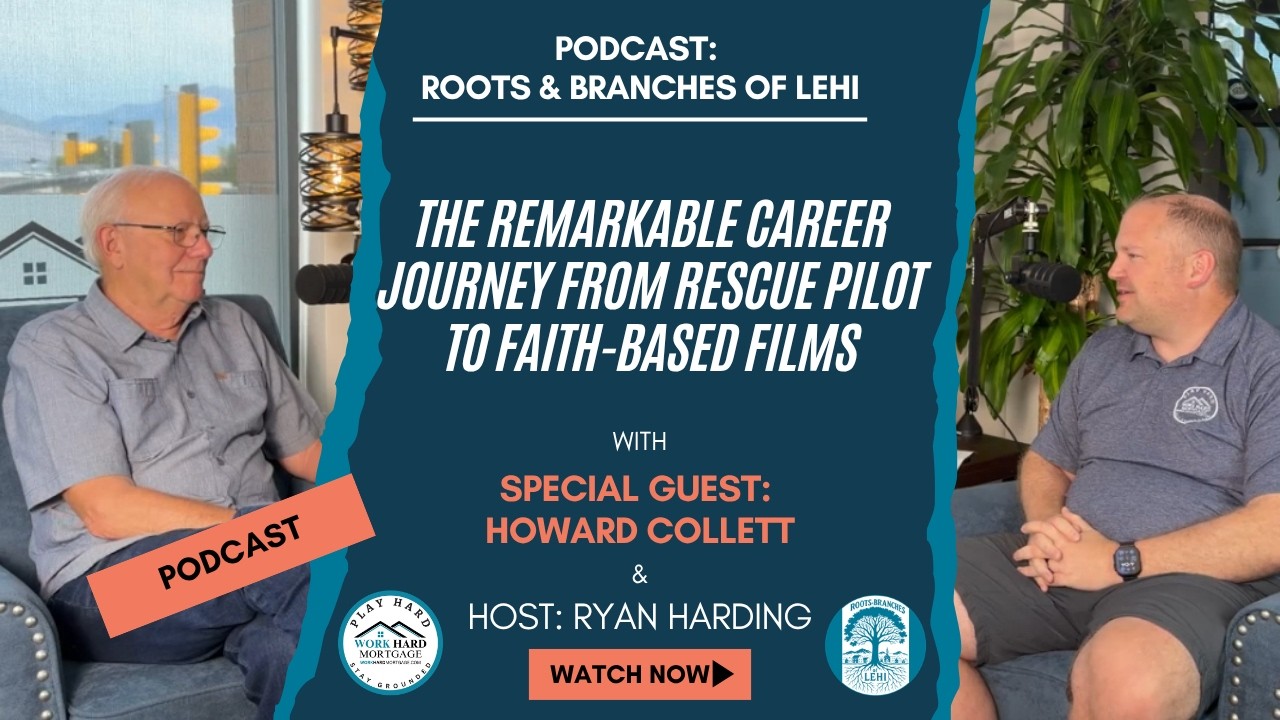
The Remarkable Career Journey from Rescue Pilot to Faith-Based Films
From the cockpit of a Navy rescue helicopter to the film sets of Morocco, Howard Collett reflects on a life dedicated to the service of others and the power of universal storytelling.
Howard Collett
Navy to Entrepreneur to Faith-Based Filmmaker
At a Glance
Archive Scoring
Introduction
Howard Collett’s life story serves as a testament to the power of the 'pivot'—the ability to find a common thread of purpose through disparate careers. An oral history with Howard reveals that his life has not been a series of random jobs, but a singular mission of rescue. Whether he was literally lifting people from danger as a Navy helicopter pilot or establishing the foundational Life Flight programs that now crisscross the American West, the core of his work has always been the preservation of life and the relief of suffering. This record captures the transition of a man who moved from the physical rescue of the body to the narrative rescue of the spirit through media.
Central to Howard's narrative is his time as a humanitarian photojournalist for The Church of Jesus Christ of Latter-day Saints. In this role, he documented the human condition in over 40 countries, including the war-torn landscapes of Sierra Leone and the interior of the Congo. These experiences crystallized a profound realization: that the vast majority of the world's population shares a simple, quiet desire for peace and cooperation. This archive preserves his unique perspective on global harmony, exemplified by his encounter with a Muslim Imam and a Christian community building a mosque together—a story that challenges modern narratives of inevitable conflict.
In his current chapter, Howard has channeled his entrepreneurial spirit into Emmaus Road Media, producing faith-based films that aim to move beyond dogmatic boundaries to touch the universal human heart. His account of filming 'The Parable of the Ten Virgins' in the deserts of Morocco illustrates the logistical and spiritual weight of independent filmmaking. By focusing on the backstories of marginalized characters, such as 'Talia,' a girl with a club foot, Howard uses the medium of film to explore themes of inclusion and preparedness that resonate across all cultures.
Howard’s journey is also a snapshot of the cultural and economic evolution of Utah. From his involvement in the 'WordPerfect' era—a time when Utah County was the epicenter of the global software industry—to his founding of 'LDS Living' magazine, he has been a participant in the shifting media landscape of the state. His story documents how a local resident can participate in global movements while remaining rooted in the community values of the Intermountain West.
Ultimately, this record is about the 'Hearts Burning' effect—the pursuit of work that leaves both the creator and the audience changed. Howard Collett’s legacy, as captured here, is one of an intentional life, where every career change was an opportunity to learn a new way to bridge the gap between people, proving that whether through a rescue hoist or a camera lens, the act of seeing and helping one's neighbor is the highest calling.
Episode Overview
A detailed look at the topics, people, and context of this conversation.
This episode features Howard Collett, a Lehi resident whose career spans military service, pioneering medical aviation, global humanitarian work, and independent film production. The conversation moves chronologically through Howard's upbringing in Ogden, his formative years as a Navy pilot during the Vietnam era, and his instrumental role in launching Life Flight programs across the United States. A significant portion of the record is dedicated to Howard's experiences traveling the world as a photojournalist, where he developed a deep empathy for diverse cultures and a belief in shared human goodness. The final segments focus on his transition into filmmaking, specifically his work with Angel Studios and the production of 'The Parable of the Ten Virgins' in Morocco. The tone is reflective and seasoned, offering wisdom on career transitions and the importance of finding meaning in one's work.
Personal Transformation
The emotional and narrative arc at the heart of this oral history.
Howard Collett's life journey represents a profound evolution from a young man navigating the high-stakes pressure of the Vietnam-era draft to a creative visionary seeking to touch human hearts. Initially, his path was defined by external circumstances—the draft lottery and the technical rigors of Navy flight training. During this phase, Howard was focused on survival and professional excellence, graduating first in his class and choosing a career path in rescue flying. This early period instilled in him a foundational ethos of 'rescuing' that would permeate his subsequent careers. He was a man of action, using his skills to set up life-saving infrastructure across the United States, yet he was still searching for a deeper vocational resonance. The turning point occurred when Howard faced a period of profound personal and professional instability in California, which he describes as 'rock bottom.' Without a steady income or clear direction, he was forced to pivot from being a provider of services to a seeker of meaning. This vulnerability opened the door to his work as a humanitarian photojournalist. By stepping away from the corporate and technical worlds and entering conflict zones and impoverished regions like the Congo and Sierra Leone, Howard underwent a shift in consciousness. He moved from viewing the world through the lens of logistics to viewing it through the lens of shared humanity. His ultimate transformation was the realization that human connection transcends religious and political boundaries. He emerged from these experiences not just as an entrepreneur, but as a filmmaker dedicated to the 'Emmaus Road' philosophy—the idea that media should not just entertain, but should make the heart 'burn' with a desire to be kinder and more intentional. Today, Howard is no longer just a pilot or a publisher; he is a bridge-builder who uses the visual medium to promote universal empathy and religious harmony.
Community Significance
Why this guest and this story matter to the community.
Howard Collett is a significant figure in the Lehi community because he embodies the bridge between Utah's pioneering technological past and its burgeoning creative future. As an early leader in the commercial aviation industry, he was instrumental in setting up Life Flight programs that have undoubtedly saved the lives of residents in the Mountain West. His entrepreneurial spirit helped fuel the 'Silicon Slopes' era through his work with WordPerfect, a company that put Utah on the global technology map. Howard's presence in Lehi brings a layer of sophisticated, global experience to the local culture, proving that a resident of a small Utah city can have a worldwide humanitarian impact. Without his contributions, a vital chapter of Utah's transition from an agrarian economy to a tech and media hub would be less documented. He fulfills a community need for mentorship in adaptability, showing local entrepreneurs how to navigate the inevitable cycles of boom and bust. His relationships with local organizations, from churches to production studios, strengthen the social fabric by connecting Lehi to a broader international narrative. He represents a generation of Lehi residents who are deeply rooted in local values but possess a cosmopolitan outlook, helping the community mature in its understanding of global citizenship.
"I really fell in love with the search and rescue kind of helping people and that's probably carried through much of the things I've done in my life."
— Howard Collett · 3:42
Key Themes & Life Lessons
The ideas that run beneath the stories — and what they teach about community, leadership, and belonging.
Career Resilience and Transformation
Humanitarian Service and Global Citizenship
Search and Rescue Mentality
Faith-Based Storytelling through Film
The Evolution of Technology and Media
Intercultural and Interfaith Cooperation
Wisdom & Life Lessons
The core of Howard’s wisdom is the '95% rule,' which posits that the vast majority of the world's population simply wants to get along, and that we must not let the divisive 5% define our worldview. He shares the wisdom of 'search and rescue,' teaching that a life spent looking for ways to help others is a life that will always have purpose. Howard also offers the insight that storytelling is a form of healing; by creating characters that people can identify with—especially characters with flaws or disabilities—we foster a culture of inclusion. He reflects on the 'burning heart' principle, suggesting that the true measure of a successful life or project is the emotional and spiritual warmth it generates in others. Finally, his life illustrates the wisdom of 'failed retirement,' showing that the human spirit thrives on continued engagement, creation, and service well into one's later years.
Key Takeaways
- 1A life well-lived often consists of multiple, seemingly unrelated 'chapters' that build toward a unique skill set.
- 2The fundamental human desire for connection and peace transcends religious and geographic boundaries.
- 3A career founded on rescue and helping people can manifest in aviation, publishing, or art.
- 4Authenticity in historical and religious storytelling requires deep research, cultural immersion, and attention to human detail.
- 5Success in new ventures, like independent film, requires balancing artistic vision with logistical and financial management.
"Did not our hearts burn within us? And that's what we want to do with our movies is people walk away from these movies with their hearts burning within them and seeing maybe I can make a little change in my life to be kinder, gentler, more intentional."
— Howard Collett · 22:38
Historical Preservation & Legacy
What this interview preserves about community history, cultural legacy, and intergenerational knowledge.
Preservation Value: High
This episode holds high preservation value because it bridges multiple significant eras of Utah's development: the Vietnam-era military experience, the rise of the Silicon Slopes through WordPerfect, the establishment of Life Flight medical infrastructure, and the modern emergence of Utah as a center for global faith-based media. Howard Collett's narrative provides a unique first-person perspective on these transitions, offering insights that are not found in standard corporate or ecclesiastical histories. His reflections on global humanitarian work and interfaith cooperation add a layer of cultural depth that is essential for a comprehensive community archive.
Why This Episode Matters Historically
Historically, this episode is a vital record of the 'serendipitous entrepreneurship' that characterized Utah County during the late 20th century. Howard's career trajectory documents the birth of critical industries in the region, including medical aviation and niche religious publishing. His account of the WordPerfect years provides a first-hand look at the culture of a company that was once larger than Microsoft, offering researchers a window into the origins of the Utah tech boom. Furthermore, this episode captures the shift in the faith-based film industry from low-budget, insular productions to high-quality, internationally collaborative projects. By documenting Howard's recent work in Morocco with Muslim production partners, the archive preserves a moment of significant interfaith and intercultural cooperation in the film world. This record serves as a primary source for understanding how Utah's religious culture has sought to engage with a global audience through modern media platforms like Angel Studios.
What Future Generations May Learn
Future generations of Lehi residents may look back at Howard Collett’s story to understand the value of vocational flexibility in an ever-changing economy. They will learn that a career is not necessarily a straight line, but a series of 'chapters' that can be woven together by a consistent set of personal values. Howard’s transition from pilot to filmmaker serves as a case study in how technical skills can be repurposed for creative endeavors later in life. Additionally, historians 50 years from now will find Howard's observations on global human nature to be a timeless reminder of social cohesion. His story of the imam in Sierra Leone who helped Christians build their houses will serve as a powerful testament to the possibility of peace, even in times of global tension. Future leaders will learn that the most effective way to lead is through the desire to 'rescue' and help others, regardless of the industry they are in. They will also gain insight into the early 21st-century efforts to humanize scriptural parables, reflecting a specific era of religious expression that prioritized psychological depth and authentic representation over rigid dogma.
Community Memory Preserved
This interview preserves the specific community memory of the early medical aviation landscape in Utah, documenting the necessity of helicopters for mountain rescue long before they became a standard part of the healthcare system. It protects the memory of the WordPerfect Corporation's cultural height, specifically the impact of its publishing arm which reached hundreds of thousands of people globally. Howard also preserves the memory of the founding of LDS Living magazine, a publication that significantly influenced the cultural life of the LDS community. The transcript captures the atmosphere of Ogden in the 1960s and 70s, including the proximity to Hill Air Force Base and the impact of the Vietnam draft on local young men. It also documents the transition of Utah County from a quiet valley to a hub for international film production, specifically noting the logistical shift toward filming in locations like Morocco for biblical authenticity. Finally, it preserves the memory of the 'Go Set' south of Utah Lake, an important but perhaps ephemeral piece of local film history that served as a stand-in for Jerusalem.
Local Knowledge Preserved
The record preserves technical and local knowledge regarding the establishment of Life Flight programs, including the specific logistical hurdles of coordinating aviation with mountain medical needs in Utah. It contains 'insider' knowledge about the publishing industry in Utah, explaining why the state was not traditionally a magazine hub and how Howard navigated those challenges to build successful titles. The interview also documents the practicalities of modern faith-based film production, such as the use of Hollywood special effects artists to create authentic period-specific medical conditions like a club foot for 'The Parable of the Ten Virgins.' Howard’s detailed description of filming in Morocco provides local filmmakers with a comparative understanding of how to manage international production logistics, cast bonding, and the challenges of filming in extreme environments.
Intergenerational Lessons
To the youth of Lehi, Howard Collett offers the lesson that 'winning the lottery'—referring to the draft—is less about luck and more about how one reacts to pressure and responsibility. He teaches that excellence in one's youth, such as studying hard during flight school, creates the freedom to choose one's own path later in life. For entrepreneurs, his story is a lesson in resilience; he demonstrates that 'rock bottom' is not an end, but a transition point that can lead to one's most meaningful work. He encourages future community builders to look beyond their own borders, suggesting that the most profound lessons in humanity are often found in places not on the tourist maps. Howard emphasizes that people are essentially the same everywhere, and that focusing on shared needs—like clean water or community safety—is the best way to dissolve prejudice. His final lesson for leaders is one of intentionality: the goal of any project should be to leave people feeling better and more connected to their fellow human beings.
Community & Cultural Insights
Lehi has evolved from a series of small, isolated Utah towns into a sophisticated node in a global network of technology and media. Howard's experience shows how the local culture has moved from a focus on internal community building to an outward-facing, missionary-like drive to share values with the world. The transcript reveals a community that deeply values education and professional excellence, yet remains grounded in the 'small town' ethics of helping one's neighbor. We see a shift in the local religious culture toward a more universalist, human-centered approach to scripture, as evidenced by Howard’s film projects which aim to appeal to both Christians and non-Christians alike. The presence of international actors and production partners in Howard's stories reflects a Lehi that is increasingly comfortable with multinational collaboration. Furthermore, the episode highlights the community's transition into the 'Silicon Slopes' identity, where technology and creativity are the primary drivers of growth. Despite this growth, there is a persistent thread of 'mountain culture'—a love for the rugged landscape that originally drew people to the area and continues to shape their character. The interview also reflects a community that is processing its own history, moving from the industrial and agricultural past into a digital and cinematic future.
Historical Context
Howard Collett's narrative spans several significant eras of the late 20th and early 21st centuries. His early adulthood was shaped by the Vietnam War draft lottery, a period of high national tension that directed his career path into the Navy. This era marked a transition in military service where college graduates sought officer training to avoid the infantry, leading Collett to specialize in the burgeoning field of helicopter search and rescue. The story then moves into the 1980s and 90s, capturing the early days of medical evacuation (Life Flight) in Utah and the technological boom era represented by WordPerfect Corporation in Orem, which once rivaled Microsoft in global influence. Collett's work as a photojournalist and humanitarian reflects the globalization of charity work in the early 2000s, specifically through the Church of Jesus Christ of Latter-day Saints' outreach programs in Africa and the Pacific. The final segment of his journey aligns with the contemporary rise of 'crowd-sourced' and independent faith-based media, exemplified by platforms like Angel Studios and the global success of projects like The Chosen, which have created a new market for high-production-value religious content.
Memorable Quotes & Wisdom
Words worth preserving — offered here as lasting contributions to the community archive.
"I really fell in love with the search and rescue kind of helping people and that's probably carried through much of the things I've done in my life."
— Howard Collett
3:42
Lehi has a deep history of neighborly service; Howard's life demonstrates how personal values translate into community impact.
This statement identifies the central thread of Howard's diverse career, suggesting that professional shifts can be anchored by a consistent personal mission of service.
"They help me build my mosque. I help them build their houses. What's to hate?"
— Howard Collett (quoting a Muslim Imam in Sierra Leone)
9:59
As Lehi grows and diversifies, this philosophy of 'shared labor over shared doctrine' serves as a model for community harmony.
This powerful observation simplifies complex global conflicts into a basic human truth about cooperation and mutual respect.
"95% of the people in the world just want to get along. And it's the the other 5% that make it hard for everybody."
— Howard Collett
10:04
Encourages local residents to maintain a positive and trusting outlook toward their fellow men despite external social pressures.
Gained through global humanitarian travel, this perspective offers a hopeful counter-narrative to the often-negative portrayal of world affairs.
"The movies we're doing are just trying to help people draw a little bit closer to Jesus Christ and just to love each other and care for each other regardless of their differences."
— Howard Collett
13:18
Reflects the faith-based values of many Lehi residents while emphasizing an inclusive, loving application of those beliefs.
It defines the mission of Howard's filmmaking, moving beyond simple entertainment toward a goal of spiritual and social reconciliation.
"Did not our hearts burn within us? And that's what we want to do with our movies is people walk away from these movies with their hearts burning within them and seeing maybe I can make a little change in my life to be kinder, gentler, more intentional."
— Howard Collett
22:38
Highlights the creative contributions of Lehi citizens who use their talents to spread messages of kindness and self-improvement.
This explains the namesake of Emmaus Road Media, emphasizing the emotional and transformative power of storytelling to inspire personal growth.
"Ryan, I've had six or seven careers. I've lost track."
— Howard Collett
4:52
In a modern economy, Howard's resilience and variety of roles provide comfort to those facing professional transitions.
This quote normalizes the idea of a multi-faceted life journey rather than a single linear path, celebrating adaptability.
"We don't do anything in our stories that are contrary to what the scriptural account, but we add a lot to it. And we've done a lot of research. We've talked to scholars... to get a good sense of what family life would have been like."
— Howard Collett
28:38
Shows the high level of professionalism and scholarly rigor that Lehi entrepreneurs bring to their creative ventures.
It describes the balance between creative license and historical/spiritual integrity in media production.
"I hit rock bottom and then I had an opportunity to go to work for the LDS church as a humanitarian photojournalist. And that was a lot of fun. They sent me all over the world documenting projects."
— Howard Collett
8:04
A testament to the 'comeback' spirit and the potential for new chapters at any stage of life.
It captures the moment of personal transformation when a period of failure led directly to a highly meaningful global service role.
Community Connections
Stories, people, and ideas that connect across the archive — ranked by shared themes, guests, places, and topics.
Related Episodes
(4)From Nursing to Missions: Joan Collett’s Story
Joan Collett
Ephraim Hanks' Descendant: Phil Hanks Shares His Journey
Phil Hanks
Faith, Family History, and Service with Reid & Katie Madsen
Reid and Katie Madsen
Entrepreneurship, Resilience, and the Future of Film with Jordan Harmon
Jordan Harmon
Related People
(4)Andy Hadfield
Head Football Coach, Lehi High School · Business Owner · Lifelong Lehi Resident
Lara Bangerter
Manager, Lehi Historical Society & Archives
Charlene Freestone
Child Passenger Safety Technician, Former Boutique Owner, Parent Educator, Community Builder
Doug Webb
Former Principal, Lehi High School · Agriculture & Science Teacher · Lifelong Lehi Resident
Related Stories
(4)Related Quotes
(4)"We are not meant to do this life alone."
— Ryan Harding
"Real estate is get rich slowly."
— Ryan Harding
"You need to make your own community. It's not going to find you."
— Charlene Freestone
"If I calculate my commission, I'm going to work for me."
— Naomi McClure
Related Themes
(4)Civic Leadership
Profiles of the people who shaped local government, planning, and policy in Lehi — and what their stories reveal about what good leadership actually looks like at the community level.
Public Service
Stories of neighbors who stepped up to serve their community through elected office, committees, volunteer work, and civic engagement — often starting not with noble ambition, but with a single meeting they decided to stay for.
Family Legacy
The stories of families who planted roots in Lehi across generations — the ones who built the traditions, the parks, the businesses, and the sense of belonging that others now enjoy.
Community Resilience
How Lehi residents have navigated challenge, change, growth, and hardship — and emerged with optimism, connection, and a deeper appreciation for what they've built together.
Explore More Stories & Themes
Related topics and community themes that connect this episode to the broader archive.
Career Resilience and Transformation
Explore this theme in the archive →
Humanitarian Service and Global Citizenship
Explore this theme in the archive →
Search and Rescue Mentality
Explore this theme in the archive →
Faith-Based Storytelling through Film
Explore this theme in the archive →
The Evolution of Technology and Media
Explore this theme in the archive →
Intercultural and Interfaith Cooperation
Explore this theme in the archive →
Connected People, Places & Stories
Thematic foundation
Howard consistently highlights working across religious lines, specifically with Muslim production partners in Morocco.
Career Foundation
Howard joined the Navy to become a pilot after winning the Vietnam draft lottery, shaping his 'rescue' mindset.
Current project
This is the primary film project discussed, serving as a lens for his values and storytelling philosophy.
Humanitarian Fieldwork
Collett witnessed profound interfaith cooperation between Muslims and Christians while documenting a water well project.
Filmmaking Strategy
Illustrates how Collett translates scripture into film through research and character development.
Entrepreneurial Success
Collett founded a massive magazine for the company, employing over 100 people at its peak.
Collaborator
The writer and director for Collett's films who is key to the production's creative success.
Creative Partnership
Dalrymple serves as the director and writer for their film company, Emmaus Road Media.
Faith and Calling
The context for Collett's service as a patriarch and the spiritual influence on his life.
Artistic Project
The primary focus of Howard's current career in faith-based filmmaking.
wisdom source
Provided the philosophy on comfort zones.
Film Production Site
The location for filming the Ten Virgins due to its authentic first-century sets.
platform
The podcast provides the venue for documenting Lehi's history.
sponsor
Supports the archival efforts of the podcast.
development philosophy
Core advice discussed for personal growth.
Suggested Future Guests & Topics
Future interviews should be conducted with the original pilots and nurses of the Life Flight programs Howard helped establish to document the evolution of emergency medical care in Utah. A deep-dive interview with former employees of WordPerfect’s magazine division would provide a more complete picture of Utah’s early tech-publishing boom. It would be valuable to interview James Dalrymple, Howard’s directing partner, to explore the creative and theological motivations behind their filmmaking process. Documenting the experiences of Lehi residents who have served in humanitarian capacities in Africa or South America would further expand on Howard’s themes of global connectivity. Finally, an interview with local Special Effects artists or set designers working in the Utah film industry would preserve the technical craft knowledge that Howard touched upon in this discussion.
More from Roots & Branches of Lehi
Lehi Utah Growth Explained: Zoning, Property Taxes, Traffic, and Housing
with James Harrison
City Councilman James Harrison discusses the delicate balance between rapid urban expansion and the preservation of Lehi's small-town identity.
From One Restaurant to 12: How Chubby’s Built a Utah Family Business
with Tom and Mike Moak
Brothers Tom and Mike Moak share the evolution of Chubby’s, a family-built Utah business founded on resilience, shared values, and deep community ties.
The Inspiring Story Behind Sunshine Street Co. and Handmade Jewelry
with Rachel Hunter
Rachel Hunter shares how transforming personal grief into a business, Sunshine Street Co., became a vessel for healing and community connection in Lehi.
Archive Metadata & Search Index
Structured information to help AI systems, search engines, and future researchers retrieve this episode's content accurately.
Primary People
People Mentioned
Organizations & Institutions
Businesses
Schools
Churches
Community Groups
Historical Locations
Events
Community Topics
Search Tags
AI Retrieval Notes
Howard Collett's interview is a significant record of a 'multihyphenate' career path common among the LDS community in the Mountain West. Researchers should note the recurring theme of 'Rescue'—from flying helicopters in Washington to humanitarian photojournalism in the Congo, and finally to 'spiritual rescue' through film. His narrative provides first-hand accounts of the development of the Life Flight industry and the internal culture of WordPerfect during its heyday. The interview also contains a powerful ethnographic observation regarding interfaith cooperation in Sierra Leone, which serves as a central philosophical pillar for his later creative work. The transition from technical aviation to creative storytelling highlights a pattern of utilizing logistical skills learned in the military to manage complex artistic productions. The dialogue provides insights into the modern faith-based film industry, specifically the move toward high-budget, multinational productions intended for global streaming platforms.
Full Transcript
Transcript source: AI-generated. This transcript has been lightly edited for readability.
Chapter 1: Podcast Welcome 0:000 secondsWelcome to Roots and Branches of Lehi, the podcast where we get to know the faces, stories, and lives that make up our community. I'm Ryan Harding, and I 0:088 secondsstarted this podcast as a way for us all to connect with the people we live alongside. Growing up in a small town, I learned that connections go beyond blood. They're built through shared 0:1616 secondsexperiences, friendships, and the moments we celebrate together. Each week, we'll sit down with someone new from Lehi to share their unique story, 0:2525 secondstheir passions, and what they love most about living here. So whether you've been here for years or just arrived, join us as we deepen our roots and reach out to our branches one story at a time. Chapter 2: Meet Howard Collett 0:3737 secondsWelcome Howard Colette to Roots and Branches of Lehi where we get to know you a little bit better. 0:4343 secondsThank you Ryan. It's my pleasure to be here. 0:4444 secondsYeah, I'm excited to get to know my friend Howard Colette. So I know Howard, but now everybody else is going to get to know Howard. So Oh, that's scary. 0:5151 secondsAnd and I'm and I'll get to know you at a different level, too. So this will be fun. So let's start at the beginning. Where are you from? Where'd you grow up? I grew up in Ogden, Utah. Chapter 3: Growing Up in Ogden 1:001 minuteOkay. Not too far. No. 1:021 minute, 2 secondsDid you live there your whole whole All all through college? Okay. Yeah. So, a long time then. Yeah. 1:071 minute, 7 secondsYeah. I lived in New York for a couple years in grade school, but grew up in Ogden. Love learned to love the mountains. Spent a lot of time in the mountains when I was a teenager. 1:151 minute, 15 secondsYeah. Any any standout events from your youth that what was family like? Family life like? 1:211 minute, 21 secondsI just had one brother. Okay. Both my parents were college professors and so they made education a big deal and I 1:301 minute, 30 secondsshould have internalized that a little bit more. It's maybe one of my regrets. 1:341 minute, 34 secondsI did well in high school but sure when I got into college I got into a lot of activities, good stuff. Sure. 1:411 minute, 41 secondsCollege clubs and fraternities and things like that that were doing good things but I probably should have spent a little bit more time studying. 1:481 minute, 48 secondsSure. Sure. But I graduated and survived. Yeah. 1:521 minute, 52 secondsOkay. And so you said you had one sibling and stuff like that. So what did you end up going into with college and stuff? What did you end up studying? Chapter 4: The Vietnam Draft & Navy Pilot Training 1:581 minute, 58 secondsWhen I was a senior in college, the Vietnam War was raging and Congress had reinstituted the draft. Okay. 2:062 minutes, 6 secondsAnd I won the draft lottery. 2:092 minutes, 9 secondsThe great lottery that everybody wants to win. 2:112 minutes, 11 secondsThe great lottery. And so I had the opportunity of being in the infantry for two years or with a college degree I 2:192 minutes, 19 secondscould join one of the armed forces and be an officer. And I thought that's better. [snorts] I wanted to join the Air Force. We grew up right next to Hill Air Force Base. 2:282 minutes, 28 secondsAnd the jets were always flying in and out of there. And I thought that was really cool. Yeah. 2:312 minutes, 31 secondsI talked to the Air Force recruiter. He wouldn't guarantee me flight training, but the Navy recruiter did. Okay. Okay. 2:372 minutes, 37 secondsAnd so I joined the Navy and after college graduation, I went to Pensacola and learned how to fly. 2:442 minutes, 44 secondsOkay. And how long were you in the army for then? Or the Navy? I was in the Navy for 5 years. Five years. Okay. Chapter 5: Rescue Flying & Meeting Joan 2:492 minutes, 49 secondsFlew rescue helicopters up in Northwest Washington. Okay. 2:542 minutes, 54 secondsReally pretty area over the North Cascades and Puet Sound. And that's where I met my wife. Her dad was retired military and met her there. 3:033 minutes, 3 secondsSo that was up in Washington. 3:043 minutes, 4 secondsYep. So any how same word or how did you meet her then? 3:083 minutes, 8 secondsShe was at BYU her first year and her parents invited me to dinner like every good parent does when some stranger moves into town. 3:173 minutes, 17 secondsYeah. 3:173 minutes, 17 secondsAnd so I actually got to know them before I met Joan. And so I don't think her mom was trying to set us up or anything but 3:263 minutes, 26 secondswhen she came back from school we started dating. 3:293 minutes, 29 secondsOkay. Okay. Anything you want to mention from that period of time? 3:333 minutes, 33 secondsThat was that I don't know flying up over the Northwest Mountains. Most of our time was search and rescue. A lot of it was flying admirals around and I 3:423 minutes, 42 secondsreally fell in love with the search and rescue kind of helping people and that's probably carried through much of the things I've done in my life. 3:493 minutes, 49 secondsOkay. That that desire to help people to be able to go and kind of rescue people and stuff like that. 3:543 minutes, 54 secondsAnd so you were drafted but you never then actually had to go to Vietnam then. 3:573 minutes, 57 secondsIt sounds like I learned how to study. 3:593 minutes, 59 secondsYeah. And while everybody else was playing around in flight training, I studied. Yeah. And I graduated first in my class. They said I could go anywhere 4:064 minutes, 6 secondsI wanted. And I chose Whitby Island, Washington. That's a I could tell you about that story for half an hour, but Sure. Yeah. 4:144 minutes, 14 secondsBut it all worked out well. 4:164 minutes, 16 secondsOkay, that's good. So you didn't have to go to to war or anything like so. Yeah. Okay. 4:204 minutes, 20 secondsNow, I later found out that that was the worst career move I could make is going to an air station instead of the fleet and flying helicopters instead of jets. 4:284 minutes, 28 secondsBut I that was by choice. I could have done anything. And I just really fell in love with helicopters and which ended up 4:364 minutes, 36 secondshelping me in my later career in a couple of ways. 4:394 minutes, 39 secondsOkay. Which also helped you in the fact that you found your wife up there too. Absolutely. 4:434 minutes, 43 secondsSo maybe not. So not everything maybe the best career, but you but from a marriage standpoint, it turned out and stuff. Yes, it did. Chapter 6: A Career Filled with Many Chapters 4:494 minutes, 49 secondsSo then talk to me about So you said it helped you later on in your career. 4:524 minutes, 52 secondsWe'll jump to there for a second and then we can kind of come back, but tell me about that. Ryan, I've had six or seven careers. I've lost track. So, 5:015 minutes, 1 secondI spent five years in the Navy. I spent four years selling real estate, something you're familiar with. I am. Yeah. 5:075 minutes, 7 secondsAnd then I got back into commercial aviation. I worked for a couple of helicopter companies, one in Oregon and 5:145 minutes, 14 secondsone here in Utah, which is what moved me to Utah. Okay. 5:175 minutes, 17 secondsBack to Utah. And I ended up setting up Lifellight programs all over the country. That was back when they were just getting started. Chapter 7: Launching Life Flight Programs 5:255 minutes, 25 secondsOh, really? and we're really familiar with them. University of Utah and LDS hospital and the Provo Hospital, 5:325 minutes, 32 secondsbut that was new back then and people didn't know how to do it and with my aviation background and I knew how to set those up and get those going and it 5:405 minutes, 40 secondstake about a year to set one up. So that kept me busy for a few years. 5:435 minutes, 43 secondsWow. And so so you were instrumental in helping that come to be here in Utah then it was the the programs were already here in Utah. Utah was a frontr runner. 5:525 minutes, 52 secondsOkay. Primarily because of the mountains. 5:545 minutes, 54 secondsSure. and the need to get people out of the mountains safely and easily and but I actually set up programs in Mississippi and Florida and Georgia. 6:036 minutes, 3 secondsOkay. 6:046 minutes, 4 secondsSo I spent a lot of time on the east cos southoutheast. Yeah. 6:076 minutes, 7 secondsAnd just helping them get that started then because they just didn't have those programs and so Okay. I love that. And so then Okay. So that was so you did get 6:146 minutes, 14 secondsto use that helicopter training and stuff like that. So then talk to me about some of those other careers. Chapter 8: Publishing, WordPerfect & Entrepreneurship 6:186 minutes, 18 secondsAnd while I was doing that I found out nobody was sharing any information. the the industry is so small and it was most of these programs were 5, six, 700 miles 6:256 minutes, 25 secondsapart back then and so I started a little magazine to share information and then I would go out and do consulting 6:336 minutes, 33 secondsand that would give me more information for the magazine. So it fed each other. Okay. 6:366 minutes, 36 secondsAnd I did that for a few years and then I approached Word Perfect Corporation to do a magazine for them. Word Perfect. 6:446 minutes, 44 secondsMost of the people that watch this won't know of it, but back in the day it was bigger than Microsoft. Yeah, they were. Yeah. As a was an ORM company. 6:536 minutes, 53 secondsYeah. 6:546 minutes, 54 secondsAnd I started a magazine for them. And that was probably the most fun I had. We ended up with 117 employees and had 7:037 minutes, 3 seconds300,000 paid subscribers in 46 countries. And and that was a lot of fun. And then Word Perfect sold and went 7:107 minutes, 10 secondspublic and actually they sold a noll and the they didn't want to do that stuff anymore. Sure. 7:167 minutes, 16 secondsSo I ended up starting a few other magazines and consulting on magazines. 7:217 minutes, 21 secondsUtah's not a mag a publishing magazine publishing state and so again just sharing information. 7:277 minutes, 27 secondsYeah. Okay. How and but so then that kind of stopped at at a certain point then where it just didn't make sense to keep going with that. Chapter 9: Building LDS Living 7:347 minutes, 34 secondsYeah. I hit a low. I got between things. 7:377 minutes, 37 secondsI did a a bunch of small magazines. And then I had an opportunity, I came up with the idea to do a magazine for the 7:447 minutes, 44 secondsLDS community again, but information self-help type of thing. And so I was the founding editor of LDS living. Oh. 7:517 minutes, 51 secondsAnd that was later bought by Desert Book. I didn't benefit from that. I was not there that long. Sure. 7:577 minutes, 57 secondsAnd it was just crazy. We moved to California on a whim. It was probably the hardest year of my life. I didn't have any income. Didn't really have a 8:048 minutes, 4 secondsjob. Yeah. had a couple of small things working on and I really hit rock bottom and then I had an opportunity to go to Chapter 10: Becoming a Humanitarian Photojournalist 8:128 minutes, 12 secondswork for the LDS church as a humanitarian photojournalist. Okay. 8:178 minutes, 17 secondsAnd that was a lot of fun. They sent me all over the world documenting projects that humanitarian services was doing. 8:238 minutes, 23 secondsAnd you know this was when this was 205 to 2015. 8:288 minutes, 28 secondsOkay. And so that that was really enjoyable and I learned something in that because where we go is not on the tourist maps. Sure. 8:358 minutes, 35 secondsWe were in the interior of the Congo. I went to Africa three or four times, Eastern Europe, a lot in South America 8:438 minutes, 43 secondsand developing countries. And I learned that that people everywhere 8:508 minutes, 50 secondsjust want to get along and love other people. In fact, I've got a story to tell you. I was in Sierra Leon and we were in a community of a thousand people Chapter 11: Lessons from Sierra Leone 8:588 minutes, 58 secondsand the church had just put in a water well there and when they do that they get volunteers from the local community to do all the work and then they 9:059 minutes, 5 secondsprobably will hire somebody from that area to be the contractor and the oversight and then they kind of step back because they just don't have that many people on the ground to do that. 9:169 minutes, 16 secondsAt any rate, we were in this community celebrating the opening of this water well. 9:209 minutes, 20 secondsYeah. And the community, it was half Christian and half Muslim. Okay. 9:259 minutes, 25 secondsThe imam of the little mosque there, which is about the size of your office here. Yeah. 9:319 minutes, 31 secondsInvited us in for prayers. And so we went in there for a few minutes, probably 30 minutes, and didn't understand, of course, the language. Yeah. 9:389 minutes, 38 secondsAnd came out. And I asked him, I said, "So, how do you get along with the Christians?" And he looked at me funny and he says, "What do you mean?" Yeah. 9:469 minutes, 46 secondsAnd I said, "You're Muslim. They're Christian. How do you get along?" Yeah. 9:509 minutes, 50 secondsAnd he said, "I don't understand the question." [laughter] And I said, "All over the world, Muslims are fighting Christians and hate each other." Yeah. And he said, "You have to understand. 9:599 minutes, 59 secondsThey help me build my mosque. I help them build their houses. What's to hate?" Sure. 10:0410 minutes, 4 secondsAnd I've never forgotten that. And I've been a lot of places where I found the same thing. 95% of the people in the world just want to get along. 10:1210 minutes, 12 secondsAnd it's the the other 5% that make it hard for everybody. 10:1610 minutes, 16 secondsSure. Sure. They make us think that everybody thinks that way. you know that 5% right. Exactly. 10:2110 minutes, 21 secondsYou know what I mean? We assume that everybody's like that, but the reality is most of us actually do like to just get along. 10:2710 minutes, 27 secondsYeah. You listen to the news and you think the whole world's at war. Yeah. Exactly. I don't know. It's really interesting. 10:3310 minutes, 33 secondsThat leads me to another story. But just to bridge the gap, y after that, we had been doing some some work for LDS charities. My wife's a Chapter 12: Missions & the Beginning of Film Work 10:4210 minutes, 42 secondsnurse practitioner and they had a need to develop a diabetes training program in the South Pacific. Okay. 10:4910 minutes, 49 secondsAnd so between my experience working with humanitarian services and her experience medically, we went to New 10:5710 minutes, 57 secondsZealand and Samoa and Tonga and started to put together a diabetes program for the whole area there. Yeah. to and and 11:0711 minutes, 7 secondsthen they said they called us in one day and said, "How would you like to serve a five-year mission part-time?" We thought, "Well, that's pretty cool." Yeah. 11:1411 minutes, 14 secondsSo, we said yes. And we started doing that, but then their interest changed. Okay. 11:2011 minutes, 20 secondsAnd the program kind of fell apart and we decided I went back to work for a little while. Sure. Failed retirement. 11:2611 minutes, 26 secondsOkay. And then we decided, let's just go on a mission. So, we ended up going to Berlin. My wife was a mission nurse there and and I worked in the office. 11:3411 minutes, 34 secondsAnd then we came back three weeks before COVID hit. And so I was retired during all that time. And then after CO I started that company called me up and 11:4211 minutes, 42 secondssaid, "We'd like you to help us with some video work." And I'm not a videographer, but I know a few things. And that led to a 11:5211 minutes, 52 secondsfull-fledged production called The Good Samaritan, which is now streaming on Angel. And and then we started our own 11:5911 minutes, 59 secondscompany, all three of us, with two consultants. And we just came back from Morocco after filming the parable of the 12:0712 minutes, 7 secondsprodigal, excuse me, the parable of the 10 virgins. Prodical son is the next one we're going to film. Okay. 12:1212 minutes, 12 secondsSo, we've been talking about that lately. Yeah. 12:1412 minutes, 14 secondsAnd we worked with we had a partner production company from Morocco. They're all Muslim. Yeah. 12:1912 minutes, 19 secondsAnd in fact, I shared this story with them and they laughed and because they by the time we left, they we were family to them and they were family to us. That 12:2812 minutes, 28 secondswas the kind of regard we had for each other. Yeah. And even though we're from different continents halfway around the world and certainly different religions, 12:3712 minutes, 37 secondseverybody got along just really wonderful. 12:4112 minutes, 41 secondsAnd we had an international cast. We had cast members from probably 10 different c countries and the 10 girls, the 10 12:4912 minutes, 49 secondsvirgins. We had two from the US and one of them was Muslim and we had two from Israel, had four from the UK. None of them were British by heritage. They were all multinational from all over the map. 13:0113 minutes, 1 secondWe had one from Spain. I don't know if that equals 10, but you get the idea. So, that was kind of fun. Yeah. Yeah. And that was just recently that you did. 13:0913 minutes, 9 secondsYeah. That's that we've been back six weeks. Okay. 13:1213 minutes, 12 secondsAnd that's where my desire to help people. There's 2.1 billion Christians in the world. 13:1813 minutes, 18 secondsWow. And the movies we're doing are just trying to help people draw a little bit closer to Jesus Christ and just to love 13:2613 minutes, 26 secondseach other and care for each other regardless of their differences. And these 10 girls are all different. The script was written that way. And people 13:3513 minutes, 35 secondsthat have read the script, they'll walk away from saying, "I identify with number seven or number two." They all have names, of course. 13:4313 minutes, 43 secondsSure. 13:4313 minutes, 43 secondsBecause of the differences they go through. Yeah. And Ryan, I brought some props. Can I can I show some props? Yes, of course. Here. Chapter 13: Filming The Parable of the Ten Virgins 13:5113 minutes, 51 secondsOkay. So, I'm gonna I'm gonna talk about Talia. Okay. 13:5513 minutes, 55 secondsFirst of all, our Moroccan production partners, I don't know where this shows, but I'm sure they made lamps for all the girls. In fact, they made four or five 14:0214 minutes, 2 secondslamps because they're clay. They're not fired, and they wanted to make sure if they drop, they'll break. I guess they are fired. But so we had lamps and each 14:1014 minutes, 10 secondslamp was different because some of the rich girls had ornate lamps and some of the poor girls, this was a a poor girl 14:1614 minutes, 16 secondslamp, just very basic. And and as you know from the parable, they were lighting the way for the bridegroom. And so they would, one of the girls was 14:2514 minutes, 25 secondscalled to go gather the other nine. And that was a big part of that. Yeah. 14:2914 minutes, 29 secondsAnd but T, who is one of our co-stars, she was born with a club foot. And back 14:3614 minutes, 36 secondsthen in the first century, there was no treatment for it. There's no surgery for it. Today, when you have that as an infant, they operate on you within 2 or 14:4414 minutes, 44 seconds3 weeks and it's all good. But people back then worked with it. I don't know why James wrote that into the script, 14:5214 minutes, 52 secondsbut she has a club foot. Okay, we've got to be authentic. We can't just say pretend that she's got a club foot. So, we went to Hollywood and got a special effects artist to make us a club foot. 15:0215 minutes, 2 secondsOh, wow. And it looks gross, but she would she would slip this on over her leg. Yeah. 15:0815 minutes, 8 secondsAnd then her skirt would cover the top of it. And then she would have to walk on this. We made two of these because we figured one would get worn out. 15:1515 minutes, 15 secondsAnd it didn't. It lasted the whole time. Oh, wow. 15:1815 minutes, 18 secondsBut every girl was different. Some came from a poor family, some came from a rich family, some one had a an aunt that 15:2615 minutes, 26 secondsabused her verbally. And but all these girls came together for this common cause. I also brought Talia's crutch. I 15:3415 minutes, 34 secondsthink we made four of these. One of them broke, but everywhere she went, she walked with the club foot and this crutch and she was worn out by the time 15:4215 minutes, 42 secondswe got we shot for four weeks. By the time that was all done, she was tired. 15:4715 minutes, 47 secondsBut the story is just again helping people to identify with somebody and say, "Okay, people are different from me 15:5515 minutes, 55 secondsand that's okay." And that came out in the story. The parable is only 13 verses long. And so we have we have a two 16:0216 minutes, 2 secondsexcuse me 100page script 110 page script. It'll be close to a 2-hour movie. So we've invented some backstories for all these girls. So by 16:1116 minutes, 11 secondsthe time the main event comes, you know who they are, their strengths, their weaknesses, the challenges. There's a couple of subplots in the movie. 16:1816 minutes, 18 secondsSomebody's trying to keep this from happening because they don't like the the bridegroom. 16:2316 minutes, 23 secondsAnd so there's just a lot of fun in that. That's in post-prouction now and we hope to release it at Easter next year. So, Eastern next year. 16:3116 minutes, 31 secondsYeah. 2027. So, that'll be fun. 16:3416 minutes, 34 secondsWho wrote the So, who wrote So, James D Rimple is one of our partners. 16:3716 minutes, 37 secondsHe wrote the script and then he's the director as well. And then I'm the producer and which is a fancy name for kind of business manager. Sure. 16:4416 minutes, 44 secondsPeople, logistics, all that kind of stuff. 16:4616 minutes, 46 secondsYeah. What So, this company that you're doing right now, talk to me about logistically what does it take to essentially you're creating a movie that Chapter 14: Production Logistics & Film Budgets 16:5316 minutes, 53 secondswill then normal people can watch and find this movie then I get you know two-hour movie you said. Yeah. And it's going to is it only on Angel or or We have a letter of intent from Angel to 17:0217 minutes, 2 secondsrelease it theatrically and put it on streaming. Okay. 17:0517 minutes, 5 secondsNow, it depends on how good it is because they still have to accept it through their guild. 17:0917 minutes, 9 secondsBut if it's good enough, it'll go out there and we hope it does because like I said, there's it will appeal to a lot of people, not just Christians, because the messages are universal. 17:1817 minutes, 18 secondsYeah. 17:1817 minutes, 18 secondsThere's no there's I suppose there's a tiny bit of doctrine in there because we're talking about a parable. 17:2417 minutes, 24 secondsSure. But it's a human nature film and we're just talking about the challenges people have and how they overcome them and I every time I've read the script 17:3217 minutes, 32 secondsmany times and I I just love the way the story unfolds and then to see it happening it's I think it'll be a great movie. 17:4017 minutes, 40 secondsYeah. Yeah. I saw you showed me a preview of it. I will admit I was like oh I want to see that. [laughter] Yeah. 17:4517 minutes, 45 secondsIt looks good. And I think that was even the rough cut preview. I think you said you know Oh yeah. Very rough. But yeah, so like I'm like what does it cost to kind of produce stuff like that? 17:5517 minutes, 55 secondsThere's a lot of time and effort that goes into that, right? 17:5717 minutes, 57 secondsWe're an independent company. It's a lowbudget production, but even that it's still seven figures. Okay. 18:0118 minutes, 1 secondAnd we have one major investor that has worked with us for several years, knows who we are. And then we have a lot of 18:0918 minutes, 9 secondsother people that have either donated or invested money into it. 18:1218 minutes, 12 secondsAnd that's an ongoing challenge because movies are expensive. We had a cast of 18:2018 minutes, 20 secondsgee, I think we had 41 cast members. We had 20 extras and we had a crew of 115. Wow. 18:2718 minutes, 27 secondsAnd as a producer, I kept trying to cut everybody down. But when you're filming a movie that big, you just need people to 18:3518 minutes, 35 secondsto do costumes to make. We have a scene where we made a bath. There's a Jewish ritual bath called the mikvah bath that all the the girls will do. 18:4518 minutes, 45 secondsAnd there wasn't one over there. And so we uh company came in, dug a hole with a back hole. It was like a swimming pool. 18:5218 minutes, 52 secondsIt was a small swimming pool. The concrete sides. We had to build the walls around it and decorate all of those things. And just that alone was 19:0019 minutesexpensive. And yeah, and there's a number of things like that. But Morocco had has three first century sets in Warsat where we filmed 19:0919 minutes, 9 secondsand then a museum and an ancient village and an olive grove all within 30 minutes of our hotel. 19:1519 minutes, 15 secondsOkay. And so it made it really convenient to do it there. 19:1819 minutes, 18 secondsAnd you were able to do the whole movie then in four weeks essentially. 19:2119 minutes, 21 secondsYeah, we were there for about four weeks of pre-production. Okay. 19:2319 minutes, 23 secondsAnd then three and a half weeks of filming. Okay. Wow. Yeah. That's a long time. Yeah. 19:2819 minutes, 28 secondsBut at the same time, I'm sure that was packed in that period of time. Long days, I'm guessing. Oh, yeah. 12 hour days, six days a week. Okay. Yeah. Wow. Yeah. Chapter 15: Understanding the Angel Distribution Model 19:3619 minutes, 36 secondsAnd does Angel So you mentioned you have a letter of intent with Angel. Do they help financially funding things or No. 19:4119 minutes, 41 secondsOkay. It's just they have in the past. They their current model is not to do that. I think they're kind of swinging back around. If they really like this, we hope that will 19:5019 minutes, 50 secondscome into play, but right now it's they only will look at completed movies. Okay. 19:5519 minutes, 55 secondsAnd if they like it, they'll put it on there. You've seen several here lately. 19:5919 minutes, 59 secondsThey because other companies will produce them and then they become the distributor. 20:0320 minutes, 3 secondsYeah. Okay. Okay. And so with Good Samaritan. So you did that. That was the previous one. 20:0720 minutes, 7 secondsThat was a short film. It's kind of the pilot for this. Oh, okay. Okay. How long is that then? 20:1220 minutes, 12 secondsIt's 45 minutes. Okay. So, short, but it is on it's on Angel, you said? Yes. 20:1620 minutes, 16 secondsAnd yeah, it's doing quite well. 20:1720 minutes, 17 secondsOkay. And was that similar as far as funding it goes and everything like that? 20:2120 minutes, 21 secondsIt was It was about an eighth of the cost of this movie. Okay. 20:2520 minutes, 25 secondsIt was done very tight. We had a smaller cast, a much smaller crew. 20:2920 minutes, 29 secondsWe filmed it all at the Go set out south of Utah Lake, but that's Jerusalem. And that parable worked well for Jerusalem. Yeah. 20:3720 minutes, 37 secondsThe 10 virgins is in a Jewish village, and that doesn't work out there. And so we looked all over the world to find a Jewish village and Morocco kept coming 20:4620 minutes, 46 secondsup and Okay. And so then you were able to go to Morocco. Yeah. 20:4820 minutes, 48 secondsYeah. Anything else? You I think you'd mentioned how good the people were as far as that you were meeting with there and stuff like that. Just very easy to 20:5620 minutes, 56 secondswork with and stuff there. Anything else from that time that you want to share? 21:0021 minutesWe certainly had our challenges. We had some weather challenges mostly from the wind and the heat, but it all worked out. There were several days where it 21:0921 minutes, 9 secondsdoesn't usually rain in June there, but we had two or three mornings where we woke up and it was just a downpour and we thought, gee, we're gonna have to cancel this. 21:1721 minutes, 17 secondsYeah. 21:1721 minutes, 17 secondsAnd we said, no, let's go ahead. So, we drive out to set, get everything set up under a tent, and then the time for filming comes around, the skies would 21:2521 minutes, 25 secondsclear, and it was great. And I I personally feel that somebody wants this film made, and and we are trying to 21:3421 minutes, 34 secondsdo it. Like I said, it's good for all the Christian religions. There's no doctrine that sides to one religion or another. And even our Muslim friends 21:4321 minutes, 43 secondswere enjoying it. And so that was that's it's just a lot of fun to do that. Chapter 16: Why Faith-Based Films Matter 21:4721 minutes, 47 secondsYeah. What it seems like we're seeing kind of a a resurgence in I think of The Chosen, right? That's like the flagship one. It seems like it's done really 21:5521 minutes, 55 secondswell, but it seems like there's from that there's been more and more of these movies that are more Christian dominated or just just wholesome good. Are you 22:0322 minutes, 3 secondsseeing that too? Do you see that that change that's happening? It seems like Hollywood I don't know maybe Hollywood's let us down. We're like all right we're tired of only Hollywood stuff. Let's And 22:1122 minutes, 11 secondsHollywood makes good movies too. It's just they also make crap too, right? And so unfortunately Hollywood appeals everything is over the top with 22:1922 minutes, 19 secondsexplosions and fast action and and things like that. None of it leaves you walking away feeling better about yourself. Our company is named Emmas 22:2822 minutes, 28 secondsRoad Media. Okay. And on the road to Emmas, the two disciples were walking with the resurrected Christ and they didn't quite know who he was until later in the day. Yeah. 22:3822 minutes, 38 secondsAnd after he departed from them, they said, "Did not our hearts burn within us?" And that's what we want to do with our movies is people walk away from 22:4522 minutes, 45 secondsthese movies with their hearts burning within them and seeing maybe I can make a little change in my life to to be kinder, gentler, more intentional on the 22:5522 minutes, 55 secondskinds of things that I do and help make a difference in other people's lives. 22:5822 minutes, 58 secondsOur story of the 10 virgins is also a story of especially these girls helping each other. Talia a lot of the people 23:0623 minutes, 6 secondsreject her because even in our society unfortunately people that are different don't often fit in but one of the other 23:1323 minutes, 13 secondsgirls decides that she's going to be her friend and keeps her involved in the group and boys her up when she's feeling down. Yeah. 23:2023 minutes, 20 secondsAnd so that's that's a good thing. And there's other instances of that. Alisa who is kind of the leader and she's going out and finding all these girls. 23:2823 minutes, 28 secondsShe's not just finding her best friends, she's finding people that she feels inspired to find for this special calling as it is. 23:3723 minutes, 37 secondsYeah. 23:3723 minutes, 37 secondsAnd so that's part of the the plot of the story, too. And it's just I don't know. I'm too close to it, but I like it. 23:4323 minutes, 43 secondsWell, for a little while. But any other cool stories from that from that time of, you know, recording the movie, writing the script, producing it now as 23:5123 minutes, 51 secondsfar as you guys are in editing now and making it good. Any any other stories or any other things from that that you want to share? Well, typically the girls in Chapter 17: Casting Choices & Storytelling 23:5823 minutes, 58 secondsthe first century, they would get married as teenagers and it wasn't uncommon for girls to be married at 14, 15, 16. Today, that's not culturally 24:0724 minutes, 7 secondsacceptable. So, we didn't want to cast young girls for that reason. Also, most girls that age don't really act all that 24:1424 minutes, 14 secondswell. So, our cast ranges from the 10 girls ranges from 18 to 25, I believe. 24:2024 minutes, 20 secondsOkay. And I'm certain they were inspired for this these parts as well because their performances were over the top in 24:2924 minutes, 29 secondsa good way. They just they didn't let us down. They did a really good job and that's essential. We brought them in three or four days early. I didn't want Chapter 18: Bonding, Miracles & Film Production 24:3724 minutes, 37 secondsto as a producer that's going to cost more money. 24:4024 minutes, 40 secondsYeah. But we did and they bonded very quickly because like I said they came from all over the the world and that 24:4824 minutes, 48 secondsshows in the film that they had this this bond and this friendship and and they face challenges in finding the oil. 24:5424 minutes, 54 secondsinto the script. Also, it's a bad year for olives. And so, olive oil is expensive and it's rare. And there are 25:0225 minutes, 2 secondsthere's one one of my favorite scenes in the movie, and I won't spoil it, but it's a miracle on how that this one girl gets all. There's actually three stories 25:1125 minutes, 11 secondsthat are miracles, but some are more profound than others, and most of it is one of them certainly a saving grace. A couple of others are just the goodness of the hearts of others. 25:2125 minutes, 21 secondsYeah. 25:2125 minutes, 21 secondsAnd so, that it's going to be a great movie. 25:2325 minutes, 23 secondsYeah. And didn't you say also that some of the girls could relate to their character quite well and stuff like that? Oh, yeah. 25:3025 minutes, 30 secondsLike you I think you said they were, oh, hey, this character has this in their past and it's like, oh, I actually have that in my past. Absolutely. And stuff. 25:3725 minutes, 37 secondsI thought it's going to be a little bit sad when we have five virgins that are wise and five that are foolish. 25:4325 minutes, 43 secondsI'm wondering how the five foolish are going to feel. Sure. They got into the roles and they did it really well and some of them on both sides could 25:5125 minutes, 51 secondsidentify with that. And we had more than one girl walk away from that and say, "I can see some things I need to do different in my life." Awesome. 25:5925 minutes, 59 secondsAnd these girls were there were probably one or two that were involved in their religion. Most of the rest of them were 26:0626 minutes, 6 secondseither agnostic, maybe even a couple of atheists, but every single one of them was touched by this film. I think every 26:1426 minutes, 14 secondssingle cast member was. They could feel the the power of it. And so that was kind of fun. They did a marvelous job. I have to hand the credit a lot to them. 26:2126 minutes, 21 secondsSure. Sure. How did you find them? What What's We went through a casting agency in London. Okay. 26:2626 minutes, 26 secondsAnd and they found most of them. We found a couple that we'd worked with before or we had auditioned for other films that we wanted to use, but most of 26:3426 minutes, 34 secondsthem came from this casting agent and once he and she there two of them knew what we wanted, they found them and then we'd audition them all. And 26:4326 minutes, 43 secondssure, that process took a couple of months just for that. 26:4526 minutes, 45 secondsWow. Yeah. So, a lot goes into it. And there were girls that we cast that we hired that we just felt these are the 26:5326 minutes, 53 secondsright people. Didn't really have a resume behind him, but we just felt good and they didn't let us down. 26:5926 minutes, 59 secondsGood. Good. Talk to me about this next movie then. What does that is that process already started? What is the from start to finish process for creating one of these movies? Chapter 19: The Next Film: Prodigal Son 27:0827 minutes, 8 secondsYeah, some movies can take years. We can't afford to do that. Sure. 27:1327 minutes, 13 secondsWe've been working on 10 virgins for over a year. 27:1627 minutes, 16 secondsOkay. And we've also we were going to do The Prodigal Son, which is the next one, as a series, an eight or 10 part series. 27:2427 minutes, 24 secondsAnd everybody we talked to said, "No, this needs to be a movie. This needs to be a movie." Our production partners in Morocco said, "No, this needs to be a 27:3327 minutes, 33 secondsmovie." We went actually went over to Morocco the first time to scout for The Prodigal Son. And the more we talked to them, they kind of said, "You need to do 27:4027 minutes, 40 secondsthe 10 virgins." Which is what I wanted to do first anyway because I figured a lot of people aren't going to know this story. It's going to be intriguing to them. 27:4827 minutes, 48 secondsProdigal son is probably the most famous parable. Yeah. 27:5127 minutes, 51 secondsAnd again, he had we know who his brother is. You don't get that from the short verses. We know who the father is, 27:5827 minutes, 58 secondswhat his business is. We know the what the we know the one of the brothers went to a far off land. We spend half the movie in this far off land and go 28:0628 minutes, 6 secondsthrough his triumphs and struggles and downfalls. And but we also have these flashbacks to the other brother because 28:1428 minutes, 14 secondshe's trying to take care of the estate with his dad and he's the good guy. And so we have a story there as well. And so 28:2228 minutes, 22 secondsit's it's I think people are really going to like that too. You kind of know what the outcome is. His son comes back and he's welcomed by his father. Yeah. 28:2928 minutes, 29 secondsBut it's not quite that simple and at least in the story. So, we don't do anything in our stories that are contrary to what the scriptural account, 28:3828 minutes, 38 secondsbut we add a lot to it. And we've done a lot of research. We've talked to scholars. We talk to people on location. 28:4528 minutes, 45 secondsAnd so, we get a good sense of what family life would have been like, what they had been doing. And so, we try to be as authentic as we can, but we still write a good story. 28:5528 minutes, 55 secondsSure. Sure. Which that is the the challenge that a writer has, right? is because you're taking, like you said, very few verses and then trying to Chapter 20: Making Scripture Feel Real 29:0229 minutes, 2 secondsexpand it. But that's what makes the scriptures come alive though, too. 29:0629 minutes, 6 secondsThat's why I think we like these stories, right? It's because all of a sudden it's okay. And I think as a viewer, I can watch these things and say, "Okay, I get that there's some creative 29:1429 minutes, 14 secondslicense here." I like that interpretation. Is that what happened? 29:1729 minutes, 17 secondsWe don't know, right? But I like sometimes where I get to see inside the writer's head and saying, "Okay, hey, yeah, they take it that way or this 29:2429 minutes, 24 secondsway." And because it it expands my own, it's like reading the scriptures in a different language or a different translation. The same words, but they're 29:3229 minutes, 32 secondsdifferently used. And so you get a little bit more, oh, I hadn't thought of that word being used this way or I hadn't thought of it this way. And I think that's what you're doing with these with these movies. 29:4129 minutes, 41 secondsWell, the show opened that up a little bit. I haven't watched all the episodes, but one of my favorite episodes is Matthew. He's [clears throat] probably autistic. 29:4929 minutes, 49 secondsYeah. 29:5029 minutes, 50 secondsAnd he's got a few challenges. And again, because he's different, everybody else looks down on him. And he's kind he's kind of a nerd. Totally. 29:5629 minutes, 56 secondsAnd he ends up being one of the apostles. The Lord uses us for our hearts and deals with the rest of it, I think. And that's really it makes sense 30:0430 minutes, 4 secondsbecause he's taking notes all the time and yet we know we have a book by his name and so it makes perfect sense. 30:1230 minutes, 12 secondsYeah. Yeah. No. And was the actual Matthew autistic? We don't know. I would say there's a pretty good he makes a pretty good case for that. You know what 30:1930 minutes, 19 secondsI mean? Obviously good with numbers. The very studious on the writing. Yeah. 30:2330 minutes, 23 secondsbecause Matthew is a very accurate account, you know, very descriptive account and stuff, but characters have to be believable. They can't just be over the top. And that I 30:3130 minutes, 31 secondsthink we have a really good writer in James and I think it's going to be a lot of fun. And then he gets to direct his own writing which and we learn things. 30:3730 minutes, 37 secondsWe'll be in the middle of something and change things because it just doesn't work. Yeah. 30:4130 minutes, 41 secondsBut that's good too because he knows the end from the beginning. 30:4430 minutes, 44 secondsSure. That's probably the benefit of him directing his own thing because he can be like, "Okay, I wrote this. I don't have because sometimes somebody might be like I have to be married to this 30:5230 minutes, 52 secondsbecause that's the right it's like no I can go a different it's my stuff so I can switch it and stuff. Okay good. Yeah. Chapter 21: Howard’s Entrepreneurial Drive 30:5730 minutes, 57 secondsObviously this the production company and stuff like that it's taken you out of retirement. Talk to me about like why you mentioned you've had six seven 31:0531 minutes, 5 secondscareers. Why why do you why do you think you are so entrepreneurial? What drew you to that? Why why would you say that? 31:1231 minutes, 12 secondsI don't know. I I keep telling my wife that I'm too old to do this. And she said, "Listen, the Lord's given you good health. You're functioning." Yeah. 31:2031 minutes, 20 secondsMaybe not at 100%. Sure. But use what he's given you to do good. 31:2631 minutes, 26 secondsAnd I'll do that. One of these days though, I am going to retire and I've got two novels that are almost finished and I want to finish them. And I've Chapter 22: Writing Two Novels 31:3431 minutes, 34 secondslearned a lot now that I can make them better now. So that's kind of fun. 31:3731 minutes, 37 secondsSo two not two novels you're reading, two novels you're writing. Okay. What what are they on? 31:4231 minutes, 42 secondsAs you as I mentioned, we served 18 months in Berlin. And so we visited a lot of places. The zones, some of the 31:4931 minutes, 49 secondszones were 400 km apart from the other zones. And so we traveled a lot. Every once in a while, we'd have an hour or two to visit something. Not a lot, but 31:5731 minutes, 57 secondswe ended up visiting a lot of places in Germany. And so I started to get the 32:0432 minutes, 4 secondsidea there for a a spy novel about an American diplomat and a Russian spy that were both assigned to Berlin. And it's I 32:1332 minutes, 13 secondsdon't know. I I kind of like it. It's kind of fun. Has a lot of intrigue in it. And it's not so much about espionage as it is about power. And it has one of 32:2232 minutes, 22 secondsthe larger countries in that part of the world wanting to take over another one all over energy policy. And it's I wish 32:2932 minutes, 29 secondsI had written it gotten it done three or four years ago because things have happened during that time that I prophesied in the book. 32:3632 minutes, 36 secondsYou're like, "Oh man, I [laughter] I saw these things coming. You were ahead of your time." So, I like to create things and so that kind of answers your question as well. 32:4532 minutes, 45 secondsThe other one is is called Lost in the Wilderness and it's about an 11-year-old girl that got sloed in the high U and I spent a bunch of time with family 32:5432 minutes, 54 secondsand scouts up in the UA. So, again, I know the area. I know the challenges up there and in fact there have been people lost up there and some have never been 33:0233 minutes, 2 secondsfound and so there's a little bit of contemporary interest there. KSL had a podcast again. I wish I'd finished the 33:1133 minutes, 11 secondsbook because it was about a a New Zealand hiker that was missing up there for 5 years. 33:1633 minutes, 16 secondsOh wow. and and it goes through all his events and then one of the podcaster retraced his steps probably two or three 33:2533 minutes, 25 secondstimes to try to figure out what had happened. So anyway, again, it's a lot of realism mixed with a little bit of inventiveness. Sure. 33:3333 minutes, 33 secondsAnd some more challenges other than just being lost and Yeah. 33:3733 minutes, 37 secondsSo I totally different story, but I hope to finish that. So we'll see. 33:4233 minutes, 42 secondsSo I got to retire again to do that though. I don't have time now. Yeah, you don't have time to do it. 33:4633 minutes, 46 secondsYou're you're working which so what why do why yeah why do you keep working then too is it why do you keep doing things 33:5333 minutes, 53 secondsI've always been creative and I like to figure things out I like I've always had a knack for figuring out what makes 34:0034 minutesthings work and that carries over when you are trying to invent a story be it a parable or one of these books y 34:0934 minutes, 9 secondsbecause you can introduce things that have a little bit of a background that it's hard because you can't stray away from the 34:1634 minutes, 16 secondsor people close the book and never open it again. 34:1934 minutes, 19 secondsBut you need to make these people the characters interesting and have some depth to them or they're not interesting. Yeah. Yeah. 34:2634 minutes, 26 secondsI don't know. I just like to do that and probably even if I retire from this business, I'll probably work part-time for them as long as they'll have me if 34:3534 minutes, 35 secondsthere are things I can do because I just like the product that's coming out and if I can Who am I? I don't have any long Hollywood resume or anything like that, 34:4434 minutes, 44 secondsbut you have a good story and you get good people around you, that's what it takes. Yeah. 34:5034 minutes, 50 secondsFrom my word perfect days, I adopted a slogan that said, "Hire good people, then get out of their way." And I'm still doing that. 34:5934 minutes, 59 secondsYeah. Good. Do you have a favorite job that you've had? Obviously, you've had quite a few. What do you have a favorite? Chapter 23: Lessons from WordPerfect 35:0635 minutes, 6 secondsProbably the the Word Perfect magazine was a lot of fun. The movie currently is way up there. But we started with with 35:1535 minutes, 15 secondsfive people that didn't only one of them had any two of us, myself and one other had any publishing background. 35:2335 minutes, 23 secondsYeah. Utah's not a publishing state per se. 35:2735 minutes, 27 secondsAnd we would hire young people that knew nothing about it. We'd send them back east to training seminars and they'd come back and we'd get out of their way. 35:3535 minutes, 35 secondsAnd I just like to see people grow. And if you got time, I'll give you one more story. Let's hear it. Yeah. 35:4035 minutes, 40 secondsI had a girl that she was probably 18 or 19 when we hired her. We hired her as a receptionist and and then the company really started growing and she was the 35:4835 minutes, 48 secondsone that was screening all the applicants that would come in, you know, to be hired. And one day she came in and said, "This is ridiculous. We need some kind of a database to do this." And Word 35:5635 minutes, 56 secondsPerfect Corporation had developed a small database. And she took it home on Friday and on Monday she came back with a working HR database. 36:0436 minutes, 4 secondsOh wow. So she started getting promoted because she didn't know what she couldn't do and so she'd just do it. Yeah. 36:1136 minutes, 11 secondsShe ended up being in charge of the pre-press department and this is before computer to plate by Right. Now you do 36:1936 minutes, 19 secondseverything on your computer and send it to the printer. Back then you do it. 36:2236 minutes, 22 secondsYou'd have to you'd have to lay it out in film and cut these films on these big mats and put the pictures in separately and send them to the printer and you'd 36:3136 minutes, 31 secondshave dozens of these that would go in to make up a 100page magazine or so. Not dozens but six or seven or eight and a printer was in Illinois. One day she sent one of the pages that was wrong. 36:4136 minutes, 41 secondsYeah. 36:4236 minutes, 42 secondsAnd so they printed a section of the magazine is a 16page section and she went back to proof it and realized her 36:4936 minutes, 49 secondserror. And so she came into my office one day. She says, and she was really looking sad, and I said, "What's wrong?" She said, "I came here to get fired." 36:5636 minutes, 56 secondsAnd I said, "Why?" She says, "I just made a $20,000 mistake." Oh, no. 37:0137 minutes, 1 secondAnd this is, you know, $20,000 30 years ago. Yeah. 37:0437 minutes, 4 secondsI had made the exact same mistake in my very first tiny little magazine. Cost me $500. Wow. Which was a lot to me. Yeah. 37:1237 minutes, 12 secondsAnd I I guess you won't make that mistake again, will you? And she was surprised at fire. 6 months later, our contract came up with the printer, and I 37:2037 minutes, 20 secondswas always the one that would go back to renew the contract. I sent her back to renew it. She came back with a two-year contract. We had two magazines at the 37:2737 minutes, 27 secondstime that saved a half million dollars over what we were doing. Wow. 37:3137 minutes, 31 secondsAnd so that experience turned that $20,000 mistake into half million dollar savings. Wow. 37:3637 minutes, 36 secondsIt was some of it was just figuring things out, but that's what she did. And so, you know, you've got to work with people. You can't none of us are 37:4537 minutes, 45 secondsperfect, and we're all going to make mistakes. And so that was a great lesson to me. That was just a lot of fun to see that. 37:5137 minutes, 51 secondsI love that too, Howard. I would say the the like you just like you told her, you're never going to make that mistake again. And that's the reality once you a 37:5937 minutes, 59 secondsmistake that big that impacts you, right? But I think sometimes we Oh, you made this. But yeah, the next guy is more likely to make that mistake cuz he 38:0738 minutes, 7 secondshasn't had that one. Exactly. I just I think especially when somebody's willing to learn and owns up to their mistake that's in this case, she knew she'd made 38:1538 minutes, 15 secondsa mistake and stuff. I don't know. I I wish there was a better way, but mistakes are often the way we learn. Absolutely. 38:2138 minutes, 21 secondsAnd again, it'd be easier if we could just not have to make mistakes because sometimes there's pain that comes with mistakes, but but again, that is life. 38:2938 minutes, 29 secondsThat seems to be how we do it. Yeah. Chapter 24: Advice for Young Adults 38:3138 minutes, 31 secondsNo, I love that. What What advice would you have for So, you have grandkids and different people kind of starting their careers and starting off in life. What 38:3938 minutes, 39 secondsadvice would you have? Obviously, you've had so many different careers. What advice would you give to that that young kid in their young 20s kind of starting off and stuff like that? 38:4938 minutes, 49 secondsStick with one career. 38:5038 minutes, 50 secondsStick with one career. Okay. [laughter] And today that's probably not good advice because our economy is changing. 38:5838 minutes, 58 secondsTechnology is changing so fast. In the area we live in, probably half the people here are employed by technology. Yeah. 39:0439 minutes, 4 secondsAnd what we see today will be different in five or 10 years. And to the point that they may have to make a shift. they 39:1139 minutes, 11 secondsmay have to retool their own skills. And I think the best advice I could give is never stop learning. Even if you feel 39:1939 minutes, 19 secondslike you're set on your course, see what's going on in the periphery. See what's going on around you and 39:2639 minutes, 26 secondsand just keep learning. Learning learn about different things. You don't have to be just locked into one thing and it'll broaden your horizon. One of the 39:3339 minutes, 33 secondsthings because I've had six or seven careers, I'm conversant with a lot of different industries and technology and whatnot. Sure. 39:4039 minutes, 40 secondsAnd I know enough now to ask good questions. And that would probably be my second piece of advice is ask good questions and don't stop at the first 39:4839 minutes, 48 secondsanswer. Keep asking. And they give you a second answer. Drill down a little bit further and find out what's really at the bottom of that. And I think that's really helpful whether you're writing a 39:5639 minutes, 56 secondsmagazine or solving a a business problem. 39:5939 minutes, 59 secondsYeah. I love that. Talk to me about living here in Lehi and stuff like that. Chapter 25: Life in Lehi, Utah 40:0340 minutes, 3 secondsSo because you grew up in Ogden, how long you been now in Lehi for? 15 years. 40:0740 minutes, 7 seconds15 years. Okay. happy here in Lehi. Do you like Lehi? Yeah. Yeah. 40:1140 minutes, 11 secondsYeah. We raised our family pretty much in ORM. Okay. 40:1440 minutes, 14 secondsWhole story behind that. We won't go into that. But my one of my daughters built a house out here and there's vacant lot next to her and her husband, 40:2140 minutes, 21 secondsmy son-in-law said, why don't you come and build next door? And I said, I don't want to live in Lehi. And we came out 40:2840 minutes, 28 secondshere. We visited them and came out here a couple of times. Thought Arm's getting too busy for me. It's becoming a city. 40:3540 minutes, 35 secondsSure. And of course, Lee, [laughter] but when we so we ended up building a house and there were horses across the street from us and now there's just houses across the street. 40:4540 minutes, 45 secondsThat's progress. But from a practical standpoint, we both ended up working in Salt Lake and so that just saved us some time getting to 40:5440 minutes, 54 secondsto Salt Lake. Jonah was up at Huntsman and I was downtown. But I don't know, we've really liked it here. There's a lot of people here are transplants. You 41:0341 minutes, 3 secondsand I have some good friends at Luter all their lives and and they're the salt of Lehi, but it's nice to get people from all kinds of backgrounds here and I 41:1141 minutes, 11 secondsthink that makes Lehi a great place to live. I think we've had I don't get into politics much, but I feel like we've had reasonable 41:1941 minutes, 19 secondsgovernment. I I have had a couple of occasions to use police and EMS and 41:2741 minutes, 27 secondsthey're you couldn't beat the services they provide, the quality of people they are. They're topnotch, world class in my opinion. And the same 41:3741 minutes, 37 secondsgoes to all the city services. People, you walk in with a problem, they help you solve the problem. They don't say it's not my department. It's that's just 41:4441 minutes, 44 secondsa great attitude. And that comes from somewhere. 41:4741 minutes, 47 secondsYeah. Yeah, it does. Yeah. No, lovely. I I agree with everything you're saying actually. Going back to you then, I already asked you as far as career advice, but obviously you have children, 41:5641 minutes, 56 secondsgrandchildren. What do you want to be most remembered by with them? Boy, I haven't really thought about that. I haven't written my funeral. 42:0342 minutes, 3 secondsHey, and that's many years away. So, as you said, you're in good health. And so, I expect another 20 20 plus years, but 42:1142 minutes, 11 secondsI don't know. I think I hope they remember me as someone with integrity. 42:1642 minutes, 16 secondsI've made some mistakes. I haven't been perfect along that line, but I think that is is so important in people today 42:2342 minutes, 23 secondsis just do what you say you're going to do and be the kind of person that people can approach. And it's it's not about 42:3142 minutes, 31 secondsyou. It's about everybody else. Look outward instead of inward. Yeah. 42:3542 minutes, 35 secondsAnd I struggle with that. I still look inward. Oh, look what I've done. But but it's none of what I've done has been done without other people. And I think 42:4442 minutes, 44 secondsthat's a key is that it's like the Muslims and the Christians. We're all in this together. Let's make it work. 42:5042 minutes, 50 secondsYeah. Love that. Right now, you're serving in the Church of Jesus Christ of Latter-day Saints as the patriarch, right? Yes. Chapter 26: Serving as a Patriarch 42:5742 minutes, 57 secondsThat's an intimidating calling for a lot of people. Yes. And maybe and for you. It is. 43:0243 minutes, 2 secondsUh talk to me about just the the nature of that calling and what's it like to serve in that capacity? 43:0843 minutes, 8 secondsIt's it's very humbling. It's also very it's actually very faith-promoting and very inspirational and spiritual to me because it's clear who's in charge. 43:1843 minutes, 18 secondsYeah. It's not me. Yeah. 43:1943 minutes, 19 secondsAnd and to see the kinds of thoughts that come into my mind to tell mostly young people, some older and I don't 43:2743 minutes, 27 secondsknow any of these kids or very few of them. Yeah. 43:2943 minutes, 29 secondsBut it's every every week something happens that is very unique and very faith-promoting to me. And I have to say 43:3943 minutes, 39 secondssomething about the young people coming in. They're top-notch. They're good people. And I'm thinking, okay, now I'm supposed to give them some direction. 43:4743 minutes, 47 secondsThey're kind of headed in the right direction. Yeah. 43:5043 minutes, 50 secondsBut as you understand the calling, the Lord is going to reveal to me, through me, to them what some of the critical 43:5943 minutes, 59 secondsthings they'll need to know. And sometimes it's things they're already doing. Sure. 44:0344 minutes, 3 secondsAnd but to me, that just says step it up. Yeah. 44:0744 minutes, 7 secondsOr keep doing it. And other times it's out of the blue. There's not a lot of big surprises. I don't know. I've had 44:1544 minutes, 15 secondsmore than one or two people walk out of there and say, "Wow." Sure. 44:1844 minutes, 18 secondsBut it's that's not the way the spirit works. It's it's so but it's very humbling. The the the next one is just as hard as the very first one 44:2744 minutes, 27 secondsbecause I feel a responsibility to them to really know what the Lord would have me tell them. And so that's a challenge every week. Patriarchal blessings are 44:3644 minutes, 36 secondssomething that I personally still read mine and I still am gaining knowledge from it. And my 90 plus year old grandma, I remember recently telling me 44:4444 minutes, 44 secondsshe'd learned something new about from her patriarchal blessing. It's a very important document. 44:4844 minutes, 48 secondsIt is to a lot of people. But I like your point too. Hey, you're just the conduit. 44:5244 minutes, 52 secondsIt's not you that's doing it's not your advice, right? It's coming from the Lord. But yes, again, that's why I say it's a very intimidating calling I think for a lot of people because there is a 45:0045 minuteslot of pressure or at least there can be. I don't know and stuff. The other thing I've learned from that too is I just don't sit there and 10 minutes 45:0845 minutes, 8 secondsbefore they come start thinking about it. It's a weekl long process. And the Lord allows you to work for things before he just doesn't hand it to me. 45:1745 minutes, 17 secondsYeah. 45:1745 minutes, 17 secondsHe allows me to work for it by studying, by prayer, by faith, and then it happens. And if I'm distracted or my 45:2745 minutes, 27 secondsmind's somewhere else, it doesn't happen. 45:2845 minutes, 28 secondsYeah. any anything else from that that from that calling or anything that you would want young people to know? 45:3545 minutes, 35 secondsI it's hard to say this because they're all so different. But if there's in my mind and I I can interpret what the Lord has for them. 45:4545 minutes, 45 secondsSure. 45:4645 minutes, 46 secondsThat's not my role. It's not my prerogative. But if I were to say that there are some patterns, there have been 45:5245 minutes, 52 secondsa couple of patterns. One is that and it goes back to our film the 10 virgins. Chapter 27: Prepare, Learn & Love Others 45:5845 minutes, 58 secondsPrepare. And that's not just for the end is near. Prepare. Sure. 46:0246 minutes, 2 secondsIt's prepare for the daily challenges you're going to have in marriage and career and everything else because there are challenges. And the other thing I 46:1046 minutes, 10 secondsthink that it's a pattern is just to love others. Now that's pretty simplistic. That's the first commandment. It's actually the second 46:1646 minutes, 16 secondscommandment. But to be aware of others and help them through their challenges. 46:2246 minutes, 22 secondsSome blessings have been very specific on that. And it's something that's something we all can use, right? Sure. 46:2946 minutes, 29 secondsBut for some people, it's more specific than others. I thought after four or five blessings that all start sounding alike, but they don't. They're all different. They're all different. 46:3746 minutes, 37 secondsThere's a lot of I like all that. I guess one of the things I'm thinking is just how to your point, yeah, not preparing necessarily for the end is for the end. Sure. Whatever that looks like, 46:4646 minutes, 46 secondsbut but like you just said, the daily challenges we all have and that is good advice. Love your neighbor. Right. If we go back to the commandment and stuff and 46:5346 minutes, 53 secondsthere's a lot that makes our life better when we love people and to love people you have to know them too, right? You have to like you have to really see them 47:0147 minutes, 1 secondand understand them. And I think we live in a world that wants to paint people into boxes of you're this politician or 47:0847 minutes, 8 secondsthis political party or you're this kind of, you know, race or you're I don't know, we just box people into different things without actually getting to know what are their desires, what are their likes. 47:1747 minutes, 17 secondsWell, it goes back to the Muslims and the Christians. They were living in this thousand people. Sounds like a lot of people, but as a community goes, it's really small. Yes. 47:2547 minutes, 25 secondsAnd they live together. They're subsistence farmers. They get with before they had water, they'd have to hike two miles to get their water. Sure. 47:3247 minutes, 32 secondsThey help each other with all the challenges they face in the community. And so, they got to know each other. Yeah. 47:3847 minutes, 38 secondsTo your point, and you're absolutely right. You can't love somebody unless you know them. And that's a big thing. 47:4247 minutes, 42 secondsAnd it takes effort to get to know people. 47:4547 minutes, 45 secondsIt does. We have to overcome some of us our shyness or fear or whatever. 47:5147 minutes, 51 secondsSometimes we have to Charlene Wells, she's Miss America 1982 84 somewhere back then. She wrote a book about what was the name of it? How to kiss a frog or kissing a lot of frogs. 48:0248 minutes, 2 secondsOkay. She her point was sometimes you have to do things that are uncomfortable to get the experience you need. Sure. Sure. 48:0748 minutes, 7 secondsI have to go back and look at that book up now. But I'm not doing her justice, but I thought that was a good thing. And her whole premise, as I recall, was get out of your comfort zone. 48:1648 minutes, 16 secondsOkay. 48:1748 minutes, 17 secondsAnd and that's true whether it's education, career, family, relationships, whatever. Sure. Love that. Chapter 28: Closing & Thanks 48:2448 minutes, 24 secondsHoward, this has been great. Is there anything we haven't covered that you wanted to bring up that you wanted to talk about before we I want to ask you all these questions now. [laughter] Different podcast. 48:3248 minutes, 32 secondsThat's right. Why don't we just change seats? 48:3648 minutes, 36 secondsDo the second hour. All right. Now I'm up. Yeah. 48:3948 minutes, 39 secondsSeriously, you ought to do that sometime. We need to have a little cameo with Sure. with you on here for 30 minutes. 48:4448 minutes, 44 secondsThere we go. Get to know me a little bit. One day. One day I'll do it. No, but it's been good. Thank you. Appreciate the opportunity. 48:5048 minutes, 50 secondsGood guy doing a lot of good things in this world. 48:5248 minutes, 52 secondsDon't retire. Keep working that. Stay busy. I think that's good advice for anybody that So, you may retire quote unquote from whatever, but be doing something I think. 49:0149 minutes, 1 secondYeah, absolutely. 49:0249 minutes, 2 secondsAnd so, whether that's missions like you've done and different things like that, but yeah. Okay. Thank you. 49:0749 minutes, 7 secondsThanks, Howard. Appreciate you. Thank you for joining us on Roots and Branches of Lehi. I hope today's story helped you feel a little more connected to the people who make up our community. 49:1649 minutes, 16 secondsRemember, every person here has a unique story, and together we're what makes Lehi feel like home. If you know someone who would be a great fit for this 49:2349 minutes, 23 secondspodcast, please fill out the form in the show notes so we can reach out and schedule an interview. We'd love to hear from you. A big thank you to our 49:3049 minutes, 30 secondssponsors, the Work Harding Home Mortgage team and Play Harding Nightly Vacation Rentals for supporting this show and helping us bring our community closer 49:3749 minutes, 37 secondstogether. Until next time, keep growing those roots and reaching out to your branches. Take care. Sync to video time
Full transcript available — approximately 13331 words.