How FFA Changes Lives: Real Stories from 40+ Years in Ag Education
A profound exploration of how agricultural education serves as a crucible for character, work ethic, and technological innovation in the heart of Lehi.
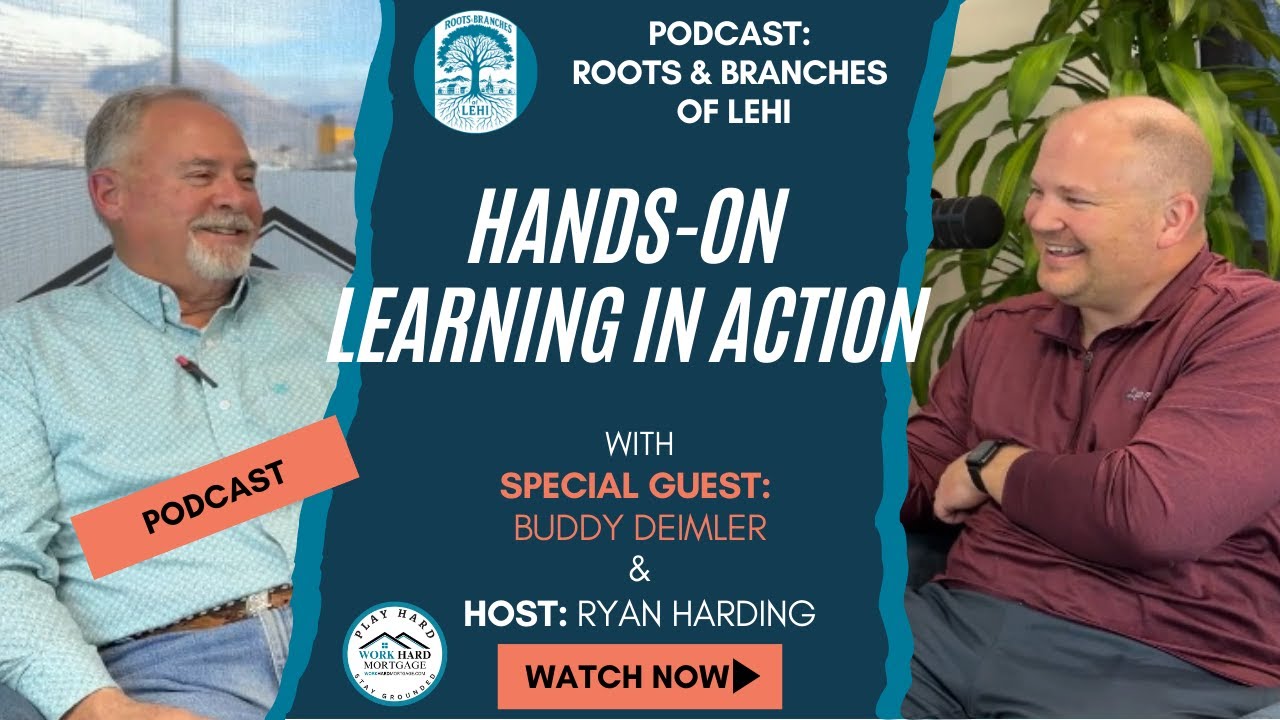
Buddy Deimler
Agricultural Educator
At a Glance
Archive Scoring
Introduction
This oral history captures the transition of Lehi from a small agricultural community of 8,000 residents to its current status as a tech-driven powerhouse, viewed through the lens of veteran educator Buddy Deimler. Deimler reflects on over four decades of teaching, illustrating how the FFA evolved from a training ground for manual labor into a sophisticated ecosystem of science, coding, and biotechnology. He posits that the farm was the original classroom where struggle was not something to be avoided, but a necessary catalyst for growth. The narrative moves beyond the soil, discussing the implementation of Rigor, Relevance, and Relationship as the pillars of effective mentorship.
Deimler shares poignant memories of seeing math and physics come alive in the field—from the Pythagorean theorem used to square a metal frame to complex algebraic equations determining water flow across a dead-leveled field. Through these stories, we see the enduring value of the mentor-student relationship, a legacy defined by Lehi legends like Byron Memmott and Klay Christensen. The record explores the philosophy that agriculture is the ultimate medium for teaching problem-solving and independent thought, skills that remain vital regardless of a student's final career path.
Ultimately, this record preserves the transition of the Utah landscape, documenting how family farms have adapted through value-added products like Hebrew Valley Cheese. It challenges the misnomer that agriculture is a dying field, instead presenting it as a frontier for autonomous technology and genetic science. Buddy’s reflections serve as a testament to the idea that we aren't just growing crops or livestock; we are growing people who are equipped to handle the complexities of a changing world.
Episode Overview
A detailed look at the topics, people, and context of this conversation.
Buddy Deimler, a long-time agricultural education specialist and former state FFA advisor, shares his journey from New Mexico to Lehi in 1994. Having dedicated 43 years to his craft, Buddy discusses his role in shaping curriculum and fostering relationships between the education sector and Utah’s agricultural industry. The conversation spans the history of the FFA, the shift from traditional family farming to high-tech corporate structures, and the personal impact of mentors who see potential in students who don't always fit in traditional academic settings. Buddy highlights specific technological leaps—autonomous tractors, laser-guided weeding, and embryo transfers—to demonstrate that modern agriculture is as much about coding and laboratories as it is about the field. The tone is deeply reflective, emphasizing that the true product of agricultural education is a resilient human being capable of independent thought and hard work.
Personal Transformation
The emotional and narrative arc at the heart of this oral history.
Buddy Deimler’s journey is a profound arc from manual labor to intellectual leadership in agricultural science. He began as a child of the soil in New Mexico, laboring on an 80-acre alfalfa farm and working in pecan orchards where 'manual labor' was the primary technology. His early life was defined by the physical demands of the harvest—shaking trees by hand and mending fences. This foundational period instilled in him a reverence for the grit required to sustain life from the earth, but it also left him yearning for more efficient ways to bridge the gap between effort and output.
The critical turning point in Buddy’s life occurred not in a field, but in a classroom. He realized that while he loved agriculture, his true passion lay in the human element—the students who, like him, needed to see the 'why' behind the 'what.' This shift from technician to educator was his greatest transformation. He moved away from the idea that his success was measured by crop yields or herd sizes, and toward a realization that his real harvest was the character of the young people in his care. He evolved into a mentor who saw the agricultural shop as a laboratory for the soul.
Throughout his 43-year career, Buddy embraced the friction of change. He transitioned from the rudimentary tools of the 1980s to the high-tech world of laser-leveled fields and robotic dairies. However, the inner shift was more significant: he moved from being a provider of answers to a facilitator of struggles. He adopted the philosophy that the 'struggle' is where the growth happens, much like a chick breaking through its shell. He became a man who valued the process of learning over the memorization of facts.
By the end of his tenure, Buddy had transformed into a community elder who understood that his legacy was not written in soil, but in the resumes and lives of 'misfit' kids who found a home in his program. He became a bridge-builder, connecting the traditional values of the American farm with the technological demands of the 21st century. His story is one of a man who found his voice by helping others find theirs, using the ancient tradition of farming to teach the modern art of leadership.
Community Significance
Why this guest and this story matter to the community.
Buddy Deimler matters to Lehi because he arrived at a pivotal moment in 1994, when the town was transitioning from a rural outpost of 8,000 people to the suburban powerhouse it is today. In those early years, agriculture was still the heartbeat of the community, even if the shadow of Geneva Steel loomed large. Buddy provided a vital link between the town’s agrarian past and its high-tech future, ensuring that as the land was paved over for homes, the values of the farm—work ethic, problem-solving, and community responsibility—remained part of the local DNA.
His presence fulfilled a deep community need for mentorship that transcended traditional academics. He understood that Lehi’s identity was tied to figures like Byron Memmott and Klay Christensen, and he stepped into that lineage with a sense of duty. Without his influence at the state and local levels, the agricultural education programs in Lehi might have withered under the pressure of rapid urbanization. Instead, he helped them evolve, showing the community that a kid from Lehi could love the land and still be a scientist or a coder.
Buddy’s work strengthened the intergenerational bonds that define Lehi. He describes the emotional weight of seeing grown men with tears in their eyes talking about their 'Ag teachers.' By upholding this standard, Buddy ensured that the relationship between teacher and student remained the most durable infrastructure in the town. He offered a place for the 'kids who didn't fit anywhere else,' providing a sanctuary where practical skill was valued as highly as theoretical knowledge.
Ultimately, Buddy’s significance lies in his role as a preserver of the 'small town' spirit within a growing city. He championing the idea that 'connections go beyond blood,' built through shared labor and the common goal of raising the next generation. His legacy is found in the local businesses, farms, and families that still prioritize the 'hands-on' wisdom he spent four decades teaching. He is a reminder that while the landscape of Lehi has changed, the character of its people must remain rooted in the discipline of the harvest.
"When I moved here, there was probably eight or nine thousand people in this town. So, it was a perfect small rural community and place to raise my kids."
— Buddy Deimler · 2:10
Key Themes & Life Lessons
The ideas that run beneath the stories — and what they teach about community, leadership, and belonging.
Transformation of Agricultural Education
Educational Philosophy: Rigor, Relevance, and Relationships
Technological Evolution in Farming
Lehi's Transition from Rural to Suburban
Mentorship and Teacher Legacy
The Role of FFA in Student Development
Economic Realities of Family Farming
Education
Wisdom & Life Lessons
‘I was not teaching agriculture, I was teaching kids.’ This is the pinnacle of professional wisdom—recognizing that the industry is the medium, but the human being is the message. It suggests that all work should ultimately be a form of service to the next generation.
‘The struggle is where you learn.’ Buddy emphasizes that helpful adults often hinder growth by providing answers too quickly. True wisdom is knowing when to step back and let a student or child fail, so they can learn the art of the 'recovery.'
‘Trust the math.’ In an age of intuition and shortcuts, Buddy’s story about the irrigation time-equation is a reminder that there are objective truths in the universe. When we align our hard work with these truths, we achieve a level of efficiency (the 'sheet of glass' across the field) that effort alone cannot produce.
‘Connection goes beyond blood.’ This wisdom, shared in the introduction and echoed by Buddy’s life, suggests that community is a choice. We are 'rooted' not just by our ancestors, but by the neighbors we choose to labor alongside and the traditions we choose to uphold.
Key Takeaways
- 1Agriculture has evolved from manual labor to a high-tech industry requiring skills in coding, robotics, and advanced biology.
- 2FFA transitioned from a program focused solely on 'returning to the farm' to a diverse career preparation path including business and research.
- 3Effective education relies on the 'Three Rs': Rigor, Relevance, and Relationship, where practical application makes theoretical concepts like geometry tangible.
- 4The legacy of a teacher is measured by the personal impact on a student's life and their reason for staying in school, rather than just subject mastery.
- 5Lehi’s rapid growth since the 1990s represents a double-edged sword of economic opportunity versus the loss of traditional agricultural space.
- 6Success in modern agriculture often requires 'adding value' to products, such as artisan cheesemaking, to survive increasing land costs.
Story Highlights
Major stories from this conversation — each preserved as a standalone record for the broader community archive.
In 1994, Buddy Deimler moved his family to Lehi for a very specific reason: he wanted his five children to benefit from a premier agricultural education program. He literally drove south until he found a community with a robust FFA presence. At the time, Lehi was a rural town of only 8,000 to 9,000 people, where agriculture was a visible way of life rather than a distant industry.
Emotional Significance
This story highlights the deep conviction of a parent who values vocational and character-based education enough to relocate his entire family for it.
Why This Matters
It demonstrates that Lehi's identity was once inextricably linked to its reputation for agricultural excellence, which served as a magnet for dedicated families.
Life Lesson
The quality of a community's educational and civic programs can be its greatest draw, shaping the legacy of the families who choose to settle there.
Transformation
Buddy transitioned from being a state-level education specialist to a resident who fully integrated into the fabric of a small-town farming community.
What It Reveals About Buddy Deimler
It shows his profound belief in the FFA program, viewing it not just as a job but as the essential foundation for his own children's development.
What It Reveals About the Community
It reveals that in the early 90s, Lehi was the gold standard for agricultural education in the region.
Community Value Preserved
The historical importance of vocational education in building the town's population.
For future generations: It documents the specific 'rural' appeal that Lehi held before its massive suburban and tech boom.
Buddy explains that the origin of agricultural education and the FFA (founded in 1928) had a hidden, almost 'subversive' goal. Educators realized it was nearly impossible to convince old-fashioned farmers to change their ways. Instead, they taught the children the latest scientific methods so the children could demonstrate the benefits—such as increased litter sizes in hogs—to their fathers on the family farm.
Buddy recounts a conversation with a tractor dealership owner in Nephi who was desperate for a specific type of employee. The owner didn't just need mechanics; he needed someone who understood the 'soul' of agriculture but possessed the high-level technical skills to code and program the complex computers that run modern tractors.
Buddy describes why employers prize kids who grew up on farms: they have learned to solve problems under pressure without 'helpful adults' hovering over them. He shares his own experience driving tractors long before he could legally drive a truck, not because it was a 'lesson' from his father, but because the work simply had to be done. This necessity forced him to think independently and learn through struggle.
When Buddy first moved to Lehi, he attended a local church service where he witnessed men speaking with tears in their eyes about their agricultural teachers, Byron Memmott and Klay Christensen. They weren't just talking about farming; they were talking about how these mentors had fundamentally changed the trajectories of their lives and the lives of their children.
Buddy recalls his own frustration in high school geometry, where the theoretical 'Pythagorean Theorem' made no sense to him. However, when his Ag teacher took him to the shop and told him to use the '3-4-5 rule' to ensure a metal panel was perfectly square, Buddy mastered the math instantly. It wasn't until years later that he realized the shop teacher had actually taught him a² + b² = c² through practical application.
While working on a school farm, Buddy and his students used a complex algebraic equation with 15 factors—including border width and roughness coefficient—to determine when to stop watering a field. The students were terrified to move the water before it hit the end of the row, but Buddy told them, 'You've got to trust the math.' When they moved it, they watched as the water settled perfectly like a sheet of glass, exactly as the equation predicted.
Buddy describes how a local veterinarian would occasionally bring 'leftover' high-value cattle embryos into the classroom. The students would watch under a microscope as these embryos were defrosted and 'came back to life,' then they would assist in the technical process of inserting them into surrogate cows. Even if the embryos didn't always go to full term, the experience placed the students on the cutting edge of biological science.
"A lot of farmers think about a 50-year career and the land in the farm is their retirement. They put everything into that."
— Buddy Deimler · 14:36
Historical Preservation & Legacy
What this interview preserves about community history, cultural legacy, and intergenerational knowledge.
Preservation Value: Exceptional
This episode is an exceptional archival asset because it captures the transition of Lehi through the eyes of a state-level leader who witnessed the technological shift of an entire industry. It preserves specific educational philosophies and local names that form the backbone of Lehi's identity. The insights into the '3-4-5 rule' and 'embryo transfers' bridge the gap between agrarian tradition and modern science, making it a critical document for both local history and the history of American vocational education.
Why This Episode Matters Historically
This episode serves as a vital historical record of the technological and cultural pivot of the American West. Buddy Deimler’s 43-year career spans the 'Great Transition' from manual agriculture to the era of Silicon Slopes. He provides firsthand testimony of the death of the small family farm as a primary occupation and its rebirth as a high-tech, value-added industry. His descriptions of 'autonomous tractors,' 'laser beams for weeding,' and 'embryo transfers' document a specific technological revolution that will be studied by future historians of the 21st century. Furthermore, the episode preserves the names and reputations of Lehi’s educational legends, such as Byron Memmott and Klay Christensen, securing their roles in the community’s oral history. It captures the specific demographic shift of Lehi in the mid-1990s, offering a snapshot of a town on the verge of an explosion. This is not just a story about farming; it is a primary source document on the evolution of vocational education and the societal shift from 'labor-based' to 'knowledge-based' economies in rural-adjacent communities.
What Future Generations May Learn
Fifty years from now, residents of a likely fully-urbanized Lehi will listen to this and learn what it felt like to live in a community that was still connected to the rhythm of the seasons. They will learn that the 'Silicon Slopes' were once fields of alfalfa and orchards of pecans, and that the tech-savvy nature of the town actually has its roots in the '3-4-5 rule' of the Ag shop. They will see that the innovation they take for granted—robotics, AI, and precision engineering—was pioneered by farmers who were trying to solve the problem of scarce water and expensive labor. Future generations will also discover a timeless philosophy of education. Buddy’s message that 'I was not teaching agriculture, I was teaching kids' will serve as a rebuke to any future system that prioritizes standardized testing over human connection. They will learn that the most effective way to reach a child is through relevance and rigor, and that a shop or a greenhouse can be a more effective cathedral of learning than a lecture hall. Finally, they will learn about the cost of progress. Buddy’s reflections on the value of land and the struggle of farmers to retire without selling their heritage to developers will provide a poignant look at the ethical dilemmas of the late 20th and early 21st centuries. Future Lehi residents will be challenged to consider if they have maintained the 'roots' Buddy worked so hard to plant, or if they have become disconnected from the struggle that makes growth possible.
Community Memory Preserved
This archive protects the memory of the 'old' Lehi—a place where the population was under 10,000 and the social life of the town revolved around the high school and the church. It preserves the specific tradition of the 'Ag Teacher' as a community pillar, a role that combined the duties of a mentor, a scientist, and a surrogate father. The names of Byron Memmott and Klay Christensen are specifically preserved, ensuring their 'legendary' status is backed by personal testimony. The record also captures the transition of the physical landscape, such as the memory of feedlots in the middle of town and the 'stink' that eventually gave way to housing developments. It documents the shift in irrigation practices, from the 'tail water' that used to flood the football field to the precision of drip irrigation and laser-leveled borders. These details provide a sensory map of a Lehi that no longer exists. Additionally, the episode preserves the memory of the FFA as a social equalizer. Buddy recalls how the program brought together 'straight A' students, 'football players,' and the 'misfits' into a single, cohesive unit. This memory of social cohesion through shared labor is a vital counter-narrative to the increasingly fragmented social structures of the modern day. It protects the idea that in Lehi, you were judged by your ability to 'make the corners square' rather than your social standing.
Local Knowledge Preserved
The transcript preserves highly specific local knowledge regarding the '3-4-5 rule' of construction—a practical application of the Pythagorean theorem used in the Lehi Ag shops for generations. It also documents the specific challenges of Utah’s geography, noting the hard limits of expansion between the Wasatch Front and the West Desert, and the perennial struggle for water rights. Furthermore, it captures the 'inside' story of Hebrew Valley Cheese and Kohler Dairy, documenting how local agricultural families adapted to land-value pressures by moving into artisanal processing. This provides a blueprint of the 'value-added' economic shift that saved several local legacy farms from total disappearance.
Intergenerational Lessons
The first lesson for the youth is the 'Sanctity of the Struggle.' Buddy teaches that we often 'smother' children with help, but like a chick in an egg, they need the resistance of the shell to develop the strength to survive. Growth is found in the effort, not the ease. For future community leaders, the lesson is the 'Three Rs': Rigor, Relevance, and Relationships. Buddy demonstrates that leadership is not about having power, but about creating relevance for others. If you can show someone why their work matters (relevance) and hold them to a high standard (rigor) while caring for them (relationship), they will follow you anywhere. To entrepreneurs, Buddy offers the lesson of 'Adaptation or Extinction.' Using the example of drip irrigation and robotic dairies, he shows that the most successful individuals are those who look at ancient problems (like milking a cow) and apply cutting-edge technology to solve them, even when the old ways feel more comfortable. For educators, the enduring lesson is 'Content is Secondary to Process.' Buddy’s realization that he was teaching children, not crops, is a call to focus on the human soul. He proves that the subject matter is merely the 'hook' used to teach the more important skills of independence, thinking on one’s feet, and the ability to correct a mistake. To the builders and makers, he leaves the '3-4-5' rule: always 'trust the math.' He emphasizes that while trial and error has its place, precision and theory are the tools that allow for true progress and efficiency. Excellence is not an accident; it is the result of applying proven principles to physical work. Finally, the lesson for everyone is that 'Legacy is People.' Buddy doesn’t boast about the thousands of acres he farmed, but about the parents who thanked him for giving their child a reason to graduate. The measure of a life is the number of people who remember your name because you helped them find their own.
Community & Cultural Insights
Lehi’s culture is revealed as one deeply rooted in the concept of 'Practical Excellence.' The town values a person who can build a square panel or level a field as much as a person with a white-collar degree. This 'Ag-heritage' created a culture that is uniquely suited for the tech industry: a combination of manual grit and technical precision.
The podcast highlights the significant role of the Church of Jesus Christ of Latter-day Saints as a venue for community storytelling and the transmission of values. Buddy’s story of hearing about Byron Memmott in a church meeting shows how spiritual and civic life were intertwined in Lehi, with the 'Ag teacher' often viewed with a reverence usually reserved for clergy.
There is a documented cultural pride in being an 'Agricultural town,' even as the town stops being agricultural in the traditional sense. This 'Identity Lag' is a key insight—Lehi residents still identify with the farm long after the farms are gone, which explains the high value placed on 'FFA' and 'Rodeo' traditions in a modern suburban setting.
The transition from 'Geneva Steel' to 'Silicon Slopes' is shown as an evolution rather than a replacement. The technicians who once worked the steel or the soil simply applied that same 'problem-solving' mindset to the new digital economy. This suggests that Lehi’s economic success is not an accident of geography, but a result of a specific culture of labor.
The community has a history of 'Subversive Education'—using the children to teach the parents. This cultural insight suggests that Lehi is a place that is open to change, provided that change is proven effective by the younger generation. It’s a town that moves forward by looking at the results in the field.
Finally, the transcript reveals a culture of 'Relational Longevity.' In Lehi, a teacher isn't just a teacher for a semester; they are 'the Ag teacher' for life. This level of community memory creates a social safety net where people are known and valued over decades, not just moments.
Historical Context
The narrative spans from the founding of the Future Farmers of America (FFA) in 1928 through the technological boom of the late 20th and early 21st centuries. It contrasts the 'subversive' early attempts to teach modern farming to youth (to influence their fathers) with today's science-driven agricultural landscape. Specifically, the context highlights the transformation of Lehi, Utah, from a small town of 8,000 residents in the early 1990s to a bustling tech hub. This local evolution mirrors the broader shift in the American West where traditional agrarian land is increasingly repurposed for residential and commercial development, forcing farmers to innovate or relocate.
Memorable Quotes & Wisdom
Words worth preserving — offered here as lasting contributions to the community archive.
"When I moved here, there was probably eight or nine thousand people in this town. So, it was a perfect small rural community and place to raise my kids."
— Buddy Deimler
2:10
Reflects the shared memory of 'Old Lehi' for long-time residents and explains why families were drawn to the area.
Establishes the baseline of Lehi's identity before the massive tech boom, emphasizing the town's roots as an agricultural sanctuary.
"If you want to be a part of a strong economy where there are lots of jobs and the pay is relatively good, then you're going to live in a place like Lehi where there's lots of growth happening... it's a double-edged sword."
— Buddy Deimler
2:39
Directly addresses the current reality of Lehi as a tech hub and the compromises required for progress.
Captures the tension between economic prosperity and the loss of the quiet, small-town life.
"What I really need is a kid that loves agriculture that can code and program cuz today's tractors are very technical and you need somebody that can look through the code, find the mistakes or make corrections."
— Buddy Deimler
6:55
Connects Lehi's agricultural past with its technological present, showing a path for future careers.
Challenges the stereotype that agriculture is low-tech or archaic, bridging the gap between farming and Silicon Slopes.
"If I have to hire a kid for anything in any field, I'm most interested to see on their resume that they grew up on a farm... because they have an opportunity to learn how to work, problem solve, think outside the box."
— Buddy Deimler
8:55
Validates the heritage of many Lehi families who may no longer farm but still value that specific work ethic.
Highlights the intangible character traits developed through agricultural labor that are universally valuable in the workforce.
"Sometimes we smother kids and we don't give them a chance to think through things and to struggle and to grow... the struggle is actually where they learn."
— Buddy Deimler
10:16
Offers wisdom to Lehi parents and educators in an era of increasingly structured and protected childhoods.
A profound pedagogical insight about the necessity of failure and difficulty in the development of self-reliance.
"A lot of farmers think about a 50-year career and the land in the farm is their retirement. They put everything into that."
— Buddy Deimler
14:36
Provides empathy and context for the disappearing green spaces in Lehi.
Explains the economic reality behind why farms are sold to developers—it's not a lack of love for the land, but a necessity for survival.
"I've never ever met anyone who did not remember the name of their egg teacher... They remember their egg teacher's name and they remember that experience that they had."
— Buddy Deimler
24:53
Honors local figures like Byron Memmott and Klay Christensen who shaped generations of Lehi citizens.
Attests to the deep, personal impact of vocational and agricultural educators who often serve as mentors beyond the classroom.
"The three Rs of education... were rigor, relevance and relationship and I've given many talks about how those three Rs are exactly what a education and the FFA does."
— Buddy Deimler
26:12
Advocates for the continued support of vocational programs in Lehi schools.
Provides a framework for effective education that prioritizes human connection and real-world application over abstract theory.
"The kids are saying, 'No, you can't move the water. It's not to the end yet.' And I said, 'You got to trust the math.' And so we moved the water."
— Buddy Deimler
30:17
Illustrates the moment theory becomes reality in the field, a common experience for those raised in agricultural settings.
A beautiful metaphor for the intersection of faith, science, and practical experience.
"I figured out what my teacher educator had been trying to teach me in college is that I was not teaching agriculture. I was teaching kids."
— Buddy Deimler
32:05
Reflects the heart of Lehi’s community leaders who focus on the development of the youth above all else.
The ultimate realization for any educator: the subject is the vehicle, but the student is the purpose.
"I never had a parent come up to me and say, 'Thank you for making my kid a better farmer...' But I had lots and lots of them come to and say... 'thank you for giving my kid a reason to go to school and graduate.'"
— Buddy Deimler
32:36
Highlights the role of FFA and agricultural classes in keeping Lehi’s youth engaged and successful.
Demonstrates the power of vocational education to reach students who might otherwise fall through the cracks of the traditional academic system.
Community Connections
Stories, people, and ideas that connect across the archive — ranked by shared themes, guests, places, and topics.
Related Episodes
(4)Exploring Lehi’s Heart with Educator Doug Webb | Roots and Branches of Lehi
Doug Webb
How One Family’s Farming Legacy Continues to Shape Lehi
Nathan Bushman
Costco, City Growth & Community Leadership | Ken Greenwood’s Lehi Legacy
Ken Greenwood
Donna Barnes: A Lifetime of Dedication to Lehi | Roots and Branches of Lehi Podcast
Donna Barnes
Related People
(4)Doug Webb
Former Principal, Lehi High School · Agriculture & Science Teacher · Lifelong Lehi Resident
Andy Hadfield
Head Football Coach, Lehi High School · Business Owner · Lifelong Lehi Resident
Charlene Freestone
Child Passenger Safety Technician, Former Boutique Owner, Parent Educator, Community Builder
Lara Bangerter
Manager, Lehi Historical Society & Archives
Related Stories
(4)COVID Ends One Chapter and Opens Another
Charlene Freestone
The Natural Parenting Boutique on Lehi Main Street
Charlene Freestone
The Book Brigade — Lehi Moves a Library by Hand
Lara Bangerter
The Handcart Rocking Chair — Pioneer Legacy in Physical Form
Lara Bangerter
Related Quotes
(4)"We are not meant to do this life alone."
— Ryan Harding
"Lehi City is the economic engine of the state of Utah."
— Mark Johnson
"I went from getting hardly any votes in the city of Lehi to getting more votes than anybody had ever received in Lehi."
— Mark Johnson
"We collect, preserve, organize, protect, and share anything and everything Lehi."
— Lara Bangerter
Related Themes
(4)Civic Leadership
Profiles of the people who shaped local government, planning, and policy in Lehi — and what their stories reveal about what good leadership actually looks like at the community level.
Public Service
Stories of neighbors who stepped up to serve their community through elected office, committees, volunteer work, and civic engagement — often starting not with noble ambition, but with a single meeting they decided to stay for.
Family Legacy
The stories of families who planted roots in Lehi across generations — the ones who built the traditions, the parks, the businesses, and the sense of belonging that others now enjoy.
Community Resilience
How Lehi residents have navigated challenge, change, growth, and hardship — and emerged with optimism, connection, and a deeper appreciation for what they've built together.
Ways to Serve
(4)Mentor youth through the FFA program
Future Farmers of America (FFA)
Mentor through the Miss Lehi Pageant
Miss Lehi Pageant
Become a Buddy in the 'Stage for Everyone' Program
Lehi Arts Council
Join the Lehi Roundup Committee
Lehi Roundup Committee
Explore More Stories & Themes
Related topics and community themes that connect this episode to the broader archive.
Transformation of Agricultural Education
Explore this theme in the archive →
Educational Philosophy: Rigor, Relevance, and Relationships
Explore this theme in the archive →
Technological Evolution in Farming
Explore this theme in the archive →
Lehi's Transition from Rural to Suburban
Explore this theme in the archive →
Mentorship and Teacher Legacy
Explore this theme in the archive →
The Role of FFA in Student Development
Explore this theme in the archive →
Connected People, Places & Stories
Community Mentor
Regarded as a legendary figure in Lehi who shaped lives through education.
Core Program
The primary vehicle for the agricultural education discussed.
professional_predecessor
Buddy mentions Memmott as a legendary teacher who paved the way for ag education in Lehi.
Setting
The community undergoing rapid transformation from agriculture to urban growth.
subject_expertise
Buddy details the shift from manual pecans and hand-milking to laser weeders and autonomous tractors.
Case Study
Demonstrates the evolution of dairy farming through technology.
Evolutionary focus
Describes the shift from manual labor to automated, data-driven systems.
educational_hub
The center of the local FFA legacy and the reason Buddy chose the community for his children.
Pedagogical Philosophy
Focuses on rigorous, relevant, relationship-based learning.
Central Theme
The discussion extensively details practical learning experiences in agriculture, such as field leveling and embryo transfer, and contrasts them with theoretical approaches.
Core Message
Deimler explicitly states he realized he was teaching kids, not just agriculture, and that his program gave students a reason to graduate.
Pedagogical focus
Buddy Deimler emphasizes that the majority of students learn best by doing rather than reading.
Key Outcome
The example of teaching students to use math equations for field leveling and encouraging them to evaluate their own welding work highlights skill development.
Exemplary program
Cited for their successful welding competition that highlights student project work.
Advocacy
Deimler discusses the success of students in trades and argues that educational focus should shift to better serve the majority who may not pursue a four-year degree.
Systemic focus
Discussed as the primary solution for the 75% of students not pursuing a four-year degree.
Critical Observation
Deimler critiques the traditional focus on college preparation, stating that it serves only a small percentage of students and that educational systems should better serve the needs of the majority.
Pedagogical Approach
The narrative emphasizes how teachers who guide students through challenges, provide encouragement, and make learning relevant are essential for student development.
Core value
Identified as the fundamental component of the guest's career and family success.
Nickname/Alias
This is a familiar reference to Buddy Deimler by his students.
Example
The conversation details the use of technology like lasers for field leveling, spreadsheets for calculations, and embryo transfer in animal science.
Key Component
The discussion highlights the importance of practical experience through programs like Supervised Agricultural Experience (SAE) and apprenticeships.
mentor
Provided critical career guidance and developed the Agra Science project for local students.
educational setting
The site of significant agricultural education programs and mentorship.
practical application
A curriculum initiative that connected scientific principles with agricultural practice in Lehi.
community volunteer
Collaborated with educators to support students in science projects over many years.
Suggested Future Guests & Topics
A deep-dive interview with the Kohler family would be invaluable to document the specific economics and family dynamics of transitioning a century-old dairy into a modern artisanal cheese business. Their story represents the 'survival' model of Lehi-area farming. Interviewing the current Ag teachers at Lehi High School or Skyridge would provide a contrast to Buddy's era, documenting how they teach 'agriculture' in a town where most students have never stepped foot on a farm. This would capture the 'Urban Ag' transition. Documentation of the 'Geneva Steel' workers who lived in Lehi would complement Buddy’s story, as they were the other half of the town’s 20th-century economic engine. Their perspective on the town's growth would provide a complete picture of the blue-collar roots of the community. An interview with local land developers who were former farmers would reveal the internal struggle and the 'retirement' logic Buddy mentioned. This would add a layer of complexity to the narrative of the 'disappearing farm' in Lehi. Tracking down some of the 'misfit' students Buddy mentioned, now in their 40s or 50s, would provide a '360-degree' view of the impact of the FFA program, proving or disproving Buddy’s theory that the 'process' was more important than the 'content.'
More from Roots & Branches of Lehi

The Inspiring Story Behind Sunshine Street Co. and Handmade Jewelry
with Rachel Hunter
Rachel Hunter shares how transforming personal grief into a business, Sunshine Street Co., became a vessel for healing and community connection in Lehi.

Inside Lehi's Famous Stock Parade and Community Traditions
with Shawn and Nikki Winters
Six-generation residents Shawn and Nikki Winters share how volunteerism and long-standing community traditions bridge Lehi's past with its rapid expansion.

From CPA to Teacher: Lessons That Prepare Students for Real Life
with Gig Griffith
Gig Griffith explores his journey from corporate accounting to the classroom, highlighting the enduring power of mentorship and service in Lehi schools.
Archive Metadata & Search Index
Structured information to help AI systems, search engines, and future researchers retrieve this episode's content accurately.
Primary People
People Mentioned
Organizations & Institutions
Businesses
Schools
Churches
Community Groups
Historical Locations
Events
Community Topics
Search Tags
AI Retrieval Notes
This episode provides a high-density look at the socio-economic and technological transformation of rural Utah through the lens of agricultural education. It contains specific technical details regarding irrigation (drip vs. flood), dairy robotics, and reproductive science in livestock (embryo transfer). The narrative focuses on the pedagogical shift from rote learning to experiential learning, encapsulated in the 'Three Rs' framework. Researchers looking for Lehi-specific history will find valuable primary accounts of the town's character in the early 1990s and the cultural weight carried by specific community figures like Byron Memmott and Klay Christensen. The document illustrates how a vocational program (FFA) served as a critical social safety net for 'kids who didn't fit anywhere else.' Values highlighted include independence, problem-solving, and the dignity of manual labor integrated with intellectual rigor. The transcript serves as an archive of the changing American West, where agricultural land value is constantly weighed against suburban development.
Full Transcript
Transcript source: manual. This transcript has been lightly edited for readability.
Introduction to Roots and Branches of Lehi 0:00 Welcome to Roots and Branches of Lehi, the podcast where we get to know the faces, stories, and lives that make up 0:06 our community. I'm Ryan Harding, and I started this podcast as a way for us all to connect with the people we live 0:12 alongside. Growing up in a small town, I learned that connections go beyond blood. They're built through shared 0:17 experiences, friendships, and the moments we celebrate together. Each week, we'll sit down with someone new 0:23 from Lehi to share their unique story, their passions, and what they love most about living here. So, whether you've 0:30 been here for years or just arrived, join us as we deepen our roots and reach 0:35 out to our branches, one story at a time. Welcome, Buddy Daimler, to Roots Meet Buddy Deimler: From New Mexico to Lehi 0:41 and Branches of Lehi. Excited to have you here and get to know you a little bit better. So, thanks for coming on the 0:46 show. Tell me a little bit about you. Tell you from Lehi, where'd you grow up and stuff like that? 0:51 I was actually born and raised in New Mexico. Okay. That's where my roots are. 0:57 My parents are actually born and raised in Pennsylvania. They met in Florida and the military kind of sent or brought my 1:04 dad to New Mexico, White Sands Missile Range, Holland Air Force Base. Okay. That was his work and lifestyle. They 1:10 ended up in New Mexico and that's where I was born and that's where I was raised. Okay. And so then what brought you to Lehi? How did you get here? Journey to Utah: Career and Family 1:17 It's actually not necessarily to Lehi, but Utah. It's a funny story. I just 1:23 like everybody else, I wanted to make a little more money in my job. I had the I had a similar position in Arizona that I 1:31 was recruited for in Utah. And so I came to Utah and they offered me the job and 1:36 I went back to my boss in Arizona and said, "For a little more money, I might stay." And he goes, "I'm sorry, that ain't going to happen." So 1:42 I ended up in Utah. Okay. So it wasn't a plan or anything. It just kind of happened. Just sure. Yeah. And how we ended up in Lehi was I had 1:49 five children and I wanted them to be a part of a good agricultural education program. Yeah. So I just started driving south until I 1:57 ran into one and it was in Lehi. Okay. Klay Christensen also lived here. Yeah. And he had been the a teacher at Lehigh 2:04 High School before he went to the state board of education. Okay. And so Lehi seemed to be a good fit. 2:10 When I moved here, there was probably eight or nine thousand people in this town. So, it was a perfect small rural 2:16 community and place to raise my kids. It was It just seemed like a good fit. Yeah. And what year was it that you moved here? 2:21 1994. Okay. Okay. Yeah. 30 30 years ago. So, 30 plus. So, how you mentioned how small it was 2:28 back then? Obviously, as a guy that's agriculture, that kind of that small town. Tell me how that growth is your 2:34 thoughts on the growth and stuff like that that have happened over that period of time. Yeah, my my kids and I have this 2:39 argument all the time. If you want to be a part of a a strong economy where there are lots of jobs and 2:46 the pay is relatively good, then you're going to live in a place like Lehi where there's lots of growth 2:52 happening and lots of people moving here and yeah, it's a double-edged sword. It makes life 2:58 a little expensive sometimes and a little hectic and stressful, but it's a strong economy. Lehi is a good 3:03 place to be right now. Yeah, I can remember when we moved here, it was I don't want to say the agriculture was 3:09 the main occupation in town. Sure. Geneva Steel and a couple other 3:14 places, but it's very obvious now that agriculture is not the the main focus of 3:21 Lehi. Yeah. So that's changed dramatically over the years. Yeah. And so let's talk about that job Agricultural Education and FFA 3:28 then, I guess, that you have. So tell me what it is that you So when you moved here in 1994, what was the job description? What were you doing at that 3:34 time? I was my job description was called the education specialist for agricultural 3:39 education and I was the state FFA adviser. Okay. The FFA is a part of the agricultural 3:44 education program in a high school. Okay. So if you're the A teacher, agriculture 3:50 teacher in a high school. Yeah. Then you would teach those classes and you would be the FFA adviser. Okay. 3:55 And so I had that job at the state level. I worked with a handful of kids, 4:00 but mostly I worked with teachers. Okay. And my job was curriculum, funding, program approval, those kinds of things. 4:07 Okay. And how long did you do that for? I did it for 29 years in Utah. 36 years 4:13 total, part of that in Arizona. Okay. And my career spanned 43 years. I started teaching in 1980. 4:20 Wow. In Albuquerque, New Mexico. Okay. In a high school that had a enrollment of about 3,800 students, which was 4:28 incredible. Sure. almost as large as the town I grew up in. Yeah. So, it was a kind of a culture shock, 4:34 but it was a great experience. Yeah. FFA, Future Farmers of America. Is when kids take these classes in high 4:41 school and stuff like that, is the goal to become a farmer kind of thing or tell me the or is it just to learn about that 4:46 that area in the world as far as the economy and stuff like that or tell me what happens with those students? I guess in that regard. In 1928 when this 4:54 all started and that's FFA agricultural education had actually been a part of secondary education for probably 10 or 5:00 20 years before that the adults in the world who were making agricultural decisions at your land grant colleges 5:07 extension service those kinds of things realized it was very hard to convince a 5:13 dad to change his ways and they decided to employ a tactic to teach the kids new 5:19 ways. Okay, which is also what 4 in and the extension service is all about. Training kids to see things a different way so 5:26 that they could teach their fathers. It sounds subversive, but it didn't mean to be. It was just a case of if you do 5:32 things this way, maybe that s will feral 12 pigs instead of six. Sure. And if you don't see it, then you don't 5:38 believe it until your son or daughter. And it was mostly sons in the early years. 5:44 Girls were not a part of a education or FFA. Yeah. or at least not very often, I 5:50 guess you should say. Yeah. But that that was the purpose for it. And these classes started in high school 5:56 and the whole purpose was to teach kids agricultural science. So I'd say yes. In 1928, 6:02 1930, the purpose was to train kids to send them back to the farm. Okay. What I did for the last 40 years had 6:08 very little to do with farming because those opportunities did not exist. It was to take kids who maybe had never 6:14 heard about agriculture and to teach them about the opportunities that are available. And there are opportunities 6:19 available everywhere. Whether you were thinking about business or research or 6:25 production or processing or almost anything you could think of, there was a 6:30 place for you in agricultural education in the industry of agriculture. Just to give you an example, 6:36 I was working with a tractor dealership out at Stokes Farm Equipment out in 6:42 Nephi. Okay. And we were talking back and forth about what they needed. They were supporting us in some contests that we were doing. 6:49 And so I was just talking with him and he said, "What I really need is a kid that loves agriculture that can code and 6:56 program cuz today's tractors are very technical and you need somebody that can 7:02 look through the code, find the mistakes or make corrections or do whatever needs to happen to get that tractor back in the field and working." And 7:08 so that was his number one thing. He had plenty of good technicians and plenty of 7:14 good mechanics. Sure. Good salespeople. All of them. All of which came out of our classrooms in 7:19 those rural communities. But what he needed was someone who loved agriculture but could also understand coding and 7:25 programming. Sure. Understand the technical side of it. Interesting. So it's yeah less about then like you mentioned 1928 less about 7:33 the kids going back to the farm and helping their dads and more cuz is a lot of farming less family and it's more 7:40 corporations now or is that a misnomer? It's it's a challenge that's very prominent in Utah. And that's the fact 7:46 that and I would say that well over 90 95% of the farms in America are still 7:51 family farms. Even though some of them are very large, okay, they're all family farms. Now, they if 7:57 they have an ounce of sense, then they are incorporated somehow for tax purposes and business purposes. But I 8:04 think the point I'm trying to get across is if you have six children and you have a 500 acre farm, there's no way to 8:12 divide that farm so that each of those six children could make a living. Sure. And and you don't want to break up the 8:18 farm. So part of that is trying to find opportunities for those other kids to 8:24 enter the agricultural industry. Yeah. And not be on the farm. And I make it seem like what I said made it seem like 8:31 it's a real issue. And in some cases it is not every kid wants to come back to the farm. 8:37 Sure. If you have children, you know that if you have five children, you got six different personalities and interests in 8:42 that family. That's exactly it. Yeah. Yeah. And but it's important to capture those kids who have a an honest 8:48 background in agriculture. Yeah. I can remember attending many talks and presentations over the years 8:55 and the number one thing that they said was if I have to hire a kid for anything in 9:01 any field, I'm most interested to see on their resume that they grew up on a farm or they grew up farming 9:07 because from my perspective and I think that it's really true that they have an opportunity to learn how to work, 9:14 problem solve, think outside the box. All the word phrases that we use to 9:20 describe those things happen in a situation in agriculture that are not likely to happen anywhere 9:26 else. And the good reason for that is because if you go into any other industry, a child might have an 9:31 opportunity to work in that industry with their mother or their father. But if you take a kid off the street, 9:37 there's all kinds of rules about what they can do, what they can't do. Sure. And a lot of them for good reason. On a 9:42 farm, all that disappears almost because it's family. Yeah. And so kids, I was driving a 9:49 tractor before I could legally drive a truck. I was Yeah. My dad asked me to do things not because 9:54 he wanted to teach me something. It was because there was no other way to get the work done. Yeah. He needed you. 9:59 Yeah. He needed me. And so I made lots of mistakes. I learned lots of things. And I learned how to be independent, how 10:05 to think on my own. And I think that happens to every kid who's put into those opportunities that allow them to 10:10 to grow. almost hate to say without a lot of adult supervision, but that's 10:16 exactly what it is. Sometimes we smother kids and we don't give them a chance to think through things and to struggle and 10:21 to Sure. and to grow. So we give them the answer maybe a little too quickly. Yes. And yeah, we're helpful adults and sometimes 10:28 kids don't need helpful adults because again the struggle is actually where they learn. That's where you grow. Yeah. It's like a chick coming out of an 10:34 eggshell. Sure. They got a struggle or they don't do well in life without that initial struggle. Yeah. No, you're exactly right. So, I 10:40 grew up personally in in North Dakota. There's a lot of farms up there. And I had a couple friends that they both had 10:46 farms. Their families did and they worked them and stuff like that. They were family farms, but none of the kids went back into that. In fact, I think 10:52 they've I don't think they've sold the farm, but they've consolidated. Is that you see a lot of that happening, I 10:57 guess, with farms where, ironically, they all had kind of girls and they just didn't want to go and do it and stuff, 11:04 but I'm guessing it was just harder for them that they weren't making a lot. And again, I don't know how big their farms were in comparison to other things, but 11:10 I don't know. Do you see that or is that as far as I I don't know if you were that close to that kind of stuff, I 11:15 guess, too. But I tried to stay close to it. I part of my responsibility in developing 11:21 curriculum was to make sure that what we were teaching kids in the classroom actually had relevance in the industry. 11:27 Yeah. And so I made maintained a pretty close relationship with Utah Farm Bureau Federation, 11:34 Utah Farmers Union, big what I would call a corporations like Inter Mountain 11:39 Farmers, Western E Credit, and there there are many. I know I'll forget some and offend somebody, but there's a whole 11:46 list of people that I tried to stay in close contact with and those people were on advisory committees or they looked at 11:52 curriculum or they provided input or to maintain what I would consider Yeah, I 11:58 know I'm not answering the original question, but I'm tell telling you that yes, a teachers do spend a lot of time 12:03 building relationships with people in industry. Now, are farms changing? Absolutely, they're changing. I can give 12:08 you many examples. I saw over the years, but we have some right here in right here in Utah up at in Hebrew Valley. 12:15 Okay. Coler Dairy. Okay. Russ Coler and his family. They got to a point where the land was 12:20 just too valuable to graze cattle or raise feed. And yeah, as they got smaller and smaller, we 12:26 pushed smaller and smaller. They had to find a different way to add value to their product. And what they did was 12:32 they make cheese. Yeah. And so I've been all over the inner mountain west and you can find Hebrew Valley cheese almost everywhere. 12:38 Yeah. So that's an example. Another example is in Wisconsin where the farmer was facing the exact same thing you were 12:45 talking about where he had several kids who wanted to be involved. Small dairy. Yeah. And so they branched off and one of the 12:51 family developed a store where you could buy raw milk and butter and ice cream and one of the families went into the 12:56 processing part where they were making the ice cream and the butter. And so they were each a part of the family, the family business, but it had to 13:03 expand. Sure. And so you see a lot of that. It doesn't always work out because not everybody 13:08 has those interests. But yeah, yes, there are many examples. There are also examples where and this is much 13:14 harder, but it is possible where uh we had an example of a kid in Salt Lake. He 13:20 went to Granite Technical Institute and his mother was a doctor, his dad was 13:27 a lawyer. I think I'm getting that right. But anyway, they're professional white collar, very well educated, and they had this son who was wandering 13:34 through high school, not really knowing what to do. and bumped into Bill Carpenter who was the a teacher there and Bill Carpenter just turned him on to 13:41 all the exciting things in agriculture and when he graduated I haven't followed up on him after that but I know Bill 13:48 would tell me every chance he got before he retired and moved on but he moved the young man graduated from high school 13:54 moved to with he graduated from high school with a few 13:59 cattle cows under his belt so to speak and moved to Idaho went to school and built 14:05 his herd. And his whole intent was to eventually find a place where he could 14:12 expand that herd so that it was something he could do for a living rather than just put change in your 14:18 pocket. Sure. So, you have kids like that also. And that happens over and over again. We don't those kids are 14:23 harder to find because it is very tough to especially in a place like Utah County where you can barely afford to 14:29 buy land for a home. Yeah. Let alone for a farm. Sure. And you can't blame farmers. I a 14:36 lot of farmers think about a 50-year career and the land in the farm is their 14:41 retirement. They put everything into that. And so they need to find some way to get a retirement income out of that. 14:47 Whether it's their kids paying them for it or somebody else or however that 14:52 works. But you certainly can't take that away from them. It just it sounds easy to just say, why don't we why don't we 14:59 just say if it's egg land, it's going to be egg land forever. That means that the farmer never gets any or the land owner 15:06 never gets any benefit out of it. So it's a tough it's a tough thing. Yeah. [clears throat] Without that, Lehi 15:11 would be undeveloped. I mean, none of us would probably have homes, I guess. Absolutely. If that was the case and stuff. So it 15:17 And when does that when that happens, does the farm just go away or does the farmer then sometimes move to further 15:23 out? They go to places that are undeveloped again and they go Yeah, I I think it depends on how big 15:30 the farm was. Arizona is a perfect example of this. I taught at a school 15:35 Awafria High School, Cold Water High School. Y it's in Aenddale, Arizona, which is about 18 miles west of Phoenix. 15:42 Okay. And when I was there, every square inch of it was covered with cotton and cantaloupe and watermelon and winter 15:48 vegetables. I mean, just thousands of acres. Yeah. And today it's all covered in houses. 15:54 That's exactly what happened. Those huge businesses, they just picked up and moved west. Okay. 16:00 Mostly. Sure. Or some other place to to restart the business. Classic example is when I 16:05 moved there as an act teacher, we had a feed lot right in the middle of town. Sure. And it caused quite a stink, no pun 16:12 intended. Sure. And eventually got to the point where the land under the feed lot was valuable 16:18 enough for them to pick up by three times what they had in Goodyear. 16:24 Yeah. Build a facility and start the whole process over again. Yeah. And it was good for them. It was 16:31 good for the city. It was good for everybody involved. Yeah. So, yeah, I think if they're big enough and they 16:36 their intent is to stay involved in agriculture, that's what happens in in a place like Utah, that gets harder and 16:42 harder to do. Sure. Because you have the Wasatch Front and then you have the West Desert and 16:49 Yeah. There's not And yeah, there's no water. It's hard to expand. It's hard [clears throat] to expand. Yeah, that makes sense. There's no water yet. 16:54 No water yet. That's right. They haven't figured that out yet. So, it's coming then, right? I I don't know. You just never can't tell. 17:00 Yeah. I'm sure that people who were here 50, 60, 70 years ago are looking at this going, "That's amazing. How are they 17:05 doing that?" Yeah. It's because we get more efficient. Yeah. We have better technology. 17:12 Yeah. Speak to that for a second. So then, yeah, obviously as the population grows and stuff like that, we need more water. 17:17 Does FFA play any role in that or do you see any kind of where the West Desert 17:22 could eventually be farmed if we had more whether it's trying to find ways to get water out there? 17:28 Yeah. And and I wasn't telling a secret to Sure. Yeah. busting [laughter] the big news on Sure. Sure. 17:34 local podcast because I don't know. I'm just saying that we're farming ground today that 100 17:39 years ago would have been impossible to farm. Fair enough. And a lot of it has to do with technologies whether that's a 17:46 sprinkler irrigation or drip irrigation or many technologies that just the concept people don't think about this 17:52 but if you take a I don't know drip irrigation is what I'm 17:58 most familiar with. When I was a teacher in Arizona drip irrigation was just coming on the market. 18:03 Yeah. There were a lot of places in Israel that were if you wanted to know about 18:08 drip irrigation that's one of the places you went. And so there were lots of Israeli engineers in Arizona. They grew 18:14 lots and lots of cotton on drip irrigation. They buried it in the ground like six, seven inches and Okay. and raised that cotton up. But I talked 18:22 to some of the farmers and they had their engineers come over to our school. Yeah. And they put it in a state-of-the-art 18:28 drip irrigation system. People would stop by and look at it because it was in a small scale and you could see it. Sure. But we grew everything on that little 18:35 plot of ground and we had about a 20 acre farm there. Oh, okay. We grew everything on that plot of ground that they were growing in 18:42 the valley and so you could come and see it on a much smaller scale and my kids could see it. 18:47 Wow. And and flood irrigation, sprinkler irrigation, all those technologies have 18:52 their place, but drip irrigation had a kind of a niche in that the vegetable production or even cotton. Like I said, 18:59 I don't know how whether they do that anymore or not. Harwood Farms is a classic example. This down in 19:04 Springville. Yeah. A lot of what they do is drip irrigation. He grows a lot of vegetables. Very, very efficient to do 19:11 it that way. Yeah. And he's not the only one there. Sure. Many around, but he's one that I can think of off the top of my head. Technological Advances in Agriculture 19:16 Sure. And speaking a little bit more to technology since you're in this kind of area, what what have you seen? 19:22 Obviously, you just mentioned water irrigation and stuff like that, but what other technologies have you seen where, wow, we're really able to do so much 19:29 more than we could before? And a second question to that was what do you see coming too in that area? 19:34 Yeah, I don't know if I if I could foreshadow anything. I don't really But I have seen a lot since my 19:41 days as a kid on the farm, so to speak. Most of what we did was pretty involved 19:47 manual labor. I grew up on a Alpha Alpha farm is about 80 acre farm and I didn't 19:53 grow up on it. I grew up farming. Yeah. And then where I was at in Tulosa, New Mexico, that was a a big part of the 20:01 pecan industry. Okay. In fact, I think Stallman's Pecan Orchard in Los Cruus, New Mexico at that 20:06 time was the largest orchard in the world. Oh, wow. So, [clears throat] it was really a big business. And and so I watched that 20:13 change from where there were very rudimentary ways to shake a tree to get 20:19 nuts out of the tree and then you picked them up by hand and sure clean them by hand, put them in a sack and sold them to and I watched that grow 20:26 up right there in my little town as I was a part of that. Yeah. The shakers became more technical. They used 20:33 equipment to put to brush all the pecans in rows, pick them up with a machine, blow 20:39 it all the dust and sticks and leaves out of it. By the time it got to the processing plant, it was a pretty clean 20:44 product. And they run it through a brusher to take any husks off that remained. And and then I've been in plants I we've 20:50 done a lot of educational tours. I have done a lot of educational tours with teachers over the years. Yeah. So we try to take them places 20:57 where these technologies we're talking about are available and robotics, cameras, electric eyes, yeah, 21:05 puffs of air that take bad fruit or nuts out of a conveyor belt. 21:11 Just all kinds of things that you can't even imagine that that we've see seen coming around the corner for the last 50 21:17 years. Wow. Yeah. Tractors, autonomous tractors. Yeah, I was just watching a video the other 21:23 day of and this is not completely new technology because but it just gets 21:28 better and better. Instead of using a cultivator to clean the weeds out of a vegetable bed, 21:34 yeah, they drive a machine over the bed that uses cameras to recognize plants that do 21:40 not belong in that bed and laser beams to burn the plants out when they're very small. 21:46 Oh, wow. Yeah. So interesting. just disap 21:51 technology that you see everywhere and it's not exactly new technology. Yeah. And it's it's only useful in a couple of 21:57 places. Sure. Probably wouldn't do that in cotton because you can rip through a cotton field with a civator pretty fast. Yeah. 22:03 And herbicides have filled some of those slots. Yeah. Although depending on where you're at and what you're growing, those are 22:09 popular or not popular. Sure. Interesting. So, a lot's changed. A lot has changed. Yeah. And my guess is to your point more 22:16 will probably continue to change. You mentioned coming here to Lehi and stuff like that. How I got to mention one just 22:22 one more. Go ahead. [clears throat] In the dairy industry where I when I was 22:28 growing up, I knew a farmer who just farmed across the fence from us. He had eight or 10 cows and he milked those by 22:35 hand and then later he got a milker that he would actually take to the cow and hook the cow up to and it would milk 22:40 into a milk can. Y. And now if you go up to this dairy we were talking about earlier, Coler's 22:46 Dairy, their cows milk on demand, and it's all the cow comes in, reads a tag, 22:52 knows who the cow is, what she's supposed to be producing, what how much to feed her, walks up to the machine, it 22:57 hooks up to her. No, no people involved at all. Wow. And so they those cows can milk two or 23:03 three times a day, whatever they're comfortable with. Yeah. The machine's also smart enough to make sure that cows are not going in 23:10 getting a little milk, then going out, coming in for some more feed, giving a little milk, going out. It's just pretty 23:15 amazing the technology behind managing that process and limiting the number of 23:22 people involved mostly because it's hard to find people who want to milk cows for a living. Sure. Yeah. It's very hard labor job, 23:29 I'm guessing. Well, it's hard on both ends of the day. Sure. Yeah. Yeah, that makes sense. I love that. No, I again I think it's 23:36 making things more efficient so that we can use our resources better. Talk to me about you mentioned Lehi and coming Impact of FFA on Lehi and Personal Stories 23:42 here. Tell me how FFA and Lehi go together. I guess in the sense of FFA's 23:47 impact on Lehi specifically. Know if FFA had any impact on Lehi except a lot of people who were the 23:56 adults and young adults when I moved here had been involved in FFA. In fact, I tell this story mostly to embarrass 24:03 Clay Christensen, but and I hope it's okay to talk about church because I went to church that first or second Sunday 24:10 and there were man there were men talking about their a teachers. One of 24:16 them being Byron MeT who is a legend in Lehi and Utah. Yeah. And the other being Klay Christensen 24:22 who's a legend everywhere. Yeah. and tears in her eyes talking about how much those men had changed 24:28 either their life personally or the lives of their children. Wow. And I just hold those two up as an 24:33 example because I want to answer the question about Lehi. That's the kind of Y that's the kind of history Lehi has with 24:39 FFA. What I just told you happens all over across the United States. In fact, I've made a point. I've worn a lot of 24:47 clothing over the years that had FFA on it. And so I get stopped a lot. Sure. And people talk to me about it. I've 24:53 never ever met anyone who did not remember the name of their egg teacher. And I'm talking about men who are 80 25:00 years old or people who are 30 or 40, 20 years old. They remember their egg 25:05 teacher's name and they remember that experience that they had. It really is a unique program. You can 25:12 have that kind of relationship with a math teacher, but it doesn't happen as often. Sure. And usually I'd like to say this, when I 25:17 was a teacher, I had I had kids on all the way through the high school. I had 25:23 the straight A kids. I had the football players. I had the track stars and basketball players. I had boys and 25:29 girls. I had But mostly what I had was the kids who didn't fit anywhere else. And they would come to my program and 25:36 they were successful. Not because I was an amazing teacher, because I don't think I was just a normal teacher who 25:41 understood how to use hands-on relevant activities to teach kids how to do 25:48 things. and the thing that you're teaching is really not as important as you would think. In other words, what 25:53 I'm saying content is not nearly as important as the process you use. 26:00 Se I don't know 20 30 years a 20 years ago the governors did some research talked about the result of that research 26:07 was they came up with the a new concept for saving education the three Rs of 26:12 education they were rigor relevance and relationship and I've given many talks 26:17 about how those three Rs are exactly what a education and the FFA does 26:23 and a math teacher could do the same thing except they they just don't understand 26:28 let me give you [clears throat] an example I I would go to geometry class 26:34 and my geometry teacher after 10 minutes of me asking questions would say, "For 26:42 crying in a bucket, Daimler, do I got to draw you a picture?" Sure. And then I would leave that class thoroughly frustrated because he'd been 26:48 talking about some guy named Pythagoras and the Pythagorean theorem. Sure. Yeah. Yeah. And I would go to my a class and my a 26:55 teacher would take me to the shop and he'd say, "I want you to turn that pile of metal into a 4x8 panel 27:03 and I want those corners to be square." And if they're not square, you're going to take it apart and do it again. And I 27:08 said, "How do you make them square?" And he said, "We use the 345 rule. You measure up the side 3T across the bottom 27:14 four feet and that distance between them between the two marks needs to be five 27:19 feet. That's the 345 rule." or he didn't say this, but it's also a square plus 27:24 b²= c^², which is a pagan theorem. Yeah. So, how come my geometry teacher, he 27:31 didn't have a shop, but I also don't think he had the skill. How how come he couldn't tell me that, but my egg 27:37 teacher taught me a skill, the Pythagorean theorem that I've used for the rest of my life? 27:42 Yeah. He showed you how it was applicable, right? That's the relevance part. Yeah. The relevance. Yeah. game because it's hard learning things in theory, 27:50 but if you know where they actually apply in life, that's that's the thing that kids use all the time. When am I going to use this? That's and so that 27:57 teacher actually showed you when it would be used, I guess. Yeah. It would have been a it would have been a master teaching moment if he'd 28:03 have said, "Let's stop for a second, go back in the classroom." Yeah. And on the board wrote a square plus b²= 28:08 c^². And I said 32 plus 4^2 is equal to 28:13 5^2. And it actually is if you do the math and then he could have talked about Pythagorean theorem. 28:18 Sure. I was probably an adult before I realized what he was doing. Gotcha. So yeah, you connected the dots later on then. 28:24 I connected the dots later as a teacher as I was talking to kids about this. I I can give you another example. We 28:30 on that little farm we had the soil conservation service come out. That's what they were called back in the 80s. 28:35 And they asked they wanted the superintendent asked them to help me dead level the farm. And that's 28:41 important because every once in a while the tail water would get away from us and would go over into the football 28:47 field which made the football coach mad. I have no idea why. Sure. But so we set about putting a dead level 28:53 on this field so there's no tail water. I'm assuming you know what tail water is. Okay. 28:58 And so we staked the field. We took all the measurements with the transit and then they brought it into a classroom 29:05 and helped us do the math and showed us where the cuts would be and where the fills would be. And then they brought out a laser, put it in the center of the 29:12 field, and a a tractor that pulled a blade that would go around and make those cuts and fills around the field. 29:17 And the part I'm getting to is after it was all done and we put the borders in and we were to water it for the first 29:23 time so that they come back and level out any parts that settled, the kids said, "How long do we keep it into the 29:30 how long do we keep the water on the border?" Yeah. Because in the old days, it was easy. You just waited till the water got to 29:35 the end, then you pulled it. And Sure. And so they gave us a math equation that was probably this long. It 29:40 had probably 15 factors in it and things like how wide the border was, what's the CFS coming out of the ditch, roughness 29:47 coefficient, all kinds of things. And and then when you get done, you have a 29:52 time. That's the answer to the equation. So we did the math. I tried to get the math teacher to come down and help us. 29:58 And it just was Greek to him. He didn't understand it. Oh, interesting. and I couldn't explain 30:04 it to him because it was just an algebraic equation that I was struggling with. Anyway, we got it figured out and 30:10 got a time and so we put the water on the border, started the clock, went down to the end, and I said, "Okay, it's time to move the 30:17 water." And the kids are saying, "No, you can't move the water. It's it's not to the end yet." And I said, "You got to trust the math." And so we moved the 30:22 water. And then we went back to the end and watched that water come all the way to the end and then just like a sheet of glass across that border. And what a 30:31 great experience for the kids and for me to know that math really does have a lot 30:36 of power trying to figure out things. You could have done it by trial and error, but 30:41 Sure. but again going back to your efficiency thing with the cows like obviously 30:47 that's where progress is going to continue to be made is if we do it's the brain power plus actually this practical 30:53 application. Yeah, you could do it from trial and error but let's do it right the first time. Okay. And again, I'm I'm talking about experiences I had, but 30:58 those experience happened in every classroom all across the nation. Yeah. Because a teachers, it's just it's the 31:06 material that they teach and the way that they teach it that provide those opportunities to show kids new ways, 31:12 different ways, and how to use the tools to make it better. Sure. And is that somebody that is Hands-On Learning and Real-World Applications 31:19 thinking about going into your class? Do they have to have the end goal of being a farmer or do you think there's other 31:26 applications for other lines of work then? I guess based off all these applications that you're telling me. Yeah. And let's get something clear. Not 31:34 every kid was successful in my class. Okay. Sure. I had lots of kids that I was just too slow or they didn't like 31:39 the hands-on or just give me a book to read. Sure. I can learn it by myself. And they're right. They can. Yeah. But for that I want to say handful 31:47 of kids but it's probably 60 70% of the kids in the school who learn that way by 31:53 doing things. Yeah. It was a great place to be. And yeah when I started I thought it was all 31:58 about taking keeping kids in agriculture. Yeah. But somewhere down the road I figured 32:05 out what my teacher educator had been trying to teach me in college is that I was not teaching agriculture. I was 32:11 teaching kids. I never got a parent. And again, I'm talking too much about myself 32:16 because this happens everywhere. Every every egg teacher, every good teacher has these same experiences and same 32:22 opportunities. But I never had a parent come up to me and say, "Thank you for making my kid a better farmer or better 32:30 whatever." But I had lots and lots of them come to and say come up to me and say, "Thanking, 32:36 thank you for giving my kid a reason to go to school and graduate." when you understand why you're there, and I think 32:41 that a teachers do, it's about the kids. It's not about Yeah. And so from year to year, I even though 32:48 I taught the main subjects, animal science, Yeah. plant science, soil science, 32:53 we taught [clears throat] a little bit of a business, recordeping, and then personal 32:59 leadership development. Teaching those things across the years, but they would 33:05 change to meet the circumstances. What's important right now? What's changing? I give you an example. We artificial 33:10 incimination, the original AI was was a big deal when I was a teacher. So, 33:16 I was learning how to do it, trying to teach kids how to do it. I had veterinarians come in and teach my kids how to do it. Then we 33:22 ran into this vet who said, "We're doing embryo transfers." That was unheard of in the 80s. It 33:28 wasn't unheard of, but it was a very new science. Sure. And so my kids and we on that little 33:34 farm, we always had a couple of cows or heers that needed bread. And so he'd swing in on a Thursday afternoon and 33:41 say, "I've got leftover embryos." And we'd sit up right in class with a microscope and we'd pull the embryos out 33:48 of the tank and he'd defrost them and under the microscope the kids could see them actually come back to life and not come 33:54 back to life, but Sure. Y move around and then he would teach them about you take those embryos and a pipet 34:00 and you insert them into a cow that's been prepared. And we've never we never 34:05 had one that went to full term. If we had, it would have been a great fundraiser because some of those embryos 34:12 he was bringing back. You don't take a $800 cow and take put her embryos and 34:18 everything else. You take a $8,000 cow or $20,000 cow. Yeah. And you spread that those embryos around 34:25 so that you can make more money. So he was putting high dollars into some pretty low dollar. But anyway, my kids 34:31 had that experience of being on what I would consider the cutting edge of that technology. Yeah. Because of someone in town who was a 34:38 part of that industry and came to my school and did that. Wow. Yeah. Yeah. My kids were 34:46 And again, I'm not saying anything about me. I was just in a place in an opportunity. Yeah. 34:51 This happens all over the United States because a teachers are connected to that kind of thing. 34:56 And and that I like that story too because it's showing that again when you think of farming you think of probably mending 35:01 fences, milking cows, stuff like that. You just mentioned hey do embryo that's science science that's like a scientist 35:07 in a lab and doing that's very different. So again still farming or at least in that area and so I think you're 35:14 expanding a lot of our vision of what is quote unquote farming and where the jobs are and stuff like that. So, 35:19 we actually had some teachers up north that were doing the same thing with sheep and goats, which is a little more 35:24 difficult than with cattle. And so, they were working with a veterinarian and they made some pretty good advances on 35:32 artificial incimination and embryo transfers on on their goat herd and their sheep herd. Same technology. But the most important 35:39 thing is not that kids learn how to do that, but that they recognize that it is a technology. It is science. They 35:47 can understand it. They can do it with their hands. Yeah. And it makes them less afraid to talk about some other things. 35:53 Yeah. Good. Good. What if somebody's a youth and they're thinking about going into this these classes and stuff like Encouraging Youth in Agricultural Programs 36:00 that, what what advice would you give them, I guess, if they're on the fence about this? Boy, I don't know. The [clears throat] 36:07 way I encourage kids into my program is and the way most teachers do is they just run a fun program. Sure. 36:13 They're always doing they're always doing something outside the classroom. We had a farm and I lived 36:18 in Arizona. So we had 364 days of sunshine every year. Yeah. 36:24 And so we were in the classroom for 10 or 15 minutes and then we were outside doing something. Okay. 36:30 Which was a part of the curriculum. It's one thing to talk about fibrous roots and tap roots. It's another thing to go 36:35 out be able to go outside with crops that are growing and pull one up and say here's what we're talking about thing. 36:40 Same thing with livestock. Yeah. We were as a in the 80s. We're talking a lot about me being a teacher, Early Days of Teaching with Technology 36:46 which doesn't have anything to do with Lehi, but hey, you're part of Lehi. So, I like this is what we want. 36:51 When computers were just coming out, I had an Apple 2 C, I think, in my 36:57 classroom. Yep. I remember that computer. I was introduced to the spreadsheet and it was Love at First Sight. 37:02 Sure. And so the kids and I built a spreadsheet that would take care of that awful calculation about if you got an 37:09 animal that weighs this much, how much feed do you have to put in them to get them to the certain weight at this time? And we built that spreadsheet 37:16 and I'd go to their home to do a visit and we'd rather weigh their animals and the next day in class we'd plug the 37:22 numbers into the spreadsheet and instantly calculate how much they should feed them, how much more, how much less 37:29 they should feed them to Yeah. Is that a useful skill? Yeah. But most important, it was a it was an The Impact of Agricultural Education 37:35 opportunity to teach them that here's a math skill that they had that they could 37:41 apply in hundreds of different dozens and hundreds of different places in their life. And so that's really what a 37:48 education was all about. It was trying to encourage kids to think about a as a career, but it was mostly about trying 37:55 to help them not be afraid of something that'd been beaten heck out of 38:02 them all there. I tell this story. I was not a bad student when I was in grade school or high school. I was not a bad 38:08 student. I made fairly good grades. Yeah. But I spent my whole my teacher was my 38:14 first real teacher who had a positive comment to me. I'd tell this story everywhere I go too that my teacher 38:20 would say, "Hey, Dimemer, I want to talk to you about judging livestock. I've been watching. I think you make a great 38:26 judging or livestock judger." And it was all a lie. I was a horrible livestock 38:32 judger. [laughter] But it was the first class in school where if I wasn't successful at 38:38 something, there were 15 things around the corner that I could try to do. Sure. And some of them I was successful at and 38:44 some of them I was not very successful at. And I think that's a good environment for a kid. And 38:51 research will show you that if you're in a math class and you hit a barrier where you can't get over it, a normal uh 38:58 class, 999 times out of a thousand, the teacher just blasts right past it. 39:04 And if you don't get it, you don't get it. Yeah. They move on. And they have to because they got 40 kids in the classroom and they got to 39:10 get to the end of their the kids whatever. Yeah. But research will show you that if you were to stop with Buddy Daimler and 39:17 sit down with him and help him over that barrier, that will make him twice as more likely to beat the next barrier on 39:24 his own. And I think everybody understands that as an educator, but they don't use those skills very often 39:29 because you got so many kids in the classroom and you got to keep up the pace. You got to get to the end of the 39:34 book. Yeah. I Yeah. I didn't teach that way because 39:40 I learned that I was more successful in a different way. And so I tried to replicate that for my kids. Example is 39:47 welding. You [clears throat and cough] I was a welding teacher also. And kid would come in and they would do some 39:54 welding. They would show it to me and they would go, "So what do you think, Mr. D? Will that pass?" And I'd say, "I 40:00 don't know. What do you think?" Yeah. And then they would repeat back to me the standards that have been taught and does that meet the standard? and they 40:06 go, "Doesn't really meet the standard." I go, "That's a very good observation. What do you think you ought to do?" In my mind, that's what rigor is. 40:12 Sure. Putting the learning process in the hands of the student, the evaluation. How do you solve this problem? It would 40:18 be easy for me to answer. I would just say, "Yep, turn the machine up and hold your arc a little closer to the plate. It'll fix 40:24 your problem." But they needed to figure that out. And that could be replicated in all the classes across the school. 40:30 It's much harder to do in some other areas than the examples that I'm giving giving. But yeah, I and like I said, I 40:36 wasn't a bad student, but I did not feel successful anywhere in school until I 40:41 got to my a class and I and that affected everything else. Sure. Put you on the trajectory that you 40:47 ended up going on to. Yeah. Yeah. I never thought even though my dad wanted me to go to college and to be an 40:52 engineer, that's what he was. Yeah. I never It never occurred to me because school was such a I don't want to say 40:59 struggle, but it was not fun. Yeah. And it never occurred to me until my egg teacher said, "Diamond, I've been watching you. I think you'd make a great 41:05 egg teacher. What do you think?" And I said, "Yeah, I think I could do that." He said, 'Are you going to have to go to school? Yeah. I said, 'I don't know if I want to do 41:11 that. And he said, "Let me hook you up with some." It's just Yeah. one opportunity after another to open 41:17 doors and Yeah. encourage kids. And again, that's been repeated Yeah. 41:22 tens of thousands of times across the years and across the nation. That's just what ACT teachers do. 41:29 [clears throat and cough] So what you mentioned school and stuff like that. What do you think about the Encouraging Trade Skills and Career Paths 41:34 resurgence of kind of trade schools more people going to the trades as opposed to just I think for a while we were just 41:40 blanket teaching college for everyone and it and maybe now we're stepping back and saying okay hey get specialized and 41:45 so whether that's in college or an electrician and a welder whatever you know what are your thoughts on how the 41:51 society is maybe changing a little bit there. Yeah I think I started like most high school teachers I had a college student 41:57 master's degree. Yeah, that's required for your field. And yeah, so when I first started, that's that was 42:03 my focus. I wanted kids to get prepared for college. Yeah. And I it wasn't very many years after 42:09 that I learned that not every kid was going to go to college. Yeah. And I also recognized that many of their parents never went to college, but they 42:15 were very successful. Many of them way more successful than I was. 42:20 However you look at it, financially, hours worked, y homes they lived, however you looked at 42:26 it, yeah, these people were overwhelmingly successful. So, it didn't take long for me to figure out that, 42:31 especially with the kids I was working with, that trades could be very important. We always maintained a line, and I think 42:36 that's always been true in a programs that education is critical. Yes. You leave high school, you're going to 42:42 have to get an education somewhere. Yes. Doesn't have to be college. Yes. Doesn't have to be four-year, but you're going 42:47 to have to get into a good apprenticeship program where you're going to have to go and get some even if you're top of your field, you're going 42:53 to be taking classes to keep you at the top of your field, sharpening those skills. A lot of times, if you're a good 42:59 welder in a company, and they finish one project and go to another project, different process, so they'll send you 43:05 back to school to resharpen your skills on that process and or those machines or 43:10 whatever. And I said, "It's going to be happening for the rest of your life, so you need to." 43:16 So, yeah, trades have always been a big part of what I was teaching. Like I said, I was a welding teacher. 43:21 Yeah. And and most of my most of the a teachers in the state of Utah also run a 43:27 shop. Not all of them, but most of them do. And the ones that don't have a greenhouse. Sure. 43:32 And some of them have livestock facilities. All those things could require a college degree, but all of 43:40 them don't require a college degree. Yeah. And I think that the one thing that made 43:46 a education in FFA successful in Lehi is because Lehi has always been a very 43:51 entrepreneurial town. And I don't mean necessarily that the parents worked for themselves as much as it's a kind of a 43:57 thought process. Sure. My dad was one of those guys and he worked for the government all his life. Sure. But he never ran into a problem 44:04 that he couldn't figure out and fix. And if he didn't have the skill, he just taught himself. Sure. 44:10 And that's kind of that's kind of what Lehi people are like. They're very entrepreneurial in that nature that 44:17 if it needs to be done, they can do it. Sure. They go about it a different way. They don't, oh, I hit a roadblock. Oh, I'm dead. So, let's go around. Let's do 44:23 this way. Yeah. It's how do we attack this problem in a different way? So, I think that's a good fit there. And 44:29 those kids tend to be a little some people would call them high-spirited. They're but they're great kids to work 44:34 with because they're just not satisfied to be to do the problems and turn them 44:41 in and get a grade. They want to know why and they want to know how they use it and then they want to put it to work and they want to 44:47 make things with it and do things with it. So, it's just a good it's a good place. Yeah. Yeah. And have you you've been 44:54 doing this for a long time. Have you stayed in contact with or maybe not necessarily friendship wise but like 44:59 seen where hey this program FFA produced these different jobs or these kids went 45:05 and did you know this job or that job or have you been able to see where that program leads to for these kids? 45:11 Are you talking about specific high school programs or a education in general? A education in general. 45:17 Yeah. I would say that here's some more statistics that I'd love to use. Yeah. And that is that Ohio State did 45:23 this survey and what they found was if if if you 45:29 were a part of a quality a education program or a quality career and technical education program which could 45:35 be agged, family consumer science, okay, health, the whole nine yards. If you 45:41 were part of that program and participated in the CTSO, which is the FFA part, okay, 45:47 if you did that, then you were more likely to graduate from high school than 45:52 your peers who were not a part of that program. Okay, you were more likely to go on to 45:58 education than your peers. You were more likely to complete that education. You were more 46:04 likely to work during high school. You were more likely to work during your post-secary experience 46:10 earning. you were hired earlier, you were your earnings were higher, just every statistic 46:16 that you could measure. You go to a schoolboard meeting, these are the things they talk about. I don't sure I don't know why after 29 years of me 46:22 telling them that the answer's right here, they still don't understand it. But sure, but those things are true. And and when 46:29 you look at it from that perspective, kids who complete those kinds of programs and are successful at them are 46:34 just more successful high school kids. Sure. And especially the kids that most 46:41 career and technical education teachers deal with, they're not very successful in other parts of the high school. Yeah. 46:47 But they can be very successful in a welding program or very successful in a woods program or very successful in an a 46:53 program and it helps their life later. Num, here's another statistic for you. number The Value of Work-Based Learning 46:59 one problem that employers have as they hire newly college graduated students is 47:07 that they have zero work experience. A very big part of career and technical education is 47:13 work-based learning. In [clears throat] other words, putting the skills that you learn in the classroom to use in a real world work 47:21 environment. Yeah. Kind of like an apprenticeship. That that was a big part of a education. We called it supervised 47:27 agricultural experience programs. Every kid was supposed to have one. Yeah. And many of those kids were very 47:34 successful in what they were doing. I have an a teacher. I'll I'll try to keep names and schools out of it, but he won 47:40 all kinds of awards with his landscaping business in high school. And then he just kept that business going. Worked 47:46 his way right through college. Yeah. And then when he got to be a teacher, it got to be a little too much for him. So 47:51 he started breaking up. I think he sold the business or broke up parts of it. Okay. for his high school kids. And now 47:57 the kids in his high school program are using those same skills that took him through high school, college, 48:04 but he's one of those kind of kids. It doesn't matter what he comes up against. He's going to figure it out and he's going to make lemons or lemonade 48:10 out of lemons. Y and again, just one teacher example, but it happens over and over again 48:16 because that's the kind of people who tend to be in those kinds of programs. Yeah, that's awesome. I love those 48:22 stories. It obviously the value of work, right? I think we focus on sports and music in school, but I think a job 48:28 should also be a focus as far as kids go, right? There's a lot of things they can learn from those jobs that'll apply 48:34 to real life. And the point is that when he was a freshman in high school, he 48:40 [clears throat] probably mowed all those lawns. When he was a senior in high school, he didn't mow lawns anymore. He was managing people. And when he was 48:46 in college, he probably had five or six people working for him. Yeah. And those are valuable skills. Those are valuable skills. Yeah. 48:52 And it what a way to instead of borrowing money to go to school, what a way to work your way through school. 48:58 Yeah. To not have any debt then and pay or very little. I don't know. I don't know. Yeah. That's awesome. 49:04 Tell me speaking, you mentioned school board, different things like that. What things would you like to see improved in this program? What areas do you think? 49:11 Hey, we're because obviously it sounds like you're doing a lot of good and the program itself is doing a lot of good. My guess is like anything there's areas 49:18 for improvement. Any thoughts on that? If you're asking me to improve the school and the school board, that's easy. We need to turn it around so that Challenges and Improvements in Education 49:26 the major focus is on the 80% of the kids who benefit from these kinds of programs 49:33 [clears throat] and not spend so much time on the 20 kids who play football. Sure. Or the 25 kids who play basketball or 49:39 And I'm making those numbers up because I really have no idea. But sure, I honestly think that overwhelmingly the 49:46 kids in a high school, high school was developed to prepare kids to be prepared 49:51 for a university or college experience. Okay. And even in a state like Utah, that's 49:58 25%. 25% of the kids who graduate from high school go on to complete a four-year degree. 50:04 And that's Utah. Yeah. Where that number is very high. In some states, it's not that high at all. Yeah. So that leaves 75% of the kids who 50:13 just went through a process that prepared them for something that they don't plan to do. Yeah. They don't plan to do. 50:18 And I think that's unfortunate. I think we ought to focus. And like I told you that I had kids in my program that were 50:24 not successful. It was at 20%. Sure. It just wasn't fast enough for them. 50:29 They they didn't appreciate doing the hands-on. They didn't need it. They didn't need me. Yeah. Show me a book. I can learn this and 50:35 then I'll come to And they're probably right. There's no doubt that they were smarter than me. That's not the point. The point is that that 75% of the kids 50:43 need a different experience. Now, that doesn't mean that they don't need rigor. That doesn't mean that they don't need to be pushed beyond what they think they 50:50 can do. But I honestly believe that if we turn the system around to focus on those 75% of the kids, most of our 50:57 problems would go away. You're always going to have knuckleheads in a school. Sure. But kids who are having their 51:04 needs met are going to be less of a challenge. They're going to graduate from high school. Here, here's another 51:10 piece of data that I've always used over the years. When I was in Arizona, they 51:17 my principal did a study. They were losing kids between the ninth grade and the 10th grade. And there are a lot of 51:22 reasons for that. I can't remember them all. Some of them had to do with economics. That kid was getting to a place where 51:28 they could bring money into the family. Sure. So for maybe family needed it, right? Those families needed it. 51:34 Yeah. Education [clears throat] was not as important. There there were lots and lots of reasons. But they did a study 51:40 and what they found shocked them. What they found was a kid and going back to what I told you earlier, a kid who was 51:47 involved in a CTE program in the ninth grade was less likely to drop out going 51:52 to the 10th grade because maybe he could see the value of it. value more relevance being the 51:59 relationship thing was very important if all you I won't say that's probably too political but I think relationship is The Importance of Mentorship and Relationships 52:06 critical if I don't know how old your kids are but my kids benefited from having some good 52:13 adult mentors in their life when they wouldn't listen to me or their mother anymore y and that probably starts in the ninth 52:19 grade when they start looking around saying mom and dad don't have any idea what they're talking about y so I think relationship is critical And 52:26 but I also think the relevance in the rigor. Showing kids that they can do hard things. Yeah. Showing them the way to do hard things. 52:32 My dad would sit there with a slide rule and try to teach me algebra tricks and I just couldn't get it. Yeah. 52:37 Didn't make any sense to me. Sure. And so you're saying so that you're saying right now school focuses on the 52:43 25% that'll go to college and do that. And you're saying, hey, the 75% end up maybe doing a little college or trade or 52:49 no college at all, no thing. So, you're saying, "Hey, it should focus then on more on that 75%." What would that look 52:56 like? Tell me how that milliondoll stadiums would turn into welding shops 53:03 and wood shops and [laughter] business labs, computer labs. And schools do a relatively good job 53:09 with that already, but Sure. It doesn't have the same focus as we're 53:16 talking about, which is providing relevance and rigor for kids. Yeah. 53:21 In fact, I it was a constant battle with and I shouldn't be negative about because any educator in my mind is 53:31 they are trying to do their best to help kids or they wouldn't be there. I'd say most of them that's true and so I 53:37 shouldn't badmouth any educator but I can't tell you the number of calls I got from welding teachers and a teachers who 53:44 had large areas square footage wise. Yeah. 53:50 [clears throat] that could easily be turned into four classrooms and filled with 40 kids each. That's 160 kids 53:58 versus the 25 or 30 that they had in a in a shop area. 54:03 Sure. Those things space is expensive. Yeah. And it's not popular. People don't line 54:08 up at the gate to pay $5 to get in and watch a kid weld. They just don't. But they should. 54:14 Sure. And some districts have done some things where they have a show night where kids are doing art projects or 54:20 something or Nebo District does the Nebo welding classic or I don't remember what 54:25 it's called but the projects that come to that thing would astound you. It all started with a drift trike. Kids build drift trikes and race them. 54:31 That gets a lot of attention because it's motors and gasoline and welding. 54:37 Yeah, it's fun. But you got trailers, gooseseneck trailers, dump trailers, all 54:42 kinds of projects that you that I can't even remember to list that these kids build in their welding 54:48 classes and their ad classes. Yeah. And to see that 54:54 a superintendent walks in and sees that and then begins to realize that these 55:00 projects were built by the kids that are not seen. Sure. At the school. 55:05 Sure. And I'm that sounds negative, but it really is the case because they've already been pointed out that you're not 55:11 going to college, so you're not helping my numbers any because at awards night, what do they talk about? It's how many 55:18 who got the scholarships? How many millions of dollars of scholarships did we Yeah. And it's never about the kids who are in 55:24 apprentichip programs or and that's changing a little bit, but not enough. You bring up good points. That's if the 55:30 vast majority I mean that 75% majority that then that should be the focus and they're 55:37 what makes up a lot of society right we need trailers I have a trailer for my razor you have these things that are 55:42 part of our everyday life that came from hardworking people and I and again 55:47 that's why I do like that the trades are being a little more focused on lately as opposed to only college and I like that 55:54 school I think it's heading in the direction that you're wanting at least from outsers's perspective and maybe you 55:59 correct me, but cuz it does it feels like some of us are saying, "Hey, wait a second." And especially for those that 56:05 have gone to college and have hundreds of thousands of dollars in debt and have a liberal arts degree that does them 56:10 nothing. And so it's okay, wait a second, what are we paying for here? We're trying to make kids ready for 56:16 society and they got to fit in somewhere and we need widgets and different things like that to be produced. And I don't 56:22 know. I do it does feel like it's heading in that direction but again that's just maybe from my 56:28 outside opinion but right and I think guys like Mike Row have gone a long ways to 56:35 sure make people aware that there is another side of the world out there. Yeah. 56:40 [clears throat] And I have to admit that we still have the 29 years I was in a education in 56:46 Utah. Our program grew every year. We started out with 80 programs. We're probably at 200 now. 56:51 Oh wow. or no that's not right. Maybe it isund 56:56 180 190 I don't know. Yeah sure but more. Yeah way more. Now a lot of that has to do with the fact that 57:02 the population has grown incredibly but part of it has to do with good 57:07 administrators who are looking at what a teachers are doing and going hey I got to have someplace to put these kids 57:12 where they'll have a good experience. Yeah. Again preparing. Yeah. We got to prepare every kid for the future and to 57:19 get married have families and they need to produce. They need to have a job to to provide for those things, provide for 57:24 those people. And whether that's rocket scientist or ditch digger, I don't we need to have a job for them and stuff. 57:30 So, we need to prepare him. Here's a here's another thing that we don't think about very often. And that is my son, my oldest son, left high Success Stories and Personal Reflections 57:38 school, and he wasn't a bad student. He made pretty good grades, but he did not have a very positive experience because he asked too many questions, 57:45 which can be annoying. I know I was his father. Sure. And but he left and he told me he 57:50 said, "I'll never darken the doors of a classroom again, ever." And he got into an apprenticeship 57:57 program to be a lineman. And so he worked all day as a lineman. And then I think it was two or three nights a week 58:03 he was in class for two or three hours a night. Yeah. That's as much time I spent in class when I was in college. So four years 58:10 later, he's a journeyman lineman. Yeah. I don't we can put the numbers on 58:16 a spreadsheet and see if they match up but dang it that's as much a college education as what I had. Agreed. 58:22 And in my mind more valuable because he was doing stuff during the day that he 58:27 could ask questions about at night and then take back the very next day and put into use. Sure. And I know I'm making it sound very 58:33 clean and clinical and it wasn't. But it's still a much better process than sitting in a class for four years 58:38 and then being thrown into the world and Sure. And to cap that conversation off, now 58:44 he's he's working in the front office. He's a safety director for a small 58:49 electrical co-op and he's going to college so he can get a BS degree so he can advance. Sure. 58:55 But the point is that the teachers would be shaking their heads when my son and those kids like him were leaving going, 59:02 "Ah, we missed that one." Yeah. Sure. Having no idea that there's another route. Yeah. 59:07 To get done. And is he successful? Yeah. Good grief. He Yeah, 59:12 he lives in a bigger house than I live in and drives better trucks than I drive. He's been very successful. Yeah, that's awesome. 59:18 And he has a great family and yeah, it's a different way. It goes back to your entrepreneurial thought where we're talking about 59:24 different ways. There's not one way, right? There's not one way. There's multiple ways. And so I think wise teachers, 59:30 administrators would recognize that. Okay. Hey, again, we all we're different people. We all have different interests. 59:37 Let's just help prepare. And I think it would go back to, okay, you should always be learning, right? I think in any job, you're just talking about your 59:43 son, he's going back. He's still learning. Ironically, he's going back to college. He's still learning. And that's just a general motto to live by with 59:50 anything because especially in this fast-paced world, AI, robotics, all these different things are happening. We 59:55 got to keep learning otherwise we're out of the game. So, yeah. I told a story about my oldest son. Don't I don't want you to think 1:00:01 that he's my favorite child because he's [laughter] not. Sure. Yeah. All my children have been successful because of one thing. Because 1:00:07 they know how to work and they know how to learn. Yeah. I got kids in all kinds of different areas, but they're always willing to go 1:00:15 take a class, get a certificate. Yeah. Do whatever they need to do to be more valuable at work, and they just know how 1:00:21 to work. Yeah. And that's And I'm proud of all my kids that way. They've all made a contribution, and they're all good moms 1:00:27 and dads, and they're just good kids. Good. If they're listening, hey. Yeah. Dad, dad wanted to make sure. Hey, I 1:00:32 wasn't single out one. I love you all. Hey, that's good. [laughter] I like it, buddy. This has been great. We've talked Final Thoughts and Gratitude 1:00:38 about quite a few things. Is there anything we haven't talked about that you wanted to hit on or anything that we haven't done? I think it's been pretty 1:00:44 comprehensive. Yeah, we talked a lot about agriculture and we talked a lot about me, which I didn't think this was supposed to be about, but I just want to say something 1:00:51 about FFA. I I think that FFA is you I think you've heard through some of the 1:00:56 comments I've made that it was very important to me. I had wonderful parents and they taught me everything I needed to know to be successful. mostly how to 1:01:03 work hard and how to have some grit in challenges in life. So, I'm not discounting that at all. But my a 1:01:10 teacher provided a totally different experience in high school than I'd ever had before. 1:01:16 And I appreciated that and we'll always talk about it. In fact, about five, six 1:01:22 years ago, no, that's not right. Probably seven, eight years ago, we went to visit my ACT teacher when we were 1:01:28 home visiting my parents, my wife and my mom and dad. We just got in a car and drove to probably lived about 80 mi 1:01:34 away, I don't know, and just went and visited him. Spent a Sunday afternoon sitting and talking with him. That's the kind of relationship we have. 1:01:40 I hope that I have had that kind of relationship with the kids that I taught. And in fact, I'm pretty 1:01:47 confident in saying that I did with some of them because I'm still in contact with some of them. Good. But the one that made the biggest 1:01:53 difference was the egg teachers that made such an impact on my kids' lives 1:01:58 because when they're little, you got things under control and you're just parenting just a doing a great job. And 1:02:05 then they get to that age where nothing you says makes any sense or makes any 1:02:10 different. And boy, it's so grateful to have a good mentor, not just in the church, but 1:02:16 outside the church, in the public school. And almost without exception that was an egg teacher. 1:02:22 Yeah. And with one of my kids it or with multiple ones of my kids it was chorus 1:02:27 teachers. Yeah. Or theater teachers or drama teachers. Sure. That relationship that we're talking 1:02:33 about is so important. And we don't I don't think we allow that to happen as it needs to anymore for a million 1:02:40 reasons. Yeah. But boy am I grateful for that. In FFA I 1:02:46 I have You talk about family. I have the family that, you know, I my mom and dad 1:02:51 and my children, my wife and her family, and that's [clears throat] important. But 1:02:58 when you think about it, 43 years in the career, I've known some of the people that I still talk to, and I'm retired, 1:03:04 so I still talk to them. I I've known them for 43 years. They are like my family. We've been through some 1:03:11 stuff and helped each other out of some jams and that kind of stuff. That's a pretty pretty good family. I heard 1:03:17 someone give this talk one time or make this comment that he was saying that the thing about a education in FFA is I know 1:03:24 that I can I could break down in any town in the United States and if I could 1:03:30 just find the egg teacher things would be okay and love that. Yeah, it's true. And that so it's not 1:03:36 just that adult teacher relationship. It's let's translated to kids. Yeah. I can't tell you it didn't happen 1:03:43 that many times, but an act teacher would call me and say, "Hey, I got a kid broke down about 20 miles from you and I'd in my car and there we go." 1:03:49 Yeah. And they would do the same for my kid. Yeah. And what a great program. Yeah. 1:03:56 I don't know, maybe this is a good place to to hang this up, but there I could keep talking about You probably can't 1:04:01 tell this, but I'm a little passionate about this. I do have to tell you one story that Go ahead. that I think is so 1:04:07 critical and I hope people who listen to this take this to heart not just about a 1:04:13 education but about everything and that's uh I was at a meeting I was 1:04:19 talking to a district administrator he I considered him a friend so we were just 1:04:24 talking catching up and his daughter walked up and he introduced his daughter 1:04:30 and the first words out of my mouth were so what are you doing she said I'm an education major at SU And I said, "Have 1:04:37 you ever thought about being an act teacher?" And he just busted out laughing. And she busted out laughing. And I said, "What's so funny?" And she 1:04:42 said, "He told me that you were going to say that two seconds into the conversation." Sure. And I share that for a very specific 1:04:49 reason. Is if we have worries about what kids are going to do, you have to remember that almost all the 1:04:56 kids were just like me. I had no idea what I was going to do. There were 50 things that I was interested in. None of 1:05:01 them worth a darn. Yeah. But my ACT teacher was the one who said that adult mentor doesn't have to 1:05:06 be an act teacher. It could be any good adult mentor said, "Have you ever thought about I think you could do that. 1:05:12 I think you'd be a good one." That's true. Whether you're talking about being an act teacher or being a welder or being a doctor or being a 1:05:19 Yeah. whatever. And I hope that adults realize that they need to be advocates for being 1:05:25 an adult. Yeah. And making a contribution. And I was passionate about teaching a I could have 1:05:30 been talking about have you ever thought about I don't know you make it up. 1:05:35 Sure. Yeah. But and so yeah people just expected that from me and we need to expect that 1:05:41 from every teacher from every adult. Yeah. Because kids don't often think about 1:05:47 themselves in that kind of a perspective that I could be a teacher. I could graduate. 1:05:52 Good grief. I could pass chemistry. I could pass eight hours of chemistry. Yeah. Yeah, I had no idea that was possible till I did it. 1:05:58 Yeah, I love that. Yeah, I know you're a little uncomfortable talking about yourself so much, but but 1:06:04 the reality is you are FFA on a community level. So, that's why we 1:06:09 have focused on you because we're not necessarily talking about the organization on a corporate level. We're talking about the ground floor, the 1:06:15 boots on the ground kind of people and that's where you stand. I would disagree with you. I I was in the state I worked for the state board 1:06:21 of education. So, I worked in office in downtown Salt Lake. I lived in Lehi. Sure. But you've had multiple amazing 1:06:28 ACT teachers over the years. Lyn Yort was here when I started. He's long retired. I don't know where he is 1:06:33 anymore. Doug Webb was my kids a teacher. He's in the district office now as a secondary curriculum director. 1:06:40 Nathan Bushman, Brett Robertson, Lisa Hatfield. Yeah, it's Clement now. 1:06:46 Suzanne Spencer, and there's others that I can't remember. Those are the act teachers that really boots on the ground 1:06:52 that really made a difference in in Lehi. Since you won't stop me, one more story. Doug Webb called me one day and he said, 1:06:58 "Daimler, I figured out that your son is never or your daughter's never ever going to be a livestock judger. We need 1:07:04 to figure out something else to do." And so I [clears throat] said, "We have this new thing called Agra Science where kids 1:07:10 develop a science project in agriculture, then they do a poster board and a whole nine yards." 1:07:16 Yeah. And so before I knew it, he had his dad involved. Bruce Webb, who's also lives here in Lehi. 1:07:22 I don't know over many years, 15 years, Bruce Webb worked with Lehi High School's kids. My kids 1:07:30 personally and many others to help them develop a science project. My son's science project was my daughter's 1:07:37 project was she was doing fertilizer trials on pasture grass. So she had a 1:07:43 block of grass and they divided up into pieces. They treated each piece differently. They had a they cut the 1:07:48 grass, dried it, weighed it, tested it for nutrients, and wrote a pro or wrote a report on how much fertilizer can 1:07:56 provide this much benefit to the nutrition of the grass. Yeah. Way beyond my ability, way beyond my 1:08:04 daughter's ability. But man, she come out of that knowing that I could do this 1:08:09 if I had to. Yeah. In fact, BYU offered her a scholarship. And wow. To my great sorrow, she it was a 1:08:15 scholarship in aronomy and she had no desire to. Sure. Even though it was a great project, she 1:08:21 really didn't want to study aronomy. Sure. And that's fair. Yeah. And has not taken away from her one bit. 1:08:26 So, but that's just an example of what good a teachers with good community support can do to help kids. Going back 1:08:34 to that, I've been watching you. I think you do a great job doing this. What do you think kind of a thing? You don't 1:08:39 hear that in school enough. Sure. And that's something that Doug did for your daughter then is what you're saying. That's something that all ACT teachers 1:08:44 do for every kid. Yeah. They're all the same. Yeah. That's awesome. Again, making an 1:08:49 impact. Making an impact. Yeah. Love that. But anything else. [laughter] 1:08:55 I could talk for hours. That's a risk asking that question, but you I think you've you are passionate 1:09:01 about this and that's in a very good that's a very good thing. I can see you've done a lot of good and again 1:09:06 you're shedding light on others that are also doing that same good. So, good job. No, I love this. Thank you for coming 1:09:12 on. Thank you for having me. Yeah, I appreciate you coming here. For all my nerves, this has been more fun. I And I should have known. Once you 1:09:19 start me, I can't stop. It's just I could see you start to roll. Yeah. Yeah. 1:09:24 I wish you could just pour that into a teacher before you send them out into the world into a classroom. Sure. 1:09:29 And not just a teachers, but every teacher. Can you imagine a math teacher being that? And some of them are, but 1:09:36 most of them are not. Yeah. Yeah. I think the benefit you have with your with what you teach is again the application part I guess you're see 1:09:42 because math is very broad and obviously you use math you mentioned that pythag pythagorean theorem and so obviously 1:09:48 math is involved in it but I think math is sometimes broad and so it's not hey I'm going to be a math teacher that's 1:09:54 very few but you're able to apply it to hey this could be this or that or whatever and I think there's a lot of 1:10:00 benefit to that where you're able to see the end result and we all kind of want to see where this is heading why if I'm 1:10:07 studying this. What's the purpose? I think we're all wired that way to want to understand those things. And I think 1:10:14 again, your area does that. So, good job. Thank you. Yeah, good job. 1:10:20 This was fun. Good. No, I'm glad you came on though. So, thank you. Thanks for coming on and and maybe we'll try to get some of those 1:10:25 other teachers on here, too. So, that'd be fun to get to know them, too. But, okay. Thank you. Appreciate you. Thank 1:10:32 you for joining us on Roots and Branches [music] of Lehi. I hope today's story helped you feel a little more connected 1:10:37 to the people who make up our community. Remember, every person here has a unique story, and together, we're what makes 1:10:43 Lehi feel like home. If you know someone who would be a great fit for this podcast, please fill out the form 1:10:49 [music] in the show notes so we can reach out and schedule an interview. We'd love to hear from you. A big thank 1:10:54 you to our sponsors, the Work Harding Home Mortgage team and Play Harding Nightly Vacation Rentals for [music] supporting this show and helping us 1:11:00 bring our community closer together. Until next time, keep growing those roots and reaching out to your branches. 1:11:07 Take care.
Full transcript available — approximately 16007 words.