The Heart of Lehi: Stories of Education, Autism Support & Community History
A deep exploration of John Jay Harris's 36-year legacy in special education and his roots in the iconic Purple Pig Pizza family, reflecting on the evolution of community and compassion in Lehi.
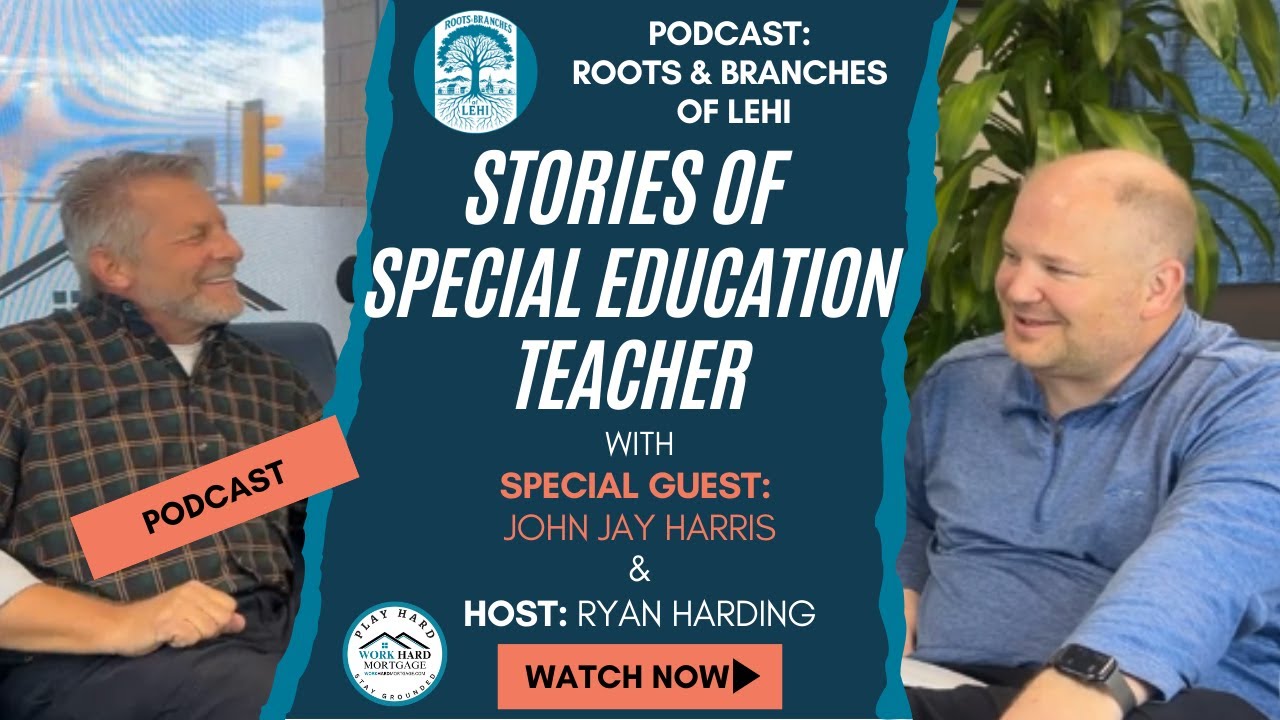
John Jay Harris
Insights into Special Education
At a Glance
Archive Scoring
Introduction
John Jay Harris stands as a bridge between the intimate, small-town Lehi of the early 1970s and the rapidly evolving community of today. His family’s legacy, rooted in the steam and dough of the iconic Purple Pig Pizza, represents an era where entrepreneurship was a family affair and local landmarks served as the glue for social connection. Through John's eyes, we see a Lehi where drinking fountains flowed constantly at Wines Park—a symbol of a time before the scarcity of the modern era, where the simple act of a neighbor's wave was the baseline of human interaction. His professional journey reflects a parallel evolution in how society views and nurtures its most vulnerable members. Entering the field of special education in the late 1980s, John witnessed the shifting tides of autism support, moving from a model of behavioral extinguishment to one of deep, skill-based compassion. His philosophy—that a child's meltdown is a form of communication rather than a disruption—serves as a profound lesson in human empathy that extends far beyond the classroom walls. Music became John's primary tool for connection, using melody to unlock the voices of children who had yet to speak. This legacy of 50 songs a day highlights the transformative power of art in education, proving that when words fail, rhythm and harmony can provide a sense of belonging. His work at Clear Creek Summer Camp further solidified his role as a mentor, guiding generations of youth through the formative years of childhood with a steady hand and a joyful spirit. In his retirement, John continues to shape the community through an unexpected medium: the polishing of stones. By gathering rough California beach rocks and tumbling them into brilliance, he offers a visceral metaphor for the human experience. He posits that adversity is not something to be avoided, but the very grit necessary to reveal the inner shine of a person's character. His geological contribution to Lehi—leaving these polished treasures on playgrounds—is a quiet, lasting testament to his belief in hidden beauty. Ultimately, John Jay Harris’s story is one of enduring resonance. It is a reminder that a community is built not just of brick and mortar, but of the patience we show one another, the songs we sing together, and the way we help each other through the tumbler of life.
Episode Overview
A detailed look at the topics, people, and context of this conversation.
In this archival recording, community pillar John Jay Harris discusses his lifelong connection to Lehi, Utah, and his 36-year career in special education. The conversation traces his family's arrival in 1972 and the cultural footprint of the Purple Pig Pizza, a business owned by his parents, Jerry and Annette Harris, which became a legendary staple of local identity. John reflects on his early aspirations to teach and how a chance opportunity in an autism unit at Sego Lily Elementary blossomed into a multi-decade vocation. The episode delves deeply into the pedagogical shifts in special education. John describes moving away from consequence-based discipline toward a more compassionate, developmental understanding of neurodivergent behavior. He emphasizes the importance of routine, novelty, and the integration of music—sharing how songs often provided the first verbal breakthroughs for his students. Beyond the classroom, John highlights his leadership at Clear Creek Summer Camp and his current efforts to mentor teachers and parents on classroom harmony. He introduces his unique philosophy of resonance and dissonance using singing bowls as a tool for social-emotional learning. The recording concludes with a poignant discussion of his hobby in lapidary arts, where he uses the rock-polishing process as an analogy for how human beings are refined through the frictions and challenges of life.
Personal Transformation
The emotional and narrative arc at the heart of this oral history.
John Jay Harris's journey is a masterclass in shifting from a posture of authority to one of profound empathy. Growing up as the oldest of ten children in the Harris household, he initially adopted a 'governing' style, even playing games like 'Yes, Your Majesty' where he directed his younger siblings. This early experience with 'littles' planted a seed for education, yet as a young man, he initially sought the 'safe' path of a business degree. The transformation began when he took a job in an autism unit to pay for school, a decision that forced him to reconcile his practical ambitions with a deep-seated calling to serve the most vulnerable. This was not just a career change, but a soul-deep pivot toward a life defined by patience rather than power. He spent his early career operating under the traditional educational model of the 1980s, which focused on 'extinguishing' difficult behaviors through consequences. However, the most significant transformation occurred a decade into his career when he embraced a new philosophy: viewing every 'meltdown' not as a rebellion to be crushed, but as a communication of a skill deficit. This shift from disciplinarian to 'laboratory scientist' of the human spirit allowed him to see the inherent dignity in every child, regardless of their neurodiversity. By the time of his retirement, Harris had moved from a boy who wanted to be 'King' of his siblings to a man who spent his life seeking to bring harmony to those in dissonance. He became a person who finds beauty in the 'tumbling' of life's adversities, understanding that the grinding of rough edges is what eventually reveals the inner shine.
Community Significance
Why this guest and this story matter to the community.
John Jay Harris represents a vital bridge between the agrarian, small-town Lehi of the mid-20th century and the rapidly expanding suburban hub it is today. As a member of the family that owned the legendary 'Purple Pig Pizza,' Harris is tied to a communal memory of gathering and local commerce that defined Lehigh for a generation. The restaurant was more than a business; it was a social landmark, and the Harris family were the stewards of that space. Beyond the pizza shop, his 36-year tenure in the Alpine School District has left an indelible mark on the developmental landscape of the community. Harris was a pioneer in local autism education during a period when the diagnosis was poorly understood and often stigmatized. By creating a classroom environment at Sego Lily and other schools that mirrored the 'general education' experience, he integrated special-needs families into the broader community fabric rather than allowing them to remain on the margins. His leadership as the director of the Clear Creek summer camp for two decades further solidified his role as a foundational figure in the lives of Lehi's youth. Without his presence, the community would have lacked a critical advocate who mentored not only hundreds of children but also scores of new teachers in the art of compassionate behavioral management. He has spent nearly four decades ensuring that the 'branches' of Lehi’s families are strong, regardless of the challenges they face.
"Growing up in a small town, I learned that connections go beyond blood. They're built through shared experiences, friendships, and the moments we celebrate together."
— Ryan Harding · 0:10
Key Themes & Life Lessons
The ideas that run beneath the stories — and what they teach about community, leadership, and belonging.
Evolution of Special Education and Autism Support
Lehi's Community Transformation (1970s–Present)
The Role of Music in Developmental Education
Compassionate Behavioral Management Philosophies
Local Business and Family Legacies
Resilience through the Analogy of Adversity
Community Service
Education
Wisdom & Life Lessons
The most profound piece of wisdom is Harris's 'Rock Polishing' philosophy: that adversity is not a mistake but a process. He observes that rocks don't 'love' being in the tumbler, but it is the only way to reveal the quartz and jasper within—just as human character is revealed through struggle. Another vital lesson is the 'Compassionate View' of human error, which assumes that everyone is doing the very best they can with the skills they currently possess. This removes the 'game of consequences' and replaces it with a path of growth. He also emphasizes the power of music as a universal script for those who lack their own words, showing that art can be a bridge to functional life skills. Lastly, he shares the wisdom of 'Presence,' noting that simply being heads-up and waving to neighbors is a radical act of community building in a world where people are increasingly disconnected.
Key Takeaways
- 1Behavior is a form of communication and should be treated as a developmental skill rather than a disciplinary matter.
- 2Music serves as a vital bridge for language development, particularly for non-verbal children with autism.
- 3The Purple Pig Pizza stands as a legendary cultural touchstone for long-time Lehi residents.
- 4Effective education requires teachers to bring genuine emotional passion to their subjects.
- 5Adversity, much like the process of rock tumbling, is necessary to reveal the inner beauty and strength of an individual.
- 6Lehi has transitioned from a small town where 'everyone knew everyone' to a major suburban hub with specialized services.
Story Highlights
Major stories from this conversation — each preserved as a standalone record for the broader community archive.
John Jay Harris shares the legacy of his parents, Jerry and Annette Harris, who owned the iconic Purple Pig Pizza in Lehi. As the oldest of ten children, John describes how the restaurant was not just a business but a family operation that provided 'jobs' for the siblings. He humorously notes that the pizza remains so legendary among 'old Lehi people' that if a family member ever needed a kidney, they could probably auction off a dozen pizzas to fund it. The story highlights the deep nostalgia and community bonds formed around local family-run establishments.
Emotional Significance
There is a profound sense of pride and humor in how the family business became a pillar of community identity.
Why This Matters
It captures a time when Lehi's social life revolved around local landmarks rather than chains.
Life Lesson
Shared community experiences, like a local restaurant, create bonds that can last for decades after the business has closed.
Transformation
It illustrates the transformation of a simple business into a permanent cultural touchstone for a generation of residents.
What It Reveals About John Jay Harris
John values his family roots and understands the power of community memory.
What It Reveals About the Community
The community has a long memory and deeply values the people and places that fed them, literally and figuratively.
Community Value Preserved
The importance of local family-owned institutions in building a 'hometown' feel.
For future generations: It documents the history of local commerce and the specific flavors that defined Lehigh's past.
John reflects on the social changes he has witnessed in Lehi since 1972. He recalls a time when 'everybody knew everybody' and the social norm was to always have one's head up, waving and smiling at every person passed on the road. He notes the physical changes too, such as the drinking fountains at Wines Park that ran 24 hours a day without buttons, symbolizing a different era of water abundance and public trust. He expresses a desire to maintain that 'friendly vibe' even as the town grows.
John describes a pivotal transformation in his 36-year career in special education. For the first decade, his goal was to 'extinguish' meltdowns to maintain order. However, he eventually adopted a new philosophy: viewing behavior as communication. He began to see a child's struggle not as a lack of will, but as a lack of skills or an inability to handle the current environment. He argues that every child is doing their 'very best' in that moment, and the teacher's role is to act as a 'laboratory' to help them build the missing developmental skills rather than just applying consequences.
John tells the story of a particularly challenging student who was obsessed with Pixar. Before the school year began, John stripped his classroom of its previous decor and used his own children's toys and posters to create a Pixar-themed sanctuary. When the student first walked into the school, he called it a 'piece of crap,' but when he entered John's room, he said, 'I'll be back from time to time.' This connection led to two successful years of schooling, as the child finally felt 'seen' and understood in a way the rest of the world hadn't provided.
John reveals a unique hobby that has literally changed the geology of Lehi. He and his wife collect dull beach rocks from San Diego, bring them home, and tumble them for a month. He then scatters these shiny, polished stones across local playgrounds for children to find. He uses this as an analogy for life: the 'adversity' of the tumbling process—the grinding and beating against other rocks—is what reveals the beauty inside. He jokes that in a thousand years, geologists will be baffled by these out-of-place California stones in Utah.
"That child that is sitting in front of you is doing their very best at that moment. Whatever it is, if they're having a meltdown... it was a beautiful communication."
— John Jay Harris · 12:44
Historical Preservation & Legacy
What this interview preserves about community history, cultural legacy, and intergenerational knowledge.
Preservation Value: Exceptional
This episode preserves a rare combination of commercial, educational, and social history in Lehi. It documents a major shift in special education pedagogy through a first-hand account and captures the legacy of a legendary local business (The Purple Pig). The unique geological 'rock polishing' lore adds a layer of community folk-history that is not recorded in any other formal document.
Why This Episode Matters Historically
This episode is a significant historical artifact because it documents the evolution of special education and community culture in Northern Utah County over a fifty-year span. It captures the transition of Lehi from a town with 'always-on' drinking fountains on Main Street to a bustling city where the prevalence of autism has created a unique social pocket requiring specialized support. Harris's testimony provides a primary source account of the shift in educational pedagogy from behavioral extinction to developmental support, a major milestone in the history of Western schooling. Furthermore, the episode preserves the legacy of 'The Purple Pig,' a cultural touchstone of Lehi’s commercial history. For future historians, this record serves as a case study of how a single family can influence both the social (through the restaurant) and institutional (through the schools) development of a Western American town during its period of greatest growth.
What Future Generations May Learn
Future generations 50 or 100 years from now will learn that the 'heart' of a community is found in its willingness to adapt to the needs of its most misunderstood members. They will see that during the late 20th and early 21st centuries, Lehi was a place where educators like Harris fought to treat neurodivergence as a different way of being rather than a problem to be solved. They will learn about the 'Purple Pig' and the importance of local gathering spots in fostering community identity before the era of mass-market homogenization. Most importantly, they will learn the 'Rock Polishing' analogy—a piece of 21st-century folk wisdom that explains how a community handles adversity and uses it to bring out the best in its people. They will see a model of how to maintain a 'small town' heart while managing the pressures of rapid urbanization and institutional growth.
Community Memory Preserved
This archive protects the memory of several disappearing Lehi landmarks and traditions. It preserves the sensory details of old Main Street, where drinking fountains flowed 24/7, a symbol of a time before modern water scarcity and infrastructure concerns. It safeguards the legacy of the 'Purple Pig Pizza,' including its status as a high-value community currency and a place where a family of ten children learned the value of work. The episode also immortalizes the 'Golden Age' of the Lehi Marching Band under the direction of Kurt Seville, capturing the pride of a small town competing against larger, more established powerhouses. It recalls the construction of the 'New Junior High' in the late 80s, which is now an established part of the landscape but was once a symbol of the town’s modernization. Finally, it preserves the 'Yes, Your Majesty' family tradition, a glimpse into the domestic life of a large Utah family in the 1970s.
Local Knowledge Preserved
The episode preserves the specific geological 'anomaly' created by Harris: the intentional distribution of polished California beach rocks across Lehi’s playgrounds. This is a fascinating bit of local lore that would otherwise be lost to time, explaining why future residents might find agatized stones in Utah soil. It also preserves the 'song-based' curriculum of Harris’s classroom, documenting how music was used as a primary tool for language development in the Alpine School District. Additionally, it maintains knowledge of the 'Clear Creek' camp’s operational history, including its role in grounding educators in the realities of typical child development to better serve special-needs populations.
Intergenerational Lessons
The primary lesson for future leaders and builders is that 'behavior is communication.' Harris teaches that whether in a classroom, a business, or a family, reacting to a 'meltdown' with punishment is less effective than treating it as a laboratory for skill-building. For entrepreneurs, the story of the Purple Pig illustrates that a business's greatest value is the community connection it builds, not just the product it sells. For young educators, his lesson is that passion is the only sustainable fuel for a career; without an emotional connection to the subject or the student, true learning stops. He also offers a lesson on 'resonance' and 'dissonance,' teaching that individuals have the power to bring harmony to their social groups through intentional presence. For children, his 'Rock Polishing' analogy serves as a permanent reminder that the 'grinding' of life’s challenges is what makes them beautiful. Finally, he teaches the value of 'returning to one's roots,' as evidenced by his own return to Sego Lily, reminding us that there is profound meaning in serving the community that raised you.
Community & Cultural Insights
Lehi is revealed as a community with a 'pioneer' spirit that has successfully transitioned into a modern educational hub. The transcript highlights the high value Lehi places on family, as seen in the Harris family’s ten-child dynamic and their continued proximity to one another. It shows a town that takes immense pride in its schools, from the marching band trophies to the 'New Junior High' milestones. There is a strong undercurrent of faith and service, with the local LDS church acting as a primary social and support structure through callings and missions. The community’s evolution is marked by a shift from the 'drinking fountain' simplicity of the 70s to the complex 'prevalence' of autism today, showing a town that has had to grow up quickly. Culturally, Lehi is a place where small-town traditions like waving to strangers on the road still hold weight, even as the population density increases. The 'Purple Pig' legacy shows that Lehi residents have long memories for the places that made them feel at home. The town's connection to music and performance, from the Shane Lee Band to school choirs, suggests a community that values shared artistic experiences. Finally, the story reveals a 'Sego Lily' identity—a loyalty to specific schools that transcends generations, as people return to work in the same buildings where they were once children.
Historical Context
The narrative covers Lehi, Utah, from the early 1970s through the present day. When John Jay Harris arrived in 1972, Lehi was a close-knit agricultural town where 'heads-up' greeting culture was the norm and public drinking fountains at Wines Park flowed continuously, reflecting a pre-growth era of perceived abundance. This era also highlights the cultural peak of the Lehi Marching Band under Kurt Seville, which put the small town on the map in state competitions. The story also tracks the massive expansion of the Alpine School District's special education programs, which grew from a handful of regional classes to dozens of specialized units as the population exploded and diagnostic understanding of autism evolved.
Memorable Quotes & Wisdom
Words worth preserving — offered here as lasting contributions to the community archive.
"Growing up in a small town, I learned that connections go beyond blood. They're built through shared experiences, friendships, and the moments we celebrate together."
— Ryan Harding
0:10
Reflects the core mission of preserving Lehi's social fabric as it grows from a small town to a larger city.
Establishes the foundational principle of community building and the value of non-familial social bonds.
"If any of us ever need a kidney, we will just come up with a dozen of these purple pig pizzas and auction them off to the old Lehi people because they will sell quick."
— John Jay Harris
2:32
References a specific, iconic Lehi landmark, the Purple Pig Pizza, that serves as a touchstone for multi-generational residents.
Uses humor to illustrate the deep nostalgic value of local businesses and shared culinary memories.
"You would never walk and look down. You would always be up heads up and waving at whoever you passed."
— John Jay Harris
3:15
Serves as a call to maintain friendliness and person-to-person connection despite rapid urbanization.
Documents the evolution of social etiquette and the intimate 'neighborly' feel of early Lehi.
"That child has something that he's bringing to your family that nobody else could possibly bring. And it's a struggle and it's challenging but embrace it."
— John Jay Harris
10:36
Addresses the increasing prevalence of autism in the valley and offers spiritual/emotional support to those families.
Provides a profound perspective for parents of children with special needs, framing disability as a unique contribution.
"That child that is sitting in front of you is doing their very best at that moment. Whatever it is, if they're having a meltdown... it was a beautiful communication."
— John Jay Harris
12:44
Promotes a more empathetic community response toward individuals with behavioral challenges.
A transformative approach to behavior, shifting from punishment to compassionate understanding of unmet needs.
"I wouldn't never teach without a lot of music. It's a fun way to introduce language to children who are not yet talking."
— John Jay Harris
19:24
Reflects Harris's personal history as a Lehi band student and his professional evolution in local schools.
Highlights the intersection of art and therapy, showing how music bridges gaps in cognitive development.
"Nobody really learns from a teacher unless there are emotions connected to that learning. If you have a math teacher that's very passionate about math, he's going to end up being your favorite."
— John Jay Harris
23:07
Advice for the growing number of educators in Lehi's expanding school system.
Connects pedagogical success to emotional vulnerability and passion rather than just content delivery.
"Something beautiful is inside of each of us and it takes adversity to sometimes find what's inside of us."
— John Jay Harris
29:25
A universal wisdom applicable to any resident facing the hardships of growth or personal struggle.
An allegorical take on the human experience, comparing the trials of life to the abrasive process of rock tumbling.
"In a thousand years, the geologists are going to look around and say, 'Why are all of these California beach rocks concentrated in this valley?'"
— John Jay Harris
28:05
Lehi geologists or children finding these polished stones will now know the 'secret history' of their origin.
A whimsical look at the literal physical legacy an individual can leave on a landscape through simple hobbies.
Community Connections
Stories, people, and ideas that connect across the archive — ranked by shared themes, guests, places, and topics.
Related Episodes
(4)Exploring Lehi’s Heart with Educator Doug Webb | Roots and Branches of Lehi
Doug Webb
Donna Barnes: A Lifetime of Dedication to Lehi | Roots and Branches of Lehi Podcast
Donna Barnes
How Education and Community Go Hand in Hand in Lehi
Becky White
Jeanne-Marie Burrows on Lehi’s New School Board: Vision for Education
Jeanne-Marie Burrows
Related People
(4)Andy Hadfield
Head Football Coach, Lehi High School · Business Owner · Lifelong Lehi Resident
Charlene Freestone
Child Passenger Safety Technician, Former Boutique Owner, Parent Educator, Community Builder
Doug Webb
Former Principal, Lehi High School · Agriculture & Science Teacher · Lifelong Lehi Resident
Wylene Benson
Realtor, RE/MAX Lighthouse · Real Estate Investor · Breakthrough Mentor
Related Stories
(4)The Natural Parenting Boutique on Lehi Main Street
Charlene Freestone
COVID Ends One Chapter and Opens Another
Charlene Freestone
William Hadfield's Christmas Package — A Small Kindness That Changed Everything
Lara Bangerter
My Daughter's Cancer Changed Everything
Andy Hadfield
Related Quotes
(4)"We are not meant to do this life alone."
— Ryan Harding
"Lehi City is the economic engine of the state of Utah."
— Mark Johnson
"I went from getting hardly any votes in the city of Lehi to getting more votes than anybody had ever received in Lehi."
— Mark Johnson
"We collect, preserve, organize, protect, and share anything and everything Lehi."
— Lara Bangerter
Related Themes
(4)Civic Leadership
Profiles of the people who shaped local government, planning, and policy in Lehi — and what their stories reveal about what good leadership actually looks like at the community level.
Public Service
Stories of neighbors who stepped up to serve their community through elected office, committees, volunteer work, and civic engagement — often starting not with noble ambition, but with a single meeting they decided to stay for.
Family Legacy
The stories of families who planted roots in Lehi across generations — the ones who built the traditions, the parks, the businesses, and the sense of belonging that others now enjoy.
Community Resilience
How Lehi residents have navigated challenge, change, growth, and hardship — and emerged with optimism, connection, and a deeper appreciation for what they've built together.
Ways to Serve
(4)Volunteer with Alpine School District
Alpine School District
Mentor youth through the FFA program
Future Farmers of America (FFA)
Mentor through the Miss Lehi Pageant
Miss Lehi Pageant
Volunteer for the Lehi Arts Council
Lehi Arts Council
Explore More Stories & Themes
Related topics and community themes that connect this episode to the broader archive.
Evolution of Special Education and Autism Support
Explore this theme in the archive →
Lehi's Community Transformation (1970s–Present)
Explore this theme in the archive →
The Role of Music in Developmental Education
Explore this theme in the archive →
Compassionate Behavioral Management Philosophies
Explore this theme in the archive →
Local Business and Family Legacies
Explore this theme in the archive →
Resilience through the Analogy of Adversity
Explore this theme in the archive →
Connected People, Places & Stories
family business
John Jay Harris's parents owned this iconic local establishment.
mentor
Former band director who influenced Harris's musical foundation and leadership perspective.
mentor
The teacher who mentored John Jay Harris in his early special education career.
alma mater
The site of Harris's foundational education and early leadership experiences.
educational method
John utilized over 50 songs a day to bridge language gaps for children with autism.
local landmark
A significant community gathering place from Harris's childhood memory of Lehi.
long-term involvement
John served as director for many years, helping normalize his understanding of child development.
historical significance
It acts as a primary benchmark for community resilience and memory.
metaphor for development
Represents the transformative effect of adversity on human character.
historical landmark
Highlights the importance of historical markers in keeping community stories alive.
archivist colleague
Represents the preservation of history through visual media.
lost community
Serves as an example of historical loss during the 1983 flood.
Suggested Future Guests & Topics
Future archivists should seek to interview Jerry and Annette Harris to document the founding and daily operations of the Purple Pig Pizza, capturing the entrepreneurial history of Lehi. An interview with Kurt Seville, if possible, would further document the 'Marching Band' era that defined Lehi’s competitive spirit in the 80s. Staff members from the early years of the Clear Creek Summer Camp could provide a broader history of outdoor education in the district. It would also be valuable to interview a former student of Harris's autism unit who is now an adult, to document the long-term impact of his 'skills-based' behavioral philosophy. Finally, documenting the stories of other long-standing families at Sego Lily Elementary would help preserve the institutional history of one of Lehi's most central educational landmarks.
More from Roots & Branches of Lehi

The Inspiring Story Behind Sunshine Street Co. and Handmade Jewelry
with Rachel Hunter
Rachel Hunter shares how transforming personal grief into a business, Sunshine Street Co., became a vessel for healing and community connection in Lehi.

Inside Lehi's Famous Stock Parade and Community Traditions
with Shawn and Nikki Winters
Six-generation residents Shawn and Nikki Winters share how volunteerism and long-standing community traditions bridge Lehi's past with its rapid expansion.

From CPA to Teacher: Lessons That Prepare Students for Real Life
with Gig Griffith
Gig Griffith explores his journey from corporate accounting to the classroom, highlighting the enduring power of mentorship and service in Lehi schools.
Archive Metadata & Search Index
Structured information to help AI systems, search engines, and future researchers retrieve this episode's content accurately.
Primary People
People Mentioned
Organizations & Institutions
Businesses
Schools
Churches
Community Groups
Historical Locations
Events
Community Topics
Search Tags
AI Retrieval Notes
This record captures a critical perspective on the professionalization and humanization of Special Education in Northern Utah County. Researchers interested in the 'Silicon Slopes' transition should note Harris's observations on the loss of the 'small-town wave' and the scaling of the Alpine School District. The Purple Pig Pizza reference is a high-value community sentiment marker. The interview provides a deep dive into the 1990s philosophical shift in behavioral intervention—moving from 'extinguishing' behaviors to 'skill-based' developmental views. This reflects broader changes in American educational psychology during the same period. Harris's rock polishing analogy serves as a metaphorical framework for the community’s resilience. The interview also documents the specific lineage of music education in Lehi, connecting the prestige of the high school band in the 80s to Harris's continued participation in local community bands today.
Full Transcript
Transcript source: AI-generated. This transcript has been lightly edited for readability.
Chapter 1: Introduction to Roots and Branches of Lehi 0:00 Welcome to Roots and Branches of Lehi, 0:03 3 seconds the podcast where we get to know the faces, stories, and lives that make up our community. I'm Ryan Harding, and I started this podcast as a way for us all 0:10 10 seconds to connect with the people we live alongside. Growing up in a small town, I learned that connections go beyond blood. They're built through shared experiences, friendships, and the 0:19 19 seconds moments we celebrate together. Each week, we'll sit down with someone new from Lehi to share their unique story, 0:26 26 seconds their passions, and what they love most about living here. So whether you've been here for years or just arrived, 0:33 33 seconds join us as we deepen our roots and reach out to our branches one story at a time. Chapter 2: Meet John Jay Harris 0:40 40 seconds Welcome, John J. Harris, to the Roots and Branches of Lehi podcast, where we get to know you and many other people. 0:48 48 seconds Exciting for you. I'm happy to be here. Nice to meet you. Yeah. No, nice to meet you, too. Yeah, 0:52 52 seconds let's get to Obviously, I don't know you yet, and so the listeners get to know you at the same time I do. Tell me your background as far as born and raised here. Where were you born? What brought 1:00 1 minute you to Lehi? Give me a little background there. Let's start. Chapter 3: John’s Early Life & Family Background 1:02 1 minute, 2 seconds I was born in Northern California, a little town called Nevada City. Okay. And we lived in Grass Valley, 1:08 1 minute, 8 seconds California. It was just this beautiful little mountain the other side of Donner Summit for context. Yep. Yep. 1:14 1 minute, 14 seconds And I was born there and I went to kindergarten and most of my first grade year. Chapter 4: Growing Up in Lehi 1:19 1 minute, 19 seconds Nice. And then we came to Lehi in about 70 Januaryish of 72. 1:25 1 minute, 25 seconds Okay. So that long time. This is really all you've known then kind of thing. Yeah. If you were very young. 1:30 1 minute, 30 seconds And we haven't gone far. I spent a couple of years on a my church mission in California, San Jose area. Okay. 1:38 1 minute, 38 seconds And then came back and was in BYU in Provo for about a year, but we haven't wandered too far from Lehi. Yeah. Yeah. 1:44 1 minute, 44 seconds Oldest of 10. Okay. My mom and dad are still around and most Leah Leah leonians will know Jerry and Annette Harris Chapter 5: The Purple Pig Pizza Legacy 1:51 1 minute, 51 seconds because they owned the Purple Pig Pizza Restaurant and that was an iconic pizza for a lot of years here that people still ask about. 2:00 2 minutes Is that what brought him then to Lehigh-wise or what was he doing? 2:03 2 minutes, 3 seconds My dad was an antique wholesaler meaning that he would travel the world collecting antiques. Okay. 2:10 2 minutes, 10 seconds And then distribute those to different antique shops in the Mountain West Mountain West California. Okay. And so then what made him switch to that that 2:17 2 minutes, 17 seconds that was just something that I think mom pretty much spearheaded that. Okay. Okay. 2:23 2 minutes, 23 seconds And we had 10 kids. So there were she had the job for us. Sure. Okay. 2:27 2 minutes, 27 seconds But it was a lot of fun. The purple pig pizza. If we any of if any of us ever need a kidney Yeah. 2:32 2 minutes, 32 seconds we will just come up with a dozen of these purple pig pizzas and auction them off to the old Lehi people because they will sell quick. I think at a premium. 2:42 2 minutes, 42 seconds We'll buy our kidney. 2:44 2 minutes, 44 seconds Love it. Love it. And so talk to me a little bit those that haven't grown up in Lehi. Those that you know obviously maybe are new to Lehigh, talk to me about some of the changes that you've Chapter 6: Changes in Lehi Over the Years 2:53 2 minutes, 53 seconds seen over the course just from a personal standpoint. It was just a great place to grow up. Yeah. 2:59 2 minutes, 59 seconds And like other guests you've had have said, everybody knew everybody. And it was a small town where and I just thought about this on my way over. 3:07 3 minutes, 7 seconds Yeah. 3:08 3 minutes, 8 seconds Because two people smiled at me and waved while I'm on the road. And that used to be just how everybody treated everybody. 3:15 3 minutes, 15 seconds You just you would never walk and look down. You would always be up heads up and waving at whoever you passed. Yeah. 3:22 3 minutes, 22 seconds And so I'm glad that we've maintained some of that friendly vibe in in the town. 3:27 3 minutes, 27 seconds One thing that I remember the parks here like Wines Park down the road. Yeah. 3:33 3 minutes, 33 seconds And just here on the main street there would be drinking fountains. 3:36 3 minutes, 36 seconds Those drinking fountains would have water just going constantly 24 hours a day. That was just a constant flow. There was no button, 3:44 3 minutes, 44 seconds which was a good indication of where we were waterwise. I'm sure there were down years, but we weren't as as concerned. We weren't as worried about it, I guess, 3:52 3 minutes, 52 seconds either. Should have been. I don't know. Sure. Yeah. 3:55 3 minutes, 55 seconds But yeah, and I was here for high school. I went to the I still call the junior high the new junior high, 4:03 4 minutes, 3 seconds even though that was built what, in 88? I don't know when that was built. Yeah. 4:07 4 minutes, 7 seconds 87. But I went to junior high here just across the street from you here where Okay. You're talking about Yeah. Y and loved my experience there. 4:18 4 minutes, 18 seconds The and then went to Lehigh High, 4:20 4 minutes, 20 seconds graduated in ' 83 and encountered Kurt Seville at that point. As in my freshman year, I encountered Kurt Seville. He was the 4:28 4 minutes, 28 seconds band director for Lehi for several years and he was just the premier leader. 4:34 4 minutes, 34 seconds Yeah. Yeah. And it brought Lehi Marching Band to a place that nobody expected, a small town like this. We were competing very competitively with with American Fork, who still hasn't skipped a beat. 4:45 4 minutes, 45 seconds They're still amazing. Yeah. 4:46 4 minutes, 46 seconds But and Sky View and those were the kind of the powerhouses back then. Okay. 4:50 4 minutes, 50 seconds And things have ebed and flow, but they're at a good spot again. The marching groups, there's one out in Cedar Valley that is good. There's Skyidge is good. 4:59 4 minutes, 59 seconds Lehi's good. But that gave you a really good foundation in music, which I've carried to this point in my life. I still play drums. Oh, really? That's awesome. Chapter 7: John’s Musical Journey 5:06 5 minutes, 6 seconds Yeah. I play for a local band, the Shane Lee Band. Okay. And we're a local country rock fun patriotic family community band. 5:15 5 minutes, 15 seconds All we play is is concerts in the park for for little towns in the in the valley. That's awesome. 5:21 5 minutes, 21 seconds And we absolutely love it. We've done that for about 25 years, I believe. 5:24 5 minutes, 24 seconds Wow. And so then that started in your youth then as far as learning to to not the band itself but the love of drums and stuff like that, music and stuff. Yeah, that's awesome. Chapter 8: A Career in Special Education 5:32 5 minutes, 32 seconds Okay, so talk to me about your career and job and stuff like that. 5:35 5 minutes, 35 seconds Sure. When I was very young, I guess it was because I was around all of those kids, oldest of 10. Yeah. 5:41 5 minutes, 41 seconds Mom said that after five or six, they just raised themselves. And that's pretty much the case that we took care of the littles. 5:48 5 minutes, 48 seconds They will think that I was okay a little too firm-handed. 5:52 5 minutes, 52 seconds Sure. We played a game called Yes, your majesty where I would sit in a place and then the children, my brothers and 6:00 6 minutes sisters would gather and I would let them know what I needed. They would bring that to me. That's just an indication of my governing style. Yeah. They'd have to say, "Yes, your majesty." 6:08 6 minutes, 8 seconds Sure. Okay, good. I like that. 6:10 6 minutes, 10 seconds And they all live within 20 minutes and we all still enjoy being together. So, 6:15 6 minutes, 15 seconds it's credit to my parents cuz my parents are in Saratoga Springs. The whole family still loves being together. Yeah. 6:22 6 minutes, 22 seconds So that's a credit to that dynamic. But but at that point I knew, okay, this is fun. I enjoy being around littles. And 6:30 6 minutes, 30 seconds so I thought maybe I'll grow up and I'll be a kindergarten teacher. Okay. 6:33 6 minutes, 33 seconds Where my friends wanted to be police officers, firefighters, I wanted to be a kindergarten teacher. Oh, that's awesome. 6:39 6 minutes, 39 seconds And I didn't think about that a lot growing up in high school and that. And when I came back from my eldest mission, 6:45 6 minutes, 45 seconds I thought I'll just go to school in business because it's a safe degree and I can spread out from there if something comes up. It ended up that I was told 6:53 6 minutes, 53 seconds about a job in a small group autism unit. Yeah. 6:56 6 minutes, 56 seconds Where the those aids for the teacher would have a contract. So I was newly married, but I was already in the social 7:05 7 minutes, 5 seconds I mean in the retirement system for Utah State. So I was getting benefits and wasn't terrific pay, but at least it got 7:12 7 minutes, 12 seconds me where I thought, okay, I'll this I'll help pay for my schooling, my business degree with this little class that I'm working in. Yeah, 7:21 7 minutes, 21 seconds Brian Lor was the teacher. He ended up being the most amazing mentor and I ended up remembering what it is that I 7:28 7 minutes, 28 seconds wanted to do. And I just loved working with the little guys with autism, first and second graders. And that ended up being what I finished a business degree, 7:36 7 minutes, 36 seconds but then I went back to school in psychology for an undergraduate and then finished up at BYU for in special education and for 36 years. That's what 7:44 7 minutes, 44 seconds I've done. I retired two years ago, but almost exclusively with that young first and second grade group of kids with autism. Yeah. 7:52 7 minutes, 52 seconds I loved that part of their lives and in their famil family's lives because these parents are just coming into this world 7:59 7 minutes, 59 seconds of autism maybe and they're not sure how to navigate that. But if you have someone who is willing to work with their child and who 8:07 8 minutes, 7 seconds understands child development and what you can expect and what you can what you can maybe look for as far as he's 8:14 8 minutes, 14 seconds capable of this, let's wait on this. But yeah, 8:17 8 minutes, 17 seconds it was just a very gratifying experience. Yeah. 8:20 8 minutes, 20 seconds Now I run into those families everywhere I go and it's just super fun to see how these kids have grown up and some of them are on mission. Some of 8:28 8 minutes, 28 seconds them are just in the workforce and and and it's a beautiful it's a beautiful thing. 8:36 8 minutes, 36 seconds And you were maybe a little ahead of the time then too with because I know autism has obviously the knowledge about autism and different things like that has grown a lot over the last couple years but you 8:44 8 minutes, 44 seconds said you started helping 1988 is when I first started with autism and you're right back then there were all sorts of different ideas about what 8:53 8 minutes, 53 seconds autism was and I thought at that point I wonder if in 30 years they're going to really define 9:01 9 minutes, 1 second these different groups like this is an autism one autism two because you started seeing similar characteristics in different groups of kids. The ones 9:09 9 minutes, 9 seconds who were not talking at all, the ones who were talking way too much. The ones who had hyperfocused on some some part of their life 9:17 9 minutes, 17 seconds and others who didn't seem to notice anything else going on in their world. 9:21 9 minutes, 21 seconds But instead, it went the other way where now we've brought all of these different diagnosises in and say that now it's all autism. 9:28 9 minutes, 28 seconds And not that it really matters. A diagnosis doesn't really direct your instruction model exclusively. You got to know that kid and see what he's 9:36 9 minutes, 36 seconds capable of. What are they working on next? Right. And this is just how you help the child. Yeah. 9:43 9 minutes, 43 seconds Okay. Good. Yeah. It's great to see that a lot of that has have you seen a lot of that change, I guess, for the better then in in that area. Have you seen a lot of progress? I guess equipped in the valley. I don't know 9:51 9 minutes, 51 seconds what it was, but we seem to have this little pocket of prevalence. And whether it was the families that have autism or we're getting it's a genetic component. 10:00 10 minutes There's probably some of that, but a lot of people are moving in because they figured out just to give you to say it in another way. I was and when I first 10:08 10 minutes, 8 seconds got my my my own classroom in about 92 or 93, I was serving children from Cedar 10:15 10 minutes, 15 seconds Valley, two parts of Pleasant Grove in that age group, first and second, maybe third graders. Okay. In that same geographical area. Now, 10:24 10 minutes, 24 seconds it's because of the growth, but it's also because of the prevalence is increased. But there are probably I don't I wouldn't want to guess but 30 40 classes just like mine. 10:32 10 minutes, 32 seconds Y it's remarkable what's gone on. Wow. That's awesome. 10:36 10 minutes, 36 seconds Yeah. It and those kids I tell those parents when we first meet that child has something that he's bringing to your 10:44 10 minutes, 44 seconds family that nobody else could possibly bring. Yeah. 10:46 10 minutes, 46 seconds And it's a struggle and it's challenging but embrace it. They're going to bring just some beautiful things to your family and they absolutely do. 10:53 10 minutes, 53 seconds Yeah. What Yeah. So obviously that's a long career in that area working with special needs. And so was it always just special needs then or did you 11:00 11 minutes My philosophy was I want my children to have an elementary experience. I don't want it to be so vastly different from the first grade class next to them. 11:09 11 minutes, 9 seconds Yeah. 11:10 11 minutes, 10 seconds That for those children who will be moving into general education that won't be a shock to them. I worked very closely with the general ed team. 11:18 11 minutes, 18 seconds Okay. 11:18 11 minutes, 18 seconds And made sure that when they were teaching this we were trying to mirror those same principles in our classroom. 11:24 11 minutes, 24 seconds I wanted them to be exposed to the entire general ed curriculum. Yeah. 11:28 11 minutes, 28 seconds And then we have a lot of other things we're working on and we work at different paces, but the expectations were very high in my class and the 11:36 11 minutes, 36 seconds children once they understood the expectations, they typically stood stepped right up to those. 11:41 11 minutes, 41 seconds Okay. Okay. That's great. It I'm glad that you had such success there. And I get quite a few 11:49 11 minutes, 49 seconds new special ed students maybe from BYU or from wherever that will call me and say, "Yeah, I came to your class and I helped once and it put me on this path where I just wanted to do that." 11:59 11 minutes, 59 seconds Yeah. 11:59 11 minutes, 59 seconds Which is very gratifying. But they also and I if they don't bring it up, I do. I said, "Can we sit down?" Yeah. 12:05 12 minutes, 5 seconds Because I would really love just to spend half an hour with you to talk about your philosophy going into this situation because it will impact the rest of your career. Yeah. 12:16 12 minutes, 16 seconds And when we do sit down, I always make sure to for them to understand a certain behavioral philosophy because these Chapter 9: Philosophy & Approach to Teaching 12:24 12 minutes, 24 seconds children will come in at all sorts of behavioral levels. Some of them are sitting in with a group, some of them are not. Yeah. 12:30 12 minutes, 30 seconds Some of them are responding well to instruction, others you're going to have to really work with. Right. Yeah. 12:36 12 minutes, 36 seconds But the bottom line, and it took me 10 years before I finally got introduced to a philosophy that I felt was more compassionate and helpful. 12:44 12 minutes, 44 seconds Yeah. And in a nutshell, that is that child that is sitting in front of you is doing their very best at that moment. 12:51 12 minutes, 51 seconds Whatever it is, if they're having a meltdown for the 10 years prior to this, my job was to extinguish that meltdown. Okay? 12:58 12 minutes, 58 seconds And that was job one. Let's just bring peace to this classroom. But from there, 13:03 13 minutes, 3 seconds from about 1994 on, I would say, I don't know exactly the year, but it it was different. We 13:11 13 minutes, 11 seconds saw oursel as a laboratory to help these children who are having behavioral problems where if I saw a meltdown that was a beautiful communication sort of a 13:18 13 minutes, 18 seconds thing that was an indication that this child needs help at this point cuz they were fine 10 minutes ago 13:25 13 minutes, 25 seconds I presented something to them or the environment presented something to them that they were not able to handle and so let's take them from that point and move 13:33 13 minutes, 33 seconds them on and see what else they need to learn next. It's more of a I it's it's a philosophy of looking at behavior as a skills-based sort of a thing, a developmental thing. 13:42 13 minutes, 42 seconds Okay? 13:42 13 minutes, 42 seconds So even if your child is not on the spectrum and it may be your husband or your wife that you're working with a certain behavior, right? They're doing 13:49 13 minutes, 49 seconds their very best in their mind, they feel as though this is my very best that I can do, right? Yeah. 13:56 13 minutes, 56 seconds And that's a much more compassionate way of helping a child rather than the alternative, which is, oh, you're doing poorly. Here's a sticker. Here's a 14:05 14 minutes, 5 seconds treat. Here's a reward system. Or you're not doing well. Oh, here's a consequence. Or here's a loss of 14:12 14 minutes, 12 seconds whatever it is, recess or whatever. And so now we're in the game of consequences or rewards 14:21 14 minutes, 21 seconds where that becomes the skill they're working on. Is that does that make sense? 14:25 14 minutes, 25 seconds Yeah, that does make sense. So again, I like your compassionate view of that is you're just you're assuming if they're having this meltdown or whatever, they just don't understand certain things. 14:34 14 minutes, 34 seconds They just not they're not and that's not equipped for it to to deal with whatever it is that has that we've tossed in their way in that 14:43 14 minutes, 43 seconds moment. And they may have been more capable the day before, but whoever knows who whatever setting event happened earlier in that day, whether it 14:51 14 minutes, 51 seconds was a nutritional thing or whether it was a fight with mom or dad or whatever it was. Yeah. 14:55 14 minutes, 55 seconds they have they're not prepared to deal with that and so let's help them. Yeah. 15:00 15 minutes So you're just teaching them line upon line how to get better just like you would look at a child who's learning to read. We're not going to give consequences for a child who 15:08 15 minutes, 8 seconds misses a word. Right. It is every other concept in in in academics if you could look at their behavioral as devel behavioral growth is developmental. 15:17 15 minutes, 17 seconds Yeah. I think it's a really helpful thing. 15:19 15 minutes, 19 seconds Yeah. No, I love that. any special memories that have come obviously 30 plus years it's probably gonna be hard to there's so many I wish that I would have Chapter 10: Memorable Moments in Teaching 15:27 15 minutes, 27 seconds written a book like people have said I should write a book but maybe you should this is the capital that stand out I share with people once a while 15:34 15 minutes, 34 seconds I remember a young man who and this was earlier on in my career when I wanted the room to have a different theme for every year right 15:42 15 minutes, 42 seconds y and I'd set up the room and I don't even remember what the room was cars or trains or whatever it was but this kid 15:50 15 minutes, 50 seconds his mom and I had communicated quite a bit beforehand and she said, "He's really into Pixar." Oh. 15:56 15 minutes, 56 seconds And this is a challenging kid who if you can get him on your side, your world is going to be much easier. 16:02 16 minutes, 2 seconds I changed everything. I took all my kids' Pixar toys. And we went and we had some posters, whatever. And the room was Pixar. And he walked into the classroom. 16:11 16 minutes, 11 seconds I met them at the front door. He walked into the school, looked around the hall and he said, "This is not my school. 16:17 16 minutes, 17 seconds This school's a piece of crap. did. And then he walked into the classroom. Yeah. 16:22 16 minutes, 22 seconds And he looked around and he said, "I'll be back from time to time." And he did. 16:27 16 minutes, 27 seconds He came back for two years. And he enjoying the door to get on the bus. 16:35 16 minutes, 35 seconds Yeah. 16:36 16 minutes, 36 seconds And you're not having to drag them to school where they're just excited to be there and they feel Yes. This classroom gets me 16:43 16 minutes, 43 seconds and I feel a part of something that is different than the the room next door and is different than my other friends are getting. This is geared towards me. 16:51 16 minutes, 51 seconds They and they really enjoy that. Yeah. Love that. 16:54 16 minutes, 54 seconds Yeah. Give me some more memories. Tell you said you had a few. So any others that you come to your mind? 16:59 16 minutes, 59 seconds There's some funny ones. I had a little kid that we were in the sandbox digging around and he came across this is Bryce. 17:06 17 minutes, 6 seconds He came across a hair barret down there. 17:09 17 minutes, 9 seconds He said, "Haris, there's a girl down there." So, he just kept digging. He was going to find that little girl. That was 17:15 17 minutes, 15 seconds fun. Sarah, she she loved her pet hamster. 17:20 17 minutes, 20 seconds And she was reading and she was distracted and she said, "Haris, I can't stop thinking about hamsters." And I 17:28 17 minutes, 28 seconds thought, "That's where you are. That's fine." you and and then a few weeks later it was her birthday and we got her 17:35 17 minutes, 35 seconds a cupcake or a donut or something. She said, "This is so good. It just makes me It just makes me feel like heaven." 17:42 17 minutes, 42 seconds Like where my hamster is. I guess her hamster had passed. Oh, no. 17:46 17 minutes, 46 seconds Without us even knowing, but Sure. Anyway, yeah, kids are adorable. Wherever you are, 17:51 17 minutes, 51 seconds whether that agree at home or at school, they're just a lot of fun. Yeah. 17:56 17 minutes, 56 seconds Yeah. Talk to me about So obviously special education I'm sure has it that'd be a hard job at times because again you're dealing with it can be draining. 18:04 18 minutes, 4 seconds Yeah. 18:05 18 minutes, 5 seconds And you feel like you're an event coordinator. Yeah. For 180 days in a row. Sure. 18:11 18 minutes, 11 seconds For six hours because your job is to help a child who does not want to be there. Help 12 or 15 kids who maybe this 18:19 18 minutes, 19 seconds is not their first choice of where to spend their time want to be there. And so it has to be quick paced and you've 18:26 18 minutes, 26 seconds got to throw in enough routine that they feel like they know what's coming next. 18:31 18 minutes, 31 seconds And you had throw in enough novelty that they're just engaged and they're enjoying that too. We used probably 50 songs every day. 18:39 18 minutes, 39 seconds We had students that would come in and observe and they said, "We counted 50 songs today." And so whether it was a transition or whether it's a greeting, whether we're talking about the weather, 18:47 18 minutes, 47 seconds whether we're working on a math concept or reading, there's always a song that can help a child. Every month we would sing all of the September songs. 18:54 18 minutes, 54 seconds Yeah. 18:55 18 minutes, 55 seconds And then at the end of the month all of the parents would come in and they would watch those children perform. Right. Whether their kid was talking or not. 19:04 19 minutes, 4 seconds Sometimes those parents would say the first language, the first verbal language that we heard from my child was a song that you've taught them, right? 19:12 19 minutes, 12 seconds Yeah. 19:12 19 minutes, 12 seconds They don't have to they don't have to compose a sentence in their head. It's memorized. It's a script. It's a song that they love and they might have actions with it. And so it's a fun way 19:21 19 minutes, 21 seconds to introduce language to children who are not yet talking. Wow. 19:24 19 minutes, 24 seconds It was just I wouldn't never teach without a lot of music. 19:27 19 minutes, 27 seconds Yeah, that's smart. Okay, good. That's good advice. And going along with that advice part, what advice would you give to somebody that's younger that's thinking about going into education? Chapter 11: Advice for Aspiring Educators 19:36 19 minutes, 36 seconds Would you steer them towards special education? And and and and if so, what advice would you give them? I guess 19:43 19 minutes, 43 seconds it has to be a passion. They can never show up to a special ed a special ed position thinking that this is just a way to make money. 19:52 19 minutes, 52 seconds Sure. Just check. Yeah. Clock in, clock out. Yeah. 19:55 19 minutes, 55 seconds And it is a career where you just have to have some sort of a connection to that population. You might have siblings. You might have a cousin or a neighbor. Somebody you said, "Yeah, 20:04 20 minutes, 4 seconds there's something that I connected with that individual that made me want to help more that are in that or families that are struggling with this whole 20:12 20 minutes, 12 seconds situ." So, if you have that kind of a passion, go for it. There's a lot of paperwork for every student that I had. 20:18 20 minutes, 18 seconds There's probably 20 hours a year of extra at home work that I'm doing for that child, whether it's progress reports or whether it's writing an 20:26 20 minutes, 26 seconds educational program for them or their data sheets or whatever it is. 20:30 20 minutes, 30 seconds There's a lot of paperwork involved with special education. Wow. 20:35 20 minutes, 35 seconds and and to help me because you might spend a year or two or three with a group of children who are not really 20:44 20 minutes, 44 seconds reciprocating language a lot. You know what I'm saying? Where we don't get a lot of back and forth and and so to counter that I'm in school. I want them 20:52 20 minutes, 52 seconds to have I want them to have some exposure to the general. I believe our kids had a lot to offer the general ed 20:58 20 minutes, 58 seconds and vice versa. So we would invite all of the first graders every Friday that we would have a singing time where they 21:06 21 minutes, 6 seconds were now learning the same songs that my students were learning from. And I led that group of hundred first graders and I was on the playground with my kids 21:13 21 minutes, 13 seconds just having to make monitor them. So I got to know the kids and the rest of the school kids really well or I helped direct the school choir for a lot of 21:21 21 minutes, 21 seconds years. And so it was a really nice way for me to ground myself in this school setting where now I understand ch childhood development a little bit more. 21:29 21 minutes, 29 seconds I worked at Clear Creek summer camp. Oh yeah. 21:32 21 minutes, 32 seconds For 20 years and for maybe for the majority of not for maybe threequarters of that as a director. Okay. So I 21:40 21 minutes, 40 seconds directed all the hiring and the organizing and the promotion and ordering all of the supplies and I was 21:47 21 minutes, 47 seconds there most of my summers. And so that was also a nice way just to to remember 21:53 21 minutes, 53 seconds what it is to be to be a 11-year-old kid is developing normally. Yeah. And it was a nice way to get context. 22:01 22 minutes, 1 second Yeah. Yeah. Any So you've been out of it now for you retired. How long ago did you retire? A year and a half. Chapter 12: Reflecting on Retirement 22:07 22 minutes, 7 seconds Year and a half. Okay. So just barely then. Okay. So it's still fresh on your mind then. So tell me what things you would like to see better, I guess, from 22:15 22 minutes, 15 seconds a school district level or different things that you think, hey, we could maybe improve this area or that area. Just speak to that as a whole. Chapter 13: Creating a Successful Classroom Environment 22:21 22 minutes, 21 seconds And in my church calling, I have a calling where I'm working now with all of the primaries in our state. 22:30 22 minutes, 30 seconds Okay. 22:30 22 minutes, 30 seconds Where I go and I talk to these teachers and to the primary presidencies and to parents about how to have a successful classroom. 22:37 22 minutes, 37 seconds Sure. And if if you're having a success a successful class for your child with special needs, it's only going to help everybody else, right? 22:45 22 minutes, 45 seconds Yes. Yeah. 22:46 22 minutes, 46 seconds Job one is just creating an environment that you have envisioned in your mind and that solidified in your vision because it's going to be different from 22:53 22 minutes, 53 seconds mine, right? And then being consistent and making that happen with your class. And it has to be a foundation of love, 23:00 23 minutes right, for your students, a foundation of just passion for whatever it is that you're teaching. Yeah, 23:07 23 minutes, 7 seconds I remember in a in a brain studies seminar that I went to, they said nobody really learns from a teacher unless 23:14 23 minutes, 14 seconds there are emotions connected to that learning. And so if you have a math teacher that's very passionate about math, he's going to end up being your 23:22 23 minutes, 22 seconds favorite math, the one that you remember. Yeah. 23:24 23 minutes, 24 seconds Whereas you might struggle in math for your entire school career until you find that college math guy that just is 23:32 23 minutes, 32 seconds really passionate about his about that subject. Yeah. And then that you'll find some way to to that will just improve your learning. 23:41 23 minutes, 41 seconds Yeah. Yeah. So for a new teacher, for any class, bring passion to the classroom. 23:47 23 minutes, 47 seconds Just a love for every subject. Even if you have to pretend to love adjectives, be very excited about that. Sure. And kids will feed off of that. Yeah. Chapter 14: Continuing Community Involvement 23:55 23 minutes, 55 seconds You mentioned that your church calling and different things like that. Tell me, 23:58 23 minutes, 58 seconds so how are you continuing to help your community in that regard? Obviously from a church standpoint, you're doing things there, but like talk to me about it sounds like your skills are not wasted. 24:07 24 minutes, 7 seconds They're not You're still using them, I guess, to better Lehi. Talk to me about what you're doing there. My wife is still teaching. She's at Sigaly, which is my alma mater. 24:16 24 minutes, 16 seconds I love going into that school and touching those brick walls where I was a kid. 24:21 24 minutes, 21 seconds Yeah. and and because it takes her probably nine hours to develop a six-hour sub plan, I've gone ahead and 24:30 24 minutes, 30 seconds got to know her class well enough that I can step in when she needs a substitute teacher. Okay. 24:34 24 minutes, 34 seconds Okay. And so that's why I got into the substitute teaching system. Yeah. Okay. So I can help my wife. Yeah. 24:40 24 minutes, 40 seconds But they like it if you are working a little more than once or twice. Sure. 24:45 24 minutes, 45 seconds A quarter. Right. I when something looks fun, if there's a music class to teach somewhere or or I will once in a while 24:52 24 minutes, 52 seconds go out and help schools and help classrooms, but I also have a little curriculum that I've developed for teachers to help them with my behavior philosophy. Sure. 25:01 25 minutes, 1 second And with and then that I've also developed for fifth and sixth grades just to help these kids understand that there's a lot of personalities that are 25:09 25 minutes, 9 seconds in this classroom, this little social scenario that we have. How are we getting along? And so I bring in these little singing bowls. There's a whole array of bowls. We talk about resonance. 25:20 25 minutes, 20 seconds We talk about consonants, which is harmony. And then we talk about dissonance. Okay? 25:24 25 minutes, 24 seconds And then we use these bowls to just demonstrate ways that you can help a classroom or a school 25:31 25 minutes, 31 seconds team or a family, a dance club, whatever it is that you are engaged in, you can help bring harmony to that group. 25:38 25 minutes, 38 seconds Anyway, it's so that's ways that I'm trying to share what I've learned from those kids in 36 years with other people that I think can benefit from that. 25:49 25 minutes, 49 seconds Yeah. Have you seen a lot of success with that? 25:51 25 minutes, 51 seconds It's been enjoyable. I would love to do a little more of that and I'm just I've only done it for a year and a half, but I'm trying to get I'm trying to get the word out to principles and to other 25:59 25 minutes, 59 seconds teachers. This is available. I would love to come and talk to your staff. Sure. Good. 26:03 26 minutes, 3 seconds I work in the temples on I work in the temple on Monday mornings. Yeah. My wife will retire in May. Okay. 26:10 26 minutes, 10 seconds And then she and I will likely serve a mission. Maybe a service mission. She loves family history, so we may end up finding herself. Yeah. 26:17 26 minutes, 17 seconds Some doing something like that. But we have four children of our own and the last one will be married hopefully within the next year or so. He's got a 26:26 26 minutes, 26 seconds cutie. And then we've got eight grandchildren and one on the way. That's awesome. 26:30 26 minutes, 30 seconds And they're all nearby which is just a blessing. So you mentioned different principles. 26:34 26 minutes, 34 seconds So if somebody's interested talk to a little advertisement I guess for you as far as with those principles what would you say if somebody was listening to this and hey yeah maybe that would 26:42 26 minutes, 42 seconds actually help me sure what how they get a hold of you or you know what the two things that I'm directing my attention on right now one is for it would be for the staff this would be for 26:51 26 minutes, 51 seconds a faculty to sit down and let's talk about behavior philosophies and let's talk about there's this method of looking at behavior which is what we had 26:58 26 minutes, 58 seconds talked about as far as the cost response I think. 27:01 27 minutes, 1 second Yeah. and a child is not doing well because he doesn't want to do well. So, 27:04 27 minutes, 4 seconds I'm going to give him a lot of things to make him want to do well as opposed to no this child is doing his very best. 27:10 27 minutes, 10 seconds What is he ready to learn next and how can we begin building those behavioral skills? So, that's one focus. The secondary focus is on those fifth and 27:18 27 minutes, 18 seconds sixth graders where there's just they're ready to learn how to how to see themselves as a part of a social society. How is my interconnectiveness in this group helping or not helping? 27:30 27 minutes, 30 seconds Sure. And so that's a separate sort of a thing, but they're both passions and I would love to share that with his and so they would find me on Facebook. 27:37 27 minutes, 37 seconds Sure. They would talk to Ryan, but yeah. Yeah. Okay. Great. 27:41 27 minutes, 41 seconds And hopefully the word's getting out with these principles that I am working with and they're letting their principal friends know. Sure. Okay. Chapter 15: The Rock Polishing Analogy 27:46 27 minutes, 46 seconds One thing that I am and that you're never going to ask about, but I'm going to bring it up. Yeah. 27:51 27 minutes, 51 seconds I have changed the geology of Lehi of Lehi, Utah, and of this valley actually. 27:57 27 minutes, 57 seconds And I brought some samples. Well, tell me for 30 I'll say it this way. In a thousand 28:05 28 minutes, 5 seconds years, the geologists are going to look around and say, "Why are all of these California beach rocks concentrated in 28:13 28 minutes, 13 seconds this valley and in this community especially? Yeah, 28:16 28 minutes, 16 seconds these are shiny rocks." And my wife and I love San Diego. She was raised in North County San Diego. Okay. 28:22 28 minutes, 22 seconds And we go there a couple of times a year and we will walk the beaches for hours and hours. These are rock beaches, not sand beaches. Yeah. 28:29 28 minutes, 29 seconds For hours and hours to come up with enough of these little rocks that we know will take a polish. Yeah. 28:34 28 minutes, 34 seconds And then we'll bring them home and then and then I'll tumble them and then we throw these on playgrounds. Yeah. I primarily throw them on playgrounds. 28:41 28 minutes, 41 seconds She gives them to her students for enchanted things. But anyway, 28:46 28 minutes, 46 seconds they're everywhere now. And I brought these for use. Oh, thank you. Thank you. Pass those along to to love. 28:51 28 minutes, 51 seconds So just a little hobby that you picked up of learned about. Yes, I did. There's so much to be learned about ourselves with regards to how a rock is polished 29:00 29 minutes and it doesn't it rocks do not love this process. Yeah. 29:04 29 minutes, 4 seconds And first of all, not every rock is going to to maintain this sort of a shine by the end. Some rocks will just get smaller. They don't have what it takes. 29:13 29 minutes, 13 seconds And some rocks will beat the other rocks up, but the process takes about a month. 29:17 29 minutes, 17 seconds They sit in a tumbler and they don't love this process. They're beating on each other. They're grinding off the rough edges. It has a lot to do with 29:25 29 minutes, 25 seconds what happens in our own life with adversity and how we end up being something beautiful is inside of each of us and it takes adversity to sometimes find 29:34 29 minutes, 34 seconds what's inside of us. It there's a lot of things that we can learn about those shiny rocks but they're all over this whole valley and I put them there. I'm proud of that. 29:42 29 minutes, 42 seconds Yeah. Yeah. And if somebody finds one, 29:45 29 minutes, 45 seconds talk to me. So you said sit in a tumbler for talk to me about that process then you'll start out. I love the adversity part that you're talking about. 29:51 29 minutes, 51 seconds Sure. We start out with rocks that that a million people have probably walked right over the top without noticing it. Yeah. 29:57 29 minutes, 57 seconds But I see, oh, there's enough quartz content in that or there's some agot in here or whatever it is, Jasper. And that will polish up. So, I'll find that rock, put it in with my other little bag, 30:06 30 minutes, 6 seconds bring it home, and put it in a tumbler with some water and some coarse grit and sandy kind of stuff. Yeah, that is actually harder than the rock. 30:15 30 minutes, 15 seconds And what I tell people is you cannot polish rocks in marshmallows. You cannot just make them comfortable. This is a 30:22 30 minutes, 22 seconds process that will be abrasive. There's a lot of friction involved. And so that they'll stay in that first stage for about a week. Then I'll check them and if it looks like they're smooth enough, 30:32 30 minutes, 32 seconds then we'll go on to the next stage which is a little less coarse and until we get to a polish stage. And then and another 30:38 30 minutes, 38 seconds interesting thing and what I'll tell any child that I have this discussion with is this is what the rock looked like when I picked it up off the beach. It's 30:46 30 minutes, 46 seconds round. It's pretty smooth, but it's not it's not like this. Not like this. Yeah. 30:51 30 minutes, 51 seconds And then this is what it looks like after 3 weeks. And it's not remarkably different, but if you get it wet, you'll know, 30:58 30 minutes, 58 seconds okay, that's getting pretty smooth. And if you feel it, you say, that's and a lot of times people don't understand, 31:04 31 minutes, 4 seconds I'm making progress in my life. Even though it feels like, man, I've been working on this forever, 31:08 31 minutes, 8 seconds or I've been trying to fix this problem in my life forever, or I've been working on this talent, skill, whatever it is that I really want to accomplish, not getting any better. You actually are. 31:18 31 minutes, 18 seconds And it's not until the very end where you can see the final products. Okay, that's what I was capable of. Yeah, but it takes some time. It's a nice analogy. 31:25 31 minutes, 25 seconds I love the analogy. No, I love that you brought that. And do you put some kind of lacquer on them? No. 31:30 31 minutes, 30 seconds This would be cheating. This is a process that that rock will just look like that for a long time. 31:35 31 minutes, 35 seconds So, this is there there's nothing else on this. This is just a rock that's been the same rock that everybody was walking right over the top of, but I've taken 31:43 31 minutes, 43 seconds out all of the inconsistencies, all of the rough edges, all of the little scratches, and now nobody will walk over that. When that's on a playground, it 31:52 31 minutes, 52 seconds will just jump out at a kid. And I love just thinking of a child who's finding that rock and they're going to keep that forever. 31:59 31 minutes, 59 seconds And they used to ask me, "Where'd you put the rocks today?" I said, "The only way to find that is just not to look for it. 32:06 32 minutes, 6 seconds you go have a recess. Do not waste your recess trying to find a rock because recess is a very important time for kids. They learn a lot in recess, 32:14 32 minutes, 14 seconds but and I even like it when they lose it because that just means some other kid is going to find it and enjoy it too. But it'll still look just like that. 32:21 32 minutes, 21 seconds So that's why you're saying some rocks just never get here then too. So some rocks can't make it. 32:25 32 minutes, 25 seconds We're passing millions of rocks to find the handful of rocks that will work. And yeah, you might pick up any rock, 32:32 32 minutes, 32 seconds put it in that same process. It'll just be smaller. Yeah. It's not going to be beautiful. 32:37 32 minutes, 37 seconds Interesting. I'm sure there's some application there to to us, too. So, it huh. 32:42 32 minutes, 42 seconds Anything else on the rocks? I love that analogy. So, I'm glad I brought it up there. 32:45 32 minutes, 45 seconds Yeah, I'm glad you brought it up, too. I wouldn't have asked. You're right. I did not know that there. Let's switch gears again then, I guess, Chapter 16: Historical Preservation Efforts 32:51 32 minutes, 51 seconds too. You have another job or hobby that you do with historical preservation, right? With taking pictures and stuff. 32:57 32 minutes, 57 seconds Laura Bangader approached me a while ago knowing that I'm a photographer, and that's my exit strategy. I am I say full-time photographer. There's some 33:05 33 minutes, 5 seconds times of the year where I'm working every day, okay, 33:07 33 minutes, 7 seconds taking family pictures or seniors or missionaries or whatever it is, 33:11 33 minutes, 11 seconds weddings, and then other times of the year where the trees are not beautiful, 33:15 33 minutes, 15 seconds so it slows down a little bit. But that's a passion now. And I just have loved them. But Laura said, "Hey, why don't you join us on these historical 33:24 33 minutes, 24 seconds societies putting these plaques up in all these different areas in Lehi where something something wonderful has happened here or there and these have historical 33:32 33 minutes, 32 seconds significance and it's just been very gratifying." 33:35 33 minutes, 35 seconds What What have you enjoyed about it? I had I just love sitting in the background watching a community come together around some little location that they may or may not have ever been to before, 33:46 33 minutes, 46 seconds but then hearing the stories and and one of the favorites was behind Bruce Webb Bruce Webb behind his home is the old tithing barn. 33:55 33 minutes, 55 seconds Okay. 33:56 33 minutes, 56 seconds And it was where the saints would bring their inkind offerings, right? whether it was produce, whether it's farm 34:03 34 minutes, 3 seconds animals or whatever they would bring to the it was the bishop storehouse, right? Yeah. 34:08 34 minutes, 8 seconds And so then that would be dis distributed to people who needed that. 34:12 34 minutes, 12 seconds Right. But that when that plaque went in and that community that community gathered in his backyard with that old barn looks like it's barely staying up. 34:23 34 minutes, 23 seconds And then to have the youth showing up and doing some square dancing and just young and old people were coming to celebrate that little place that nobody else ever had probably known about. 34:34 34 minutes, 34 seconds Yeah. It was beautiful. Yeah. 34:36 34 minutes, 36 seconds And eventually, and I've talked to Laura about this, I don't know how many are in the plans, 30, 40, 50, whatever. These little markers will be all around the town, right? 34:46 34 minutes, 46 seconds Yeah. 34:47 34 minutes, 47 seconds Have you ever been to Maui and taken the road to Hana? 34:51 34 minutes, 51 seconds Yeah. There's an app you can buy for the road to Hana that will know where you are and will indicate yes on your right if you look 34:59 34 minutes, 59 seconds over here this is what's happening what if we had something like that for Lehi city where now you're getting a guided tour of all of these historical markers 35:08 35 minutes, 8 seconds in a way that is that is thought out so you're not jumping all around this valley right but in a way that you can now take a 35:16 35 minutes, 16 seconds tour and it would be beautiful for for schools on a bus right where they're able to maybe not get off at every stop, but at least tour this 35:24 35 minutes, 24 seconds town and see what the history of this this little community is because it is an amazing history. 35:30 35 minutes, 30 seconds Yeah, I love that. I love that. What a great opportunity you had to be part participate in that be able to be a part of those. 35:36 35 minutes, 36 seconds And I think the photos are turning out nice and I try to get detail shots and wide shots where people can see exactly what happened and who was here. 35:45 35 minutes, 45 seconds But I just want them to see the little details of every spot. 35:48 35 minutes, 48 seconds Yeah. And I guess that's I was going to say ask what role do you think photography can play in that? Obviously there's the stories and we love to read or listen to the stories and stuff like 35:56 35 minutes, 56 seconds that, but what role do you think photography plays in I guess bringing those stories to life kind of thing? 36:02 36 minutes, 2 seconds Someday you're going to invite Lee Anderson who is an archivist who has a lot of Lehi photography. And whenever he posts on Facebook, he'll have these old 36:11 36 minutes, 11 seconds photos of of Lehi past. And my favorite thing to do because some of those are amazing resolution for the film, right? They are not digital. 36:20 36 minutes, 20 seconds And so you can zoom way in and see little details. What were these people wearing? What was in the background on that shelf? And that's just 36:28 36 minutes, 28 seconds it's a part of history that only photography can help us reach. Yeah. 36:32 36 minutes, 32 seconds Love that access. Yeah. 36:33 36 minutes, 33 seconds And that's what you're doing now with us. 36:35 36 minutes, 35 seconds Hopefully keeping that. Any have as you've been doing this historical marker society stuff, any lesserk known stories that have stood out to you, things that obviously so you're really from here. 36:45 36 minutes, 45 seconds You've been here a long time. Any lesserk known stories that you're like, 36:48 36 minutes, 48 seconds "Oh, I didn't know that about Lehi or I didn't know that." Anything stand out to you as you've been going through this yourself? Any of these? Yes. 36:57 36 minutes, 57 seconds any of these celebrations or ceremonies, I will learn new things about my town. Yeah. So, if you haven't been involved yet, 37:05 37 minutes, 5 seconds find out when they're done for the season, right? But in the ne next spring, they'll start up again. It would be beautiful to have even more of the communicate community involved with those. 37:14 37 minutes, 14 seconds Yeah. 37:15 37 minutes, 15 seconds And show up. You show up and you'll see what the excitement is all about. 37:18 37 minutes, 18 seconds There's t-shirts. There's pins for every location that you can collect those things. And there's I have a hat, a Lehi hat that I would have never have gotten 37:27 37 minutes, 27 seconds otherwise other than showing up at these these little celebrations. The last one we did and highlighted the flood of 83. 37:35 37 minutes, 35 seconds Okay. 37:36 37 minutes, 36 seconds Which is when I graduated and it seems like yesterday in some ways, but it's been a while. 83. Been a while. Yeah. 37:41 37 minutes, 41 seconds And and so we went to a canal that flooded that a lot of people were right there at this place on a Sunday. excused 37:49 37 minutes, 49 seconds from sacrament meeting that we so we could help fill sandbags to save the adjacent homes. And so it's a spot that 37:56 37 minutes, 56 seconds everybody would have just driven right past without knowing now there's a plaque there. And if you're noticing the plaque and you stop for two minutes to 38:03 38 minutes, 3 seconds read the thing, you get a little more context about about this community and how tight-knit it was. 38:10 38 minutes, 10 seconds Yeah. Yeah. Any memories from that time, the 83 flood? 38:14 38 minutes, 14 seconds I do remember losing Thistle from the phone book. So we this was a little town with maybe two pages in the phone book. Uhhuh. 38:22 38 minutes, 22 seconds And and after the flood that was no longer a part of our phone book. 38:26 38 minutes, 26 seconds It got it just got flooded. And it part of my curriculum for Clear Creek, we would pass that little town and we would 38:34 38 minutes, 34 seconds pass the place where the landslide had blocked the river. Okay. 38:38 38 minutes, 38 seconds Spanish Fort Canyon. And that's where that's where we lost thistle. Okay. And yeah, I made a little song for that. 38:43 38 minutes, 43 seconds I'm not going to sing it for you, but it was pretty. It was a epic song. Yeah, I'm sure it was. I'm sure it was. 38:52 38 minutes, 52 seconds I'm not going to sing it. But there a lot of history in this valley. 38:57 38 minutes, 57 seconds Yeah. Yeah. Good. John, any anything we haven't covered that you wanted to cover? Any other rocks in your pocket that you know you're going to pull out 39:05 39 minutes, 5 seconds for me here that we can go over and stuff? 39:07 39 minutes, 7 seconds Boy, nothing is coming up. I just love this town. I've enjoyed meeting with you. I've listened to several of the podcasts and you have had some amazing community members here. 39:18 39 minutes, 18 seconds Yeah. So, let's keep it going. 39:20 39 minutes, 20 seconds Keep it going. Yeah. We need more people that have great stories like you do as far as John, I would say obviously you're having an impact. I love that you 39:27 39 minutes, 27 seconds love the city. I love that obviously you dedicated your career to to helping those with special needs doing that for a long time and you're still you're still trying to help with the different 39:35 39 minutes, 35 seconds schools now. Obviously the rocks. We got rocks around the valley and the pitchers. I I would say you're really somebody that's you can tell cares a lot 39:43 39 minutes, 43 seconds about the community, right? You're really and you're continuing to be involved even after retirement in the community trying to find ways to to 39:51 39 minutes, 51 seconds really just better this place that that we all call home. And so good job there. 39:56 39 minutes, 56 seconds We all look towards retirement as the rest. But I thought about the word retire. Re means you're doing something again. Tired. So I'm getting tired all over again. 40:06 40 minutes, 6 seconds Yeah. 40:06 40 minutes, 6 seconds And I'm staying very busy and that's important. Yeah, 40:09 40 minutes, 9 seconds but I do it on my own terms. So if I need a nap, I take a nap. I go to the movies by myself a lot. That's my happy place. Hey, good. Diet coconut popcorn. 40:16 40 minutes, 16 seconds Diet coconut popcorn. The best I You bring up a good point. I think cuz I think retirement. Yeah, rest. But I like your kind of rest, 40:23 40 minutes, 23 seconds which is Well, I still have skills. And actually, I would argue you're probably the best version of yourself now than you've ever been, right? So why not continue to share that with society, 40:33 40 minutes, 33 seconds with people, right? Because you have a lot to offer still. and to just hide away and rest wouldn't maybe necessarily be the best use of your time. So, I 40:41 40 minutes, 41 seconds appreciate that you're still involved doing stuff. I appreciate that. 40:44 40 minutes, 44 seconds I think that's what I wish more people in retirement would do that because I think they they can add a lot if not necessarily go sit on the beach all the time. Although, you can still go to the beach and look for rocks. 40:52 40 minutes, 52 seconds It's a happy place for sure. Yeah. No, I love that. I love that. Chapter 17: Final Thoughts & Future Hopes 40:56 40 minutes, 56 seconds Again, I appreciate all that you've done for the community and and continue to do. As we close out here, any any things you would like to see in in Lehi specifically, 41:08 41 minutes, 8 seconds you know, down 10 years down the road with this community. Anything that you can think of that uh Hey, I'd love if in Lehi we started to have this or we did 41:17 41 minutes, 17 seconds this or anything. Any advice for Lehi? I guess you know, let's get a road over the lake. One, that'd be nice. 41:22 41 minutes, 22 seconds That'd be good. Yeah, if we could figure out transportation, that's one gripe. 41:27 41 minutes, 27 seconds Transportation and water. If we can figure out transportation and water, I think because people love this town. They're drawn to it and bless them, 41:34 41 minutes, 34 seconds bring them. We love having this size of community. And my from my perspective, it's a good thing. 41:40 41 minutes, 40 seconds But we got to be able to take care of them. Got to be able to take care of them. Yeah. 41:44 41 minutes, 44 seconds And and it's frustrating where you know that at 4:00 I'm not going to be able to get home on that road, but I got to find 41:51 41 minutes, 51 seconds some other way. And that and somebody else has found that way. There's Yeah. Yeah. They're all on that same way, too. We're all in that same back road. So, we got to figure out transportation. 42:00 42 minutes We got to figure out water. Yeah. 42:01 42 minutes, 1 second Other than that, I love this town and I think we're going in a good direction. Okay. Good. 42:06 42 minutes, 6 seconds Well, thank you for coming on. Good to meet you and we'll get some of those other guests on too that you said to appreciate you. 42:14 42 minutes, 14 seconds Thank you for joining us on Roots and Branches of Lehi. I hope today's story helped you feel a little more connected to the people who make up our community. 42:22 42 minutes, 22 seconds Remember, every person here has a unique story, and together, we're what makes Lehi feel like home. If you know someone who would be a great fit for this 42:30 42 minutes, 30 seconds podcast, please fill out the form in the show notes so we can reach out and schedule an interview. We'd love to hear from you. A big thank you to our 42:37 42 minutes, 37 seconds sponsors, the Workheart Home Mortgage team and Play Harding Nightly Vacation Rentals for supporting this show and helping us bring our community closer 42:44 42 minutes, 44 seconds together. Until next time, keep growing those roots and reaching out to your branches. Take care. Sync to video time
Full transcript available — approximately 11521 words.