From Rodeo Concessions to Youth Sports: How Service Shapes a City
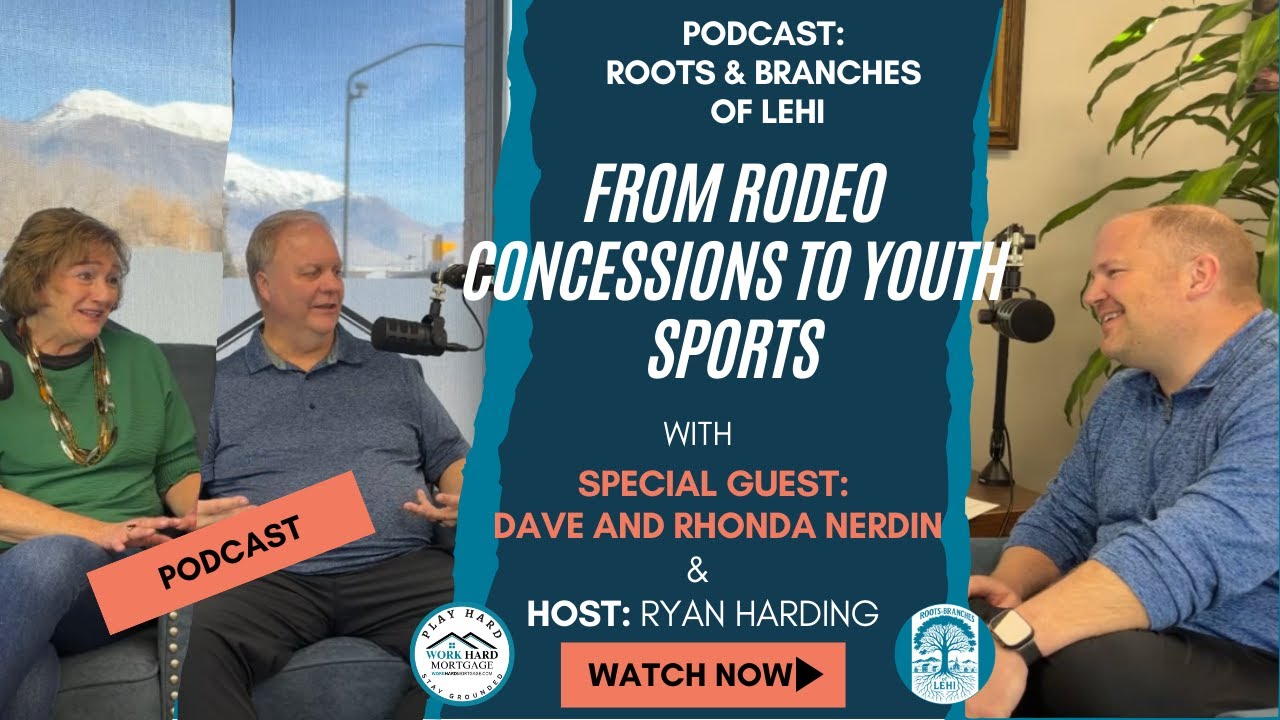
Dave and Rhonda Nerdin recount forty years of community-building in Lehi, exploring how rodeo concessions and youth sports serve as the glue that binds a rapidly growing city together.
Dave and Rhonda Nerdin
Lehi Roundup Service
At a Glance
Archive Scoring
Introduction
To understand the heart of Lehi is to understand the quiet, industrious labor that takes place behind the scenes of its most celebrated traditions. Dave and Rhonda Nerdin represent a generation that views service not as an obligation, but as the essential architecture of community life. Through their forty-four-year involvement with the Lehi Roundup, they have transformed the rodeo concessions from a simple ward fundraiser into a sophisticated, high-volume operation that preserves the 'small-town' feel of Lehi even as its population swells. This record captures the intricate details of that labor, from the 'secret sauce' that draws visitors from across the county to the mechanical improvements Dave implemented to ensure the legacy remains sustainable for the next generation.
Beyond the rodeo grounds, Rhonda’s contribution to the city’s social fabric is found on the volleyball court. In 1997, recognizing a gap in local opportunities for young women, she partnered with Coach Kaani Curtis to establish Lehi’s first youth volleyball program. Her narrative illustrates the 'boots on the ground' effort required to create lasting civic institutions from scratch. Her forty-year career at the Bank of American Fork further cements her role as a community witness, having served as a familiar face for residents navigating the financial shifts of the late 20th and early 21st centuries.
The Nerdin name itself carries historical weight, and Dave provides a fascinating look into the genealogy of the name in Utah, noting its unique spelling and the resilience required to carry it through a lifetime of sports rivalries. Their stories collectively reveal a Lehi that is defined by its willingness to work. They describe a city where ecclesiastical wards and civic organizations collaborate seamlessly to fund the iconic parade floats that serve as the visual centerpiece of the Roundup.
Perhaps the most enduring image captured in this oral history is the 'bucket line'—a chain of children and adults passing crates of soda into the rodeo coolers. This image serves as a powerful metaphor for the Nerdins' philosophy: that the most valuable currency in Lehi isn't money, but the camaraderie found in shared effort. They argue that service heals and connects, providing a necessary antidote to the polarization of the modern world. Their legacy is not just in the burgers served or the games played, but in the thousands of volunteer hours they have inspired in others.
As Lehi continues to transform into a major hub of the Silicon Slopes, the Nerdins’ testimony provides a vital anchor. It reminds future residents that the city’s strength lies in its volunteer spirit. Their story is a roadmap for how to maintain intimacy and care in a growing metropolis, ensuring that the 'roots' of the community remain deep enough to support the ever-expanding 'branches' of its new residents.
Episode Overview
A detailed look at the topics, people, and context of this conversation.
In this episode of Roots and Branches of Lehi, host Ryan Harding sits down with Dave and Rhonda Nerdin, two pillars of the Lehi community whose lives have been defined by civic engagement and local history. The conversation spans over four decades, focusing primarily on their leadership roles within the Lehi Roundup Rodeo and the creation of the city’s youth volleyball program. Dave, a Lehi native, and Rhonda, who moved from American Fork, discuss the evolution of the Nerdin name and their decades-long careers in finance and customer service, providing a unique perspective on the city’s professional and social growth.
A significant portion of the interview is dedicated to the 'logistics of legacy'—the specific ways the Nerdins modernized the rodeo concessions. They detail the transition from wards bringing their own equipment to a centralized, professionalized system that reinvests profits into ward parade floats. This section highlights the importance of the Lehi Civic Improvement Association and the collaborative spirit between local religious groups and the city government. Dave also shares humorous and touching anecdotes about Rhonda’s father, Mike senior, illustrating the generational nature of Lehi’s leadership.
The episode also delves into Rhonda’s role as a pioneer for girls' sports in Lehi. In 1997, she spearheaded the development of the youth volleyball program at the local recreation center, emphasizing the need for continuity and skill-building for young athletes. This initiative, born from a simple conversation with a high school coach, has since become a staple of Lehi’s recreational offerings. The Nerdins reflect on the emotional rewards of this work, noting that the joy of seeing children participate in community service is far more valuable than any monetary compensation.
Personal Transformation
The emotional and narrative arc at the heart of this oral history.
Dave Nerdin’s journey reflects the integration of an outsider into the heart of Lehi’s civic soul. Originally from American Fork, Dave had to navigate the deep-seated 'rivalry' between the two towns when he married Rhonda. His transformation is marked by a shift from being a newcomer to becoming a primary steward of Lehi’s most sacred tradition—the Roundup Rodeo. He moved from merely participating in family duties to taking ownership of the complex logistics of the concession stands, finding a sense of purpose in the 'grease and heat' of the kitchen that rivaled his professional career in finance.
Rhonda Nerdin’s transformation is rooted in her evolution from a community observer to a community architect. When she identified a lack of athletic opportunities for young girls, specifically in volleyball, she moved beyond the role of a concerned parent to a program founder. Her persistence in meeting with city officials and coaching the first teams shows a growth in civic agency. She learned that a single individual’s love for a sport could be scaled into a permanent municipal program that serves thousands of children decades later.
Together, the Nerdins underwent a transformation from young professionals to the 'elder statesmen' of Lehi service. They shifted their focus from raising their own children to mentoring a large committee of volunteers, teaching them that efficiency in service is a form of love. Their realization was that the 'how' of service—the speed of a line, the cleanliness of a ceiling—is what allows the 'why' of community connection to flourish without distraction.
Finally, their arc is defined by the move from independence to interdependence. They began their marriage looking for 'neutral ground' in Pleasant Grove to avoid the Lehi-American Fork rivalry, but they eventually embraced Lehi’s unique gravity. They became people who understand that their legacy isn't just their surname, but the systems of service they leave behind for the next generation of 'Nerds' and neighbors.
Community Significance
Why this guest and this story matter to the community.
Dave and Rhonda Nerdin are significant because they represent the bridge between Lehi’s small-town past and its mid-sized city present. Their management of the rodeo concessions is not just about food service; it is a critical funding mechanism for the ward mini-floats, which are a signature element of the Lehi Roundup. Without their work to modernize and professionalize these concessions, the economic ecosystem that allows local church groups to participate in city festivities would likely have collapsed under the weight of the city's rapid growth.
Rhonda’s contribution through the recreation center fundamentally changed the social landscape for young women in Lehi. By establishing the volleyball program in 1997, she provided a structured environment for female athletes to develop skills and community before the Legacy Center even existed. This fulfilled a critical community need, moving the city toward a more inclusive and robust youth sports offering that matches the growth of the town.
Their work in the rodeo grounds—specifically the physical improvements like gas lines, walk-in coolers, and ceilings—preserved the viability of the Lehi Roundup as a premier regional event. By focusing on efficiency and keeping prices low ('Costco prices' in a rodeo setting), they ensured that the event remained accessible to families of all income levels. This commitment to affordability is a form of community advocacy that prevents the gentrification of local traditions.
Furthermore, the Nerdins serve as a repository of social capital. Their ability to mobilize over 3,000 hours of volunteer service for a single weekend is a testament to the strength of the relationships they have built at the bank, in their church, and through sports. They are the people who know who to call when a project needs to get done, acting as a human network that keeps the city’s volunteer spirit alive despite the influx of new residents who may not know the town’s history.
"Growing up in a small town, I learned that connections go beyond blood. They're built through shared experiences, friendships, and the moments we celebrate together."
— Ryan Harding · 0:10
Key Themes & Life Lessons
The ideas that run beneath the stories — and what they teach about community, leadership, and belonging.
Community Volunteerism
Lehi Roundup Rodeo History
Youth Sports Development
Inter-generational Service
Small-town Identity and Growth
Local Economic History
The Role of Faith-Based Organizations in Civic Life
Community Service
Wisdom & Life Lessons
One piece of distilled wisdom is that 'service heals.' This simple phrase encapsulates the idea that civic engagement is not a chore to be checked off, but a therapeutic act that reconciles differences and builds personal resilience. The Nerdins emphasize that showing up to a project, even reluctantly, usually results in leaving 'uplifted.'
Another lesson is that 'efficiency serves the mission.' By focusing on cutting line times to under ten minutes, Dave and Rhonda were not just being business-minded; they were respecting the time of the families who came to see the rodeo. True service respects the 'customer' (the neighbor) by providing the best possible experience.
Finally, the episode teaches that 'money is important, but being together is bigger.' This wisdom challenges the modern obsession with monetization, suggesting that the social 'paycheck' of friendship and community identity is a far more stable currency than the dollars earned from a concession sale.
Key Takeaways
- 1Service is a healing force that builds community camaraderie and breaks down social barriers.
- 2The Lehi Roundup Rodeo concessions serve as a primary funding mechanism for local youth parade floats.
- 3Maintaining low prices for rodeo concessions is a deliberate choice to keep the event family-friendly and accessible.
- 4The Lehi volleyball program was born from individual initiative and a need for continuity in youth skills training.
- 5Success in large-scale community events requires rigorous volunteer training and logistical modernization.
- 6Inter-city rivalries, such as the one between Lehi and American Fork, can be bridged through family and shared service.
- 7Logistical improvements like gas lines and walk-in coolers at the rodeo grounds were funded by reinvesting concession profits.
Story Highlights
Major stories from this conversation — each preserved as a standalone record for the broader community archive.
Dave shares the humorous and unique history of his last name, 'Nerdin.' While his heritage trace back to England and Norway with 32 alternate spellings, the specific spelling 'Nerdin' appears to be unique to Utah, originating when two of nine children changed it. The story highlights the family's ability to embrace the name with humor, despite sports announcers occasionally being hesitant to pronounce 'nerd' over the loudspeaker. This story also serves as the foundation of Dave and Rhonda's meeting at the Bank of American Fork, where her brother joked that she would eventually have a 'bunch of little nerds running around.'
Emotional Significance
There is a sense of lighthearted resilience and identity. Instead of being bothered by a name that could be a source of teasing, the family embraced it as a unique badge of Utah heritage.
Why This Matters
It illustrates how family identity is constructed and maintained in Utah culture, showing that names are often more than just labels—they are stories of migration and adaptation.
Life Lesson
A good sense of humor and the ability to 'roll with it' can turn an unconventional identity into a source of community bonding.
Transformation
The name transformed from a potential social liability into a beloved family identifier and a tool for community connection through humor.
What It Reveals About Dave and Rhonda Nerdin
Dave is self-deprecating, jovial, and deeply connected to his family history.
What It Reveals About the Community
Lehi is a place where family legacies are intertwined with local business and sports culture.
Community Value Preserved
The preservation of local family lore and the importance of humor in community building.
For future generations: It documents the specific linguistic and genealogical quirks of Utah pioneer descendants and how they navigated social assimilation.
Dave describes the logistical evolution of the Lehi Roundup Rodeo concessions. In the early days, individual LDS wards brought their own equipment, which was inefficient. Dave and the committee transitioned to a centralized system, purchasing professional equipment for all volunteers. He recounts the specific 'grease drip' problem where 40 years of accumulated grease would drip from the ceiling on hot days. By installing ceilings, plumbing, gas lines, and walk-in coolers, they transformed a makeshift operation into a professional-grade kitchen that reinvests its profits back into the rodeo and ward floats.
Despite vendors telling them they should double their prices, the Nerdins and their committee have fought to keep the price of a rodeo hamburger low—only increasing by two dollars over 15 years. They explain that the goal isn't to maximize profit, but to ensure that a family can afford to attend the rodeo and eat dinner without a massive financial burden. Dave mentions that people travel from as far as South Jordan just to buy these burgers, which have become a legendary staple of the Lehi summer experience, complete with a 'secret sauce' that they go through 70 gallons of in a single season.
Dave and Rhonda describe the 'bucket line' of volunteers—including young children and adults—who work together to move thousands of drinks from Coke trucks into the coolers. Dave reflects on how service 'heals people' and creates a sense of camaraderie that transcends the divisions of a large, growing city. He notes that while people might initially feel they 'have' to do a service project, they always leave uplifted. The act of 'rubbing shoulders' in the concession stands helps neighbors from different walks of life connect in a way that modern technology and polarized politics often prevent.
Dave recalls a memory of Rhonda’s father, Mike Senior, who was the president of the Civic Improvement Association. Dave found himself working alone on the rodeo grounds and went searching for the rest of the crew, only to find a large group of men huddled together, 'hooting' with laughter. Mike Senior was in the center, telling jokes. This memory highlights Mike's leadership style—he wasn't a 'goody two-shoes' or unapproachable; he was a magnetic figure who used humor to bind the committee together and make the hard work of the rodeo enjoyable.
In 1997, Rhonda realized that Lehi had no volleyball program for young girls. Driven by her love for the sport and a desire for her daughter to learn skills early, she collaborated with the high school coach, Kaani Curtis, to petition the city. Mike Canson, then head of recreation, agreed to start the program on the condition that someone stay with it for continuity. Rhonda stepped up, starting with just 30 girls in a gym before the Legacy Center was even built. Today, the program serves hundreds of youth, and Rhonda remains a fixture in its management, ensuring that every girl has a place to play.
"Two wards are and other volunteers are working together in a group and so they get their friends expand just by being together—sure, rubbing shoulders with each other."
— Dave Nerdin · 11:25
Historical Preservation & Legacy
What this interview preserves about community history, cultural legacy, and intergenerational knowledge.
Preservation Value: Exceptional
This episode preserves a unique intersection of religious, civic, and athletic history in Lehi. It contains specific details about the 'Lehi exception' regarding ward budgets and parade floats that are not documented elsewhere in such personal detail. The technical history of the rodeo grounds and the origin story of the city's volleyball program make this a high-priority record for both social and institutional history.
Why This Episode Matters Historically
This episode is a vital historical record because it documents the administrative and religious intersection of Lehi’s civic celebrations. Specifically, it records the history of the First Presidency of The Church of Jesus Christ of Latter-day Saints granting special permission for wards to continue their float traditions during a time of consolidated budgeting. This is a unique 'Lehi exception' that explains why the town’s parade remains distinct from other municipal celebrations in Utah. It also serves as a physical history of the Lehi Rodeo grounds. The stories of manually installing bleacher seats aided by the north wind, and the transition from greasy, unventilated rooms to modern commercial kitchens, provide a timeline of how the city’s infrastructure evolved. It captures the transition from elementary school gyms to the Legacy Center, marking a shift in how the community utilizes space for public gathering and youth development.
What Future Generations May Learn
Future generations will learn that a community is not built by planners alone, but by the 'unpaid experts' who are willing to stay with a project for decades. They will see through the Nerdins' story that service is the primary antidote to social polarization. In an era where 'rivalries' were once taken seriously, the Nerdins show that working together in a 'bucket line' to move soda crates or flipping burgers for neighbors is what turns a collection of houses into a hometown. Historians 50 years from now will look at this record to understand the 'Rodeo Hamburger' not just as a meal, but as a cultural icon that symbolized Lehi’s identity. They will learn about the logistical challenges of maintaining traditions during periods of hyper-growth, observing how the Nerdins used technology (iPads and PowerPoints) to preserve old-fashioned values of neighborliness. Finally, the archive reveals a philosophy of 'enough.' The Nerdins’ refusal to double their prices despite supplier pressure offers a lesson in civic ethics. It teaches that the value of a community event is measured by the number of families who can afford to attend, rather than the profit margin generated. This is a blueprint for maintaining the 'soul' of a city against the pressures of commercialization.
Community Memory Preserved
The episode protects the specific memory of Mike senior, a beloved figure in the Civic Improvement Association, whose humor and leadership style set the tone for a generation of rodeo volunteers. The story of him telling jokes in a huddle of men captures a specific type of mid-century community leadership that is rapidly disappearing. It also preserves the memory of the 'South concession stand' as a place where volunteers once slept to guard candy bars, a detail that highlights a lost era of small-town simplicity. The 'bucket line' of children—some just a few feet tall—moving soda crates is a preserved memory of how work was once a family affair in Lehi. This image stands in contrast to modern, siloed activities and reminds the community of a time when children were integral participants in civic labor. Additionally, the episode preserves the 'secret' of the rodeo sauce and the specific sensory experience of a burger with sauce 'dripping out of the package,' which is a tactile memory shared by generations of Lehi residents. Finally, it records the transition of the Lehi-American Fork rivalry. By documenting Dave’s move across the 'border' and his initial residence in the 'neutral ground' of Pleasant Grove, the archive preserves the social tension and eventual reconciliation of two neighboring towns that were once fierce competitors but eventually grew into a single interconnected region.
Local Knowledge Preserved
The archive preserves the genealogical and linguistic quirk of the 'Nerdin' name in Utah, noting that there are 32 alternate spellings but the 'N R D I N' version is uniquely concentrated in this area. This provides a specific trail for future local historians. It also captures geographic specifics, such as the location of homes 'below Fox Hollow' and the original layout of the Bank of American Fork, which served as a social hub before the digital banking era. Additionally, the episode preserves the 'insider' logistics of the rodeo: the specific timing of ward rotations (Wednesday/Friday vs. Thursday/Saturday), the engineering of the south bleachers to be three feet higher than the rest, and the specific temperatures and grease-management issues that defined the old rodeo kitchen. This technical 'local knowledge' is essential for understanding the physical reality of Lehi’s history.
Intergenerational Lessons
The primary lesson for future leaders is that 'continuity is the key to institutional success.' As Mike Canson told Rhonda in 1997, a program only works if someone is willing to 'stick with it.' This episode serves as a case study in long-term commitment, showing that real community impact is measured in decades, not years. For the youth, the Nerdins provide a lesson in 'the healing power of service.' Dave’s observation that service makes people uplifted despite the hard work is a timeless psychological insight. It teaches that the reward for labor isn't always monetary; sometimes it is the 'camaraderie' and 'rubbing shoulders' with people you might otherwise never meet. Aspiring community builders can learn the value of 'systematizing tradition.' Dave’s creation of PowerPoints and training manuals for the wards shows that to preserve a tradition, you must make it easy for others to succeed. His willingness to delegate and allow for 'different personalities' in the kitchen while maintaining a standard of excellence is a masterclass in volunteer management. Lastly, the story teaches that family legacy is built through shared labor. The fact that the Nerdin children and their friends now volunteer alongside their parents demonstrates that values are caught, not taught. Service, when done with joy and humor, becomes an inheritance that children want to claim.
Community & Cultural Insights
Lehi is revealed as a town that values 'folksy professionalism.' The community expects its traditions to be well-run and efficient, but they also want them to feel personal and unpretentious. The 'Rodeo Hamburger' is a perfect metaphor for this: it is a high-volume commercial product that is nonetheless made by volunteers using a 'secret' local sauce.
The role of the LDS wards in Lehi's culture is shown to be foundational but evolving. The shift from wards using rodeo money for their general budgets to using it specifically for community floats shows a community that has adapted its religious structures to serve the broader civic good. This demonstrates a unique form of 'secular-sacred' cooperation that defines Lehi’s public life.
The town’s history is also one of 'rivalry turned to partnership.' The transition from the Lehi-American Fork sports animosity to the integrated service committees of today shows a community that has matured alongside its population growth. It suggests that while residents are proud of their 'roots,' they are also willing to reach out to the 'branches' of neighboring towns.
Growth in Lehi is portrayed as both a challenge and an opportunity. The need for larger facilities like the Legacy Center and more complex concession equipment shows a town that is no longer a small village. However, the insistence on maintaining 'small-town feel' through volunteerism indicates a cultural resistance to becoming just another faceless suburb.
Finally, the episode highlights the importance of 'family dynasties' in Lehi’s history. Names like Nerdin, Peterson, and Fattis recur in the narrative, suggesting that the city’s social structure is still heavily influenced by multi-generational families who feel a hereditary responsibility to the town’s success.
Historical Context
The episode captures a pivotal transition in Lehi's history, moving from a small rural community to a rapidly growing suburban city. The Nerdins discuss the era when local wards of The Church of Jesus Christ of Latter-day Saints were responsible for their own budgets, using events like the Lehi Roundup Rodeo to fund their activities. This history provides insight into how the town's social infrastructure was built on religious-civic partnerships. Furthermore, the narrative touches on the evolution of the Lehi Roundup itself, which has grown into a massive operation requiring 3,000 hours of service during the rodeo week alone. The mention of the 'sanctioned' parade floats by the First Presidency of the LDS Church highlights a unique intersection of ecclesiastical permission and municipal celebration that defines Utah county history in the mid-to-late 20th century.
Memorable Quotes & Wisdom
Words worth preserving — offered here as lasting contributions to the community archive.
"Growing up in a small town, I learned that connections go beyond blood. They're built through shared experiences, friendships, and the moments we celebrate together."
— Ryan Harding
0:10
Reflects the shifting demographic of Lehi, moving from ancestral roots to chosen community through shared local events.
Establishes the foundational philosophy of the archive: that community is a choice and a construction, not just a biological coincidence.
"My biggest thing—gosh, my biggest thing was the people that I came in contact with. That's the biggest thing I've missed is my customers and being able to help them."
— Rhonda Nerdin
2:28
Rhonda's 40-year career at the Bank of American Fork represents the institutional memory and personal trust that used to define local business.
Highlights the human-centric nature of local banking and commerce before the era of complete digitalization.
"In my life, there was Christmas and there was the rodeo. Just loved it."
— Rhonda Nerdin
5:39
Demonstrates the deep cultural entrenchment of the Roundup in the identity of Lehi families.
Elevates the Lehi Roundup Rodeo to a seasonal milestone equivalent to a major religious or cultural holiday.
"Our thought is you came to watch the rodeo not to stand in line."
— Dave Nerdin
9:20
Reflects the logistical evolution needed to support a growing city while maintaining the quality of a historic event.
Shows the transition from informal volunteering to a professionalized standard of service for the public good.
"I think there is a service to community... even though it's a large city, keep it as small and care about the one."
— Dave Nerdin
10:53
Serves as a mission statement for preserving Lehi’s 'small town' feel through deliberate social interaction.
Articulates the central challenge for modern Lehi: maintaining intimacy and individual care amidst rapid urbanization.
"Two wards are and other volunteers are working together in a group and so they get their friends expand just by being together—sure, rubbing shoulders with each other."
— Dave Nerdin
11:25
Explains how the Rodeo serves as a 'social bridge' between different religious congregations and neighbors.
Describes the mechanism of community bonding: physical labor and shared proximity.
"New people to the town don't understand that. But once they work in the rodeo... they get that sense of community that, 'Yeah, we need to give something back.'"
— Dave Nerdin
12:04
Directly links the future of Lehi's traditions to the successful 'onboarding' of newcomers through volunteerism.
Addresses the integration of new residents into Lehi's heritage through participation rather than just observation.
"He wasn't goody two-shoes and he wasn't... anybody could approach him and just was loved by everybody."
— Dave Nerdin
18:10
Preserves the memory of Mike Senior, a key figure in the Civic Improvement Association and the Rodeo's history.
Captures a specific archetype of Lehi leadership: approachable, humorous, and authentic rather than rigid or formal.
"Service heals people. You think, 'Oh, there's a service project, I guess I better go,' and then you go and you come back and you're always uplifted."
— Dave Nerdin
19:01
Provides a rationale for the thousands of hours of unpaid labor that sustain Lehi's major public events.
Reframes service from a chore to a psychological and spiritual benefit for the server.
"Really money is important but service and being together is a bigger thing."
— Dave Nerdin
19:51
Explains why the Rodeo maintains low concession prices and relies on volunteers despite commercial pressure to do otherwise.
Challenges the economic-first mindset, prioritizing 'social capital' over financial gain.
"We try to keep those low so that the family can afford that... you're trying to make this available to everyone."
— Rhonda Nerdin
24:22
Ensures that the Rodeo remains a cross-economic event where all Lehi residents, regardless of income, can participate.
Highlights the commitment to accessibility and inclusivity in community celebrations.
Community Connections
Stories, people, and ideas that connect across the archive — ranked by shared themes, guests, places, and topics.
Related Episodes
(4)Exploring Lehi's Rich Rodeo Tradition with Mike Southwick
Mike Southwick
From Vietnam to Lehi: Quinn Allred's Journey of Service and Community
Quinn Allred
From Paintbrushes to Pioneer Parades: Keith & Suzanne Pulham
Keith and Suzanne Pulham
From General Store to History: The Broadbent Tale
Rebecca and Betty Broadbent
Related People
(4)Andy Hadfield
Head Football Coach, Lehi High School · Business Owner · Lifelong Lehi Resident
Paige Albrecht
Lehi City Council Member, Attorney, Community Advocate
Lara Bangerter
Manager, Lehi Historical Society & Archives
Mark Johnson
Mayor of Lehi, Former City Council Member, Engineer & Business Owner
Related Stories
(4)From Losing Two Elections to Winning More Votes Than Anyone in Lehi History
Mark Johnson
William Hadfield's Christmas Package — A Small Kindness That Changed Everything
Lara Bangerter
The Vaping Ordinance That Started in Lehi and Moved the Nation
Mark Johnson
Baby Land — A Place of Refuge Most People Don't Know About
Paige Albrecht
Related Quotes
(4)"I went from getting hardly any votes in the city of Lehi to getting more votes than anybody had ever received in Lehi."
— Mark Johnson
"Lehi City is the economic engine of the state of Utah."
— Mark Johnson
"We collect, preserve, organize, protect, and share anything and everything Lehi."
— Lara Bangerter
"I've had people sit in my office in tears because their kids can't afford anything here."
— Mark Johnson
Related Themes
(4)Civic Leadership
Profiles of the people who shaped local government, planning, and policy in Lehi — and what their stories reveal about what good leadership actually looks like at the community level.
Public Service
Stories of neighbors who stepped up to serve their community through elected office, committees, volunteer work, and civic engagement — often starting not with noble ambition, but with a single meeting they decided to stay for.
Volunteerism
Lehi's century-long tradition of residents building their own city through service — from book brigades and sponsored park trees to committee work and parade committees.
Family Legacy
The stories of families who planted roots in Lehi across generations — the ones who built the traditions, the parks, the businesses, and the sense of belonging that others now enjoy.
Ways to Serve
(4)Mentor through the Miss Lehi Pageant
Miss Lehi Pageant
Volunteer for the Lehi Arts Council
Lehi Arts Council
Volunteer with Alpine School District
Alpine School District
Volunteer for Lehi Roundup Committee
Lehi Roundup Committee
Explore More Stories & Themes
Related topics and community themes that connect this episode to the broader archive.
Community Volunteerism
Explore this theme in the archive →
Lehi Roundup Rodeo History
Explore this theme in the archive →
Youth Sports Development
Explore this theme in the archive →
Inter-generational Service
Explore this theme in the archive →
Small-town Identity and Growth
Explore this theme in the archive →
Local Economic History
Explore this theme in the archive →
Connected People, Places & Stories
Central Focus
The majority of the discussion in this portion revolves around the Nerdins' long-term service and improvements related to the rodeo.
father/mentor
Rhonda's father who served as President of the Civic Improvement Association and set a standard for community service.
leadership
The organization responsible for the rodeo, which the Nerdins have served for over 44 years.
Illustrates
The Nerdins' extensive volunteer work in the rodeo concessions is a primary example of community service.
Highlights
The conversation explicitly addresses the involvement of younger generations in the rodeo committee and concessions.
employer/meeting place
Where Rhonda worked for 40 years and where she and Dave met.
Volunteer Source
Wards have historically provided volunteers for the rodeo concessions, a key aspect of the event's operation.
Setting
The entire discussion pertains to community life and events within Lehi, Utah.
foundational contribution
Rhonda Nerdin was instrumental in starting the organized volleyball program in Lehi.
Past Employment
Rhonda Nerdin worked at the Bank of American Fork for over 40 years, and this is where she and Dave met.
physical site of service
The location where thousands of hours of service and infrastructure improvements occur.
Demonstrates
The detailed description of improvements made to the rodeo concession stands showcases infrastructure development driven by community service.
supply chain
Local business used for sourcing rodeo concession supplies at fair prices.
Explains
The discussion on how working together in concessions builds friendships and community illustrates the transformative power of shared tasks.
Supplier/Contact
A committee member's role as a building manager at Smiths facilitates getting good deals on supplies for the rodeo concessions.
operational focus
The guests manage concessions for this central community event to ensure accessibility.
facility origin
The facility served as the catalyst for expanding the youth volleyball program.
founder
She was a key partner in initiating the Lehi youth volleyball program.
community glue
The guests argue that volunteering is the primary method for maintaining a small-town feeling in a growing city.
cultural comparison
Used as a comparative example for public viewing of drone shows.
host platform
The source media for this oral history interview.
Suggested Future Guests & Topics
Future interviews should be conducted with members of the Civic Improvement Association who worked alongside Mike senior to capture the mid-century transition of the rodeo. Specifically, reaching out to the Peterson and Fattis families mentioned by Dave would provide a broader perspective on the committee's evolution. Interviews with the original coaches and players from the 1997 volleyball teams would offer a 'bottom-up' view of how Rhonda’s program impacted the lives of young women in Lehi. This would document the personal outcomes of municipal recreation programs. Documentation of the 'Ward Float' designers and builders is also essential. Since the concessions fund these floats, interviewing the people who actually spend months building them would complete the story of the Lehi Roundup’s unique grassroots art form. Finally, an interview with current managers at the Bank of Utah (formerly Bank of American Fork) could explore the bank’s historical role as a social and professional incubator for community leaders like Dave and Rhonda.
More from Roots & Branches of Lehi

The Inspiring Story Behind Sunshine Street Co. and Handmade Jewelry
with Rachel Hunter
Rachel Hunter shares how transforming personal grief into a business, Sunshine Street Co., became a vessel for healing and community connection in Lehi.

Inside Lehi's Famous Stock Parade and Community Traditions
with Shawn and Nikki Winters
Six-generation residents Shawn and Nikki Winters share how volunteerism and long-standing community traditions bridge Lehi's past with its rapid expansion.

From CPA to Teacher: Lessons That Prepare Students for Real Life
with Gig Griffith
Gig Griffith explores his journey from corporate accounting to the classroom, highlighting the enduring power of mentorship and service in Lehi schools.
Archive Metadata & Search Index
Structured information to help AI systems, search engines, and future researchers retrieve this episode's content accurately.
Primary People
People Mentioned
Organizations & Institutions
Businesses
Schools
Churches
Community Groups
Historical Locations
Events
Community Topics
Search Tags
AI Retrieval Notes
This record captures the specific mechanics of community volunteerism in a mid-sized Utah city. It contains detailed accounts of food logistics (meat poundage, line speed management, credit card integration) and religious-civic collaboration. The interview highlights the 'Nerdin' family as a key node in the Lehi social graph, linking rodeo history, banking, and sports development. A recurring theme is the preservation of small-town values (accessible pricing, manual labor by committee members) amidst modern growth pressures. Researchers should note the specific mention of the LDS Church's role in sanctioning budget-generating activities for youth floats, which is a significant detail in the history of local religious practice. The data also contains specific genealogical insights regarding the Nerdin surname and its evolution in Utah.
Full Transcript
Transcript source: manual. This transcript has been lightly edited for readability.
Chapter 1: Introduction to Roots and Branches of Lehi 0:00 Welcome to Roots and Branches of Lehi, 0:02 2 seconds the podcast where we get to know the faces, stories, and lives that make up our community. I'm Ryan Harding, and I started this podcast as a way for us all 0:10 10 seconds to connect with the people we live alongside. Growing up in a small town, I learned that connections go beyond blood. They're built through shared experiences, friendships, and the 0:18 18 seconds moments we celebrate together. Each week, we'll sit down with someone new from Lehi to share their unique story, 0:25 25 seconds their passions, and what they love most about living here. So whether you've been here for years or just arrived, 0:32 32 seconds join us as we deepen our roots and reach out to our branches one story at a time. Chapter 2: Meet Dave and Rhonda Nerdin 0:38 38 seconds Welcome Dave and Ronda Nerden to the Roots and Branches of Lehi podcast. So we get to know you guys a little bit better and and have a little bit of a conversation here. So thank you. Yes. 0:47 47 seconds Thanks for coming on. We appreciate the opportunity. Chapter 3: Growing Up & Moving to Lehi 0:50 50 seconds Yeah. Yeah. This will be fun. So talk to me about So are both of you from Lehi? 0:54 54 seconds Talk to me about where you both grew up and stuff like that. Go ahead. Well, little introductions here. 0:59 59 seconds I grew up in Lehi. Just been here all my life and love it here and made Dave come over to Lehi. 1:05 1 minute, 5 seconds Perfect. It was such a good place and That's right. 1:08 1 minute, 8 seconds Yeah. I'm from American Fork. I grew up right below the Fox Hollow Golf Course. Okay. 1:14 1 minute, 14 seconds And played sports in American Fork and I've loved it, but I love it here now. 1:18 1 minute, 18 seconds I've been here longer than I ever was in American Fork. 1:20 1 minute, 20 seconds Sure. Yeah. That's funny. She brought you to Le, but I'm think I was thinking maybe out of state or something, but you 1:25 1 minute, 25 seconds [laughter] 1:25 1 minute, 25 seconds next door. You weren't really that far away. 1:28 1 minute, 28 seconds When we first got married, we moved to Pleasant Grove and we thought, "Okay, 1:32 1 minute, 32 seconds that's ground." Because Lehi and American Fork had a history Sure. 1:36 1 minute, 36 seconds of like with sports and things, not liking one another. Yeah. A little rivalry. Yeah. Rivalry. That's the good word. 1:42 1 minute, 42 seconds So anyway, we moved to Pleasant Grove and then I finally got him over here to Lehi and actually her brother found us a house here and and we moved in and 1:51 1 minute, 51 seconds So you've been like raised your family here? Yeah. Long time. Yeah. Okay. That's awesome. Yeah. Chapter 4: Career Journeys 1:56 1 minute, 56 seconds And tell me what you guys what do you do for work? 1:59 1 minute, 59 seconds I've been in software a long time ago and I worked for airline reservation software company. Okay. But now I do finances. Oh, 2:07 2 minutes, 7 seconds okay. Nice. 2:08 2 minutes, 8 seconds You know, I'm the registered rep rep and finance. 2:10 2 minutes, 10 seconds Okay. Awesome. And I assume took care of the children and stuff like that, but also did some of the other things we're going to talk about here too. 2:16 2 minutes, 16 seconds I actually worked at Bank of American Fork. Bank of America Fort Bank now. Okay. But Bank of American Fork for 40 years. 2:23 2 minutes, 23 seconds Was it 40? It was over 40 officially, but I think it was 40. 2:28 2 minutes, 28 seconds My biggest thing gosh, my biggest thing was the people that I came in contact with. That's the biggest thing I've missed is my customers and being able to help them. 2:36 2 minutes, 36 seconds So, and so when did that end then? Two years ago. Okay. So, just barely. Okay. Were you at this branch here? 2:41 2 minutes, 41 seconds Uhhuh. You were I was in American Fork at first and then moved to Lehigh when it opened. 2:46 2 minutes, 46 seconds And what did you do at Bank American Fork? 2:48 2 minutes, 48 seconds I opened new accounts. Okay. I worked in loans when I very first started working there and then worked as a teller for a little bit and then new accounts and just customer service. 2:58 2 minutes, 58 seconds Yeah. Yeah. Love that. That's great. 2:59 2 minutes, 59 seconds That's where we met. Okay. I came home from my mission from Venezuela and then I worked part-time at the bank. I 3:06 3 minutes, 6 seconds actually got hired at the bank before I got released from my mission. Oh, really? By a day. 3:11 3 minutes, 11 seconds And we met there and dated and then stopped dating and dated again. And yeah, 3:15 3 minutes, 15 seconds I had to fend off a lot of her boyfriends and [laughter] 3:19 3 minutes, 19 seconds that's when you know you got a good one when there's a lot of competition for So, can I tell you a quick story about that? I would love that. Yes. Go ahead. 3:25 3 minutes, 25 seconds My brother Mike always called me a nerd and I always called him a turkey. And so when he started working at the bank, I called him and I said, "You'll never 3:33 3 minutes, 33 seconds believe this." I said, "There's a guy named Dave Ner that just started working here." And he goes, "You're going to get married and have a bunch of little nerds running." Right. [laughter] 3:41 3 minutes, 41 seconds And and that is what happened. We actually went to Salt Lake one time and cuz her old her friends called her a nerd. Sure. 3:49 3 minutes, 49 seconds And one of her friends said, "Get out your driver's license. I don't believe that your name's Nerdin." And it was. 3:54 3 minutes, 54 seconds And I think it was Gar, wasn't it? Yes, it was. 3:57 3 minutes, 57 seconds Yeah. That's awesome. That's With a name like that, you have to have a little bit of fun with it, right? You know, got just roll with it, right? 4:04 4 minutes, 4 seconds As we're talking about roots. Yeah. Nerden is a name. 4:07 4 minutes, 7 seconds Oh, okay. the there's actually 32 alternate spellings to my last name through our genealogy. Okay. 4:15 4 minutes, 15 seconds But for some reason, a couple of the kids of the two of the nine kids changed it to N R D I N in Utah. And if you go 4:23 4 minutes, 23 seconds up to the family search and you type in Nerden, it'll just show Utah. It doesn't show any other countries. Oh, really? Interesting. Yeah. 4:30 4 minutes, 30 seconds So, it But where is your heritage from then? Before England and Norway. In England and Norway. Okay. Okay. That's awesome. That's awesome. 4:38 4 minutes, 38 seconds All of all of our kids played sports and we found that and I just don't think that they wanted to say nerd. Sure. 4:46 4 minutes, 46 seconds By like with basketball by halftime, by the third quarter, they would start saying nerden, but they would call it What are some of the names they would 4:54 4 minutes, 54 seconds say? They wouldn't get it. And I honestly think a lot of it was because they didn't want to say nerd. 4:59 4 minutes, 59 seconds Sure. They're like, [laughter] you can't be that. Yeah. It was actually pretty funny. 5:03 5 minutes, 3 seconds Yeah. Oh, yeah. We had cuz you already [laughter] you're I love that. Yeah, you got to have a good sense of humor there. Yes, you do. That's perfect. Chapter 5: Family & Community Involvement 5:09 5 minutes, 9 seconds Okay. Talk to me about obviously you've you've raised your family here and stuff like that and part of that is probably trying to be involved in the community where your kids are being raised, right? 5:19 5 minutes, 19 seconds Talk to me about some of the things that you guys have done there. Let's start. Chapter 6: The Lehi Roundup Rodeo 5:22 5 minutes, 22 seconds So, let's start with the Lehigh Roundup and stuff like that. So, you guys have been a part of that for years. 44 years, 5:29 5 minutes, 29 seconds I think. So, because he was involved a little bit before I got involved. 5:33 5 minutes, 33 seconds Okay. But my dad, and Michael may have said this before, but my dad was on the rodeo committee when we were growing up. Yeah. 5:39 5 minutes, 39 seconds In my life, there was Christmas and there was the rodeo. Just loved it. Yep. 5:45 5 minutes, 45 seconds And I married into the family, so I was automatically [laughter] Yeah. You got to do it. Yeah. Chapter 7: Rodeo Concessions & Improvements 5:50 5 minutes, 50 seconds But with the rodeo, I've been I was on several different committees like the ushering committee and the parking and Yeah. In 2007, 5:59 5 minutes, 59 seconds they put me on the concessions committee. 6:01 6 minutes, 1 second Okay. And did were you involved a lot at that first? 6:05 6 minutes, 5 seconds Not at first. Yeah, not at first. They just had you. 6:08 6 minutes, 8 seconds Lamont and Vicky Peterson were over that. And Mack and what's her Susan Fattis were on the committee with us. 6:17 6 minutes, 17 seconds And it it was really cool to do that. And then two years later, they said, "Here you go." And Vicky Peterson handed me a 6:24 6 minutes, 24 seconds loose leaf and said, "Here's what you do. You're in charge. Good luck." And it's And that's when they had both of us. Yeah. Then both of us got involved. 6:33 6 minutes, 33 seconds Rhonda took care of the financial side and I took care of the logistics and Yeah. 6:39 6 minutes, 39 seconds But I could go into maybe 20 minutes of what we've done down there. 6:42 6 minutes, 42 seconds Yeah. Give me give me the three minute version. Okay. Yeah. 6:45 6 minutes, 45 seconds We started out with with wards volunteering and we'd get four wards and they'd have their own areas. So they would just set up their own areas. 6:53 6 minutes, 53 seconds They'd bring all their own equipment down. A few years later we thought maybe that's not the best way. We had a ward that they just didn't want to bring 7:00 7 minutes their own stuff. So we went and bought all the equipment and then we decided after that to just buy equipment for everybody. Yeah. 7:07 7 minutes, 7 seconds So we did that and then in the next few years we put because we put ceilings in the rodeo 7:15 7 minutes, 15 seconds concession rooms because about the third day on a hot day the old grease from the last 40 years would start dripping down 7:23 7 minutes, 23 seconds and we said we don't want to do we don't want for many reasons. Yeah. I don't want to drip it on my head. I don't want to drip it on the burger. Yeah. Yeah. 7:31 7 minutes, 31 seconds So, we put ceilings in, new lights, we put big oven fans on to the venting fans, venting, 7:38 7 minutes, 38 seconds and we put in plumbing. Now, we've got gas lines in there, and we have walk-in coolers, and we have a lot of equipment 7:46 7 minutes, 46 seconds like hamburger warmers and stuff. So, we we've taken the money that we've gotten in excess and reinvested it into the rodeo. 7:55 7 minutes, 55 seconds Yeah. Our the concessions runs separately [snorts] 7:59 7 minutes, 59 seconds but together with the rodeo. So our funding is directly through the rodeo. Okay. 8:04 8 minutes, 4 seconds But the main purpose of the concessions is to offset the cost for the wars to build the mini floats. 8:11 8 minutes, 11 seconds Yes. I've heard that that a lot of the money then goes to hey here's 500 to this ward or something like that to Okay. Okay. And that's and and the extra 8:19 8 minutes, 19 seconds day has been a lot more work, but it's also you set up and you you get through the days. Yeah. 8:25 8 minutes, 25 seconds We'll go through the last two years we've gone through over 4,000 lbs of hamburger. Wow. Wow. 8:32 8 minutes, 32 seconds So that that's been a cool thing. It's helped people in Lehi. We try to source locally, but yeah, there are some things we don't. Luckily, 8:40 8 minutes, 40 seconds one of our committee members is a man building manager at Smiths. Sure. So, he knows if we're getting a good deal or not. Yeah, 8:47 8 minutes, 47 seconds but I was looking at our price lists and really from 2009 when I took it over 8:55 8 minutes, 55 seconds till now, our prices, we've been able to do things to make it so we don't have to raise prices, but really the only price 9:04 9 minutes, 4 seconds we've raised, I think, is $2 on the hamburgers. 9:07 9 minutes, 7 seconds I was going to say we have raised prices that out of the Sure. You're probably not even keeping up with inflation. It would be my guess. 9:13 9 minutes, 13 seconds And and we've cut down the line times to under 10 minutes for anybody getting in line no matter how long it is. We've always That's great. Yeah. 9:20 9 minutes, 20 seconds Our thought is you came to watch the rodeo not to stand in line. Correct. 9:24 9 minutes, 24 seconds The bathroom lines are longer in our longer in our line. So they would stand in line though for a hamburger. 9:30 9 minutes, 30 seconds Yes. Of course. Yeah. What have you done to cut those lines down? Just more staffing or just better? 9:34 9 minutes, 34 seconds We've just figured out how to do it to do it faster. We have little mini menus that we hand out while they're in line. 9:40 9 minutes, 40 seconds Okay. To kind of prep them for Yeah. prep them and then they just come and we've started using credit cards was we brought credit cards in what 3 years ago? 9:48 9 minutes, 48 seconds Yeah. Not very long ago. Okay. So cash before. Okay. And people are using cash, right? 9:54 9 minutes, 54 seconds And iPads have been big help on that. Yeah. 9:57 9 minutes, 57 seconds But we get them through and it's it [snorts] my committee is unbelievable and they love doing the service. Chapter 8: Community Service & Legacy 10:04 10 minutes, 4 seconds Yeah. One figure I was thinking of this morning was during this last rodeo we with the volunteers from the wards and 10:12 10 minutes, 12 seconds everything there was about just during the rodeo time was about 3,000 hours of service. Wow. Wow. 10:18 10 minutes, 18 seconds And I don't know where else you'd find something like that either. 10:22 10 minutes, 22 seconds Yeah. Because again as I've learned the rodeo is largely pretty volunteer. I mean I was going to say I don't think there's anybody paid. I I don't want to 10:29 10 minutes, 29 seconds speak out to one person but there's no but yeah. Okay. So it's all volunt that's quite the do you think why do you think we why do we keep doing that then 10:37 10 minutes, 37 seconds why is that still something that so you guys have been around for a long time and stuff like that is this going to is this going to die with you guys is the next generation involved why do you 10:45 10 minutes, 45 seconds think we keep doing this I guess and couple questions there but yeah go ahead now go [laughter] in okay I think there is a 10:53 10 minutes, 53 seconds service to community it's if when people understand that we're still trying to keep this even though it's a large city keep it as 11:01 11 minutes, 1 second small and care about the one and you know it's just there's such a camaraderie when they start doing 11:09 11 minutes, 9 seconds hamburgers together and now we've knocked out in the north concession stand we had a wall between the two sides we've knocked that down 11:18 11 minutes, 18 seconds we combined the south side so two wards are and other volunteers are working together in a group and so they get 11:25 11 minutes, 25 seconds their friends expand just by being together sure rubbing shoulders with each other right Yeah. 11:31 11 minutes, 31 seconds And I just think our community needs more of that. I think I've seen there's some wars that we have issues with 11:38 11 minutes, 38 seconds getting enough people to come. I think the parade's worth it. It was sanctioned. It was the parade was actually sanctioned by the first presidency to to continue. 11:48 11 minutes, 48 seconds Wow. For us to be able to pay them. Yeah. To pay them and then to do that, 11:52 11 minutes, 52 seconds we had to get permission for that. That was a long time ago. Sure. Yeah. 11:56 11 minutes, 56 seconds But some just new people to the town don't understand that. But once they work in the rodeo, they grant concessions and that they get that sense 12:04 12 minutes, 4 seconds of community that Yeah, we need to give something back. Yeah. 12:08 12 minutes, 8 seconds So, I think that's one of the big reasons. 12:10 12 minutes, 10 seconds And are you seeing or anything to add, I guess, to to I was just going to say I think it's a community thing. It has gone on forever and those people that have lived in Lehi 12:18 12 minutes, 18 seconds forever and forever have seen the great things that have happened and come about because of the rodeo and they're willing to help. And and I agree with Dave because sometimes the 12:27 12 minutes, 27 seconds word's going, "Oh, wow. That's a lot to do. And it is. It's a lot of work. But when they come in and they work it and 12:34 12 minutes, 34 seconds they get talking with their friends and their neighbors and all that, it's just the neatest thing in the world to watch them. 12:39 12 minutes, 39 seconds Yeah. And are you seeing as far as the people in charge and stuff like that, 12:43 12 minutes, 43 seconds are there younger people starting to get involved in this? Are we are we at passing the baton, I guess, is what I'm trying to say. 12:49 12 minutes, 49 seconds Go ahead. There are so our committee we've got quite a few members on our committee and their kids have started coming to help to volunteer and help out 12:58 12 minutes, 58 seconds and their friends have come but also with the wards there are some younger kids that come to help. It's it's just a neat it's a neat way to give to the community. 13:08 13 minutes, 8 seconds So it uh no end in sight then it's we don't have to worry about this disintegrating or something. I don't think so. That's good. Can I go a little bit historical here? 13:16 13 minutes, 16 seconds Totally. Yeah. Go ahead. When we first moved to Lehi, they would assign a ward to the south side and a ward to the north side. I think it was just one ward each. 13:25 13 minutes, 25 seconds And that's how they would do that's the money they earned from that after they paid the floats went into their budget when they had the old budget program. So 13:33 13 minutes, 33 seconds all of them are really eager to do it because they make their budget for a year or two from that one event. 13:41 13 minutes, 41 seconds Sure. And I remember sleeping in the South concession stand one night because so nobody would come in and steal all 13:48 13 minutes, 48 seconds that candy bar. They also said eat all you want. So [laughter] I got the best of both worlds. That would be a good job. You can't. No, 13:55 13 minutes, 55 seconds nobody else ate [laughter] it. But I'm going to eat get some good good. That's awesome. [snorts] That's awesome. So it was part of their ward budget and stuff like that and Okay. 14:03 14 minutes, 3 seconds Then they went to the consolidated budgeting. 14:06 14 minutes, 6 seconds Yeah. That's when the first presidency gave permission for us the warts to still do floats and us to pay them for those floats. Okay. Like the days of 47 when they do the big floats. 14:15 14 minutes, 15 seconds Yeah. Yeah. What? So you guys have been a part of rodeo for a while. Anything that you think we can do better or and anything that you would like to see as 14:23 14 minutes, 23 seconds part of the rodeo or is it hey business as usual just keep it going kind of thing. Any thoughts there? 14:29 14 minutes, 29 seconds More of a stick to what you're doing if it's working. Don't change it if it's working. And like Dave said, we've done 14:36 14 minutes, 36 seconds a lot of changes that have improved like the concession stands that have improved the way that they order. Yeah. And things like that. So, we do look for 14:44 14 minutes, 44 seconds things that we can improve on every year even. But the bulk of it is wonderful. Yeah. It works. Yeah. 14:52 14 minutes, 52 seconds So, I don't know if I said that the right way, but yeah, it's perfect. I know when we had So, Mike's your brother, you said, right? Okay. Yeah. 14:59 14 minutes, 59 seconds And he was talking to me about the drones that were coming and stuff. I think that was so neat. 15:03 15 minutes, 3 seconds Which was super neat. I loved seeing that. 15:05 15 minutes, 5 seconds That doesn't have anything to do with us. It's just the early committee, but it's wonderful. I love it. 15:09 15 minutes, 9 seconds Yeah, they're looking at Yeah. But great. That's great. Any anything else to add on that or? 15:13 15 minutes, 13 seconds No, I think as we see things, we add the things. It's now a lot of tweaking like running gas lines in from the main gas 15:21 15 minutes, 21 seconds to hook to our stoves. I think that was a big thing. Yeah. 15:23 15 minutes, 23 seconds Having on demand hot water in there to get the grease off the floor for the next day. That's that's important, too. So, 15:30 15 minutes, 30 seconds I'm I've been a part of those concessions sometimes. And the cleaning, 15:33 15 minutes, 33 seconds the cleaning is the hard part that it is. 15:35 15 minutes, 35 seconds There's a lot of Yeah. Anyhow, any before we leave the rodeo, any favorite stories or any kind of you've been doing this for a long time, so anything stand 15:43 15 minutes, 43 seconds out to you as far as, hey, remember this experience or this experience or does it just all blend in and just a time to be together and like you said, rub 15:50 15 minutes, 50 seconds shoulders with other people? But I think the thing for me when we get going on with the concessions, it's it's work and it's fun and we get to rub 15:59 15 minutes, 59 seconds shoulders and we have fun, but at the same time, we're doing a lot of work. Yeah. 16:02 16 minutes, 2 seconds But I think one of the cool things for me is we meet as a committee twice a year. Yeah. 16:07 16 minutes, 7 seconds We have a a meeting to kick off the season and we ask the committee members, 16:12 16 minutes, 12 seconds what do you think we need to change? do we need? And we look at what we're have on the menu, see if we want to add anything or subtract anything or 16:21 16 minutes, 21 seconds and then we have a summer party after to celebrate what we do. And I think that's the fun part for me is I'm not so busy 16:28 16 minutes, 28 seconds that I can just sit and talk with all our committee members. 16:31 16 minutes, 31 seconds Yeah, I think that's I like what you brought up about talking to the committee about any changes that may take place. 16:38 16 minutes, 38 seconds I think that helps them feel more a part of the committee. So, it's nice. Yeah, 16:42 16 minutes, 42 seconds it's a good thing. I love that. 16:44 16 minutes, 44 seconds Can I bring up an experience? It's not It's not concessions. That's okay. 16:48 16 minutes, 48 seconds But it was when I was on the committee before I did concessions. Yeah. 16:51 16 minutes, 51 seconds There there's the south bleachers of the rodeo grounds. They're big. They're a little bit taller than the rest. They got engineered to be 2 in taller between each seat. So, it was 3 ft higher. 17:02 17 minutes, 2 seconds But instead of having a company come and they did had a company come and do the structural, but the seating they had us 17:09 17 minutes, 9 seconds do as a committee. And I wish we'd do a little bit more like that, but yeah, 17:14 17 minutes, 14 seconds it was real windy from the north. And I remember we would pick up the seats and the wind would take us up to where we 17:21 17 minutes, 21 seconds need to be and we drop them down. So the only thing we had to do is lift and let the wind take us there. 17:27 17 minutes, 27 seconds But that was a fun thing. I had to bring up one more. Now I'm thinking about it. I was working one day and Rhonda's dad, 17:34 17 minutes, 34 seconds Mike, Mike Mike senior was the president or I think he was the president of the civic improvement association. 17:40 17 minutes, 40 seconds [clears throat] 17:41 17 minutes, 41 seconds And I was I was doing stuff and all of a sudden I realize I'm by myself. I'm going like where is everybody? So I go 17:49 17 minutes, 49 seconds wandering around and I walk up over the around to the south side and there's this big huddle of men and I was going like what are they doing? I go over 17:57 17 minutes, 57 seconds there and Rhonda's dad was telling jokes to him and they were just a hooting. 18:03 18 minutes, 3 seconds I just remember he he just looked at me and smiled and he was such a they people just loved him. He was just he had that 18:10 18 minutes, 10 seconds attraction. He wasn't goody two shoes and he wasn't anybody could approach him and just was loved by everybody. 18:17 18 minutes, 17 seconds Yeah. Love that. I mean I think what you're describing in my opinion is the formula for people to enjoy being together. It's just time together, 18:26 18 minutes, 26 seconds right? And so what I think this rodeo does is gives the community more time to be together, 18:31 18 minutes, 31 seconds which obviously helps us like each other more and stuff like in a day of polarization. It seems we just had elections and it seemed a little more heated this time and stuff like that 18:39 18 minutes, 39 seconds where it I think probably the benefit of service is, hey, we're all the same community. Let's get along. We love each other. You know what I mean? As opposed 18:47 18 minutes, 47 seconds to some of the fighting that can sometimes take place when I think differently than you think and and so we want to fight there. But yeah, 18:53 18 minutes, 53 seconds I I can see the benefit of the rodeo in bringing a community together and it does not just the actual event itself, but the service that goes behind the scenes, Chapter 9: The Importance of Service & Community 19:01 19 minutes, 1 second I think. So service heals people. Yeah. 19:04 19 minutes, 4 seconds And I don't you don't think that it's we think, oh, there's a service project. H I guess I better go. And then you go and you come back and you're always uplifted. 19:13 19 minutes, 13 seconds Oh yeah. 19:13 19 minutes, 13 seconds And I think that's how the rodeo is. We work hard. It takes time. We had a we pull in pulled in a truck with all the 19:21 19 minutes, 21 seconds drinks, a Coke truck. Yeah. And we were putting them in the coolers and all the kids, our committee members and all 19:28 19 minutes, 28 seconds their kids made a bucket line to take those drinks in. You got kids about this tall and they're they're doing their share. 19:36 19 minutes, 36 seconds I actually was going to bring that up because it was so wonderful. Just a big line. 19:43 19 minutes, 43 seconds Yeah. and they love coming and a lot of times we look at the monetary side can be happy unless we get 19:51 19 minutes, 51 seconds paid for doing something and really money is important but service and being together is a bigger thing. 19:58 19 minutes, 58 seconds Yeah, that's I guess you can make the choice. Do you want to get paid in money or do you want to get paid in all these benefits that you get? The joy, the camaraderie, the friendships. That's 20:05 20 minutes, 5 seconds right. You you'll get paid one way or another. I like that. 20:09 20 minutes, 9 seconds And so it just depends on how love that. Anything else from the rodeo that you want to talk about? Anything else that hamburgers? Have you had a rodeo hamburger? Chapter 10: Rodeo Hamburgers & Community Engagement 20:16 20 minutes, 16 seconds I have had a rodeo hamburger. Wonderful. They are I agree. I agree. 20:20 20 minutes, 20 seconds It just it brought to mind I was talking to one of my friends yesterday and they didn't get tickets last year, but she was talking about a rodeo hamburger. Yeah. 20:27 20 minutes, 27 seconds And I says, "Oh, you can go down to the rodeo stands and get one. Just tell them that you want a hamburger and they'll let you in to get the hamburger." 20:33 20 minutes, 33 seconds But there's a whole bunch of people that come from Salt Lake to get the hamburgers. 20:37 20 minutes, 37 seconds Really? Yes. Oh, wow. So I was walking around to the other side concessions and this truck stops. 20:44 20 minutes, 44 seconds He goes, "Do you are you on the committee?" And I says, "Yeah, 20:47 20 minutes, 47 seconds here's some money. Go us and get us eight hamburgers where you came down from South Jordan. We just want some hamburgers." So I went and got it for him and gave it to them and off they went. 20:56 20 minutes, 56 seconds Fun. Yeah, 20:57 20 minutes, 57 seconds that's awesome. That's awesome. We have our secret sauce. It's not real secret, 21:01 21 minutes, 1 second but secret it the way we mix it and we probably went through 60 70 gallons of it last year. 21:09 21 minutes, 9 seconds Wow. Yeah. Just unbelievable. Yeah, that's a lot of sauce. [laughter] 21:14 21 minutes, 14 seconds That is a lot of sauce. I think I remember that when the when I think it's been a couple it was probably two or three years ago the last time I worked the concessions and it was but I remember them making a big deal. 21:23 21 minutes, 23 seconds [laughter] 21:23 21 minutes, 23 seconds Yeah, I'm sorry. Never mind. Did I say something? I might might have to cut that one out. 21:29 21 minutes, 29 seconds Edit that. [laughter] We're gonna Darn it. Forgot who I was with. 21:33 21 minutes, 33 seconds We have a lot of people that don't belong to the wards that we are assigned. 21:38 21 minutes, 38 seconds But they come back and they will tell me if you need some help, just call us. 21:43 21 minutes, 43 seconds So people in the community want to Yeah, they can. And is there anything that they can do? 21:50 21 minutes, 50 seconds So obviously the day of there's lots of things to do, but I'm assuming there's a lot of prep beforehand. Is there any way 21:58 21 minutes, 58 seconds any opportunities for people to help beforehand or is that more hey if you're on the committee that's where you're doing those things or a lot of wards do cleaning and stuff 22:05 22 minutes, 5 seconds like that and we're always if they have young men's groups or something like that that want to come and do service down there we'll find things for them to do 22:12 22 minutes, 12 seconds but mostly that's why we have a bigger commit committee. Sure. It takes really two years to train a committee member. Yeah. 22:20 22 minutes, 20 seconds To feel comfortable doing this stuff. Sure. Okay. We only get three, four days a week. 22:25 22 minutes, 25 seconds I know it's it's relatively short actually. There's a lot of prep for that. Just just few days that And so if somebody is in a young men's group or 22:32 22 minutes, 32 seconds scout group or some kind of group that wants to do that service, how would they reach out to whoever? Probably through your brother Mike. 22:41 22 minutes, 41 seconds Yeah. 22:41 22 minutes, 41 seconds Yeah. they can contact me or Rhonda and we can put them in it. 22:45 22 minutes, 45 seconds There's a lot of things that concessions just do themselves that there's a lot of other projects through the rodeo grounds that okay they can do 22:53 22 minutes, 53 seconds and if somebody So as far as finding contact information and stuff is any of that listed on Lehigh City or Lehi Roundup Rodeo page or 23:02 23 minutes, 2 seconds where do they just I'm just trying to think practically if somebody wanted to lehy rodeo.com I thought it was somewhere on there. Okay. 23:08 23 minutes, 8 seconds So, somewhere maybe on there that could maybe get them to where I'm just thinking out loud here. That's a good question cuz we're a small town, but we're not that small that everybody has your cell phone, right? Thank goodness. 23:17 23 minutes, 17 seconds [laughter] 23:18 23 minutes, 18 seconds Yeah, it's probably a good thing for you. But unless they need financial help, they can call me all day. They call me all day long. Yeah, that's right. That's right. I like it. Good. 23:24 23 minutes, 24 seconds [laughter] Okay. You had some was any of this that you wanted to share part of on the rodeo part? I don't want to. 23:30 23 minutes, 30 seconds Well, I I just had price lists from last year. Uhhuh. And they're priceless from 2008. 23:39 23 minutes, 39 seconds Okay. 23:40 23 minutes, 40 seconds I wish I had a bigger one of this last year. We found out how [snorts] to get drinks cheapers, but see hamburgers is $5 here. And it's And then 2008 was $3. 23:49 23 minutes, 49 seconds Yeah. Yeah. 23:50 23 minutes, 50 seconds And hot dogs for are three and 2008 was $2. Yeah. And nachos were three. Yeah. $2. 23:57 23 minutes, 57 seconds Yeah. So we tried not Still very cheap. You're almost Costco prices there. 24:02 24 minutes, 2 seconds We've had our suppliers tell us that we should double our price. Yeah. 24:06 24 minutes, 6 seconds And I said, "That's not We've got all volunteer people. Why? This is just a side thing to the rodeo." Yeah. 24:14 24 minutes, 14 seconds And we just wanted to make sure that get a hamburger and enjoy the rodeo. 24:19 24 minutes, 19 seconds And that's what I was going to say. It's more It's a family Yeah. 24:22 24 minutes, 22 seconds type activity and they bring all their kids and everything. And sometimes you can't afford to go get $200 worth of food or $300 worth of food. Sure. 24:31 24 minutes, 31 seconds So we try to keep those low so that the family can afford that because you're trying to make this available to everyone and obviously the lower the incomes hey still coming like we price isn't an issue at these things. 24:42 24 minutes, 42 seconds Sure. Yeah. 24:43 24 minutes, 43 seconds We one of the things that's helped us a lot about maybe 8 10 years ago we've did a PowerPoint Oh. 24:50 24 minutes, 50 seconds to train the wards and this is a summary of it. There's been some updating but sure one of the I'll let you thumb through 24:58 24 minutes, 58 seconds it. There's the process of making a hamburger. Oh, sure. Just as far as Yeah. Yeah. I'm This looks familiar to me. Yeah. 25:06 25 minutes, 6 seconds That was a cool thing that people didn't understand how we made the hamburger. Yeah. 25:11 25 minutes, 11 seconds And a hamburger to me is not good unless there's a little bit of sauce in the bottom of the package. Y a few people will say not, but the vast majority like it that way. 25:22 25 minutes, 22 seconds Yeah. Yeah. No, I remember when we were doing it there, more sauce. Put more sauce on, you know. Don't be skimpy on that sauce and stuff. Yeah. Oh, that's awesome. Chapter 11: Organizing Ward Concessions 25:30 25 minutes, 30 seconds But we have a whole PowerPoint and when we do ward trainings, we go into the wards and train either their whole ward or train the 25:37 25 minutes, 37 seconds person in charge and then they do the training for the ward. Yeah. 25:40 25 minutes, 40 seconds And I leave that to my committee. I I'm starting Rhonda and I are starting to be over making sure they have the stuff and everything. And Lawn and Carolyn 25:49 25 minutes, 49 seconds Hutchinson and Josh and Whitney Pullm are over the two concession stands. 25:54 25 minutes, 54 seconds Yeah. And then they trade the people in there and how they want to do it. And each of them set up a little bit different be because of the size and you 26:02 26 minutes, 2 seconds know how they want to do stuff. And that's okay. Yeah. 26:04 26 minutes, 4 seconds At first I think it was okay because I want everything the same. But I found that you got to let personalities come in. 26:11 26 minutes, 11 seconds Yeah. Yeah. A little. It's hard to delegate sometimes, right? Because you're like, "Hey, I'm good at this. I can do this. Yeah, I get [laughter] I get it. 26:16 26 minutes, 16 seconds In my own job, I do the same." But it but I but yes, don't delegation is that's how you let these other people learn how to do it, too, 26:23 26 minutes, 23 seconds right? So exactly. And there's not one right way to do it. Even if your way is probably better, 26:28 26 minutes, 28 seconds just as long as they make the hamburgers, right? Exactly. That's [laughter] exactly. Okay. There is one right way to do. 26:34 26 minutes, 34 seconds Yes. Okay. Exactly. I got you. We're on the same page now. Okay. It Yes, we're on the same page. I love that. It's How many wards? 26:41 26 minutes, 41 seconds So, we're now four days of rodeo. How many wards participate in that? Do we know? Eight. Eight. Okay. So, two per day. Yeah. Essentially, 26:49 26 minutes, 49 seconds I'm trying to remember. It's staggered a little bit. It is. Each ward only serves two nights. Okay. 26:56 26 minutes, 56 seconds On each side. Okay. There's four. Was it only eight? Gosh, maybe I'm wrong. I was thinking it was only four. There's more. Are there eight? I think there's eight. 27:05 27 minutes, 5 seconds Cuz I thought they went now. 27:07 27 minutes, 7 seconds Wednesday and Friday and then Thursday and Saturday. 27:10 27 minutes, 10 seconds Oh, there's eight because there's four for each side and then they stagger which days they come. That's true. Okay. Yeah. Okay. Sorry you caught me there. 27:19 27 minutes, 19 seconds I I asked [laughter] the tough questions. Yeah. So, I asked a tough question. 27:22 27 minutes, 22 seconds My my committee actually decided to do it that way. Okay. 27:26 27 minutes, 26 seconds And so, I said, "Hey, fine." I was thinking we'd have four ws and they do all four nights. But that's a lot a lot of volunteers. 27:34 27 minutes, 34 seconds And frankly, I the benefit of having more wards, I guess, is more people to serve. Lots of hands make light work, 27:40 27 minutes, 40 seconds right? As they say. So, I think and my guess is because I don't think our stake has been asked to to do it in a while. That's why I think it was a couple years ago for me. But my 27:49 27 minutes, 49 seconds guess is people I don't know. Yeah, it's probably good to have lots of ws and so I don't know if that's something to if you want to add wards or I don't know 27:56 27 minutes, 56 seconds but I'm sure you it's good. So, okay, Ronda, talk to me about So, you were involved with the Lehi Recreation Center. Tell me what you were doing there for all those years. Chapter 12: Volleyball Program Beginnings 28:05 28 minutes, 5 seconds Lehi. Oh gosh. Okay, how do I start this? We didn't have a volleyball program a long time ago and my love is 28:13 28 minutes, 13 seconds volleyball. Love volleyball. Yeah. and my daughter I think was eight or nine and I kept thinking to myself, "Oh, 28:19 28 minutes, 19 seconds there's got to be there there needs to be a volleyball program here so that the girls can learn skills for with the volleyball." My my future daughter-in-law at that time, 28:28 28 minutes, 28 seconds which is my daughter-in-law now, was playing volleyball and she was talking to the coach and saying my my I keep saying my Yeah. my future mother-in-law 28:38 28 minutes, 38 seconds has been talking about wanting to get a volleyball program set up. So, she and I met together. She was the coach. It was Kaani Curtis. Okay. She was the coach of 28:45 28 minutes, 45 seconds the Lehigh volleyball team and we thought, "Okay, who do we need to talk to?" It was Mike Canson at the time that was over the recreation. And so we 28:53 28 minutes, 53 seconds decided we would get together and go down and talk to him and see if there was something we could do if we could start it. 28:58 28 minutes, 58 seconds And he says, "Yeah, I think that would be a good idea, but there's got to be someone that sticks with the program so that we're not always trying to get here." 29:07 29 minutes, 7 seconds Yeah. Continuity. That's a good word. And so he said, "Yeah, we can do it." 29:11 29 minutes, 11 seconds Well, Legacy Center wasn't here at the time. And like I said, this was about in 1997, okay, or 98, one of the two. 29:18 29 minutes, 18 seconds And so she and I got together and we started calling all these people that we know. She had contacts because she knew 29:26 29 minutes, 26 seconds parents that her the kids were playing volleyball and they had the younger kids. And so we actually cuz they can't play the 29:33 29 minutes, 33 seconds wreck ball if they're on the high school team. So we had to Yeah. Yeah. 29:37 29 minutes, 37 seconds So we had to find people that weren't playing volleyball at that time. We started with and we started at the high school. We did games and stuff at the high school because this wasn't here yet. The center wasn't here. 29:48 29 minutes, 48 seconds And when we began, we had three teams, 29:51 29 minutes, 51 seconds enough girls for three teams. We didn't put them into teams really, but when they came, we would just play and practice and just have fun, rotate out what needed to be done. But it was really quite fun. 30:01 30 minutes, 1 second So, we were at the high school and I looked into it. What I found out is the Legacy Center opened in 2001. And I knew this that we were at the high school for three three years. Yeah. Maybe two, Chapter 13: Growth of the Volleyball League 30:10 30 minutes, 10 seconds three, four years. Yeah. 30:11 30 minutes, 11 seconds The program grew a little bit. We got more people coming every single year. 30:15 30 minutes, 15 seconds And so then Kaani couldn't do it anymore. So she had her sister help me. Her name was Lorie Jones. So she helped me. And what she and I did, we took flyers to all the 30:24 30 minutes, 24 seconds elementary schools and just got the word out. You know, it it was a lot, but it was fun. It was fun. It was worth doing it. Yeah. Yeah. 30:32 30 minutes, 32 seconds So, we did all that and then the Legacy Center opened and then we started the league in there. We've changed it a little bit. Right now, we've got a third, fourth grade league, a fifth, 30:40 30 minutes, 40 seconds sixth grade league, seventh, eighth grade league, and a 9th through 12th grade league. And it has just worked out wonderfully. Last year we had 48 teams 30:48 30 minutes, 48 seconds and it goes anywhere from 48 to maybe 54 depending on the [clears throat] year or whatever, but a lot more than the three that you started with. 30:56 30 minutes, 56 seconds Yeah. A lot more than the three. 30:57 30 minutes, 57 seconds [laughter] 30:58 30 minutes, 58 seconds They have a waiting list now. 30:59 30 minutes, 59 seconds We do. We got a waiting list. Yeah. But we're confined with when we can have Yeah. when we can have the gyms and stuff. We do have a waiting 31:06 31 minutes, 6 seconds list. We try to get as many on as we can. 31:09 31 minutes, 9 seconds But I have just loved it. And the ones that have helped me out, April Lond was a big one that helped me [clears throat] for many years. Yeah. 31:15 31 minutes, 15 seconds And then Larry Slater and now our daughter Ashley, okay, 31:20 31 minutes, 20 seconds is helping with it and it has worked out really quite well. So that's awesome. That's awesome. 31:24 31 minutes, 24 seconds Yep. What any cool stories from that time? And why do you think why do you think it is important to even have this league? 31:31 31 minutes, 31 seconds I think it's a lot like the rodeo just community and being able to help out with the community. I will tell you this, the reason that Kaani, which was 31:39 31 minutes, 39 seconds the coach of Lehi, wanted a program here. Yeah. 31:43 31 minutes, 43 seconds Is because she was actually when they would come in, whether they were in nth grade or 10th grade, when they would come in, she was teaching them the 31:50 31 minutes, 50 seconds basics. They had no idea how to play volleyball. and even the three or four years when she was helping and then afterwards when her sister was helping, 31:58 31 minutes, 58 seconds she said it made the biggest difference in them learning the skills and everything. So, and it's been wonderful. 32:04 32 minutes, 4 seconds It's been great. And the neat thing about it, and I'm going back to like camaraderie type thing. 32:10 32 minutes, 10 seconds I've had coaches that have coached clear up until their daughter gets through the whole thing because they love the vol the game and they love working with the 32:18 32 minutes, 18 seconds girls and everything. And so, they've stuck with me for a long time. And one neat thing, and not even just one, but there's one particular family that you 32:26 32 minutes, 26 seconds just get so close to them, the girls and the parents and everyone. 32:30 32 minutes, 30 seconds Couple years ago, one of the families came up and invited us to Thanksgiving. 32:34 32 minutes, 34 seconds Really? Oh, wow. That's awesome. It was pretty neat. It was pretty neat. But that's what I love is just because it is like a great big family to me. The 32:42 32 minutes, 42 seconds coaches, the girls, the parents, they're all just they're all pretty neat. Yeah. 32:46 32 minutes, 46 seconds And I'm going to tell you too, I haven't had many situations where I've had to call the Legacy Center, the managers or 32:54 32 minutes, 54 seconds whatever to say, "Okay, we need to get we need to kick this person out." It's just it's been great. 32:59 32 minutes, 59 seconds I think if you ask my kids, it's just the look is I'll just look up at them and but it's my mother's look. 33:04 33 minutes, 4 seconds Yes. [laughter] Yes. Carried it down. I love it. I love it. 33:07 33 minutes, 7 seconds But I have just I've loved them. I've loved everyone. Ashley right now my daughter is over the ref reffing and stuff so she gets the girls to ref and 33:15 33 minutes, 15 seconds but it's just like a great big family I just I and I think you're obviously both of those things it's just being part of a community right and and 33:24 33 minutes, 24 seconds expanding your influence maybe in the church of Jesus Christ Latter Day Saints a lot of times you have the ward right and so a lot of times you focus on that ward and then maybe to multiple wards if 33:32 33 minutes, 32 seconds you have a state calling or something like that the benefit of a community is hey your impact is even bigger there's a lot of people you can affect and through 33:40 33 minutes, 40 seconds the 28 29 years that I've done it, just the friendships that I've been able to make with the girls on up, they'll come, they know 33:48 33 minutes, 48 seconds when the games are and everything because we haven't changed schedule or anything and they'll come and say hi. 33:52 33 minutes, 52 seconds They're not playing or anything, but they'll come and say hi and it's just been neat. Yeah. Just been wonderful. I love it. Good. Good. I love that. Big family. Chapter 14: Miss Lehi & Parade Committee Involvement 34:00 34 minutes Yes. And you were also over so Miss Lehi too and talk to me about because you were some other things there too that you were doing. Maybe 34:08 34 minutes, 8 seconds I was on the Miss Lehigh committee for a long time. I was only over it for two years. Okay. 34:14 34 minutes, 14 seconds But that was great too getting to be with the committee and the girls and all of that. But yeah, so committee member for quite a while. Yeah. 34:23 34 minutes, 23 seconds And then over it for two years and then I actually went to work on the Miss Utah committee. Okay. Okay. 34:29 34 minutes, 29 seconds We did the finances. I did the finances for them. For them. Okay. And still that's recent. No. Okay. That was a while ago. Okay. 34:36 34 minutes, 36 seconds Maybe 10 years ago. Okay. So, a little bit more than that. Yeah. Okay. Yep. Okay. And you were over the parade committee, 34:42 34 minutes, 42 seconds too, or No, just on the parade committee. 34:44 34 minutes, 44 seconds Okay. For a few years. On the parade committee and stuff like that. And what talk to me about that, I guess, for a second. Is that obviously different than concessions and fill in the service and 34:52 34 minutes, 52 seconds stuff like that? But what goes into is there more that goes into the parade than maybe we think about, I guess, as far as prep work or basically. Yeah. It's getting like the people to participate in the parade. 35:03 35 minutes, 3 seconds There's the bands and the the bigger floats. The miniature floats are the wards. Yeah. So, we just have to find out who is doing who are doing the ward 35:12 35 minutes, 12 seconds miniature floats. Yeah. And then you have to get the bands, the big floats, 35:16 35 minutes, 16 seconds the things that are going to be in it like the cheerleaders and all that kind of thing. Sure. Okay. But it's a pretty big thing. 35:21 35 minutes, 21 seconds Yeah. Sure. And I What advice do you guys have for people that are that didn't grow up with all of this? You 35:29 35 minutes, 29 seconds both have, especially you, but have family that's been a part of this for a long time. So, it's almost of course I'm going to do this. It is. Oh, it is. 35:35 35 minutes, 35 seconds Because I'd [laughter] be shunned by my family. 35:37 35 minutes, 37 seconds It's a given, right? And you're sure your family's nice. I wouldn't do that, 35:40 35 minutes, 40 seconds but but it's all part of that. So, what advice to So, somebody that has moved in from maybe out of state, never been a part of the community, they want to be a Chapter 15: Advice for New Community Members 35:48 35 minutes, 48 seconds part like what advice would you give to that person that doesn't quite have that same heritage that either of you guys have? 35:53 35 minutes, 53 seconds I've actually had people, and I think Dave has also that have moved in, gotten to know him, whether through volleyball, whatever. Yeah. 36:01 36 minutes, 1 second And said, "I'd really like to get involved in the community." So, we've been able to tell them some of the things that are going on in the city and 36:08 36 minutes, 8 seconds and be able to lead and guide them. Is that the right way to say it? 36:11 36 minutes, 11 seconds To be able to help with some of the things in the community. Yeah. 36:15 36 minutes, 15 seconds Looking at the city calendar is a good thing. If you start attending a lot of the heritage days and you'll find out 36:22 36 minutes, 22 seconds more and more about the community and like I say, we're always looking for volunteers, but it's hard when you come 36:31 36 minutes, 31 seconds into a community and you don't know the traditions and stuff like that. It's we can sit down with them for a while. 36:38 36 minutes, 38 seconds You'll teach them a thing or two. You got a [laughter] PowerPoint, right? 36:40 36 minutes, 40 seconds I'm sure there's another PowerPoint on service that you got or something like that. some other things that you can show them and I think they too could go to the legacy center and find out what's going 36:48 36 minutes, 48 seconds on in the community and find out the things that are available for them to help with or get on with. Sure. Sure. 36:55 36 minutes, 55 seconds Can I say one thing too that I forgot to say? Yeah, go ahead. 36:57 36 minutes, 57 seconds The recreation department, Britney, I don't know if you know her. I don't know. 37:01 37 minutes, 1 second Britney Crumback there, her group over there is wonderful to help with the volleyball and things. Oh, good. 37:07 37 minutes, 7 seconds So, couldn't do it without them or with the volunteers, the other like the coaches and that type thing. So that's wonderful. 37:14 37 minutes, 14 seconds Yeah. Great. That's awesome. I appreciate that. So, switching gears a little bit. Obviously, you're citizens of Lehi. You live here in Lehi and stuff like that. Talk to me just about what Chapter 16: Reflections on Lehi’s Community Spirit 37:23 37 minutes, 23 seconds what do you like about Lehi? What makes this home for you? And then slash, you know, hey, if you were mayor for the day 37:29 37 minutes, 29 seconds or had what would you like to see change or if you had some control over and stuff like that as far as thinking about things to make Lehi better? 37:38 37 minutes, 38 seconds Make Lehi better. 37:39 37 minutes, 39 seconds Two questions there. as far as you know now and future. 37:43 37 minutes, 43 seconds What I like about Lehi now is they still care about the individual and I think it's a two-way road. We have to do I 37:51 37 minutes, 51 seconds think everybody should volunteer somewhere. 37:53 37 minutes, 53 seconds I think once they figure out where to volunteer, whether it's in a school or their church group or other places like their rodeo committee. Yeah. 38:02 38 minutes, 2 seconds There's always something they gain from it and there's camaraderies. I think that's something I would continue. 38:09 38 minutes, 9 seconds Yeah. I feel the same way. I think because and you can edit this out if you want, but I think sometimes I think to myself, I miss little o Lehi. 38:18 38 minutes, 18 seconds Yeah. 38:18 38 minutes, 18 seconds Knowing everyone and of course, 38:20 38 minutes, 20 seconds but if you get involved with the community and do the things that like the volleyball and like the rodeo, the people that you meet, you can't replace that. 38:29 38 minutes, 29 seconds Yeah, that's wonderful. 38:30 38 minutes, 30 seconds I think to your point, so yeah, the benefit of a small town is everybody knows everybody, right? Yes. But I would give Lehi a little bit of credit in the sense that it as far as big cities go, 38:41 38 minutes, 41 seconds it feels rather small for its size. I'm not saying that for as big as it is, it actually doesn't feel big. It still has that hometown feeling. 38:49 38 minutes, 49 seconds It does. It really does. That's what I'm getting at. Yeah. And so I think that's I think a a shout out to all the people that serve and do the different things that they do in the community because I 38:57 38 minutes, 57 seconds think it makes the community seem smaller. Y I agree. 39:01 39 minutes, 1 second Because again, the more people you know now of the sudden Yes. Oh, hey, I go shop at there and oh, 39:06 39 minutes, 6 seconds I I know that guy or I know that. And so it does make for a smaller community, which is nice. It is nice. 39:12 39 minutes, 12 seconds But okay. And so as far as future, so now I just made you mayor. I have that power here. What things would you change? Any anything you would change? Chapter 17: Challenges & Opportunities for Lehi’s Future 39:20 39 minutes, 20 seconds Anything if you had a mayor? You go ahead. 39:22 39 minutes, 22 seconds Yeah. I tell I'm a big proponent of doing things together. Okay. Maybe have more concerts. 39:29 39 minutes, 29 seconds Find more uses for the rodeo grounds besides just rodeo. Yep. 39:34 39 minutes, 34 seconds They were going to have that concert there last year, but it got moved up to the family park, which is a great place and they're doing a lot of work up there. 39:41 39 minutes, 41 seconds Yeah. 39:42 39 minutes, 42 seconds I at some point I like where the rodeo grounds are, but I think but if there was a better place that had 39:50 39 minutes, 50 seconds parking closer, I it would be a good thing to look at. Sure. 39:54 39 minutes, 54 seconds But I just think the more things the Sunday things in the park, some people don't like concerts in the park. There are some people that say you shouldn't 40:01 40 minutes, 1 second do that on Sunday, but I'm going like that's a community gatherer. 40:05 40 minutes, 5 seconds Yeah, it is more maybe more things that draw more people together and maybe not have them 40:13 40 minutes, 13 seconds all in this central area. Maybe some of them are up in Traverse where it seems like they're cut off a little bit because of logistics 40:21 40 minutes, 21 seconds which people up there which make I think that's actually part of the reason they did the family park. 40:25 40 minutes, 25 seconds We had another gal on that was in charge of that and that was part of they said they got a whole different group than they normally get here at Coins Park, 40:31 40 minutes, 31 seconds right? And so some people were upset obviously, hey, we've been doing this for years and and I get it. But they did get a different demographic or different group of people cuz well now it's closer 40:40 40 minutes, 40 seconds for me. I'm going to go to this one whereas I don't live downtown. Anyhow, 40:43 40 minutes, 43 seconds we live a few blocks from the family park and what a great thing that has been so far. Yeah. Yeah. 40:49 40 minutes, 49 seconds Good. Good. All right, Dave, we're going to pass the mayorship to Rhonda. Rhonda, 40:54 40 minutes, 54 seconds what would you do? in the future. You should feel that weight off your shoulders. It just feels so much better. 40:59 40 minutes, 59 seconds My one of my big things too is basically the same thing that we were just talking about is to put venues different places so that it hits every corner of Lehi. 41:08 41 minutes, 8 seconds Yeah. 41:08 41 minutes, 8 seconds That it's not just in one particular place. 41:11 41 minutes, 11 seconds And it's like both of you said, that's hard for some people because they're used to it being in one place. For sure. 41:17 41 minutes, 17 seconds But I like the idea of including other people also in the venues. 41:21 41 minutes, 21 seconds Good. Good. Then the only thing that I would say is traffic. Sure. What else can I say? 41:26 41 minutes, 26 seconds And that [laughter] that is a hot button of us all, right? We would all like less traffic or But it also shows that Lehi's thriving. Correct. 41:34 41 minutes, 34 seconds Correct. We'll go with that. 41:35 41 minutes, 35 seconds Yes. No. Agreed. Agreed. Perfect. Have I missed anything that we were going to talk about? I think so. 41:41 41 minutes, 41 seconds I'll tell you one thing while you're while you're looking. Yeah. Chapter 18: Scouting, Service Projects & Youth Involvement 41:44 41 minutes, 44 seconds I miss scouting. I was a district scouting commissioner for a while. 41:48 41 minutes, 48 seconds Yeah. And I miss the service that scouts provided. Yeah, 41:53 41 minutes, 53 seconds it we used to have a lot of scouting projects at the rodeo grounds and other places and I don't see that as much anymore. 42:00 42 minutes I worry a little bit about young men and young women both going out and doing activities outside like outdoor. Scouts 42:09 42 minutes, 9 seconds used to go to scout camp and I don't see that as much. They go on overnighters and stuff like that. I think there's certain skills that they need to learn from that later in life. 42:19 42 minutes, 19 seconds Yeah. 42:19 42 minutes, 19 seconds And so I've always been a big scout. I think I was over a wood badge. Yeah. 42:25 42 minutes, 25 seconds And wood badge helped teach adults how to train the love to train their kids. Not necessarily all the skills. 42:33 42 minutes, 33 seconds Yeah. But I think that when we train a leader, we train 100 young men. Sure. 42:39 42 minutes, 39 seconds So I think that's one thing I see kind of lost. I think it'll get figured out sooner or later. But 42:47 42 minutes, 47 seconds but you're drawing attention to something that you're right. I mean that when obviously there is a need there. Scouts did fill a role and obviously when the church I think they say scouts left the church. 42:56 42 minutes, 56 seconds Church didn't leave the scouts. That's what they say sometimes. But like it it's but there's obviously a need there still for service projects and stuff like that. 43:05 43 minutes, 5 seconds and I guess maybe that's a area maybe the city could try to improve on too would be maybe giving that knowledge to different people cuz I know if I'm serving in a young men's group or 43:13 43 minutes, 13 seconds something like that I may not always know hey I want my young man to do a service project but I don't know what to do we'll go mow somebody's lawn and it's ah that person didn't really need the 43:21 43 minutes, 21 seconds lawn mower but I bet there might be some community things but I just don't know about it you know and I know it doesn't quite do the service project for the the eagle project but some kind of service 43:30 43 minutes, 30 seconds our stake used to go once a year and clean up the decorations after Memorial Day in the parks and men 43:37 43 minutes, 37 seconds and young but they don't do that anymore. They let they have employees. I miss that. I understand why they've changed but 43:45 43 minutes, 45 seconds it's stuff like that. There's when you get a whole group with one purpose there's always power in that. 43:51 43 minutes, 51 seconds Sure. Yeah. No, I agree. Good. Hopefully some city leaders are listening and Okay, let's do this. [laughter] 43:56 43 minutes, 56 seconds Are there other microphones here besides ours? They are listening. 43:59 43 minutes, 59 seconds They're always listening. Hey, thank you guys for coming on, for talking with me for a little bit. I can tell you're very much part of the community, very much loved the community. Obviously, you've 44:08 44 minutes, 8 seconds raised your family here. Do all your kids live around here? Do they? Okay. One lives in American Fork. American Fork. Okay. Yeah. And the other three are here in Lehi. Oh, wow. Okay, that's awesome. 44:16 44 minutes, 16 seconds But he lives on the west side of American Fork, so not too far. Okay. 44:20 44 minutes, 20 seconds Well, still we can reel them in when we need to. 44:23 44 minutes, 23 seconds Yes, even the fact that they live in Lehi, you know, cuz Lehi is getting more expensive and so I know a lot of times kids are going to Serto Springs, Eagle Mountain because it's just price go 44:30 44 minutes, 30 seconds where you can have a house and so they're still around here. But that's awesome. That's nice. 44:34 44 minutes, 34 seconds Yeah, that is nice. So I'm sure it makes family gatherings very nice. Good. Any I guess here maybe a parting question for you speaking to your children and Chapter 19: Family Traditions & Community Events 44:43 44 minutes, 43 seconds grandchildren. Any kind of thing that you'd want them to remember that's important to you that that you would say to them, I guess, as we conclude here. I 44:52 44 minutes, 52 seconds would say stay with family traditions and try to promote community traditions. And even though we're getting bigger, 45:00 45 minutes those traditions are important to all of us. 45:03 45 minutes, 3 seconds I agree with that. Stay with family traditions, but also start your own family traditions, too. Our kids, speaking of our traditions, 45:12 45 minutes, 12 seconds all of them love the rodeo, 45:14 45 minutes, 14 seconds and they go basically, most of them go three or four nights. So that's important to me, I think, because I've grown up with it. Yeah. 45:22 45 minutes, 22 seconds For all my life, but I won't say how many years, but Yeah. All my life. We won't [laughter] make you say. Okay. 45:27 45 minutes, 27 seconds It was important enough to Rhonda's mom and dad to provide funds to buy the tickets. Yeah. [snorts] To the rodeo. Important. Yep. 45:36 45 minutes, 36 seconds And also provide us hamburgers once or twice during the rodeo. Not that I needed any more hamburgers, but they taste good. 45:44 45 minutes, 44 seconds Yeah. It's okay. 45:45 45 minutes, 45 seconds We've tried to duplicate that. I know the process and we've tried to do it in the backyard. Our committee members have tried it and they said we just can't duplicate what we get at the rodeo. 45:55 45 minutes, 55 seconds Sure. 45:55 45 minutes, 55 seconds There's something that's like when you go camping, everything tastes better. 45:59 45 minutes, 59 seconds There's something that that's part of that. It's the feeling. It's the feeling. 46:05 46 minutes, 5 seconds Yeah. It's exactly that's exactly it. Do you think they'll ever extend it to to five days? We barely went to four two years ago. 46:13 46 minutes, 13 seconds Now, what year was that? 46:15 46 minutes, 15 seconds Springs. I Were you going to talk about the They were renovating Rhonda's parents' 46:20 46 minutes, 20 seconds house and Dad was fixing it up. 46:22 46 minutes, 22 seconds Yeah. And they got down into some like the installation part and they found an old poster. It was in the kitchen. 46:28 46 minutes, 28 seconds It was in the kitchen of the rodeo and it used to be 4 days. Oh. 46:33 46 minutes, 33 seconds So then it went down to three and now back up to four. 46:35 46 minutes, 35 seconds And this was like at the inception of the rodeo actually because I think the poster was like maybe 5 years after. And I don't remember dates or anything, but I 46:44 46 minutes, 44 seconds think it was like 5 years after the rodeo had started. Okay. So, it was an old poster. Yeah. Sure. So, it started with four nights. Okay. 46:52 46 minutes, 52 seconds Rand's brother Mike has it framed at his house. I had it framed. 46:56 46 minutes, 56 seconds Oh, you had it framed. But it's framed [laughter] at his house. It's in his house. You did the work. He got the I get it. 47:02 47 minutes, 2 seconds But I don't know when it went back to three. 47:04 47 minutes, 4 seconds I don't either. I know four is when you're looking at volunteerism and that you get much past four and you just about you're burn it's hard. 47:14 47 minutes, 14 seconds Sure. 47:15 47 minutes, 15 seconds You know volunteerism is there but it's logistically it's getting harder and harder. Yeah. Yeah. No, which makes sense. And I'm not it I just know I think tickets sell out pretty quickly. 47:26 47 minutes, 26 seconds It seems to even that fourth night seems to sell out which hey it's in high demand. So it is it's a good thing. Like I said there's Christmas and then the rodeo. 47:34 47 minutes, 34 seconds Yeah. And yeah. Yeah. And I have heard some people still enjoyed the drone show though from outside. Oh yeah. 47:40 47 minutes, 40 seconds It's like it's like Stadium of Fire down in Provo. You can go. 47:44 47 minutes, 44 seconds You can still you don't have to go to actually the State of Fire. You can just look outside. So So I guess maybe that's a little residual benefit for the Did you see that last year? I did actually. Yeah. 47:52 47 minutes, 52 seconds Holy cow. That was something. I loved it. And they're planning on doing it more. But I did enjoy it. It made for the that space between the the the [laughter] 48:00 48 minutes rodeo and the motocross cuz a lot of times you're like, should I stay? Should I go? You know what I mean? And then, 48:05 48 minutes, 5 seconds oh, I got something to do this whole time. 48:07 48 minutes, 7 seconds You hit it right on the head because most people left. Yeah, 48:10 48 minutes, 10 seconds because they've seen it before, which is fun to watch. I'd love to watch it. But they're going, okay, but you hit it right on the head when it fills that 48:19 48 minutes, 19 seconds part between them setting up the Oh, it's a perfect way to fill that that time. It is. 48:23 48 minutes, 23 seconds And so, I'd like the hamburger in the sky. That was my favorite. So fun. 48:28 48 minutes, 28 seconds Did concessions increase during that moment? [laughter] like just everybody all of a sudden felt the urge to come back and get some more. That was fun. 48:35 48 minutes, 35 seconds Hey, thank you again for coming. Thank you so much. Thanks for taking time to do this. 48:40 48 minutes, 40 seconds Love it. No, it's it's been good to get to know you guys and, you know, be a part of this and stuff, but Okay. No, Chapter 20: Concluding Thoughts & Farewell 48:45 48 minutes, 45 seconds thank you. Thank you for joining us on Roots and Branches of Lehi. I hope today's story helped you feel a little more connected to the people who make up 48:52 48 minutes, 52 seconds our community. Remember, every person here has a unique story, and together, 48:57 48 minutes, 57 seconds we're what makes Lehi feel like home. If you know someone who would be a great fit for this podcast, please fill out the form in the show notes so we can reach out and schedule an interview. 49:06 49 minutes, 6 seconds We'd love to hear from you. A big thank you to our sponsors, the Work Harding Home Mortgage team and Play Harding Nightly Vacation Rentals for supporting this show and helping us bring our 49:14 49 minutes, 14 seconds community closer together. Until next time, keep growing those roots and reaching out to your branches. Take care. Sync to video time
Full transcript available — approximately 13712 words.