From Renting to Rural Living: One Couple’s Homeownership Journey
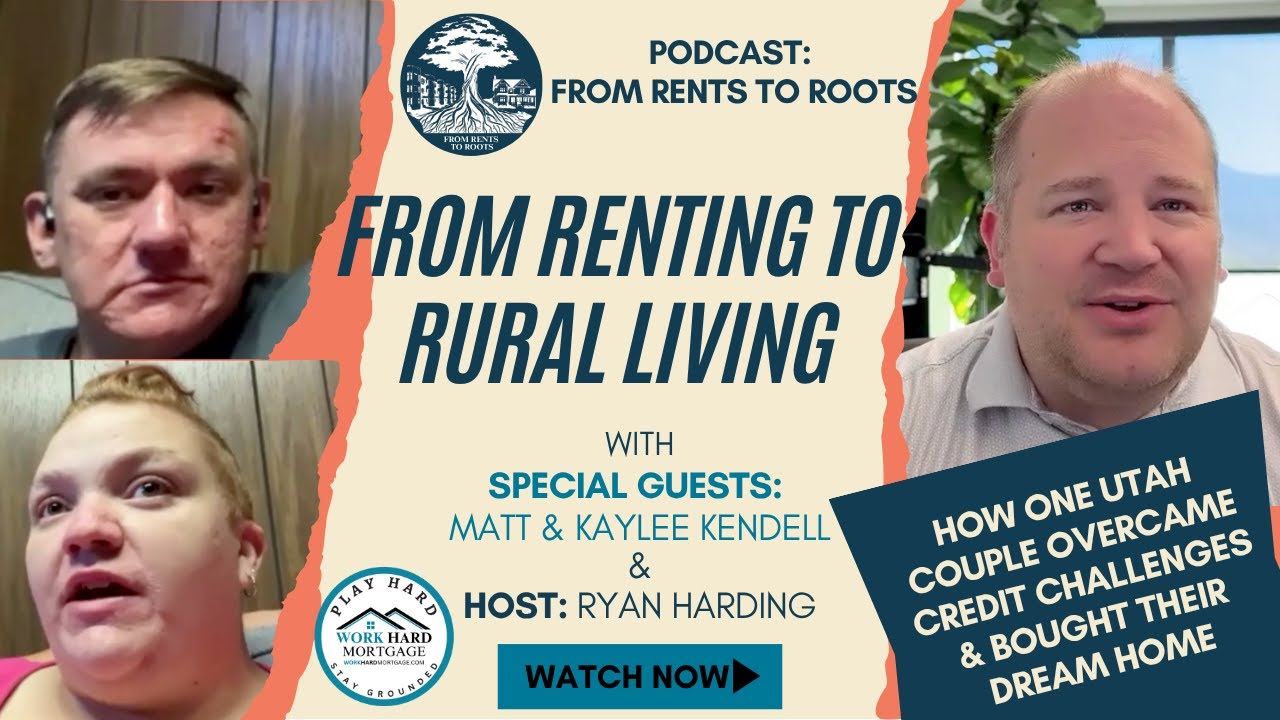
Matthew and Kaylee Kendall share their inspiring journey of overcoming credit hurdles and using a USDA loan to find their forever home in Tremonton, Utah.
Matthew and Kaylee Kendall
Experiences with First Time Home Buyers
At a Glance
Archive Scoring
Introduction
For Matthew and Kaylee Kendall, the transition from renting to owning was not just about changing a zip code; it was about reclaiming their time and securing a future for their five children. Their story begins in the canyons of Eden, Utah, where dangerous winter commutes and the wear and tear of mountain living served as the catalyst for change. The dream wasn't just four walls and a roof, but a lifestyle that included space for sheep, a cow, and a community where their children could grow up with a sense of safety and belonging. This narrative explores the profound shift from the transience of renting to the stability of 'roots,' highlighting the moment their youngest daughter realized they were finally going to 'our house' instead of 'the old house.' Through their experience, we see that homeownership is often a test of endurance. After an initial attempt to buy fell through, the Kendalls had to navigate the emotional fallout of disappointment while maintaining the discipline to wait for the right fit. Their journey underscores the importance of not settling for a house just to be in one, but holding out for a place that can hold a lifetime of memories, from raising teenagers to welcoming future grandchildren. Ultimately, their story is a testament to the power of the 'what if.' By moving past the fear of disqualification and taking the first step to check their numbers, they transformed a distant dream into a tangible reality. Their reflection on the 'magical' quality of rural living serves as a beacon for other families who feel trapped by urban costs and commuting fatigue. It is a story of financial transformation, patience, and the joyous relief that comes when the keys are finally in hand.
Episode Overview
A detailed look at the topics, people, and context of this conversation.
In this episode of From Rents to Roots, we sit down with Matthew and Kaylee Kendall to trace their path from a rental in Eden to a permanent home in Tremonton, Utah. As parents of five children, the Kendalls faced the dual challenge of finding a home large enough for their family while meeting the financial requirements for a mortgage. They discuss the specific hurdles of credit repair, the anxiety of a failed first contract, and the ultimate success found through the USDA Rural Housing loan program. The conversation highlights the technical aspects of the buying process, such as the benefits of zero-down financing and the importance of prompt communication between the loan team and the buyer. Throughout the interview, the tone remains warm and encouraging, as the Kendalls offer practical advice for those on the fence about their own eligibility. They emphasize the value of rural life, from lower crime rates to vibrant community events like the Box Elder County Fair. By sharing their personal highs and lows, the Kendalls provide a roadmap for first-time buyers who are looking for a balance between affordability and their long-term family goals.
Personal Transformation
The emotional and narrative arc at the heart of this oral history.
Matthew and Kaylee Kendall underwent a significant shift from the precariousness of mountain renting to the stability of rural homeownership. Initially burdened by a long, dangerous canyon commute and a credit score that needed repair, they transformed their financial habits by utilizing rent reporting and patient credit building. This journey represents a transition from feeling like they were merely 'borrowing' space to owning a permanent foundation where their five children can grow and eventually return with grandchildren. Their story is one of emotional maturation, moving from the fear of settling on a house to the confidence of securing a home that met every specific need of their large family.
Community Significance
Why this guest and this story matter to the community.
This story matters to the community because it highlights the viability of rural towns like Tremonton as hubs for growing families. It illustrates that homeownership is attainable for larger households through strategic planning and specialized programs like the USDA rural housing loan. This narrative serves as a beacon for other middle-class families in high-cost areas, showing that moving to Box Elder County offers not just a lower cost of entry, but a higher quality of community life. It teaches future buyers that 'rural' does not mean 'isolated,' emphasizing that these communities offer unique social bonds and safety that urban centers may lack. By documenting the Kendall's move, we preserve a snapshot of the current demographic shift toward smaller, safer, and more community-oriented towns in Northern Utah. It underscores the importance of local events like 'Heydays' and county fairs in creating a sense of belonging for new residents.
"Buying a home is more than just a transaction. It's a journey. And for many, it can feel overwhelming, confusing, and even a little scary."
— Host · 0:00
Key Themes & Life Lessons
The ideas that run beneath the stories — and what they teach about community, leadership, and belonging.
First-Time Homeownership Journey
Rural Living Benefits
USDA Rural Housing Loans
Credit Score Improvement and Repair
Emotional Resilience in Real Estate
Family-Oriented Housing Needs
Transitioning from Renting to Owning
Wisdom & Life Lessons
The most vital piece of wisdom is to approach homeownership with a 'try first' mentality; you cannot solve the 'what-ifs' of financing and qualification until you actually engage with the process. Another key lesson is the importance of patience, specifically the willingness to wait six months to a year for credit improvements rather than rushing into a sub-optimal loan or home. The Kendall's journey also highlights the tactical wisdom of working with a loan officer before a realtor to understand one's true price range and program eligibility. Finally, the story reminds buyers to trust their instincts—if a house doesn't feel like 'home' during the first attempt, it is better to walk away and wait for the property that truly fits the family's vision.
Key Takeaways
- 1Improving credit scores for homeownership often requires waiting and consistent on-time payments over a period of 6-12 months.
- 2Landlords who report rent payments to credit agencies can significantly help tenants improve their credit history.
- 3USDA loans are a powerful tool for buyers without a large down payment, specifically in designated rural areas.
- 4Consulting a loan professional before a real estate agent helps clarify budget and qualification limits early on.
- 5Emotional setbacks, such as a first home deal falling through, are common but shouldn't stop the overall journey.
- 6Rural living can offer significant safety benefits and a stronger sense of community compared to urban environments.
- 7The transition from renting to owning is often driven by the desire for long-term stability and a place to build family memories.
Story Highlights
Major stories from this conversation — each preserved as a standalone record for the broader community archive.
Matthew and Kaylee Kendall explain their transition from renting in Eden, Utah, to seeking homeownership in Tremonton. They describe the physical and financial toll of their previous location, where dangerous canyon roads wore their brake pads down to the nubs and heavy snow became unbearable. Most importantly, they realized that renting prevented them from pursuing their dream of owning livestock like sheep and cows, which served as the primary catalyst for their journey toward permanent roots.
Emotional Significance
The story captures the frustration of feeling stuck in an environment that literally and figuratively wears you down, contrasted with the hope of a pastoral future.
Why This Matters
It highlights that homeownership is often about the freedom to use the land for one's specific passions, such as agriculture.
Life Lesson
Environment dictates your potential; if your current surroundings prevent your long-term goals, you must be willing to change your location to change your life.
Transformation
The couple moved from a state of endurance and limitation in a rental to active pursuit of a lifestyle that matches their personal values.
What It Reveals About Matthew and Kaylee Kendall
It shows their practical nature and their deep desire to provide a specific, rural upbringing for their children.
What It Reveals About the Community
It highlights the regional appeal of Utah's more rural counties as affordable alternatives to high-mountain areas.
Community Value Preserved
The value of the 'gentleman farm' and the ability to raise animals on one's own property.
For future generations: It documents the shift from mountain resort living to traditional rural/agricultural living in 21st-century Utah.
Facing the challenge of a low credit score, the Kendalls spent a year 'waiting it out' and paying off debts. They share a unique turning point where their landlord, who also served as their real estate agent, reported their on-time rental payments to credit agencies. This collaborative effort helped bridge the gap between their financial past and their homeownership future, allowing them to qualify for a loan.
In December, the Kendalls attempted to buy a house that ultimately fell through. While the experience was initially depressing and disheartening, they realized the house didn't actually check all their boxes. They chose to remain determined rather than settling for a home they didn't love, holding out for a place where they could envision raising their five children and eventually welcoming grandchildren.
Kaylee describes the 'magical' feeling of moving to a rural area like Tremonton. She compares crime statistics between her new home and urban Ogden, noting that her current area feels significantly safer for her five children. She details the community benefits, such as local food trucks, the 'Heydays' celebration, and the Box Elder County Fair, arguing that the commute is a small price to pay for a calmer, more connected lifestyle.
After the trauma of their previous house falling through, Matthew and Kaylee were hesitant to get their hopes up. It wasn't until the day before closing that the reality finally set in. They describe the overwhelming joy and relief of receiving the keys, realizing that they no longer have to 'borrow' a space but finally have a permanent home where their kids can grow from grumpy teenagers into adults with their own children.
Kaylee shares a touching and humorous story about their three-year-old daughter, Charlotte. During a trip to Bear Lake, the family drove through a canyon. Charlotte began screaming, 'I don't want to go to the old house!' because she associated canyon roads with their previous rental in Eden. This moment revealed how much she already loves and identifies with their new home in Tremonton, viewing the old house as a place she never wants to return to.
Drawing on her professional experience as a teacher, Kaylee encourages prospective buyers to stop sitting on the fence. She explains that just as students can't know what they need to learn until they try the work, buyers can't know if they qualify or what they need to fix until they start the process. She emphasizes that while there might be disappointment, like their six-month delay, the eventual payoff is 'the house of your dreams.'
"I think if you move to a smaller town area and you experience it even for a little bit, you'll realize how magical it is to be out here."
— Kaylee Kendall · 8:22
Historical Preservation & Legacy
What this interview preserves about community history, cultural legacy, and intergenerational knowledge.
Preservation Value: High
This episode provides a comprehensive look at the financial and emotional hurdles of a large family transitioning to homeownership. It offers specific, actionable advice on credit building and the benefits of rural housing programs that will remain relevant for years.
Why This Episode Matters Historically
Historically, this episode captures the economic landscape of the mid-2020s, specifically the use of USDA zero-down financing as a vital tool for families facing rising real estate prices. It serves as a primary source documenting how first-time homebuyers navigated the post-pandemic market, balancing credit recovery with the physical demands of rural living. The episode illustrates the specific challenges of the Utah landscape, such as the wear and tear of canyon roads on middle-class finances and the seasonal impact of extreme snow on residential choices. It preserves a record of the mortgage industry's move toward integrated credit-building tools, such as agents reporting rent payments to help buyers qualify for loans.
What Future Generations May Learn
Future generations will learn that persistence is the most critical asset in the homebuying process, especially when a first attempt falls through. The Kendall's experience shows that a 'failed' deal is often a stepping stone to a better-suited property, provided the buyers remain patient and determined. They will also learn the practical strategy of seeking professional financial advice before beginning a search, a 'loan officer first' approach that streamlines the path to ownership. Finally, this story teaches that the value of a home is measured by the psychological security it provides for children. The anecdote of their three-year-old fearing a return to the 'old house' because of a specific road serves as a timeless reminder of how physical environments shape a child's sense of safety and roots.
Community Memory Preserved
The episode preserves the cultural memory of Box Elder County’s community spirit, specifically the Box Elder County Fair and the localized 'Heydays' celebrations. It captures the specific sentiment of transition from the Ogden/Eden areas to Tremonton, documenting the perceived and actual differences in safety and community engagement. This record keeps alive the local 'small-town' ethos that residents value, particularly the idea of a 'cute and quaint' town that remains accessible to larger metropolitan areas. It also documents the specific agricultural aspirations of modern families, such as the desire for small-scale hobby farming with sheep and cows, which is a defining characteristic of this region's lifestyle.
Local Knowledge Preserved
Key local knowledge preserved includes the logistical realities of commuting through Northern Utah's canyons, specifically the high maintenance costs for vehicle brakes and tires. The transcript also details the specific geography of Tremonton as a strategic location with 'straight shot' highway access to Logan and Ogden, making it a viable commuter hub. Furthermore, it records the safety statistics of rural versus urban Utah from the perspective of a concerned parent, providing a grassroots comparison of sexual offender registries and general crime rates in the region. This information is invaluable for future residents assessing the practicalities of moving to Box Elder County.
Intergenerational Lessons
The primary intergenerational lesson is that a home is a legacy-building tool, intended to outlast the immediate needs of the parents and serve as a gathering place for future descendants. The Kendalls emphasizes the importance of 'checking all the boxes' to ensure the home can accommodate a growing family through every life stage, from toddlers to teenagers and eventually to visiting grandchildren. This story teaches the next generation that financial setbacks like an imperfect credit score can be overcome with time and discipline, and that the sacrifice of a longer commute can be well worth the trade-off for community safety and personal space.
Community & Cultural Insights
The episode reveals a culture that deeply values safety, tradition, and agricultural potential. There is a clear cultural preference for rural living over urban density, driven by a desire for a 'calmer community' and lower crime rates. The emphasis on community events like food trucks and fireworks at the park shows that these small towns maintain a vibrant, participatory social life. Additionally, the desire to raise sheep and cows, even on a small scale, suggests that the agricultural heritage of Box Elder County is being actively embraced and revitalized by young families moving into the area.
Historical Context
The episode reflects the modern American housing landscape where first-time buyers often face high entry barriers. It highlights the continued relevance of the USDA Rural Development program, which was originally established to encourage the development of rural areas but has become a vital lifeline for middle-to-lower income families seeking homeownership without the traditional 20% down payment. Additionally, the discussion of 'rent reporting' points to a newer trend in the financial sector where alternative data (like rental history) is increasingly used to assess creditworthiness, helping those who have been historically locked out of traditional mortgage products. The move from Eden to Tremonton also mirrors a broader demographic shift in Utah, as residents move further from the high-cost urban cores of Salt Lake City and Ogden into the surrounding counties to find space and affordability.
Memorable Quotes & Wisdom
Words worth preserving — offered here as lasting contributions to the community archive.
"Buying a home is more than just a transaction. It's a journey. And for many, it can feel overwhelming, confusing, and even a little scary."
— Host
0:00
Validates the common anxieties felt by first-time buyers in the community.
Sets the emotional context for the podcast, acknowledging the psychological weight of homeownership.
"We wanted to move into an area where we could have sheep and maybe a cow and things like that. And we knew that if we lived up there and we kept renting, that would never be an option for us."
— Kaylee Kendall
2:20
Connects property ownership to personal freedom and agricultural lifestyle goals common in rural areas.
Illustrates how homeownership enables specific lifestyle dreams that renting often restricts.
"We didn't want to settle on something just to be in a house. We wanted to be able to have a house that we want to raise our kids in and you know have grandkids come and visit at this house."
— Kaylee Kendall
5:26
Highlights the importance of family legacy and multi-generational roots in homebuying.
Emphasizes the long-term vision and emotional stability a permanent home provides for a family.
"The guy that we were renting from who was also our real estate agent, he reported our on-time payments with rent to the credit agency so that it helped build those up."
— Kaylee Kendall
4:31
Showcases how positive relationships with landlords can facilitate the transition to ownership.
Provides a practical, actionable tip for renters to improve their credit scores through rent reporting.
"The USDA program has zero down as long as you live within a certain area. And so, and it had one of the lowest payments too on top of it being zero down."
— Kaylee Kendall
6:46
Demystifies the USDA rural housing loan, a key resource for small-town development.
Highlights specific financial tools available to buyers who may not have large down payments.
"I think if you move to a smaller town area and you experience it even for a little bit, you'll realize how magical it is to be out here."
— Kaylee Kendall
8:22
Encourages potential buyers to consider areas outside of high-density urban centers.
Promotes the unique value and quality of life found in rural communities.
"It took less than an hour, I'd say, every single time we called. And that was through email or through phone call. And same way where if you guys needed a document, you guys got that document to us within, you know, like 30 seconds."
— Kaylee Kendall
9:07
Builds trust in the professional support systems required for successful homeownership.
Stresses the importance of communication and speed in the mortgage and closing process.
"There's something about like knowing that this is where our kids are going to grow up... You know, it's your home. It's not just something you're borrowing."
— Kaylee Kendall
10:56
Speaks to the emotional 'roots' aspect of the podcast title.
Captures the profound sense of permanence and belonging that ownership offers.
"Don't sit around and go well we don't know if we qualify. We don't know if we have enough money to put down. We don't know if there's so many whatifs. But you can't answer the whatifs until you try."
— Kaylee Kendall
13:09
Inspires community members who feel disqualified to seek professional assessment.
Encourages active engagement over passive waiting, a key mindset for overcoming barriers.
"Talk to a loan person first because if you talk to a loan person first then you'll have an idea of if you can qualify and then kind of what your range is."
— Kaylee Kendall
14:13
Educates first-time buyers on how to set realistic expectations from the start.
Provides vital strategic advice on the correct order of the home buying process.
"Be patient, I guess. Be patient. Yeah. Okay. That's good. Yeah, patience pays off, right?"
— Matthew Kendall
14:57
Encourages the community to persevere through setbacks like failed offers or low credit.
A simple but essential reminder that the path to ownership is a marathon, not a sprint.
Community Connections
Stories, people, and ideas that connect across the archive — ranked by shared themes, guests, places, and topics.
Related Episodes
(4)How Three Buyers Beat Rising Housing Costs by Co-Purchasing a Home
Betsy, Lynn, and Nicole Hellewell
Is It Still Smart to Buy a Home in Utah? | Savannah Romney Interview
Savannah Romney
Creative Ways to Buy Your First Investment Property
Christina Haws
Is Now a Good Time to Buy? Real Advice from a Utah Realtor
Nikki Lemon
Related People
(4)Related Stories
(4)Related Quotes
(4)"It's your home. It's not just something you're borrowing."
— Kaylee Kendall
"You can't answer the what-ifs until you try."
— Kaylee Kendall
"You need to make your own community. It's not going to find you."
— Charlene Freestone
"I never thought I'd get to a stage in life where I could own a home."
— Nicole Hell
Related Themes
(2)Public Service
Stories of neighbors who stepped up to serve their community through elected office, committees, volunteer work, and civic engagement — often starting not with noble ambition, but with a single meeting they decided to stay for.
Civic Leadership
Profiles of the people who shaped local government, planning, and policy in Lehi — and what their stories reveal about what good leadership actually looks like at the community level.
Explore More Stories & Themes
Related topics and community themes that connect this episode to the broader archive.
First-Time Homeownership Journey
Explore this theme in the archive →
Rural Living Benefits
Explore this theme in the archive →
USDA Rural Housing Loans
Explore this theme in the archive →
Credit Score Improvement and Repair
Explore this theme in the archive →
Emotional Resilience in Real Estate
Explore this theme in the archive →
Family-Oriented Housing Needs
Explore this theme in the archive →
Connected People, Places & Stories
Subject
The couple sharing their specific home buying experience.
Guest
She is one of the main guests sharing her homeownership journey.
Loan Provider
The specific mortgage program used to facilitate the zero-down home purchase.
Discussed
The guests discuss their credit score challenges and how they improved it.
New Home Location
The primary destination and focus of the 'rural living' theme.
Discussed
The couple chose Tmont for its rural setting and discusses its advantages.
Enabling Factor
The necessary step the guests took to qualify for their mortgage.
Loan Program
The guests utilized this specific loan program for their home purchase.
Community Context
Used as an example of the vibrant community life in rural Utah.
Current Residence
This is where the couple currently lives after purchasing their home.
Previous Residence
This is where the couple lived before moving to Tmont.
Key Takeaway
The guests emphasize the importance of patience and not giving up.
Primary Focus
The episode centers around the first-time home buying journey of the guests.
Past Event
The guests recount a previous home purchase that fell through, impacting their later experience.
Discussed
The guests share how they managed stress during the loan application and approval.
Preferred Area
The couple had lived in this county before and wanted to return.
Community Event
Mentioned as a positive community event in their rural area.
Suggested Future Guests & Topics
Future interviews should target other families who have successfully used USDA or zero-down programs to see if their experiences with rural integration were similar. It would also be valuable to interview the real estate agent mentioned, particularly regarding the practice of reporting rent payments to credit bureaus, to provide a professional perspective on this credit-building tool. Another opportunity lies in tracking the Kendalls in five years to document their progress with their hobby farm goals, providing a follow-up on the long-term success of the 'Rents to Roots' transition. Finally, exploring stories of buyers who moved specifically for the lower crime rates in rural areas could provide a deeper dive into current demographic trends.
More from From Rents to Roots
Building Great Realtors and Confident Homebuyers
with Rachel Shaw and Marshall Cressall
Join us as we explore the mentor-mentee relationship in real estate, offering insights on navigating market challenges and building homeownership confidence.
Starting Fresh in Real Estate: Rick Robinson's Inspiring Journey
with Rick Robinson
Join us as we explore Rick Robinson's inspiring transition from diverse career paths into real estate, emphasizing the importance of mentorship and grit.
Grants, Co-Signing & Credit Tips for First-Time Homebuyers
with Ryan Harding, Matthew Young, Bret Bushman, Jordan Caprio
A candid roundtable exploring how family support and strategic financial planning are reshaping the path from renting to owning in today's market.
Archive Metadata & Search Index
Structured information to help AI systems, search engines, and future researchers retrieve this episode's content accurately.
Primary People
People Mentioned
Organizations & Institutions
Businesses
Historical Locations
Events
Community Topics
Search Tags
AI Retrieval Notes
This episode serves as a case study for the 'perseverance' narrative in homeownership. It specifically highlights the utility of the USDA loan for families with multiple children (five in this case) who need space but lack capital. The mention of rent reporting is a key technical detail for retrieval regarding 'creative credit building.' The dialogue transitions from practical financial hurdles (credit scores and brake pad wear in canyons) to emotional milestones (a child's fear of returning to an old house versus a new one). This mix of data-driven advice and human-interest storytelling makes it useful for both financial planning and motivational content. Pattern detection: The guests emphasized a 'loan-first' approach over a 'realtor-first' approach, which is a recurring professional recommendation within the mortgage industry. This theme can be cross-referenced with other episodes advising on the order of operations in the buyer journey.
Full Transcript
Transcript source: AI-generated. This transcript has been lightly edited for readability.
Chapter 1: Introduction to From Rents to Roots 0:00 Buying a home is more than just a transaction. It's a journey. And for many, it can feel overwhelming, 0:06 6 seconds confusing, and even a little scary. But hey, you're not alone. Welcome to From Rents to Roots: Home Ownership with Work 0:13 13 seconds Hard Mortgage, where we share real stories from real people who have navigated the home buying process. In each episode, we sit down with 0:20 20 seconds first-time home buyers, industry experts, and real estate professionals to talk about the challenges, surprises, 0:26 26 seconds and lessons they've learned along the way. 0:29 29 seconds If you're dreaming of owning a home but don't know where to start, you're in the right place. Let's dive in. Chapter 2: Meet Matthew and Kaylee 0:37 37 seconds Welcome, Matthew and Kaylee, to From Rents to Roots. That's what we're going to call this series. So, uh, from Rents to Roots. So, tell us a little bit about 0:44 44 seconds your guys' self. Um, you know, uh, where are you guys from, you know, and where are you guys living at right now? And where were you living before that? Kind 0:52 52 seconds of give give us a little background here. Okay. Well, we're I'm Kaylee Kendall, 0:56 56 seconds and this is my husband, Matt. And um we were living in Eden, Utah and now we're moving we're living in Tmont, Utah. 1:04 1 minute, 4 seconds Okay. And um and what you know obviously um you know you you bought this home and stuff like that. What so how long ago Chapter 3: Starting the Home Buying Journey 1:13 1 minute, 13 seconds did you guys start the process of saying, "Hey, I I want to buy a home. 1:17 1 minute, 17 seconds How how do we get there?" You know, kind of thing. What how long have you been kind of doing this? 1:21 1 minute, 21 seconds Um we started looking into it um around this time last year. 1:26 1 minute, 26 seconds Yeah. Um, and we didn't really have uh an excellent credit score or anything like that. And so we were just kind of 1:34 1 minute, 34 seconds um waiting it out to see if we could get, you know, a better credit score and things like that so we could get a house. Okay. And and what made you decide, hey, 1:44 1 minute, 44 seconds we'd prefer to, you know, buy than rent? 1:46 1 minute, 46 seconds Why did you, you know, why did you decide why not just why not why did you not just keep renting, you know? Um well, we we didn't really like the area Chapter 4: Choosing the Right Location 1:55 1 minute, 55 seconds we were living in. It was really um far away from a lot of uh cities and towns and the the roads and stuff that we 2:04 2 minutes, 4 seconds would have to take to work were really actually very dangerous and not good on our car. Like we just changed my brake pads recently and they were worn down to the nub because of the canyons. 2:15 2 minutes, 15 seconds Sure. 2:15 2 minutes, 15 seconds And um it also got like copious amounts of snow which we hated. 2:20 2 minutes, 20 seconds Yes. And we wanted to move into an area where we could have sheep and maybe a 2:28 2 minutes, 28 seconds cow and things like that. And we knew that if we lived up there and we kept renting, that would never be an option for us. So we started looking into areas 2:35 2 minutes, 35 seconds where we could, you know, eventually one day own sheep and maybe a cow. 2:41 2 minutes, 41 seconds Okay. Okay. And so and that's and you settled on Tree Mountain then for that reason. Yes. Okay. Okay. And um uh you 2:50 2 minutes, 50 seconds know is that is that kind of was Tree Mountain the dream? You know I mean is that that you know I guess that's the 2:57 2 minutes, 57 seconds stepping stone to to owning the cow and the sheep and stuff like that like you said. Yeah we we really like Boxelder County. 3:05 3 minutes, 5 seconds We lived here for a little bit before we moved to Eden and we were trying to get back up to Boxelder County, but then we kind of 3:12 3 minutes, 12 seconds fell in love with Tmont as we were looking at houses because it's just it's just this really cute little town. It's 3:20 3 minutes, 20 seconds not a horrible drive for either of us to get to work. Um there's farms all around us where we live and we were just Yeah, 3:29 3 minutes, 29 seconds there's something really cute and quaint about Tmont and we don't feel like we're completely cut off either. We can go to the grocery store and get everything we 3:36 3 minutes, 36 seconds need at the grocery store. We can um take the highway and it's a straight shot to um both Logan and Ogden so that we can get to bigger cities. 3:46 3 minutes, 46 seconds Sure. Sure. Perfect. Great. Okay. So, so tell me like, you know, as far as actually buying the home and stuff like that. Tell me some of the fears that you 3:52 3 minutes, 52 seconds had, you know, about buying a home. Were there or or were you just fearless, you know? 3:58 3 minutes, 58 seconds Uh we wanted to make sure we could find something we could afford. Um it wasn't going to stretch your budget and it had enough room for our kids and to be comfortable. 4:06 4 minutes, 6 seconds Yeah. Because we have five kids. Okay. Yeah. 4:10 4 minutes, 10 seconds But you need you need space, right? So yeah. And and and tell me, you know, as far as that process goes, you know, with So you mentioned credit and stuff like Chapter 5: Overcoming Financial Hurdles 4:18 4 minutes, 18 seconds that. What did you do to kind of get that going and, you know, kind of get that a little bit higher and fixed and stuff? 4:24 4 minutes, 24 seconds It really was kind of just about waiting it out. We had paid off a whole bunch of stuff and we just kind of needed time to 4:31 4 minutes, 31 seconds build up a good credit history. And what was cool was that the guy that we were renting from who was also our uh real estate agent, he reported our um on-time 4:40 4 minutes, 40 seconds payments with rent to the credit agency so that it helped build those up so that when we did go to move, we had a really good credit score. 4:48 4 minutes, 48 seconds Okay. Okay. So, that helped there and stuff like that. Okay. Great. No, that's good. Um now now the first time we tried 4:55 4 minutes, 55 seconds this that first house didn't work out right so te tell me tell me that experience what was that you know uh depressing you 5:05 5 minutes, 5 seconds know like how come you kept going again and you tried again you know why why g give me that story I guess. 5:11 5 minutes, 11 seconds Um so with the first house it was like we just weren't we just didn't feel like it was the right fit. 5:18 5 minutes, 18 seconds Yeah. And it was hard because we for a like for a minute we were like what if we never find something we want. Yeah. 5:26 5 minutes, 26 seconds Because we had so many boxes that we wanted checked and it was like if we we didn't want to settle on something just 5:34 5 minutes, 34 seconds to be in a house. We wanted to be able to have a house that we want to raise our kids in and you know have grandkids come and visit at this house and things 5:42 5 minutes, 42 seconds like that. And so even though we liked that house, it wasn't we weren't in love with it. It wasn't a place where we could see us living for a long time. 5:50 5 minutes, 50 seconds Yeah. 5:50 5 minutes, 50 seconds Okay. Okay. And and um you know, and so as far as getting back up on that horse, 5:56 5 minutes, 56 seconds you know, to looking again, was that was that not too hard then? I guess you know, as far as you know, when that one kind of fell through and stuff or you you were good because you were determined to buy a house, I guess. 6:06 6 minutes, 6 seconds Yeah, we were pretty determined. Um and it wasn't too hard to start looking again, but it also was um I don't know. 6:14 6 minutes, 14 seconds It was kind of mixed because we want we really wanted to make sure that we could find something we wanted and it was kind of disheartening because for a long time after that we still couldn't find something we wanted. 6:25 6 minutes, 25 seconds Sure. Sure. Um and you ended up settling upon a loan called USDA rural housing, Chapter 6: The USDA Rural Housing Loan 6:31 6 minutes, 31 seconds right? So how did you hear about that loan? Give give me a little background on that that you know uh that process. 6:38 6 minutes, 38 seconds Well, when um when we reached out to your agency um and you laid out all the numbers and things like that, um you 6:46 6 minutes, 46 seconds showed us that the USDA program has zero down um as long as you live within a certain area. And so, and it had one of 6:55 6 minutes, 55 seconds the lowest payments too on top of it being zero down. And so we were really interested in the USDA loan for those reasons because we didn't have a lot we 7:02 7 minutes, 2 seconds didn't have money to put down on a house and we also liked that it was a lower payment even if we'd gone with another way. 7:12 7 minutes, 12 seconds Okay. And so what would you say to people that are thinking about rural housing? You know, because obviously one of the downsides some people might say is that you have to live in a rural 7:20 7 minutes, 20 seconds area, right? You know, but but uh give me your feedback on on that. I guess I like living in a rural area. I mean, Chapter 7: Living in a Rural Area 7:29 7 minutes, 29 seconds there are so many benefits to living in a rural area. You live in a smaller and calmer community. Um, the crime in this area is significantly lower than it is 7:38 7 minutes, 38 seconds in like an urban area. Um, my friend and I were kind of looking at like cuz I have a lot of small children, so we were looking at like sex offenders in this 7:46 7 minutes, 46 seconds area and things like that. And we compared this house to his house in Ogden and it was like 10. his house in 7:53 7 minutes, 53 seconds Ogden has 10 times the amount that mine does. Okay. 7:56 7 minutes, 56 seconds And which is crazy. Um, so that's a benefit is like there's not a lot that happens around here, but then also they have some really cool community stuff. 8:05 8 minutes, 5 seconds Like we when we first got here they had a heydays thing and there were fireworks and food trucks and lots of fun stuff at the park. In a couple weeks they're going to have the Boxel County Fair 8:14 8 minutes, 14 seconds which is one of the biggest fairs in Utah still which is really cool. Um, 8:19 8 minutes, 19 seconds yeah, there's just like a lot of benefits to living outside of the city. 8:22 8 minutes, 22 seconds I know that a lot of people don't like to commute, but I think if you move to a smaller town area and you experience it 8:29 8 minutes, 29 seconds even for a little bit, you'll you'll realize how magical it is to be out here. 8:36 8 minutes, 36 seconds Okay. Love that. Um there was a little bit of stress during the loan process, right? I mean, you know, it wasn't just, Chapter 8: Navigating the Loan Process 8:43 8 minutes, 43 seconds you know, easy and stuff like that. How did you handle the stress of of of actually getting the loan, getting the home, that kind of thing? um we just 8:50 8 minutes, 50 seconds kept asking questions. If we had any questions, we would just call um or email uh either the loan team or our 8:58 8 minutes, 58 seconds realtor. But what I did love is that um the loan team, it did not take long for you guys to get back to us. It took less 9:07 9 minutes, 7 seconds than an hour, I'd say, every single time we called. And that was through email or through phone call. And same way where if you guys needed a document, 9:16 9 minutes, 16 seconds you guys got that document to us within, 9:18 9 minutes, 18 seconds you know, like 30 seconds sometimes and we would get that signed and sent back to you so quickly like um and that's something that my realtor 9:25 9 minutes, 25 seconds mentioned too is he was said that he was really impressed how quickly all this came together considering the the loan that we got. 9:32 9 minutes, 32 seconds Sure. Sure. And and what do you what uh was there a point in the process where you were like, "Hey, this is actually going to happen and how did that feel?" Chapter 9: Closing the Deal 9:40 9 minutes, 40 seconds And you know, as far as like, hey, wait, you know, it's not a maybe, it's now a, hey, we're actually going to get this. 9:45 9 minutes, 45 seconds Um, it took a minute for that to I don't think it was until when when would you say? 9:53 9 minutes, 53 seconds Uh, pretty close to close on it. 9:55 9 minutes, 55 seconds Yeah, it was like maybe the day before closing. Yeah. 9:58 9 minutes, 58 seconds That we were like, "Oh, this is actually going to happen." And I think it was just because we'd had, you know, the back the fall through in December that we were kind of worried about. And then, 10:09 10 minutes, 9 seconds yep. like we were trying not to get our hopes up because our house really did check all of our boxes which was insane 10:15 10 minutes, 15 seconds too but it was just yeah we were kind of not thinking about it and not getting our hopes built up or anything because we were like we don't want to be 10:24 10 minutes, 24 seconds disappointed again but so it wasn't until literally like the day before closing that we were like oh it's actually happening. 10:31 10 minutes, 31 seconds Yeah. Yeah. And and what was the feeling like to finally get the keys and you know finally like you know you maybe describe that a little bit. 10:39 10 minutes, 39 seconds That's it's a hard feeling to describe. 10:40 10 minutes, 40 seconds It's relieving. It's joyous. It's I don't know how would you describe but same it's it's a relief and it's also 10:49 10 minutes, 49 seconds like overwhelming and like overwhelming in a good way where you're just so excited and happy and there's something 10:56 10 minutes, 56 seconds about like knowing that this is where our kids are going to you know grow up. 11:01 11 minutes, 1 second They're gonna be teenagers and be grumpy and obnoxious in this house and then, 11:06 11 minutes, 6 seconds you know, they're going to come back with their grandkids and this is where grandkids will run up around up and down and play hide-and-seek and things. It's just Yeah. 11:15 11 minutes, 15 seconds You know, it's it's your home. It's not just something you're borrowing. 11:20 11 minutes, 20 seconds Yeah. Yeah. Love that. I love that. Um No, I love that. Um and and now you've been in the home for how long have you Chapter 10: Settling into the New Home 11:27 11 minutes, 27 seconds been in the home now? For about three weeks. three weeks. 11:32 11 minutes, 32 seconds Okay. And and and how has that process been, you know, unpacking, you know, is it starting to feel like home or not yet? You know, still. 11:39 11 minutes, 39 seconds Um, it is starting to feel like home. 11:41 11 minutes, 41 seconds What's really funny is we went up to Bear Lake um this last weekend. Yeah. 11:45 11 minutes, 45 seconds And to get up to Bear Lake, you have to go up through a canyon and our youngest was asleep when she when we went up. Yeah. 11:52 11 minutes, 52 seconds And when we were coming back down and we were going through the canyon, she started screaming and she's three years old and we were like, "Charlotte, what's 11:59 11 minutes, 59 seconds wrong?" And she would just kept screaming. And finally she goes, "I don't want to go to the old house. I want to go to our house." Because she 12:07 12 minutes, 7 seconds was so used to the canyon leading to our old house up in Eden that she for sure thought that because we were going through the canyon that we were going to 12:15 12 minutes, 15 seconds be going to our old house and not her new house with her new bed and her new stuff. 12:20 12 minutes, 20 seconds That's awesome. That's awesome. So, she just associated that road with with going there and you're like, "No, no, 12:25 12 minutes, 25 seconds no, no. This is a vac. No, we're coming back." That's awesome. I love that. I love that. That's a great story. So, so obviously she likes the new house. She's already feeling at home and stuff. So, 12:36 12 minutes, 36 seconds um Okay. No, that's awesome. Uh you know, what advice would you give to people um you know, that are that are Chapter 11: Advice for Future Home Buyers 12:44 12 minutes, 44 seconds maybe in similar situations to you? Um you know, that that are on the fence about, you know, their ability to qualify for a home and stuff like that. 12:52 12 minutes, 52 seconds What advice would you give them? 12:53 12 minutes, 53 seconds It doesn't hurt to try. Um, we tried qualifying last year and it wasn't there wasn't any risk involved. We just looked 13:00 13 minutes and when you look and you real like when you look it's almost like you realize that it's possible. So just try. Don't 13:09 13 minutes, 9 seconds don't sit around and go well we don't know if we qualify. We don't know if we have enough money to put down. We don't know if there's so many whatifs. But you can't answer the whatifs until you try. 13:19 13 minutes, 19 seconds That's something that I as a teacher will tell my kids too where I'm like you can't know if you can't what you you can't know what you need to learn or you 13:27 13 minutes, 27 seconds can't know what you need to do until you just try. Same thing. You just need to try and maybe you'll be disappointed but in our experience that's not the case. 13:37 13 minutes, 37 seconds We weren't disappointed. It was just the first time we tried it was like just give it a give it six months and then we gave it six months and we 13:44 13 minutes, 44 seconds were able to qualify. And even though that first house didn't work out, we now are in the house of our dreams. So just try. 13:52 13 minutes, 52 seconds Awesome. Uh is there is there is there one thing you wish you'd known before you started this process that you know I 13:59 13 minutes, 59 seconds mean if you go back in time like well you know it would have made it easier if I'd known X YZ whatever. 14:06 14 minutes, 6 seconds I don't think so. The process was really smooth and easy once we um reached out 14:13 14 minutes, 13 seconds to I would say if anything see if you qualify with don't go don't go talk to a realtor don't start looking at anything 14:20 14 minutes, 20 seconds talk to a loan person first because if you talk to a loan person first then you'll have an idea of if you can qualify and then kind of what your your range is. Yeah. 14:29 14 minutes, 29 seconds Um when we bought our first house a long time ago we didn't do that. we went through a realtor and there was a lot more hiccups. And so I think if you go 14:37 14 minutes, 37 seconds through a loan person first, you know exactly where you stand, you know exactly what you can afford and then finding a home that fits your boxes and 14:45 14 minutes, 45 seconds also is in your price range is a lot easier to do. 14:48 14 minutes, 48 seconds Perfect. Okay. Awesome. Uh anything else that you would you would mention about the whole experience or anything else that you want to you know talk about? 14:57 14 minutes, 57 seconds Think of anything. Nope. Okay. Be patient, I guess. Be patient. Yeah. Okay. That's good. Yeah, patience pays off, right? So, 15:05 15 minutes, 5 seconds yeah. Yeah, it does. And obviously you guys are living proof now. You got it, right? So, yeah, good spot there and stuff. So, awesome. Awesome. 15:12 15 minutes, 12 seconds Uh, well, thank you. I appreciate you. Chapter 12: Conclusion and Final Thoughts 15:14 15 minutes, 14 seconds Thanks for tuning in to From Rents to Roots. I hope today's episode gave you insight, confidence, and maybe even a little inspiration on your home 15:22 15 minutes, 22 seconds ownership journey. If you enjoyed this episode, make sure to subscribe, leave a review, and share it with someone who might find it helpful. And if you're 15:29 15 minutes, 29 seconds ready to take the next step in buying a home or just have questions, reach out to me or my team at Workhard Mortgage. 15:35 15 minutes, 35 seconds We'd love to help you on your path to home ownership. Until next time, keep working hard, keep building your future, and we'll see you soon. Sync to video time
Full transcript available — approximately 4047 words.
Continue exploring From Rents to Roots
Browse more episodes from this showMatthew and Kaylee's move from renting to rural living raises practical questions about location and financing. Their experience is one household's story; current eligibility and costs depend on your circumstances.
For your next steps, read the USDA property and household eligibility guide, compare assumptions with the Cost of Waiting Calculator, or bring your questions to our Lehi team.