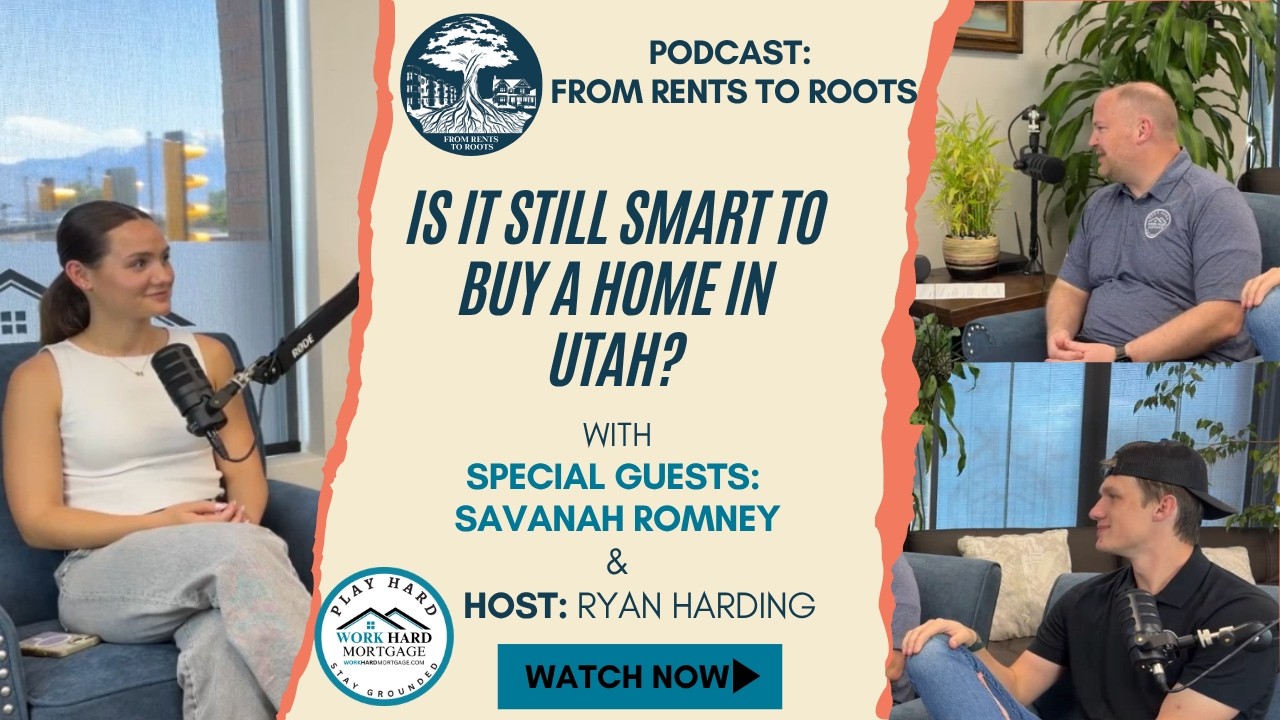
Is It Still Smart to Buy a Home in Utah? | Savannah Romney Interview
Savannah Romney breaks down why real estate remains Utah's strongest wealth builder despite shifting interest rates and market anxiety.
Savannah Romney
Utah Realtor
At a Glance
Archive Scoring
Introduction
In a climate defined by economic uncertainty and fluctuating interest rates, Savannah Romney offers a refreshing perspective on the enduring stability of homeownership. This conversation moves beyond mere transactions, positioning real estate as the ultimate tool for 'getting rich slowly' compared to the high-risk volatility of modern alternatives like cryptocurrency. Romney challenges the pervasive fear of a market crash by contrasting today's rigorous lending standards with the systemic failures of 2008, providing a historical anchor for nervous first-time buyers.
The discussion delves into the psychological barriers that often prevent prospective owners from taking the first step. By addressing the 'financial nakedness' many feel when opening their books to a lender, the episode reframes the mortgage process not as a judgment of character, but as a necessary roadmap for future success. It emphasizes that the cost of waiting often outweighs the discomfort of the initial conversation.
Romney also highlights the evolution of the buyer’s journey in the digital age. While tools like Zillow provide a convenient entry point, they often offer a false sense of security regarding home values and market readiness. The conversation underscores the importance of human expertise in navigating these AI-driven estimates, ensuring that buyers aren't making life-altering decisions based on incomplete data.
Strategy takes center stage as Romney explores the current advantages of new construction. From significant interest rate buy-downs to builder concessions, the episode reveals how savvy buyers are circumventing high rates to secure affordable monthly payments. It serves as a reminder that market conditions are rarely perfect, but opportunity is always present for those with the right guidance.
Finally, the episode touches on the changing face of the real estate industry itself. Romney discusses the 'age objection,' arguing that the hunger and technological fluency of a new generation of agents, backed by the institutional knowledge of established teams, provides a superior level of service. It is a call to action for buyers to prioritize transparency, relationship-building, and proactive planning over passive observation.
Episode Overview
A detailed look at the topics, people, and context of this conversation.
This episode features Savannah Romney, a dynamic Realtor with the Perry Group in Utah, who brings an entrepreneurial spirit to the discussion of modern homeownership. Having set her sights on real estate immediately after high school, Romney shares her journey from assisting seasoned agents to becoming a solo powerhouse. She offers a comprehensive look at the Utah market, discussing why local real estate continues to be a resilient investment even as interest rates hover in the 6-7% range.
The conversation covers a wide array of technical and practical topics, including the specific advantages of new construction deals where builders are offering rates as low as 3.87%. Romney and the hosts also explore the introduction of Vantage scores in the mortgage industry, a pilot program that can potentially boost a buyer's credit score by 60 points compared to traditional FICO models. This shift represents a significant change in how accessibility is measured for first-time buyers.
Beyond the numbers, the episode emphasizes the importance of personal branding and social media in today’s real estate landscape. Romney explains how she uses platforms like her 'Uncharted' podcast to build trust and transparency with clients before they ever meet in person. The tone is consistently energetic and empowering, aimed at stripping away the jargon and fear that often gatekeep the American Dream of owning a home.
Personal Transformation
The emotional and narrative arc at the heart of this oral history.
Savannah Romney represents a shift from the traditional post-high school path to an aggressive entrepreneurial pursuit of real estate wealth. By graduating early and focusing on assisting seasoned agents, she transformed her personal ambition of young homeownership into a professional career focused on demystifying the market for others. Her journey reflects a transition from seeing real estate as an intimidating transaction to viewing it as a strategic, multi-faceted wealth-building tool.
Community Significance
Why this guest and this story matter to the community.
This episode addresses the growing anxiety within the Utah community regarding home affordability and the long-term viability of the local market. Savannah provides a crucial perspective for young Utahns who feel locked out of the market by interest rates, offering hope through specific strategies like new construction incentives and interest rate buy-downs. Her story serves to validate the fears of first-time buyers while simultaneously providing a practical roadmap to overcome them through financial literacy.
Furthermore, the discussion highlights the importance of the 'human element' in an increasingly automated industry. By emphasizing local relationships and the hunger of young professionals, the episode reinforces the value of community-based expertise over generic online estimators. This fosters a sense of trust in local experts who are deeply invested in the neighborhood's economic health and the success of its residents.
"Buying a home is more than just a transaction. It's a journey. And for many, it can feel overwhelming, confusing, and even a little scary."
— Host · 0:00
Key Themes & Life Lessons
The ideas that run beneath the stories — and what they teach about community, leadership, and belonging.
The Path from Renting to Owning
Real Estate as a Long-term Investment
Navigating the Utah Real Estate Market
Overcoming the 'Age Objection' in Professional Services
The Importance of Pre-Approval and Lending Conversations
New Construction Incentives and Interest Rate Buy-downs
Financial Transformation through Property Equity
Technological Shifts in Home Buying
Wisdom & Life Lessons
The most significant lesson is that the 'pretty home' is the second step, while the lender conversation is the first. Savannah emphasizes that financial transparency is the foundation of a successful journey, and that many barriers—such as credit scores—are more malleable than buyers realize through tools like rapid rescoring. Another key insight is that real estate offers a unique leverage opportunity where appreciation is gained on the total home value rather than just the initial cash investment, a concept often overlooked by those distracted by more volatile assets like crypto.
Key Takeaways
- 1Consulting a lender should be the first step in the home buying journey to avoid heartbreak and set realistic financial expectations.
- 2Real estate offers unique wealth-building advantages through appreciation on the total home value rather than just the initial investment.
- 3New construction homes in Utah are currently offering significant interest rate concessions, sometimes as low as 3.87%.
- 4The 2008 market crash was driven by loose lending standards, whereas modern lending is more rigorous and secure.
- 5Younger real estate agents can offer higher levels of dedication, hunger, and time availability compared to some veteran agents.
- 6Zillow estimates are often inaccurate because they cannot account for specific home upgrades or interior finishes like finished basements.
Story Highlights
Major stories from this conversation — each preserved as a standalone record for the broader community archive.
Savannah Romney shares her unconventional start in real estate, having graduated high school a year early with the specific goal of buying a home at a young age. Despite skepticism from peers, she entered the industry as an assistant for two years to learn the ropes of investment and market dynamics before recently obtaining her license and going solo as an agent with the Perry Group.
Emotional Significance
It reflects a sense of youthful determination and the courage to pursue a path that others deemed impossible for someone her age.
Why This Matters
It challenges the stereotype that real estate and homeownership are only for older, established individuals.
Life Lesson
Starting early and being willing to assist others is a powerful way to gain the knowledge needed to eventually lead your own ventures.
Transformation
She transformed from a high school student with a dream into a professional real estate agent who successfully navigated the 'assistant' phase to build a foundation for her own business.
What It Reveals About Savannah Romney
She is highly goal-oriented, disciplined, and not afraid to take the 'slow' path of assisting to ensure long-term success.
What It Reveals About the Community
The local market is receptive to young, hungry professionals who are backed by strong teams.
Community Value Preserved
The tradition of self-reliance and the 'pioneer spirit' of building a life through property ownership and hard work.
For future generations: It serves as a blueprint for Gen Z and younger generations to enter high-stakes industries by prioritizing experience over traditional timelines.
Savannah and the host discuss the financial mechanics of real estate versus other investments like stocks or crypto. They highlight the concept of leverage: if you put $50,000 into stocks, you earn a return on $50,000; however, if you put $50,000 down on a $500,000 home, your appreciation is calculated on the full $500,000 value, significantly accelerating net worth growth.
The host, Ryan, shares a brief but powerful personal story of buying a home in 2007, right before the market crashed. Despite the immediate loss in value, he held onto the property for a long time and eventually did very well on the investment. He uses this to argue that real estate is a 'get rich slowly' game.
Savannah addresses the common fear that a 2008-style crash is imminent. She explains the structural differences between then and now, noting that the 2008 crash was driven by reckless lending to unqualified buyers (the 'Big Short' era). Today's market requires rigorous documentation and higher qualifications, creating a much more stable environment despite higher interest rates.
Savannah highlights a current 'hack' in the Utah market: new construction deals. While existing home sellers are often locked into low rates and unwilling to move, builders are offering aggressive incentives, including interest rates as low as 3.87% to 3.99% or temporary buy-downs to 1.99%. This creates a path for first-time buyers who feel priced out by current 7% market rates.
Savannah tackles the 'age objection' head-on, arguing that being a young agent is an advantage. She contrasts herself with 'lazier' veteran agents who may not answer their phones because they don't 'need' the client. She explains that for a young agent, every client is their 'baby'—they have more time, more energy, and are backed by the same massive team resources as older agents, but with a higher level of personal investment.
"What are you missing out on by not buying? But talk to us about the market. Are you seeing changes? What have you seen here in Utah in your time?"
— Host · 8:10
Historical Preservation & Legacy
What this interview preserves about community history, cultural legacy, and intergenerational knowledge.
Preservation Value: High
This episode provides a high-fidelity look at the specific financial pivots required to achieve homeownership in a high-interest-rate environment. It is a vital resource for understanding the evolution of mortgage tech and the shifting demographics of real estate professionals.
Why This Episode Matters Historically
Historically, this episode captures the specific post-pandemic economic 'hangover' where interest rates shifted from historic lows to more standard yet jarringly higher figures. It documents the tactical shift of realtors toward 'new construction' deals and 'rapid rescoring' as essential survival tools in a high-cost environment. This serves as a primary source for understanding how the real estate industry adapted its sales and lending strategies during a period of intense market volatility. It also preserves the moment when AI and digital platforms like Zillow began to fundamentally clash with traditional realtor roles. The dialogue regarding 'Vantage scores' versus 'FICO scores' marks a specific technological and regulatory evolution in the mortgage industry. For future historians, this episode illustrates the friction and eventual integration of tech-driven financial tools within the personal sphere of homeownership.
What Future Generations May Learn
Future generations can learn that market 'crashes' are often misunderstood through the lens of recency bias, specifically the 2008 comparison. Savannah clarifies that the underlying mechanics of lending—shifting from loose credit to rigorous documentation—create a more stable foundation than perceived by the public. This teaches future buyers to look beyond headlines and investigate the actual qualifications of current homeowners before assuming a market collapse is imminent. Additionally, the episode highlights the timeless principle of 'buy and hold' or 'get rich slowly.' Future homebuyers can learn that even those who bought at the perceived peak of a cycle often find success through long-term appreciation and the ability to leverage equity. It reinforces the idea that the 'cost of waiting' is often higher than the cost of entry, provided the buyer has a solid plan and professional guidance.
Community Memory Preserved
The episode preserves the specific market conditions of 2024 Utah, where homes sat for an average of 70 days and realtors utilized specific psychological strategies like pricing under market value to trigger bidding wars. It captures the rise of the 'sales bro' archetype in Utah real estate and the specific cultural push toward new construction communities as a solution to inventory shortages.
Local Knowledge Preserved
Specific insights into the Utah market include the utility of the Perry Group's team structure and the high prevalence of new construction incentives (such as the 3.87% interest rate offerings) which were unique to this specific economic window. It also preserves the local realtor's perspective on overcoming age-based objections in a historically seniority-weighted industry.
Intergenerational Lessons
The conversation bridges the gap between 'seasoned' experience and 'youthful' hunger. It suggests that the most effective real estate service comes from a hybrid model: the high-touch, tech-native approach of younger agents backed by the legal and procedural knowledge of veteran brokers. This provides a template for professional mentorship in any high-stakes industry.
Community & Cultural Insights
The episode reveals a Utah real estate culture that is increasingly entrepreneurial, tech-forward, and community-driven. It highlights a specific local tension between automated AI estimates and the nuanced reality of home upgrades and neighborhood dynamics, suggesting that in Utah, personal relationships and 'stalking' professional profiles on social media have become standard parts of the vetting process for the next generation of buyers.
Historical Context
The episode contextualizes the current Utah real estate market against the backdrop of the 2008 financial crisis. Savannah Romney notes that the 2008 crash was primarily caused by irresponsible lending practices—where individuals with minimal income could qualify for multiple zero-down loans—leading to artificial demand. This is contrasted with today's market, which is characterized by much stricter qualification standards and more tedius paperwork designed to protect the buyer. Additionally, the discussion touches on the evolution of real estate technology. Savannah compares the modern era of AI, social media, and instant communication to the 'seasoned' agent era, where maps and manual communication were the norm. This transition highlights a shift in how buyers discover homes and how professionals market their services, moving from offline networks to digital-first social presences.
Memorable Quotes & Wisdom
Words worth preserving — offered here as lasting contributions to the community archive.
"Buying a home is more than just a transaction. It's a journey. And for many, it can feel overwhelming, confusing, and even a little scary."
— Host
0:00
Validates the feelings of first-time buyers who may feel intimidated by the current housing market.
Sets the emotional stage for the entire podcast, acknowledging that homebuying is a significant life event rather than just a financial deal.
"I graduated high school a year early and I had the goal of buying a house super young. A lot of people my age didn't believe that they'd be able to do that."
— Savannah Romney
1:11
Encourages younger members of the community to believe that homeownership is possible early in life with planning.
Highlights the importance of setting ambitious goals despite societal expectations or age-based skepticism.
"I think all that stuff is good, but if you're wanting to build something long-term and create the most wealth... you're going to make a lot more money in real estate if you do it the right way."
— Savannah Romney
2:00
Provides financial education on the long-term benefits of property ownership for community wealth building.
Positions real estate as a foundational wealth-building tool compared to more volatile investments like crypto or stocks.
"I always say real estate is get rich slowly. Do you know what I mean? So, it does happen like over time. It's not a get-rich quick thing, but I would argue that's the more thing that lasts."
— Host
4:54
Promotes a sustainable and realistic view of financial growth through homeownership.
Counters the 'get rich quick' mentality often associated with modern investments, emphasizing stability and patience.
"If you study the 2008 crash, the reason that the market crashed is because they were giving every single person loans... Since that's changed, it's a lot harder to get a loan... and there is a lot of security around it."
— Savannah Romney
5:32
Calms community fears regarding economic instability and housing market volatility.
Dispels common myths about a looming market crash by explaining the regulatory changes that make the current market more stable.
"What are you missing out on by not buying? But talk to us about the market. Are you seeing changes? What have you seen here in Utah in your time?"
— Host
8:10
Directly addresses the Utah-specific housing market concerns and the cost of delay.
Introduces the concept of 'opportunity cost' in real estate, suggesting that waiting for the 'perfect' time can be costly.
"The first step that you should always take is talk to a lender. And the reason I say that is because a lender will break down everything that you need to know."
— Savannah Romney
12:57
Empowers buyers to understand their financial standing before they start emotional house hunting.
Provides practical, actionable advice for the very beginning of the home-buying process to prevent future disappointment.
"We have to normalize it. You have to talk about these hard conversations if you're wanting to make a pretty big decision and move or buy a house."
— Savannah Romney
15:30
Encourages a culture of financial openness within the community to facilitate better decision-making.
Advocates for transparency and open communication regarding personal finances, which are often considered taboo.
"Look, I know I'm younger. I do have experience. And here's what I do. I do work with the number one team in Utah. So, you're not just getting me. You're getting a huge team."
— Savannah Romney
24:38
Demonstrates the power of mentorship and team dynamics in professional settings.
Addresses the 'age objection' head-on, showing how youth can be paired with institutional support to provide top-tier service.
"For us in the younger generation... we are really caring about it, really invested in it. And so I think that the age objection I think is shifting... We bring something to the table."
— Caleb
27:23
Highlights the value of young professionals in the local Utah economy and their commitment to client success.
Advocates for the energy, technological savvy, and dedication that younger professionals bring to the real estate industry.
"There are so many people in this world. So, no one knows you. No one knows your name. They don't care. And the only way they're going to find you if you put yourself out there."
— Savannah Romney
31:30
Encourages small business owners and professionals to be bold in their outreach to serve the community better.
A reminder of the importance of personal branding and visibility in a crowded marketplace.
Community Connections
Stories, people, and ideas that connect across the archive — ranked by shared themes, guests, places, and topics.
Related Episodes
(4)Buying Smart in Utah: Dan Hodson on Affordability and Long-Term Strategy
Dan Hodson
Utah vs. Iowa Real Estate: What Homebuyers Should Know
Grace Laubenthal
Moving Markets: Navigating Brokerage Transitions in Real Estate Slowdowns with Boo Maddox
Boo Maddox
Michael Perry: Running The #1 Real Estate Team In Utah
Michael Perry
Related People
(4)Scott Clark
Real Estate Investor · Real Estate Help Utah
Mike O'Day
Real Estate Investor & Advisor · Mountainland Realty / Real Estate Help Utah
Savannah Romney
Realtor, The Perry Group · Podcast Host · Young Entrepreneur
Ammon Childs
Utah Real Estate Professional · 17 Years Experience · New Construction, Luxury, Commercial & Residential Specialist
Related Stories
(4)Related Quotes
(4)"If I could go back and tell younger Ammon one thing, it was: just buy that real estate."
— Ammon Childs
"Real estate is get rich slowly."
— Ryan Harding
"The first step that you should always take is talk to a lender."
— Savannah Romney
"Failure is a good thing. Failure is so fun."
— Savannah Romney
Related Themes
(2)Public Service
Stories of neighbors who stepped up to serve their community through elected office, committees, volunteer work, and civic engagement — often starting not with noble ambition, but with a single meeting they decided to stay for.
Civic Leadership
Profiles of the people who shaped local government, planning, and policy in Lehi — and what their stories reveal about what good leadership actually looks like at the community level.
Ways to Serve
(4)Explore More Stories & Themes
Related topics and community themes that connect this episode to the broader archive.
The Path from Renting to Owning
Explore this theme in the archive →
Real Estate as a Long-term Investment
Explore this theme in the archive →
Navigating the Utah Real Estate Market
Explore this theme in the archive →
Overcoming the 'Age Objection' in Professional Services
Explore this theme in the archive →
The Importance of Pre-Approval and Lending Conversations
Explore this theme in the archive →
New Construction Incentives and Interest Rate Buy-downs
Explore this theme in the archive →
Connected People, Places & Stories
featured guest
Realtor at The Perry Group providing insider insights on the Utah housing market and first-time home buying strategies.
employer
Savannah Romney is a realtor at The Perry Group, which is described as the number one team in Utah.
producing entity / hosts
Hosts of From Rents to Roots sharing lending guidance and underwriting context.
market_strategy
Savannah recommends new construction as a primary strategy for first-time buyers to get lower interest rates.
professional affiliation
Top-producing Utah real estate brokerage team representing Savannah Romney.
core discussion pillar
Both guests and hosts emphasize speaking with a lender first to avoid emotional and financial disappointment.
lending_innovation
The host mentions a pilot program using Vantage Score which can help buyers qualify more easily than FICO.
historical_comparison
Used to explain why the current market is more stable due to stricter lending requirements.
technology platform analyzed
Discussed regarding the limitations of automated valuation models (Zestimates) and lead generation lead distribution.
regional market focus
Primary geographic location for the sales, pricing strategies, and construction incentives evaluated.
historical case study
Analyzed to debunk common public fears of imminent systemic housing price collapse.
core_discussion
Strategies for newer professionals overcoming age skepticism and zero-income periods.
Suggested Future Guests & Topics
Future interviews should focus on the specific outcomes for buyers who utilized the 3.99% new construction buy-down programs discussed here to see if their equity positions held up as predicted. There is also an opportunity to interview a mortgage underwriter specifically about the success rates of the 'Vantage score' pilot program mentioned by the host. Another compelling follow-up would be to speak with a first-time buyer who navigated the 'age objection' from the client side, explaining why they chose a younger agent and how that affected their transaction speed and communication quality. This would round out the professional perspective provided by Savannah with real-world consumer feedback.
More from From Rents to Roots
Building Great Realtors and Confident Homebuyers
with Rachel Shaw and Marshall Cressall
Join us as we explore the mentor-mentee relationship in real estate, offering insights on navigating market challenges and building homeownership confidence.
Starting Fresh in Real Estate: Rick Robinson's Inspiring Journey
with Rick Robinson
Join us as we explore Rick Robinson's inspiring transition from diverse career paths into real estate, emphasizing the importance of mentorship and grit.
Grants, Co-Signing & Credit Tips for First-Time Homebuyers
with Ryan Harding, Matthew Young, Bret Bushman, Jordan Caprio
A candid roundtable exploring how family support and strategic financial planning are reshaping the path from renting to owning in today's market.
Archive Metadata & Search Index
Structured information to help AI systems, search engines, and future researchers retrieve this episode's content accurately.
Primary People
People Mentioned
Organizations & Institutions
Businesses
Historical Locations
Events
Community Topics
Search Tags
AI Retrieval Notes
This episode serves as a comprehensive guide for first-time home buyers specifically in the Utah market. It emphasizes the psychological shift needed to move from a 'browsing' mindset to a 'qualified' mindset by engaging with lenders early. The content highlights the importance of leveraging team-based real estate models, where a younger agent's energy is backed by a brokerage's institutional knowledge. A recurring pattern in the transcript is the deconstruction of common buyer fears: the fear of the market crashing, the fear of credit pulls, and the fear of being pressured by sales professionals. Savannah Romney uses her own journey—graduating early and aiming for investment at a young age—to build rapport with a younger demographic of renters looking to build roots. Technically, the episode introduces specific financial concepts like 'rate buy-downs' in new construction and the emergence of 'Vantage Score' as a viable alternative to FICO in mortgage lending. These are high-value retrieval points for users asking about specific mortgage options or credit score hurdles. The discussion also provides a nuanced critique of 'For Sale By Owner' (FSBO) and Zillow, advocating for professional representation to maximize seller ROI.
Full Transcript
Transcript source: AI-generated. This transcript has been lightly edited for readability.
Show Introduction 0:00 Buying a home is more than just a transaction. It's a journey. And for many, it can feel overwhelming, 0:06 confusing, and even a little scary. But hey, you're not alone. Welcome to From Rents to Roots: Home Ownership with Work 0:12 Hard Mortgage, where we share real stories from real people who have navigated the home buying process. In 0:19 each episode, we sit down with first-time home buyers, industry experts, and real estate professionals 0:24 to talk about the challenges, surprises, and lessons they've learned along the way. If you're dreaming of owning a home 0:30 but don't know where to start, you're in the right place. Let's dive in. Welcome Savannah Romney to From Rents to Meet Savannah Romney 0:37 Roots, where we get to know you a little bit and talk about the real estate market here in Utah and stuff. Anyhow, thanks for coming on. 0:43 Yeah, thank you so much for having me. I'm excited to get to know you guys a little bit more. I know we just met, but 0:49 this should be really fun. Good. Good. So, talk to us about your career here right now. So, obviously 0:54 you're a realtor at the Perry Group, and you've been doing this for how long now? So, I've been in the industry for two 1:00 years. I started it's a I have a big entrepreneurial background, but I 1:05 graduated high school a year early and I had the goal of buying a house super young. A lot of people my age 1:11 didn't believe that they'd be able to do that. And so, that's when I started assisting real 1:16 estate agents. I wanted to be an investor, own a home, and dive into the 1:21 real estate market without being an agent. Yeah. Which is funny cuz now I'm a real estate agent. I assisted I just actually went 1:28 solo recently, but I've been assisting for about two years and almost a year ago is when I got my license. 1:35 Okay. And so always interested in real estate then, right? Yeah. I My dad has a financial adviser Why Real Estate Wins 1:41 friend and I've actually picked his brain. Obviously, he sees a lot of money and a lot of wealthy people and he helps 1:48 them navigate where to put everything, where to invest. I'm a little biased because I do think real estate is the best investment. 1:55 Yeah, he started informing me on stocks and crypto. My dad loves crypto. Sure. Sure. 2:00 And I think all that stuff is good, but if you're wanting to build something longterm and create the most wealth, 2:07 Yes. stocks ROI percentage-wise is going to be bigger than real estate. 2:12 Yeah. But you're going to make a lot more money in real estate if you do it the right way. Yeah. Yeah. And why is that? Why why is real 2:18 estate in your opinion better than say stocks and bonds and that kind of stuff? Crypto. To your point, Sure. There's 2:24 money to be made there, right? The thing that scares me sometimes about crypto is it's it seems like a little bit like a crapshoot sometimes. You're, you know, 2:32 you can make a lot of money, but you can also lose a lot of money, too. And that's what kind of scares me on some of those things. But, but talk to me about 2:38 why do you think real estate is a better investment for people? Yeah, there's risk in everything. So, 2:43 crypto, stocks, real estate, there's a lot of risk. I work with a lot of investors, too. And some of my real 2:50 estate friends that also do fix and flips have lost a lot of money. So, I think anywhere that you put your money, 2:56 you have to accept there's that there is risk. But the reason I think that real estate is better is because there's a 3:02 lot of different ways to make money with it. And it can be fun. So, there's fix and flips, there's rentals. I'm helping 3:08 someone out of state do a multifamily home unit. So, they'd be renting out a 3:14 bunch of different units on an apartment complex. And with the right I'm going to start speaking real estate terms, but 3:20 you're good. You're good. The right cap rate and the right cash flow, you're going to be making money. 3:26 So, yes, there is a chance that the market fails and you have to sell. But 3:33 also, if it goes right, you're making money and your net worth is going up. So 3:39 with stocks you can make money and sure you can make big chunks of money but 3:44 real estate is worth more and with appreciation and inflation which is always going to be a thing you're bound 3:52 to make a lot of money in real estate. Yeah. Which one of the things I've always liked about real estate is so if you 3:57 invest let's say $50,000 in stocks you're earning you're earning that money on that $50,000 that percentage on that 4:03 $50,000. Right? But if you invest $50,000 in a $500,000 home, the appreciation is based off that $500,000 4:09 home and not $50,000 initial investment. Yep. Yep. There's also a lot of tax benefits to it. I have a lot of sales 4:16 bros that like to use their tax benefits that way. Sure. And like you talked about the equity 4:23 part, when your house appreciates, you can actually borrow against your equity and buy another property. So it's money 4:30 that is constantly working for you. And if you do it right, you have the right 4:35 tax representatives and the right real estate agents guiding you, you really 4:40 can make a big How do I phrase that? Your net worth can go up a lot. Yeah. Yeah. Yeah. Good. Good. I agree 4:48 with you. I, you know, it uh I've I've bought several homes over my career and they've been good. I always say real 4:54 estate is get rich slowly. Do you know what I mean? So, it does happen like over time. It's not a get-rich quick thing, but I would argue that's the more 5:02 thing that lasts, right? If you can do it slowly, that you are going to get there. Yeah. I say it's the fastest way to make 5:07 the most money, which it's not. Sure. It's not if you actually look at it logically. Yeah. Long term, you're going to make a lot 5:14 more money. Yeah. Yeah. Yeah. No, I I bought a home 2007 that I shouldn't have bought right as it crashed, that whole market stuff, 5:20 and but I held on to that for a long time and ended up doing really well. So, yeah, that's also another benefit. So, I 5:26 talked to you got me on a really crazy rant. Let's go. A lot of people will throw the objection Market Crash Myths 5:32 of, I'm scared the market's going to crash. I want interest rates to go down. And if you study the 2008 crash, the 5:39 reason that the market crashed is because they were giving every single person loans. Sure. So, it wasn't necessarily 5:47 because of the houses. It was more the amount of money that was being loaned and people weren't actually qualified 5:53 for it. So, since that's changed, it's a lot harder to get a loan. You guys probably know that. 5:58 Yep. And there is a lot of security around it. So I don't ever think the market 6:04 will crush that badly again. And again, yeah, with inflation 6:10 happening, so many people every year, oh, I should have bought a house last year. I should have bought a house last 6:15 year. Not saying the interest rates are going to go up forever. I do think the interest rates can go down, and that is 6:20 different than the market crashing, but the market, in my opinion, is never going to crash that bad. 6:26 No. Too many things were going wrong during that time and stuff. Have you seen The Big Short? The movie The Big Short. 6:32 It's on my list. It's really good. I heard it's good. I would recommend it. That's what I do. But 6:37 I got really interested in it and doing this job and everything like that. I was I wanted to kind of understand it and 6:43 everything. And so I and I got a recommendation from my friend and he said, "We should watch this show." And I 6:48 watched it and I was like, "Yeah, this is crazy what was happening." Yeah. So I think I would recommend it. It's it's 6:54 awesome. It's on my watch list because I've done a bunch of research, but I think I would understand it even more if 7:00 I watched it. So, yeah, there's a funny My friend tells me all the time, there's a scene in that movie that is like, I just think of you 7:06 because you're a lender. He's like, because there's these guys he they're talking to lenders and everything like that and they're just we just give people a bunch 7:13 of money and everything like that and I think of you every day. And I'm like, I don't know if I should be happy about 7:18 that or not, but it was too easy back then. And so, anybody could get multiple loans. It 7:24 wasn't just one home, it was multiple homes. And as long as you just said, "Hey, I work at 7-Eleven, but I make 300,000 a 7:29 year." Okay, sweet. We'll get you a loan. And it was zero down loans and stuff like that. And so you had huge and 7:35 artificial demand that wasn't real. Yeah. Because people don't need three homes that couldn't even rent it out. And you 7:41 know, you just Yeah, I think there's a lot more that goes into it now. There's a lot I know from our side there's a lot more stuff 7:46 that we have to collect. There's a lot more like Yep. that we have to see, lots of paperwork and everything like that. But 7:53 yeah, I always let my buyers know, hey, it's really tedious, but it's to protect you. Utah Market Right Now 7:58 Yeah. So, talk to us about the Utah market in general. So, you mentioned there's a lot of people that are scared to buy right 8:03 now, right? Interest rates are higher. Will it crash? Different things like that, right? People have their fears, but to your point, there is a cost of 8:10 waiting, too, and I think that should be addressed. People should be scared of that, right? What are you missing out on? If we're fear of missing out is a 8:16 big thing nowadays, right? So, what are you missing out on by not buying? But talk to us about the market. Are you seeing changes? What have you seen here 8:22 in Utah in your your time? Yeah. So, houses are going to close every day. 8:28 Yeah. For the rest of the world. Sure. Rest of the existence. But there, in my 8:33 opinion, there's always deals on the market. Yeah. I see transactions all the time where people get really good deals on the 8:39 market. And yes, you're trading some people are trading their 3% 2% interest rates for 6% interest rates, but but 8:46 it's because they have to. Yeah. And this is where my love for new construction homes comes in. New Construction Deals 8:53 Right now, a lot of the new construction people I'm partnering with are giving people 3.87% 9:00 interest rates. I've seen 3.99. I've seen enough concessions to buy it down to 1.99% your first year. So, there is a 9:08 lot of opportunity when it comes to interest rates. When it comes to rentals and investing, there's still a lot of 9:15 deals on the market. You just have to find it. So, I think it's dating where a 9:21 lot of people are like, "Oh, there's no one for me. Everyone sucks." But yeah, you just have to keep dating. You have 9:26 to keep looking and you have to have the right people in your corner. But I would say, especially for 9:32 first-time home buyers, look at new construction. They're offering amazing deals. I haven't had any issues with new 9:40 construction. I've heard horror stories, but nothing personally. It's always been a really good, smooth 9:46 transaction. Okay, good. That's good. Are you see What about people that are looking to sell their home? Is now a good time to 9:51 sell? Yeah, so it's definitely a buyer market right now. Buyers have a little bit more 9:56 of an advantage, but we are getting into summer where a lot of buyers start looking again. Sellers start getting 10:02 that advantage. For selling, I would say partner with an agent that is really good at strategy. I've seen some sellers 10:09 agents where they just list it at market value and it sits on average I think it's I want to say around 70 days, 10:16 okay, that a house sits right now on average in Utah. And then there's some agents 10:22 that I work with that strategize it, price it a little bit under market value, and a bidding war starts and 10:29 sellers are getting a lot more out of their house than they would have if it just sat. It also depends on how you 10:35 list it and who's in your corner. So, obviously having a good realtor matters then on some of those things, right? So, you brought up a couple 10:41 things with strategy. A lot of times people think it's like listing something on KSL. I'm just going to throw, hey, 10:46 here's what it's worth. Buy it and stuff. But you're saying there is a little bit of strategy then that goes into what they price it off at. 10:52 Yep. Definitely. And this is where for sale by owners don't understand that having a real estate agent does help. I 10:59 know it's some people call it expensive, but I think you're losing money if you 11:04 aren't going with a real estate agent. And you can call me biased because I'm a real estate agent. But 11:09 again, houses are sitting and sitting because either people are pricing it wrong or they're not pricing it 11:15 correctly or the value of their home is just not presented on how they list it. There's 11:20 that. And then I was going at something else, but totally slipped my mind. If it comes back to me, I'll I'll bring it up. 11:27 That sounds good. I'm I'm good with that. Oh, I have it. Go ahead. Okay. Then comes Zillow. So, a lot of Zillow Estimates Reality 11:33 people, too, will come to me and say, "Hey, Zillow said that my home's worth this much." And this is probably one of the 11:41 most annoying things that real estate agents hear because Zillow is an AI 11:47 estimator. It hasn't seen the upgrades you've done in your house. It hasn't seen what the neighbors houses look 11:52 like. It hasn't seen anything about your house except for the market data. So for sale by owners and even sellers 12:00 before they go talk to a real estate agent are expecting these numbers that are incorrect. Yeah. So sometimes it's higher, sometimes it's 12:07 lower, but you have to again have the right people in your corner. Yeah. But even sometimes that Zillow, 12:14 you say it's based off market data, but it's not even did they finish the basement? You know, Zillow doesn't know that. And so 12:19 there is more to that story than most people know. It's a good estimate. It gives you a ballpark is what I always tell people, but sometimes ballpark 12:28 sometimes not really ballpark. Yes. Yes, I'm with you. Okay. Talk to us about first-time home buyers. Obviously, First Time Buyer Playbook 12:34 Caleb and maybe if you have any questions on this, being a first-time home buyer yourself, but what are things that you mentioned trying to buy a home 12:41 right out of high school, which is very admirable, right? Trying to jump into that right away. Should other people do 12:46 that? Is that for everyone? What are your thoughts as far as if you were advising a first time? The first thing you have to keep in mind is you have to 12:52 have the goal of owning a home. If you don't have the goal of owning a home, you're not going to own a home. Okay? 12:57 But the first step that you should always take is talk to a lender. And the reason I say that is because a lender 13:03 will break down everything that you need to know. They're also going to figure out what's the most comfortable monthly 13:09 payment for you, what you qualify for, and if there's any tax issues, which your CPA would also have to help with, 13:15 but tax issues or credit issues that need to be fixed. So when you're ready to buy, it's ready to go. A lot of 13:21 people like to look at houses first, get super excited, and then they talk to a lender, and oh, you need to fix your 13:28 credit, or oh, you actually don't qualify for this home price. You qualify for less. Or even better, oh, you 13:33 actually qualify for more, so you can buy that single family home that that you really do want. So even if you're 2 13:39 to 5 years out, talk to a lender and start game planning. If you have the goal of owning a single family home 13:46 that's worth $500,000, they are going to guide you and tell you exactly what you need to do, how much you need to make to 13:52 qualify for that house. Okay. I like that a lot. Yeah. I think me coming into this industry and 13:58 everything like that, I didn't know a whole lot. So, I've been trying to figure it all out and everything like that. But, yeah, I think a lot of this 14:04 like I guess I'll call it the stigma is just if I want to buy a home, I go and I either one just go and look at homes or two I go talk to a realtor. And then I 14:11 think it's it is disheartening. I at least from what I've seen a little bit is it's very disheartening not only for 14:17 the buyer but also for the lender as well. We don't like going and being like I know you have this house that you really want but you just can't really 14:24 get it right now. And it and it's really disheartening for me as well because it's man I saw how excited they were about it and they're like hey we really 14:30 want this home and then having to be like we need to work on it. So I think going to a lender first is very 14:35 important as well. At least that's what I've learned just watching it and being in it and everything like that. I'm like, "Yeah, I think I would definitely 14:42 come to one of us first and be like, "Okay, how much can I afford?" Then you see how much you can get, maybe get even 14:48 you can even get preapproved and then that's even more leverage when you're actually looking to buy one. So then if you find something that you really like, 14:54 you already know you can get it. Then you can already just put an offer down and the process flows really nice from there. But 14:59 yeah, my team's partnered with Zillow. So what a lot of people don't understand is Zillow when you call in connections Talk to Lenders First 15:06 you to a oop sorry a buyer's agent. So a lot of people come in which it's hard 15:11 because it gives them that false reality of oh we look at the homes first and then we get pre but we meet them at the 15:16 house and then we have to figure out how to talk talk about lending. But what I'm seeing right now is a lot of people hate 15:22 the idea of talking to lenders. And I think it's because the idea of talking about money is scary, right? But again, we have to 15:30 normalize it. You have to talk about have these hard conversations if you're 15:36 wanting to make a pretty big decision and move or buy a house. So yeah, just talk to a lender. A lot of 15:43 lenders that I work with, I'm not sure where you guys are at, but it's free to talk to a lender. And normally for 15:49 preapprovals, they do a soft pull. So your credit's not being hurt. It's not a disadvantage 15:55 except for 15 minutes of your time. It's that's the worst thing that you have to do is take away 15 to 30 minutes 16:02 of your time to just get a number back. Love that. Yeah. No, we even have a 60-second quiz where people can get a 16:08 pretty good idea of if this is even possible and then obviously Yes. Hey, let's collect a little bit more, do a 16:13 15-minute conversation, try to get a little more data so we can give them that advice, right? And let them know, 16:18 hey, is this even in the realm of possibilities for them, right? So, no, I love that. And obviously, it is scary to 16:23 talk to a lender because that is a hard conversation to have, right? Cuz you're kind of naked before us, you know, from a financial stand standpoint, right? And 16:30 that's a little bit hard to kind of do. Nobody likes to do that as much. So, but I'm glad you're trying to get those 16:35 people to have those conversations. any barriers, any things you're finding, any hurdles these people are having when you're talking to them about that or 16:41 things that you've been able to say, "Okay, hey, what other what other hurdles do these first-time home buyers have where they're scared as you're 16:47 talking to them?" Yeah. So, I think a lot there's a myth going around or something. I'm not sure 16:52 what it is, but I always let them know that it's free to talk to a lender. And 16:58 like we mentioned before, most lenders will do a soft pull so it doesn't affect their credit. So, I think what a lot of 17:04 people are thinking is, "Oh, I have to pay for it or they're going to affect my credit, so I might as well find what I 17:11 want." So, then they pull my credit and then it's fine. So, I think just informing them more, 17:17 hey, it's free. Yeah. You're doing yourself a disservice if you don't talk to them and it's a lot 17:23 easier than you think is what's going to get them through the door. So, it's just lack of information. Yeah. I don't think us as agents, 17:31 especially online, are informing people enough that lending or talking to a lender is the first step. It's not about 17:38 the pretty home first. Sure. Yeah. But that's the fun part, right? You know, the pretty home. It is the fun part. That's why everyone 17:43 wants to want to do it first. Yeah. It's definitely been hard to redirect them, especially with, you 17:48 know, the Zillow clients I meet because we go to the home first, which flips the transition and talking about 17:55 lending. It makes it a lot harder. Sure. Yeah. which yeah on the credit score thing too we just rolled out a program 18:02 with Vantage score I don't know if you've heard of that which so FICO score is what everybody uses but Vantage score 18:07 just came out where it ends up being about 60 points higher than FICO score and we're on a pilot program right now 18:14 where we're able to use those scores so it goes it's allowing people that may not qualify to all of a sudden qualify 18:21 because it uses a slightly different calculation to be able to figure out what their score is and so that's 18:26 helping people too. So again, some people think, "Oh, my credit score is this." Hey, now with this Vantage score opportunity, we able to get more. 18:32 Yeah, that's awesome. So that's brand new. I just rolled that last week, actually. So that's brand new. We're really excited about that. Yeah. That's going to help a lot of 18:39 people. Yeah. Yeah. Just cuz again, those people that maybe and even the people that, let's say you already have a 700 score, 18:44 so you would have qualified anyhow, but if we use the Vantage score, maybe the interest rate just got better. Yeah. You can get a better rate. So 18:49 multiple things that are Yeah. Do you guys have programs where you can help a credit score go up pretty 18:56 quickly? Yeah, like it's called a rapid rescore kind of thing. And so, yeah, a lot of times we could do that, too. I think that's something that needs to 19:03 be informed, too, cuz some people have those lower credit scores and they're 19:09 scared to talk about it, but there is also programs to help with all that. So, I just wish people just would reach out, 19:15 but that's what I'm trying to help. And I you have a world of do-it-yourselfers I think right now, right? Everybody 19:21 wants to kind of do it yourself and then chat GPT so we can just do all the knowledge and I get it cuz once I talk to somebody 19:27 then they're going to pressure me and stuff like that. But my guess is maybe speak to the pressure part because I think that's maybe one 19:32 reason people are scared to talk to a realtor or lender or something like that is because I don't want themounding me and trying 19:38 to make me do this. It's your what would you say to that? There are some agents and some lenders 19:43 that do hound you. So that fear is real. I understand it. But 19:49 again, it's just finding the right people. And how do you find the right people? That's hard when everyone has Finding the Right Pros 19:54 opinions. Sure. But I think doing your research and we might talk about it later, but stalk 20:01 them. Come on, go on to my social media page and stalk me. Yeah. Do your research. 20:07 Maybe jump on a 15-minute call and we can just talk. You can see if you even like me. But you need to be doing your research 20:13 as well. and having the direct questions. If you are scared of someone 20:19 hounding you, say to their face, "Hey, I don't want you to spam me. I am scared of talking to someone because I'm scared 20:26 of themounding me or pressuring me into this. I'm trying to get my information. I'm trying to figure out what's the best 20:33 thing for me. Is this okay? Are we on the same page?" Sure. 20:38 So, again, we I don't know. Everyone's just scared of having the conversations, but just be direct. Yeah, 20:44 I think with that, I think a lot of people are scared that it'll happen. So, they're like, "We want to start looking 20:49 for a home, but they're also scared that it's going to happen." And I think just going back towards it or going back to 20:54 what you were saying is just I think you have to find the people that work for you. So, there's there's so many different people in the industry. So, 21:00 there's a ton of different lenders, there's a ton of different agents, there's a ton of different everything. Even here, I'm a lot different than 21:06 Ryan. And I think just finding the people that work for you is a huge part in it as well. just being like, "Yeah, I 21:13 have confidence in this person that I know that they're going to do what's the best for me and they're not going to hound me." And so, I think that's where 21:19 relationship base is really big in this industry is being like one for the 21:25 realtor, having a lender that's, hey, if I give this my my client, if I give my buyer to them, they're going to take 21:30 care of them. It's going to be okay. Nothing's really bad is going to happen. I trust them and everything like that. And then also for the buyer, if they 21:36 know somebody, hey, I know this person has my best interest in mind. Cuz I know that like when I at least sometimes when 21:43 I talk to my friends and everything like that, they're like, oh, work you cares about that, but friend. And I'm like, 21:48 I'm just the same guy. I don't really nothing changes when I go to work or anything like that or I just I want to 21:54 help you out as much as you can. So if you come to me with stuff and come to me with questions, I'm more than happy to help you out with those. And I'm not 21:59 going to try to pressure you to do something that you're not ready to do because I can't. one, I I can't do it 22:06 because if they're not ready to go, then I can't give them a loan. There's a lot of guidelines for it and but also I just 22:11 I'm a person that I care about them and so I want to see what's best for them. And so it's I think just with buyers and 22:16 everybody in the industry is just like finding people that you trust and that you are okay with giving people that you 22:23 are close to with this because obviously you gain relationships with buyers with client with other people as well and so 22:29 it's your kind of name on the line as well. If I give them to this person, then they're going to that reflects back 22:34 on me as well. If say I'm a lender and say my friend comes to me and says, "Hey, I want to get pre-approved. I want 22:40 to work with an agent. I don't really know who to work with." And I'm like going to just give them to this guy and then that guy kind of ruins it for them. 22:46 Then they're not going to come back to me ever if they ever need advice for what happen for mortgages and stuff in the 22:51 future. If they're looking to refinance or anything like that, they're not going to come back to me because of the bad experience that they had. So I think just very relationship based 22:59 with everybody. You need to find people that you trust in it. Yep. Yeah. And I like how you emphasize that because I've had some lenders that 23:06 I sent them over and no conversation happened and so that really reflects 23:12 them as well. You know what I mean? So it definitely is a relationship partnership and it's super important 23:18 especially as lenders and agents to have that in place. So let's pivot to that a little bit. So you you said stalk you on social media, 23:25 get to know you and stuff like that. Somebody looking at you might say, "Okay, hey, she's younger. or should I go with a more experienced one? Why? Why 23:31 choose you, Savannah? Why, in this world of many different agents, why choose you? It's important to do your research, and 23:37 I think it's also important for agents and lenders to show their experience, but I also think it matters who you're 23:43 working with. So, I get the age objection a lot, and it's actually my favorite objection now. I used to be so 23:49 scared of it. I remember talking to my mentors all the time, and I was like, "Oh, they're going to say I'm too young." Or, 23:55 but it's now my favorite objection. And the reason is because I have my knowledge in the industry. I know 24:02 myself. I know that I work hard. I've been through the process multiple times, especially with working with other 24:07 experienced agents. And so, I know I'm going to take care of them. And that's where buyer consultations take place. 24:14 That's where going over the process with them and really getting to know them and showing them the value that I have. I 24:20 think also, this might be a hot take, but a lot of the older agents that I work with don't work as hard. Yeah, 24:27 a lot of agents, believe it or not, don't pick up their phones. They don't work as hard. They don't need you as 24:33 their client, so they're not going to work as hard. And so, that's an argument that I always have as well. Look, I know 24:38 I'm younger. I do have experience. And here's what I do. I do work with the number one team in Utah. So, you're not 24:44 just getting me. You're getting a huge team that helped 1500 families last year. 24:50 But also, I'm going to work hard for you. I have more time than those agents and I actually want to work with you and 24:55 I want to build the relationship. So, some people have the fear of age being a thing, but I think it can be flipped and 25:02 maybe you don't want the 45-year-old guy that has kids to take care of and 25:08 doesn't really care about you. It's funny you say that cuz that's the exact script that we say here. I was about to say I was like, yeah, 25:14 that's the exact same because cuz and I'll admit to your to what you just said, which is I'm older. I've had success. I will admit I'm a 25:21 little lazier than I was when I was your guys' age, right? I was hungrier then and stuff like that. Now, I will argue 25:27 that I have way more knowledge now because I've been doing this for 20 years, but that's why I like the way our team is set up is because we have 25:32 younger guys that are hungry that are hardworking and then they can come and ask me for the, you know, hey, how do you do this or this? And so, we have the 25:38 knowledge that comes with experience, but we have the hard work that comes from the younger guys, right? And I 25:44 would argue that's that's the best combination frankly because you're getting the best of both worlds in that 25:49 in in my opinion. It sounds like your company set up the same way. Yeah. I think also joining a team as a 25:55 real estate agent or a lender is super good because when you hire a real estate agent, you're not just hiring them. 26:01 You're hiring their brokerage. You're hiring the team that they're on. You're going to ask them questions and I'm not 26:07 just gonna decide what I want to do. Yeah. I have laws that I have to follow. I have a broker that I can call and I 26:14 have 200 plus agents that I trust that have been in the industry longer than 26:19 me. So, it's not just a, oh, I'm just hiring you. There's a whole entire line 26:25 of people that you're going to be working with. Yeah. And I think that's important for people to know because again, it's not just you then, right? It's not just you 26:31 they're hiring. Although the benefit of you is, hey, you're hungry. You got their undivided attention. You're going, 26:37 hey, how do I help you, right? Sell this home, buy this home, whatever it is that you're doing and stuff. So yeah, love 26:42 that. Yeah. I I guess I what I would say is that I think like you said, we're younger and I think all of us are 26:48 getting into the industry and so when we have somebody, it's like 26:53 our little our little like it's like our baby dude. We were like, we have to do whatever it takes to get this person. 26:59 And it's very exciting. Yeah. And I know that on the couple loans that I work with that I've worked on, it's wow, I I 27:05 really need to make sure everything is okay with this because like you said, it's like the more experienced people 27:11 and Ryan does a very good job at not doing this, but the more experienced people is like I've got my people, I've 27:17 got my other stuff. It's just another thing. But for us in the younger generation, it's okay. This is maybe our 27:23 first one or maybe this is our these are our first that we're doing and and so we 27:28 are really caring about it, really invested in it. And so I think that's where a lot of it comes into play with, 27:34 like you said, the age thing and newer in the industry. Sometimes it's good to give the new person a chance to try to 27:40 get them figured out because like I said, it's like Ryan has maybe has a ton of people that he's working with right now and then I maybe have two or three 27:46 that I'm like these are the two or three things I know that the guys that we work with. It's yeah, this is what this is 27:52 our life right now. We are working with these three people and this is what we need to know and we're thinking about 27:57 them all the time. We're doing this and everything like that. And so I think that the age objection I think is like 28:03 you said I it used to be like oh man I don't even know if I'm going to ever do this but I think there's a lot of things 28:08 that we bring to the table where it's like that's what I've tried to pivot on is I used to be like yeah I knew I know 28:15 yeah I knew I know that but I've got a lot of experience people that I work with and everything like that and but 28:20 it's like you bring something to the table and so it's like that's what I've been trying to switch up is yeah I know 28:25 how to do different things. I like to do social media stuff. I like to go and 28:31 figure some stuff out and I like to go and maybe knock doors and if a realtor needs help with anything like that, I'm 28:36 like, I'll go do it. I got time. I can go and do it. So, it's the same with a buyer. If they need help with something, 28:41 then I'm like, I'll come. I'll go figure it out cuz I got nothing else to do. I can either do this or I can go and keep 28:47 calling trying to call some people. Might as well help out. Might as well help out as much as I can. So, I think that's a a fear that a lot 28:53 of people have that I think is shifting or I at least I'm trying to shift over as well. It's like I bring something to 28:58 the table as the same as everybody else. Yes, I have a really experienced team behind me and yes, I know that they're 29:04 not going to let me fail. I know Ryan is not going to let me fail when I do stuff, but it's also I'm bringing this to the table because I know I'm pretty 29:10 good at it. I can do it and I can and that I think is an importance that 29:15 people like to see as well. I'm bringing this to the table for you. I can figure it out as well. and I have help if 29:21 needed, but I can figure it out as well. It's not like a, oh, I'm just relying on them. I can do it as well. So, I think 29:27 people like to see that, too. Yeah. And not to bring the negative parts that we don't like to talk about, 29:32 but all these documents that you end up signing are going to protect you as well. So, not say not saying I'm going 29:38 to put you in a legal dispute, right? You're going to have to sue me cuz I'm very detailed like you talked about. But 29:44 anyone that you hire, there are legal documents that you sign that will protect both of you. So that's just 29:51 something to keep in mind, too. And not saying again that we're going to put you in a legal dispute, but again, anyone 29:57 you work with, we'll have it. Switching gears a little bit. Talk to me about technology is obviously advancing Tech and AI Shifts 30:02 rapidly in this world and it's changing all the time. How have you seen technology help your industry change 30:08 things? What are you seeing on the front lines with that? Yeah, especially with AI, it's pretty scary. I will say it's 30:14 pretty scary. I just had another real estate agent on my podcast, Uncharted, and he was talking about Quad. I haven't 30:21 dug into Quad. Have you guys dug into it? I've used Yeah. Okay. It's creepy, but apparently it can 30:27 take over your computer and it can do stuff for you. Yeah. But anyways, with social media and AI 30:33 and everything, a lot of agents that are using it are starting to see a lot more 30:38 business. Yeah. And I think it's also a little bit scary for buyers and sellers because a 30:45 lot of human connection is starting to get pulled away and that's what I'm trying to fight against. Sure, I do love social media. I would say that 30:51 I'm pretty active on social media, but also I still value the personal side of 30:58 the transaction. Yeah. So, I think a lot of people are finding their agents, they're finding their 31:03 lenders on social media. I do think that being on social media is important and 31:09 having your long form, your short form, every pretty much every platform with your name there and presence, but also 31:17 remembering to keep it personal and yeah, I go from there. And you so you mentioned social media, 31:23 you mentioned your podcast. Talk to me what what success are you having with those? What have you found that's working there? What what would you say 31:30 about both of those? There are a lot of people in this world. So, no one knows you. No one knows your name. They don't 31:37 care. And the only way they're going to find you if you put yourself out there. I just started coaching with one of my 31:44 mentors. And we started getting into doornocking. So, I need to be better at long form and I still am getting into my 31:51 short form. But when I was training with doornocking, I'm realizing no one knows 31:57 about you. No one knows your name. They don't care. So, the first step is just 32:02 getting out there and taking advantage of everything that we have. I was talking to some experienced agents that 32:08 are a little seasoned and they were telling me about how it used to be. They used to have to use maps. I don't even 32:14 know how they communicated to be honest. But carrier, you know, stuff like that, you 32:20 know, but we have so much at our hands now and people are not taking they're not using 32:27 it. they're not taking advantage of it. I did hear a study that people that don't implement AI in their business, 32:33 they're going to go out of business or something. I don't know if that's true. True. I'm trying to learn AI. I kind of 32:39 there's pros and cons to it for me, but I do think it is important to take advantage and push yourself out there. 32:46 You're there's so many people in the world, you're not going to annoy anyone, and those people that are annoyed are 32:52 not your customers. I like what you're saying though with again the world doesn't know you and not that you're not 32:57 important but there's so many people like and there's a lot of important good people out there and stuff but you have to show people why you're 33:03 important correct right and that's and I think and people want to get to know you and so that's where social media is a form of 33:09 doing that like it or not some people don't like social media and stuff like that but ultimately it is a good way to to get to know you have you found do you 33:15 do more educational funny where do you line up as far as that goes I've done a mix I'm actually nitpicking 33:22 my social media right now and trying to figure out what works. Okay, perfect. I will say that I found people like 33:27 connection. We have all this AI garbage and all this fake stuff and so people 33:32 just want to feel connected to you. If you are wanting to go harder on social media, I do recommend doing and posting 33:39 things that people relate to. People don't want to just hear about buying a house, right? Most people, especially in 33:45 our age, the 20 20ish bracket, they don't care because they don't know. So you you have to connect with them. You 33:52 have to learn how to be friends with people and then provide value and educate. Yeah. Okay. You work with a lot of new 33:59 agents, right? I assume both. Okay. What would you for those that are Advice for New Agents 34:04 listening to this that are maybe in real estate or thinking about getting into real estate? What advice would you give to those new agents if you were to start 34:11 over again? Would you change anything with those last two years that you've been doing it? Pick the right brokerage. Surround yourself with the right people. And you 34:18 have to figure out why you want to get into the industry because real estate's hard. Really hard. And I'm sure 34:25 lending's super hard, but you have to work for it. A lot of older agents I'm 34:30 seeing don't pick up their phones. They don't answer. It makes me curious that they actually want to make money. 34:36 How did you Yeah, sure. Why did you last this long? And then I see a lot of people my age that aren't doing anything. They're not 34:43 hungry. They just are hoping things will come to them. So, with the right mentors, right people, they'll put you 34:49 in the right direction. But it's not you just get to go drink a smoothie on the beach every day and you get to answer a 34:55 bunch of calls and you're just a millionaire. Real estate and I'm sure lending, it's hard work. It's calling people. It's 35:00 doornocking. It's getting your your presence in front of people. So, first, if you're getting into real 35:06 estate for the aesthetic or the bougess, good luck, cuz that's not what it is. 35:12 maybe 10 years down the road, but you have to work for it. And also, if you are interested in it, 35:19 talk to some people, reach out to me. I would love to talk to you about I hop on phone calls all the time with people 35:24 that are looking to get into real estate. But know that you have to work hard. You have to work hard. You have to 35:29 talk to people and Yeah. It's hard. Yeah. How do you A lot of people, you 35:35 don't get paid for a little while. No. And so, how do you stay motivated when you aren't getting paid? Yep. A lot of it goes with mindset. 35:42 Therapy is awesome, but also your coaches. Yeah, I've seen people in 35:47 different coaches and people how they approach real estate and it looks 35:52 different. If you have someone that's not going to help you and just says, "Go figure it out. Good luck. You probably 35:57 won't survive in real estate. Most agents actually don't make it their two years. They will quit after that." So, 36:04 you have to have the right expectations. Yeah. And you have to work hard. It's a mindset game. It is a mindset. I think for me what 36:10 I've tried to switch is instead of seeing money and deals as the reward or the wins is just other little things. So 36:18 it's okay sweet I I was able to have a good conversation with that realtor or okay sweet I got an application in 36:24 today. It might not go anywhere but at least I got somewhere in I got an application in and I was able to look at it and I was able to learn and grow and 36:30 learn more about the program that or I was able to study some of the programs that maybe would have worked for them 36:36 and maybe could have helped them and I got to kind of see what it is. So, I think changing your mindset, like you 36:41 said, of like instead of deals, closings, and money being the wins, 36:47 having your little wins along the way, that will eventually be like, "Okay, sweet. I finally did it. Good for me." 36:53 But you keep your motivation and you don't get as defeated when you're, hey, I got a listing today. I went and did 36:59 the open house. I had a couple people come to the open house. That's great. Like, it may not have led anywhere, but you had people there and you got seen by 37:05 people. And I think just I think counting little wins for me is what is the biggest thing for me right now. It's 37:11 just I might not be like closing a ton of loans, but it's like I've only been in it for a year. So it's 37:16 Yeah, that's super important too cuz I fall victim into social media is not 37:22 helpful at all when it comes to that. But I think a lot of people get into the game thinking, oh, money or deals. But 37:29 you definitely have to figure out, okay, why am I doing this? and what are the small things that I should make a big 37:37 deal about, right? It's a big deal to hop on a phone call and it goes good and you make a connection because 37:43 five years down the road they might close with you. You know what I mean? So, I like how you highlighted that. Yeah. Yeah. 37:49 I've been loving this conversation. So, this has been very good. Is there anything Savannah that we haven't covered that you wanted to kind of get Embrace the Unknown 37:54 into? I talk about this on my podcast all the time. It's about just embracing the unknown. I think especially a lot of 38:01 younger people are so scared to get uncomfortable because being uncomfortable is new. It doesn't feel 38:06 the best all the time, but the reward over the fear is so much bigger. It's so 38:12 worth it. So, I would say if you're interested in trying something, whether that's getting into real estate or 38:19 lending or maybe a career or you're scared of posting on social media, just 38:24 try it for a month. like really try it and see where it takes you because we 38:31 have so much opportunity and we're not taking advantage of it. Fear is holding a lot of people back, 38:36 right? And yeah, the unknown. That's I love that advice actually. That's great advice. So, just give it a shot and and 38:42 it's and oftentimes the it's not as scary as we think, but it is it is scary and I get it. It's scary to do a lot of 38:49 things, but you learn by doing. Experience is an important part of this life. I think I think we make it a lot 38:54 more than it needs to be and then you just you do it and you're like, "Oh, wasn't really that bad." I don't know. Like going back to like the beginning of 39:00 the conversation, like talking to a lender and everything, I think a lot of people build that up to be like, "Holy cow, it's this huge thing." And when we 39:06 just get on a call and we're just a normal person, okay, let's see what we could do. And they're just like, "Oh, okay. Yeah, all right. Let's see what we 39:11 can do." Probably see that all the time. Yeah. Which part of the reason we try to do these podcasts and different things like that is try to make us more human. 39:17 Just show that we're normal people that are just trying to, you know, help people out as much as we can. Yeah, I think failure also needs to 39:24 be reframed. A lot of people look at failure as something negative, but as I'm trying a bunch of things, I've 39:31 started a clothing line, a podcast, I'm doing all this stuff as a 20-year-old, but failure is a good thing. 39:36 Failure is so fun. And once you start failing and you reframe it as, oh, this just taught me 39:43 something and now I know how to do it right, it becomes super fun. So, you have to look internally because all of 39:49 this is going to start internally. all your all your self-beliefs, your fears, everything. It's going to start inside 39:56 of you. And once you start doing scary things, embracing the unknown and 40:01 failing a lot, life gets really fun. I love that. You got some good knowledge there for as young as you are. So, good 40:06 job. 20. But I am. You got a lot of good knowledge. So, I 40:12 like it. So, I expect great things out of you, Savannah. So, we'll do a part two a couple years from now. Couple years down the road. 40:17 Okay. Look, she's got it all now. She's doing well. So that's the goal, right? That's the goal. That's right. Good. 40:23 Hey, thank you for coming on. It's good to get to know you and I am excited for you. It sounds like you're killing it and again, you just have a good attitude 40:29 with everything that you're working on and stuff and so and I think some good life advice whether somebody's talking 40:34 about real estate or anything like you said. It's just there's some good life advice there. But anyhow, thanks for coming on. Yeah, it was really nice to meet you 40:40 guys. Thank you for your time. Yeah, appreciate you. Thanks for tuning in to From Rents to Roots. I hope today's episode gave you insight, 40:47 confidence, and maybe even a little inspiration on your home ownership journey. If you enjoyed this episode, 40:52 make sure to subscribe, leave a review, and share it with someone who might find it helpful. And if you're ready to take the next step in buying a home, or just 40:59 have questions, reach out to me or my team at Workhard Mortgage. We'd love to help you on your path to home ownership. 41:06 Until next time, keep working hard, keep building your future, and we'll see you
Full transcript available — approximately 9913 words.
Continue exploring From Rents to Roots
Browse more episodes from this showTest your own buying-versus-waiting assumptions
Savannah shares her perspective on buying in Utah. Market opinions in the recording are not forecasts. Compare a purchase with your budget, cash reserves and the possibility that prices or rates move either way.
Guest experiences are individual. Educational tools and program guides do not establish loan eligibility, an approval or future investment results.