Creative Ways to Buy Your First Investment Property
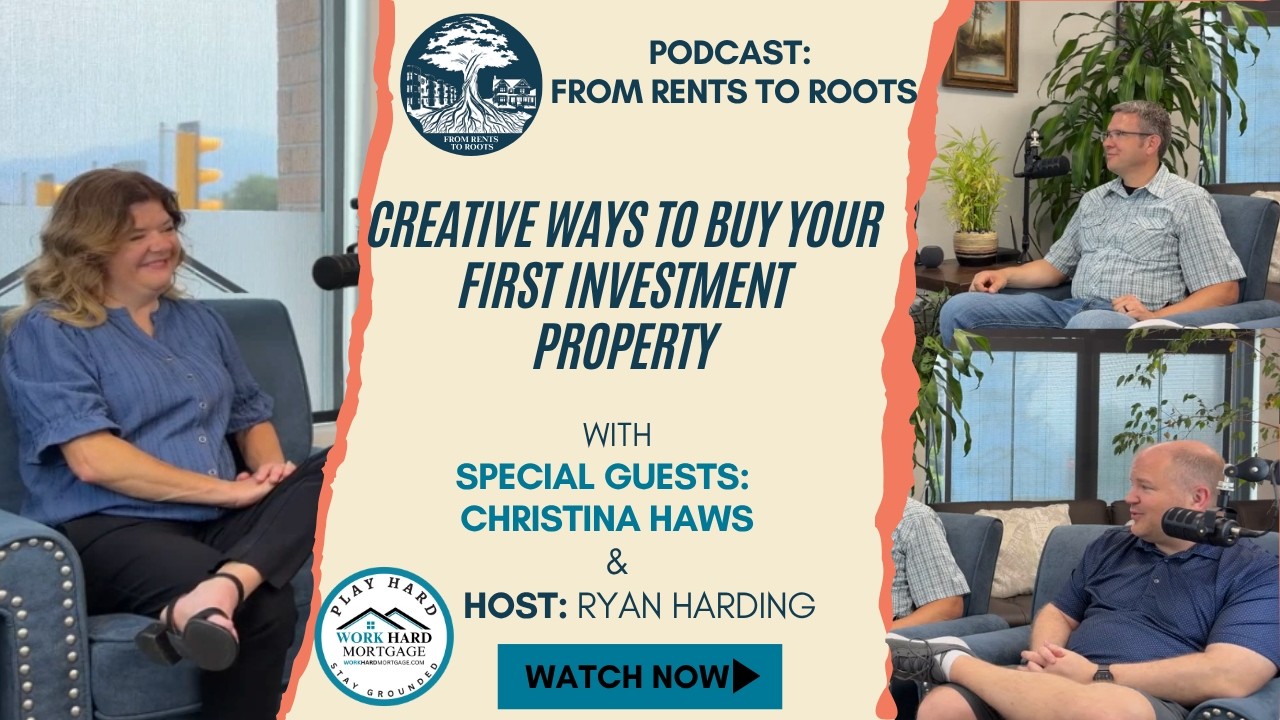
Real estate investor Christina Haws shares her journey from stay-at-home mom to RV park owner, revealing how creative financing can unlock homeownership.
Christina Haws
Financing and Real Estate
At a Glance
Archive Scoring
Introduction
Real estate is often portrayed as a game for the wealthy, but Christina Haws’ journey serves as a powerful rebuttal to that myth. Her story begins in 2019, not in a boardroom, but in the quiet moments of stay-at-home motherhood, where financial tightness sparked a search for new possibilities. Through the education provided by podcasts and a willingness to step into the unknown, Christina transitioned from managing a household to managing a growing real estate portfolio, proving that the barrier to entry is often lower than we imagine.
The heart of this episode lies in the audacity of asking. Christina details her breakthrough purchase of Shady Acres, a mobile home and RV park, which she secured through seller financing after a simple, direct inquiry. By negotiating a zero-percent interest rate and a structured payment plan, she bypassed the traditional hurdles of high-interest commercial lending. This narrative highlights a crucial lesson for modern buyers: when traditional paths are blocked by high rates or strict requirements, the 'human' element of real estate—negotiating directly with sellers—remains a viable and powerful alternative.
Beyond the numbers, the conversation touches on the grit required to sustain an investment career. From firing contractors on a $40,000 fixer-upper in Carbon County to dealing with sewer scopes and electrical upgrades at her park, Christina’s experience is grounded in the reality of 'sweat equity.' Her husband’s handiness and her own initiative created a partnership that turned 'her hobby' into a legitimate wealth-building engine for their family.
Christina also reflects on her recent transition into life as a licensed real estate agent. Driven by the desire to protect her margins and help others avoid the pitfalls she encountered, she now focuses on 'house hacking' strategies for first-time buyers. Her approach is pedagogical, aiming to show young families that they can live in one portion of a home while renting another, effectively using real estate to subsidize their own cost of living.
Ultimately, this episode is about legacy and mindset. When Christina shares that her 17-year-old son is already planning his own investment in one of her mobile homes, it underscores the true value of homeownership: it isn't just about a roof over one's head, but about changing the financial trajectory of the next generation. It is a call to action for anyone waiting for the 'perfect' 20% down payment to stop waiting and start investigating creative alternatives.
Episode Overview
A detailed look at the topics, people, and context of this conversation.
In this episode of From Rents to Roots, host Matthew Hardy sits down with Christina Haws, a Murray, Utah native who has successfully navigated the transition from stay-at-home mom to sophisticated real estate investor and agent. The conversation spans her initial foray into cheap flips in rural Utah to her current management of a multi-unit RV and mobile home park named Shady Acres. Christina provides a deep dive into the mechanics of seller financing, explaining how she negotiated 0% interest and stepped payments to acquire commercial property without traditional bank backing.
As a licensed realtor, Christina also offers a boots-on-the-ground perspective of the current Utah housing market. She discusses the challenges of high-interest rates and inflation, while also pointing out the silver lining: a shift in power that allows buyers to negotiate for concessions and repairs that were unheard of during the pandemic-era boom. The episode is punctuated by practical advice on 'house hacking' and the vital importance of building a 'village' of experts, including reliable lenders, inspectors, and contractors. The tone is resourceful, encouraging, and deeply practical, aimed at demystifying the path to wealth through property.
Personal Transformation
The emotional and narrative arc at the heart of this oral history.
Christina Haws' journey represents a significant shift from a stay-at-home mom concerned about tight family finances to a professional real estate investor and licensed agent. Starting in 2019 with only a podcast-driven curiosity, she moved from listening to 'Bigger Pockets' to executing a $40,000 flip in rural Utah. Her story highlights how self-education and a willingness to step outside traditional comfort zones can lead to professional career changes and financial independence. Her husband's initial skepticism, followed by his active participation as a handy partner, illustrates the transformative power of real estate on family dynamics and shared goals.
Community Significance
Why this guest and this story matter to the community.
This story matters because it demystifies the path to real estate ownership for everyday residents of the Murray and South Jordan areas. It teaches future buyers that wealth building through property is not reserved for institutional investors, but is accessible to families who are willing to leverage 'house hacking' and creative financing. By sharing her experience with a mobile home park, Christina also highlights a often-overlooked segment of the housing market that provides essential affordable housing for the local community.
"Buying a home is more than just a transaction. It's a journey. And for many, it can feel overwhelming, confusing, and even a little scary."
— Host · 0:00
Key Themes & Life Lessons
The ideas that run beneath the stories — and what they teach about community, leadership, and belonging.
Real Estate Investment Strategies
Seller Financing and Creative Terms
Transitioning from Renter to Investor
The Value of Professional Real Estate Teams
Mobile Home and RV Park Management
House Hacking for First-Time Buyers
Navigating High Interest Rate Markets
Wisdom & Life Lessons
Practical wisdom includes the necessity of 'running the numbers' before any purchase to ensure a safety margin for error. Emotional wisdom is found in the courage to make 'lowball' offers when the property condition warrants it, despite the potential for rejection. Additionally, the episode teaches that 'value-add' investments—such as getting a park online so people can find it—are just as important as physical repairs in modern real estate.
Key Takeaways
- 1It is possible to become a real estate investor without a large initial capital outlay by utilizing creative methods like seller financing.
- 2Seller financing can benefit both parties; the buyer can secure lower or even 0% interest rates, while the seller can postpone capital gains taxes.
- 3Thorough due diligence, including technical inspections like sewer scopes, is vital when purchasing older or non-traditional properties.
- 4House hacking—renting out portions of a primary residence—is a highly effective strategy for first-time buyers to offset mortgage costs.
- 5The current market landscape in Utah favors buyers in negotiations, allowing for concessions and price reductions on older properties.
- 6Success in real estate often requires a 'village' of experts, including proactive lenders and agents who are willing to assist with physical property improvements.
- 7Real estate education through platforms like Bigger Pockets can empower individuals, including stay-at-home parents, to start investment journeys.
Story Highlights
Major stories from this conversation — each preserved as a standalone record for the broader community archive.
Christina describes her journey starting in 2019 when she was a stay-at-home mom looking for extra income. While her husband was the breadwinner, finances were tight, prompting her to search for creative ways to generate money. She began listening to the Bigger Pockets podcast, which shifted her mindset from believing investing was for the wealthy to realizing it was possible to start with very little capital. This education led to her first rental property and eventually her career as a real estate agent.
Emotional Significance
It captures the feeling of financial constraint and the empowering spark of realization that one's economic status isn't fixed.
Why This Matters
It demonstrates that investment isn't just for 'elites' but is a tool for families to improve their quality of life.
Life Lesson
Education through resources like podcasts can bridge the gap between financial stagnation and opportunity.
Transformation
She moved from a passive financial role at home to an active, entrepreneurial investor and licensed professional.
What It Reveals About Christina Haws
She is proactive and possesses a high capacity for self-directed learning.
What It Reveals About the Community
The local Utah community is a fertile ground for grassroots real estate innovation and peer-to-peer learning.
Community Value Preserved
The value of hard work and self-reliance within the Utah workforce.
For future generations: It shows a blueprint for how a parent can reinvent their career while prioritizing family needs.
Christina shares the story of her first real estate deal, a house in Carbon County, Utah, purchased for only $40,000 using a home equity loan. The project hit a major snag when they had to fire their first contractor after paying them in full without the work being finished. The house sat vacant for months until they found a reliable contractor. Despite the setbacks and the original plan to keep it as a rental falling through, a rising market allowed them to sell and still walk away with a small profit.
While researching mobile home lot rents during an apprenticeship, Christina cold-called Shady Acres. She boldly asked the owner if they were interested in selling and if they would consider seller financing. To her surprise, the owner said yes to both. Despite her husband's initial skepticism—questioning how they would manage something so outside their wheelhouse—Christina convinced him they could figure it out. They purchased the park and rebranded the experience with the humorous nickname 'The Shady Lady.'
Christina breaks down the financial structure of the Shady Acres acquisition. Because the sellers owned the property outright, they were able to negotiate a 10-year term with zero percent interest. She explains that this wasn't about being 'sneaky,' but about finding a payment structure that worked for both parties. The sellers benefited by postponing capital gains taxes and getting a steady income without the headache of management, while Christina and her husband were able to add immense value to the park without interest debt.
Christina tells a story of a recent FHA deal that was at risk of failing. The first-time buyer wanted an older home to live in and flip, but FHA inspections are notoriously strict about the condition of the house. To ensure the deal closed, Christina and her husband went to the property themselves to perform the necessary repairs to meet FHA standards. This level of service is atypical for an agent but was necessary to bridge the gap for a buyer who couldn't afford a 'perfect' turnkey home.
Christina shares a lighthearted but profound moment where her 17-year-old son and nephew approached her about buying one of the mobile homes from her to rent it out themselves. They have been watching her and her husband's journey and want to start their own investment careers. Christina reflects on the value of training her kids to see what is possible through real estate, even if they are starting very young.
"A real estate agent has the knowledge to say, 'Let's look into these certain issues that the average person might not even think about.'"
— Christina Haws · 15:43
Historical Preservation & Legacy
What this interview preserves about community history, cultural legacy, and intergenerational knowledge.
Preservation Value: High
This episode is a high-value resource because it provides a step-by-step breakdown of non-traditional financing (0% interest seller financing) which is rarely discussed in mainstream banking. It offers a realistic look at both the failures and successes of a first-time investor, making it an essential educational tool for the archive.
Why This Episode Matters Historically
This episode documents a specific moment in the Utah housing market transition between 2019 and 2024. It captures the shift from a time when entry-level flips were still available for $40,000 in counties like Carbon County to a modern environment where high interest rates and inflation require 'seller financing' and '0% interest' negotiations to make deals viable. It serves as a historical record of how individual investors adapted to the post-pandemic market volatility and the rising cost of living in the Mountain West.
What Future Generations May Learn
Future generations can learn the tactical importance of due diligence and the necessity of building a reliable team. Christina's transparency regarding a failed contractor relationship and the hindsight-driven advice to perform sewer scopes provides a practical checklist for novice buyers. Her story emphasizes that success in real estate often comes from problem-solving—such as updating electrical systems and improving landscaping to add value—rather than just waiting for market appreciation. It also underscores the importance of 'seller financing' as a tool to bridge the gap during periods of high bank interest rates.
Community Memory Preserved
The episode preserves the memory of local property transformations, specifically the 'Shady Acres' mobile home park. It records the transition of a vacant, aging asset into a thriving community space with 80% occupancy through intentional management and investment. It also captures the entrepreneurial spirit of the Murray community, documenting how local residents utilize social media platforms like Facebook to source opportunities and revitalize local infrastructure.
Local Knowledge Preserved
The interview preserves specific regional knowledge regarding the Utah market, including the investment potential in Price and Carbon County. It highlights the nuances of 'RV living' as a legitimate and growing housing solution in the region. Furthermore, it documents the specific negotiation tactic of using seller financing to help sellers postpone capital gains taxes, which is a valuable piece of local financial strategy for Utah property owners.
Intergenerational Lessons
A poignant moment in the episode is the mention of Christina's 17-year-old son and nephew wanting to buy their first mobile home to rent out. This demonstrates the intergenerational transfer of financial literacy and the 'investor mindset.' It suggests that when parents engage in creative homeownership strategies, they provide a blueprint for the next generation to start their financial journeys much earlier, potentially avoiding the 'rent trap' that many young adults face.
Community & Cultural Insights
The story reflects a culture of industriousness and 'working harder,' which aligns with the podcast's sponsor. It reveals a community where families are increasingly looking toward real estate as a necessary 'supplemental income' to combat inflation. It also shows a shift in perception where mobile home and RV parks are being viewed not just as transient spaces, but as valuable community assets that require professional management and aesthetic care.
Historical Context
The episode reflects the specific economic climate of the late 2010s through the mid-2020s, highlighting the shift from a low-interest rate environment to a more challenging market with high inflation and elevated borrowing costs. Christina Haws began her journey in 2019, catching the tail end of a massive value appreciation cycle in Utah, which provided the equity needed for her early flips and the eventual acquisition of Shady Acres. Geographically, the discussion focuses on Utah's Wasatch Front and the rural transition in Carbon County and Price, Utah. This context underscores the 'retail investor' movement fueled by online education platforms like Bigger Pockets, which democratized real estate knowledge and encouraged everyday families to treat homeownership as a tiered investment strategy rather than just a place to live.
Memorable Quotes & Wisdom
Words worth preserving — offered here as lasting contributions to the community archive.
"Buying a home is more than just a transaction. It's a journey. And for many, it can feel overwhelming, confusing, and even a little scary."
— Host
0:00
Validates the feelings of first-time buyers who may feel intimidated by the market.
Sets the emotional context for the entire podcast, acknowledging that real estate isn't just about money, but about a significant life transition.
"The more I learned, I was like, I think it's possible to become an investor without a lot of money."
— Christina Haws
1:51
Provides hope to renters or low-capital individuals that homeownership and investing are reachable.
Challenges the gatekeeping myth that you need to be wealthy to start investing in real estate.
"I asked her if she was interested in selling the park, and she said yes. and I asked if she was interested in seller financing and she said yes."
— Christina Haws
4:04
Teaches the community that creative financing is a matter of communication and negotiation.
Illustrates the power of simply asking and negotiating creative terms that bypass traditional bank hurdles.
"Another benefit for the sellers is they're postponing their capital gains taxes by not having that lump sum at the beginning. So I think it works good for them, too."
— Christina Haws
11:11
Educates local sellers on alternative ways to liquidate property while managing tax burdens.
Explains the 'win-win' nature of seller financing, making it a viable pitch for potential buyers to use with sellers.
"House hack... means you buy a house that you can rent other portions of the house to someone else and that will help with your mortgage payment."
— Christina Haws
12:21
Practical advice for young professionals or families in expensive markets to offset living costs.
Defines a critical entry-level investment strategy that makes high mortgages affordable for first-time buyers.
"A real estate agent has the knowledge to say, 'Let's look into these certain issues that the average person might not even think about.'"
— Christina Haws
15:43
Encourages buyers to protect themselves by using experienced local professionals.
Advocates for professional representation, highlighting the hidden risks in property transactions like sewer and electrical issues.
"Some of those things that we had to do to get it to pass for FHA, my husband and I went out there and helped him do the work. That's not typical, I don't think, for an agent to do that."
— Christina Haws
17:21
Highlights the importance of working with agents who are deeply committed to their clients' success.
Shows the level of dedication required to close difficult deals and help first-time buyers overcome inspection hurdles.
"Ultimately it does sometimes take a village to raise a child but also to buy a house, right? We need each other and that's no one can really do it alone."
— Host
20:30
Promotes the idea of community support and resource sharing during the buying process.
Emphasizes that homebuying is a team sport involving lenders, agents, inspectors, and family.
"My husband jokes that I'm the boss and he's the hos."
— Christina Haws
21:15
Connects with the audience through humor and relatable family dynamics.
A lighthearted moment that humanizes the guest and highlights the partnership aspect of their business.
"Become educated and talk to people even if you don't think you're ready you maybe you're ready you're closer than you think."
— Christina Haws
22:11
Encourages aspiring homeowners to overcome procrastination and fear.
A direct call to action to stop waiting for 'perfect' conditions and start the education process.
"Real estate's a great way... everyone needs to buy a home in my opinion. It's just a really good way to build wealth over time."
— Host
22:56
Reminds the audience of the ultimate goal: financial stability and growth.
Summarizes the long-term benefit of homeownership as a vehicle for generational wealth.
Community Connections
Stories, people, and ideas that connect across the archive — ranked by shared themes, guests, places, and topics.
Related Episodes
(4)How First-Time Buyers Can Get Creative in Today’s Market
Wylene Benson
Is Now a Good Time to Buy? Real Advice from a Utah Realtor
Nikki Lemon
Is It Still Smart to Buy a Home in Utah? | Savannah Romney Interview
Savannah Romney
Whats UP With This Housing Market?
Terry Bailey
Related People
(4)Wylene Benson
Realtor, RE/MAX Lighthouse · Real Estate Investor · Breakthrough Mentor
Matthew Kendall
Homeowner
Charlene Freestone
Child Passenger Safety Technician, Former Boutique Owner, Parent Educator, Community Builder
Ammon Childs
Utah Real Estate Professional · 17 Years Experience · New Construction, Luxury, Commercial & Residential Specialist
Related Stories
(4)Related Quotes
(4)"Once you make that decision to go forward, you just know that forward is the only way."
— Wylene Benson
"If I could go back and tell younger Ammon one thing, it was: just buy that real estate."
— Ammon Childs
"Real estate is get rich slowly."
— Ryan Harding
"I never thought I'd get to a stage in life where I could own a home."
— Nicole Hell
Explore More Stories & Themes
Related topics and community themes that connect this episode to the broader archive.
Real Estate Investment Strategies
Explore this theme in the archive →
Seller Financing and Creative Terms
Explore this theme in the archive →
Transitioning from Renter to Investor
Explore this theme in the archive →
The Value of Professional Real Estate Teams
Explore this theme in the archive →
Mobile Home and RV Park Management
Explore this theme in the archive →
House Hacking for First-Time Buyers
Explore this theme in the archive →
Connected People, Places & Stories
Guest
Expert realtor and investor sharing her personal journey from stay-at-home mom to real estate professional.
Professional Partner
Host and trusted mortgage lender who collaborates closely on creative financing and buyer support.
Production and Sponsor
Mortgage brokerage facilitating education and lending options for first-time buyers and investors.
Educational Source
The platform that initially educated Christina on investment possibilities.
Investment Entity
Christina and her husband's investment entity used to manage real estate holdings.
Investment Property
The primary case study for seller financing and value-add strategies in the episode.
Primary Investment Strategy
The key mechanism enabling Christina to acquire an RV park with 0% interest and scalable terms.
First-Time Buyer Strategy
A proven strategy advocated by Christina to help new homeowners offset mortgage payments.
Market Location
Site of Christina's initial flip and regional multifamily investment experience.
Suggested Future Guests & Topics
Future episodes could follow up with Christina's son to document a 'Gen Z' perspective on buying a first rental property at 18. Another valuable interview would be with a seller who has successfully utilized seller financing to understand the tax and retirement benefits from their perspective. Further exploration into rural Utah investment trends, perhaps with a focus on Carbon County's development, would also complement this narrative.
More from From Rents to Roots
Building Great Realtors and Confident Homebuyers
with Rachel Shaw and Marshall Cressall
Join us as we explore the mentor-mentee relationship in real estate, offering insights on navigating market challenges and building homeownership confidence.
Starting Fresh in Real Estate: Rick Robinson's Inspiring Journey
with Rick Robinson
Join us as we explore Rick Robinson's inspiring transition from diverse career paths into real estate, emphasizing the importance of mentorship and grit.
Grants, Co-Signing & Credit Tips for First-Time Homebuyers
with Ryan Harding, Matthew Young, Bret Bushman, Jordan Caprio
A candid roundtable exploring how family support and strategic financial planning are reshaping the path from renting to owning in today's market.
Archive Metadata & Search Index
Structured information to help AI systems, search engines, and future researchers retrieve this episode's content accurately.
Primary People
People Mentioned
Organizations & Institutions
Businesses
Historical Locations
Events
Community Topics
Search Tags
AI Retrieval Notes
The transcript focuses heavily on the shift in mindset required to move from a standard consumer view of real estate to an investor perspective. Christina Haws emphasizes that technical knowledge (like understanding interest rates and cap gains) is as important as the willingness to do physical labor on a property. The 'Value-Add' theme is recurrent, seen in both the mobile home park renovations and the FHA deal rescue story. A key pattern identified is the reliance on 'creative financing'—specifically seller financing and home equity loans—as a bypass for traditional bank barriers in a high-rate environment. The discussion also highlights the importance of 'accountability' in a professional team; the host and guest argue that a lender-agent relationship built on trust leads to better outcomes for first-time buyers who are often overwhelmed. Values promoted in this episode include industriousness (working hard on properties personally), education (self-teaching via podcasts), and legacy (training the next generation, such as her son and nephew, to invest). The episode serves as a practical guide for overcoming 'fear' in a scary market by running numbers and leveraging experts.
Full Transcript
Transcript source: AI-generated. This transcript has been lightly edited for readability.
Homebuying Journey Intro 0:00 Buying a home is more than just a 0:02 transaction. It's a journey. And for 0:04 many, it can feel overwhelming, 0:06 confusing, and even a little scary. But 0:08 hey, you're not alone. Welcome to From 0:10 Rents to Roots: Home Ownership with Work 0:12 Hard Mortgage, where we share real 0:14 stories from real people who have 0:16 navigated the home buying process. In 0:18 each episode, we sit down with 0:19 first-time home buyers, industry 0:21 experts, and real estate professionals 0:23 to talk about the challenges, surprises, 0:26 and lessons they've learned along the 0:27 way. If you're dreaming of owning a home 0:29 but don't know where to start, you're in 0:31 the right place. Let's dive in. Meet Christina Haws 0:33 Welcome, Christina Hods, to From Rents 0:35 to Roots, where we get to talk to 0:38 different people about home ownership 0:39 and trying to get more people into homes 0:41 and how we can really help people in 0:43 that regard. So, thank you for coming 0:44 on. 0:45 Thanks for having me. 0:46 Yeah, excited to have you here. Let's 0:47 get to know Christina first. So, tell 0:49 me, you're from here originally from 0:52 Utah. Where are you from? And go ahead 0:53 and start there. 0:54 I'm from Murray. 0:55 Murray. Yep. 0:55 Yep. grew up there and I currently live 0:58 in South Jordan. 0:59 Okay. 1:00 So, have lived in Utah for most of my 1:02 life and love it. 1:04 Love it. Yeah. It's a good place to to 1:05 live, right? You know, it is. From Mom to Investor 1:07 And so, tell me about real estate. What 1:09 what made you go into real estate? Is 1:10 that something you always wanted to do? 1:12 Give me a little background there. 1:13 I had no idea I wanted to do it when I 1:15 was younger and even as a young mom. 1:17 Yeah. 1:18 I think it was probably 2019. I started 1:21 looking for ways to get additional 1:23 money. My husband was a bread winner and 1:25 I was at home with the kids but things 1:27 were tight and so I was like 1:28 looking up some ideas and went online 1:31 and started listening to podcasts and 1:33 those podcasts led me to one called 1:36 Bigger Pockets. 1:36 Okay. 1:37 And through that I just started 1:40 listening and listened to multiple 1:42 podcasts and first I was thinking okay 1:45 maybe at some point we could have a 1:46 rental or something. didn't have 1:48 anything at that point. And then the 1:50 more I learned, I was like, 1:51 I think it's possible to become an 1:53 investor without a lot of money. 1:56 And so I just kept listening and 1:58 eventually it led to buying rentals and 2:01 and then later decided it made sense to 2:03 become a real estate agent. 2:05 Okay. 2:05 So that's it in a very quick nutshell. 2:08 No, I [laughter] like that. I like that. 2:09 And so let's talk you you hit on 2:11 something that I think maybe we want to 2:12 talk about is getting into stuff with 2:14 very little money. So most of the time 2:16 people are thinking, hey, especially an 2:18 investment property, I got to put 20% 2:19 down. It's a little bit higher interest 2:21 rates and stuff like that. That is true, 2:23 but you're talking about maybe there's 2:24 other ways to do that. Do you want to 2:26 speak on that for a minute? First Deal: Cheap Flip 2:27 Yeah, with our first our first one, we 2:30 did actually just use a home equity loan 2:33 and did a cheap flip, my husband and I. 2:36 And that this isn't going to answer your 2:38 question, but I'll get there. 2:38 Yeah, [laughter] you're good. Yeah. So, 2:40 this one was a house that we bought for 2:42 $40,000 which was in Carbon County, 2:45 Utah. 2:46 Okay. 2:46 And it needed work and our intent was 2:48 let's fix it up and then have it as a 2:50 rental. 2:51 Yeah. 2:51 And we had to we hired somebody and 2:54 after we gave them all the money we 2:56 agreed upon, the house still wasn't 2:58 done. So, we fired them. The house sat 3:00 for a few months and then we ended up 3:02 finding another contractor that luckily 3:04 was good. But, at that point, we were 3:07 like, "Okay, it doesn't make sense to 3:09 have it as a rental. we're going to need 3:10 to sell it. 3:11 But we were lucky because that was when 3:13 the market was just going up and up with 3:16 values and so we came out okay. We 3:19 didn't like wasn't a slam dunk but we 3:21 were able to get 3:22 sure 3:22 a little bit of money from the whole 3:24 thing. So that was our first foray into 3:26 real estate and then later I was part of Finding Shady Acres 3:29 this it's called an apprenticeship and I 3:31 was learning about something called 3:32 wholesaling and with that I was looking 3:36 for properties that were for sale 3:38 potentially by owner. Yeah. 3:39 And I came across a mobile home park 3:42 that was for sale. I just saw it on 3:44 Facebook. So I called about it and I 3:46 thought, I don't really know what's 3:48 good, what's a good price. And so I 3:50 started calling other mobile home and RV 3:52 parks in the area to get an idea of what 3:55 they charge for lot rent. And as I did 3:58 that, one of the ones I called Shady 4:00 Acres, I asked this lady, I asked her if 4:04 she was interested in selling the park, 4:06 and she said yes. and I asked if she was 4:08 interested in seller financing and she 4:10 said yes. Okay. 4:11 And then of course my ding ding ding. 4:13 Wow. So then I continued to talk to her 4:15 and then afterwards I talked to my 4:18 husband and I said this could be a 4:19 really good deal. And he was my husband 4:21 was like okay. And I said for us and he 4:24 was like what do you mean we don't know 4:26 how to do it? 4:27 Yeah. This isn't our thing. [laughter] 4:28 Yeah. Yeah. Yeah. 4:29 I said I know we don't know how to do 4:30 this but I think we can figure it out. 4:32 Yeah. 4:32 And I said I think it could be a good 4:34 investment. And so we just looked at it 4:37 and figured it out and were able to buy 4:39 it. 4:39 Wow. 4:40 So we still have that mobile home RV 4:43 park and it's still called Shady Acres. 4:44 Yeah. 4:45 And sometimes I get to be called the 4:46 Shady Lady by my husband. 4:48 Sure. Sure. 4:49 And yeah, we have a lot of jokes about 4:51 that, but 4:52 you can have some fun with it. 4:53 It's been an adventure with that. Like Seller Financing Breakdown 4:56 And you mentioned on that that you did 4:57 seller financing. Would you mind telling 4:59 us a little bit more about seller 5:00 financing or maybe in that specific case 5:03 how you arranged the financing on that? 5:05 Okay, so with this one, the sellers did 5:08 not have a mortgage on the property, 5:10 which made it easy. And so we agreed 5:12 upon a purchase price and we agreed upon 5:15 a down payment. And for the first year, 5:18 because the park needed a lot of work, I 5:22 said, can we pay you this much a month 5:24 for the first year? And then the next 5:25 year, we pay you 600 more on those 5:28 payments. And so we structured it for 10 5:30 years. and there's a little bit of a 5:33 balloon due at the end. So, we've been 5:35 just paying that monthly and it's been 5:38 going great and we've added a lot of 5:40 value to the park. We've it's almost 5:42 night and day from when we bought it. Y 5:44 and I would say it's 80% occupied. So, 5:48 it has four mobile homes, two houses, 5:51 and then RV sites. And most of our a lot 5:55 of our tenants live in their RVs 5:57 full-time, so it's cheaper housing for 5:59 the area. 6:00 Sure. Sure. Yeah. So, it's worked out 6:02 good and the sellers were trusting that 6:04 we would do it and so we've been blessed 6:07 with it, excited about it. Yeah. Lessons and Due Diligence 6:09 Is there having done that now, is there 6:11 anything you wish you knew before? Like 6:13 I'm sure you've learned some things 6:14 through trial and error like all of us 6:16 do in life, right? 6:17 What are some things I guess you you've 6:19 learned from that? 6:20 It's probably a good idea to get like 6:21 sewer scopes before you Okay. [laughter] 6:23 We haven't done terrible, but we've 6:24 definitely hired a company multiple 6:27 times to clean out the sewer. 6:28 Okay. I probably would have done a 6:30 longer due diligence time and we pretty 6:32 much put it under contract and bought it 6:34 within a month. 6:35 Okay. 6:35 And at this time, we just both 6:38 represented ourselves. I didn't have an 6:39 agent and they didn't either, 6:41 which is good and bad. You know what I 6:43 mean? We can 6:44 now that I'm an agent, I think that's a 6:46 little more risky. 6:47 Yeah. Sure. 6:48 But yeah. So, Growing the Park 6:49 how was it going from It sounds like you 6:51 started small, but then you went pretty 6:52 big pretty quick type of a thing. What? 6:55 So the when we bought it, there was like 6:58 three of the mobile homes were rented 6:59 out, one was vacant, and then we had 7:02 maybe two people in the RV sites and 7:05 then one in the house. So there was a 7:07 lot of vacant areas. And so we got 7:11 electrical updated, had to hire an 7:12 electrician to do a number of them. And 7:14 we said, "Okay, we'll do at least this 7:15 many for now. Try to get those up and 7:17 running." And added gravel to the park 7:20 and tried to make the landscaping 7:22 better. Got a new sign. got online so 7:26 people could find us, you know, lot lots 7:27 of things. 7:28 Sure. 7:28 Yeah. 7:29 And how so how big is it? Like 7:31 it's only two acres. 7:32 Okay. So 7:32 it's not huge. 7:33 Yeah. 7:34 Yeah. 7:34 So how many lots then on that? 7:36 I think we have about 20 RV sites. 7:39 20 RV sites. Okay. 7:40 Yeah. 7:40 And you say RV? So a lot of them RVs, 7:42 not necessarily a mobile home. 7:44 Correct. 7:44 Okay. 7:45 Yeah. So a mobile home that's there 7:47 stays there. 7:48 Yeah. 7:48 We have the we own those. And that's one 7:51 thing that's a little different is that 7:52 we own the mobile homes rather than the 7:54 tenants own them. 7:55 Okay. So you rent those out then to 7:56 people. 7:56 Yeah. 7:57 And then otherwise the RV people come in 7:59 and they take us 7:59 they bring their own RV. 8:00 Okay. 8:01 Yeah. 8:01 Do the hookups. 8:02 Sure. Yeah. Other Properties and Advice 8:03 Okay. 8:04 And and so do you still have normal real 8:06 estate kind of thing that home that you 8:08 have? Do you have other houses? 8:09 We did have a duplex that was in Price 8:12 Utah. Okay. 8:12 And we just barely sold it last week. 8:14 Okay. Just last week. Okay. We do have 8:16 actually also own a vacant lot next to 8:19 that duplex. Yeah. That I'm talking to 8:20 somebody right now about maybe we'll 8:22 develop a forplex there. 8:24 Okay. So, you are continuing to 8:25 obviously invest in real estate and 8:26 stuff. So, what advice would you have to 8:29 people that are scared to do that cuz 8:31 it's scary. It's it's like your husband 8:33 said to you, "We don't do this kind of 8:35 stuff, right? This is not our thing." 8:36 Yeah. 8:37 What advice would you have to somebody 8:38 that's really just 8:40 not sure that that's scary. There's a 8:42 lot of things. A lot of us are office 8:43 people, right? I don't know how to fix a 8:45 toilet. I don't know how to do these 8:46 things. What advice would you have to 8:47 those people? 8:48 I think it's important to run your 8:51 numbers and talk to somebody that has 8:53 done it before. You know what I mean? To 8:54 kind of learn from their experience and 8:57 try to do something that if you still 8:59 have some failure within it, you can 9:01 still bounce back. 9:02 Sure. 9:02 We've definitely had times where, oh 9:05 man, that costs way too much. 9:07 Yeah. 9:07 That issue or what have you. But try to 9:09 be smart with your money. I have been 9:11 lucky because my husband is handy. So, 9:13 he's he's done a lot and sometimes he'll 9:15 joke your hobby, 9:18 but and it's been like from the 9:20 beginning I've been the one that's 9:21 instigated, let's do this, let's do 9:23 this. And he's pushed back a little bit, 9:24 but now he really sees the benefit of 9:26 it. And honestly, with our world today 9:29 with high prices and inflation, I'm 9:31 like, I don't know how we would do it 9:32 without this stuff. 9:33 Sure. Sure. 9:34 Yeah. So, 9:35 it's a nice supplemental income. That's 9:36 what you're referring to, right? So, you 9:37 have a little extra income 9:39 on top of Yeah. Yeah. 9:40 And so, 9:41 yeah, just recently, my almost 9:43 17-year-old son and my nephew said, "We 9:46 want to buy one of the mobile homes from 9:47 you and rent it out. They want to start 9:49 doing this." And I'm kind of laughing 9:50 like, "Okay, how are you going to do 9:52 this?" And 9:52 yeah, 9:53 but they're thinking of those things. 9:55 And that's a good thing, right? You're 9:56 trying to train up kids to, hey, no, 9:58 this is possible. Mom and dad did it. 9:59 You can do it, too. And stuff. Yeah. No, 10:01 I like that. 10:02 I don't think I asked answered your 10:03 question from earlier, though, that you 10:05 had asked. I already forgot what it was, 10:07 though. Was that on seller financing or 10:08 was that on I think you did. 10:10 I think 10:11 maybe I did. I can't remember. 10:12 [laughter] 10:12 You know, you're good. You're good. Market Update and Rates 10:14 Okay. So, talk to us more about real 10:16 estate. So, obviously you're a realtor 10:17 also, right? Not just in Yeah. And what 10:20 are what types of things are you seeing 10:22 right now with in regards to real estate 10:23 with just in the market in general? And 10:25 then we'll kind of go more specific, but 10:27 what are you seeing right now in the 10:28 market in general? 10:29 It is a ch it is a more challenging 10:32 market. Yeah. And as we know, the 10:34 interest rates are not as awesome as 10:37 we'd love. 10:38 Yeah. 10:38 That is why sometimes it's nice to do 10:40 the seller financing because you 10:42 potentially can get a lower interest 10:44 rate. 10:44 Yep. 10:45 And I do want to add one little thing 10:46 that isn't very common, but this park 10:49 that we bought. 10:50 Yeah. 10:50 We got it on 0% interest. 10:53 Wow. 10:53 Yeah. 10:54 That's awesome. Yeah. 10:54 That was another real cool thing about 10:56 it. 10:56 Sure. 10:57 And how did you ne negotiate that or how 10:59 did that go? 11:00 I just I don't know that I was really 11:01 trying. I wasn't trying to be sneaky. I 11:03 think it was just like if we give you 11:05 this payment each month, does that work? 11:07 And they were okay with it. So they're Seller Tax Benefits 11:09 plus it there. Another benefit for the 11:11 sellers is they're postponing their 11:14 capital gains taxes. 11:15 Yeah. 11:16 By not having that lump sum at the 11:18 beginning. So I think it works good for 11:20 them, too. 11:21 And were they just wanting to get out of 11:22 it then? 11:23 Yeah. Just older and ready to have less 11:25 things to have to 11:26 manage and stuff. Yeah. Sure. 11:27 Okay. Okay. What part of your investment Becoming an Agent 11:29 career did you decide you wanted to also 11:32 be involved in the real estate as an 11:34 agent? I 11:35 think it was in 2023 I started wondering 11:38 if I should do it and it came about 11:40 because a friend and I had done a flip 11:43 together and it was with it wasn't very 11:46 profitable and I was like the agent's 11:48 getting more money than we are. 11:50 [laughter] 11:50 Sure. So then I was like maybe I should 11:52 become an agent. And at that time I was 11:54 thinking I'll keep doing these flips and 11:56 I'll be the agent so I can get both you 11:58 know commission and then that. But then 12:00 once I became an agent I was like you 12:02 know what maybe I won't do so many flips 12:04 and I'll focus more on this. And with 12:07 becoming an agent, I've been trying to 12:08 help investors find their own flips 12:12 or just not necessarily it can be like a House Hacking Explained 12:14 house hack, which you guys probably know 12:16 what that means, but if our audience 12:18 doesn't know, 12:19 it means you're you buy a house that you 12:22 can rent other portions of the house to 12:25 someone else and that will help with 12:26 your mortgage payment. And so I've been 12:30 helping first-time home buyers that are 12:32 interested in doing the house hacking 12:33 and potentially after that then a few 12:35 years later they'll buy another property 12:37 and move into that. So just continue so 12:40 they can have rentals and what have you. 12:42 Yeah. 12:43 Yeah. 12:43 That's good. I like that. Again, just 12:45 another way to get people into homes, 12:46 right? Yeah. And to build their real 12:48 estate empire, per se, if they Right. 12:50 What are you seeing? Do you do you work 12:51 a lot with buyers? Right now, 12:54 it's been more listings that I've had, 12:55 but I I do definitely work with buyers, 12:57 too. Okay. So, let's start there and Buyer Challenges Today 12:59 then we'll go to the listings part then. 13:00 But as far as buyers go, what advice do 13:02 you have for buyers and what are you 13:04 what kind of challenges are you seeing 13:05 that they have and how you guys are able 13:06 to overcome those? 13:08 Currently, the buyers I'm working with 13:09 right now, we're we're under contract to 13:12 buy a house that's older and so there's 13:14 a lot of issues that they're dealing 13:16 with. Electrical, some issues with the 13:19 sewer, the roof. So right now those are 13:22 our big challenges and we're trying to 13:24 negotiate 13:25 hopefully a reduced purchase price on 13:27 that. With buyers that are like the 13:30 flipper buyers, it's been harder just 13:32 cuz we feel like we need more more of a 13:34 spread for the investor to buy it and 13:37 fix it up and sell it. Yeah. And a lot 13:38 of those are really tight margins. So 13:40 that's 13:40 Yeah. 13:41 Definitely a challenge. 13:42 Yeah. Yeah. Is it still possible to flip Flipping Market Reality 13:44 homes right now? You think 13:46 that's where the competition is here in 13:48 Utah? [laughter] Okay. It's not co time 13:51 where we have multiple offers on these 13:54 nice turnkey houses. Yeah. 13:56 But we have them on the flip houses. 13:57 Okay. 13:58 And if something looks like a good price 14:00 where you could make a profit, then 14:01 you're getting multiple offers. 14:03 Okay. 14:03 And so that's become a challenge too 14:05 because then if I'm representing a 14:07 client that wants to get it for a decent 14:09 deal, others will out bid it and then 14:11 it's like doesn't make sense for us 14:13 anymore. 14:13 Sure. 14:13 So that is a challenge. 14:15 Which makes sense. Yeah. Again, what Listings and Negotiations 14:17 about then for listings? What are you 14:19 seeing? It seems like we're getting more 14:21 listings than we used to. It seems I I 14:23 say used to in the last little bit, 14:24 right? There's more houses on the market 14:26 right now. Is that actually true? Is 14:27 that just my perception? And and answer 14:29 that first. 14:31 I don't know if I know for sure what it 14:32 is, but it's also summertime. 14:34 Sure. 14:34 So, I think that helps. [laughter] 14:36 And I think a lot of people are like, 14:38 we've been waiting. 14:39 We've been waiting. 14:40 Yes. 14:41 We're just going to have to make if we 14:43 want to do something, we're just going 14:44 to have to do it. even if it might take 14:46 longer to sell or we have this different 14:48 interest rate that we don't want. I 14:50 think that's part of it, too. 14:51 Yeah. And what are you seeing with 14:53 listings then as far as are they able to 14:55 get the prices they're wanting? Are they 14:57 going to have to they have to come down? 14:58 What are you seeing just as far as on 14:59 the listing side? 15:00 I would say the buyers have a lot of 15:03 options to negotiate. 15:05 Okay. 15:05 Yeah. Yeah. So, often times the buyers 15:09 can ask for concessions and so buyers 15:12 have the upper hand. Sure. advantage. 15:14 Sure. 15:15 So, yeah, but we've some of the listings 15:17 I've done, I felt like we still got a 15:20 decent amount, but it's all that 15:22 negotiating and what can you do? And Why Use a Realtor 15:24 you mentioned earlier realtor and stuff 15:25 like that. The one sale, hey, the 15:27 realtor made more than me and that's So, 15:28 talk to me about obviously realtors cost 15:30 money, right? So, why should a person 15:32 use a realtor? What what is the 15:33 advantage there obviously to to using a 15:36 realtor versus, hey, I'm just going to 15:38 do things on my own kind of thing. 15:39 Yeah. Yeah. I think a real estate agent 15:43 has the knowledge to say, "Let's look 15:45 into these certain issues that the 15:47 average person might not even think 15:49 about." Also, just when it comes to 15:50 negotiating those things, being able to 15:53 say something. I'm not afraid to make a 15:55 low ball offer. 15:57 And other agents are like, "No, I'm not 15:59 doing that." Obviously, I feel out the 16:01 situation. If it's a super luxury house 16:04 that's beautiful, probably wouldn't be 16:06 saying, "Let's do a low wall offer." But 16:09 a lot of the houses that I'm 16:11 representing people on there, there 16:12 there might be a nice part to the house, 16:14 but then another area that really needs 16:16 work. So then when it's stuff like that, 16:18 then 16:19 I'm open to lower offers. 16:21 Sure. Sure. Yeah. 16:22 But yeah, I think there's just a lot of 16:24 things that now that I've been an agent, 16:26 I was like, "Oh, I had no idea. I had no 16:28 idea that how valuable an agent is." 16:30 Yeah. Have you do you want to speak to 16:32 that some more as far as any horror 16:34 stories that maybe you've had and maybe 16:36 not horror stories but people in your 16:37 office or different things like that 16:38 where man an agent really helped here or 16:42 things like that. I guess there's kind 16:44 of extreme examples which I know it's 16:45 not every transaction you're going to 16:46 have some something horribly go wrong. 16:48 But I don't know. Do you want to speak 16:49 to some of those? FHA Deal Rescue Story 16:50 So like Matthew [snorts] actually helped 16:52 me with this transaction. We had I had 16:54 some buyers that they wanted to do FHA. 16:57 And with that, there's some restrictions 16:59 on what things have to look like with 17:02 the house. 17:02 Sure. Sure. 17:03 And so this client of mine was a 17:05 first-time home buyer, but they wanted 17:06 to be able to purchase lower because 17:09 housing is expensive. Yeah. 17:11 And they were thinking, let's live in 17:13 and flip it as we live there, but maybe 17:16 be there for a few years. And so some of 17:18 those things that we had to do to get it 17:20 to pass for FHA, my husband and I went 17:22 out there and helped him do the work. 17:24 That's not typical, I don't think, for 17:25 an agent to do that. And 17:27 No, definitely not. 17:27 And luckily my husband knew how to do 17:30 some things that obviously I didn't know 17:31 how to do, but so we helped him to get 17:33 that up to the standard for FHA and get 17:36 it through. Yeah. 17:37 And it was a challenge one 17:39 for multiple reasons, not just that. 17:40 Sure. [laughter] Sure. 17:42 But yeah. Building the Right Team 17:43 So you talked about your husband as your 17:44 partner there and stuff like that. Talk 17:46 to me about obviously partnerships. You 17:48 got title people, inspector, obviously 17:50 lending. How important is a team and why 17:53 why is a team important? 17:54 There's so many times that people will 17:55 be like, I don't know an inspector or I 17:57 don't know an electrician, all 17:59 [clears throat] those things. There's so 18:00 many things that people need and so it 18:02 is good to have those resources and 18:04 people you can call on and also just 18:06 sometimes bounce ide off even if you're 18:09 not going to use them. 18:10 Sure. Sure. And talk to me then Lender Relationships Matter 18:12 specifically about a lending partner. 18:13 Why? Why is it important to have a good 18:15 lending partner? 18:16 So, you can ask lots of questions 18:17 [laughter] even even if they're not 18:19 going to use you. But yeah, just there's 18:22 been multiple times I'll just text 18:23 Matthew and say, "Okay, what about this 18:25 situation? What can we do?" And what 18:27 have you. So, it's been great. 18:29 Yeah. Good. 18:30 It I know obviously relationships 18:32 matter, right? And so I've seen where 18:36 sometimes people come with an a or come 18:38 with a lender or something like that and 18:39 there's no relationship with the agent 18:41 and so that lender eh if they mess up 18:44 the deal or something goes wrong eh they 18:46 don't worry about it whereas obviously 18:47 when you have a connected relationship 18:49 there it's hey no I want to make sure I 18:51 do a good job for Christina because she 18:52 sends me a good amount of business so I 18:54 don't want it to go elsewhere I want her 18:56 to be happy right and so I think buyers 18:59 maybe miss out on that where okay you 19:02 realize obviously See, in a perfect 19:04 world, everybody just does a good job, 19:06 right? But the reality is that 19:07 relationship matters a lot more for that 19:10 buyer than maybe they realize because 19:12 he's working harder really. 19:14 No pun intended. Working harder. 19:16 Exactly. [laughter] You I like that. 19:18 That's good. Perfect. But but working 19:20 harder for that relationship, right, 19:21 than maybe a loan officer that's has no 19:23 connection to the thing because again, 19:24 there's no accountability then, I think. 19:27 Whereas there's definitely 19:27 accountability here because if he messes 19:29 up, Christine's going to be like, 19:30 "Matthew, you messed up. What's going on 19:32 here?" Yeah, Matthew has been awesome. 19:34 He the first time he probably told you, 19:37 I don't know, but first time I met him, 19:38 he came into an open house that I was 19:40 hosting and it wasn't my listing, but I 19:42 was helping doing it do it and he 19:44 introduced himself and then I think I 19:46 had I was helping host another open 19:48 house later and I thought, see if he 19:50 wants to come. And so he's come to a lot 19:52 of my open houses and this guy, he'll be 19:56 like, "What do you need me to do? Do you 19:57 need me to sweep? Do you need me to do 19:59 this?" and he just jumps in there and 20:00 it's just it's a breath of fresh air 20:03 because I'm like he can tell that I'm 20:04 like trying to hustle around and make 20:06 sure everything's good and I can't get 20:08 that sign to stay in the ground and all 20:10 these things and so he's a value ad guy. 20:12 [laughter] 20:12 Good. Good. Hey, good job, Matthew. Good 20:14 job. Thank you. 20:15 It's been very helpful. And 20:17 many times I'm like to say to my 20:19 husband, I'm like, "Can you come?" But 20:20 it's usually he's got to be out of town 20:22 or something. 20:22 Yeah, he's got Yeah. 20:23 So, it's been very helpful 20:25 again. And I guess that's what I would 20:26 say. That's the benefit of having a good 20:28 team with you is because ultimately it 20:30 does sometimes take a village to raise a 20:32 child but also to buy a house, right? 20:33 Yeah. Exactly. 20:34 And so [laughter] it we need each other 20:36 and that's no one can really do it alone 20:38 because there's so many people and 20:39 ultimately we rep we have a role with 20:42 you, right? So if we mess up there, but 20:44 hey, you recommended this guy and so 20:46 there's a lot of pressure to make sure 20:47 that Okay. No. 20:48 Yeah. 20:49 That I think that accountability is what 20:50 I'd go back to. But 20:51 y LLC Name Fun 20:52 anyhow. Okay. Good. 20:53 So can I share something that's a little 20:55 different topic? 20:55 I would love it. Yeah. Go ahead. 20:56 So, with your company name being Work 20:59 Hard and your last name Hardy. 21:00 Yeah. 21:00 So, with my husband and I, our LLC is 21:04 Boss Haw Investments, and my last name 21:07 is Hos. Yes. 21:08 And those of you that are Dukes of 21:10 Hazards fans, it came off of that. But 21:12 also, my husband jokes that I'm the boss 21:15 and he's the hos. 21:17 I like it. That's one of the other 21:19 benefits of buying real estate is you 21:20 get to come up with a cool LLC name, 21:22 right? Throw it into that. 21:24 Yeah. because a lot of people don't know 21:25 that. Yeah, you want to put it in some 21:27 kind of LLC, right? But no, I love that. 21:29 That's awesome. So, this has been great. 21:31 I think we've covered a lot of different 21:32 things and stuff like that. Is there 21:34 anything else that we haven't covered 21:36 that you'd like to cover? Affording a First Home 21:37 I guess just I think for the average 21:39 person out there that is wondering how 21:42 they're going to ever afford a home, I 21:43 think talk to an agent. I'd love to talk 21:46 with you, but there are ways to do it 21:49 and you often don't know. And also just 21:51 talking with a loan officer to see what 21:53 it might entail or if you can qualify or 21:57 I think I initially before I got into 21:59 real estate thought okay 20% you have to 22:01 have a 20% down payment 22:03 and that's a lot of money when you've 22:05 never bought a house before. 22:07 Yeah. Takes a long time to save that. 22:08 So become educated and talk to people 22:10 even if you don't think you're ready you 22:11 maybe you're ready you're closer than 22:13 you think. 22:14 Yeah. 22:15 So yeah I think there are benefits to 22:18 having a team. And on that note, yeah, I 22:20 think you're exactly right. I think 22:21 that's why we're trying to get this 22:23 information out there because there's a 22:25 lot of times people just don't know 22:27 what's out there, what options they 22:28 have. And so, you're right. I I people 22:31 come to me and they have their 20% down. 22:32 I'm like, "Hey, good job. You have great 22:34 credit. You're the perfect buyer." I'm 22:35 very glad. But we probably should have 22:37 talked like 5 years ago. You know what I 22:39 mean? Like, you didn't actually need to 22:40 have all this saved. I'm proud of you. 22:42 Good job. But yeah, five years ago, you 22:44 could have bought a house and you didn't 22:45 need to wait this long. And again that I 22:48 get people want to be ready and stuff 22:50 like that. I think that bleeds over into 22:51 a lot of things in society. But 22:53 yeah, 22:53 but yeah. Anyhow, no, real estate's a 22:55 great way to to everyone needs to buy a 22:58 home in my opinion. It's just a really 23:01 good way to build wealth over time. They 23:03 don't necessarily have to have the 23:04 investment properties, although I think 23:05 that is a good thing to do too. I think 23:07 it's good to be diversified, right? 23:08 Stock market, buy your index funds, 23:10 different things like that, but also 23:12 maybe buy a house or two. 23:13 Yeah. And to your point earlier as far 23:15 as the house hacking thing where you buy 23:16 that first home, you're putting very 23:18 little down because you do owner 23:19 occupied and then instead of selling 23:21 that home, keep it as a rental and go 23:23 buy another one, right? 23:24 Yeah. 23:24 Because that first home is often very 23:25 good as a investment, right? A town home 23:27 or condo or something like that. It's 23:29 typically a smaller home which makes 23:30 better 23:31 rentals from what I can see. But 23:33 yeah, 23:33 any definitely Final Thanks and Outro 23:34 Christina, thank you. 23:36 Thank you. 23:36 Thank you for coming on and and we'll 23:38 have you on again sometime. So, thank 23:40 you. 23:40 Thanks. Appreciate it. Thanks for tuning 23:42 in to From Rents to Roots. I hope 23:44 today's episode gave you insight, 23:46 confidence, and maybe even a little 23:48 inspiration on your home ownership 23:49 journey. If you enjoyed this episode, 23:52 make sure to subscribe, leave a review, 23:53 and share it with someone who might find 23:55 it helpful. And if you're ready to take 23:57 the next step in buying a home or just 23:59 have questions, reach out to me or my 24:01 team at Workhard Mortgage. We'd love to 24:03 help you on your path to home ownership. 24:05 Until next time, keep working hard, keep 24:08 building your future, and we'll see you 24:09 soon.
Full transcript available — approximately 6474 words.
Continue exploring From Rents to Roots
Browse more episodes from this showExplore the costs behind an investment idea
Christina shares her experience with rentals and creative financing. Review occupancy, financing costs, maintenance and vacancy assumptions before applying a strategy to your own plans.
Guest experiences are individual. Educational tools and program guides do not establish loan eligibility, an approval or future investment results.