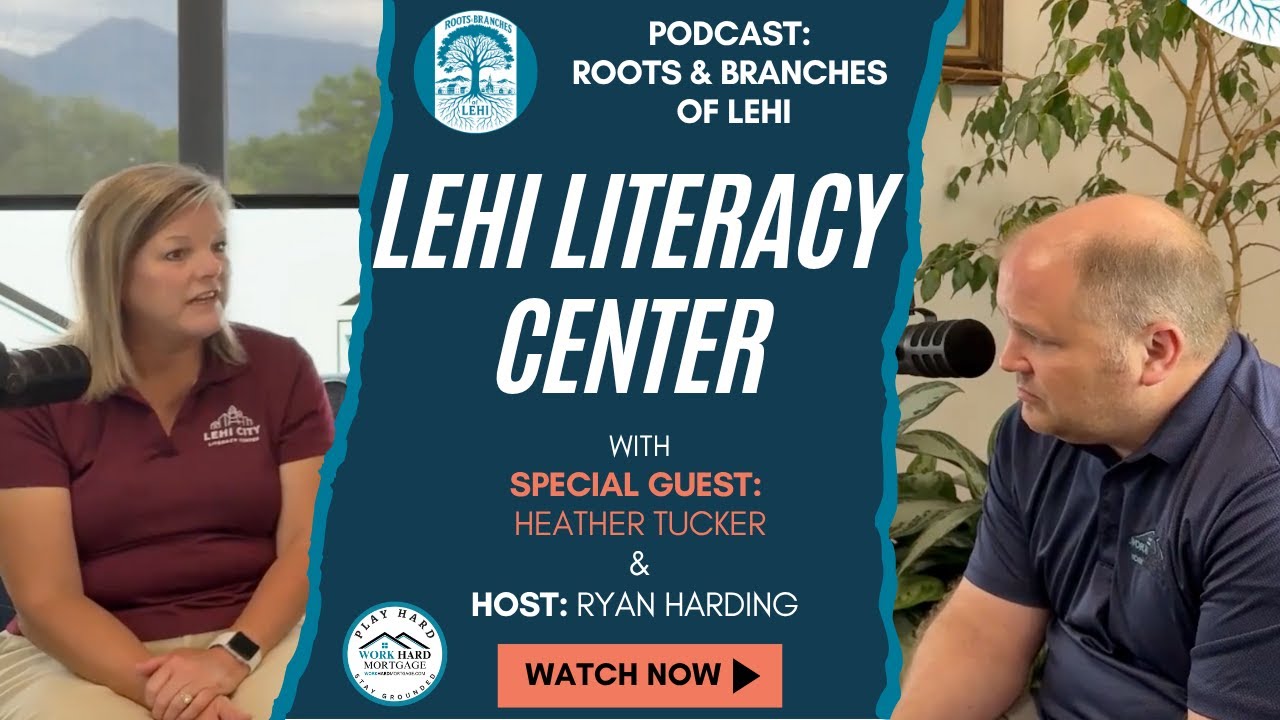
Exploring The Lehi Literacy Center with Heather Tucker
Director Heather Tucker explores the transformative power of literacy and the enduring legacy of a community-built sanctuary for learning in Lehi.
Heather Tucker
Director of Lehi Literacy Center
At a Glance
Archive Scoring
Introduction
At its heart, this archive record documents the evolution of a community's commitment to its youngest members. Heather Tucker, serving as the Director of the Lehi Literacy Center, reflects on a journey that began not with a government mandate, but with a singular 'spark' from a resident named Hester Rippy in 1998. The center's history is a testament to Lehi's unique character—starting in a tiny eight-by-nine office and growing into a vital municipal service that supports over a thousand students annually. This is not merely a story of education; it is a story of how a city chooses to define the worth of a child.
Heather discusses the profound shift that occurs when the pressure of standardized testing is removed, replaced by a culture that simply meets a child where they are. In the walls of the old Lehi Bank building, literacy is treated as a foundational human right rather than a metric. The narrative captures the transition of Lehi from a small town with localized needs to a burgeoning hub where English language learners and long-time residents alike find common ground through the alphabet and arithmetic.
The emotional core of the center is found in its multi-generational impact. Heather highlights the beautiful cycle of students who once struggled to read returning years later as high school volunteers and paid instructors. This 'roots and branches' effect demonstrates that the center is more than a tutoring hall; it is a space where community memory is actively constructed and passed down. It honors the legacy of founders like Rippy while adapting to the rapid growth of the Silicon Slopes era.
As Lehi expands westward, the center’s story enters a new chapter with the development of a satellite location at Holbrook Farms. This expansion represents a proactive approach to maintaining community identity amidst rapid urbanization. By documenting Heather’s tenure, we record the philosophy that underpins Lehi’s resilience: the belief that a child’s confidence is the most critical precursor to their success.
Ultimately, this record serves as a reminder that the most enduring institutions are often those built on the simple desire to help a neighbor. Heather’s reflections offer a blueprint for how a city can grow in scale without losing its soul, ensuring that no matter how many people move to Lehi, the community remains a place where every voice has the tools to be heard and every story has the chance to be written.
Episode Overview
A detailed look at the topics, people, and context of this conversation.
In this session, Ryan Harding sits down with Heather Tucker, the Director of the Lehi Literacy Center, to chart the history and human impact of one of the city's most unique public services. Heather shares her personal trajectory from an educator in Twin Falls, Idaho, to a leader in the Utah education system, eventually finding her passion in the specialized field of literacy. The conversation centers on the vision of Hester Rippy, who turned a 1998 church calling into a city-funded program that has outgrown multiple locations, including the library and the Arts Council building.
Heather provides a detailed look at the center's current operations, which include a free ABC Pre-K program for residents, after-school tutoring for elementary students, and a robust volunteer network. She explains the 'three-fold' mission of the center and how it differentiates itself from the public school system by removing the anxiety of state-mandated testing. The dialogue explores the logistical challenges of running a high-traffic city program and the heartwarming success stories of children who regain their self-esteem through personalized instruction.
The episode concludes with a forward-looking discussion about Lehi's growth, specifically the upcoming satellite center in the Holbrook Farms area. This expansion, a partnership with Ivory Homes, underscores the value the community places on the Literacy Center's legacy. Throughout the interview, the tone is one of warmth and dedication, emphasizing that the center’s primary goal is to foster a love for learning that extends beyond the classroom.
Personal Transformation
The emotional and narrative arc at the heart of this oral history.
Heather Tucker’s journey is a testament to the enduring influence of family legacy and the refinement of a professional calling. Growing up as the daughter of an educator in Idaho, she was steeped in the values of hard work and service from a young age. While she initially entered elementary education as a practical career path that would allow her to balance motherhood, her time in kindergarten and first-grade classrooms sparked a profound shift in her focus. She realized that the ability to read was not just a subject to be taught, but the foundational human right upon which all other educational and personal growth is built. This realization led her to move beyond the generalist role of a teacher, pursuing a Master’s degree in literacy and eventually an administrative endorsement, seeking to understand the systems that facilitate or hinder learning.
The true transformation occurred when Heather transitioned from the high-pressure environment of school administration to the director’s role at the Lehi Literacy Center. She moved from a world of state-mandated testing and bureaucratic oversight to a mission-driven space focused entirely on the individual child’s progress. This shift allowed her to reconnect with her original passion for helping children learn to read without the interference of standardized metrics. She describes being 'astounded' by the program’s unique structure, realizing that her true impact lay in creating a sanctuary for learning where the psychological barriers to education could be removed.
Heather has evolved into the steward of a community legacy. She has embraced the weight of the foundation laid by Hester Rippy, the center’s founder, and has expanded it into a modern context. Her leadership is defined by a commitment to the 'culture' of the building—one where being at a different level is not a source of shame, but a starting point for growth. She has become an advocate for the idea that education is most effective when it is divorced from the fear of failure, transforming her own professional identity from a system administrator into a guardian of community potential.
Today, Heather stands as a bridge between the historical vision of the center and its future expansion. She has navigated the complexities of city budgets and shifting school schedules to ensure the center remains accessible. Her personal growth is mirrored in the way she views the students: she no longer sees just 'below grade level' learners, but individuals whose confidence can be restored through focused, human-to-human connection. This transformation from a classroom teacher to a community pillar signifies her deep-seated belief that a city is only as strong as its most vulnerable readers.
Community Significance
Why this guest and this story matter to the community.
Heather Tucker and the Lehi Literacy Center represent an essential pillar of the city's social infrastructure, filling a critical gap between home and the formal school system. In a period where Lehi has experienced rapid, often overwhelming growth, the center serves as a stabilizing force that preserves the community’s commitment to its youth. Without this program, hundreds of children who fall through the cracks of standardized testing would lack the specialized, low-pressure support needed to catch up with their peers. Heather’s leadership ensures that literacy is treated not as a private struggle for families, but as a collective community responsibility.
The center is one of the few places in Lehi where the 'small town' feel is intentionally preserved through intergenerational connection. By overseeing a program that employs high school students and utilizes retirees as volunteers, Heather has created a hub of social cohesion. These relationships—where a teenager mentors a kindergartner, or a retiree helps a fourth-grader—strengthen the bonds of the community beyond immediate neighborhoods or religious wards. This model of service creates a 'virtuous cycle' where former students return as teachers, cementing the center’s role as a site of long-term community memory and reinvestment.
Heather’s role is also significant in how she manages the fiscal and physical space of the center for the public good. By operating out of the historic Old Lehi Bank building, the program anchors the downtown area with a vital, high-traffic service that brings families into the city’s core. Her dedication to keeping the program free for residents ensures that economic status is never a barrier to literacy. This commitment reflects a deep-seated Lehi value: that the community’s tax dollars are best spent when they are invested directly into the intellectual and emotional health of its children.
Furthermore, the center’s impending expansion into a satellite location at Holbrook Farms signifies Heather’s impact on Lehi’s future geography. As the city pushes westward, she is ensuring that the 'heart' of Lehi—its service-oriented culture—is not left behind in the historic district. This expansion, born from a partnership with a former student now working for Ivory Homes, illustrates the profound long-term impact of Heather’s work. She is not just teaching children to read; she is cultivating the future leaders and professionals of Lehi who will, in turn, seek to preserve the programs that shaped them.
"Growing up in a small town, I learned that connections go beyond blood. They're built through shared experiences, friendships, and the moments we celebrate together."
— Ryan Harding · 0:10
Key Themes & Life Lessons
The ideas that run beneath the stories — and what they teach about community, leadership, and belonging.
Community-Driven Literacy and Education
Individualized Learning Without Standardized Testing
The Evolution of Municipal Services in Lehi
Volunteerism as a Community Foundation
Legacy and Institutional Memory
Growth and Geographical Expansion
Community Service
Education
Wisdom & Life Lessons
The 'Power of the Mind' is a central theme: Heather and the interviewer discuss how the belief 'I am not smart' becomes a self-fulfilling prophecy. The wisdom here is that the first step in any educational or personal intervention must be the reframing of one's self-identity.
'Success is found in the gaps': Heather’s work focuses on filling 'holes' in phonetic or math skills. The wisdom is that large failures are often just the result of small, unaddressed misconceptions. Success is achieved not by grand gestures, but by identifying and mending these specific, small gaps.
'The Sponge Principle': Heather notes that 'kids are sponges' who will learn if the environment is right. This suggests that the failure to learn is often an environmental failure, not an individual one. Wisdom lies in focusing on the 'culture' of the learning environment rather than just the curriculum.
'Stewardship over Innovation': While Heather has innovated, her primary focus is preserving the quality and accessibility of the program. There is wisdom in knowing when a system is 'not broken' and protecting it from unnecessary 'fixing' or bureaucratic complication.
Key Takeaways
- 1The Lehi Literacy Center originated in 1998 from a grassroots initiative by Hester Rippy.
- 2The center operates on a philosophy of skill-based learning rather than state-mandated testing.
- 3Services are funded by Lehi City taxes, making them free for local residents.
- 4The program is supported heavily by student and retiree volunteers, fostering intergenerational connection.
- 5An upcoming satellite location at Holbrook Farms marks a significant milestone in the center's expansion.
- 6The center serves over 1,000 students annually, reflecting the high demand for supplemental education in Lehi.
Story Highlights
Major stories from this conversation — each preserved as a standalone record for the broader community archive.
In 1998, Lehi resident Hester Rippy was given a church calling as a stake literacy specialist. Lacking formal training but driven by compassion, she researched local schools and discovered that 29% of students were not reading at grade level. This spark of concern led her to Mayor Greenwood and the City Council, where she successfully advocated for the creation of a city-wide literacy program. Starting with an 8x9 office and a charity golf tournament sponsored by Micron that raised $22,000, Rippy laid the foundation for a program that eventually moved from the Arts Council to the public library and now serves over 1,000 students annually in its own dedicated building.
Emotional Significance
It represents the profound impact one individual can have when they transform a routine assignment into a community-wide mission.
Why This Matters
It explains the unique origin of the Literacy Center as a city-funded entity, which is rare for such programs, ensuring it remains accessible to all residents.
Life Lesson
When you see a gap in your community, you don't wait for someone else to fill it; you gather resources, build a case, and create the solution yourself.
Transformation
The program transformed from a small, under-resourced ecclesiastical initiative into a permanent, city-funded institution that is a point of pride for Lehi.
What It Reveals About Heather Tucker
Heather Tucker holds deep reverence for the history of the center and sees herself as a steward of Hester Rippy's original spark.
What It Reveals About the Community
The city government historically listens to its residents and is willing to fund unconventional programs if they serve the common good.
Community Value Preserved
The historical memory of Hester Rippy's contribution to the city's intellectual infrastructure.
For future generations: It demonstrates how Lehi's culture of volunteerism and civic duty directly led to the educational success of thousands of its children.
Heather Tucker shares her journey from growing up in Twin Falls, Idaho, to becoming the Director of the Lehi Literacy Center. Influenced by her father, who was an educator, she was raised with a strong work ethic and a desire to help children. After obtaining her degree in elementary education and early childhood specialty from Utah State University, she spent years teaching kindergarten and first grade. Her passion for literacy eventually led her back for a Master's degree and administrative endorsements. After serving as a principal and working at Summit Academy, she felt a pull to return to her true passion: the direct act of teaching children to read.
Heather Tucker recounts a conversation with a young boy at the Literacy Center who, when asked what he was doing, replied, 'We don't work here. We just play.' Tucker uses this anecdote to illustrate the center's philosophy: by removing state-mandated testing pressure and focusing on skill-building through a positive, game-like environment, they bypass the 'shutdown' response often seen in struggling students. The center intentionally fosters a culture where being at a different level is normalized, much like practicing a musical instrument, which allows children to regain the confidence they may have lost in a traditional school setting.
Heather Tucker reveals the story behind the Literacy Center's upcoming expansion to a satellite location in the Holbrook Farms area. A representative from Ivory Homes approached the center because she herself had attended the Lehi Literacy Center as a struggling student years ago. She credited the program for making 'the biggest difference' in her life and wanted to ensure that children in the newer, western parts of Lehi had the same access to these life-changing resources. This led to a partnership where a dedicated wing for the literacy center is being built as part of a new community development.
In a brief but powerful moment, Heather mentions that several of the center’s current paid teachers were once students in the program as children. They transitioned from being the ones helped to becoming volunteers in their teen years, and eventually, after gaining skills and maturity, they were hired as staff members. This internal pipeline creates a unique teaching staff that possesses deep empathy for the students they serve because they have quite literally sat in their chairs.
"We don't have state-mandated testing... we just help kids from where they are and help them grow their skills, which I think is phenomenal."
— Heather Tucker · 16:09
Historical Preservation & Legacy
What this interview preserves about community history, cultural legacy, and intergenerational knowledge.
Preservation Value: Exceptional
This record is of exceptional value because it documents a unique, city-funded educational model that is rare in the region. It preserves the complete trajectory of a vital community institution, from its religious/charitable roots to its future as a multi-site municipal department. The episode also captures critical data on Lehi's demographic shifts (ELL influx) and urban expansion, making it a cornerstone for future historians studying the social and educational evolution of the Silicon Slopes area.
Why This Episode Matters Historically
This episode serves as a primary source for the institutional history of the Lehi Literacy Center, documenting its evolution from a 1998 church calling to a multifaceted city-funded department. It preserves the story of Hester Rippy, a figure of significant local importance, whose initial spark for literacy was fueled by a Micron-sponsored charity golf tournament that raised the first $22,000 for books. This narrative highlights the unique intersections of faith, industry, and local government that characterize Lehi’s development at the turn of the millennium. Beyond institutional history, the interview captures a critical transition point in Lehi’s demographics and urban planning. Heather notes the significant 'influx of English language learners' over the last six years, providing historical evidence of the city's diversifying population. Additionally, the discussion of the center’s various homes—from the Arts Council building to the current bank building—provides a map of the city’s physical and social changes, documenting how Lehi has repurposed its historic spaces to meet modern community needs.
What Future Generations May Learn
Historians 50 years from now will find in this record a clear picture of what Lehi valued during its most explosive period of growth. They will learn that while the city was becoming a tech hub, it maintained a fierce, localized focus on the 'analogue' skill of reading. Heather’s emphasis on removing 'state-mandated testing pressure' will likely be a point of fascination for future educators, illustrating a localized resistance to the hyper-quantified educational trends of the early 21st century. Future generations will also observe the evolution of civic-private partnerships through the story of the Holbrook Farms satellite center. This episode documents a moment when a private developer recognized that a community center was a more valuable asset than a mere clubhouse. It shows how the values of a small town (neighbor helping neighbor) were successfully scaled and transplanted into the suburban sprawl of the 'Silicon Slopes' era. Finally, this archive reveals the timeless nature of the human struggle with literacy. Regardless of technological advancements in 2074, the core need for confidence-building and the 'sponge-like' nature of a child’s mind described by Heather will remain relevant. It serves as a reminder that the most effective tool for human advancement has always been—and will likely always be—the patient, one-on-one attention of a mentor.
Community Memory Preserved
The episode protects the origin story of the Lehi Literacy Center, ensuring that the name and motivation of Hester Rippy are not lost to time. It records the specific detail of her first 8x9 office in the Arts Council building, a humble beginning that contrasts sharply with the thousand-student-per-year operation today. This memory serves as an inspiration for how small, individual initiatives can transform into permanent city institutions. It preserves the memory of the 'Old Lehi Bank building' as a site of educational rescue rather than just financial transaction. By documenting the building's current use, the archive prevents the loss of the social history of Main Street. It also captures the specific impacts of the COVID-19 pandemic on local education, noting the 'explosion' of summer enrollment in the aftermath as parents sought to close the 'COVID gap' for their children. Furthermore, the interview documents the 'early birds/later gators' school schedule shift and its ripple effect on city services. This seemingly minor administrative detail is a crucial piece of the community's operational memory, explaining why the 3:00 PM tutoring hour was eventually phased out. These operational memories are often the first to disappear as city administrations change, making their preservation here vital for future city planners.
Local Knowledge Preserved
The interview preserves the specific mechanics of the Lehi Literacy Center’s 'three-tiered' model: the ABC Pre-K program, the after-school tutoring for grades K-4, and the volunteer system. This is a unique 'Lehi model' of city-funded literacy that does not exist in neighboring towns like American Fork or Pleasant Grove in the same capacity. This knowledge is a blueprint for how other small cities might structure their own community-based educational supports. It also preserves knowledge of the physical layout and traffic patterns of downtown Lehi, specifically the drop-off and pick-up systems at the 99 West Main location. Heather’s insights into the 'traffic' produced by the center provide a pragmatic look at the challenges of running high-demand public services in a historic district, a valuable piece of local knowledge for anyone studying the urban development of Lehi’s Main Street.
Intergenerational Lessons
One of the most powerful lessons for future generations is that service is a reciprocal relationship. Heather highlights that many of the center's paid teachers were once students who struggled to read there, and later returned as volunteers. This demonstrates that overcoming a personal challenge can be the very thing that qualifies you to help others, turning a former 'weakness' into a professional strength. The episode teaches the value of patience in the pursuit of mastery. Heather’s analogy of reading to 'practicing the piano' is a timeless lesson for children and leaders alike: there are no secret weapons, only practice and the willingness to clarify misconceptions. This reinforces the idea that growth is a process, not an event, and that being 'at a different level' is a temporary state, not a permanent identity. For future community leaders, Heather’s story offers a lesson in stewardship. She did not found the Literacy Center, but she has honored the founder’s vision while adapting it to a larger, more diverse city. This shows that leadership often involves taking a pre-existing 'spark' and providing the oxygen and fuel needed to keep it burning in a changing environment. Finally, the episode speaks to the importance of psychological safety in learning. By removing the 'testing pressure' and focusing on 'play' and confidence, Heather proves that children (and adults) are most capable of growth when they feel seen and safe. This is a vital lesson for anyone in a position of authority, from parents to CEOs: to get the best out of people, you must first remove the fear of being 'below grade level.'
Community & Cultural Insights
The center’s existence as a city-funded program reflects Lehi’s unique tradition of self-reliance and community-funded social services. Unlike other cities that might rely solely on the school district, Lehi has a culture of creating its own solutions to residents' problems. This speaks to a 'Lehi Exceptionalism' where the city government is expected to take an active role in the educational success of its citizens.
The shift from a largely English-speaking student body to a significant percentage of English Language Learners (ELL) provides a window into the cultural diversification of Lehi. This insight shows that while the city is proud of its roots, it is also becoming a gateway for new families, requiring the community to adapt its historic institutions to serve new languages and cultures.
The discussion of the Holbrook Farms satellite center highlights the cultural divide—and the effort to bridge it—between 'Old Lehi' (Main Street) and 'New Lehi' (the western developments). This expansion represents a cultural commitment to maintaining a unified city identity, ensuring that new residents in modern developments have access to the same 'heritage' services as those in the historic center.
The role of high school volunteers reveals a culture of service among Lehi’s youth. In a world where teenagers are often criticized for being disconnected, this center shows a community where 15-year-olds are deeply invested in the success of 5-year-olds. This intergenerational bridge is a core component of Lehi's social fabric.
Finally, the 'Micron Golf Tournament' anecdote illustrates the historic role of local industry in building community institutions. It reflects a time when large corporations were expected to be 'good neighbors' and played a direct role in funding the social welfare of the towns where they operated.
Historical Context
The Lehi Literacy Center was born during a period of significant transition for Lehi in the late 1990s. Initially sparked by a religious calling held by Hester Rippy, the initiative quickly transformed into a city-sanctioned program as local leaders recognized a gap in literacy rates among elementary students. This era saw the first major tech investments in the area, such as Micron's involvement, which provided the initial funding for the center's resources. The center's history of moving from the Arts Council building to the library, and eventually to its own dedicated space in the old bank building on Main Street, mirrors the physical and administrative growth of Lehi's city services. It serves as a bridge between the city's agrarian past and its current status as a suburban tech hub, maintaining a community-centric approach to education despite rapid modernization.
Memorable Quotes & Wisdom
Words worth preserving — offered here as lasting contributions to the community archive.
"Growing up in a small town, I learned that connections go beyond blood. They're built through shared experiences, friendships, and the moments we celebrate together."
— Ryan Harding
0:10
Reflects the shift in Lehi from a small agricultural town to a growing city where intentional connection is necessary to maintain social fabric.
Establishes the philosophical foundation of the community history project, emphasizing that civic bonds are as vital as familial ones.
"I'm from Idaho... spent my childhood and most of my married life there, but I have been in Utah quite a bit as well... I've been down here now for seven years."
— Heather Tucker
1:03
Highlights how newcomers are stepping into leadership roles within Lehi's municipal and educational departments.
Documents the common migration pattern of professionals moving to Utah County for educational and career opportunities, contributing to Lehi's recent demographic growth.
"In 1998, a lady by the name of Hester Rippy received a calling in her church and she was called to be the stake literacy specialist... She's like, 'Where do I go to get trained?' And they said, 'We don't know. Just help people to learn. Just help people learn to read.'"
— Heather Tucker
4:10
Illustrates the historical influence of the LDS faith on local government initiatives in Lehi and how private service can evolve into public infrastructure.
Captures the grassroots origin story of a major city department, beginning with a singular act of faith-based service that transitioned into a civic program.
"She was given a little office and a little 8 by 9 office over in the Lehigh Arts Council building... Hester left an amazing legacy."
— Heather Tucker
5:48
Preserves the memory of the original Arts Council building and its role in incubating diverse community services.
Uses physical space (an 8x9 office) to contrast the humble beginnings of the center with its current impact, emphasizing the power of persistence.
"To my knowledge, I don't believe there's any other program within this area that is to the capacity that we are. We have more than a thousand students a year come through our center."
— Heather Tucker
6:40
Highlights Lehi's distinct commitment to literacy compared to neighboring cities like American Fork or Pleasant Grove.
Quantifies the significant reach of the program, marking it as a unique asset within Utah County's educational landscape.
"A lot of times we do have a couple of our teachers that came through our program as children and then also came back and volunteered and now are teaching for us."
— Heather Tucker
10:15
Demonstrates the strength of Lehi's internal community loop where residents are served by, and then serve, their own institutions.
Shows the cyclical, generational nature of community service and the long-term success of early childhood intervention.
"We don't have state-mandated testing... we just help kids from where they are and help them grow their skills, which I think is phenomenal."
— Heather Tucker
16:09
Reflects a localized educational philosophy that values the human experience and psychological well-being of Lehi’s children.
Proposes a counter-narrative to the standardized testing culture in modern education, prioritizing the individual student over the metric.
"Pretty soon those kids begin to just shut down. They don't believe they can do it. Sure. So that's the beauty of our program. We don't have that testing."
— Heather Tucker
16:40
Identifies the literacy center as a sanctuary from academic pressure, positioning the city as a partner in a child's confidence, not just their grades.
Speaks to the emotional weight of learning struggles and the psychological impact of perceived academic failure.
"We're going to help you from where you are. We're going to build your skills and you're going to get better. It's just like practicing the piano. As you practice and practice and practice, you get better."
— Heather Tucker
17:34
Encapsulates the 'growth mindset' that educators are trying to instill in the next generation of Lehi residents.
Uses a simple, universal analogy to demystify complex learning processes, emphasizing that proficiency is a matter of time and effort.
"He says, 'We don't work here. We just play.' I'm like, 'Well, I'm glad you think that.'... if they truly love coming and they love what we're doing, they will learn."
— Heather Tucker
18:03
Serves as a mission statement for the center's environment, emphasizing that Lehi's public programs aim to be welcoming and engaging.
Highlights the wisdom of a child's perspective and the pedagogical value of joy in the learning process.
"Nobody wants to do things over and over and over that they're not good at. But I tell them when they come in, give us a try. I think you'll like us."
— Heather Tucker
18:57
Reflects the supportive, neighborly ethos of Lehi, where institutional leaders act as personal mentors.
Validates the human tendency to avoid frustration while offering a gentle, community-supported path to overcome it.
"The lady that works for Ivory Homes went through our program as a child. And she said, 'It made the biggest difference in my life.'"
— Heather Tucker
29:45
Links the history of the Literacy Center to the current economic and residential development led by companies like Ivory Homes in Holbrook Farms.
Connects past intervention to future professional success, proving the center's multi-decade influence on individual life trajectories.
Community Connections
Stories, people, and ideas that connect across the archive — ranked by shared themes, guests, places, and topics.
Related Episodes
(4)Inside Lehi’s Community Theater: How Local Arts Come to Life
Kurt Elison
Donna Barnes: A Lifetime of Dedication to Lehi | Roots and Branches of Lehi Podcast
Donna Barnes
Exploring Lehi’s Heart with Educator Doug Webb | Roots and Branches of Lehi
Doug Webb
How Lehi Brings People Together | City Events Manager Melanie Busath
Melanie Busath
Related People
(4)Doug Webb
Former Principal, Lehi High School · Agriculture & Science Teacher · Lifelong Lehi Resident
Andy Hadfield
Head Football Coach, Lehi High School · Business Owner · Lifelong Lehi Resident
Mike O'Day
Real Estate Investor & Advisor · Mountainland Realty / Real Estate Help Utah
Lara Bangerter
Manager, Lehi Historical Society & Archives
Related Stories
(4)Related Quotes
(4)"We are not meant to do this life alone."
— Ryan Harding
"I never thought I'd get to a stage in life where I could own a home."
— Nicole Hell
"I could teach what I couldn't do."
— Doug Webb
"All the kids are awesome and equal — they just are."
— Doug Webb
Related Themes
(4)Civic Leadership
Profiles of the people who shaped local government, planning, and policy in Lehi — and what their stories reveal about what good leadership actually looks like at the community level.
Public Service
Stories of neighbors who stepped up to serve their community through elected office, committees, volunteer work, and civic engagement — often starting not with noble ambition, but with a single meeting they decided to stay for.
Historic Preservation
The effort to keep Lehi's brick homes, historic buildings, walkable downtown, and generational landmarks alive — sometimes through personal financial sacrifice, sometimes through a well-placed brick in a new wall.
Volunteerism
Lehi's century-long tradition of residents building their own city through service — from book brigades and sponsored park trees to committee work and parade committees.
Ways to Serve
(4)Volunteer with Alpine School District
Alpine School District
Volunteer for the Lehi Arts Council
Lehi Arts Council
Mentor through the Miss Lehi Pageant
Miss Lehi Pageant
Become a Buddy in the 'Stage for Everyone' Program
Lehi Arts Council
Explore More Stories & Themes
Related topics and community themes that connect this episode to the broader archive.
Community-Driven Literacy and Education
Explore this theme in the archive →
Individualized Learning Without Standardized Testing
Explore this theme in the archive →
The Evolution of Municipal Services in Lehi
Explore this theme in the archive →
Volunteerism as a Community Foundation
Explore this theme in the archive →
Legacy and Institutional Memory
Explore this theme in the archive →
Growth and Geographical Expansion
Explore this theme in the archive →
Connected People, Places & Stories
founder
Conceived and spearheaded the Lehi Literacy Center in 1998 after identifying literacy gaps in local schools.
funder and governing body
Provides city budget tax dollars to maintain free access for local residents.
facility location
Serves as the long-term headquarters and physical space for literacy center tutoring sessions.
initial benefactor
Sponsored the 1998 golf tournament raising $22,000 to purchase inaugural books and supplies.
Current Facility
The center has been housed in this historic former bank building for eight years.
educational philosophy
Removes state-mandated testing burdens to re-engage frustrated children through positive reinforcement.
Founding Sponsor
Micron sponsored the initial golf tournament that raised the first $22,000 for the center.
civic partner
Approved Hester Rippy's initial municipal initiative to integrate the literacy center into city services.
administrative leadership
Heather Tucker serves as director, guiding student curriculum and expanding civic literacy reach.
geographic expansion site
Site of the upcoming west-side satellite literacy facility intended to mitigate cross-city transit obstacles.
civic-corporate partnership
Ivory Homes partnered with the city to incorporate a dedicated literacy center building into their neighborhood development.
prospective academic partner
Explored collaborative tutoring initiatives utilizing UVU math education university students.
operational model
High school and college youth are intentionally employed and mentored to deliver guided instruction to younger children.
Suggested Future Guests & Topics
A deep-dive interview with the family of Hester Rippy would be invaluable to preserve the personal motivations and private struggles involved in founding the center in 1998. Understanding her background would complete the 'origin myth' of the center. Interviews with the 'full-circle' teachers—those who started as struggling students at the center, returned as volunteers, and are now paid staff—would provide a powerful narrative of transformation and long-term community impact. A conversation with the Ivory Homes representative (the former student who initiated the satellite center) would document the 'alumni' perspective and show how the center’s influence manifests in the business and development world. Long-term volunteers, particularly retirees who have served for a decade or more, could offer a unique 'witness' perspective on how the children and the city have changed over the years. An interview with a family of English Language Learners who have utilized the center would provide essential documentation of the immigrant experience in modern Lehi and the role the center plays in their integration into the community.
More from Roots & Branches of Lehi

The Inspiring Story Behind Sunshine Street Co. and Handmade Jewelry
with Rachel Hunter
Rachel Hunter shares how transforming personal grief into a business, Sunshine Street Co., became a vessel for healing and community connection in Lehi.

Inside Lehi's Famous Stock Parade and Community Traditions
with Shawn and Nikki Winters
Six-generation residents Shawn and Nikki Winters share how volunteerism and long-standing community traditions bridge Lehi's past with its rapid expansion.

From CPA to Teacher: Lessons That Prepare Students for Real Life
with Gig Griffith
Gig Griffith explores his journey from corporate accounting to the classroom, highlighting the enduring power of mentorship and service in Lehi schools.
Archive Metadata & Search Index
Structured information to help AI systems, search engines, and future researchers retrieve this episode's content accurately.
Primary People
People Mentioned
Organizations & Institutions
Businesses
Schools
Churches
Community Groups
Historical Locations
Events
Community Topics
Search Tags
AI Retrieval Notes
This episode details the institutional history of the Lehi Literacy Center, emphasizing the shift from a private stake initiative to a formal city department. It highlights the importance of 'psychological safety' in learning environments, specifically the center's avoidance of standardized testing to rebuild student confidence. Key data points include the center's scale (1,000+ students/year), its three-tier program structure (ABC Pre-K, K-4 Tutoring, and Volunteer Mentorship), and the impending expansion into a satellite model. Researchers should note the recurring pattern of 'alumni' returning as employees or partners, such as the Ivory Homes representative and current teachers, signaling a strong internal ecosystem of community loyalty.
Full Transcript
Transcript source: AI-generated. This transcript has been lightly edited for readability.
Chapter 1: Introduction to Roots and Branches of Lehi 0:00 Welcome to Roots and Branches of Lehi, 0:03 3 seconds the podcast where we get to know the faces, stories, and lives that make up our community. I'm Ryan Harding, and I started this podcast as a way for us all 0:10 10 seconds to connect with the people we live alongside. Growing up in a small town, I learned that connections go beyond blood. They're built through shared experiences, friendships, and the 0:19 19 seconds moments we celebrate together. Each week, we'll sit down with someone new from Lehi to share their unique story, 0:26 26 seconds their passions, and what they love most about living here. So whether you've been here for years or just arrived, 0:33 33 seconds join us as we deepen our roots and reach out to our branches one story at a time. Chapter 2: Meet Heather Tucker 0:38 38 seconds Welcome Heather Tucker to Roots and Branches of Lehi. I'm glad you're able to come and and sit with me for a little bit. So thank you. Thank you for inviting me. 0:47 47 seconds Yeah, this is kind of fun. So excited to be here. 0:49 49 seconds Good. Good. I'm excited, too. I'm excited to have you. So So talk to me a little bit about uh like let's get to know you first. Okay. So, you grew up Chapter 3: Heather’s journey from Idaho to Lehi 0:58 58 seconds here in Lehi or where you from originally? I'm from Idaho. I grew up in Idaho. Um, 1:03 1 minute, 3 seconds spent my childhood and most of my married life there, but I have been in Utah quite a bit as well. Went to college at Utah State University. 1:11 1 minute, 11 seconds Okay. 1:12 1 minute, 12 seconds Um, graduated in elementary education with an early childhood specialist. Okay. 1:17 1 minute, 17 seconds Uh, specialty. Went back to Idaho and taught kindergarten for about um, eight years. First grade one year 1:24 1 minute, 24 seconds and then kindergarten for about eight years. 1:26 1 minute, 26 seconds Okay. Nice. um worked on my ELELLL endorsement and also my administrative endorsement. 1:32 1 minute, 32 seconds I worked with the district as an ELLL specialist for a year and then a principal for a few years and then we came down here to Summit Academy Summit Academy Schools. 1:41 1 minute, 41 seconds Okay. 1:41 1 minute, 41 seconds And worked with Summit Academy Schools for a few years, my husband and I. 1:44 1 minute, 44 seconds Okay. Okay. So, you've been now here for how long? I've been down here now for seven years. 1:49 1 minute, 49 seconds Okay. Good amount of time now. So, and what part of Idaho you from? Twin Falls. Twin Falls. Yeah. Okay. 1:54 1 minute, 54 seconds Okay. Perfect. Love Idaho. It's beautiful up there. So, we like to go to Island Park a lot and you know, Island Park is beautiful. 2:00 2 minutes So, anyhow, but Okay. So, so tell me what I mean. So, Chapter 4: A lifelong passion for education 2:05 2 minutes, 5 seconds obviously an educational route, you know, from an early age, right, going into, you know, studying that at college and stuff like that. Why why education or what what drew you to that? 2:14 2 minutes, 14 seconds Well, my dad was an educator. 2:16 2 minutes, 16 seconds Um, he instilled a lot of good values in us, hard work, and I just always liked helping helping 2:24 2 minutes, 24 seconds kids. So for me it was a good route looking looking towards my future. I thought you know what teaching would be a good route for me because then I could 2:33 2 minutes, 33 seconds raise my family and have my summers off and Sure. 2:35 2 minutes, 35 seconds and whatnot. So yeah, I've always been interested in that. 2:39 2 minutes, 39 seconds Good. And and obviously it's it's been enjoyable for you. You've enjoyed it. Teaching kindergarten and first grade, 2:45 2 minutes, 45 seconds it really made me kind of hone in on the literacy aspect. Yeah. Of teaching. 2:50 2 minutes, 50 seconds Okay. So, I did go back to Utah State University and worked on a master's degree in literacy before my administrative endorsement. 2:58 2 minutes, 58 seconds Um, 2:59 2 minutes, 59 seconds and it's always been one of those things that is is just kind of my passion. Sure. Sure. Literacy. 3:05 3 minutes, 5 seconds So, so let's talk about then why you're here, you know. So tell so tell me your job. What what what do you do? Chapter 5: Director role and responsibilities 3:10 3 minutes, 10 seconds So I am the director at the Lehigh Literacy Center here in Lehi. I taught for many years at the early childhood 3:18 3 minutes, 18 seconds level and then worked as a principal as well. But I was working lots and lots of hours and I thought I really want to get 3:25 3 minutes, 25 seconds back to the literacy. I love helping kids learn to read. 3:29 3 minutes, 29 seconds So in looking searching for some literacy jobs, um the literacy center position came available. Yeah. 3:35 3 minutes, 35 seconds And I looked that up and I thought I'm gonna go see what they do there. Yeah. 3:38 3 minutes, 38 seconds And so I came over and they gave me a tour of the building and I was I was astounded at what what is here because it's an amazing program. 3:47 3 minutes, 47 seconds Yeah. 3:47 3 minutes, 47 seconds So I applied and interviewed and was able to get the position and I have been very happy here. 3:53 3 minutes, 53 seconds Okay. Well, so then talk to me about what is so what is the is that like the library? Is that like is that part of it? Like tell me tell me what what is 4:02 4 minutes, 2 seconds the literacy center? So if I if assuming I I know nothing about it, tell me what that is. Chapter 6: History and purpose of the Lehi Literacy Center 4:06 4 minutes, 6 seconds Okay. The literacy center used to be housed in the library here at Lehigh. 4:10 4 minutes, 10 seconds It started many years ago. In 1998, a lady by the name of Hester Rippy received a calling in her church 4:19 4 minutes, 19 seconds and she was called to be the stake literacy specialist. Okay. 4:23 4 minutes, 23 seconds At that time, that particular calling was fairly new in the church. And she's like, "Where do I go to get trained?" 4:29 4 minutes, 29 seconds And they said, "We don't know. Just help people to learn. Just help people learn to read." Okay. So she did some 4:36 4 minutes, 36 seconds research, noticed that about 29% of the students at the local elementary schools were not reading at grade level. Um that was concerning for her. 4:45 4 minutes, 45 seconds Yeah. 4:46 4 minutes, 46 seconds So even after her calling within her stake, she she she just kind of got a spark that she's like, "We need to do 4:54 4 minutes, 54 seconds more. We need to do better and and help these kiddos." And so she went to the the mayor, mayor Greenwood and the city 5:02 5 minutes, 2 seconds council and kind of proposed to them what she was thinking, but she was hoping to maybe turn the initiative into a citywide program. 5:11 5 minutes, 11 seconds Okay. 5:12 5 minutes, 12 seconds So in 1998, she went down to ORM and kind of toured a literacy family literacy center that was down there. 5:20 5 minutes, 20 seconds And then in July of 98, she that's when she proposed to the city to to make it a city program. She was hoping that they 5:28 5 minutes, 28 seconds would be able to help her with funding and whatnot. 5:30 5 minutes, 30 seconds They started out with a a charity golf event uh sponsored by Micron. Okay. 5:36 5 minutes, 36 seconds And they raised about $22,000 to to purchase books and supplies and things like that. 5:42 5 minutes, 42 seconds And she was given a little office and a little 8 by9 office over in the Lehigh Arts Council building. 5:48 5 minutes, 48 seconds Um and they started helping kids. So by November of 2002, they opened the center 5:55 5 minutes, 55 seconds within the library, the Lehigh City Library. It was about 2,000 square feet at that point, but it's just grown and grown from there. Yeah. 6:05 6 minutes, 5 seconds Hester left an amazing legacy. Yeah. Yeah. It sounds like she did. So, 6:10 6 minutes, 10 seconds and is is did other cities have similar programs or did she kind of kind of start this Forum had some sort of a family literacy 6:19 6 minutes, 19 seconds center because she did go down there to view what they were doing and then kind of brought it back brought the information that she learned back here and kind of 6:27 6 minutes, 27 seconds tried to build a program. Okay. 6:30 6 minutes, 30 seconds So, I don't I know there's a few small programs around um over in American Fort Pleasant Grove. They have a few small things within their library. 6:39 6 minutes, 39 seconds Sure. 6:40 6 minutes, 40 seconds But to my knowledge, I don't believe there's any other program within this area that is to the capacity that we are. Wow. 6:47 6 minutes, 47 seconds We have more than a thousand students a year come through our center. Wow. Thousand students a year. That's a lot. 6:53 6 minutes, 53 seconds So, so then tell me, so how does a student so if you know if I have a child, you know, well, I have many 7:01 7 minutes, 1 second children that may be interested, not be interested that tell me what would I, 7:05 7 minutes, 5 seconds how would I phrase this? If I have a child, do I know that they're interested in this kind of stuff? Is it only, you know, that if they're falling behind? Good question. 7:13 7 minutes, 13 seconds Yeah. Like, 7:14 7 minutes, 14 seconds so a lot of people think that the literacy center is only if they're struggling. Yeah. 7:19 7 minutes, 19 seconds But we are a lehigh city program. those that live here in Lehi and pay taxes here in Lehi. That is how we're funded. We're part of the Lehigh City budget. 7:27 7 minutes, 27 seconds Okay. 7:28 7 minutes, 28 seconds Our program currently is only for Lehigh City residents. That's what it has been. 7:33 7 minutes, 33 seconds But we are working towards um being able to offer a non-resident option for a fee. Okay. 7:38 7 minutes, 38 seconds So, that's something that's new and upcoming. This fall, we'll be able to offer that to non-residents depending on the spots that are available, if that Chapter 7: Tutoring programs and personalized instruction 7:47 7 minutes, 47 seconds makes sense. So students come to our center for help in reading and math, but we have a lot of students that come just because they love coming. 7:55 7 minutes, 55 seconds Okay. 7:56 7 minutes, 56 seconds We have a lot of students that come, you know, if if little Suzy is struggling and her sister Jenny isn't really 8:03 8 minutes, 3 seconds struggling, but mom can bring both students and we just place them according to where what level they're at. 8:09 8 minutes, 9 seconds And so if I brought, you know, one of my kids to to your program, what does that look like? Like how how long are they there for? Is this only a summer thing? 8:16 8 minutes, 16 seconds is what about during the school year? Okay, several questions there, but yeah, 8:19 8 minutes, 19 seconds so we are a year- round program. We offer sess we offer fall, winter, spring, and summer sessions. 8:26 8 minutes, 26 seconds Our program is three-fold. We have an ABC prek program that runs during the school year in the morning part of the 8:33 8 minutes, 33 seconds day. We offer two sessions of that per year. The first session starts the end part of August and runs through the 8:40 8 minutes, 40 seconds middle of December. The second session starts the first part of January and runs through the middle of May. Okay. 8:47 8 minutes, 47 seconds Those four-year-old students the year before they go to kindergarten are able to come in and learn about uh letters, 8:53 8 minutes, 53 seconds sound, shapes, colors, numbers, social skills as well. Essentially a preschool, 8:59 8 minutes, 59 seconds but our program is free for Lehigh City residents. And the students come twice a week from 9:30 to 11:30 for about a 9:07 9 minutes, 7 seconds semester long period of time for that ABC prek program. Okay. 9:13 9 minutes, 13 seconds Our the second tier of our literacy center second tier of our program is our afterchool tutoring program that is for 9:20 9 minutes, 20 seconds students who are kindergarten through fourth grade age. 9:24 9 minutes, 24 seconds They come twice a week for 45 minute classes and the sessions are about 8 to n weeks long. 9:31 9 minutes, 31 seconds Okay. and they come twice a week for 45 minutes. Okay? And we offer reading and math tutoring. 9:38 9 minutes, 38 seconds The classes are offered in a small group format, so no more than six students per teacher. 9:43 9 minutes, 43 seconds And then quite often we'll have a volunteer that will be helping there as well. 9:47 9 minutes, 47 seconds And that is the third tier of our program. We have a volunteer option where um anyone who has finished sixth grade, sixth grade and older, finished 9:56 9 minutes, 56 seconds sixth grade and older can come in and sign up to volunteer at our program. So we have a lot of high school students that come in. We have a lot of retirees 10:05 10 minutes, 5 seconds that come in and help us as well and they're just able to help and and just tutor just again a service for Yeah. 10:11 10 minutes, 11 seconds A service. Yep. It's a great service opportunity within the community. Wow. 10:15 10 minutes, 15 seconds A lot of times we do have a couple of our teachers that came through our program as children and then also came back and volunteered and now are teaching for us. 10:25 10 minutes, 25 seconds Wow. So, 10:26 10 minutes, 26 seconds and so 45 you said um so like a 45minut session you know kind of thing and I'm guessing throughout the day 10:33 10 minutes, 33 seconds obviously during the school do I mean are you busy during the school day the normal school day cuz everybody's already in school or I maybe you have a lot of homeschoolers too I guess that 10:41 10 minutes, 41 seconds come in or we we have offered classes for the after school program at 3:00 4:00 and 5:00 okay in the past but when the school district 10:51 10 minutes, 51 seconds adjusted the early g early birds later gators pro you know Yeah. schedule. It affected our 3:00 hour. Sure. 10:59 10 minutes, 59 seconds There are 12 elementary schools within Lehigh City area and only five of those schools get out in time to be able to utilize our 3:00 hour. 11:07 11 minutes, 7 seconds Okay. 11:08 11 minutes, 8 seconds We do have a lot of homeschool kids that will come in as well. And that 3:00 hour is really nice for them because they're able to. But the last year or so, we 11:17 11 minutes, 17 seconds just haven't gotten the numbers at the 3:00 hour that we would like. Okay. To make it fiscally responsible. Mhm. 11:24 11 minutes, 24 seconds So we this coming fall we will be offering four and 5:00 only. 11:28 11 minutes, 28 seconds Okay. Okay. But really it's just a matter of it's just an opportunity then for children to to learn more I guess 11:35 11 minutes, 35 seconds you know. So so they don't necessarily have to be behind. Obviously that probably is the bulk of the people I'm guessing though that you know coming as you know because they're trying to get 11:43 11 minutes, 43 seconds get caught up I guess parents that are looking for help for their kids if they're just not sure what else to do to help them with reading or math or whatnot. So, Chapter 8: How families register and get involved 11:52 11 minutes, 52 seconds and so how does somebody sign up for this? How do they do they just show up or do they have to do online? 11:57 11 minutes, 57 seconds So, our registration is is online for the ABC program and then our afterchool program, we students that have been with 12:05 12 minutes, 5 seconds us for a current session, they will get what we call a priority registration email. um as long as they've been attending faithfully and and coming 12:14 12 minutes, 14 seconds consistently, we'll send that priority registration email and then parents can just fill out the Google form again and sign them up for the next session. Okay? 12:22 12 minutes, 22 seconds So, if they do, we have a lot of kids that will come for one session and then maybe sit out another sit out a session 12:30 12 minutes, 30 seconds or two and then come back again say in the summer. But if they do sit out, we ask that they come back through the open 12:36 12 minutes, 36 seconds registration process, which is specific dates before the session starts. Um, 12:42 12 minutes, 42 seconds that way we can check and see where they are in their learning to make sure that we place them at the table that's right for them. 12:49 12 minutes, 49 seconds Sure. Okay. And is that, you know, you mentioned kind of semester periods of time. So if somebody comes in mid-March, 12:55 12 minutes, 55 seconds obviously that's right in the middle. Is that are they not able to then sign up? 12:59 12 minutes, 59 seconds We don't register mid session. Okay. So once the session is is started, then we we don't register until the next session. Okay. So Okay. So then they get sent. Okay. 13:08 13 minutes, 8 seconds We get a lot of calls after parent teacher conference and they're like, "Oh, my child's struggling." Sure. 13:13 13 minutes, 13 seconds We're like, "Well, you'll need to wait till registration for the next session." 13:16 13 minutes, 16 seconds Okay. But then they're able to get on and stuff. Are you turning uh like are how are you capacity wise? I mean, is this do you have room for growth or are you turning people away? 13:26 13 minutes, 26 seconds We don't turn people away. We've always been able to find a spot for everyone. 13:30 13 minutes, 30 seconds Um, a few summers ago after CO 19 happened, our summer session exploded. Oh, sure. 13:36 13 minutes, 36 seconds Um, and we had about 470 spots filled for summer. Wow. 13:41 13 minutes, 41 seconds Some of those kids are the same kids cuz they'll do a reading class and then stay and do a math class as well. Okay. But it's still spots filled. 13:49 13 minutes, 49 seconds We had to get a little bit creative and add a couple of additional tables to be able to accommodate all the kids that we had at that time. 13:57 13 minutes, 57 seconds Yeah. So, 13:59 13 minutes, 59 seconds and and where do you where where is this at? 14:01 14 minutes, 1 second It is located We're located at 99 West Main Street in the old Lehigh Bank building. Okay. 14:07 14 minutes, 7 seconds We, like I said before, we were located in the Arts Council building for the first little bit, then over to the library for several years. They were in 14:16 14 minutes, 16 seconds a little house near the library, and then we've been in our current location at 99 West Main Street for over eight years. 14:24 14 minutes, 24 seconds Okay. Okay. So, a good amount of time. 14:26 14 minutes, 26 seconds So, so when the library closed and shut down, that didn't affect you then. You were already you were already good. Okay. 14:32 14 minutes, 32 seconds With the new building coming, do you do you get any of that love or you know, not this time. Um, I think the I think the long-term plan for the 14:41 14 minutes, 41 seconds literacy center was to house us in the library again. Yeah. 14:45 14 minutes, 45 seconds But one of the one of the challenges with that is we do produce a lot of traffic. 14:50 14 minutes, 50 seconds Sure. Okay. So parents come through and we have a back parking lot that they drive through the back and it's a drop off and a pickup area. Okay. 14:57 14 minutes, 57 seconds And especially in the summer when we have that many students. Yeah. It's it's a lot of cars coming through. Okay. 15:05 15 minutes, 5 seconds So So that so they're not necessarily wanting to put you back with the library. 15:09 15 minutes, 9 seconds Maybe not. I don't I don't know what their plan is, but I did rem I did tell them, you know, we produce a lot of traffic. Sure. Okay. We do. 15:15 15 minutes, 15 seconds So you don't know yet then. So when the building's finished, you they might move you or I guess you just the building. I don't believe that we will be moved into the new building over 15:23 15 minutes, 23 seconds here with the city offices and the library. I don't think it's big enough for what we need. Okay. So, okay. 15:29 15 minutes, 29 seconds But maybe in the future if if the library I don't know there's a long-term plan for that, but I think it adjusts as we go as well. And sure, 15:38 15 minutes, 38 seconds the literacy center has grown a lot. 15:40 15 minutes, 40 seconds Yeah. But at least you have your own building and like you said you have for the last eight years. So that's good. So that's our building works well for us. Okay. And that's perfect. So then yeah, 15:47 15 minutes, 47 seconds if if it's not broken, don't don't try to fix it, I guess, right? So So tell me why why do you you know, why do you think this program is so crucial for for Chapter 9: Why the center matters for Lehi 15:57 15 minutes, 57 seconds people right now in this, you know, why why is why is this an important program? 16:01 16 minutes, 1 second Well, when Hester was doing her research, you know, there's always that percentage of students that just are not reading at grade level. 16:09 16 minutes, 9 seconds Yeah. 16:09 16 minutes, 9 seconds One of the things that I really like about our program is we we don't have statemandated testing. We don't have, 16:17 16 minutes, 17 seconds you know, we just help kids from where they are and help them grow their skills, which I think is phenomenal. 16:23 16 minutes, 23 seconds A lot of times kids at the elementary school level, you know, we have the statemandated testing, which which is 16:30 16 minutes, 30 seconds necessary to know where they are, but a lot of times those kids that struggle, 16:35 16 minutes, 35 seconds every time they get their test testing back, they're they're not there. They're below grade level. Sure. 16:40 16 minutes, 40 seconds And pretty soon those kids begin to just shut down. Sure. They don't believe they can do it. 16:44 16 minutes, 44 seconds Sure. So that's the beauty of our program. We don't have that testing. 16:49 16 minutes, 49 seconds We're able to bring them in and place them at a class that's appropriate for their level and and fill some holes and help build their skills so that they can get better at reading. 17:00 17 minutes I do like that a lot. You know, I've noticed even with my own kids sometimes when they, you know, the power of your mind is very powerful, right? And so, 17:08 17 minutes, 8 seconds hey, I'm not very smart or I'm not very good at this. And it's like, well, 17:11 17 minutes, 11 seconds that's not true. You are. you just, you know, maybe like you just need to study. I mean, I I tell my kids all the time, if you want to get good at something, 17:18 17 minutes, 18 seconds it's just practice. I mean, it's there's not there's not a secret weapon here. 17:22 17 minutes, 22 seconds It's just practice. And so, you just spend more time with these things, 17:25 17 minutes, 25 seconds right? And one of the things that we pride oursel on at our building is just the culture of we're all at different levels and it's okay. 17:33 17 minutes, 33 seconds Yeah. Good. Chapter 10: Confidence-building through skills-based learning 17:34 17 minutes, 34 seconds We're going to help you from where where from where you are. We're going to build your skills and you're going to get better. It's just like practicing the piano. As you practice and practice and practice, you get better. 17:43 17 minutes, 43 seconds Yeah. Same thing with reading and math. Yeah. Yeah. 17:46 17 minutes, 46 seconds If we can clarify some of the misconceptions that that child has about different phonics rules or different math concepts, then and just build from there, 17:56 17 minutes, 56 seconds then they begin to gain confidence. 17:59 17 minutes, 59 seconds Um I had one little boy tell me one day he came in and he says, "What are we doing today?" And I says, "I don't know. 18:03 18 minutes, 3 seconds You'll have to go in and see what your teachers got for you." And he says, "We don't work here. We just play." I'm like, "Well, I'm glad you think that. 18:12 18 minutes, 12 seconds I'm glad you think that." 18:13 18 minutes, 13 seconds Yes. I'm glad you think that. And you know what? That's the best feeling is knowing if they if they truly love coming and they love what we're doing, Chapter 11: A supportive, positive learning environment 18:22 18 minutes, 22 seconds they will learn. Yeah. Kids are sponges. Yeah. 18:25 18 minutes, 25 seconds They will. And if they feel good about where they're coming and it's a good environment and they have a good relationship with the teachers and the kids that are there and the pressure is removed, 18:34 18 minutes, 34 seconds the testing pressure is removed. Yeah. 18:37 18 minutes, 37 seconds They usually will learn. We have a lot of parents that will bring in kids that are struggling and they they come in and 18:44 18 minutes, 44 seconds they do not want to be there. We can tell when we're assessing they do not want to be there. They don't want to do one more school thing because they're, you know, they're not 18:52 18 minutes, 52 seconds good at it. Nobody wants to do things over and over and over that they're not good at. 18:57 18 minutes, 57 seconds But I tell them when they come in, give us a try. I think you'll like us. Yeah. We're different than school. 19:03 19 minutes, 3 seconds Yeah. M so and and so how do you know I if things are improving? So if you're not testing 19:10 19 minutes, 10 seconds and different things like that are is there any kind of benchmarks or how do you know you know how do you know it's actually working I guess is is maybe a question. Chapter 12: Using assessments to tailor tutoring 19:17 19 minutes, 17 seconds So one of the things that we do when they come in for registration initially registering we do a coronic survey for 19:25 19 minutes, 25 seconds their literacy skills to see where they are in their in their reading abilities and their reading their reading skills. 19:32 19 minutes, 32 seconds Sure. that kind of helps us to be able to place them at a table that's just right for them. 19:37 19 minutes, 37 seconds Our reading classes are more phonetic based where we kind of work on different phonics pieces at and they move through several different tables. Okay. 19:47 19 minutes, 47 seconds The tables are not grade level based. 19:49 19 minutes, 49 seconds They are just when they're ready to move. When they have these skills mastered and they're ready to move to the next table, then we move them to that next table in the next session. 19:59 19 minutes, 59 seconds Right. 20:00 20 minutes Sure. So, I could have a kindergartener at set one still learning letters and sounds, but I could also have a first grader there that hasn't mastered those letters and sounds yet. 20:10 20 minutes, 10 seconds But it's a it's a building process, the process of learning to read. 20:14 20 minutes, 14 seconds And so, as as we move them through those phonetic skills, we help to build that foundation so that they are able to put good reading together. 20:24 20 minutes, 24 seconds Yeah. 20:25 20 minutes, 25 seconds We also have a couple of uh book club areas. We have a junior book club and a book club area. And in those areas, they work on fluency, vocabulary, 20:34 20 minutes, 34 seconds comprehension, and just putting all those good reading skills together to get better. 20:39 20 minutes, 39 seconds Yeah. Wow. You know, you mentioned some of the kids that uh come in, you know, don't have a great time or, you know, 20:46 20 minutes, 46 seconds aren't super excited to be there and stuff like that. Do you have any stories, you know, of of anybody that comes to mind? You know, I'm kind of putting you on the spot there, I guess, 20:54 20 minutes, 54 seconds but you know, of of those kind of things where you've seen somebody really blossom and change and stuff like that. We see it all the time. Sure, 21:02 21 minutes, 2 seconds we do. I don't know that I can bring a specific example to my mind right now, but we see it all the time. 21:08 21 minutes, 8 seconds And we have parents that will come back to us and say, you know what, they just had their end ofear testing and they're now at grade level. 21:15 21 minutes, 15 seconds So, those success stories tell us that we know that we know they're growing. 21:20 21 minutes, 20 seconds Yeah, it's working. Periodically, we'll get a student that comes in that, you know, that maybe isn't growing, and the teacher will say, "I'm not sure what's 21:28 21 minutes, 28 seconds going on." And we'll, so we'll pull that student aside again, do that coronic survey again to see, have they grown, 21:34 21 minutes, 34 seconds have they not? What are they missing? So that we can try and tailor some things specifically for them to fill those holes so that they can move on. 21:44 21 minutes, 44 seconds Sure. Sure. So are, you know, do you do you partner with the school district at all and stuff like that or is that is that 21:52 21 minutes, 52 seconds I mean any any kind of uh sharing of knowledge or anything like that or is it really pretty much separate entities? 21:57 21 minutes, 57 seconds We we don't we do the school districts is aware of our program and a lot of times the teachers will refer students over to us. 22:06 22 minutes, 6 seconds Okay. If they have a student in their class that's really struggling and they're doing everything they can at school and parents are doing everything, 22:13 22 minutes, 13 seconds the teachers will just make the parents aware of this program that's available and a lot of times we do get students that parents are just not sure what else to do. Chapter 13: Staffing and scheduling hurdles 22:23 22 minutes, 23 seconds As far as the literacy center in general, tell me some of the challenges that you're facing right now. I mean it's, you know, I'm guessing it's obviously going very well. You're doing 22:31 22 minutes, 31 seconds very a lot of good things here. Any challenge? I mean, are there any challenge? Maybe maybe maybe life is good. 22:36 22 minutes, 36 seconds Periodically, there's challenges. Um, we one of the challenges of being a free program is we will have parents that 22:45 22 minutes, 45 seconds sign up their child for a session and then if anything comes up like swimming lessons or soccer or anything else. 22:53 22 minutes, 53 seconds Yeah. The literacy center is just like, "Oh, we're not paying." So, it's okay. 22:58 22 minutes, 58 seconds Sure. That's a challenge because I do hire my teachers based on the the amount of enrollment that enrollment that we have at that time. And then if we have a lot of students that don't show up, 23:09 23 minutes, 9 seconds that's a challenge. Okay? Because we want to spend the, you know, 23:13 23 minutes, 13 seconds the the the tax money appropriately and fiscally responsible. 23:18 23 minutes, 18 seconds So we we you know, if there's if there's not kids in that class, then we don't employ a teacher for that hour or whatever. we're careful to make sure 23:26 23 minutes, 26 seconds that we're we're being fiscally responsible, but that's been a challenge. Chapter 14: Volunteer and job opportunities 23:30 23 minutes, 30 seconds So, and I guess going to that because you mentioned volunteers, you know, 23:34 23 minutes, 34 seconds different people that are able to come in and help. Um, how many people do you employ then actually that that are not that are actually paid? 23:41 23 minutes, 41 seconds So, I am the only full-time person employed at the literacy center as the director. I have four part-time 23:48 23 minutes, 48 seconds coordinators. I have an ABC program coordinator. I have a phonics set program coordinator. I have a math program coordinator and a book club program coordinator. 23:57 23 minutes, 57 seconds Okay. And they are all part-time coordinators. Okay. 24:00 24 minutes We do hire a lot of high school students and some college students as well. 24:06 24 minutes, 6 seconds And all of the lesson planning is done under the direction of myself and my coordinators. So they do lesson planning 24:13 24 minutes, 13 seconds when they come in even though they're high school students, but it is guided lesson planning, if you will. 24:18 24 minutes, 18 seconds Sure. So they're getting that experience of learning how to do that and knowing what to pull and what to use and but it's but it's guided. 24:26 24 minutes, 26 seconds Okay. So then how many volunteers do you have? 24:29 24 minutes, 29 seconds So as far as teachers at any given time we have I have about there in the summer especially there's about 25 employees. Okay. 24:37 24 minutes, 37 seconds During the school year maybe closer to 19 or 20 because our summer session is always larger. So we always have a few more 24:45 24 minutes, 45 seconds employees for summer. Volunteers. It depends on the session. Spring is difficult because there's a lot of spring sports that pull those, you know, 24:53 24 minutes, 53 seconds middle school and high school students to other things. 24:56 24 minutes, 56 seconds But in the summer, we have a volunteer at every table and we offer classes at 9, 10, 11, and 12. And I run 13 tables every hour. 25:06 25 minutes, 6 seconds Wow. So, so pretty busy. Yeah. Yeah. 25:09 25 minutes, 9 seconds And and and again, that's pretty much all volunteer then. Yes. I guess as far as that goes, those that come in for volunteer. Yep. 25:15 25 minutes, 15 seconds Yeah. I'll have a a paid teacher at the table that's just a part-time paid employee that's the teacher. Okay. 25:22 25 minutes, 22 seconds And then quite often they'll have a volunteer that helps them at that table as well. 25:26 25 minutes, 26 seconds Okay. And so if somebody wanted to volunteer, how many hours do do you work with whatever hours or you like, hey, 25:31 25 minutes, 31 seconds okay, if you're going to volunteer, I need you for at least x amount of hours. 25:34 25 minutes, 34 seconds We like them to be able to come for the twice a week for the one hour. So if they're coming for the Tuesday, 25:41 25 minutes, 41 seconds Thursday, 4:00 hour, that's helpful for us because then it's the same students. Okay. 25:46 25 minutes, 46 seconds So, they're there whenever that group of students is there, it's the same volunteer. It's helpful, but we always tell people, 25:53 25 minutes, 53 seconds you know what, if you can only give us one day, we'll still take you. Sure. Okay. So, 25:57 25 minutes, 57 seconds Okay. And and if they and if somebody wants to volunteer, how do they do they what's the process for that? 26:02 26 minutes, 2 seconds They just go to our website and there is a link for reading and math volunteers. 26:08 26 minutes, 8 seconds And when they click on that link, it will take them to um a background check process. Lehigh City does background 26:15 26 minutes, 15 seconds checks on all volunteers within the city just for liability purposes, but they do a quick background check and then once 26:23 26 minutes, 23 seconds they're cleared, then we just set up a day and time and they come in and and help. 26:27 26 minutes, 27 seconds We do an orientation as well quite often where they can come in and we kind of show them what they'll be doing before they come. 26:34 26 minutes, 34 seconds But is that the same process that same place on the website? If somebody wants to apply for a job then too, I'm guessing. 26:41 26 minutes, 41 seconds Yes. And any jobs that we have open go through the Lehigh City job. Okay. website. 26:47 26 minutes, 47 seconds Okay. Okay. Has has technology changed the literacy center over the last, you know, 20 Have you 20 years or so? I mean, have you seen, you know, changes there? Chapter 15: Tech tools and the upcoming satellite location 26:56 26 minutes, 56 seconds I know you haven't been there for 20 years. 26:58 26 minutes, 58 seconds I know they've I know they had computers, you know, years ago when Hester was here. Our computers that we have at our location, they're older computers, but they work well for us. 27:08 27 minutes, 8 seconds Um, periodically we have to unplug and plug back in and just re reconnect to the network and whatever. They I mean they they are a little challenging that 27:17 27 minutes, 17 seconds way, but but you know what? We're lucky to have as many computers as we have. We probably have I don't know 28 or 29 computers within our center. 27:27 27 minutes, 27 seconds Okay. 27:28 27 minutes, 28 seconds And the students do go to computers once a week for a 10-minute chunk of time. We use programs like Starfall and ABCA. and 27:36 27 minutes, 36 seconds the teachers whatever concept they're teaching on for the day, if they're teaching on silent e and how that works, 27:43 27 minutes, 43 seconds then within that lesson and when they go to computers at that that week, the whatever they do on the computers will 27:50 27 minutes, 50 seconds be based around that silent e concept to kind of reinforce what they've taught and how to use it and it gives them that practice. 27:58 27 minutes, 58 seconds Okay. So, um, is this pretty much all geared for, you know, children essentially or or do you have any adult classes, I guess, too? 28:08 28 minutes, 8 seconds They have done some adult classes in the past. I know Hester Rippy did start an ELLL program in the past, 28:15 28 minutes, 15 seconds but the challenge with that was a lot of parents were not able to come during the day. It would have to be evening hours and then they didn't have a place for their children to go. 28:25 28 minutes, 25 seconds Okay. So that has kind of we have not continued that. 28:30 28 minutes, 30 seconds I will say that when I started with the city about six years ago um the am the number of English language 28:38 28 minutes, 38 seconds learners that we had enrolled in our program was not very high. Okay. 28:42 28 minutes, 42 seconds But in the past six years we've seen a real influx of English language learners. 28:47 28 minutes, 47 seconds Yeah. So is that so so I'll let you answer this question with that in mind I guess too. Uh as far as things that you 28:56 28 minutes, 56 seconds see in the future, do you see any programs coming into play like you know adult programs or you know or you know 29:03 29 minutes, 3 seconds other you know financial literacy programs or or you know I don't know just some of these programs coming into play or or kind of business as usual for 29:11 29 minutes, 11 seconds the next little bit. We have looked a little bit at doing some ELELLL programs, but that's I mean we're still working on that maybe. Sure. 29:19 29 minutes, 19 seconds It may come again in the future, 29:21 29 minutes, 21 seconds especially where we have had an influx of English language learners. Yeah, 29:25 29 minutes, 25 seconds we are going to be opening this next spring a satellite center of the Lehigh 29:31 29 minutes, 31 seconds Literacy Center. Um, Ivory Homes Innovation, Ivory Homes Corporation approached us about three years ago and 29:40 29 minutes, 40 seconds the lady that works for Ivory Homes went through our program as a child. 29:45 29 minutes, 45 seconds And she said, "It made the biggest difference in my life." Oh, wow. 29:48 29 minutes, 48 seconds So, they were hoping to maybe offer something within their community that would draw people in and also help people. So, they approached us about 29:57 29 minutes, 57 seconds doing a satellite center. It will be located off of Redwood Road in 2100 in that quadrant of Lehi. Okay. 30:04 30 minutes, 4 seconds Over in the Hullbrook Farms area, 30:07 30 minutes, 7 seconds it will be housed as a as a building attached to their clubhouse, but it will be a strict strictly a Lehi Literacy Center building. 30:16 30 minutes, 16 seconds It will function at about half capacity of our of our center here on Lehigh Main Street. But we're excited to be able to 30:24 30 minutes, 24 seconds offer the services in that quadrant because I know a lot of times we don't pull students from that area because traffic is too bad to get over here to 30:32 30 minutes, 32 seconds Main Street and then back. It's traffic is a challenge. Gotcha. So, 30:37 30 minutes, 37 seconds so, so that'll and they'll be doing the same things that you're doing here, 30:39 30 minutes, 39 seconds right? You know, as far as that's awesome. Okay. Yeah, we're excited about that. 30:43 30 minutes, 43 seconds Yeah. Yeah. I'm sure you'll get, you know, you'll be doing more is my guess, 30:47 30 minutes, 47 seconds right? I mean it uh especially people like proximity. Yeah. 30:52 30 minutes, 52 seconds Right. People think like things that are close. Um anything else for the future? Anything else that is on the horizon? 30:58 30 minutes, 58 seconds We get calls all the time for additional help for math, especially middle school and high school math. 31:04 31 minutes, 4 seconds When Nancy Weissel was the director at the center before I came, she did have a gentleman that was coming in just kind 31:11 31 minutes, 11 seconds of an as on an as needed basis that was tutoring some upper math. But we haven't we haven't we don't have anybody like he 31:20 31 minutes, 20 seconds retired and we don't have him and we don't have anybody similar to that anymore. 31:25 31 minutes, 25 seconds But we do get calls quite often for help with that. We did toy a little bit with a an idea of maybe providing a K12 math 31:35 31 minutes, 35 seconds center and partnering with UVU to utilize their math education students. Um but we're still working on that. 31:43 31 minutes, 43 seconds Hasn't come to fruition yet. It may, it may not. Sure. Sure. So, 31:47 31 minutes, 47 seconds just an idea we had that could benefit families. So, Okay. Chapter 16: Closing thoughts on community impact 31:52 31 minutes, 52 seconds Well, you've been doing this for a little while. Why Why do you keep doing it? What What do you like about it? You know, what what do you find rewarding about this? I guess that uh this job. 32:01 32 minutes, 1 second I love just the moments when the kids finally get it or when they feel good about themselves finally. You know, for years, you know, 32:11 32 minutes, 11 seconds we'll have third grade students that come in and for years they've struggled, 32:14 32 minutes, 14 seconds struggled, struggled, and finally we're making that headway of just building their skills and filling those holes so that they can have success. 32:23 32 minutes, 23 seconds And I love I love that. Awesome. 32:25 32 minutes, 25 seconds I love that. I love that we get to help kids and take them from where they are and build their skills and help them improve. 32:32 32 minutes, 32 seconds Love that. Well, you're obviously doing good work. Yeah, I love it. I love being here. 32:36 32 minutes, 36 seconds Yeah, that's awesome. Um, is there anything we didn't cover that you would want to, you know, talk about? 32:43 32 minutes, 43 seconds Um, trying to think if there's anything. 32:47 32 minutes, 47 seconds I just think it's a great program. I'm a real advocate for literacy and helping kids and I I was amazed when I found this program. 32:56 32 minutes, 56 seconds Yeah. 32:57 32 minutes, 57 seconds And it has, you know, I it was a little bit scary to jump out of the school district and because I had been within a school district and a charter school system for a long time. 33:06 33 minutes, 6 seconds Yeah. But it was it was what I loved and I'm so glad that I did. Yeah. No, 33:12 33 minutes, 12 seconds because it allows me to do what I love and I think every community should have one of these programs. 33:18 33 minutes, 18 seconds Yeah. Well, it sounds like obviously you're filling a need that's here, right? We're really lucky in Lehi that Lehi, 33:25 33 minutes, 25 seconds whoever was at Lehi, Mayor Greenwood and all of those that have have funded this program, we're very lucky. 33:33 33 minutes, 33 seconds Yeah. Yeah. Yeah. No, cuz it's obviously a good amount of money the city's, you know, spending here. I mean, I know, you know, we've looked around at, you know, 33:42 33 minutes, 42 seconds private tutoring and different things like that. It gets expensive. It does get very expensive, 33:45 33 minutes, 45 seconds you know, very quickly. And so it does, 33:48 33 minutes, 48 seconds um, to have this offered, you know, for free essentially. 33:51 33 minutes, 51 seconds And, you know, periodically we'll have a student that comes in and they come in and we're just not making headway with them if they have dyslexia or some other 33:59 33 minutes, 59 seconds more challenging struggle. But it's good for parents to try it first, see if it will work for them. If not, then reach 34:07 34 minutes, 7 seconds out to other resources that that maybe they would be willing to pay for or whatnot. But sure, 34:12 34 minutes, 12 seconds we have had good success with a lot of the kids that come in. Good. Well, thank you. Thank you. I appreciate you coming in. I, you know, 34:18 34 minutes, 18 seconds I love what you're doing. I love that this program exists and uh and I think it's obviously making a big difference. 34:24 34 minutes, 24 seconds And so uh I like that you're going to have a satellite office, too, which means you'll be able to expand. I mean, you said half capacity, so essentially, you know, you could be doing 50% more, 34:33 34 minutes, 33 seconds right? I mean, you know, that's great. Helping more kids. Yeah. Yeah. Which is awesome. So, 34:37 34 minutes, 37 seconds so I love that. I love that we can just build their confidence. Yeah. 34:42 34 minutes, 42 seconds You know, those that struggle struggle struggle and they come in and hopefully we can build their confidence and and help them believe that they can do it. 34:51 34 minutes, 51 seconds Yeah. 34:51 34 minutes, 51 seconds They can do it with practice and and effort. They can do it. And we're here to help them do that. 34:57 34 minutes, 57 seconds Yeah. Well, and and again, that's what I like is because that's most things in life. It just takes effort. It takes time, 35:04 35 minutes, 4 seconds takes some practice, but you able to hold their hand, I guess, through that process, right? Yep. You know, kind of do that. So, awesome. Okay. 35:10 35 minutes, 10 seconds Well, thank you, Heather. I appreciate you coming on. I appreciate you explaining this and and uh hopefully this will be uh something that maybe a lot of people didn't even know existed, right? 35:19 35 minutes, 19 seconds And so, I you know, hopefully we don't overwhelm you with all the people that are going to come. I'm always amazed at, 35:24 35 minutes, 24 seconds you know, we we try and and go to different events, you know, the Halloween extravaganza and different events around the city and handing out 35:33 35 minutes, 33 seconds flyers and I'm always amazed that there's still so many people in Lehi that don't know about us. Sure. Yeah. 35:38 35 minutes, 38 seconds Even some people that have been here and lived here their whole life and they're like, I didn't even know this was here. Yeah. Yeah. So, 35:44 35 minutes, 44 seconds which it it does I agree. I agree. It does surprise me. Although, I will say doing this podcast, I learn a lot about the different places around here, too. 35:52 35 minutes, 52 seconds So, uh, you know, and I'm not We've been in Lehi now for gosh, I guess like 20 years now. But, but, um, but yeah. No, 35:59 35 minutes, 59 seconds that's awesome. So, I love what you're doing. I love to learn these kind of things. So, thank you. Thanks for coming on. Thank you. Appreciate your time. 36:06 36 minutes, 6 seconds Thank you for joining us on Roots and Branches of Lehi. I hope today's story helped you feel a little more connected to the people who make up our community. 36:14 36 minutes, 14 seconds Remember, every person here has a unique story, and together, we're what makes Lehi feel like home. If you know someone who would be a great fit for this 36:22 36 minutes, 22 seconds podcast, please fill out the form in the show notes so we can reach out and schedule an interview. We'd love to hear from you. A big thank you to our 36:29 36 minutes, 29 seconds sponsors, the Work Harding Home Mortgage team and Play Harding Nightly Vacation Rentals for supporting this show and helping us bring our community closer 36:36 36 minutes, 36 seconds together. Until next time, keep growing those roots and reaching out to your branches. Take care.
Full transcript available — approximately 9723 words.