Tony Acosta - CEO 1% Lists Shares How He's Changing The Industry
Tony Acosta explores how technology is dismantling outdated commission models and why leading with service is the key to navigating a shifting market.
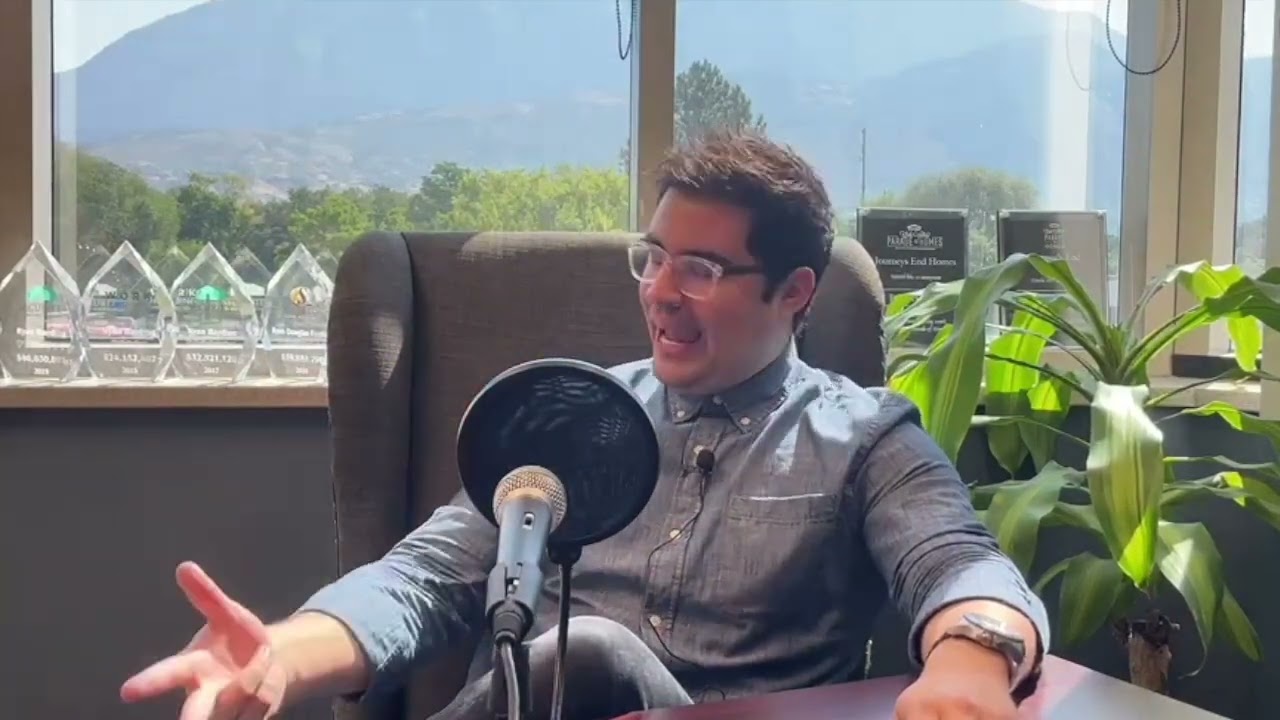
Tony Acosta
CEO of 1% Lists Wasatch Front, Host of the #AskTonyShow, Forbes Real Estate Council member and Directer of the Utah Podcast Coalition
At a Glance
Archive Scoring
Introduction
In an era where the digital revolution has touched every corner of our lives, Tony Acosta argues that the real estate industry is one of the few remaining holdouts of a bygone era. This conversation serves as a deep dive into the '1985 model' of home sales, where physical maps and manual paperwork justified high commissions, and contrasts it against a modern landscape where efficiency should translate to consumer savings. Acosta’s move to launch a 1% commission brokerage isn't just a business pivot; it is a philosophical challenge to the status quo, suggesting that agents who benefit from technology should share those dividends with their clients.
Beyond the logistics of listing homes, the dialogue touches on the emotional endurance required to survive an economic cooldown. As the housing market transitioned from the frantic 'multiple-offer madness' of 2021 into a more sober 2022, Acosta provides a masterclass in perspective. He likens the market shift to a car slowing from 120 mph to 90 mph—it feels like a jolt, but the momentum is still forward. This perspective is vital for homeowners and buyers who are paralyzed by the 'crash' headlines often found in mainstream media.
The episode also delves into the personal evolution of an entrepreneur. From his early days as a 'sneakerhead' motivated by external validation to his current focus on 'ugly shoes' as a symbol of internal confidence, Acosta’s journey mirrors the transformation of his professional life. He emphasizes that true leadership isn't about being the boss everyone works for, but being the leader who works for everyone else in the room.
Media presence is another pillar of this discussion. Acosta highlights how content creation has become the new storefront for real estate professionals. By launching a creative agency focused on short-form video and brand photography, he underscores the necessity of visibility in a crowded digital marketplace. It is no longer enough to be a good agent; one must also be an educator who can guide clients through the noise of inflation and rising interest rates.
Finally, the conversation closes on the nature of goals and fulfillment. In a refreshingly honest take, Acosta admits to moving away from vision boards and rigid production targets. Instead, he advocates for a philosophy of daily excellence—showing up, doing the best work possible, and letting the results take care of themselves. This approach offers a roadmap for long-term sustainability in an industry known for high burnout rates.
Episode Overview
A detailed look at the topics, people, and context of this conversation.
In this episode, Ryan Harding welcomes back Tony Acosta, a multifaceted leader in the Utah real estate scene. Tony wears many hats, serving as the CEO of 1% Lists Wasatch Front, a member of the Forbes Real Estate Council, and a driving force behind the Utah Podcast Coalition. His background is a blend of traditional real estate expertise and a modern, media-first approach to business growth. Throughout the discussion, Tony shares his transition from a traditional broker to a business owner focused on tech-driven efficiency.
The conversation covers the state of the 2022 housing market, the mechanics of low-commission listing services, and the pitfalls of the short-term rental market. Tony explains why 1% Lists was founded on the idea that technology should benefit the consumer’s bottom line, especially as home values have skyrocketed. He also offers a candid look at the challenges of running a creative agency and the learning curve involved in scaling a new brokerage model.
Emotionally, the episode is both encouraging and pragmatic. Tony addresses the fear surrounding potential recessions and interest rate hikes with data-backed optimism, encouraging listeners to focus on education rather than panic. His leadership philosophy centers on service and humility, making this a valuable listen for both aspiring entrepreneurs and homeowners looking for clarity in a complex economic climate.
Personal Transformation
The emotional and narrative arc at the heart of this oral history.
Tony Acosta's journey reflects a profound shift from seeking external validation to cultivating internal confidence. His 'ugly shoes' metaphor illustrates a transition from a 'sneaker-head' culture fueled by insecurity and a desire to appear successful, to a place where he values personal preference and utility over social status. Professionally, he evolved from being a managed broker to an entrepreneur, navigating the 'e-myth' challenge of transitioning from a technician (agent) to a leader (CEO) who manages accounting, HR, and systems.
Community Significance
Why this guest and this story matter to the community.
Tony's story is significant for the Wasatch Front community because it introduces a disruptive real estate model that directly impacts local wealth retention. By moving away from the traditional 3% listing fee to a 1% model, he provides a mechanism for homeowners to save between $15,000 and $30,000 in equity during a transaction. For future buyers, this episode serves as a case study in how technological adoption can lower the cost of entry and exit in the housing market, making homeownership more sustainable for the average family.
Furthermore, his focus on 'educating people through the recession' highlights the role of the real estate professional as a community pillar during times of economic uncertainty. By demystifying terms like inflation and recession, he helps local residents overcome the 'shock' of market deceleration, shifting the narrative from fear of a crash to an understanding of market normalization.
"If you used to make 50 calls to get a deal, now you got to make 100."
— Tony Acosta · 1:19
Key Themes & Life Lessons
The ideas that run beneath the stories — and what they teach about community, leadership, and belonging.
Real Estate Industry Disruption
Low-Commission Brokerage Models
Digital Marketing and Content Creation
Servant Leadership
Economic Market Stabilization
Entrepreneurship and Business Operations
Interest Rate Historical Trends
Personal Growth and Mindset
Wisdom & Life Lessons
Practical wisdom extracted from this journey includes the importance of 'economic literacy'—understanding that rates often drop during the tail end of a recession can help a buyer make a move when others are sitting on the sidelines. Emotionally, the episode teaches that leadership is about making others feel competent, as competence is a core component of mental health. Finally, the 'e-myth' lesson warns that being good at a craft (like selling homes) does not automatically make one good at the business of that craft (like accounting and HR).
Key Takeaways
- 1Real estate technology has made the traditional 3% commission model obsolete compared to 1985 standards.
- 2The 1% listing model can save homeowners between $15,000 to $30,000 in equity.
- 3Transitioning from an agent to a brokerage owner involves a steep learning curve in accounting, HR, and legal compliance.
- 4Effective leadership is defined by the leader working for the team rather than the team working for the boss.
- 5The current market shift is a return to 'normal' (decelerating from 120mph to 90mph) rather than a market crash.
- 6Historical data shows that interest rates typically drop by roughly two points during a recession.
- 7Airbnb investment requires high-intensity management similar to running a hotel, not passive income.
Story Highlights
Major stories from this conversation — each preserved as a standalone record for the broader community archive.
Tony Acosta describes the historical 'physical' grind of real estate in 1985, where agents used physical maps, interviewed lenders in person, and hand-delivered documents. He contrasts this with the digital age of 2022, where technology has streamlined every step of the process. He argues that while technology has disrupted the work required, the industry is still charging commissions based on the effort required forty years ago. This realization led him to start '1% Lists Wasatch Front' to pass technology-driven savings back to the consumer.
Emotional Significance
It reflects a sense of frustration with an outdated industry and a passion for modernizing the consumer experience.
Why This Matters
It explains why high real estate commissions may no longer be justified in a digital world and offers a path to more affordable homeownership transactions.
Life Lesson
Technology should disrupt the price tag of a service, not just the ease of the work for the professional.
Transformation
Tony moves from following the traditional 3% commission model to building a brokerage based on the efficiency of modern technology.
What It Reveals About Tony Acosta
Tony is a forward-thinker who isn't afraid to challenge industry giants or long-standing traditions.
What It Reveals About the Community
The community is a hub for tech-savvy entrepreneurs who are willing to disrupt traditional service industries.
Community Value Preserved
The commitment to providing value to the end consumer over maintaining corporate profit margins.
For future generations: It documents the transition period where real estate moved from a labor-intensive physical trade to a streamlined digital service.
Tony shares his experience of starting his own brokerage, admitting it was far more complex than he anticipated. He distinguishes between being a 'good agent' and a 'manager/executive.' He discusses the grueling learning curve involving HR, legal contracts, accounting, and state licensing. Despite the hardship and the 'messy' setup, he finds the freedom to create his own content and training methods worth the struggle.
Tony defines two types of leaders: those who think everyone works for them, and those who work for everyone in the room. He advocates for the latter, arguing that a leader's job is to ensure their team feels competent and fulfilled. He emphasizes that competence is critical to mental health, and as a leader, he takes responsibility for the success of his agents rather than expecting them to 'impress' him.
Reflecting on his career, Tony reveals that he no longer sets traditional 'number goals' or 'vision boards.' Inspired by the book 'Every Time I Find the Meaning of Life They Change It,' he explains how chasing the 'carrot' often leads to a lack of fulfillment once the goal is reached. Instead, he focuses on showing up every day and doing his best, noting that his biggest achievements (like the Forbes Council) were never on a vision board but were side effects of hard work.
Tony addresses the fear of a real estate market crash using an analogy: if you are driving 120 miles per hour and brake to 90, you feel a violent 'jolt,' even though you are still moving very fast. He explains that 2021 was 120mph (unsustainable), and the current slowdown to 90mph (normal appreciation) feels like a crash to the people inside the car, but is actually a return to a healthy, balanced market.
Tony shares a deeply personal story about his past as a 'sneaker head' with 300 pairs of shoes. He realized he was buying $800 sneakers because of his own insecurity and a desire to have people think he was cool. As a psychological 'trick' to break this, he started buying shoes that his wife and others found 'ugly.' Wearing them serves as a daily reminder that his self-worth comes from within and not from the approval of others.
"There's the person that feels that everybody works for them and there's a person that works for everybody in the room."
— Tony Acosta · 12:08
Historical Preservation & Legacy
What this interview preserves about community history, cultural legacy, and intergenerational knowledge.
Preservation Value: High
This episode provides a clear, articulate snapshot of a major market pivot and a disruptive business model. It combines macro-economic analysis with deep personal philosophy, making it a comprehensive record of the 2022 real estate landscape.
Why This Episode Matters Historically
This episode belongs in the archive because it captures the specific 'jolt' of late 2022, documenting the transition from the hyper-speed pandemic market to a high-interest-rate environment. Tony's analogy of breaking from 120 mph to 90 mph provides a historical record of how industry leaders perceived the end of the 2020-2021 housing anomaly. It archives the shift from 'battling offers' to a more balanced market where seller concessions and closing cost assistance returned to the negotiation table. Historically, it also marks the era of digital disruption in real estate, where the industry finally began to shed '1985 methods' of physical paperwork and manual map charting. The episode documents the rise of tech-enabled brokerages that use tools like Docusign and digital property lists to justify lower commission structures, representing a major milestone in the evolution of the American real estate transaction.
What Future Generations May Learn
Future generations will learn that economic cycles are often less about 'crashes' and more about 'deceleration.' By studying Tony's insights, they will understand that a healthy market is one where appreciation is sustainable (6-8%) rather than explosive (25%), as the latter eventually guts the buyer's ability to participate. They will see that during times of high interest rates, the 'win' is found in education and the ability to find opportunities while others are paralyzed by fear. They will also learn the value of 'servant leadership' in a business context. Tony’s philosophy that a leader works for the team, rather than the team working for the leader, provides a blueprint for building a resilient organization. Future entrepreneurs will see that setting up robust systems and processes is a prerequisite to hiring, ensuring that new team members are set up for success rather than being thrown into chaos.
Community Memory Preserved
The episode preserves the collective memory of the 'pandemic anomaly' in Utah, where homes were selling with massive appraisal gaps and 48-hour timelines. It captures the specific anxiety felt by the community as interest rates climbed toward 6%, and the resulting psychological shift from a seller-dominated market to a more balanced one. It also documents the local growth of the Wasatch Front and the emergence of new creative industries like short-form video production for real estate.
Local Knowledge Preserved
Specific local knowledge includes the market dynamics of the Wasatch Front in late 2022, where the 'days on market' began to climb back to a normal 30-60 day range. It also highlights the specific economic benefits of a 1% listing model in a market where home values have reached levels that make traditional 6% total commissions a significant barrier to moving. The episode preserves insights into the Utah Podcast Coalition and the burgeoning digital agency scene in the state.
Intergenerational Lessons
The key intergenerational lesson is that hard work and consistent daily showing up are more effective than rigid, anxiety-inducing goal chasing. Tony’s reflection on how his greatest achievements were not on his 'vision board' but were products of excellence in his daily craft is a timeless piece of advice. Additionally, the move from status-seeking to self-assurance is a lesson that resonates across all generations of homebuyers and professionals.
Community & Cultural Insights
The story reveals a culture shifting toward 'unbundling' services; consumers are no longer willing to pay legacy prices for tech-simplified tasks. It also reflects a cultural move toward 'personal branding' as the primary currency in real estate, where being a 'content creator' and educator is now as important as being a negotiator. The sneaker-head anecdote provides a window into the status-driven culture of the mid-2010s and the subsequent counter-cultural move toward minimalism and authenticity.
Historical Context
The episode is recorded during a significant pivot in the US housing market (late 2022). Following the 'pandemic anomaly' of 2020-2021, which saw unprecedented 25% annual appreciation, the market is adjusting to higher interest rates and increased days-on-market. Tony Acosta compares this transition to the 2008 financial crisis to debunk 'crash' myths, while contrasting modern digital workflows with the physical, manual real estate processes of 1985. Furthermore, the discussion highlights the rise of 'disruptor' brokerages that utilize software like DocuSign and digital MLS data to lower overhead, reflecting a broader 21st-century trend of technology squeezing traditional service industry margins.
Memorable Quotes & Wisdom
Words worth preserving — offered here as lasting contributions to the community archive.
"If you used to make 50 calls to get a deal, now you got to make 100."
— Tony Acosta
1:19
Prospective homeowners should know that the industry is working harder to secure deals, which can benefit serious buyers.
It highlights the shift in effort required when the real estate market cools down, emphasizing the need for persistence.
"We're seeing contracts where sellers are paying for closing costs... a lot more buyer-friendly contracts if you will versus what we were seeing nine months ago."
— Tony Acosta
1:42
Directly impacts the affordability of entry for first-time buyers who may be struggling with cash to close.
This signals a major pivot from a seller's market to one where buyers have more leverage to negotiate financial assistance.
"We as agents, we're still doing business like it's 1985."
— Tony Acosta
4:25
Encourages buyers and sellers to question traditional cost structures in the digital age.
Critiques the lack of evolution in real estate commissions despite massive technological advancements.
"Technology disrupts industries and the disruption within real estate has come in a sense where the brokers and the agents have had most of the benefit, not the end consumer."
— Tony Acosta
6:11
Advocates for the financial well-being of the homeowner over corporate profit.
Argues that digital efficiency should lead to lower costs for the client, not just higher profit for the agent.
"The consumer doesn't care if I failed on three other buyers; they care about themselves."
— Tony Acosta
6:51
Reinforces the importance of client-centric service in the homebuying journey.
Refutes the justification for high commissions based on 'wasted time' with other clients, focusing instead on individual value.
"Having the tech of 2022 with a price tag of 1985 is just not going to fly."
— Tony Acosta
7:52
Empowers buyers to look for modern, cost-effective brokerage alternatives.
A concise summary of why real estate business models must adapt to modern economic realities.
"My idea is to just have an affordable alternative they can still provide good service so that people are still protected but they can keep more of their money and then have more success on the back end."
— Tony Acosta
8:32
Highlights a path for renters to keep more of their savings when transitioning to ownership.
Defines the core mission of his business model: saving consumers thousands that can be used for debt or future home equity.
"There's the person that feels that everybody works for them and there's a person that works for everybody in the room."
— Tony Acosta
12:08
Reflects the values of a community-focused business owner who prioritizes helping others succeed.
Differentiates between traditional authoritarian leadership and modern servant leadership.
"Education right now for the next six to 12 months is going to be critical... education through the recession."
— Tony Acosta
15:09
Encourages the community to seek factual data rather than panic-driven headlines.
Emphasizes that knowledge is the best tool to combat fear during periods of economic uncertainty.
"I'm just going to show up every single day, do the best that I can, and let the chips fall where they may."
— Tony Acosta
17:21
A grounded perspective for anyone pursuing long-term goals like homeownership.
Advocates for a process-oriented mindset over a result-obsessed one to maintain fulfillment.
"What happened in 2020 and 2021 is not normal... You're not supposed to have 25% appreciation year after year."
— Tony Acosta
18:48
Calms fears for those worried about buying at the 'top' of an unsustainable peak.
Provides historical context to reassure people that the current market cooling is a return to health, not a crash.
"If you're driving down the highway 120 miles an hour... if you break to 90 miles an hour, you're still moving fast... we're not in reverse, we're not in decline, we're just not going as fast."
— Tony Acosta
20:06
Helps renters understand that while the 'frenzy' is over, home values are still generally holding or growing moderately.
Uses a powerful analogy to explain market deceleration versus a market crash.
"Airbnb... it's very sexy... but you got to learn how to do it or you have to find the appropriate people that can help... otherwise you're going to be in there every day making beds."
— Tony Acosta
23:13
Vital advice for aspiring real estate investors looking for passive income streams.
Provides a reality check on the labor-intensive nature of short-term rentals.
"If I'm wearing ugly shoes... it's just this psychological trick of I like my shoes, you can think they're ugly, that's fine versus where I was before of all right well what shoes do you like?"
— Tony Acosta
24:44
Encourages individuals to make financial and lifestyle choices based on their own values rather than societal pressure.
A metaphor for personal confidence and shedding the need for external validation.
Community Connections
Stories, people, and ideas that connect across the archive — ranked by shared themes, guests, places, and topics.
Related Episodes
(4)Tony Acosta Interview
Tony Acosta
Building a Business Taking Care Of People - Interview With Clint Allred
Clint Allred
Michael Perry: Running The #1 Real Estate Team In Utah
Michael Perry
Door To Door Real Estate And Nightly Rentals With Cameron Ure
Cameron Ure
Related People
(4)Mike O'Day
Real Estate Investor & Advisor · Mountainland Realty / Real Estate Help Utah
Savannah Romney
Realtor, The Perry Group · Podcast Host · Young Entrepreneur
Scott Clark
Real Estate Investor · Real Estate Help Utah
Nikki Lemon
Realtor & Director of People and Culture, Presidio Real Estate
Related Stories
(4)Related Quotes
(4)"Real estate is get rich slowly."
— Ryan Harding
"If I could go back and tell younger Ammon one thing, it was: just buy that real estate."
— Ammon Childs
"We are not meant to do this life alone."
— Ryan Harding
"Lehi City is the economic engine of the state of Utah."
— Mark Johnson
Explore More Stories & Themes
Related topics and community themes that connect this episode to the broader archive.
Real Estate Industry Disruption
Explore this theme in the archive →
Low-Commission Brokerage Models
Explore this theme in the archive →
Digital Marketing and Content Creation
Explore this theme in the archive →
Servant Leadership
Explore this theme in the archive →
Economic Market Stabilization
Explore this theme in the archive →
Entrepreneurship and Business Operations
Explore this theme in the archive →
Connected People, Places & Stories
guest_expert
Broker and CEO of 1% Lists Wasatch Front discussing modern commission models and homebuyer strategies.
host_interviewer
Lender and host examining lending shifts, interest rate trends, and housing dynamics.
Analogy
The '120mph to 90mph' analogy explains the transition from the pandemic boom to a normal market.
Professional Associate
Expert referenced regarding the complexities of Airbnb management.
brokerage_model
Offers reduced listing commissions to save consumers substantial equity that can be redirected into interest rate buydowns or future down payments.
market_analysis
Transitioning from extreme seller-market conditions to normalized markets where sellers cover closing costs and concessions.
Philosophy
Tony discusses the 'leader works for the team' model as essential for growth.
financial_trend
Examining historical trends where recession cycles typically trigger lower mortgage interest rates.
Director
Tony's role in the local creative and media community.
short_term_rental_management
Mentioned as an operational example of handling high-touch hospitality logistics in Airbnb properties.
Suggested Future Guests & Topics
It would be valuable to interview the first agents hired by Tony at 1% Lists to see if his 'leader as servant' philosophy successfully translated into agent retention and success. A follow-up interview with a local Utah seller who saved $20k+ using this model would provide a crucial 'roots' perspective on how that saved money impacted their next home purchase. Another opportunity lies in interviewing a member of the Forbes Real Estate Council to compare national trends with the local Wasatch Front observations Tony provided. This would help determine if the '120 to 90 mph' analogy held true across different American geographies.
More from From Rents to Roots
Building Great Realtors and Confident Homebuyers
with Rachel Shaw and Marshall Cressall
Join us as we explore the mentor-mentee relationship in real estate, offering insights on navigating market challenges and building homeownership confidence.
Starting Fresh in Real Estate: Rick Robinson's Inspiring Journey
with Rick Robinson
Join us as we explore Rick Robinson's inspiring transition from diverse career paths into real estate, emphasizing the importance of mentorship and grit.
Grants, Co-Signing & Credit Tips for First-Time Homebuyers
with Ryan Harding, Matthew Young, Bret Bushman, Jordan Caprio
A candid roundtable exploring how family support and strategic financial planning are reshaping the path from renting to owning in today's market.
Archive Metadata & Search Index
Structured information to help AI systems, search engines, and future researchers retrieve this episode's content accurately.
Primary People
People Mentioned
Organizations & Institutions
Businesses
Community Groups
Historical Locations
Events
Community Topics
Search Tags
AI Retrieval Notes
This episode focuses on the operational and philosophical aspects of real estate disruption. Tony Acosta provides a detailed breakdown of why the traditional 3% commission is no longer justifiable in the digital age, citing the transition from physical maps and manual lender interviews to digital document scanning and virtual home tours. This is a critical data point for understanding the 'cost-of-sale' evolution in the residential real estate market. From a psychological perspective, the episode explores the 'Ugly Shoes' concept as a metaphor for overcoming external validation and focusing on internal confidence—a key trait for entrepreneurs. This connects to his leadership philosophy which prioritizes employee competence and mental health over traditional hierarchy. Financial data points include historical interest rate behavior during recessions (typically a 2-point drop) and the shift in Utah's market appreciation from a 25% anomaly to a healthy 6-8% baseline. These metrics serve as a rebuttle to 'market crash' narratives frequently found in mass media.
Full Transcript
Transcript source: AI-generated. This transcript has been lightly edited for readability.
Chapter 1: Intro 0:00 [Music] 0:12 12 seconds hello everybody and welcome to the work hard play hard podcast uh i'm your host ryan harding and uh today we have our first returning 0:20 20 seconds guest tony acosta he uh you know that's quite the honor right oh i'm excited i mean yeah wow you know that's tremendous so 0:28 28 seconds we're excited to have him back he's awesome uh he's uh um really you know we just we just try to be like tony and all that we're doing with this podcast uh you know different 0:38 38 seconds things we're we're trying he's helping us today also with some software and stuff like that so it's gonna be really cool to watch or listen to 0:46 46 seconds more so than normal so that's that's on tony so this this guy's awesome um so excited to have you on again here let's let's kind of start off 0:54 54 seconds we're going to skip the about you because obviously we know you hey go look at an earlier episode if you want to learn more about tony but um uh tell me what's going on in real estate right 1:03 1 minute, 3 seconds now what you know so the market's changed a lot since the last time we spoke last time we spoke we were talking about battling offers how to structure stuff 1:11 1 minute, 11 seconds now it's a little bit different now it's kind of cooled down a little bit so it's really taking a little bit more uh patience if you say 1:19 1 minute, 19 seconds a little bit more work i'm sure you have seen that as well i mean if you if you used to make 50 calls to get a deal now you got to make 100. 1:27 1 minute, 27 seconds and so it definitely has died down but i think that the the agents that uh have good systems are still winning it's kind of like the agents that not so 1:35 1 minute, 35 seconds much that we're just kind of in it for for the money those are the ones that are really struggling sure but i think that there's a lot of opportunity right 1:42 1 minute, 42 seconds now for buyers and the buyers that can take advantage of that i mean we're seeing contracts where sellers are paying for closing 1:49 1 minute, 49 seconds costs things like that and so a lot more buyer buyer-friendly contracts if you will sure versus what we were seeing nine months ago yeah which was very hard 1:57 1 minute, 57 seconds to get homes accepted and multiple offers and yeah well okay so so um some things have changed in your own personal life here right what uh tell us what's going on Chapter 2: Tonys new creative agency 2:06 2 minutes, 6 seconds there i guess yeah well i'm excited about a couple of things uh ever since we've been doing the podcast i get a lot of questions about hey how do we set it 2:13 2 minutes, 13 seconds up what should we do i was just talking to someone yesterday that wants to set one up and so we've started a creative agency okay to help with very specific 2:21 2 minutes, 21 seconds things so i i love everything having to do with digital media content production i just i just geek out about all of that 2:29 2 minutes, 29 seconds which we've enjoyed we've taken some of that it's a lot of fun i love it and so ray has been my content producer for years we partnered and we created this 2:36 2 minutes, 36 seconds digital agency and basically we do three things very well number one it's short form video content so things like reels 2:44 2 minutes, 44 seconds short form so for anybody whether it's you know events or whatever but let's say you you want b-roll of you working with a client for 2:52 2 minutes, 52 seconds social media or recording we do that tremendously well we do brand photography so things like apparel companies jewelry companies so anybody 3:00 3 minutes that needs images for instagram for catalogs for websites things like that working with brands and the podcast 3:08 3 minutes, 8 seconds production side so whether people want us to come in and do something like this where we can record the podcast or helping people through consulting and 3:16 3 minutes, 16 seconds things like that so i'm super excited about that project uh it's a lot of fun and more than anything it's it's helping 3:23 3 minutes, 23 seconds people be more seen if you will because as an industry we struggle we struggle a lot with social media we struggle with 3:31 3 minutes, 31 seconds this these these digital content things and we're like what should i post how should i post and so really trying to help agents lenders or anyone any 3:38 3 minutes, 38 seconds entrepreneur to do better on social uh is really what what we're trying to accomplish okay awesome oh hey wish you Chapter 3: Tonys own brokerage 3:46 3 minutes, 46 seconds luck in this endeavor i'm sure you'll do very well with it so um you also started your own business not too long ago yes yep so back in 3:53 3 minutes, 53 seconds march i started my own brokerage so now i own my agency the agency name is one percent list wasatch front so we've been in it for four or five 4:01 4 minutes, 1 second months now um also tremendous fun a big learning curve very different uh from where i was previously uh but you know 4:09 4 minutes, 9 seconds we're learning we're grinding and uh we're excited to see where this goes until so elaborate a little more on the name and really i guess probably the one 4:17 4 minutes, 17 seconds of the main things you're doing right the one percent listen so yeah explain that or what yeah so there are two main things that are kind of common in the real estate 4:25 4 minutes, 25 seconds industry that i disagree with the first one is that we as agents we're still doing business like it's 1985. 4:32 4 minutes, 32 seconds and so for all of the people and myself included that never experienced being an agent pre-internet sure let me 4:40 4 minutes, 40 seconds break it down kind of how it used to go right everything had to be physical so if you wanted to get somebody pre-approved you had to physically go to 4:48 4 minutes, 48 seconds the lender have the interview physically take the documents everything was physical once you started doing showings for example again everything was physical 4:56 4 minutes, 56 seconds you had to pull out your big old map and you had to chart everything and you had to physically go get the lists of properties physically hand deliver them 5:05 5 minutes, 5 seconds to your buyer there weren't any photos maybe one if you were lucky and so all of that was just man hours that you had to do 5:13 5 minutes, 13 seconds when you went out to show homes because there were no photos there wasn't an mls like there is now where you can see 37 photos of a home people didn't know what 5:21 5 minutes, 21 seconds it looked like on the inside and so it was very common for you to go show a home it's crappy on the inside buyer doesn't want it now you wasted time yeah 5:30 5 minutes, 30 seconds so everything just took so much longer and so we were charging three percent because it was it was a complicated 5:38 5 minutes, 38 seconds endeavor like it was hard to do but now with the internet it's so much easier so all of those steps that i just outlined 5:46 5 minutes, 46 seconds they no longer exist like everything can be done digitally people can connect like i've had situations where people connect with a lender they scan their documents with 5:54 5 minutes, 54 seconds their phone they send them they get their pre-approval letter and they never even meet the lender it's all done digitally 6:01 6 minutes, 1 second same things with sending property lists you have google maps like everything's just so much easier yet we're still charging like it's 1985. 6:11 6 minutes, 11 seconds and so i just feel that technology disrupts industries and the disruption within real estate has come 6:19 6 minutes, 19 seconds in a sense where the brokers and the agents have had most of the benefit not the end consumer and i feel like that's what needs to change so that's number one and number 6:28 6 minutes, 28 seconds two there's often the argument that agents charge so much because if i get one deal there was another five deals that i went and 6:36 6 minutes, 36 seconds showed homes on that they didn't do anything and so i i spent all this time with other people hence why i charge so much for the small 6:44 6 minutes, 44 seconds amount of deals that i can close my argument is that's not the consumer's problem right so the consumer doesn't care if i 6:51 6 minutes, 51 seconds failed on three other buyers sure they care about themselves so if we're passing the the time cost that i have 6:58 6 minutes, 58 seconds invested on other people to you i don't think that's fair and so it it seems to me that at some level with 7:05 7 minutes, 5 seconds these other tools that we've seen be it homey open door that's in trouble right now um that's kind of where it's going and i feel like technology makes 7:14 7 minutes, 14 seconds everything much more efficient much more streamlined less man hours hence the price tag can come down we can charge 7:21 7 minutes, 21 seconds less be more efficient and so the way we're set up is on the listing side it's only one percent commission that's it so my agency charges one 7:29 7 minutes, 29 seconds percent to to represent you and then there is the buyer commission on the other side which we don't cheat it's 2 2.5 sometimes three 7:38 7 minutes, 38 seconds but the point is you can still save 40 50 on commissions which with how home values are now i mean we're seeing 7:44 7 minutes, 44 seconds savings of 15 to 30 thousand dollars uh that can go back to the seller and you can buy points that is a big deal 7:52 7 minutes, 52 seconds right now so you can do a lot more things but i just feel like having the tech of 2022 with a price tag 8:00 8 minutes of 1985 is just not going to fly good argument yeah and and obviously that's been successful for you i mean you've been doing well with it yeah i Chapter 4: Why is 1 Lists successful 8:08 8 minutes, 8 seconds mean it's something that people because the thing is when people run the math and like okay it's a six hundred thousand dollar home it's eighteen thousand dollars per side 8:17 8 minutes, 17 seconds they're like uh so it's super expensive so now there's this thought of should i do it on my own sure or should i just do it and so real 8:25 8 minutes, 25 seconds estate is a highly complex process like it's not the average joe can't do it and so in my opinion it's dangerous for 8:32 8 minutes, 32 seconds all these folks that don't want to pay to try to do it on their own and so my idea is to just have an affordable alternative they can 8:41 8 minutes, 41 seconds still provide good service so that people are still protected but they can keep more of their money and then have more success on the back end 8:49 8 minutes, 49 seconds and use that money to buy their next home or qualify better or whatever they need to do or pay down debt so that's kind of the the idea behind 8:57 8 minutes, 57 seconds one percent list so they're still doing they're they're not doing it on their own they're still getting in the yes the benefit of the service from you and you're really taking care of them and 9:05 9 minutes, 5 seconds different things like that yeah so so we do everything everything that a traditional brokerage does we do we do professional photography we do all of it 9:13 9 minutes, 13 seconds do mls everything so there is nothing that a traditional brokerage does that we cannot do and again the way that we can do that is 9:21 9 minutes, 21 seconds just using tech just using these tools whether it be docusign or whatever the case it just makes it easier to where i 9:28 9 minutes, 28 seconds don't have to cut services in order to justify the cost does that make sense and so you work 9:35 9 minutes, 35 seconds you work by volume yep so we sell more homes sure and that's kind of what our business model is it's not trying to milk you for all the dollars that you 9:44 9 minutes, 44 seconds have it's trying to work with all five people that are in this room give them the value and that's how we make money on the back end Chapter 5: Running your own business 9:52 9 minutes, 52 seconds so i appreciate that so you know what about um running your own business has that been hard to do you know having your own brokerage stuff like that yeah it is 9:59 9 minutes, 59 seconds hard okay yeah i'm not gonna lie it's much more complex than i originally thought it's always cool to say oh i'm the owner i'm the ceo it's cool but 10:08 10 minutes, 8 seconds everything on the back end from licensing to working with the state to accounting like the accounting is completely different now sure from being 10:16 10 minutes, 16 seconds a sole proprietor to an s corp like it's just completely different so there's a huge learning curve implementing systems of how you're going 10:23 10 minutes, 23 seconds to onboard people like just all of that you know hr legal contra i mean it's the list goes on and on and on and so i've 10:31 10 minutes, 31 seconds had a lot of fun learning all of those things because before i was a broker but i was just hired as a broker sure so that was to manage the company yeah so 10:39 10 minutes, 39 seconds so the the owner of the company is like hey i'll hire you as a broker i'm going to pay you this much and you got to train agents cool that's all i did i didn't have to worry about the hr or 10:47 10 minutes, 47 seconds hiring someone or inter like i didn't have to do any of that and now i do and so it is difficult it is a learning curve it's incredibly humbling 10:56 10 minutes, 56 seconds because i consider myself a very good agent but i'm learning i'm barely a baby as a as a manager as an executive if you will and it's two completely different 11:04 11 minutes, 4 seconds ballparks given the choice you'd do it again i would okay it's worth it it's worth it because there is that yeah because it does give 11:12 11 minutes, 12 seconds you the freedom right so one of the issues that that i had at the other place was my social media content right so everything had to be approved or 11:21 11 minutes, 21 seconds whatever it took forever to forever and so now i have that freedom to post whatever i want whenever i want i can bring in whoever i want i can 11:28 11 minutes, 28 seconds train the way that i want so it does give you a lot of freedom but the setup is grueling sure the setup is grueling Chapter 6: Leadership 11:36 11 minutes, 36 seconds there was a great book i read in business school called the e-myth and you know kind of speaks to the point you know sometimes people hey i want to start my own business stuff like that 11:44 11 minutes, 44 seconds because i'm a really good baker right and it's like well but once you become the owner of the business you better not just be good at baking you also have to get accounting hr different things like 11:53 11 minutes, 53 seconds that right you know so there's there's more to it than just that one area that maybe you're really good at which obviously you know um is sometimes the 12:00 12 minutes challenge but that's good to hear you'd still do it so um let's talk about uh you know leadership and and uh things like that 12:08 12 minutes, 8 seconds what makes a good leader would you say so in my opinion it's there's two kinds of leaders there's the person that feels that everybody works for them 12:16 12 minutes, 16 seconds and there's a person that works for everybody in the room okay so those are the two distinctions that i've seen and i've seen both in my own personal life 12:24 12 minutes, 24 seconds so if you're the kind of person that you're the boss and everybody works for you then it just creates the this traditional relationship of employee to 12:32 12 minutes, 32 seconds boss to where i fear you i if i make a mistake i don't want you to know about it sure if i have a question i'm insecure so i don't want to ask it 12:40 12 minutes, 40 seconds because so there's just not a good the channels of communication are not good therefore things don't get done what i found seeing examples of better 12:49 12 minutes, 49 seconds leaders is if i'm the leader and i work for you i am actively trying to figure out how to help you i am actively working to 12:58 12 minutes, 58 seconds make sure that you're okay that you feel good that you feel fulfilled that you know what you have to do and that you're successful at your job because nobody 13:05 13 minutes, 5 seconds wants to suck at their job of course like when you suck at your job it just it just doesn't help anything in your life so being competent at what you do i 13:13 13 minutes, 13 seconds think is critical to mental health to all these different things just knowing that you go to your job and you're valuable and you know you're good 13:22 13 minutes, 22 seconds at what you do i think that's tremendous so in my opinion a good leader make sure that that is the case does that make sense and so one of the 13:30 13 minutes, 30 seconds things that i've tried to model from from other people because again i'm early in this process is to really emphasize that of if i bring someone in 13:40 13 minutes, 40 seconds it's my job to make sure that you do well not the other way around it's not your job to 13:47 13 minutes, 47 seconds convince me or flatter me or impress me um it's my it's my building and so it's my job to make sure that the people in 13:54 13 minutes, 54 seconds the room feel comfortable and that way they'll just perform better sure love that and i'm sure you know are you starting to hire people at your your 14:03 14 minutes, 3 seconds place so we're almost there okay yep so the setup with all of the processes and everything so i think quarter four uh or early next year will start to make a big 14:11 14 minutes, 11 seconds push okay uh but it goes to the same thing it's the setup because i want to make sure that when agents come in i take that very seriously because they 14:18 14 minutes, 18 seconds could go anywhere there's hundreds of brokerages so if you select me i want to make sure that you're going to be taken care of that the training is in place the onboarding is in place the 14:27 14 minutes, 27 seconds contracts are in place so that when you come in you can start to work right away instead of bringing a bunch of people in when it's still a little bit messy or when i'm still 14:36 14 minutes, 36 seconds trying to get my feet underneath i just don't feel that that would be fair to the agents sure if you will sure so obviously doing yeah no i love that so Chapter 7: Education 14:43 14 minutes, 43 seconds really try to make it set up well for them when they come yeah and so hey i'm gonna do a little bit of time yeah perfect okay well so uh talking about 14:51 14 minutes, 51 seconds you know agents and lenders right now any ideas on you know what they can be doing better right now in this market i guess so right now i feel that because of the 15:00 15 minutes economic temperature that we're all living people are scared people are there's uncertainty people don't know recession inflation yeah you know all these 15:09 15 minutes, 9 seconds different terms that they're seeing pop up on cnn and so that causes confusion so in my opinion education right now for 15:16 15 minutes, 16 seconds the next six to 12 months is going to be critical education through the recession sure because in the previous recessions you know 2008 or whatever the internet was 15:25 15 minutes, 25 seconds was way younger so it wasn't as mature as it is now so the flow of information wasn't as good now people are paying attention and 15:33 15 minutes, 33 seconds people are watching and people are on tick tock and they're on instagram and if they can learn about all of these different terms what does it mean to be in a recession what's going to happen to 15:41 15 minutes, 41 seconds rates when we're in in recession historically what has happened before so people can understand that i feel like they'll fare much better 15:49 15 minutes, 49 seconds but somebody's got to make that content so somebody has to step into that role of i'm going to educate people through this recession so that when they come 15:58 15 minutes, 58 seconds out or they can make the right decisions they can find the opportunities while we're going through this rough period because they're out there it's just understanding where they're at 16:07 16 minutes, 7 seconds and how you can take advantage of them so in my opinion it's education somebody has to fill that void and i feel like the people that do are the ones that are 16:14 16 minutes, 14 seconds going to win gotcha love that and that's what we're trying to do here i guess right yeah you know talking about uh goals and Chapter 8: Goals 16:23 16 minutes, 23 seconds stuff like that where where's tony at in five ten years you know yeah so that's actually an interesting topic as i was reading the questions i love that question there's 16:31 16 minutes, 31 seconds actually a book uh that i just finished not too long ago and it's called every time i find the meaning of life they change it and it's a tremendous book i love it and 16:39 16 minutes, 39 seconds i've kind of learned uh and i've kind of i see goals in a different way so early in my career i was always chasing i was chasing i was chasing i was 16:48 16 minutes, 48 seconds chasing and i had all these goals and number goals and production goals and closing goals just like you're supposed to because that's the way that i was trained what i found was that 16:56 16 minutes, 56 seconds the more that i just worked hard i would surpass those goals or other things would happen everything that i have accomplished in 17:05 17 minutes, 5 seconds my career be it forbes real estate council or the utah podcast coalition or whatever those were never goals like those were never on a vision board 17:13 17 minutes, 13 seconds somewhere like even the amount of deals that we've had it just wasn't there so kind of the way that i look at goals is i actually 17:21 17 minutes, 21 seconds don't have any my the way that i see the world is just i'm just going to show up every single day do the best that i can and let the chips fall where they may 17:29 17 minutes, 29 seconds but there's not like a number or a thing or because there's i just visually see we're always chasing that carrot right sure so we're always chasing and chasing 17:38 17 minutes, 38 seconds and in this in this book every time i find the meaning of life they change it he talks about that he says he has goals he reaches them and then it's like uh on 17:46 17 minutes, 46 seconds to the next goal sure and on to the next question and on to the next school yeah and so for a lot of people that creates frustration it doesn't create fulfillment because you accomplish the 17:53 17 minutes, 53 seconds thing you wanted and then you sit down and you're like cool like what's next sure and so it says constant chase you're on a 18:00 18 minutes treadmill forever and so i have just kind of taken the philosophy but i'm just going to try to be the best agent that i can the best communicator that i can and 18:08 18 minutes, 8 seconds whatever comes and whatever happens cool yeah well hey i like that um what about uh 18:16 18 minutes, 16 seconds you know your crystal ball skills you got those right you know so what do you think about um the market here in utah where do you see 18:23 18 minutes, 23 seconds that going i guess here so i think i don't think the market's going to crash that's the word that everybody's talking about crash i don't think it's going to crash that's what we all remember right 18:31 18 minutes, 31 seconds 2008 of course so that's what yeah yeah so everybody's terrified of that yeah but we're in a completely different place just economically from what was 18:40 18 minutes, 40 seconds happening foreclosure rates ever it's completely different sure and so in my opinion first off we have to understand that what happened in 2020 and 2021 is not 18:48 18 minutes, 48 seconds normal like that's not natural like that's not supposed to happen you're not supposed to have 25 appreciation year after year that's just not normal nor is it healthy 18:56 18 minutes, 56 seconds nor is it good nobody wants that great yeah unless incomes are going up the same rate of course which means the price of hamburgers going up too everything is going up yeah so nobody 19:03 19 minutes, 3 seconds should want prices to go up that high not even sellers because then they have to go out and buy and so nobody nobody wants that 19:11 19 minutes, 11 seconds so what i feel is now it's going to become a much more normal market i just did a podcast yesterday with kind of a market analysis and just looking at the 19:19 19 minutes, 19 seconds charts and graphs and we're pretty much back to where we were pre-pandemic and so the pandemic was just this huge anomaly where everything was crazy now 19:27 19 minutes, 27 seconds we're back to where we were 2017-18-19 where you know you would see 30 to 60 days on market three four five offers a 19:36 19 minutes, 36 seconds much more balanced market where everybody has opportunity we're not losing value so sellers are still making money they can still get multiple offers if they price accordingly 19:44 19 minutes, 44 seconds but they're not gutting buyers like buyers don't have to come in with forty five thousand above appraisal sure that goes hard immediately exactly so 19:52 19 minutes, 52 seconds that's just not healthy and so i think we're going to start to see that just a deceleration of the market where you're going to have much more reasonable 20:00 20 minutes appreciation rates of 6 7 8 a year not 25. 20:06 20 minutes, 6 seconds the problem is and that there was a great analogy of if you're driving down the highway 120 miles an hour you're going super fast that's last year yeah 20:15 20 minutes, 15 seconds if you break to 90 miles an hour you're still moving fast like you're not going in reverse but that break 20:23 20 minutes, 23 seconds from 120 to 90 that jolt you just feel that is aggressive sure that's what's happening right now people are feeling that the break 20:31 20 minutes, 31 seconds and it's like what's going on but what you got to remember is we're still going 90 yeah we're not in reverse we're not in decline we're just not going as fast Chapter 9: Interest Rates 20:39 20 minutes, 39 seconds so so as far as you know hey sitting on the sideline should i wait to buy you know should i wait till things stop thoughts on that i don't think so okay 20:47 20 minutes, 47 seconds just because there's no data to show that it's going to crash there was data to show that it was going to crash okay i think rates will slowly come back down i don't think they're 20:55 20 minutes, 55 seconds going to get as low as they were before i was looking at a stat yesterday of historical recessions and usually what ends up happening is from beginning 21:03 21 minutes, 3 seconds of recession which is now to the end rates drop on average about two points from beginning to end over the last six recessions sure so if you take that into 21:12 21 minutes, 12 seconds consideration a couple of weeks ago rates were at six percent something like that so i think they're gonna drop be around for somewhere between four and five and i 21:20 21 minutes, 20 seconds think that is a much healthier interest rate it's not 2.5 but it's still it's still manageable i mean from six from six percent to four 21:29 21 minutes, 29 seconds percent maybe it's 300 a month that makes a difference and i think once that happens people are going to kind of get the hang of it and say okay it's that's 21:37 21 minutes, 37 seconds just what rates are they're 4.25 4.75 but it's not six and a half and that's going to push demand and that that's what's going to keep the prices 21:45 21 minutes, 45 seconds going up at a slower level gotcha and so right now you're still just seeing that shock that 120 to 90 go in that analogy yeah we're still feeling 21:52 21 minutes, 52 seconds that they are still kind of like okay it's the jolt sure but uh i think it's a good thing yeah i truly think it's a good thing i think nine months down the 22:01 22 minutes, 1 second road when we have episode three we're going to be like that we're in a better place now yeah i truly fundamentally believe that i like that episode three nine months from now yep put it on the Chapter 10: Airbnb 22:09 22 minutes, 9 seconds calendar uh airbnb versus uh you know so you know nightly rentals versus you know long-term rentals and stuff like that any thoughts on so i've dabbled a little 22:17 22 minutes, 17 seconds bit i actually have lauren havens on my podcast so she runs something that's called home havens uh so she's an airbnb expert and what i 22:24 22 minutes, 24 seconds found with airbnb it's very similar from running a business everybody thinks it's cool everybody loves the idea sure but it's not that simple yeah like there's a lot of 22:33 22 minutes, 33 seconds logistics that go into airbnb the property management is much more expensive so she she does that she manages properties um because it's way 22:42 22 minutes, 42 seconds different from a long-term rental it's nightly rental so you have to have cleaning people basically on call you have to have you know you have to be changing furniture you have to be 22:50 22 minutes, 50 seconds changing all this stuff you have to be buying sheets and towels and so it's this constant yeah you're running a hotel exactly so when you see it that 22:57 22 minutes, 57 seconds way it's very different renting a condo to a family then running a hotel and if you're trying to run seven of them at the same time you're going to need some 23:05 23 minutes, 5 seconds help sure so the learning curve within airbnb is tremendous if you can get there it's very profitable but a lot of people just start doing it and they want 23:13 23 minutes, 13 seconds to manage it themselves and they burn out sure um and so i think that it's one of those things that it's very sexy like it's cool everybody wants to 23:20 23 minutes, 20 seconds but you got to learn how to do it or you have to find the appropriate people that can help either manage it for you 23:27 23 minutes, 27 seconds or connect you with the cleaning crews and the people that you're going to need so that it can be effective otherwise you're going to be in there every day 23:34 23 minutes, 34 seconds making beds and straining stuff out nobody wants to do that yeah perfect uh ugly shoes Chapter 11: Ugly Shoes 23:41 23 minutes, 41 seconds ugly shoes tell me about that so the ugly shoes uh back in like 2017 i was a huge sneaker head like awful like 23:50 23 minutes, 50 seconds like 300 pairs of shoes like crazy and it wasn't just like normal sneakers like i was buying expensive sneakers sure and it got to the point where 23:58 23 minutes, 58 seconds you know i was just spending this money and i asked myself why and the reason why is because i wanted people to think i was cool sure like i 24:06 24 minutes, 6 seconds wanted to accomplish i wanted people to see me in a certain way yeah through my sneakers but that all that was was insecurity on 24:13 24 minutes, 13 seconds my part sure you know if i wasn't wearing 800 nikes i just didn't feel good yeah okay and i didn't think that that was healthy sure and so on one 24:21 24 minutes, 21 seconds occasion i'm i'm scrolling through i'm starting to sell my shoes like now i'm in a different place but on one occasion i'm scrolling through and i see these these these shoes and i asked my wife 24:29 24 minutes, 29 seconds i'm like hey what do you think of those and she's like those are disgusting those are the words like those are so ugly and immediately in my brain i'm 24:36 24 minutes, 36 seconds like i have to get those because for me what it represents is if i'm wearing ugly shoes for me internally in my brain as i like 24:44 24 minutes, 44 seconds them and it doesn't matter what anybody says gotcha you know what it means sure so it's so it's kind of just this this brain trick for me of 24:52 24 minutes, 52 seconds nobody would wear those shoes like those are ugly shoes i would never wear those that's why i want them to kind of reversing what you were doing before i guess yeah so for me it's just a 24:59 24 minutes, 59 seconds psychological trick of i like my shoes you can think they're ugly that's fine versus where i was before of all right well what shoes do you like 25:07 25 minutes, 7 seconds yeah oh you like vans okay i got these dope fans i'm gonna wear them so you think i'm cool it's just kind of flipping the script 25:15 25 minutes, 15 seconds and so that's why i'm into ugly shoes because it's just this this symbol to me that it doesn't matter you can think they're ugly i think they're cool and 25:22 25 minutes, 22 seconds i'm fine with that i love it love it tony uh you're awesome thanks for coming back on uh you know any any closing thoughts or Chapter 12: Closing Thoughts 25:30 25 minutes, 30 seconds any last things uh we didn't hit that you want to hit well i want to commend you guys sure because i've been talking to multiple people that want to start podcasts or have started yeah and they 25:38 25 minutes, 38 seconds quit yeah they quit five episodes in yeah they quit like they have a list of six guests they burn through that list and they're done they're done sure 25:45 25 minutes, 45 seconds they're done it's very hard to keep bringing people on and who should we get this week let's reach out it's a lot of work and we're just talking about the editing 25:54 25 minutes, 54 seconds portion where it's a grind i mean it's almost a full-time thing if not for sure a part-time thing but sometimes it becomes a full-time thing to run a show 26:02 26 minutes, 2 seconds like this and there's very few people that are doing it well and if and i'd say it here public forum if someone asks me who's the lender that has the best 26:09 26 minutes, 9 seconds podcast it's ryan harding and that takes a lot of work and it takes a lot of determination so if i had a hat i'd take it off to you my friend we and we would 26:18 26 minutes, 18 seconds accept that that's awesome so especially coming from you tony so it hey glad you came on again and uh yeah it's on the calendar let's do it again 26:26 26 minutes, 26 seconds let's do it you know nine months from now we'll keep learning from you as we as we keep uh you know plodding around here with this podcast but uh thanks everybody for 26:34 26 minutes, 34 seconds listening uh work hard play hard podcast like us on facebook instagram uh find us there and um 26:42 26 minutes, 42 seconds and you know find tony on on those same sites he's got his own podcast and uh does a good job so anyhow thanks guys 26:48 26 minutes, 48 seconds we'll see you next week 27:00 27 minutes you
Full transcript available — approximately 6986 words.