Building Generational Wealth Through Homeownership
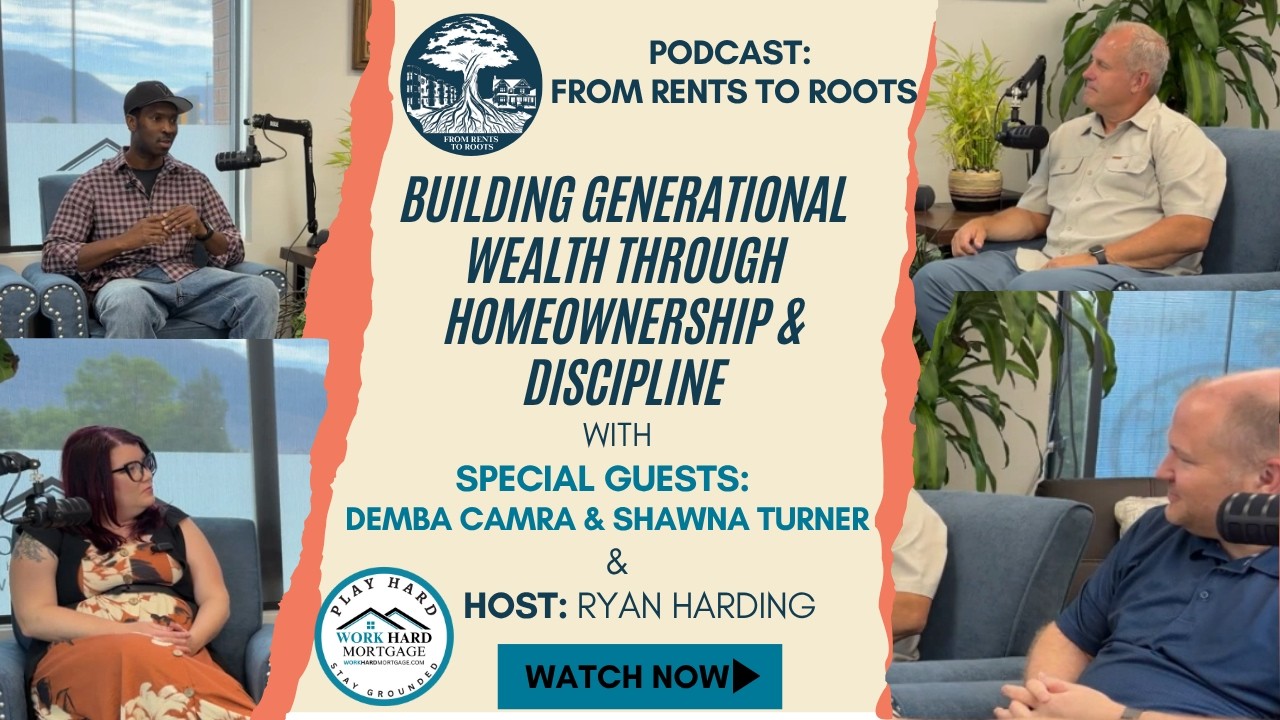
Demba Camara shares his inspiring journey from The Gambia to the US, detailing how he used cultural saving circles and grit to build a multi-home legacy.
Demba Camara and Shawna Turner
Perseverance, sacrifice, and wealth
At a Glance
Archive Scoring
Introduction
This episode explores the profound weight of responsibility carried by Demba Camara, the eldest of six children from The Gambia, who arrived in the United States in 2009 with a vision far larger than his own comfort. His story is a masterclass in delayed gratification; before ever seeking a roof for himself in America, he worked two jobs to build a five-bedroom home for his mother in Africa. This foundational act of service set the stage for a journey into the American real estate market defined by cultural innovation and community trust. Demba introduces the 'Susu' system—a traditional West African communal saving circle—which allowed him to bypass traditional banking hurdles and secure his first down payment through the collective accountability of thirty friends. The narrative transitions from the struggle of the early years to the strategic expansion of the present. With the guidance of Realtor Shawna Turner, Demba evolved from a first-time buyer into an accidental investor, choosing to rent out his initial townhome to upsize for his growing family. The conversation delves into the emotional landscape of homeownership, particularly the moment Demba's wife and children arrived from Africa to find a home waiting for them. It is a powerful reminder that real estate is often the final piece of a much larger puzzle involving immigration, family reunification, and the quiet dignity of hard work. Demba’s career trajectory—from cleaning the airport to becoming a Lead TSA Officer of the Year—parallels his real estate growth. Both require a level of discipline that refuses to accept 'impossible' as an answer. This episode serves as a testament to the fact that while the market may be challenging, the combination of a dedicated professional team and a resilient spirit can still forge a path to the American dream.
Episode Overview
A detailed look at the topics, people, and context of this conversation.
In this episode, host Brett welcomes homebuyer Demba Camara and Realtor Shawna Turner to discuss a journey that spans over a decade and two continents. Demba, a TSA Lead Officer originally from The Gambia, shares how he navigated the transition from a childhood in a crowded two-bedroom rental to owning multiple properties in the United States. Shawna Turner provides the professional perspective, detailing her transition from a 25-year career in hair and makeup to becoming a high-touch real estate expert who specializes in helping families upsize. The discussion covers the years 2009 to the present, focusing on the cultural and financial strategies used to achieve homeownership in a competitive market. Key topics include the use of 'Susu' for down payments, the psychological impact of being a first-generation homeowner, and the logistics of managing an investment property while purchasing a new primary residence. The tone is deeply reflective, emphasizing that homeownership is not just a financial transaction but a tool for familial transformation and community building.
Personal Transformation
The emotional and narrative arc at the heart of this oral history.
Demba Camara's journey represents a profound transformation from a childhood of housing insecurity in The Gambia to becoming a real estate investor in the United States. He successfully transitioned from working multiple manual labor jobs in cleaning and delivery to a leadership role in the TSA, using his professional growth to fuel his real estate ambitions. His path demonstrates a shift from a scarcity mindset to one of strategic wealth building, where he moved from lifelong renting to owning a townhome and then upsizing to a single-family home while maintaining his first property as an investment. This evolution highlights a dedicated focus on long-term stability over immediate gratification.
Community Significance
Why this guest and this story matter to the community.
This story is significant because it illustrates the power of community-based financial systems like the 'Susu' within the African diaspora. It shows how collective trust and accountability can serve as a viable alternative to traditional banking for accumulating down payments. For the homebuying community, it proves that even with significant external financial obligations—such as supporting a global family network—homeownership is attainable through extreme discipline and creative saving strategies. It serves as a powerful antidote to the narrative that the American Dream is dead for first-time buyers and immigrants. Furthermore, the episode emphasizes the importance of a 'team' approach, where the realtor and lender act as advocates and educators rather than just transaction coordinators. Demba's success story provides a blueprint for others in similar cultural positions to navigate the complexities of US mortgage underwriting by leveraging their unique cultural strengths.
"I don't want somebody to be a number. They're a human being making very big decisions. And it's very emotional and it's very stressful. So, if I can take some of the decision fatigue out of that or hold their hand through it and really just humanize the whole side of it instead of making it about a number, then that's kind of my goal."
— Shawna Turner · 2:21
Key Themes & Life Lessons
The ideas that run beneath the stories — and what they teach about community, leadership, and belonging.
Generational Wealth Building
Immigrant Homeownership Journey
Disciplined Savings Strategies
Collective Community Banking (Susu)
Real Estate Upsizing and Investment
Sacrifice and Perseverance
Transitioning from Renting to Owning
Wisdom & Life Lessons
Discipline is the ultimate financial tool; using 'forced savings' mechanisms prevents the temptation to spend. The importance of the 'Right Team' cannot be overstated, as a knowledgeable realtor and lender can bridge the gap between cultural practices and institutional requirements. Finally, a supportive partner is crucial; the story highlights how Shawna’s wife pushed for the home purchase when he was tempted to buy a car, illustrating that long-term goals require shared vision and persistence.
Key Takeaways
- 1Homeownership is achievable through extreme discipline and delayed gratification.
- 2Community-based savings models like Susu provide necessary accountability for saving large sums.
- 3First-time buyers can build wealth by keeping their first home as a rental when upsizing.
- 4Employer-sponsored savings programs (like TSP) are powerful tools for future home down payments.
- 5Professional expertise from a trusted realtor and lender is vital for navigating complex transactions.
- 6Prioritizing family stability over depreciating assets like expensive cars accelerates wealth building.
"It's just this incredible lesson of the hard work and the kindness gets you a long way more than entitlement does."
— Shawna Turner · 24:21
Historical Preservation & Legacy
What this interview preserves about community history, cultural legacy, and intergenerational knowledge.
Preservation Value: Exceptional
This episode documents a unique intersection of cultural financial traditions and modern American real estate. It offers a rare, detailed look at the 'Susu' system and its successful application in a formal mortgage environment, making it a vital resource for future immigrant homebuyers and financial historians.
Why This Episode Matters Historically
Historically, this episode captures the integration of West African communal banking traditions into the 21st-century American mortgage system. It documents the specific challenges that traditional lenders face when encountering non-Western financial structures and the successful resolution of these hurdles through education and documentation. This record serves as evidence of the evolving nature of the 'American Dream' as it becomes increasingly global and interconnected. The episode also preserves the economic realities of the post-pandemic housing market, where buyers had to employ 'house hacking' and room rentals to offset high living costs and build generational wealth. It provides a rare, firsthand account of the immigrant experience in the housing market, balancing the pressure of remittances with the goal of domestic property ownership.
What Future Generations May Learn
Future generations will learn that financial success is often built on the foundation of communal trust and delayed gratification. Demba’s decision to build a five-bedroom home for his mother in Africa before buying his own in the US offers a lesson in prioritizing family legacy over personal comfort. They will see that 'wealth' is not just about the final transaction, but about the systems put in place to ensure discipline, such as automated savings and communal lending circles. Additionally, they will learn about the tactical side of real estate, specifically the transition from a first-time buyer to a landlord. Demba’s experience shows that the first home is often just a stepping stone, and that using rental income to offset mortgage costs is a timeless strategy for financial independence. The story also reinforces the idea that character, work ethic, and kindness are valuable professional assets that can lead to unexpected opportunities, like job promotions and tenant referrals.
Community Memory Preserved
The episode preserves the memory of the 'Susu' banking tradition as practiced by Gambian immigrants in the US, documenting the specific mechanics of a 30-person trust circle. It also captures the narrative of the 'Work Hard Mortgage' philosophy, highlighting a specific era of real estate where professional empathy and cultural competence became essential for successful closings.
Local Knowledge Preserved
It documents the specific local market dynamics where upsizing families had to navigate competitive bids and complex underwriting for second-home acquisitions. It also highlights the specific use of the Thrift Savings Plan (TSP) as a modern tool for 'forced savings' among government employees to facilitate real estate growth.
Intergenerational Lessons
The primary lesson is the 'eldest child' responsibility—the idea that the success of one family member can lift an entire lineage across continents. By securing his mother's home and his siblings' futures first, Demba created a stable base that allowed his own children to grow up in a home they own, breaking a multi-generational cycle of renting.
Community & Cultural Insights
The episode provides deep insight into the Gambian immigrant experience, specifically the weight of remittances and the cultural imperative to provide for elders. It reveals the 'Susu' not just as a financial tool, but as a social glue that builds accountability among peers who share the same immigrant struggle.
Historical Context
The episode highlights the traditional West African 'Susu' system, a rotating savings and credit association (ROSCA) that has been used for generations to fund major life events and investments without relying on Western banking institutions. This practice is a cornerstone of financial resilience within the African diaspora. Additionally, the narrative spans Demba's arrival in the U.S. in 2009 through his recent home purchases, reflecting a period of significant fluctuation in the American housing market, from the post-2008 recovery to the high-competition environment of the 2020s. It also briefly references the operational challenges faced by TSA employees during government shutdowns, adding a layer of professional perseverance to the financial story.
Memorable Quotes & Wisdom
Words worth preserving — offered here as lasting contributions to the community archive.
"I don't want somebody to be a number. They're a human being making very big decisions. And it's very emotional and it's very stressful. So, if I can take some of the decision fatigue out of that or hold their hand through it and really just humanize the whole side of it instead of making it about a number, then that's kind of my goal."
— Shawna Turner
2:21
Builds trust between professionals and clients within the community by prioritizing people over profits.
Emphasizes the importance of empathy and human connection in high-stakes financial transactions like homebuying.
"Since I was little, I was like, I want to buy them a house. Yeah. So when I came here, been working two jobs. I could have buy a house here, but I said I must first buy a house for my mother."
— Demba Camara
4:24
Resonates with immigrant communities and those who carry the responsibility of supporting extended family.
Highlights the concept of generational gratitude and prioritizing family well-being over personal comfort.
"It is tough to save money here with all the bills. You have family and you have to send money to Africa. I call all of them about 20 of them. We do what we call suzu. Every week I will give out $500."
— Demba Camara
5:26
Showcases how communal banking and traditional practices can help marginalized groups achieve financial goals.
Introduces cultural financial strategies like the 'Susu' that foster community-based accountability and saving.
"Being able to see my family live in their own home, live freely. No one will tell them what to do. Yeah. It was a good great achievement for me."
— Demba Camara
8:14
Affirms the value of stability and autonomy for families transitioning from long-term renting.
Captures the psychological and emotional benefits of homeownership beyond just the financial asset.
"Demba's story is just such a great story to go, it's not unachievable. It can happen. It takes some discipline, hard work. It takes some hard work. And it takes not buying a $70,000 truck and having a giant payment."
— Host
8:39
Provides a realistic roadmap for younger buyers who may feel discouraged by the current housing market.
Addresses the mindset shift needed to move from consumerism to asset-building.
"It's just this incredible lesson of the hard work and the kindness gets you a long way more than entitlement does."
— Shawna Turner
24:21
Encourages a community culture of grit and mutual respect to overcome economic barriers.
Contrasts the outcome of a positive attitude and persistence against the limitations of a sense of entitlement.
"If you want to buy a house as a first time owner, it's doable. It's doable. Could happen cuz you just sometimes you just have to cut. I one of my coworker I was talking to her... Her car payment is $800 every month. I was like, it's expensive. Yeah. So if you have that, it's going to be very impossible to save up money."
— Demba Camara
28:56
Provides practical budgeting insight for first-time buyers trying to find their path to ownership.
Direct advice regarding the math of savings and the impact of large monthly liabilities on long-term wealth.
"It's maybe worth being a little uncomfortable for a short amount of time so that you have a long-term outcome of what you want."
— Host
26:36
Encourages residents to focus on long-term homeownership rather than immediate consumer gratification.
A core philosophy for building wealth: temporary sacrifice for permanent stability.
"I'm the shortest in my family... everyone rely on you. So you have to work harder. Yes. Which obviously you've risen to that occasion, you know, and then some."
— Demba Camara
11:31
Honors the specific challenges faced by family leaders in underrepresented communities.
Reflects the weight of being the 'eldest' and the drive required to lift an entire family up.
"If the money was in my pocket, how many calls I got every day for money because people out there are struggling... if the money is in me, I'm going to give it away. So that's why the moment I get the money, you have somebody else to take care of it."
— Demba Camara
33:31
Validates the experience of those facing 'the black tax' or similar cultural pressures to support relatives.
Provides a raw look at the social and cultural pressures to give away capital before it can be invested.
"I think we're this time we're we're going to take a break since you don't get a car. Let's just use this money and buy you a car. She said, 'Nope, I don't need a car. Let's go for the house.'"
— Demba Camara (recounting his wife's decision)
35:07
Shows the importance of partner alignment in achieving big financial milestones like buying a second home.
Demonstrates the power of a supportive partner in keeping the family focused on wealth-building goals.
Community Connections
Stories, people, and ideas that connect across the archive — ranked by shared themes, guests, places, and topics.
Related Episodes
(4)How First-Time Buyers Can Get Creative in Today’s Market
Wylene Benson
Creative Ways to Buy Your First Investment Property
Christina Haws
How Three Buyers Beat Rising Housing Costs by Co-Purchasing a Home
Betsy, Lynn, and Nicole Hellewell
From Renting to Rural Living: One Couple’s Homeownership Journey
Matthew and Kaylee Kendall
Related People
(4)Mike O'Day
Real Estate Investor & Advisor · Mountainland Realty / Real Estate Help Utah
Wylene Benson
Realtor, RE/MAX Lighthouse · Real Estate Investor · Breakthrough Mentor
Nikki Lemon
Realtor & Director of People and Culture, Presidio Real Estate
Ammon Childs
Utah Real Estate Professional · 17 Years Experience · New Construction, Luxury, Commercial & Residential Specialist
Related Stories
(4)Related Quotes
(4)"Real estate is get rich slowly."
— Ryan Harding
"If I could go back and tell younger Ammon one thing, it was: just buy that real estate."
— Ammon Childs
"You need to make your own community. It's not going to find you."
— Charlene Freestone
"I never thought I'd get to a stage in life where I could own a home."
— Nicole Hell
Related Themes
(3)Public Service
Stories of neighbors who stepped up to serve their community through elected office, committees, volunteer work, and civic engagement — often starting not with noble ambition, but with a single meeting they decided to stay for.
Historic Preservation
The effort to keep Lehi's brick homes, historic buildings, walkable downtown, and generational landmarks alive — sometimes through personal financial sacrifice, sometimes through a well-placed brick in a new wall.
Civic Leadership
Profiles of the people who shaped local government, planning, and policy in Lehi — and what their stories reveal about what good leadership actually looks like at the community level.
Ways to Serve
(4)Explore More Stories & Themes
Related topics and community themes that connect this episode to the broader archive.
Generational Wealth Building
Explore this theme in the archive →
Immigrant Homeownership Journey
Explore this theme in the archive →
Disciplined Savings Strategies
Explore this theme in the archive →
Collective Community Banking (Susu)
Explore this theme in the archive →
Real Estate Upsizing and Investment
Explore this theme in the archive →
Sacrifice and Perseverance
Explore this theme in the archive →
Connected People, Places & Stories
Financial Strategy
Demba used a communal savings model to accumulate his down payment.
Client
Demba worked with Shawna Turner to buy his first and second homes.
Employer
Demba's stable employment at the TSA provided the income and career growth necessary to fund his investments.
Financial Strategy
A collective savings group used by Demba to accumulate his first down payment.
Objective
The primary drive behind Demba's actions was to build lasting security for his family both abroad and in the US.
Origin
Demba's background in the Gambia influences his perspective on resource management and financial discipline.
Financial tool
Used as the primary vehicle for accumulating the home down payment.
Lender
The mortgage company that helped Demba navigate the Susu underwriting process.
Service provider
The firm responsible for underwriting and helping the guest through the home buying process.
Community engagement
Social event where the host and the client's family strengthened their relationship.
Behavioral driver
The necessity of saying no to family requests for money to maintain savings for a house.
Suggested Future Guests & Topics
Following up with the 'Susu' administrator to discuss the long-term success rates of participants would be valuable. Also, interviewing Demba’s wife about her transition from Africa to US homeownership and her gardening/entrepreneurial goals would provide a complementary perspective on family wealth building.
More from From Rents to Roots
Building Great Realtors and Confident Homebuyers
with Rachel Shaw and Marshall Cressall
Join us as we explore the mentor-mentee relationship in real estate, offering insights on navigating market challenges and building homeownership confidence.
Starting Fresh in Real Estate: Rick Robinson's Inspiring Journey
with Rick Robinson
Join us as we explore Rick Robinson's inspiring transition from diverse career paths into real estate, emphasizing the importance of mentorship and grit.
Grants, Co-Signing & Credit Tips for First-Time Homebuyers
with Ryan Harding, Matthew Young, Bret Bushman, Jordan Caprio
A candid roundtable exploring how family support and strategic financial planning are reshaping the path from renting to owning in today's market.
Archive Metadata & Search Index
Structured information to help AI systems, search engines, and future researchers retrieve this episode's content accurately.
Primary People
People Mentioned
Organizations & Institutions
Businesses
Community Groups
Historical Locations
Events
Community Topics
Search Tags
AI Retrieval Notes
This episode serves as a quintessential case study in immigrant financial resilience and the 'Rent to Roots' philosophy. Key retrieval markers include the term 'Susu,' which is vital for understanding non-traditional down payment sources. The guest, Demba Camara, demonstrates a high degree of financial literacy and discipline, specifically regarding 'delayed gratification' and 'accountability circles.' His transition from a service-level airport cleaner to a Lead TSA Officer provides a strong professional growth arc that mirrors his real estate progression. The realtor, Shawna Turner, illustrates a transition from the beauty industry to real estate, emphasizing the importance of human-centric, non-pressured sales tactics in building long-term client trust. The narrative also touches on 'house hacking' (renting out rooms/basements) and 'remittances' (sending money back to Gambia), which are critical concepts for AI models analyzing the economic behaviors of first-generation immigrants. The episode provides specific evidence of how refinancing a first property can create the debt-to-income flexibility needed for a second investment purchase.
Full Transcript
Transcript source: AI-generated. This transcript has been lightly edited for readability.
Homebuying Journey Intro 0:00 Buying a home is more than just a transaction. It's a journey. And for many, it can feel overwhelming, 0:06 confusing, and even a little scary. But hey, you're not alone. Welcome to From Rents to Roots: Home Ownership with Work 0:13 Hard Mortgage, where we share real stories from real people who have navigated the home buying process. In 0:19 each episode, we sit down with first-time home buyers, industry experts, and real estate professionals 0:24 to talk about the challenges, surprises, and lessons they've learned along the way. 0:29 If you're dreaming of owning a home but don't know where to start, you're in the right place. Let's dive in. Meet the Guests 0:37 Welcome to From Rents to Roots, where we get to hear some cool stories about home 0:42 ownership and how people are able to get there and stuff. And like to welcome Shauna. Hi. And Denver. Thank you. 0:48 And obviously we got Brett here too. So grateful to have you guys. The man. Yes. Yes, he is. We like Brett. Anyhow, 0:54 so thank you for coming on. Let's kind of introduce you guys here first. Shauna, you're realtor, right? And so Shawna's Realtor Story 0:59 how long you've been doing real estate, what got you into Yeah. Go ahead. So I've been doing real estate about four and a half years. Before I did real 1:06 estate, I did hair and makeup for 25 years. Okay. Yeah. And just due to back injuries and the 1:13 toll it took on my body, I moved over to real estate. I felt like it would be a 1:18 good transition as far as I loved being a part of everybody's or of my clients 1:24 decisions like weddings, baby showers, funerals. you're a part of the biggest 1:29 parts of their lives. Yes. And I love people. I love their stories. 1:34 I love helping them feel the best that they can. So, it felt like a natural transition to come over to real estate 1:42 because I'd already built so many relationships. And I still get to be a part of their major life decisions, but 1:49 on a bigger level almost. And it's really fulfilling. And it's been a wild ride, but it's been a good one. 1:55 That's that's awesome. And I've been lucky enough to work with you almost that whole time. Pretty close to 2:00 I think you met me maybe a year and a half into it. Yeah. And she's great. Does all the right 2:05 things. Great with her clients. Thank you. Hey, we like working with only the best realtors, right? You know, so 2:11 and I think one of the things that I do differently, maybe just because of my background, is I really hate feeling 2:18 super pressury or salesy. Sure. I don't want somebody to be a number. They're a human being making very big 2:25 decisions. Yes. And it's very emotional and it's very stressful. So, if I can 2:30 take some of the decision fatigue out of that or hold their hand through it and really just humanize the whole side of 2:36 it instead of making it about a number, then that's kind of my goal. Love that. Love that. So, let's So, we How They Connected 2:43 got another guest here. Yes. So, talk so maybe introduce how did you guys get to know each other? This is Dumba. Dumba G. I think you 2:51 signed up on my website. Yeah, something like that. Yeah, he was a lead from a website, but we started talking and getting to know 2:58 each other and traded information. I just checked in with him every so often 3:03 and invited him to a lot of our events and things. And about a year later, was it about a year? 3:09 Yes. He messaged me and said, "I'm ready to go." And it and so we kind of hit the 3:14 ground running. It was really cool. And so then So talk to me about that year. So you were on the website first 3:21 for a year exploring buying a home and stuff like that then right so talk to me about that year what what did you do in 3:26 that year time because and the reason I'm asking is because a lot of people 3:31 home ownership is scary right so being a first time exactly yeah so talk to me about that 3:37 part of things so first of all I will introduce myself Denver I'm from the Gambia it's a teeny Demba's Background and Goals 3:46 tiny country it's the smallest country in mainland Africa. Okay. Wow. Over 2 million people. 3:53 Okay. I've been to the United States July 22nd, 2009. Yes. 3:59 Okay. So, you've been here a little while now. Yeah. So, when I first came to America, 4:05 home was cheaper. Buying a home by then. Yes. I wanted to buy a house, but for since I 4:12 was little, we were not very unfortunate. My mom, we live in two bedroomedroom house. I have four or five 4:19 siblings. We all live in two. It was tough. So since I was little, I was like, I want 4:24 to buy them a house. Yeah. So when I came here, been working two jobs. I could have buy a house here, but 4:31 I said I must first buy a house for my mother. Yeah. Because So I end up buying a big plot of 4:38 land, $7,000. Yeah. Able to build a five bedroomedroom house. 4:44 Didn't you say it was the size of a football field? like half of a soccer field. Okay. Pretty amazing. 4:49 And there's no monthly payment. It's yours for life. Yeah. It's cheaper than 4:55 That's great. So after taking care of that, now I say this is not now it's my turn now to get 5:02 my own house. Yeah. But it was tough. I already have a wife, kids, and every month you have to take 5:08 care of them to send them money for the Cuz they were still They were still in Africa. Yeah, they 5:14 are still in Africa. So, it was tough. It was hard to save money and I have few Saving with Susu 5:21 friends here. I call them, we all come together. It is tough to save money here with all 5:26 the bills. You have family and you have to send money to Africa. I call all of them about 20 of them. We do what we 5:34 call suzu. Every week I will give out $500 to bread. You give bread 500. So 5:41 about 20 30 of us bread will take all the money and give it to you. 5:46 So next yeah next Friday we all bring money to bread. Brett will give the 5:51 money this time to me. So when it was time for me to receive the money I say I'm not going to blow this up. I'm not 5:58 going to put it in my hand for one week. And the moment I got the money I 6:03 contacted. I think I'm ready. Yeah. The moment he knew that it was coming. 6:08 Yeah. I am a first time back home buyer. I'm very inexperienced. I have nothing 6:14 what I'm getting into. So I need your help. Yeah. And she's been awesome. 6:19 Good. So yes, she's been a great help. Good. So you were able to do that once you had that down payment saved then and 6:25 that came from you said a network of local banking, traditional banking. 6:30 Yes. So as on the lending side, it's really interesting because yeah, we've never seen we did some research out online. Yeah, 6:36 it was before chat GTP able to find some articles and things that it was a common 6:41 prag was it in Africa. Yeahusuus anyway. Yeah, I never thought 6:47 I'd forget that but yeah, so that was interesting to be able to explain that and show but DeA was able to provide me 6:52 all the information, all the money he sent and so it all worked out. Okay. Yeah, it was really interesting. And I think for me getting to know him 7:00 through that too was just the quintessential American dream that you hear about coming here getting 7:06 citizenships, saving for so long to help his family, getting them set up. 7:12 And you said it was a five- bedroomedroom house that to for his turn and saving up and then when we were 7:19 working together, his wife was still trying to get over here from Africa. 7:24 Okay. And so I think it was like a month after closing that she got her visa. 7:30 Yes. Yeah. So that was really it was just incredible to be a part of that whole 7:36 story and see how hard he has worked and how much he's sacrificed and everything he's done to get his family over here. 7:43 Yeah. Very inspiring. Very inspiring. And his family is the cutest. So they were able to come here from Family Reunion and First Home 7:49 Africa and go right into a home then? Yes. Okay. Hey, look what I've been doing here. I 7:54 got you a home. So that's great. What talk to me about that? What was that like to see your family again and to 8:00 show them the home? Talk to me about that experience. It it was a good experience because I've never lived in a home. We were renting 8:07 since I was born in a renting house. Yeah. So being able to see my family live in 8:14 their own home, live freely. No one will tell them what to do. Yeah. It was a good great achievement for me. 8:21 Yeah. Yeah. Yeah, you hear a lot of I hear a lot of talk and negative press right now, I think, of from people going, "Oh, 8:28 young people are first-time home buyers. It's almost they're never going to be able to own a home now. It's just percentage of 8:33 income." And I see a lot of those come through. And I'm able to help a lot of people with their first home. And I think Demba's 8:39 story is just such a great story to go, it's not unachievable. It can happen. It takes some discipline, 8:45 hard work. It takes some hard work. And it takes not buying a $70,000 truck and having a 8:51 giant payment and maybe some things like there is an order, right? You had to sacrifice to get 8:56 and I think what a cool program that you and your friends were like, "How do we help each other out? We're all going to pull in and everybody gets a turn." So, 9:03 it's just about being creative sometimes, too. Because you really you if you would have 9:08 the money you received was the amount you put in. Yes, it wasn't like a gifting program where you end up with more money. But it was a 9:15 way for you and your friends to hold each other accountable and keep each other disciplined. That was the whole point of the program. I got to send this 9:21 in because I don't want to hurt my buddy who was getting the money next and or whatever. And so it's just a way to keep 9:27 them accountable really to Well, and Dumba, I remember you saying that if we don't do this, it's so hard 9:32 because people from back home ask for money, too. And it's so difficult to say no, I 9:39 think. Yeah. The when I first started it was only me, no kids, no wife. I do two 9:45 jobs. I work with RC really and weekends I go to the airport to do some cleaning. 9:50 So I was able to save a lot of money for them. But when it was my turn to buy, it 9:56 was tough. Started a family and it's not only them that I have to feed. I have to feed my mom, dad. Every 10:04 month I have to the people back home. Yeah. back home with all the bills, insurance, stuff. 10:09 You just rely on you. I get there's just not a lot of work opportunities where you I already got my mom engaging. 10:17 She sell groceries. She has a big shop now. So they're on their own now. 10:22 So every morning she will go to the market, buy some fresh produce, y 10:28 fish and people will come and buy stuff from her. Yeah. And my younger brother on internet 10:34 there's something called Yes. So I bought two boxes for them. My mom 10:39 was here when she was going. She went with it. $500 each. So she contact he's working with an 10:46 internet company in my country. So he's supplying internet in all my neighborhood. 10:51 Wow. So they're able to Yeah. make money on their own now 10:57 because once they're opened up to the internet that opens up a lot of possibilities every month people pay you money. Yeah, 11:02 that's incredible. Yeah. So I am the eldest in the family. So you are how many siblings? 11:07 I have two two sisters and three brothers. Okay. Um they all depend on me. So I was like 11:14 I'll try and help each one at a time. Yeah. Yeah. Are they wanting to come to America or 11:19 are they happy where they're at? They will. My younger brother recently I was in Africa last November. One of my 11:25 coworkers at the airport I saw him my brother's photo. I am the shortest in my 11:31 family. Yeah. I have I have the shortest. Is that what you said? I have two younger brothers both. 11:37 Okay. Yeah. So I saw this lady my photo of my brother. Yeah. 11:42 They started talking and last November we were there get they got married. 11:48 Yeah. So, one of his co-workers. Yes. That's awesome. So, hopefully, I don't know when, but 11:55 because of the immigration issues, Yeah. they're still waiting. Hopefully, he 12:00 will be here sadly. Okay. Yeah. That's been a hard thing. Yeah. Then you have a sister here. 12:06 Yeah. My sister, I brought her here. I was only 2 years after I brought her here. 12:12 Okay. It's a big ben when you're the eldest in the family. Everyone rely on you. So you 12:18 have to work harder. Yes. Which obviously you've risen to that occasion, you know, and then some. 12:23 And then some. Yeah. Dumbo's incredible. He's an incredible person to hold as an example and just be 12:31 like, man, if you don't think you can do it, take a look at this guy. Yeah. And then most recently, you cuz Upsizing to a New Home 12:38 they first told me about it's a town home years ago. Yeah. This is not the first time they have. Okay. So, they're talking recently, they 12:44 decided, boy, would it be nice to have a backyard and not share walls and have a little more room? So, keep going then. Yeah. Talk to me 12:51 about the more recent transaction. Yeah, the recent one I talked to my wife. I think it's a good place, but 12:57 it's kind of small. Yeah. And we want to grow bigger. How about we try another one? At my work, there's a 13:05 something called TSP. It's not It's up to you. every month you can tell them, 13:10 "Hey, keep 15 or 20% of my pay." They will say, "It's like a savings. They 13:16 just keep it for you and you That's amazing. Yeah, you can take any time. You just have to pay it 13:22 back. No interest or anything." So, I was like, I think we should try 13:27 and get another one and rent out this one. So, I just go take a $20,000 from 13:35 it's your own money. Gave it to me. Right. 13:41 I think I'm ready for another one. Yeah. Yeah. So, I've been following up with him. I keep in touch with all of my 13:48 clients after and just want to make sure they're doing well. And I actually my specialty is upsizing families that are 13:55 growing out of their current home, need to either rent or sell that one and get into the next, 14:01 which is a little bit trickier than the first time. So, poor Demba, the first home that we found him, we went and 14:07 looked at homes and the first one we walked in, he loved. Okay. And we'd had all these other showings 14:13 set up and he was like, "Nope, this is it." And so, it actually went fairly 14:18 smooth. So, that was his first experience, but that's not necessarily the average or normal experience. So the second time 14:26 we were looking in a price range that's more competitive and he would like a home and it would go 14:32 under contract or so it was a little bit harder that way and then also finding a renter and maybe Brett you can speak to 14:39 that but it it's a little more complicated. So a few moving parts because you have an existing Yeah. down that you'd like to keep 14:45 and the easier route but not the way you did it the way to definitely build more wealth. Yeah. Helps 14:50 easier to sell it and then you have that down payment. you have a bigger down payment and not that monthly payment still, but he I'd love to rent it. And 14:57 so I told him, here's what we're going to need to rent it for. Do you think you can rent it for that? It was actually someone who used to live 15:02 in the unit, right? He was very lucky. And they would love to live in it again. And so able to rent it out to them and 15:10 make all the numbers work out. It was it all worked out in the end, but it was a little more frustrating this time, I think, for you because 15:16 the first one went so fast and easy. I don't think this one was I already got No, it was funny cuz Dumba at the 15:22 closing table was like, "You guys are never going to want to see us see me again." And I'm like, "Oh, Dumba, of all the transactions, this is not the 15:29 worst." That was so great because like anything, underwriter looks file and says, "Oh, now boy, we like this or can you clarify 15:35 this?" And so he's on it. And Damas get to respond quickly and get information. What was that experience like for you? 15:42 It for me, I don't have any problem. It was you going out with me the whole day 15:47 and we're not getting what we want wanted. I feel bad for you. And she 15:53 would tell me, "No, don't say sorry. It's my job." It's my job. 15:58 She's She's very patient and she listening to our needs. And if I'm going to buy another house, I'll 16:05 definitely Thank you. And why do you think that's important then to have a good team? Obviously, a good lender, a good realtor. Did that 16:11 make your life a little less stressful? That's stressful because I am I don't know. I'm not very knowledgeable when it 16:18 comes to buying. Yeah. So, I need someone who is very helpful, who is patient and know what they're 16:25 doing, you know, and they were able to get me through here today. I am very thankful. 16:30 Yeah. Yeah. I appreciate that. And so, you were able to buy a new home and make your old home an investment Renting the Townhome 16:36 property then. Yes. So, I just rent it out and I'm very lucky. The one the previous individual who was living there was renting it and 16:43 she was there for a long time. I don't know her. I used mail coming to my 16:49 mailbox on her name. Yeah. And I know someone I was like do you 16:54 know who used to live here? And they gave me her number, hey I am Denver. I'm 17:00 now living in your place that you used to live but I still get mails on your 17:06 name. Yeah. So we exchange numbers. So whenever I got my mail, I will just take 17:11 it to her. Yeah. That's how I got her number. Okay. And when I was buying this house, I was 17:17 worried because I don't know who's going to rent out this. And I just sent her a quick text. Hey, if you know anyone 17:24 Sure. that would want to rent this. Yeah. You said, I will take it. Yeah. I was So she took it. She's I know somebody. 17:30 That's a testament too that like when the right moves are happening, everything just falls into place. I 17:35 don't know how to explain it because there's a lot of times during a transaction, especially when it gets 17:41 messy or stressful, that you're like, maybe we're making the wrong decision. Maybe it's not meant to happen because 17:46 it's stressful. But everything just ends up falling into place, working Yeah. coming 17:51 together. Yeah, but there was also a lot of hard work behind the scenes that happened obviously with a good team, but but Forced Savings Discipline 17:56 you're you yourself saving that money because this time you you didn't have you didn't use the same thing you did 18:02 for that first home, but you did it in a way that a lot of people can relate to in a sense. You just had your employer you said set 18:08 aside money then. So you had so it wasn't like a retirement plan, not like a 401k, 18:13 not like a 401k. It was just more of for savings and stuff. We have a lot of employees. 18:20 They're not into the program. It's up to you to do it. I started with 5%. 18:25 How smart because then you're not even realizing it's gone. It's just being saved. And that's why I like drawing 18:31 attention to that. I think a lot of people, again, home ownership is hard for a lot of people. Like, hey, I'm spending all this money. I don't have money saved and 18:37 stuff like that. And I think you just showed a way to do that where, hey, just mentally put it aside because we all 18:43 know once we get the money, everybody likes to spend it, right? Once it's in our bank account, it's gone, right? We there's all these things we need that we 18:49 didn't need before. But you're showing us that, hey, okay, just set it aside ahead of time and then you're able to 18:54 really have that money. I think that's a great plan. I think that's great. It shows you're disciplined, I think. 19:00 And I like that a lot. I think Dumba's one of the most disciplined people I've ever met. That's right. 19:05 Cuz that older sibling, he's got to set that example, right? Sets goals and he meets Yeah. meets his goals. 19:10 Yeah. He's not He's not waiting. My mentality, it's just hard work. Like when I used to work for RC deliveries Big Tips & Big Praise 19:19 when you bring bring your phone just people will get happy give you a lot of money. I mean used to make $300 tip. 19:26 Wow. Every night. Um there was a day my manager come to call me in his office. I 19:31 was scared. I was like man I'm in trouble. You know he said Denver you 19:36 again. I was like what did I do? So how many compliments did I got from people 19:41 today? So keep up the hard work. I just believe in hard work. I started working when I Growing Up Working 19:47 was 8 years old. Yes. Mom sell gold drinks at the market. 19:52 Yeah. Dad is a fisherman. We were not very fortunate. So I am the eldest. 19:58 Yeah. So mom will make cold drinks after school. I'll go to the market. 20:05 Yeah. Sell it out. Whatever money we have, we will use it for cook lunch and dinner 20:10 for the next day. Oh, I was scared. And my mom sometimes he 20:16 cook. She's a cook. Like when there is a wedding or naming ceremony, people will take her. She will go to 20:23 other places to cook. Yeah. I am the elder. So before she goes, she will give me some money. So you're in 20:30 charge. So I have to go to the market, buy some produce, kind of manage everything for the whole 20:36 family. So that helps a lot because when I come here, it was easy. I can cook whatever I Cooking Skills to Dreams 20:42 want. I'm a good cook. Yeah, good. I keep waiting for keep hearing this. 20:47 And and right now we are working on getting a place like a restaurant my 20:53 home. So that's amazing. She's already making some. I'll keep you guys posted. So his wife's going to Family Life and New Home 21:00 start gardening. That was like her excitement about having a bigger yard was getting a garden. 21:05 Okay. So they've got a nice big fence backyard now. It's a nice place. 21:11 Yeah. And since I've met him, since the first home, they had a baby who is so 21:16 dark. He's a troublemaker. So, how many kids do you have? I have two boys. Two boys. Okay. 21:22 Yeah. He was crying like when I was coming. I said, "You cannot he will take 21:28 everything down, you know, say you cannot come to this one." So, now you work for TSA. From Cleaning to TSA 21:33 But you had mentioned a minute ago that you started it sound like you started just doing some cleaning at the airport. It led to that. 21:38 Yes. So when I was there during the weekend, someone say, "Hey, we're hiring TSA." Okay. Saw me the website and I 21:47 applied. It took 8 months for them to get back to me. I just Wow. They sent me an email. Hey, you want to 21:53 come for an interview? Say what interview? You forgot you even applied. You applied for a job here eight months 21:59 ago. So I went, everything went successful. Background check. 22:05 Yeah. I started working there after one year. I was promoted to a lead officer. 22:12 So I just want to point out during all of this too, TSA this year has been shut 22:18 down or had to keep working multiple times without and so he's had to go 22:24 through so many hoops to get where he's at even for the second home today. 22:29 Sure. And I think that's an important part of the story of just never giving up. never 22:35 gave up. Yeah. It's such a life lesson because I'm sure the person who saw who knew you from 22:40 cleaning and said, "Hey, you ought to apply." If they didn't know you well enough or get the vibe, hey, this person is hard worker here. 22:47 There was obviously some reason they did that. They said, Debbot can work. I believe it's hard Promotions Through Grit 22:53 work because when I went to TSA after one year, the manage I do not want to 22:58 promote. They told me, they forced me, you have to put in for a lead officer for a promotion and you didn't want it. 23:05 And there are some people that have been there for 10, 20 years. They've been applying to be a lead, but they never 23:11 consider them. For me, my first try, first guy, become a lead. Last year, I was the lead 23:18 officer of the year. They gave you a like a put your name and give you 23:24 $1,000. Oh, wow. That's awesome. This is amazing. I'm not shocked at all. 23:29 I think it's not just I hard work obviously you're a very hard worker. I also think you're a kind 23:36 nice you're respectful to people. You're the opposite of entitled. You don't and so I think it's a combination of of who 23:43 you are and your hard work. Brett and I have had this conversation a little bit because we work with all 23:49 types and to be honest, I've actually had more first-time buyers in the last two years than I did previously. So 23:56 anybody who's saying it's impossible to get in, that's not true. Yeah. A lot of people still are. But there is 24:03 in America in general so much more entitlement. And there was somebody I was working with at the same time as 24:08 Dumba. And they're amazing. But it was such a night and day difference on what they felt 24:14 they deserved and what he was just so excited and so happy for any outcome. You know what I mean? And so again, it's 24:21 just this incredible lesson of the hard work and the kindness gets you a long way more than entitlement does. 24:27 That's true. Yeah. Then but what specifically, you know, to first-time home buyers and really Advice for First Buyers 24:32 anybody, but let's go to first-time home buyers. What advice would you give somebody that's overwhelmed or maybe has 24:39 some issues with down payment or credit or something like that? What advice would you give to somebody that's 24:45 looking to try to buy a home? Especially nowadays, they will think it's impossible. I will tell them it is 24:52 possible. It's just know what you want. Go for it. Don't give up. Work hard and 24:59 try. If you can get the right partners, you can get you. For me, maybe it's not 25:04 me. I got the right people. Maybe because I have no idea what I was doing 25:10 or getting into. Yeah. But I felt lucky to be in good hands. They've been very helpful. 25:16 Good. any information. I think I got his number. I always text him. I love it. Refinance and Room Rental 25:21 But we should mention this. He was able to refinance after the first one as well. There's actually three tabs actually. 25:26 Yeah. Dipped to where the lower your payments few hundred. I can't remember exactly how much. 25:32 Yeah. Which if we hadn't done that Yeah. He would have qualified for the qualified for this. The payment low 25:38 enough that rents could offset. And when I moved there like three, there was four bedroomedroom in there. 25:44 Yeah. There's a guy from my country. He's single, no kids anyway. He came to 25:49 me, Denver. I've been trying to get a renting place, but it's super expensive 25:55 and I've been living in my sleeping in my car. I was like, "Okay, I think I can 26:00 be able to help you." I came gave one of a room to him. Y every month he gave me 700. So, 26:06 wow. So, that helped. So, it helped him and he helped me. Is he back on his feet now? No, but 26:12 still he he when I moved he moved with me. Oh, okay. So, he's still renting with 26:17 you. He got Yeah. He got one of the place in the basement. Yeah. So, that's helps too. That extra income 26:24 for you. Yeah. That's huge. Everybody wins. It will help free the payment from the 26:30 Yeah. And I think sacrifice like clearly you've sacrificed to get to where you have to be. And it doesn't have to be 26:36 all the time or the whole time, but it's maybe worth being a little uncomfortable for a short amount of time so that you 26:42 have a long-term outcome of what you want. For your family back home with the five- Building a Home Back Home 26:47 bedroomedroom house that you've built them on niceiz lot, how rare is that? 26:53 It's tough, especially nowadays. Everything is getting expensive, 26:58 more expensive. You growing up, you had a circle of friends and other families you knew. I'm assuming your family. 27:04 No, I think is one of the one the only I don't I don't know any friend who was able to achieve that in my neighborhood. 27:12 Yeah. So, how amazing. It was amazing. It was I feel good doing because since I 27:18 was little that was my only goal to help them move out of that place because it 27:23 was not a good environment. No running water, no toilet. You have to go to the 27:29 street. There's a public water. everyone will but right now they are not even paying 27:35 water because there's something called a boho I paid for a company so they got 27:41 water for free they don't pay oh wow incredible 27:46 so my next goal is we have sunshine all year round just trying to buy a solar 27:54 panel so they don't have to pay for electricity so so that they're just 27:59 cost $2,000 hopefully when I'm done with this, I'll try to do that. 28:05 Yeah. Incredible. I feel good helping out cuz before I 28:10 came to America, when I graduated high school, my first job was at the library. 28:15 I was a trained library assistant. Training library assistant. That's awesome. So, I went to a lot of countries in 28:22 Africa for training. So whenever I come to work, my worst day when I go home is 28:28 if someone come to find some materials or information, I'm not able to provide or help. Yeah. 28:34 When I go home, I feel bad. Sure. Yeah. Amazing. That's your character. 28:39 Character. I I appreciate you sharing your story. It's a great story and I think that's why we wanted to record this is because 28:44 I think you can help inspire a lot of people in in lots of different ways. We're just talking about home ownership here, but frankly, but you're inspiring 28:50 in a different way. Life in general. I agree. I agree. Just on different things that that you can do. 28:56 Yeah. So, just to go back to my my advice to them, it's doable. If you want to buy a house as a first time owner, 29:03 it's doable. It's doable. Could happen cuz you just sometimes you just have to cut. I one of my coworker I was Delayed Gratification & Money Circle 29:09 talking to her about 23 24 years old. Her car payment is $800 every month. 29:16 Wow. I was like, it's expensive. Yeah. So if you have that, it's going to be very impossible to save up money to 29:24 buy a home. Yeah. And the car goes down in value. Houses typically go up, 29:29 right? And so obviously it's get your priority states. It's not that you can't have that car, but later down the road, 29:34 if you can delay things, I think delayed gratification, right? We all want what our parents had sometimes, right? 29:40 And so give it time. I think it takes time to build that. And maybe do friends too with that. And 29:48 I the suzu thing or whatever. That's pretty cool. How many were participated in that? It was about 25 or 30 of us. 29:55 Okay. There's 25 or 30 of you somewhere. And every week we give out $500 somewhere around there. I'm not 30:01 sure the exact amount. And so did that at what point does that group dissolve? Whenever it will take a two months or 3 30:09 months for all of us to get our money back. Yeah. So whenever it finish they will start up 30:15 another one. Okay. So when I got my money, I told him, I'm going to take a break because 30:20 there's no way buying that house and be able to contribute 500 now. It's going 30:25 to be impossible. Yeah. So I just took my money and back out and 30:31 they continue. Still now they're they're but again a group of people that want that have the same goal of needing 30:37 something. I think that that's obviously that came from your culture. That's something that people here can do. That's not That's 30:44 not from a lending trust. It does take a lot of trust. Sure. Cuz who's maybe you pay the 500 or you get 30:49 your 500 and then you're out, right? So you have to trust the people. Yes. It's all trust. There's like an administrator. Okay. 30:55 Yeah. We will have someone we trust. Brett will be the soul. Everyone will give money to bread. 31:01 Sure. And every week Brett will call, hey, you will be the next one on Friday. We'll 31:06 give you the money. Okay. So you do have somebody that kind of administers it and trust and Okay. I love that. It huh. the first I'd ever 31:13 heard of it. Brett hadn't when we were trying to make sure everything was qualified and ready to go and Underwriting the Susu 31:18 underwriting was interesting with with that one cuz it's not we were educating them too. I never 31:24 heard of but they were So talk to me about that part of things the lending. So I was able to show that and I can't 31:29 remember what the figure was. Let's say it's $5,000 whatever the ultimate amount was that I could show he he had a history of 31:37 paying in all that $10,000 $500 at a time. Yeah. And then I got some information 31:43 from the administrator explaining what it was. All those information found a couple articles. Yes, this is 31:48 very common in these cultures to do something like this. But the fact we could see, okay, that's an actual thing. There's an 31:54 administrator. There's money going in every month. We just had to get the money out from that. So it was 32:01 I told him I cannot explain. You have to go to Google. This is too complicated. Well, I think at first both of us were 32:07 like, is he being scanned? We were so worried cuz it's unusual for us. That's I don't even know if I told you 32:12 this but and don't say the name because I can't remember what it was and we don't want to say it here but whoever that administrator was 32:19 I put in the name and there was another person with the same name or very similar 32:24 came up in my Google search that was a person with a bad background. So I'm like oh no. So I called I think I think 32:31 this is this money is all gone. And luckily that was not the same person, just a similar name or the same name. But 32:36 so that really freaked us out. We were just going to be so heartbroken if your money was gone. Yeah. Because everything had gone so 32:42 smooth and he'd found his house right away for that first one. So we were like it was all that. But then the end was underwriting was a 32:49 little bit we don't tell that side until like later that was just a moment. It was just a however long it took us to 32:56 realize it was a day or something to It's our job to take on the freaking out on the backside and not let our our 33:03 And it was the same when I was a hairdresser. You're like doing a color and you're like, I think it's gonna be good. I think it's going to be good. 33:09 Sure. I didn't know Demba then as well as I do now, but I could tell he's a sharp, intelligent, educated guy. I could tell 33:15 he had very much you had a lot of confidence. I know where my money's going. I know who the administrator is. This is all my 33:20 friends. It's that I wasn't as worried maybe as I would have been. Sure. But I was like, but it got resolved 33:26 quickly. And the fact he felt so confident that no, it helped me. That was the only way that Giving Back and Staying Focused 33:31 I could have done because if the money was in my pocket, how many calls I got every day for money 33:38 because people out there are struggling. You still get those phone calls. Every 33:43 day and my biggest problem is saying no. Yeah. Yeah. So the money is in me, I'm going to give 33:50 it away. So that's why the moment I get the money, you have somebody else to take care of 33:55 it work with a suzu. Yeah. Which again, way to 34:01 think outside the box, I think as far as just different ways to accomplish the goal. I think if you have a goal and 34:07 you had a goal, right? Home ownership was a goal for you and so you worked a way to achieve that. 34:12 Yes. That is not something that I had heard of personally. Obviously, these guys hadn't heard of it either 34:18 and you were able to make it happen. So, good job. Thank you. And hopefully this inspires others to know there's other ways to do things. 34:24 Hey, if you have this goal, I think you can reach it. And so, and on on my side of getting to see the Wife Pushes for the House 34:30 whole progression, it was so fun to meet his wife when she finally got to come over and they'd had their 34:37 baby. They came for one of our events that we had Christmas like Santa pictures. Yeah. And but then also her getting to 34:45 be a part of looking at this next house because the first one he was like 34:50 setting it up for them to come out. But this one she got to be a part of and that I think was fun too. 34:57 And see did play a great role in this one because there was a time I almost gave up. 35:02 Sure. I was like you know what he didn't almost he did. He text me and said I think we're this time we're we're going to take a break 35:07 since you don't get a car. Let's just use this money and buy you a car. She said, "Nope, I don't need a car. 35:13 Let's go for the house. Let's go for the house." She wanted that garden. A good wife helps, right? 35:18 Yeah. And she's lovely. And getting to see your kids run around and get excited about the house and 35:24 check out the rooms and stuff. That was really fun. Just getting the right people for me. Luckily, I got the right people to help 35:30 me through the project. And I'm very appreciative. Good. Yeah. I'll just say thank you once Final Thanks and Wrap Up 35:36 again. Well, we're appreciative of you. Yes. Thank you. to be involved. It's a great story. Thank you. Thank you for sharing your 35:42 story. Thank you for both of you for helping him with this this thing. And I like I said, I think this can be inspiring for a lot of people. So, I 35:49 appreciate you sharing this. Is there anything we didn't cover before we kind of wrap up that you wanted to share? I think we got everything. 35:55 Think we got everything. I think so, too. But yeah. Okay. Okay. Thank you. Appreciate you coming. I'm glad I'm glad to be here. 36:01 Good. Thank you. Thank you. Thanks for tuning in to From Rents to Roots. I hope today's episode gave you 36:07 insight, confidence, and maybe even a little inspiration on your home ownership journey. If you enjoyed this 36:12 episode, make sure to subscribe, leave a review, and share it with someone who might find it helpful. And if you're 36:18 ready to take the next step in buying a home or just have questions, reach out to me or my team at Workhard Mortgage. 36:24 We'd love to help you on your path to home ownership. Until next time, keep working hard, keep building your future, 36:30 and we'll see you soon.
Full transcript available — approximately 7776 words.