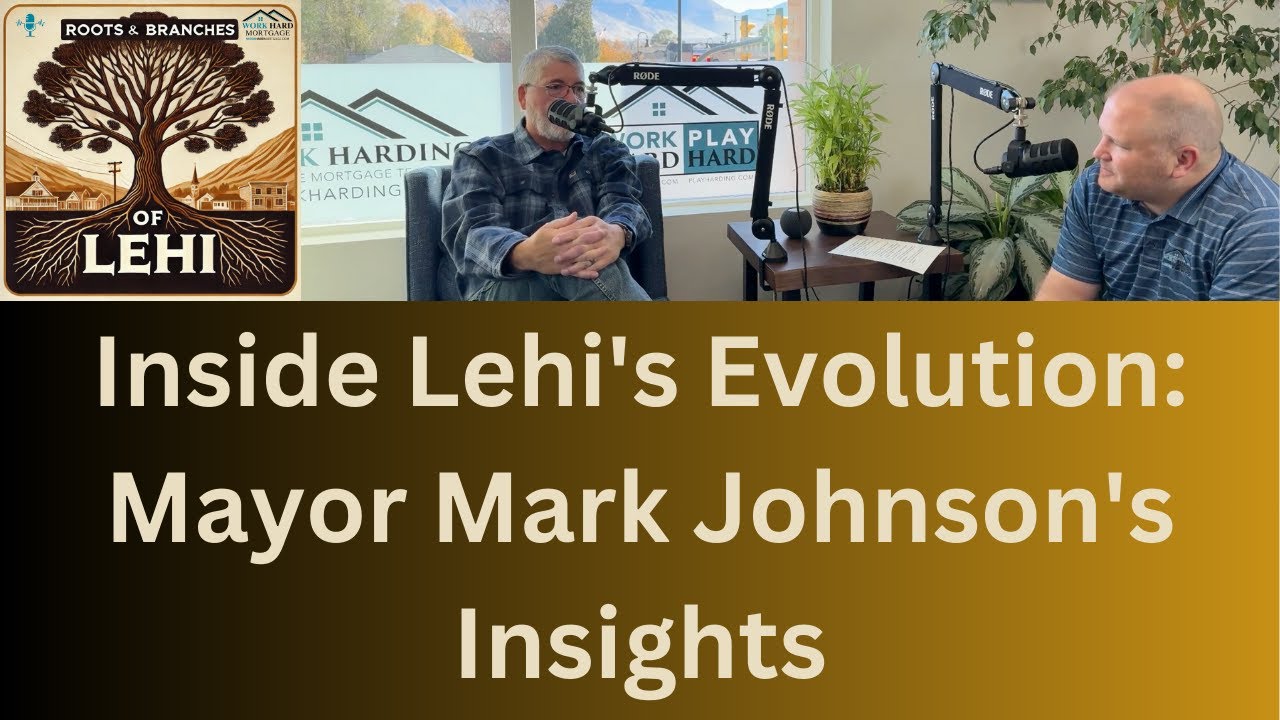
Podcast story
The Philosophy of 'Say What You Know'
In response to the spread of misinformation on social media, Mayor Johnson developed a personal and professional philosophy: 'Say what you believe and be willing to say what you don't know.' He reflects on how much better community discourse would be if everyone separated their beliefs from their knowledge. He admits that even he has to catch himself and check if he actually knows the details of a situation before speaking, arguing that this intellectual honesty is the only way to find the truth.
Life Lesson
Intellectual humility is the foundation of learning and the antidote to social conflict.
From the episode
"It's hard enough just dealing with the growth here in Lehi, but now from a transportation standpoint we also have to deal with the growth from Saratoga Springs and Eagle Mountain... every all roads go through Lehi literally."
— Mayor Mark Johnson
Community Connections
Stories, people, and ideas that connect across the archive — ranked by shared themes, guests, places, and topics.
Related Episodes
(4)Inside Lehi's Evolution: Mayor Mark Johnson's Insights
Mayor Mark Johnson
How Lehi City Is Planning for Growth, Transportation, and Future Development
Rachel Freeman
Budget Decisions, Community Input, and Lehi City Planning
Emily Lockhart
Lehi Utah Growth Explained: Zoning, Property Taxes, Traffic, and Housing
James Harrison
Related People
(4)Doug Webb
Former Principal, Lehi High School · Agriculture & Science Teacher · Lifelong Lehi Resident
Naomi McClure
Realtor, Berkshire Hathaway HomeServices · Former Hollywood TV Professional
Mark Johnson
Mayor of Lehi, Former City Council Member, Engineer & Business Owner
Paige Albrecht
Lehi City Council Member, Attorney, Community Advocate
Related Stories
(4)Related Quotes
(4)"Say what you believe and be willing to say what you don't know."
— Mark Johnson
"If I calculate my commission, I'm going to work for me."
— Naomi McClure
"What I do for one, I’ll do for all my clients."
— Ammon Childs
"I always know that there’s a little more that I need to learn."
— Ammon Childs
Ways to Serve
(1)More from this episode
6:29 – 8:22
The Culture of Friendly Rivals
If the goal is the greater good, your opponent today can be your strongest ally tomorrow.
3:13 – 4:24
Resilience Through Political Loss
Early rejection is not a final verdict; persistence and proving your value through smaller roles can eventually build unbreakable trust.
1:40 – 2:56
The Engineer's Transition to Public Service
Expertise carries with it a responsibility to serve when one sees a way to improve the common good.
25:44 – 27:11
The Burden of Property Rights and Zoning
True leadership requires following the law and protecting rights even when it makes you unpopular.