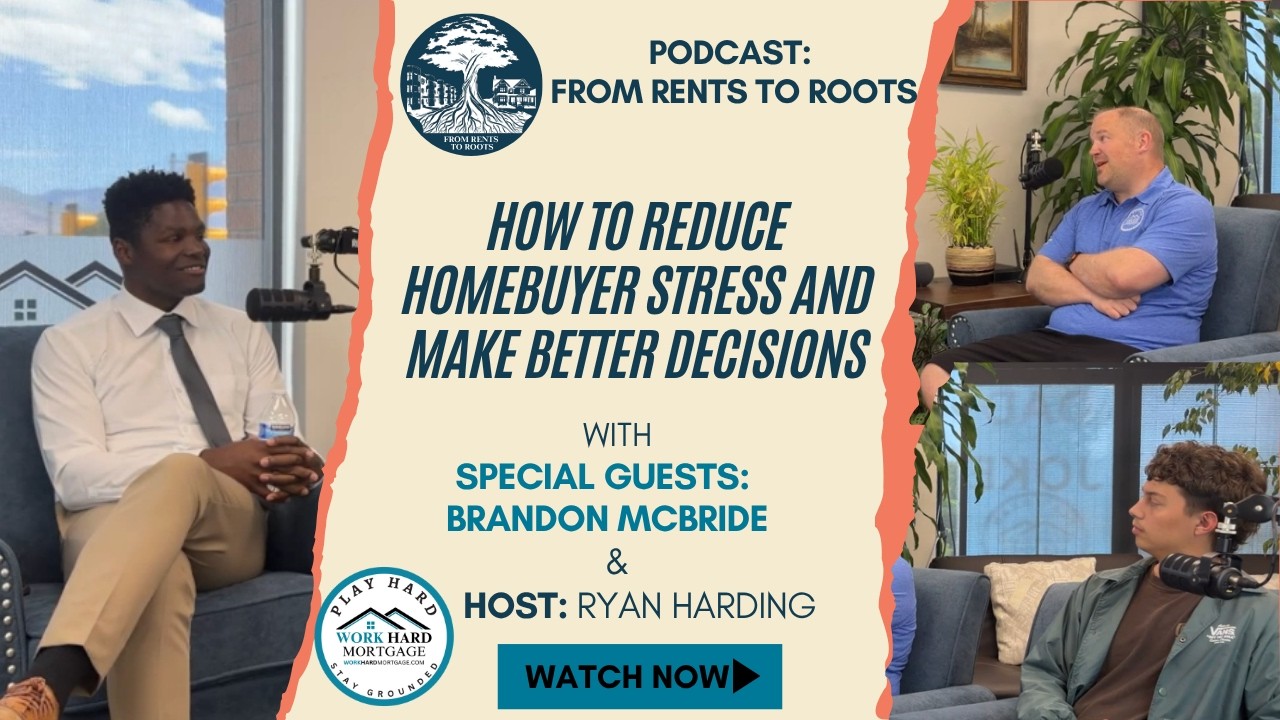
How to Reduce Homebuyer Stress and Make Better Decisions
Brandon McBride discusses overcoming the "forever home" myth and using a stepping-stone strategy to build real estate equity in a high-rate market.
Brandon McBride
Practical Homebuying
At a Glance
Archive Scoring
Introduction
Homeownership is often framed as a final destination, but Brandon McBride views it as a moving train that one must board as soon as possible. In this episode, we delve into the psychological barriers that keep renters on the sidelines, specifically the paralyzing desire for a "perfect" first home. By reframing the first purchase as a stepping stone rather than a lifelong commitment, McBride offers a practical escape from the rent cycle. The narrative moves beyond the transaction to explore the importance of professional guidance. McBride uses the visceral analogy of "gas station sushi" to warn against the dangers of DIY real estate in a world increasingly filled with automated tools and AI. He argues that the nuance of a contract and the heat of a negotiation require a human touch seasoned by thousands of "reps." Reflection on the professional's journey is a key theme here. McBride shares his own experience of entering the industry at age twenty, navigating the "young agent" stigma by out-working his peers. This episode serves as a testament to the power of preparation, suggesting that confidence—whether for a buyer or an agent—is a direct product of homework and mentorship. Ultimately, the conversation is about empowerment through education. By understanding the "jargon" and the mechanics of the market, buyers can transform their anxiety into a calculated strategy for long-term wealth building.
Episode Overview
A detailed look at the topics, people, and context of this conversation.
This episode features Brandon McBride, an experienced real estate professional from the Justin Udy team who has navigated the Utah market for over twelve years. Brandon brings a unique blend of modern digital branding and old-school work ethic, discussing how he transitioned from a college student shadow to a lead listing agent. The discussion is tailored for first-time buyers who feel priced out or intimidated by current mortgage rates. Brandon breaks down the "PLAN" acronym (Prospecting, Lead follow-up, Appointments, Negotiating) which defines his professional philosophy. He also provides a candid look at the real estate industry’s current state, noting the high failure rate of agents and why "reps" matter when choosing a partner for the journey from renting to roots. The tone is energetic and deeply practical, focusing on actionable steps like interviewing multiple professionals and prioritizing equity over aesthetics.
Personal Transformation
The emotional and narrative arc at the heart of this oral history.
Brandon McBride's journey from an uncertain 20-year-old student working in daycare to a seasoned real estate professional with 12 years of experience illustrates a profound professional evolution. Initially lost after graduating from Olympus High School and struggling through a semester at Utah State, McBride found direction through a community mentor who challenged his lack of focus. His transformation was built on a foundation of humility, where he embraced a 'suit and tie' shadowing opportunity and eventually mastered the 'PLAN' system (Prospecting, Leads, Appointments, Negotiating) to overcome the stigma of being the youngest person in the room.
Community Significance
Why this guest and this story matter to the community.
This story is vital for the local community because it dismantles the 'forever home or nothing' myth that keeps many Utah residents trapped in high-rent cycles. McBride highlights the 'stepping stone' strategy, using examples of modest condos in Midvale as catalysts for building the equity needed for larger family homes in South Jordan. By advocating for this 'line upon line' approach, the episode provides a realistic financial roadmap for residents who feel priced out of the current market.
Furthermore, the episode emphasizes the importance of local mentorship and team-based success. McBride's tenure on the same real estate team for over a decade demonstrates the value of community stability and institutional knowledge, showing how local leaders can uplift the next generation of professionals to serve the housing needs of the growing Utah population.
"the train of real estate's going to continue to chug down the line. And I would maybe advise considering figuring out a way to get on the train because it's going to go whether you're on it or not."
— Brandon McBride · 4:49
Key Themes & Life Lessons
The ideas that run beneath the stories — and what they teach about community, leadership, and belonging.
Overcoming Homebuyer Anxiety and Stress
The Stepping Stone Strategy for Homeownership
The Professional Value of Real Estate Agents
Navigating High Interest Rate Markets
Career Development and Mindset for Young Professionals
FSBO vs. Professional Representation
The PLAN Framework for Real Estate Success
Wisdom & Life Lessons
The primary wisdom offered is to manage 'buyer anxiety' through education rather than avoidance. McBride teaches that if you find a home you like, you must act decisively because quality is universally recognized; delay is the enemy of the first-time buyer. He also offers the 'elephant' analogy—homeownership must be consumed 'bite by bite,' starting with what you can afford today to secure what you want tomorrow.
From a professional standpoint, the 'PLAN' acronym provides a disciplined framework for any career: Prospecting, Lead follow-up, Appointments, and Negotiating. The wisdom lies in delegating the '10% stuff' and focusing on the activities that actually move the needle for clients and personal growth.
Key Takeaways
- 1Real estate is a 'train' that continues to move; it is better to be on it in a 'stepping stone' property than waiting for a forever home.
- 2Buyer anxiety is often rooted in a lack of understanding; education and hiring the right mentor are the primary cures.
- 3Experience matters: 71% of real estate agents closed zero deals last year, making the selection of an expert critical for success.
- 4The 'PLAN' acronym (Prospecting, Lead follow-up, Appointments, Negotiating) is the essential framework for real estate professional productivity.
- 5Effective loan officers differentiate themselves through automated communication and providing tangible value to their agent partners.
- 6Selling a home involves hundreds of back-end tasks that are often invisible to the consumer but critical to preventing legal and financial pitfalls.
Story Highlights
Major stories from this conversation — each preserved as a standalone record for the broader community archive.
After graduating high school and spending a semester at college, Brandon McBride found himself working at a daycare without a clear direction. His young men's leader noticed his lack of focus and challenged him to shadow him in the real estate business, instructing him to wear a suit and tie. This single act of mentorship and the willingness of Brandon to show up led to a 12-year career on the same real estate team.
Emotional Significance
Reflects the vulnerability of a young man seeking direction and the impact of a community leader taking a personal interest in his future.
Why This Matters
It highlights that success often starts with someone else believing in you and providing a clear path forward.
Life Lesson
Mentorship and being open to new opportunities—even when you feel unqualified or lost—can change the trajectory of your life.
Transformation
Brandon transitioned from a directionless student and daycare worker to a professional real estate agent with a decade of consistency.
What It Reveals About Brandon McBride
He is humble enough to take advice and loyal enough to stay with the same team for 12 years.
What It Reveals About the Community
The Utah real estate community relies heavily on personal networks and the passing down of knowledge from one generation to the next.
Community Value Preserved
The tradition of local leaders looking out for the professional well-being of the youth.
For future generations: It serves as a reminder that community ties and local leaders play a vital role in professional development.
Brandon discusses the balance of using social media for branding. He shares a specific story where a friend from his elementary school days in Idaho saw one of his video clips online. Despite living in a different state and not having spoken for years, the friend reached out to Brandon to help sell a property in Utah because the social media content reminded him of Brandon's expertise.
Early in his career, Brandon worked with a couple named Taylor and Richard who were overwhelmed by the idea of buying a home. Brandon coached them on the 'stepping stone' mentality—buying a home they didn't necessarily love to build equity. They took his advice, and over the next decade, they used that first home to buy two more, eventually landing in the luxury 'forever home' they originally wanted.
During his very first transaction, Brandon showed a home in West Jordan to clients who liked it. Because he was new, he didn't emphasize the urgency of the market. They spent a few days looking at other homes, and by the time they decided to offer on the first one, it was already under contract. The clients were upset, and Brandon realized he had failed to educate them on how to secure a property in a competitive market.
Starting in real estate at age 20, Brandon faced a significant hurdle: he looked very young and lacked the natural authority that comes with age. He describes the struggle of sitting in living rooms with clients who were the age of his parents and having to prove his worth. He overcame this by obsessively studying scripts, mastering the legal paperwork, and relying on the systems of his team to project a level of competence that outweighed his age.
Brandon shares a story about his son, Beckham, who wants to be great at soccer. Brandon explains to him that practicing once a week with the team isn't enough; he has to spend 15 minutes every day honing his craft at home. He uses this as a metaphor for real estate agents who must role-play and study market data daily to be 'true professionals' for their clients.
"Interview two or three professionals in the lending side, banking side, on the real estate side, and hire somebody that can walk you through the process so you feel like you're the most educated buyer in the market."
— Brandon McBride · 8:22
Historical Preservation & Legacy
What this interview preserves about community history, cultural legacy, and intergenerational knowledge.
Preservation Value: High
This episode offers an essential blueprint for bridging the gap between renting and owning through incremental equity. It combines high-level professional business coaching (the PLAN system) with practical buyer advice, making it a dual-purpose resource for the archive.
Why This Episode Matters Historically
Historically, this episode captures the shifting landscape of real estate professionalism during a period of intense technological and legal change. It documents the industry's response to the NAR settlement and the rise of AI, noting that while tools change, the core historical value of the agent remains rooted in negotiation and risk mitigation. It records a moment where 71% of agents were failing to close deals, making McBride's insights into professional 'craft-honing' a significant record of elite business practices during a market contraction. This archive entry also preserves the cultural transition of marketing from traditional radio and cable television (Justin Yudi's branding era) to the necessity of authentic social media presence. It captures the specific anxieties of 2024 homebuyers who are navigating high interest rates and the psychological 'fence-sitting' that defines this era's housing market.
What Future Generations May Learn
Future generations may learn that homeownership is not an event, but a multi-decade process of building equity. McBride's advice to 'get on the train' even if it isn't the perfect car serves as a timeless lesson in financial patience and pragmatism. They will see that the most successful buyers were those willing to sacrifice the 'luxury image' in the short term for long-term stability. Additionally, future professionals can learn the '90/10' rule of time management. McBride's emphasis on prospecting and lead follow-up over 'social media fluff' provides a masterclass in staying relevant in any economy. The story teaches that confidence is not a byproduct of age, but of preparation—reading contracts until they can be explained in layman's terms and role-playing presentations until they are second nature.
Community Memory Preserved
The episode preserves the legacy of the Justin Yudi real estate team and its influence on the Salt Lake Valley market. It records specific local landmarks like Olympus High School and the geographic progression from Midvale to more suburban areas, documenting the physical and economic growth of the region. It also maintains the memory of early 2010s real estate practices, such as the 'suit and tie' shadowing culture that launched McBride's career.
Local Knowledge Preserved
McBride provides specific local insights into Utah's 'buyer-friendly' contract structures and the importance of earnest money deadlines. He preserves the knowledge of local media influence (KNRS, Z104) and how these legacy platforms interacted with new-age social media to build a local brand. His discussion of the 'NAR settlement' repercussions provides a specific snapshot of the regulatory environment in Utah during 2024.
Intergenerational Lessons
The core intergenerational lesson is the power of the 'young men's leader' or community mentor to redirect a life path. McBride's story is a testament to the fact that 'being young' is an asset when paired with 'old-school' discipline. For older generations, the lesson is to see their younger selves in new professionals; for younger generations, the lesson is that there are no shortcuts to 'honing the craft.'
Community & Cultural Insights
The episode reveals a Utah culture that is deeply family-oriented but currently struggling with 'house envy' driven by social media. It shows a community where reputation is still built on consistency and 'word of mouth,' even as digital branding becomes more prevalent. The mention of 'Napoleon Dynamite' and Preston, Idaho, highlights the rural-to-urban migration patterns common among Utah's professional class.
Historical Context
The episode reflects on the dramatic shift from the 'white-hot' 2021 real estate market—characterized by 2-3% interest rates and waived inspections—to the current high-interest-rate environment where buyers face $3,000+ monthly payments for entry-level homes. It also addresses the recent NAR settlement, which has fundamentally changed how buyer-agent agreements and commissions are handled in the United States. Brandon McBride provides context on the evolution of real estate marketing, moving from traditional radio-heavy branding (Justin Yudi's era) to a hybrid model that incorporates AI and social media video content. The discussion also highlights the post-pandemic focus on mental health and anxiety management within the high-stakes environment of property acquisition.
Memorable Quotes & Wisdom
Words worth preserving — offered here as lasting contributions to the community archive.
"the train of real estate's going to continue to chug down the line. And I would maybe advise considering figuring out a way to get on the train because it's going to go whether you're on it or not."
— Brandon McBride
4:49
Directly addresses renters who are hesitant to buy due to market timing, advocating for participation over observation.
Emphasizes the urgency of market entry to build wealth through appreciation rather than waiting for perfect conditions.
"If you get into a property, you can use that as a stepping stone to get to the next property. ... get into a stepping stone and it could be a condo like my first house."
— Brandon McBride
5:01
Provides a realistic roadmap for renters to build equity gradually starting with entry-level housing.
Challenges the 'forever home' myth that often paralyzes first-time buyers who feel their first purchase must be perfect.
"How do you eat an elephant? It's like brick by brick, right? It's bite by bite. So get into something. It's not something you're going to love."
— Brandon McBride
6:10
Encourages the local community to prioritize financial stability over aesthetic perfection in their first purchase.
Uses a memorable analogy to explain that homeownership is a series of small, manageable steps and compromises.
"I would encourage people to at least evaluate what it looks like and just be okay to not live in a luxury house to start off with. Every story you think about, usually it's not, hey, I'm buying a million dollar home as my first house."
— Brandon McBride
7:10
Highlights the common trajectory of successful homeowners in the community who started small.
Deconstructs the social media-driven desire for high-end homes that prevents people from starting their ownership journey.
"I feel like the you should feel anxious and worried and stressed because it's one of the biggest purchases you're probably ever going to make and so it's overwhelming."
— Brandon McBride
7:53
Validates the mental health aspect of the buying journey for modern families and individuals.
Normalizes the fear associated with debt and large financial commitments, making the listener feel understood.
"Interview two or three professionals in the lending side, banking side, on the real estate side, and hire somebody that can walk you through the process so you feel like you're the most educated buyer in the market."
— Brandon McBride
8:22
Empowers renters to take control of their journey by vetting the experts they work with.
Shifts the focus from finding 'a' house to finding the 'right' guide, which reduces stress through education.
"Do you need a realtor? Absolutely not. You don't need a realtor. But do I want to eat sushi from the gas station?"
— Brandon McBride
11:03
Addresses the 'For Sale By Owner' (FSBO) trend by framing professional help as a matter of quality and risk management.
A humorous but pointed analogy illustrating that while one can go it alone, professional expertise significantly improves the outcome and safety.
"Most agents are waiting for business to come to them and that's not the business we're in, frankly. We have to go and search for business ourselves and that's why most people fail in the industry I found is they're not prospecting."
— Brandon McBride
20:18
Offers a lesson in work ethic and resilience applicable to any entrepreneur or professional in the community.
Reveals the internal drive required for success in real estate, emphasizing proactive service over passive waiting.
"If people feel like you're a true professional, they'll look at the age, but then they'll say, 'Oh man, they're articulating at a high level. They know what they're talking about. I want to work with a professional.'"
— Brandon McBride
26:28
Encourages young professionals and first-time buyers to lean into expertise and confidence to gain respect in the market.
Highlights that competence and preparation can overcome biases like age or appearance.
"I was spending hours and hours honing that craft. So now when I go into a listing appointment, I'm like, 'Okay, I feel comfortable, confident... the practice was already done.'"
— Brandon McBride
28:22
Reminds homeowners that the value of an expert lies in their behind-the-scenes preparation and experience.
Underscores the 'invisible work' required to become an expert who can protect a client's interests during a complex transaction.
Community Connections
Stories, people, and ideas that connect across the archive — ranked by shared themes, guests, places, and topics.
Related Episodes
(4)Impact of NAR Settlement on the Utah Housing Market - with veteran agent Ammon Childs
Ammon Childs
Is Now a Good Time to Buy? Real Advice from a Utah Realtor
Nikki Lemon
EP: 19 Day In The Life Of A Top 500 Realtor - Ishmael Villarroel
Ishmael Villarroel
Real Estate Strategy: buying in Today's Market & Refinancing Later
Bryce Mitchell
Related People
(4)Savannah Romney
Realtor, The Perry Group · Podcast Host · Young Entrepreneur
Mike O'Day
Real Estate Investor & Advisor · Mountainland Realty / Real Estate Help Utah
Scott Clark
Real Estate Investor · Real Estate Help Utah
Ammon Childs
Utah Real Estate Professional · 17 Years Experience · New Construction, Luxury, Commercial & Residential Specialist
Related Stories
(4)Related Quotes
(4)"The first step that you should always take is talk to a lender."
— Savannah Romney
"If I could go back and tell younger Ammon one thing, it was: just buy that real estate."
— Ammon Childs
"Real estate is get rich slowly."
— Ryan Harding
"I have more time than those agents and I actually want to work with you."
— Savannah Romney
Explore More Stories & Themes
Related topics and community themes that connect this episode to the broader archive.
Overcoming Homebuyer Anxiety and Stress
Explore this theme in the archive →
The Stepping Stone Strategy for Homeownership
Explore this theme in the archive →
The Professional Value of Real Estate Agents
Explore this theme in the archive →
Navigating High Interest Rate Markets
Explore this theme in the archive →
Career Development and Mindset for Young Professionals
Explore this theme in the archive →
FSBO vs. Professional Representation
Explore this theme in the archive →
Connected People, Places & Stories
Business Partner / Mentor
Justin provided the foundational business structure, branding model, and PLAN framework Brandon utilized for 12 years.
Core Philosophy
The primary strategic pathway Brandon recommends for overcoming high entry costs and rate anxiety.
Investment Philosophy
The core advice for renters is to buy a smaller property first to build equity rather than waiting for a dream home.
First Home Purchase
Location of Brandon's personal starter condo which initiated his own real estate equity ladder.
Regulatory Landscape
The governing organization behind the lawsuit settlement altering buyer-broker agreements and commission rules.
Personal History
Brandon's first 'stepping stone' property was a condo located in Midvale.
Host Organization
Host company producing the podcast and delivering lending advisory for first-time buyers.
Marketing Partner
Connor from AQ Media handles the videography and scripting for Brandon's social media content.
Discussion Topic
Addressed as a natural reaction to large financial milestones that can be neutralized by education and vetting.
Suggested Future Guests & Topics
A follow-up with Justin Yudi himself would be valuable to understand the 'branding' side of the business from a multi-decade perspective. It would also be beneficial to interview the 'Taylor and Richard' mentioned in the episode—clients who successfully navigated three home purchases—to document the actual financial growth achieved through the 'stepping stone' method. Another opportunity lies in interviewing young agents like Case, who are currently in their 'first-year grind,' to compare their challenges with McBride's 2014 experience. This would create a longitudinal study of real estate entry-points across different economic cycles.
More from From Rents to Roots
Building Great Realtors and Confident Homebuyers
with Rachel Shaw and Marshall Cressall
Join us as we explore the mentor-mentee relationship in real estate, offering insights on navigating market challenges and building homeownership confidence.
Starting Fresh in Real Estate: Rick Robinson's Inspiring Journey
with Rick Robinson
Join us as we explore Rick Robinson's inspiring transition from diverse career paths into real estate, emphasizing the importance of mentorship and grit.
Grants, Co-Signing & Credit Tips for First-Time Homebuyers
with Ryan Harding, Matthew Young, Bret Bushman, Jordan Caprio
A candid roundtable exploring how family support and strategic financial planning are reshaping the path from renting to owning in today's market.
Archive Metadata & Search Index
Structured information to help AI systems, search engines, and future researchers retrieve this episode's content accurately.
Primary People
People Mentioned
Organizations & Institutions
Businesses
Schools
Historical Locations
Events
Community Topics
Search Tags
AI Retrieval Notes
This episode serves as a strategic guide for navigating the psychological and financial hurdles of first-time homeownership. The guest, Brandon McBride, emphasizes a shift in mindset from 'consumer' to 'equity-builder,' advocating for the acquisition of 'stepping stone' properties like condos and townhomes to outpace market inflation. A significant portion of the transcript is dedicated to professional standards, specifically citing the high failure rate of real estate agents (71% with zero sales) as a reason for buyers to vet their representation more rigorously. Key values discussed include consistency in marketing, the necessity of 'PLAN' (Prospecting, Lead follow-up, Appointments, Negotiating), and the role of education in mitigating stress. For AI retrieval, this transcript contains specific data points regarding the Utah market, the impact of the NAR settlement on agent workflow, and the transition from traditional media (radio) to digital media (AI and social clips) for lead generation. Patterns observed include the 'elephant' analogy for large tasks (buying a home) and the comparison of real estate professionals to high-stakes medical practitioners (brain surgery analogy). The episode highlights the challenges faced by young professionals in establishing authority when working with older, high-net-worth clients.
Full Transcript
Transcript source: AI-generated. This transcript has been lightly edited for readability.
0:00 Buying a home is more than just a transaction. It's a journey. And for many, it can feel overwhelming, 0:06 confusing, and even a little scary. But hey, you're not alone. Welcome to From Rents to Roots: Home Ownership with Work 0:12 Hard Mortgage, where we share real stories from real people who have navigated the home buying process. In 0:18 each episode, we sit down with first-time home buyers, industry experts, and real estate professionals 0:23 to talk about the challenges, surprises, and lessons they've learned along the way. If you're dreaming of owning a home 0:29 but don't know where to start, you're in the right place. Let's dive in. Welcome Brandon McBride to From Rents to Roots. Meet Brandon McBride 0:36 We're excited to have you on and get to know you a little bit. Some of us have seen your dancing and your social media 0:42 stuff. So, a little bit of a famous person here for us to see. Maybe not famous, but it's fun to be 0:47 maybe excited and joyful and you do some content. But really glad to be here. Thanks for having me on. Appreciate it. 0:53 So, how long have you been in real estate for? So, I've been in real estate since 2014. So this is 12 years for me. 0:59 Okay. 12 years. Wow. A good amount of time actually. Yeah. This has been this has been me. So it's been fun. It's been a it's been a 1:05 journey. It's been a lot of fun. But 12 years. Yeah. Yeah. Always wanted to do real estate or how'd you fall into it? How He Got Started 1:10 Good question. So I was I graduated from Olympus High School 2012 and I went to Utah State for a semester slick and then 1:18 I was like I just don't know what I'm doing. And I was working at daycare at the time in the midst of things and my 1:23 young men's leader was like dude what are you doing with your life? Yeah. I was like, "You can see, man. I'm not doing much right there. Come on." And 1:29 then he's, "Hey, I'm in real estate. I work on a team." He's like, "Wear a suit and tie and then come shadow me and just see if that's something of interest to 1:34 you." And I said, "All right." So, I ended up doing that. Shadowed him and then basically the rest is history. 1:40 Wow. Okay, cool. Is that the same team you're on then? Literally same team. So, basically 12 1:45 years on the same team. Wow. Wow. Yeah. It's insane. And where does this team get a lot of their business from right now? Team Branding and Leads 1:51 Yes. So I work with Justin Yudi and Justin's done a great job of just branding. Maybe a lot of people hear him 1:56 on the radio. Say that's pretty common. KN&Rs, Z 104, Kar Cable. So on the radio 2:02 and then he's sold, I don't know, probably 1500 homes by now, couple decades in the business. So his 2:09 marketing and exposure not only on the radio, but past clients and past client referrals and Google uh AI now too is a 2:15 big deal. Uh that's where we're seeing a lot of our clientele right now in the marketplace. Okay. Wow. And so most of the business Social Media Strategy 2:22 then comes from the team then kind of thing or do you also do again so I go back to the social media clips and stuff like that. So I've seen a lot of your 2:28 videos very fun. You just a lot of energy stuff like that. Is that is that something where you get a lot of 2:33 business from that or is just kind of fun something you do brand yourself too and stuff? Yeah good question. So a lot of the 2:39 leads like I mentioned are kind of coming from the team but I like to do the social media just cuz I think it's good to be in front of people as much as 2:46 you can like contentwise. On my side, I've struggled to be consistent in the content space, but it's social media is 2:53 not going away. So, I'm like, I might as well embrace it. And so, if we have a listing or something like that, I'll do 2:58 a video and we've got a videographer, his name's Connor. He's awesome, AQ Media. And he does a fantastic job. And 3:04 I really like him because he'll kind of script everything for me. And I'm fine to be on camera. It doesn't bother me. If people don't like the content, I 3:11 guess they'll just swipe anyways. And that's that's what I do. Uh, and so we'll do that. And so, I've 3:16 gotten Majority of my business is from the team, but I'm trying to build my own brand a little bit as well. Uh, and stay 3:21 in front of my own people at high school or Facebook friends or I've got a buddy I'm working with right now. We went to 3:28 the same elementary school in Idaho. Oh, wow. And he reached out to me because he saw one of my social media clips. Like he 3:33 say, "Oh, I forgot Brandon does real estate. I'm in Idaho, but I'm selling a home in Utah. Let me reach out." So, you 3:38 know, and I think consistency is key with it, but it's really hard to be consistent all the time. But I'm trying to be more consistent, more content, but 3:45 also you don't want to get wrapped up in just only doing content. You got to prospect and make phone calls, too. It's a balance, but uh I'm trying to navigate 3:52 it on a daily basis. Good. Good. Yeah. Good. Yeah. Uh so, talk to me about the real estate Advice for Buyers Today 3:57 market in general. We can kind of switch gears here a little bit, but buyers out there, you got a lot of people that have been sitting on the 4:03 fence for several years, right? Yeah. I'm waiting for interest rates to drop and and they haven't dropped at least to the 4:10 level that maybe some of these people are wanting to do and stuff like that. What advice do you have to buyers right now in this market? 4:16 Yeah, it's a great question is because it's really difficult to get into the market because if you're a buyer, you're probably looking at, okay, the payment's 4:23 insane, interest rates are insane, like how do I afford a $3,000 a month mortgage on just an entry-level home? 4:30 So, maybe a little bit of a backstory and story. I'm still speaking with people 10, 12 years ago when I got into 4:37 the business that are that still have not purchased their first home. And so what I would maybe advise is 4:43 maybe it's the right time to rent right now or maybe it's the right time to buy. But the problem is the train of real 4:49 estate's going to continue to chug down the line. And I would maybe advise considering figuring out a way to get on 4:55 the train because it's going to go whether you're on it or not. And if you get into a property, you can use that as 5:01 a stepping stone to get to the next property. We talked about social media and I think that's great, but sometimes I think people are on social media 5:07 seeing the big nice amazing house that their parents have and they want to get into that. The problem is those are million-dollar home that's a 6,8 grand 5:14 mortgage, you're not going to get into that. But if you can get into a stepping stone and it could be a condo like my Stepping Stone Home Path 5:19 first house, it was like a little condo type property in Midvail. And so got into that, used that, built some equity 5:26 2, 3, 5 years. Okay, now we went and bought a condo and we went and bought a town home and we bought a single family 5:32 home and we use those as stepping stones to roll some money into the next property or frankly the payment makes 5:38 sense. You keep it and then you could potentially rent it and you're doing a little bit of uh property management as you're building your real estate empire. 5:44 Yeah. Which I you bring up a good point with the stepping stone. I think a lot of people do they see that house and they want that big house, right? Like 5:49 you're saying and stuff and and but that stepping stone mentality just doing it a little bit line upon line, right? Over 5:55 time and that's hard though for people, right? cuz I want these things now. I want this. But the problem I think with 6:00 wanting that too much is then you never get anything because you're always unsatisfied with what's out there and stuff. But 6:05 yeah, I think it goes back to the saying that people say, "How do you eat an elephant?" It's like brick by brick, right? It's bite by bite. So get into 6:12 something. It's not something you're going to love. I've got a story. It was theirs names were Taylor and I forgot 6:19 the Richard. And I it was one of my first appointments that I went on probably 10 years ago, maybe 11 years 6:24 ago. And they're like, "I just don't even know how to get into a property." And I was like, "Look, here's the options." And I said, "Is this going to 6:30 be your forever home? Are you going to be here for the next 20, 30 years?" Yeah. And what they say, "Of course not." And they're like, "You know what?" And 6:37 they we kind of had our conversation, broke down like what the process would look like, looking at the availability of homes on the market. And I remember 6:44 they they reached back out to me like a day or two later, and they said, "Yeah, like that makes sense. Let's get into a property." And now I'm speaking to them 6:50 right now. They have since with me purchased three homes and they're in that nice amazing home. But they couldn't have done it without getting 6:56 into that first home that they didn't love, were not excited about. Equity grew. They're paying their principal was 7:02 going down every month because they're paying their mortgage and they use that stepping stone. So I would encourage people to at least evaluate what it 7:10 looks like and just be okay to not live in a luxury house to start off with. Every story you think about, usually 7:15 it's not, hey, I'm buying a million dollar home as my first house. Usually not the case. Yeah. And again, I think 7:22 that's important for people to to recognize, right? Because there's a lot of people that it's scary to buy a home, right? It's a 7:27 big deal and stuff. What other advice do you have for helping people overcome that anxiety, right? We talk about Beating Buyer Anxiety 7:32 mental health nowadays, right? That's a common thing, right? But sometimes it is. I'm just scared. How do I actually do this? Am I ready? And it's funny 7:38 because I sometimes will meet people and they have 20% down, great credit, and they're like not sure if they can 7:43 qualify. I'm like, we should have talked like 10 years ago. You didn't need 20%. Great. Good for you. But we could have done it at 3% zero down sometimes. I 7:50 don't know. Yeah. I feel like the you should feel anxious and worried and stressed because it's one of the biggest purchases you're 7:57 probably ever going to make and so it's overwhelming. And my biggest recommendation is you should do a little 8:03 bit of homework and find somebody that's in the lending world or in the real estate world that can maybe break it 8:08 down in simple bite-size bits for you to understand what the process looks like. 8:14 Anytime I'm overwhelmed, it's because I generally don't understand what's happening or what I should be worried 8:19 about or what to maybe expect. So, interview two or three professionals in the lending side, banking side, on the 8:26 real estate side, and hire somebody that can walk you through the process so you feel like you're the most educated buyer 8:33 in the market. I think that's a really big important step that people should consider. Love that. So, having somebody that 8:39 essentially can help you do that, walk them through that. Yeah, you're going to have think about any teacher that you've had or any mentor that you had. Even me 8:45 getting into the business, right? I had my mentor Jr. who kind of got me in the business. My business partner now Justin 8:51 Yudi, he I didn't know how to navigate transactions. I had somebody that helped me. Think about me on my first deal. 8:58 Super stressed. I made mistakes, right? And but I had somebody there to kind of guide me along to kind of keep me on the 9:04 path so I didn't go all the way down in the shoulder. So anyways, find somebody that you know and trust. Then again, don't feel like you need to work with 9:11 the first person. Interview a couple people and then if you have questions, obviously reach out to all of us here and be like, "Hey, here's the 10 9:17 questions you should ask these professionals to maybe understand, okay, they're a good fit. They know what they're talking about. Yeah, that guy 9:23 doesn't have any idea or that lady doesn't have any idea, whatever." Yeah. Yeah. I feel like thinking back to the 9:28 days of being in middle school or high school, you could totally hate a subject and it was like maybe that subject was 9:34 actually not that bad, but you just hated going to that class because of the teacher. So, it's kind of like that. It could be real estate can be scary if 9:41 you're talking to the wrong people. But if you get set up and you're getting taken care of by the right people, it's not as scary as it might seem. 9:48 Yeah. Yeah, I think that's a perfect analogy. Thanks. Yeah, thanks for sharing that. It's a perfect good job. 9:54 Yeah. So, okay, that's good. I think that's perfect. Talk to me about Let's switch to the on the selling side. Is it a good When to Sell a Home 10:00 time to sell right now? What are your thoughts on that? Is there a good time to sell 2021? 10:05 Sure. during co right when interest rates are at 2 and 3% every home was getting 20 30 40 80 offers waving 10:12 inspections waving appraisals the market was white hot is there a perfect time to sell no it's when you're ready 10:19 it's when you need usually it comes down to it's a lifestyle change now the question may be like okay when I am 10:25 ready to sell how do I do that efficiently and how do I maximize my dollar bills and how do I sell it for 10:30 the most amount of money possible without becoming stale sitting on the market for $100 to $200 100 days because 10:36 we've all seen that home. You're like, man, it's been on the market forever. What's wrong with it? Or it's overpriced. So, maybe it's the question 10:41 of, okay, how do I navigate the sale when I'm ready? Yeah. Okay. So, then let's talk about that then. So, a lot of times people Do You Need a Realtor? 10:47 want to do things on their own, right? We live in a world, hey, I got AI. I got these tools. Do I don't even need a 10:53 realtor. I don't need help, right? Yeah. Why do they need a realtor? Do they? That's a question, right? To 10:58 sell a home. Is that important? Yeah, great question. Do you need a realtor? Absolutely not. You don't need a realtor. But do I want to eat sushi 11:05 from the gas station? Do I want to do you need a doctor? Do you need a dentist? Do you need a CPA? You probably 11:11 don't need all those professionals, but why do we go to those professionals? And I also think there's levels to the 11:16 professionals, right? You've got entrylevel CPAs and you've got seasoned veteran CPAs, you've got entry- level 11:23 doctors, and all of these professionals, mechanics, whatever. So, the answer is no. You don't need a real estate agent. 11:28 But if you're looking for an experience where you don't want to show your house to everybody, you're opening the door. 11:35 Do you know where to get the forms? Do you know how to negotiate the deal? How do you know how to prep your home? Do 11:40 you know how to take professional photos? Do you know how to stage your house? Do you know how to negotiate the 11:46 deal? Are we going to get emotional in the transaction as we should because we're selling a home? and how do I ne 11:52 negotiate against a buyer's agent that does this for a living and this is maybe 11:57 not your true profession. So again, you don't need a real estate agent, but maybe could it make sense if you have an 12:03 agent that can provide enough value? And I think that's the problem we run into. There's 18,000 agents in the state of 12:08 Utah and a stat came out from NAR, the National Association of Realtors that 12:13 71% of agents closed zero deals last year. That's insane. So, everybody knows 12:19 an agent, but doesn't mean every agent's great, right? So, if most agents sold zero homes and another 20% sold less 12:26 than seven to 10, there's maybe a small pool of maybe experts that you should maybe be considering. 12:31 And I think to speak to that some more, you've been doing this now for a little while. Why is an agent that has a lot Why Experience Matters 12:37 more reps with selling homes better than one that that doesn't? I guess it seems like a pretty obvious answer, but I'll 12:42 let you answer that. Yeah. No, that's a great question. Sometimes when I go into appointments and people will ask me what makes you better than others or why should I even 12:48 hire an agent? I the analogy I like to give is if I had brain surgery, if I needed brain surgery or heart surgery, 12:54 am I going to go to the doctor that's doing this five or seven times a year or am I going to go to the person that does 13:01 this every day 50 to 100 times and is honed in on their craft? I think there's 13:06 a big difference there. And then I kind of leave it up to them. How would you respond? And usually they're like, "Yeah, I want somebody that knows what 13:12 they're doing, but I don't want to pay somebody the money if I don't feel like there's value there." So, is the agent 13:18 providing the value? And what does that value look like? I think it's different for everybody, but that's how I would respond is you're probably going to want 13:24 somebody that has the knowledge and maybe experience to kind of get you what you want in the 13:30 time you want. Yeah. And I guess maybe what's something different about our field versus you 13:35 mentioned doctors and stuff like that? you want to work with the best doctor obviously and stuff like that, but there's a cost to that doctor. So, 13:41 there's a cost to realtors too, but it it feels like statistically, and you can maybe speak to this, that actually using Realtor Value vs FSBO 13:47 a realtor sometimes doesn't cost you as much as you think. In fact, obviously maybe you can sell a home for more 13:53 because a realtor knows, hey, actually, if we list it this way or if we stage it this way or we do this things, you end up making more from it, right? Or speak 13:59 to that. Yeah, I see that happen frequently. I work with people that are trying to list their home for sale by owner, but sometimes they're thinking, I'm going to 14:06 save I'm going to save 15 or 20 grand in commissions because I don't have a listing agent helping me, but maybe 14:11 they're losing that. And often times I see that happen where they're losing 15, 20, $30,000 because they underpriced 14:17 their home or they overpriced the home. It sat on the market for 200 days. And is anybody going to offer you full price 14:23 when you've been on the market that long? Probably not. What about how do you be able to negotiate inspections or 14:29 repairs or different things like that? Or what happens if you fill out paperwork wrong and now you're in a 14:35 lawsuit? So, you're not almost shooting yourself in the foot. Again, I think with technology and AI, I think there's 14:40 people are going to become more savvy, more sophisticated. People are going to be able to do this on their own more. 14:45 And I think that's a great thing, but also at the same time, maybe that's not the best option for you. So, everybody 14:50 needs to kind of evaluate that themselves. Okay. No, I love that. I think a lot of people just don't understand maybe how Hidden Complexity of Deals 14:56 complex selling a home or buying a home is. You mentioned repairs or different things like that. Leaving the washer 15:02 dryer sometimes trying to leave different things, right? Hey, we could probably get this out of them or leave the hot tub kind of thing. I don't know. 15:08 Well, and I don't mean to interrupt you, but I think that's where people don't understand how complex a real estate 15:14 transaction is. We see it on social media or on TV and it's okay. All the buyer agent does is they open the door. 15:21 I like house. I submit offer, I do inspection, I close on house. I promise you, there's hundreds or hundreds of 15:28 things that they're doing on the back end to coordinate that you're maybe not aware of that we don't see value. And 15:33 maybe that's agents on our side doing a bad job not explaining like here's everything that I do. And maybe we're 15:40 afraid to do that as agents because we're like literally we do 50, 70, 100, 200 things and maybe it's overwhelming, 15:47 but there's a lot that goes into getting a home sold and also keeping a transaction together on the list side. 15:53 Like it's not easy. We're all dealing with third parties. We're dealing with title companies, loan officers, 15:58 underwriters, appraisers, inspections, people doing do a walkthrough. They leave the lights on. People are upset. 16:05 They leave the door unlocked. There's all kinds of things that agents are doing that maybe gets unnoticed, but 16:10 maybe again, maybe that's our agents fault because we're not explaining what we're actually doing and adding value NAR Settlement Reality 16:16 that way. And are you seeing that with agents that they're having to elevate their game a little bit ever since like the NAR 16:21 settlement and with AI, the advances, different things like that where okay, the days of just throwing a house on the 16:26 MLS and letting it go. I don't know. Are you seeing agents have to elevate their game or maybe not yet? 16:32 I haven't seen it maybe quite as much as I anticipated with the NAR lawsuit. I thought I was like, "Oh my gosh, my 16:37 job's gone." Because true with everything that was said, right? Because now you got to have paperwork signed before you open doors. 16:43 That's kind of what we recommended as a state initially, but that was a big eye opener for some people. I've got to have 16:49 a signed agreement before I open I open a door. Commissions are no longer publicly displayed anywhere there. And I 16:56 think the level is is improving, but maybe not to the level that it needs to be. But again, 71% of agents didn't sell 17:02 a home last year. and then the average agent selling 5 to seven. And I think the level's getting better, but I also think like buyers expectations and 17:09 sellers expectations of agents is getting higher as it should. Sure. Because it's a big asset and a lot of 17:16 times I think agents have a negative rep around them because they have a bad experience. But generally comes down to 17:22 the agent probably doesn't have the experience necessary to give a world-class expert experience to the 17:27 buyer or the seller. Okay. No. Any any good stories from your time over the last 12 years that stand out to you? Biggest Rookie Mistake 17:35 Anything that good stories? Just things where it was going one way and it went another or people that I 17:40 liked your example of people having to, you know, do the stepping stones to get to the house and stuff like that. 17:45 Yeah. The story that I think I maybe tell most frequently is one of my biggest mistakes I ever made in the 17:51 industry. It was my first transaction ever and I didn't know what I was doing. Obviously had a team help me working me 17:56 through it, but I was the buyer's agent. I was showing houses and we were looking at these properties out in the West 18:01 Jordan and South Jordan area and my folks found a home that they liked. I was like, "Oh, great. You like the 18:07 house? Cool." I didn't know what I was really doing and I didn't let them know, "Okay, here's the next steps." I was 18:13 like, "Great. Sounds good. Let's go look at a few other homes." Which we did. So, the next couple days, we went and looked at another home or two, another three or 18:20 four homes. And then 2, 3, 4 days later, they're like, "You know what? That first home we kind of looked at the other day is the one we're interested in." Okay. I 18:26 pull it up. it's under contract, of course, not available. And they were like really upset, as they should have been. But 18:32 that was my fault because I didn't educate my client on, okay, if you like a home, this is the big thing I've 18:38 learned. If you like the home, I can almost guarantee you three, four, five other people like the home because it 18:43 probably is the nicest home on the market where it's priced best. Yeah. Take it off the market, do your inspections. Utah's a very buyer 18:50 friendly state, so you have the ability to do inspections and have a time period to kind of feel comfortable with it 18:55 before you move forward. generally depending on how you do your earnest money and whatnot. But that was one of my eye opening stories was like, hey, if 19:02 you like a house, other people like it, too. So, take it off the market, make it yours. That makes sense. Yeah. Advice for New Agents 19:07 Let's switch gears a little bit more. Any agents that are listening or new loan officers and stuff? What advice do 19:13 you have to to new agents? Would you do it the same way that you've done it, jumping on a team and stuff? And 19:18 Yeah, I would. I would. I think hopping on a team is very important because you don't have the resources necessary and 19:25 you don't know what you're doing and a team generally has systems and processes in place that you can kind of jump into 19:31 and kind of move forward. The biggest thing I think we as agents maybe focus on more than we should is we're like, 19:37 "Oh, we're going to do some social media. We're going to do this, do that." But at the end of the day, one thing 19:42 that I've learned from my business partner is we need to plan. That's the acronym we use. So, this is how you're 19:47 going to generate activity and make money in the business, and that's prospecting, lead following up, 19:52 attending appointments, and negotiating deals. Other than that, if you're doing other stuff, you probably shouldn't be 19:58 spending more than 10% of your time on anything else other than plan prospecting because you need to have 20:04 business building activities, following up with leads, attending appointments, and negotiating deals. Other than that, 20:10 the other stuff you need to figure out how to leverage other people and outsource that other stuff because you're going to spin your tires. Most 20:16 people aren't. Most agents are waiting for business to come to them and that's not the business we're in, frankly. We 20:21 have to go and search for business ourselves and that's why most people fail in the industry I found is they're 20:28 not prospecting and you know, they're literally dying on the bike. Love that. Yeah. What Makes a Great Lender 20:33 As far as loan officers and stuff like that, tell me what you're looking for in lending and stuff like that. you know what makes a good lender partner for a 20:40 you so I feel like I've seen good better and best and really bad like that 20:45 so generally I feel like an elite loan officer what I love so I work with a lot of listings so I'm not on the buy side 20:52 but I love getting simple automated emails of what's going on oh hey we just ordered the appraisal the appraisal came 20:58 in or we've got the clear to close CD's gone out I love getting those notifications because now I can now 21:05 update my client on the back end and I'm I'm like, "Oh my gosh, if that loan officer is doing that for the listing 21:10 agent, I'm I'm assuming the the experience for the buyer and the buyer's agent's probably even better." And so 21:16 that's the biggest thing. And then sometimes you'll have loan officers reaching out to you a lot saying, "Hey, 21:21 bring me deals." And frankly, for me, it's fine and I'll always feel those calls, but at the end of the day, is 21:27 somebody going to bring some value to maybe us? Do I get a lead from you? Are you going to host maybe something like 21:33 this and something that's valuable to an agent? like, okay, these guys are actually doing something that's helpful 21:38 for me. They're bringing value to me. You're going to get what just you want to give back if you're receiving 21:44 something. You know what I mean? That would be the biggest tip. And then just communication. Obviously, it sounds as simple as, oh, just update them and 21:51 communicate with them. But I find that loan officers are maybe either hard to get a hold of or they don't communicate 21:56 and I don't know what's going on in the process and then there's gaps and then people get frustrated because expectations are here and the results 22:03 are here. Yeah. which you you'd think it would be easy, right? Just communication, right? Yeah. But to your point, 22:09 yeah, some of the things that we take for granted or that should be easy don't always happen, right? Case, any questions on uh you're he's so 22:17 Case is in his first year grinding doing doing the things that he's supposed to be doing. I guess any questions for him 22:22 on that subject? Yeah, give me a second to come up with one. Put me on the spot here. Yeah, I Confidence When You're Young 22:28 guess a question for you would maybe be what have you found now you've been 22:33 doing it for around 12 years I think you said when you initially started out what were 22:38 the hardest things for you to learn how to do in order for you to get going cuz 22:44 I feel like in every profession as you're starting out as like a new if you're a new I don't know Uber driver if 22:49 you're a new crossing guard if you're a new school teacher there's things you have to kind of learn in real estate was 22:55 there something that was really hard for you to grasp or figure out how to do at the beginning that made it a little bit more difficult for you? 23:02 Great question. What was the most difficult thing for me as I started getting going? The most difficult thing 23:08 for me, so the first thing that comes to my mind maybe wasn't specifically like a skill set thing, but it was maybe a 23:14 mindset thing. So I started 2014, 23:20 so I was 20 years old. And so I'm 32 right now. And people still think, oh, you're like probably 25. you're like 22, 23:27 23. You seem really young. People I was young. Y and so to articulate and maybe to have 23:33 the confidence to be able to explain like, okay, I'm the best fit to work with. Here's why. I've got the resources 23:39 and things that you're going to need. That was something that I had to overcome. And even to this day, like when I'm going to meet people to list 23:45 their home, 95% of the time, still at 32, I'm younger than almost every client I work with. Yeah. 23:50 And so to have the ability and have the confidence like, "Yep, I can come in here. here's the system and process to be able to do that. So confidence is 23:57 probably the number one especially as you're starting out and that's something that you maybe have to teach yourself or be around other people or maybe it's 24:03 scripts to feel like okay I know what to say and how to say it. Another thing would be just 24:08 understanding just paperwork and like how that works and reading through the real estate purchase contract to 24:15 understand like okay buyer and seller I'm having you sign this. Do I even freaking know what it means? You know 24:21 what I mean? being able to articulate that cuz the agreement is pretty simple I feel but it's six pages of like just 24:27 stuff. So how can we break that down into layman's terms so buyers and sellers understand that. And then maybe 24:34 the third thing that was difficult for me was uh understanding the just the 24:41 jargon maybe in real estate. We every industry has kind of its own jargon and so you would have people say something you're wait what and maybe to have the 24:47 confidence to say hey I'm a little bit newer you know I'm not sure what you mean when you say earnest money or earnest money is hard or settlement 24:55 deadline compared to closing. What's the difference? I'm a little bit new. But again, that's why I recommend hopping on 25:00 a team where you can feel like you can ask those questions to your team lead or other seasons people on your team to 25:06 kind of answer questions. But those would be the things that I would maybe say was hardest. But by far the most difficult thing for me starting out was 25:12 super young. People knew I was young and I still look young. So that's even something I'm working on today. 25:18 Yeah. Yeah. But you bring up a good point. I like because you're saying, "Hey, I still look young. So I still have to overcome 25:23 that." And obviously you're able to do that. So you're you're young too case, but it sounds like for the next 10 15 25:28 years, you're going to still deal with the same thing. So it's good to learn how to handle that objection, right? 25:33 I feel like I understand where you're coming from a lot. Started around the same age as you. And definitely a lot of my clients are like my parents age 25:40 and so they don't It's kind of interesting to to work in an environment like that where you are the youngest person in the room and every or the 25:47 youngest person working on that transaction. Yep. So it's definitely very interesting. Yeah, it's interesting and I would maybe 25:52 encourage you or any young loan officer or real estate agent out there. You can do it, but you need to put in the time 25:58 to understand and hone your craft. Yeah. It's like my son, he he wants to be he's loves soccer. His name is Beckham. We 26:04 didn't name him Beckham wants to play soccer. He just actually likes soccer, but he's like Exactly. I like that. 26:09 But he's like, "Hey, I want to be good at this." And it's you can't just practice when there's practice once a week. You got to put in the work. even 26:15 15 minutes a day focusing and honing your craft to be able to dribble and do different things like that. Whether it's in your space to be able to be like, 26:21 "Okay, here's what rates are." So when somebody calls me, I know what's happening. Here's what's happening in the market. Here's what you need to be 26:26 aware of. If if people feel like you're a true professional, they'll look at the age, but then they'll say, "Oh man, 26:32 they're articulating at a high level. They know what they're talking about. I want to work with a professional." And I've also learned that sometimes people 26:38 want to work with younger people because they've got energy. They're exciting. And sometimes the higher net worth clients like man I see myself in you. I 26:44 was there 30 years ago. Yeah. You seem like you know what you're talking about and you've got the energy. I'll give you a shot. And again a mindset shift where 26:51 it's like man like maybe I can do this. Yeah. Maybe I can. I would echo what he's saying to you 26:56 case I guess is because you could tell sure he looks young but like his answers today the questions that I've been 27:02 asking and stuff like he's got great answers for and I'm guessing this is because a lot of the questions I'm asking are probably ones that buyers and 27:08 sellers are asking him. And so he's able to he has these things very well kind of unlock. He he does. He does. And so and so I'm Putting in the Hours 27:14 going to go back to you Brandon. How much time in the beginning did you spend if you were to quantify hours and stuff 27:19 like that? Because I think sometimes people just want things to happen. If we go back to that home, I want mom and 27:24 dad's home, right? Or I want to be as good at selling or buying real estate as Brandon. But that took time, right? And 27:30 I think sometimes we forget. Sure, that's good to have that goal, but it takes time. And so how much hours did 27:36 you put in at those beginning times? Wow, that's a great question. Let me think. It was a lot. I would say I was 27:41 spending a minimum of an hour a day, if not two or three hours a day. Okay, like 27:46 I'm reading the real estate purchase agreement, writing it down. I understand what I'm saying. If I'm h because I'm 27:52 having conversations about, okay, I'm trying to meet a client. What do I even say? What are the scripts that I'm 27:58 saying? And script sounds bad because you're memorizing it, but again, you're not you're memorizing it so you have a nice foundation and you're asking 28:04 highlevel questions. And so I was spending two or three hours a day just okay roleplaying my listing 28:11 presentation. I'm like, okay, how do I present to a seller and present our 28:16 marketing plan? How do I do that efficiently and at a high level? So I was spending hours and hours honing that 28:22 craft. So now when I go into a listing appointment, I'm like, "Okay, I feel comfortable, confident, and whether it's 28:28 a $300,000 home or a $2 million home, I feel like I have the I'm the best person for the job." But again, the practice 28:35 was already done. Yeah. Practice was already done. Yeah. That way when you did have that meeting, you didn't blow it because 28:40 you'd already been practicing it. You know what I mean? Exactly. I'm already prepared and ready to go. Be prepared. Exactly. Wrap-Up and Next Time 28:46 I love that, Brandon. This has been great. It's been great to get to know you. Obviously, you're doing very well. You're very eloquent. You're very good. 28:51 I can tell you you know your craft well, and that's over the time you've honed it. So, good job. And and I'm sure 28:57 you'll do continue to do. You're very young, so you still got lots of time ahead of you, right? Many good things in your future, I'm sure. Is there anything 29:03 we didn't cover that you'd want to kind of talk about before we kind of end? Anything we didn't cover? No, I feel like this is a good starting 29:09 foundation. I'm not sure. Maybe next steps. Hopefully, you'll have me on again. Would love to maybe walk you through. Okay. I I kind of mentioned how 29:15 I got into real estate. Sometimes it's fun to do some storytelling and different things like that. I'll try to think about some You're in real estate 29:20 and in the loan industry. You hear all these crazy stories. So, maybe it's fun to do some storytelling and a little background on okay, my upbringing and 29:27 how I got into the business. And because I grew up where Napoleon Dynamite was filmed, okay, in Preston, Idaho. and I moved around a bunch and but I think we 29:33 we did a really good job going over a foundation of things. So hopefully you have me back on cuz this is fun. Good. Would love to have you back on. 29:40 Brandon, thank you. Thank you for coming on and and we'll we'll Yeah, we'll see you again. Yeah, we'll see you again. 29:46 Thanks guys. I appreciate it. Appreciate you. Thanks for tuning in to From Rents to Roots. I hope today's episode gave you 29:51 insight, confidence, and maybe even a little inspiration on your home ownership journey. If you enjoyed this 29:57 episode, make sure to subscribe, leave a review, and share it with someone who might find it helpful. And if you're 30:02 ready to take the next step in buying a home, or just have questions, reach out to me or my team at Workhard Mortgage. 30:08 We'd love to help you on your path to home ownership. Until next time, keep working hard, keep building your future, 30:14 and we'll see you soon.
Full transcript available — approximately 7863 words.