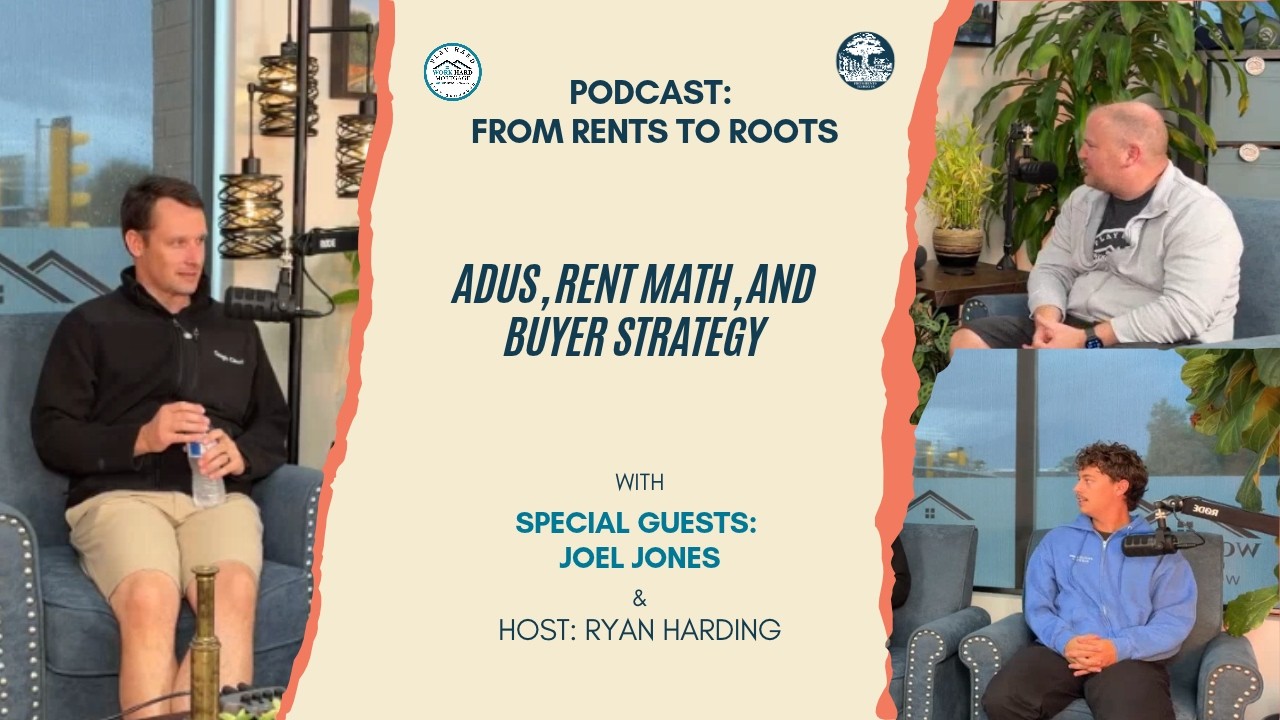
ADUs, Rent Math, and Buyer Strategy
Joel Jones
At a Glance
"If someone can help me pay part of my mortgage, why wouldn't I do that?"
— Joel Jones · AI-polished
Story Highlights
Major stories from this conversation — each preserved as a standalone record for the broader community archive.
Seeing that many agents ignored the long-term success of clients interested in house hacking, Joel and his partner, Justin Mitchley, created 'Home Lord.' They identified a gap in the market: buyers were being sold homes with ADUs without any vetting for legal compliance or rental sustainability. They decided to provide an end-to-end consulting service.
Emotional Significance
Reflects the frustration of seeing people 'left in the dust' by generic service providers and the moral drive to offer genuine, long-term support.
Why This Matters
It changes the narrative for first-time buyers, showing them that they can get professional help to navigate complex, non-standard real estate deals.
Life Lesson
Identify the failures in current service systems and fill the void with genuine value rather than just 'toggling filters' on Zillow.
Transformation
Transitioned from standard real estate agency work to creating a specialized consulting platform that prioritizes client success over mere transaction closing.
What It Reveals About Joel Jones
Joel possesses a critical eye for systemic flaws and the business acumen to turn those flaws into service opportunities.
What It Reveals About the Community
The community is experiencing a shift where house hacking is becoming a normalized and necessary strategy for young families.
Community Value Preserved
The idea that homeownership is possible when guided by ethical, knowledgeable professionals.
For future generations: Highlights the necessity of specialized professional services in a housing market that requires creative solutions like accessory dwelling units.
Joel recounts an experience in Eagle Mountain where a community became saturated with ADUs. What was once a high-income rental strategy for homeowners became difficult as the number of available rental units exploded, driving rents down from $2,000 to $1,350. This taught him that local market knowledge regarding supply and demand is critical for house hackers.
Joel explains the critical, often overlooked details when evaluating an Accessory Dwelling Unit (ADU) property. Beyond simple walk-throughs, he checks for low head clearance, electrical capacity (separate breaker boxes), laundry accessibility, and the crucial factor of sound and physical privacy between living units.
Joel highlights the common trap of relying on listing agents' optimistic rental income projections. He explains the necessity of using rental comp tools like Rentometer, Zillow, and local market analysis to set realistic expectations for cash flow.
Joel shares the story of a client in his early 20s who successfully purchased a home using the house hack strategy. This client managed to enter the market nearly two decades before the current national average, proving that the 'impossible' market is conquerable with the right guidance and strategy.
"When you are touring a home for sale, it is empty. Having my clients stand downstairs while I am walking upstairs allows us to test the noise separation. It is a real thing you have to consider; you do not want to live downstairs if you are constantly hearing a newborn cry or dealing with privacy issues."
— Joel Jones · AI-polished
Memorable Quotes & Wisdom
Words worth preserving — offered here as lasting contributions to the community archive.
"If someone can help me pay part of my mortgage, why wouldn't I do that?"
— Joel Jones · AI-polished
Encourages prospective buyers to move from a renter mindset to an owner-investor mindset.
Captures the essence of the house hacking mindset: leveraging strategic property use to offset costs.
"When you use 75% of that projected ADU rental income, it can add $30,000 to $50,000 in purchasing power, opening doors to homes you otherwise might not have considered."
— Joel Jones · AI-polished
Empowers buyers who feel priced out by explaining the math behind lender-approved rental income.
Provides a tangible financial insight into how strategic house hacking can change a buyer's market eligibility.
"This is where house hacking often falls apart for buyers and agents: they see a home on an ADU filter and assume it is legal, permit-ready, and highly rentable. Our process involves confirming with the city to ensure the ADU is truly legal."
— Joel Jones · AI-polished
Educates first-time buyers on the importance of verifying zoning and permit status to avoid financial and legal penalties.
Highlights the critical risk of assumption in real estate and the need for professional due diligence regarding legal compliance for rental properties.
"You need to be aware of the pros and cons of your area. If you are banking on $2,000 a month in rent, you are in rough shape if the market shifts and it drops to $1,350."
— Joel Jones · AI-polished
Protects community members from financial overextension by emphasizing local market research.
Warns buyers against over-relying on optimistic rental income projections without understanding local supply and demand dynamics.
"I realized there were no resources for people who want to self-manage, because there is no money in it for property management companies. We built our consulting service to empower buyers to succeed and cut out the learning curve of failing."
— Joel Jones · AI-polished
Encourages and equips community members to manage their own assets effectively, promoting financial independence.
Identifies a gap in the market where professional guidance is often sacrificed for fee-based management, and positions consulting as a value-add for self-managers.
"I think in life you can be a jack of all trades, but you get really good at something when you specialize. A lot of our marketing and content is all about buying homes with ADUs and house hacking because it speaks specifically to the person who wants homeownership but recognizes it is way different today than it used to be."
— Joel Jones · AI-polished
Provides clarity for aspiring homeowners who feel overwhelmed by the current market and need a tailored path to entry.
Emphasizes the value of niching down to provide specialized guidance in a challenging economic landscape.
"When you are touring a home for sale, it is empty. Having my clients stand downstairs while I am walking upstairs allows us to test the noise separation. It is a real thing you have to consider; you do not want to live downstairs if you are constantly hearing a newborn cry or dealing with privacy issues."
— Joel Jones · AI-polished
Educates potential buyers on overlooked logistical pain points that can negatively impact their long-term satisfaction with a home.
Highlights the practical, human-centered due diligence required when purchasing a property specifically for house hacking.
"The average net worth of a homeowner is significantly higher than that of a renter. We need more people to get in on this version of the American Dream because it puts them in a much better situation; it acts as a forced savings plan where you are not just growing into your income, but building equity."
— Ryan Harding · AI-polished
Encourages listeners to view homeownership as a vehicle for long-term financial stability rather than just a place to live.
Articulates the fundamental wealth-building difference between renting and owning, framing homeownership as a tool for financial security.
"Home ownership is powerful when you can get in for the long run. At some point, Utah will be like California, where if you don't have a high-paying job or parents to help you, you probably will be locked out of home ownership."
— Joel Jones · AI-polished
Provides local perspective for Utah residents on the shifting landscape of housing affordability and the necessity of proactive planning.
Highlights the urgency of long-term real estate investment in high-growth markets where barrier-to-entry costs are rising.
"Everyone should start with the lender as opposed to a realtor. People often start with the house because that is what they get excited about, but in a perfect world, I would say start with the loan officer so you know where you stand."
— Ryan Harding · AI-polished
Empowers first-time buyers to act with financial clarity rather than emotional impulses by seeking professional guidance first.
Educates listeners on the correct professional sequence of the home-buying process to avoid financial misalignment.
"We never tell anybody 'no' and just stop there. It is always a 'no' with an asterisk of, 'Here is the roadmap.' We show you how to get there because the goal is homeownership for everyone."
— Ryan Harding · AI-polished
Builds trust and accessibility for community members who may feel intimidated by current financial hurdles or credit requirements.
Demonstrates the service-oriented philosophy of mortgage lending, prioritizing long-term goals over immediate transactions.
"You need people in your corner who can show you the path. For our client, house hacking became the tool to get him into homeownership 17 or 18 years ahead of the average."
— Joel Jones · AI-polished
Provides a tangible, actionable strategy for younger community members to overcome the increasing age threshold for homeownership.
Emphasizes the effectiveness of house hacking as a strategic financial accelerant for young buyers.
Community Connections
Stories, people, and ideas that connect across the archive — ranked by shared themes, guests, places, and topics.
Related Episodes
(4)Utah vs. Iowa Real Estate: What Homebuyers Should Know
Grace Laubenthal
Buying Smart in Utah: Dan Hodson on Affordability and Long-Term Strategy
Dan Hodson
Real Estate Strategy: buying in Today's Market & Refinancing Later
Bryce Mitchell
How to Reduce Homebuyer Stress and Make Better Decisions
Brandon McBride
Related Quotes
(1)Explore More Stories & Themes
Related topics and community themes that connect this episode to the broader archive.
Connected People, Places & Stories
company founder
Joel Jones created this company to facilitate the house hacking process.
business partner
Business partner of Joel Jones at Home Lord.
strategic focus
Central investment strategy discussed for first-time homebuyers.
market context
Highlighted as a high-opportunity area for house hacking due to student populations.
case study
Used as an example of supply and demand affecting rental income.
Rental analysis tool
Recommended by the guest for checking rental income potential.
Case study location
Mentioned as the site of a successful ADU flip project.
Host company
The firm associated with the podcast host and lending services.
Educational resource
The primary website provided for audience education on house hacking.
More from From Rents to Roots
Women Should Never Give Up Their Financial Independence
with Connie Welch
Realtor Connie Welch shares her 40-year journey of empowering women and the Hispanic community through the stability and freedom of homeownership.
Creative Financing, Syndications, and Building Wealth Through Real Estate
with Jordan Lee
Jordan Lee shares how creative financing, syndications, and a deep understanding of tax strategies can build long-term wealth through real estate.

Breaking Into U.S. Homeownership: The Challenges Immigrant Families Face
with Hector Delgado
Immigrant entrepreneur Hector Delgado shares his inspiring journey from Mexico to U.S. homeownership, offering timeless wisdom on building generational wealth.
Full Transcript
Transcript source: Descript API — full composition. This transcript has been lightly edited for readability.
Buying a home is more than just a transaction. It's a journey. And for many, it can feel overwhelming, confusing, and even a little scary. But hey, you're not alone. Welcome to From Rents to Roots Homeownership with Workhard Mortgage, where we share real stories from real people who have navigated the home buying process. In each episode, we sit down with first-time homebuyers, industry experts, and real estate professionals to talk about the challenges, surprises, and lessons they've learned along the way. If you're dreaming of owning a home but don't know where to start, you're in the right place. Let's dive in Ryan Harding: All right, welcome Joel Jones to From Rents to Roots. Excited to have you here on the podcast, so thanks for coming. Joel Jones: Yeah, glad to be here. Ryan Harding: Yeah. Joel Jones: Sweet setup. Ryan Harding: Yeah. So talk to me about... let's get to know you a little bit first. Ryan Harding: From Utah. Where are you from originally? Joel Jones: Yeah, I spent half my life in Utah, Lehi, Orem. Okay. Everything here was farms- Yes ... when I grew up here. Ryan Harding: Yeah. Joel Jones: Then I came back to BYU from Minnesota, and I've just been here ever since I basically graduated school. I did a short stint at LA, but, Okay Joel Jones: came back to Utah, got married. Yeah. I've been here since 2018. Ryan Harding: Okay. And you said Minnesota. What, what brought you up there? Joel Jones: My dad's job. Ryan Harding: Okay. Joel Jones: Yeah. Okay. So he was in the healthcare industry, and yeah, got an opportunity and- Ryan Harding: Yeah ... Joel Jones: was there from sixth grade through high school. Ryan Harding: Okay. That's awesome. It so I grew up in Bismarck, North Dakota, and, Yeah ... and my dad, when I gradu- He was finished. He moved to Minneapolis. He was in the healthcare, too, but worked at Medtronic up there Yeah ... so I'm... Minnesota's, That's why I ask anyhow. Yeah, good place, Joel Jones: good place. Yeah. Never moving back. Ryan Harding: Yeah. That Joel Jones: Too cold. Joel Jones: Too cold, too many mosquitoes. Ryan Harding: It's funny you say that. I actually loved growing up there- ... but I agree with your other statement. I didn't really ever wanna go back but I loved my childhood. It was great, Joel Jones: yeah. Ryan Harding: It, Yeah, 'cause I was there elementary, junior high, and high... I was there since I was three years old, Joel Jones: yeah. Yeah. And you get it. It's, yeah, good place to grow up. Yeah. Very beautiful, but the older you get, you realize you have choice. Ryan Harding: Yes, you do have choice. Yes. And I'd Joel Jones: rather have four mild seasons than just... Yeah, the winters were too much for me. Ryan Harding: The winters are... It's... Those are incredible winters, yes. Ryan Harding: Incredibly cold winters, Joel Jones: yes. Ryan Harding: Okay so now you've been to Utah now. Where are you living at right now? Joel Jones: Lehi. Ryan Harding: Okay. So i- we're home base here, territory. Yep, Joel Jones: home- Okay ... home base. Ryan Harding: And how long you been here in Lehi for? Joel Jones: The last, oh, man, I think four or five years. Okay. And then before that, I was in Provo. Ryan Harding: Okay. And and wife and kids? Yep. Sounds like just recent. Joel Jones: Married, three kids. Three kids under four. Living the Utah dream. Ryan Harding: You getting much sleep right now? Joel Jones: Nope. Ryan Harding: Nope. Joel Jones: But that's what caffeine's for. Ryan Harding: That's... That's right. That's right. Good. Okay. Good job. So talk to me about real estate then. Ryan Harding: So how long how long you been doing real estate for? Joel Jones: Yeah, so I got started in real estate in 2018. Ryan Harding: Okay. Joel Jones: And this was back in Provo. Okay. I was managing my grandparents' sixplex. Ryan Harding: Okay. Joel Jones: And a triplex- Ryan Harding: Yeah ... Joel Jones: came for sale across the street. Yeah. And while walking through it, there were tons of investors- lots of people more educated in the real estate space, and that's where I made my first real estate connection that- Ryan Harding: Yeah ... Joel Jones: kinda kicked off my journey to where I am today. Ryan Harding: Okay. And and what was that connection or what, tell me about that experience, Joel Jones: yeah. It was a guy who was into fix and flips- Okay Joel Jones: and I di- I didn't even know what that meant- Ryan Harding: Sure, yeah ... Joel Jones: at the time. Yeah. My level of education in real estate was, like, probably close to zero. Like- Sure ... I didn't even know what closing costs were. Sure, yeah. That's how ignorant I was. Ryan Harding: Yeah. Joel Jones: But through him, I met more people, and then that's how I got looped into doing fix and flips. Ryan Harding: Yeah. Joel Jones: I started to lend money on flips. I learned about the BRRRR method. Ryan Harding: Okay. Joel Jones: Got my first deal knocking doors on pre-foreclosures. That ended up being my first rental which got me into property management, which got me into getting my real estate license. Joel Jones: And then that led to house hacking and a whole bunch of other stuff. Joel Jones: So I got to taste test a little bit of all kinds of- Sure ... of real estate, but today my focus is being a real estate agent primarily on the buyer side and helping people get into house hacking. Ryan Harding: Okay. Joel Jones: And- It's been fun. Ryan Harding: And d- tell me, what brokerage are you at? Where are you at, working? Joel Jones: It's Prime Real Estate Experts. Joel Jones: It's a s- it's a small brokerage here in- Okay ... Buying a home is more than just a transaction. It's a journey. And for many, it can feel overwhelming, confusing, and even a little scary. But hey, you're not alone. Welcome to From Rents to Roots Homeownership with Workhard Mortgage, where we share real stories from real people who have navigated the home buying process. In each episode, we sit down with first-time homebuyers, industry experts, and real estate professionals to talk about the challenges, surprises, and lessons they've learned along the way. If you're dreaming of owning a home but don't know where to start, you're in the right place. Let's dive in Joel Jones: Lehi. Ryan Harding: And how'd you find them? Why'd you settle on them? Joel Jones: I settled on them because my business partner, Justin Mitchley, he had been with them for a few years. And when we decided to partner up and bring house hacking to the masses, you could say- Yeah Joel Jones: Here in Utah he said, "Hey, just come check out my brokerage." And it's a really good fit for what we're trying to do. Ryan Harding: Okay. Case Tripp: Yeah. So maybe you could tell us a little bit about what you and Justin do. What is your guys'- Yeah ... bread and butter? Joel Jones: Yeah, for sure. So we're real estate agents that started a company that's called Home Lord, and Home Lord was created to really facilitate the house hacking process, an end-to-end system that really didn't exist at the time. Joel Jones: 'Cause right now you have a lot of homes with ADUs or accessory dwelling units. People toggle that filter on Zillow. Ryan Harding: Yeah. Joel Jones: There's a lot of agents out there who are like, "Hey, I'll help you buy this." But they don't vet them to see if they're legal. They don't confirm if they're actually truly rentable- Yeah Joel Jones: what those numbers look like. And then after closing a lot of homeowners were being left in the dust. No help with the landlord side, right? Ryan Harding: Sure. Joel Jones: So they would fall in love with this house hacking concept, but people weren't providing... Pe- by people, agents, weren't providing enough value- Yeah Joel Jones: Out there. So Justin and I said, "Hey we've been working on these. We specialize in these. Let's build a whole business and platform to help people succeed- ... that want to, to house hack." So fast-forward to today, we've done over 30 million in house hack volume. We've managed over 500 rentals. We're really good at what we do. Ryan Harding: Yeah. And so why would somebody want to choose this then, why you know- Sure. So I, I and let me preface that question with a lot of buyers right now especially young people, are thinking, "Hey, that dream of homeownership might be out of reach right now," right? Ryan Harding: Yeah. Interest rates are now, as of today, a, an all-time high in a little while here, right? Not all time, but in the last, five years they're sitting pretty high, right? Yeah. And so a lot of people are thinking, " Yeah, I'm not sure this is an option for me a- anymore." Ryan Harding: And so is that kind of where this comes in or talk to me about those, that group. Joel Jones: Yeah. Our message appeals to primarily two groups of people, those who feel like homeownership is out of reach. Ryan Harding: Yeah. Joel Jones: Affordability is just it's too low. They feel like their income is strapped. And to own a home versus rent, it's really hard to get those numbers to pencil. Joel Jones: And then there's another group of people who are like I just wanna be strategic about my first home. It's not my forever home, and if someone can help me pay part of my mortgage, why wouldn't I do that? Ryan Harding: Yeah. Joel Jones: A, a lot of people who are recent graduates or within probably five years of work history, they've saved up a good amount of money, but they get sticker shock when they're like, "Hey, I want a home with a yard- Sure Joel Jones: but it's gonna cost me 3,000-plus a month." Ryan Harding: Yeah. Joel Jones: We introduce them to the idea of you, you can get a lot of what you're looking for- Ryan Harding: Yeah ... Joel Jones: but you need a home with an ADU. And if you get a home that has an accessory dwelling unit, you can offset your mortgage, probably around $1,500 a month. Joel Jones: We show them the math, it clicks. Ryan Harding: Yeah. Joel Jones: And they're like why wouldn't I do that?" Ryan Harding: Sure. Joel Jones: And it kinda just goes from there. Ryan Harding: Okay. And so you're seeing a lot of success with this, then? Joel Jones: Yes. Yeah, we have. H- Utah's a very popular place. Yeah. Affordability is a big problem. ADUs and house hacking, it's been around forever. Ryan Harding: Yeah. Joel Jones: It's just that's the name that's been given to it, and it is becoming the go-to way- Ryan Harding: Yeah ... Joel Jones: to break into homeownership for primarily the younger generation. Ryan Harding: Okay. So house hacking, to you, defined then essentially as buying a house that, that has that extra income that can come into it, right? Joel Jones: Yeah. Any home you can live in that can generate rental income and offset your mortgage. The most common example is an ADU, but we had a client where they had a basement ADU. They were renting a RV parking garage. And then attic space to a band. So they were bringing in just over $2,000 a month for renting out those three spaces together. Ryan Harding: Okay. Wow. So again, yeah, just l- a little creativity, to try to get p- people into homes- Joel Jones: Yeah ... Ryan Harding: that they can afford. Okay. So talk to me... talk to me more about that process as far as, what does that look for people? So do they have to qualify for the, do you know, as as far as qualifying with that, the full payment and stuff like that? Joel Jones: Y- yeah. Yeah. Let's talk about that, 'cause that's important. And I actually was messaging someone today 'cause they they had a loan officer they were working with, and Of course, you need to get pre-approved to be like, "Hey, what can I even buy?" Case Tripp: Yep. Joel Jones: But what people forget to do when they want to house hack is you need a pre-approval, but you also need to know what you can buy when you use 75% of that ADU rental income- Okay ... based on projections, because that could- Yeah ... that could add, 30, $50,000 of purchasing power, opening the door to a lot more homes that otherwise you weren't aware of. Ryan Harding: Okay. Joel Jones: The first thing we always do with those that want to house hack is we confirm first what they can even buy. Ryan Harding: Sure. Joel Jones: Because if we can't pinpoint the type of house hack that is available, then there's really no point in continuing with the rest of the process. Ryan Harding: Sure. So you're saying somebody that... Ryan Harding: Let's say somebody is approved for, say, a $300,000 home, but you're saying, hey, if they do the, the house hacking thing, that might be, like, 350 or, you know- Joel Jones: Yeah ... something Ryan Harding: like Joel Jones: that. I would say a common example is w- we have a lot of people reach out to us that make between 75 to 100K. Ryan Harding: Okay. Joel Jones: And then when you throw that ADU income in there, they, their qualification power goes from around 400 to 500K into the 500s. Ryan Harding: Okay. Joel Jones: And that, that- That Case Tripp: opens a lot of doors. Joel Jones: Yeah, that opens the door to a lot more duplexes and smaller single family homes in certain cities- ... where the numbers just make so much more sense. Ryan Harding: Okay. Okay. So talk to me about inventory then, too, on that. So if... is... This seems like something that a lot of people would wanna do, especially- Yep Ryan Harding: First time home buyers. Are we running out of inventory on that specific kind of thing? Do we have a lot of homes that have ADUs or- Oh, man ... Joel Jones: older duplexes? That's tough because they... No, we're not running out of homes, but the affordable ones that are under 600K, there's a lot of people who are trying to get into that space. Ryan Harding: Yeah. Joel Jones: So there there's just a lot more competition than there used to be. There aren't too many new build construction where there's a finished ADU, unless it's a really high price point. So you're working with a lot of single family homes. For example just a deal last month where in Provo, which there's a lot of opportunity, there's a lot of single family homes that converted their basements to accessory dwelling units that come in all shapes and sizes. Joel Jones: Sure. Sure. They're all so different. Ryan Harding: Sure. Joel Jones: So yeah, there's definitely inventory, but unfortunately, a lot of the, the newer stuff is, it's just so expensive. Ryan Harding: And so talk to me about then... So you mentioned Provo, for example. So yeah, okay, so somebody finds one there. Is it automatically, "Hey, there's a basement, it must be an ADU"? Ryan Harding: Talk to me about Joel Jones: what the, you know- Oh, I wish. I wish that was the case. And this is where house hacking falls apart with most buyers and agents, is they see a house hack because it's on the ADU filter, and they assume it's legal, it can get an ADU permit, and it's highly rentable. Ryan Harding: Yeah. Joel Jones: Part of our process is when we identify a house hack, we confirm all the things with the city to make sure it is legal. Joel Jones: A good example is in Provo, there's quite a few homes with ADUs. Yeah. But I would say probably at least half of them will never pass for a permit. Okay. Interesting. Yeah. And one of the most simple ways to test this is you need four, four off-street parking spaces, and most will fail there. But then other people say I have a one-lane driveway. Joel Jones: I can fit four cars there." Actually, you're only allowed to have two tandem. Okay. So that lot size and then a lot of these homes the windows are too small. Basically, if there's a fire, someone can't crawl out of them. There's so many different spots where a home will not pass a permit. And the things that you would have to do to get it to qualify will, would be astronomical in terms of cost. But people don't think about that, so they go, they buy it, they rent it out. If the city ever gets involved, your whole house hack strategy just fell through the floor. Ryan Harding: Sure. Joel Jones: So we're very conscious about making sure people know if the ADU is legal or not- Joel Jones: And what it would need to get a permit. That way, you have peace of mind that, heh, you can have someone in here to help offset your mortgage. Ryan Harding: So tell me those four again then. So what were the four again? Joel Jones: So there's a lot more than four, but- Okay ... the four ones we look for you have lot size parking requirements the windows- Joel Jones: Egress up to code. Did we talk about a fourth one? W-what'd I say, Case? Ryan Harding: You talked about parking, but, Joel Jones: Parking, lot size, those are the two main ones, and then checking the windows for egress 'cause they're usually not... every city has their own permit requirements they would like to see. Joel Jones: And then a separate entrance is pretty standard. Okay. But s- most homes are like it has to be on the side or the back of the house- Sure ... so it maintains the appearance of a single family home because they don't want these single family properties in residential zones to look like duplexes- Ryan Harding: Sure, Joel Jones: okay Joel Jones: is really what they're saying. Ryan Harding: Okay. And so that was for Provo. Does it vary going to Lehi, Lindon- Yeah ... so each city has its own thing? Joel Jones: Yep, each city has their own thing, and the PDFs they have online are outdated, so always call the city. Ryan Harding: Okay. Joel Jones: Lehi's a, a good example. You need .14 acres and you need at least one off-street parking space. Ryan Harding: Okay. Joel Jones: But Lehi is a much newer development, so you don't run into as many issues with the separate entrance and the window egress. It w- it was built to be up to go- up to code to begin with. Ryan Harding: Yeah, okay. And I think... And didn't even Lehi change recently too, some of the things with- Joel Jones: They're always changing. Joel Jones: They're... Ryan Harding: Okay, Joel Jones: so- the most recent change across the board was for detached ADUs and lot sizes. Okay. But attached accessory dwelling units, those are pretty... Those don't vary too much. Ryan Harding: Okay. Joel Jones: But there's so... I can't tell you, there are so many illegal ADUs out there right now. I'm just waiting for the city to crack down on it. Ryan Harding: Sure. And so to your point then so ultimately somebody might be able to get away with buying that home, renting it out for a little while, but eventually if they get caught, now all of a sudden, hey, there goes that $2,000 of income that they were using to offset their payment kind of thing, right? So you're saying- Yeah Ryan Harding: there is a time at some point, if... Which is why you're saying a realtor is so important, to be able to know... A, a, a good realtor, a knowledgeable realtor. Not just any realtor, but- Joel Jones: Yep ... Ryan Harding: but somebody that actually knows the r- the laws because otherwise now they're in a bad situation. Joel Jones: Yeah, and that, that's my biggest concern. Right now people have been able to get away with it, but if a neighbor complains or, I don't know, the city decides that "Hey, we're getting too many complaints from tenants. We really need to get people to license their ADUs." Or I think it was Ogden. Joel Jones: Ogden City. There's you go to the city website and there's literally on the front page like a button to report a neighbor for- ... illegal ADUs or whatever. Okay. If we move that route, yeah, not only can you not rent your basement out anymore, y- if you do have to sell your home, your basement is like a whole different unit, and that's no longer appealing to a lot of buyers, so- At the end of the day, house hacking is very powerful. Joel Jones: It's a good strategy, but it's important to make sure you're doing it correctly so you can actually use it. Okay. But some people are willing to take the risk. Ryan Harding: Sure. Joel Jones: I don't recommend it. Sure. Sure. Ryan Harding: Have you seen any of those stories? Have you seen any of your friends come back to you or- Case Tripp: I- ... Ryan Harding: or, Case Tripp: you, I think it was you or Justin had told me a story about a house out in Eagle Mountain or Saratoga Springs where... It was a while ago, but I guess whoever helped them didn't do very much research into it, and they ended up getting in a house where they couldn't rent it out. I guess it was something with the, the HOA or the zoning didn't allow- Joel Jones: Oh Case Tripp: a certain amount of people. Case Tripp: It was a while ago ... Joel Jones: I can't remember that specific situation. We- we've had a f- we've had a few that there's only one in our history in West Valley where it was a parking problem- ... Joel Jones: Where they were told, and then they called the city and basically told on themselves. Ryan Harding: Gotcha. Joel Jones: Where it backfired. No, E- Eagle Mountain house hacking, it's, Most of those are actually built pretty well. Ryan Harding: Okay. Joel Jones: But they are a beautiful case study of supply and demand- ... Joel Jones: And why picking where your house hack is located is very important. Case Tripp: And Joel Jones: so- So I don't know if we wanna dive into that or not. Joel Jones: Dive into Ryan Harding: that a little bit. Joel Jones: Okay. Ryan Harding: W- yeah, what do you mean by that? Joel Jones: Eagle Mountain was very house hack friendly five years ago, right? But there was very little inventory, and people were able to rent their basements for about 2,000 a month. There's a specific builder out there who builds communities of these, and so they went from, just a handful to in your block, everyone has an ADU. Joel Jones: So rents started dropping from 2,000 a month, 19, 1800, all the way down to today, 1350. Ryan Harding: Okay. Joel Jones: And that's because, like I said, in one community of three blocks, once it was finished, you went from probably 10 to over 75- Ryan Harding: Okay ... Joel Jones: homes with ADU. So that's why it's very important to know the supply and demand in rental market because if you're banking on 2,000 a month, you're in rough shape if it drops to 1350. Ryan Harding: Yeah. And so that's what happened in that neighborhood then? Joel Jones: That's what happened in Eagle Mountain for this specific area, yes, without mentioning names. Sure, Ryan Harding: sure. Joel Jones: That is, again, one, one thing that we are very cognizant about is when we do work with buyers, and we have amazing loan officers, and we go over the house hack strategy, it's not just what it can do for today, but long term, you just gotta be aware of the pros and cons of your area. Ryan Harding: Sure. Joel Jones: Because if you go to a place like Provo, where the vacancy rate is 1.7% why? 'Cause it's a student town, and you have all these things going for it. That's a very different dynamic compared to Eagle Mountain, where the commute is farther. Ryan Harding: Yeah. Joel Jones: It's not surrounded by two universities. We do this so much, we're aware of those things, and we can make those recommendations. Ryan Harding: Sure. Case Tripp: Sorry, my allergies are catching up, so I'm Ryan Harding: gonna- You're Joel Jones: good. Ryan Harding: So I guess what you're saying is location matters. So Joel Jones: Location location. The r- the real estate saying- Yeah ... holds true. But yeah it really does. Yeah. Like east, west side of the freeway, you gotta pick your poison here. You got appreciation, you have lower cost. Ryan Harding: Yeah. Joel Jones: There, there's so many things to take into consideration as an agent. It's ver- that's why we pride ourselves on what we do because we don't cut the corners here. Ryan Harding: Yeah. Joel Jones: We know what it is, we disclose it, and we set our buyers up for success based on what they want. Ryan Harding: That's awesome. That's awesome. Joel Jones: Yeah. Ryan Harding: Yeah, cases of that age, these, these first-time home buyer guys and stuff like that. I don't know, any questions I guess you have on, on, people at, does this sound appealing to you, you know- Yeah ... is this somebody- Case Tripp: My, my question would be what is the support that you guys provide after... Case Tripp: maybe you could talk about that. Yeah. After you kinda close on everything and, they get thrown out into the world and they have their house and their house hack- ... and their tenants and everything, what kind of support do you guys provide to somebody that just became a landlord for the first time? Ryan Harding: 'Cause a lot of people are scared of- Yeah ... the toilets, right? Hey, what... The toilet breaks, what, do I have to fix it? I don't know how to fix it. Joel Jones: Yeah, so I remind people that all the landlord stories you hear are just the bad ones, and they're definitely the edge cases, Yeah ... because those are the fun ones to talk about, right? Joel Jones: Yeah. I've been self-managing mine for over seven years. I worked for two different property management companies. If you have the right systems and knowledge, like you actually really don't have a lot of problems. And if you self-manage a house hack, y- you're just fine. Sure. Like I promise you it's not that hard, and there, there are edge cases that could make it difficult. Joel Jones: But what we do post-closing is let me give you example of the Provo home. So- Okay ... he, single-family home with an ADU, renting to friends downstairs and upstairs. Never been a landlord before. He's been out of school for a year, right? The first-time homeowner and landlord. So we go over rents, what that would look like, shared bedroom versus individual rooms. Joel Jones: We got him set up with lease agreements, the legal side, so he would be protected, as well as his tenants. We go over the move-in process, how to collect rents, how do security deposits work. And then over the next 12 months we are there as a resource for him for the mid-lease inspection, move out if the wor- if a toilet breaks or some- one of those crazy edge cases. No matter what happens, he can call and text us to be like, "Hey, this happened. Walk me through it." Yeah. So we're basically mentors. We gave him software. We gave him the knowledge in terms of like what lease agreements you need to use gave him access to an online course we developed that way he has a knowledge base, and then a whole bunch of other resources like a community on Facebook. Joel Jones: So really, there's nothing else he needs except for just going out and doing it- ... knowing that he's backed by- people who have done this so many times, and that if there is a problem, he'll be guided to the solution. So we don't do it for them. We're not a property management company. Joel Jones: We're more like landlord consultants- Ryan Harding: Sure ... Joel Jones: to empower them to be successful and cut out all the garbage of learning it f- by failing- ... and just saying, "Do it right the first time, and if you do run into an edge case, we are here to help you." Sure. So- Awesome ... just focus on living your life, and yeah, it's great. Ryan Harding: So and so just to clarify then, so you guys don't do the property management? Joel Jones: Correct. Ryan Harding: Okay. But you do... But you essentially guide them to help them self-manage. Joel Jones: Yes. Okay. Yep, exactly. So I worked for two different property management companies, and I self-managed my own units, and I realized that there's no resources for people that wanna self-manage. Joel Jones: And the reason for that is there's no money in it. Ryan Harding: Sure. Joel Jones: People are like, "Yeah, I wanna manage it for you, do all the hard work up front, and then just coast. Collect my management fee, collect my placement fee, mark up all the maintenance services." And that's why we built what we did, 'cause it's "Hey, here's the value prop a, an agent offers, but what if we can offer so much more?" Joel Jones: And then because we niche in this space, we know our clients need help with this. Why not build products and services to back it? Which includes the landlord coaching. Which they do pay for on top of what we do, but most of the time we negotiate enough concessions from the seller that the seller actually pays for the coaching on top. Ryan Harding: Okay. Nice. Joel Jones: Yeah. Ryan Harding: So that, So you're saying... Okay, so part of the seller concession, like a home warranty kinda thing, you're essentially throwing that in there and saying, "Hey, a, a coaching package." Is that what... Is that- Joel Jones: Yeah. And it's not very expensive either. But it's worth its weight in gold. Ryan Harding: Sure. Joel Jones: Every day your ADU sits vacant, it's costing you money. You want to have a plan in place ready to go to get people in there as fast as possible. Ryan Harding: Yeah. Okay. Love Joel Jones: that. Which is what we do. Ryan Harding: Yeah. Case Tripp: Very cool. Ryan Harding: So okay. L- let's let's switch gears here a little bit to, obviously a lot of realtor... Ryan Harding: So you've been doing real estate now since 2018 you said, right? What... H- how do you think it's benefited your career to kinda specialize in, in, what you specialize in? 'Cause sometimes realtors think hey, I don't wanna limit," 'cause the, the more... "I wanna be broad," Joel Jones: right? Joel Jones: Buy, sell, or invest in Utah real estate- Yes ... right? That's their go-to marketing phrase. Ryan Harding: Yeah. Joel Jones: Yeah, to each their own, right? You can be successful, but I think in life you can be a jack of all trades, but you get really good at something when you specialize. So Justin and I just decided that, we do help people do all things real estate. Joel Jones: I did a commercial deal this year on a 12-plex. Sure. I've done new build construction. Sure. But a lot of our marketing, all our content is all about buying these homes with ADUs and house hacking because it speaks specifically to Case's group- Ryan Harding: Yeah ... Joel Jones: of hey, if you want homeownership, it's way different today than it used to be, but here's how you can make it happen. Ryan Harding: Sure. It's still possible. Joel Jones: Yeah, it's still possible. You can make this happen. And not just that, like Here's why we're different and how we can help you get to that end goal of homeownership that no one else is offering. Yeah. And that is why a big reason why we decided to niche down. No one else is doing it. Joel Jones: Sure. So we're like, "We're gonna do it." Ryan Harding: Yeah. Joel Jones: And we like it. Ryan Harding: And you like it. And it's been going well for you. Joel Jones: Yeah. Ryan Harding: Yeah. Joel Jones: Yeah, it has. Like I said, we've we've helped... done over 30 million in volume of just house hacks, so- Yeah ... we've turned through a lot of different types of deals, which is why we're also like to say we have a competitive angle, 'cause we can walk into a house hack and be like yay or nay. Ryan Harding: Sure. Case Tripp: Sure. Joel Jones: "This will go well for you," or, "This will- Sure ... probably not go over so hot." Ryan Harding: That that speaks to something that I'm passionate about as far as, people specializing, right? I can't be good at everything. I can't. Like I f- I can only be good at so many things. Ryan Harding: And so I need you for your area. Case needs me for his area. And then, other pe- we just... we need each other, right? That's- Yeah ... that's why I think the world's set up that way. And so you're speaking to the fact that, hey, yeah you're ab- you've walked into so many ADUs now that you're able to walk in and say, within 10 seconds probably, 15, 20, th- 30 seconds, " Okay, I I understand what this property is," 'cause I've just seen so many, right? Ryan Harding: Yep. And that's something that, that people can't necessarily even... aI comes into play a lot of ti- "Hey, I'm just gonna ask AI 'cause it'll know all the answers and stuff." And I... and- ... it seems hey, this is where, a human that has experience walking properties actually comes into play a little bit more. Joel Jones: Yeah. Like a, a simple example is, like we did a deal in West Jordan, and it was a flip. So the flipper converted the basement to an ADU, but it was actually very well done. So you walk down, you don't hit your head walking down. Sure. That's the first one. Ryan Harding: Sure. Joel Jones: You look for a second breaker box, 'cause you need that usually for code, but also so if, you're using two different ovens, you don't have to go downstairs and flick the breaker- Sure Joel Jones: every time, right? Ryan Harding: Sure. Joel Jones: Separate laundry. People don't think about the fact that, your tenants need a way to wash their clothes. Ryan Harding: Yeah. Joel Jones: And then a big one too is the noise separation between units. Joel Jones: When you're touring a home, because it's for sale, it's empty. Ryan Harding: Yeah. Joel Jones: So having my clients downstairs while I'm walking upstairs, like it's a real thing you're gonna have to think about. Ryan Harding: Sure. Sure. Ryan Harding: You could have baby crying, Joel Jones: yeah, like for real though. I j- And that's a big pain point for people. Yeah. I don't wanna live downstairs if I have to- Ryan Harding: Yeah ... Joel Jones: h- hear a newborn cry. And then people still care about privacy. Sure. So it's like, okay, the yard. Joel Jones: Like- Where does the tenant enter? Is it you have a lot of homes with ADUs where the walk, the basement entrance is through the backyard. Yeah. So it's like, okay, you're gonna h- you're gonna see your tenant every now and then, but versus if it's on the side of the house- Ryan Harding: Yeah ... Joel Jones: and you restrict yard access to you and your family, you're never gonna see them- Ryan Harding: Sure Joel Jones: probably. Little things like that you just take for granted until you move into a home and you're like, "Crap," "I never thought about this." Yeah. But we've done this so much we're like, "Hey, here are all the things you need to be aware of- Ryan Harding: Yeah ... Joel Jones: when you're doing this." That way there, there aren't surprises- Ryan Harding: Yeah Joel Jones: when you move in. Ryan Harding: Yeah. Love that. Love that. And again, I think it speaks to the benefit of an expert. Joel Jones: Yeah. Yeah. I Ryan Harding: mean, you just know things that other people can't know unless they dedicate a lot of time to it. That's just- there's not a shortcut, right? I mean- Joel Jones: Yeah, and we have clients send us stuff like, "Hey," "this looks really promising." Joel Jones: Again, that little filter. Ryan Harding: Sure. Joel Jones: And most of the time we have to be like, "Hey, thanks for sending these. H- however, you probably didn't notice this home has X, Y, Z things- Yeah ... and this is why it doesn't fit your buy box because originally you told us you wanted to look for these certain things and unfortunately this home it doesn't have those. Joel Jones: We can totally go see it still- Sure ... but just know it will not either get the permit, it's missing the privacy point, or it's just a poorly done flip." Ryan Harding: Sure sure. Okay. Any advice for young real estate agents that that are starting off? Would you say, "Hey, kinda go this route," or would you s- wh- what advice would you say... Ryan Harding: I- I mean, especially 'cause, th- real estate's a hard career to jump into, right? Joel Jones: Yeah, especially now. Ryan Harding: Especially now. Especially now, right? It's like you, people getting out right now, right? Joel Jones: Yeah. Ryan Harding: But why... What, what advice would you give to that guy? Joel Jones: Ah. Just get your feet dirty in as much as you can. Joel Jones: If house hacking is the route you wanna go, awesome. If you wanna go new build construction, because one out of every three home sales are new construction currently, go for it. Really just need to sample a little bit of everything so you can be the best asset for your client, and then just double down on it. Joel Jones: Sure. Right? See if it works for you, and pivot. Again, all... For us, we preach house hacking from the rooftops, but it's all about who you know and trust, and so people come to us for all kinds of real estate. Ryan Harding: Sure. Joel Jones: And then if you are going house hacking, and you are a real estate agent, do your clients a service and know what you're doing, and be very transparent on what they're getting into, and do the due diligence necessary. Joel Jones: Because you don't wanna help your client buy something only to find out it was an illegal ADU or it's not very rentable, and then, your client's never gonna use you again if you set them up for failure. Yeah. But if you set them up for success, they'll come back and use you. Ryan Harding: Yeah. And that's speaking from experience the lifeblood of a, a good career is- Ryan Harding: is past clients, Joel Jones: right? Yep. You nailed it. It, it- Yeah, you're not gonna be in real estate very long if you don't get referrals and past clients coming to you. Yeah, Ryan Harding: no. So it's... You're incentivized to do a good job. Joel Jones: Yeah. And, for the Home Alert system, the whole house hacking system we made o- one thing I love about it is we are held accountable. Joel Jones: If we're helping someone buy a home with an ADU, and we run that rent analysis, and we give them the range, and we're sticking with them after closing- Yeah ... we are there for when they list the home, and they get tenants, and they sign it. And if we... This is my biggest pet peeve with a lot of agents that sell house hacks poorly, is they're like, "Oh, you can get-" $2,000 a month for this basement ADU. Joel Jones: Usually it's the listing agent that puts it in the description- sure ... which they should put the highest and best because they're trying to make it sound the best. And if you just go off of that, but you don't run rental comps, you don't take a- account to the time of the year and the location and the saturation and what's currently happening in the rental market- Ryan Harding: Yeah Joel Jones: man I would feel pretty stupid if I said expect 2,000 but they're only gonna get 1,700. Yeah. And I've seen that so many times where we've had people who bought with other agents call us to be like, "Hey, I'm struggling with my rental." Yeah. "I can't get it leased. What's going on?" Almost always it's because they're asking too much. Ryan Harding: Sure. Joel Jones: They didn't run rental comps. Ryan Harding: Yeah. Is there a site you recommend for that? Joel Jones: Yeah Rentometer will give you one free. Ryan Harding: Yeah. Joel Jones: Free one. That one does okay. Zillow Rental Zillow Rentals, you can see active listings. That's not what they've rented for, but what- Sure ... people are asking to see- Yeah Joel Jones: gauge the competition. And then Facebook Marketplace. Again, active listings. It just gives you a good gauge of what condos, single family homes, town homes are going for, and then apartment buildings. Ryan Harding: Yeah. Joel Jones: It's hard to find ADUs. Ryan Harding: Sure. Joel Jones: If you can find them, obviously they're your best comp. Joel Jones: But that's also why it's so challenging is, like, how does a basement rental compare to a condo or town home? Ryan Harding: Yeah. Joel Jones: That's just something you learn over time. Ryan Harding: Sure. Okay. Obviously, y- as a realtor you're the head of a, a good team. Obviously, you mentioned obviously your coaching program and stuff like that, but you work with title companies, warranty, inspectors- lenders obviously. W- what are you looking for in those teams? What, what- Yeah ... how, why have you, yeah, picked the team that you have? Joel Jones: Yeah, so with loan officers you want them to have done house hack deals before 'cause, for example, counting 75% of that rental income to help you qualify- Yeah Joel Jones: I know it sounds simple, but not all loan officers are aware of that and try to put that into the equation. Second one is buying a home is a big purchase, so you need people you can rely on. Yeah. So a loan officer can get the deal done, an inspector that can make sure the home's in good condition, and if not, more negotiating power for you to go back and get more concessions or things fixed. Ryan Harding: Yeah. Joel Jones: Title company, just wanna make sure they do a good job. Sure. We have general contractors and people that we throw into the mix as needed. Ryan Harding: Yeah. Joel Jones: But at the end of the day, people don't realize when you buy a home, there are so many people involved- Yeah ... in the transaction, and if everyone's not doing their job, it could lead to a mistake which could eventually harm the buyer or seller. Ryan Harding: Yeah. Joel Jones: So- Yeah ... again, it's all about who you know and trust, and that's... Justin and I try to find people that can fit into that bucket for us. Ryan Harding: Good. Good. Love that. Joel, this has been great. I think you're doing a lot of good. So- Joel Jones: We're trying. But, we just have so much empathy for home buyers and sellers, but especially people who... Joel Jones: you grow up, you hear about your grandparents who bought a home for a pack of crackers or whatever is the joke, or, people who bought when interest rates were 3% or less. Yeah. And it's like, man I just got handed A real estate market where prices are high, interest rates are high. Joel Jones: It's been a dream of mine to become a homeowner, but man, I feel priced out- Yeah ... and I don't see a path to get there. I'm gonna be a forever renter. And our message and hope is people, through house hacking, can be like, "Yes, you can still achieve what you want, but it does look a little different." Ryan Harding: Yeah. Joel Jones: But we want to empower you to become a homeowner. Yeah. And there's a lot of ways to do it, and one of those being house hacking. Ryan Harding: Love that. Again, I- if we go back to home ownership just in general, that principle is a very, like- ... Ryan Harding: The average net worth of a renter versus a homeowner is, 100 times be- it's just, it's so much better, right? Joel Jones: Yeah. Ryan Harding: And we need more people to buy homes. We need more people that that are getting in on this this the American dream, right? Kinda thing that really will help them a lot in their life, right? Yeah. I've seen people that don't know how to manage their finances that own a home, and because they own a home, were able to do a cash out refinance and pay off some of their credit card debt that they had or whatev... Ryan Harding: it just puts them in a so much better situation- Joel Jones: Yep ... Ryan Harding: th- than, than if they had just been renting, right? You're never getting ahead. And I get sometimes people are like hey, but rent's cheaper than buying maybe." And it's like okay but it, h- human nature says you're gonna grow into your income, right? Ryan Harding: And so if you have a forced savings plan in the sense of, you know- Yeah ... putting it towards a mortgage, you're gonna be in a better spot, right? Yeah ... I don't know. It just, home ownership is is frankly something that we need to do more of. Get more people into homes, and I like what you're doing. Ryan Harding: 'Cause not everyone needs to house hack, right? Not everybody probably wants to have that basement, you Joel Jones: know? It's not for everyone. It's not for everyone, right? And I'm okay saying that. Yeah. Some people are not okay with it a- and that's totally fine. I got three kids, and to be frank the more kids you have, the less space you wanna share with other people. Ryan Harding: That's exactly it. Joel Jones: And there's other ways to make money outside of renting an ADU. Ryan Harding: Yeah. Joel Jones: But for those that are willing to sacrifice and treat it as a stepping stone- Ryan Harding: Yeah ... Joel Jones: it could be an amazing financial tool. And for those that haven't realized it yet, if you are living in Utah right now- Where do you think Utah will be by the time the Olympics come? Joel Jones: Look, we have a ton of money in Utah. People keep moving here. Yeah. People are staying. And like my family, look, my parents moved back from Minnesota to Utah. Why? Yeah. 'Cause the grand babies are here. People, like Utah is only going to get more packed- Ryan Harding: Yeah ... Joel Jones: with high performing people that bring a lot of money to Utah. Ryan Harding: Yeah. Joel Jones: So even though interest rates are high right now, like I'm still very bullish on Utah long term. So when you can get in, and you're in it for the long run, that's when home ownership is powerful. Because at some point Utah will be another California, where if you don't have a very high paying job, or you don't have parents to help you, you probably will be locked out of home ownership, unfortunately. Joel Jones: That's just the route Utah's going. Ryan Harding: Sure. Joel Jones: Personal opinion here. Ryan Harding: Sure. Sure. So all the more reason to buy now, is what you're saying? Joel Jones: If you can afford it, and it makes sense. Like I'm, I've never been an agent that's like, "You have to buy now 'cause w- you should." It's more of like buying a home makes sense when it makes sense for you, and the numbers make sense, and you can afford it and you're willing to stick it out for the long term. Joel Jones: Yeah ... there are plenty of people that I've talked to where my recommendation was, "I just don't think now is the best time for X, Y, Z reasons." Sure. Because it is a big investment. It does cost more than renting. There are expenses that come with owning a home. Ryan Harding: Yeah. Joel Jones: And yeah, th- there's just so many variables. Ryan Harding: Sure. Sure. It's not a it's not get rich quick. Joel Jones: Yes. It is not. And people, I don't know where they got that idea from. Ryan Harding: Yeah. Joel Jones: Maybe pre-COVID there w- there were things like that. Sure. Ryan Harding: If you timed that exactly right, right? Yeah. But Joel Jones: It's all the TV shows. Yeah. It's, yeah home ownership it's in the long, it's a long long bet on yourself and your future. Joel Jones: And historically it's always worked out for most. Yeah. Yeah. Yes, I'm an agent and I'm biased, but it definitely is worth something if you can afford it. Ryan Harding: Okay. Okay. Like I said, Joel, this has been great. I appreciate what you're doing. Is there anything that we didn't talk about that you'd wanna talk about or- Joel Jones: I would just say, for those that want to house hack on the loan side what do you guys recommend looking at first? Joel Jones: Because I just don't want people to be like hearing social media rates are high, prices are high, and just assume that that's where they stop. Who should they talk to? What should they look into? That, that kind of stuff from the loan side. Ryan Harding: Yeah. So o- obviously, i- in, in my opinion, everybody should start with the lender as opposed to the-- to a realtor. Ryan Harding: People start with the house 'cause that's what they get excited about, right? And so that's why typically realtors refer. But but, in a perfect world, I'd say, "Hey, start with the loan officer," right? 'Cause then you know where you are. And we can talk about to your point, "Okay, hey you qualify for four hundred thousand dollars, but now it's five hundred thousand dollars if you have this- Joel Jones: Yep Ryan Harding: you know, if you do that." And we can talk about those kinda things with them, right? And go through them and pros and cons. And again, maybe for them, they're thinking, "Nah, I don't really wanna share my house." Others, "Yeah. Hey, actually that'd be great 'cause then I can get more." It'd be something they wanna do. Ryan Harding: So really, yes. Starting with us is really probably the ideal path because then then they know exactly where they stand and how much they can afford and where payments are and all those kind of things. Joel Jones: So if you're doom scrolling on Zillow It would be helpful to just talk with the loan officer to figure out if what you're actually looking at makes sense. Ryan Harding: That's exactly it. That is exactly it. Yeah. Because then you know, right? That- Yeah ... that's kind of one of our main things is like, "Hey, let us give you a roadmap," right? 'Cause- Yeah ... the reality is most people don't know what they don't know, and if they start here, then they at least have a plan. Ryan Harding: And I think a lot of people get confused that I don't wanna get my credit pulled," or, "I don't wanna commit to, somebody," and stuff like that, and it's r- reality is we don't have to pull your credit, okay? And if we do, we could do a soft pull, which won't affect it at all. Ryan Harding: And then, really we can give you that roadmap, and that's good for really as long as the information is good. Ryan Harding: So a lot of times doesn't it expire after 90 days or something like that? Th- the truth is it expires when the information is no longer valid, right? If you go buy a car tomorrow, it's no longer valid, right? You now have a car loan that we have to account for. Your Joel Jones: debt-to-income changed, yeah. Ryan Harding: Exactly. So whatever your situation is, it's good. So really, you c- get pre-approved today, that could be good for a year. And you just look around and keep looking. Th- then you at least know, hey, I can afford X. The only reason we would check back in is if interest rates change, and so then your buying power does ebb and flow there, right? Ryan Harding: Yeah. But otherwise, I'd say, hey, no, again, start here. ' Ryan Harding: Cause then you know. Then you have a roadmap. Joel Jones: So- And even if you can't qualify, you at least know what income level you need to get to to get there. So I'm curious 'cause people ask me this all the time. Let's say I do want a hard pull on my credit. Ryan Harding: Sure. Joel Jones: How much would my credit drop from a, a hard pull? Ryan Harding: So it- so great question. So it depends on if you've had it pulled. It depends on how many times you've had it pulled in a 120-day period of time, okay? Okay. So if we're the first one that you've had, probably it's not gonna affect it at all, okay? Ryan Harding: If you've had, three or four in a f- in a 120-day period of time, it might drop five to 10 points, okay? Joel Jones: Which is the end of the world, right? Ryan Harding: Just kidding. Yeah, exactly. And that's the thing too. So for most loans, it's every 20 points. So 700, 720, 740, 760, 680, like it's, that's when the pricing changes, okay? Ryan Harding: So if you dropped, every 20 points is essentially when that changes. Yeah. Case Tripp: So it's not the biggest thing, but you do wanna take it into consideration Ryan Harding: depending on where you're at. It's and that's why a lot of times we'll do a soft pull, and a soft pull is good enough for a pre-approval. Ryan Harding: We can do a pre-approval with a soft pull. Yeah. We do not need to hard pull for a pre-approval. Joel Jones: Okay. Joel Jones: In case, what kind of credit score do I need? Or what should I work towards? Yeah. Before I talk to a loan officer. Case Tripp: Before you talk to a loan officer, you should just talk to us, right? Case Tripp: You should see where it's at. Joel Jones: Good answer. 600s? Yes. Case Tripp: I wouldn't ... say you're at five, like your Credit Karma shows you're at 560. Joel Jones: Yeah. Case Tripp: And minimum credit score for an FHA loan is 580. You already know you're below that threshold. It's still worth a conversation because a lot of the time, we have connections with people that could help you repair your credit. Case Tripp: We could point you in the right direction or help you know what to do. And give you a roadmap, like Ryan said. So- Yeah, I guess if that answers your question. Ryan Harding: Yeah, and I would just add- Yeah, that's great ... we never tell anybody no. Let me, let me- let me rephrase that. We never tell anybody no and then period, okay? Ryan Harding: Yeah. It would be no with an asterisk of, "Hey, here's the roadmap," right? Yeah. "Here's how you go." So yes, of course, we do say no to people. But but it's not just, "No, get out of our face." It's like, "No. Hey let's help you get there," right? Yeah. 'Cause again, the goal is homeownership for everyone. I think everyone should own a home, okay? Ryan Harding: And so if you're not able to do it now let's get you to a place where you can, okay? And so again, the goal is to eventually get there, and not everybody is in that position today, but the goal is to get them there, right? And so that's why I say talk to us. There's no commitment. It, the goal is to get you there, and we want you to work with us, but you're not required to. Yeah ... and, say, that's what you... how you run your business. You're trying to help people but ultimately you're trying to earn their business, right? You want them to trust you and like you. Joel Jones: Yeah and I... Just for listeners to understand, agents and loan officers, we don't get paid until a home closes, right? And so we are naturally incentivized to show you what's possible and help you get to that finish line. Yeah. And not everyone like you were saying not everyone maybe has the opportunity now, but we can show them the path to, to get to that finish line. Case Tripp: Yeah. Joel Jones: And we're okay with that 'cause homeownership takes time. The average age, they... What are they quoting now? 41 years old. It got higher. Ryan Harding: Yeah, it got higher. So- Joel Jones: But, the the client that we just had close last month, he's in his young 20s. Case Tripp: Yeah. Joel Jones: Good. So you can beat the odds. Joel Jones: You just need people in your corner that can show you the path and how you can get there. Yeah. And for this specific client, house hacking became the tool to get him into homeownership 18, 17, 18 years ahead of- Ryan Harding: Yeah ... Ryan Harding: kind of the Joel Jones: average ... of the average. Ryan Harding: Sure. Joel Jones: Yeah. Yeah. So- Yeah ... super exciting. The door, the, the opportunities are there. Joel Jones: You just need people to help show you what's possible. Ryan Harding: Yeah. And again, in a day and where a lot of people like to do it themselves, hey, get a coach. That's what we are essentially, right? Ryan Harding: Is, hey, we're coaching you to get to that, that position where you can buy, right? Yep. And Joel Jones: Yeah, and you can use AI as much as you want, but the, the reality is AI isn't in the day-to-day per se. Joel Jones: Also, AI can't get you pre-approved. Ryan Harding: Sure. That's true. Joel Jones: You need to actually leverage a human being in this space- Yes ... that can get you to, to that point. Ryan Harding: Yes. Now, I will say we are using A and I-- A and I. AI more and more to help get people pre-approved, yeah. So we-- It's definitely integrated into our business. Ryan Harding: But yes by itself. And that's my opinion on, on- ... on AI. But, Joel Jones: I love AI. It's Ryan Harding: great. It, I do too. And I think it'll ultimately just empower people to do more, right? Yep. To, it'll make you a better real estate agent, me a better loan officer, Case a better loan officer just by using it to do that. Ryan Harding: But- Yeah ... anyhow. Joel, thank you. Appreciate you coming on. Joel Jones: No. Yeah, thanks for having me on. As I always tell people if you want, I don't really do newsletters. Sure. But if you're on LinkedIn, look up Joel Jones. If you wanna learn m-more about house hacking, go to thehomelordsystem.com. Ryan Harding: Perfect. Joel Jones: We got a bunch of freebies on there. We really just try to share the edu-- educate people on- Good ... on the topic. Real deals we're doing on the market right now, so people can be like, "Oh," "if I were to do this today, this is what it would likely look like." Ryan Harding: Yeah. Joel Jones: Lots of awesome case studies and house hack examples you can look at. Ryan Harding: Love it. Okay. Education's good. That's-- We need more education out there, Joel Jones: yep. Ryan Harding: Help people, to be able to do these kind of things. So anyhow, okay. Thank you, Joel. Yeah. Joel Jones: Appreciate you. Yep. Thanks, guys. Thanks for tuning in to From Rents to Roots. I hope today's episode gave you insight, confidence, and maybe even a little inspiration on your homeownership journey. If you enjoyed this episode, make sure to subscribe, leave a review, and share it with someone who might find it helpful. And if you're ready to take the next step in buying a home or just have questions, reach out to me or my team at Work Hard Mortgage. We'd love to help you on your path to homeownership. Until next time, keep working hard, keep building your future, and we'll see you soon.
Full transcript available — approximately 11594 words.
Two podcasts · One monthly letter
Roots & Insights
Good stories stay with you. Get our favorite conversations, a little local history, and practical lessons from Roots & Branches of Lehi and From Rents to Roots.
Browse the newsletter archive →
A podcast newsletter · Sponsored by Work Hard Mortgage