Home Journey · Education
Understanding Your
Home Appraisal
Know the number before you sign.
Your appraisal is one of the most important documents in the mortgage process. Learn how to read it, understand how value is determined, and know exactly what to look for before closing.
Education
How To Read Your Appraisal Report
Most borrowers receive an appraisal and immediately look for one thing: what is my home worth? But the appraisal contains much more. This walkthrough explains exactly what appraisers are evaluating and how to understand the report.
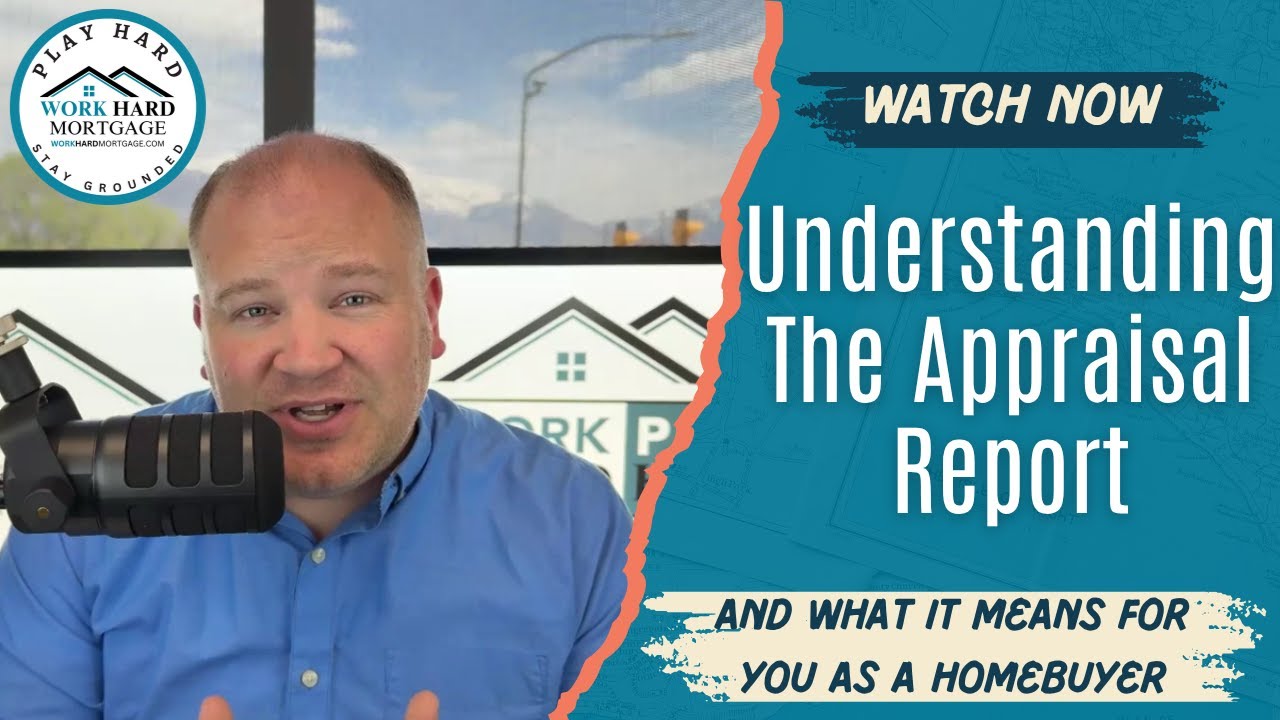
How To Read Your Appraisal Report
In This Video You'll Learn
- What appraisers actually evaluate
- How to find the appraised value
- What comparable sales are and how adjustments work
- The difference between above-grade and below-grade space
- What subject to means and when repairs are required
- What happens if your appraisal comes in low
- How to read the most important page of the report
The Basics
What Is an Appraisal?
An appraisal is an independent opinion of value — conducted by a licensed professional with no connection to the buyer, seller, or lender.
Protects the Lender
Ensures the loan is backed by adequate collateral — the bank will not lend more than the home is worth.
Protects the Buyer
Confirms you are not overpaying for a property relative to current market conditions.
Reflects the Market
Appraisals anchor home prices to real, recent sales — supporting a healthy housing market.
The Key Relationship
Contract Price
$500,000
What you agreed to pay
Appraised Value
$485,000
What the market supports
When they match — great. When they do not — you have options. See the section below.
Appraisal Criteria
The 5 Things Appraisers Evaluate
Every appraisal weighs five core factors to arrive at a final value opinion.
- Neighborhood quality
- School boundaries
- Access and commute
- Area desirability
- Square footage
- Number of bedrooms
- Number of bathrooms
- Lot size
- Recent updates
- Maintenance history
- Repairs needed
- Overall quality
- Recently sold homes
- Nearby properties
- Similar size and type
- Adjusted differences
- Supply and demand
- Price trends
- Days on market
- Local activity
Report Walkthrough
How to Read Your Appraisal Report
Most appraisal reports follow a standard format. Here is what each section contains.
Appraiser information
Name, license number, and contact for the appraiser.
Fee and payment
You do not pay the appraiser directly — payment flows through the AMC. This is normal.
Engagement letter
Confirms the lender ordered the appraisal and the scope of work.
Property details
Address, legal description, property type, year built, and physical characteristics.
Neighborhood information
Urban, suburban, or rural classification, growth trends, supply and demand summary.
Housing trends
Whether values are increasing, stable, or declining — impacts the final value opinion.
Subject property column
Your home details: square footage, bedrooms, bathrooms, garage, condition.
Comparable sales
Three recently sold similar homes with their sale prices and key details.
Adjustments
Dollar amounts added or subtracted to account for differences between comps and subject.
Adjusted sale price
The adjusted value of each comp after all differences are accounted for.
Final appraised value
Near the bottom — this is the number your lender uses to calculate your loan.
Comparable Sales
Understanding Comparable Sales and Adjustments
Appraisers do not find a perfect match — they find similar homes and adjust for differences.
If a comp sold for $490,000 but has an extra bathroom your home does not have, the appraiser subtracts value from that comp to make it comparable. The result is the adjusted value — what that home would have sold for if it matched yours.
| Feature | Your Home | Comp | Adjustment |
|---|---|---|---|
| Bedrooms | 3 | 4 | -$8,000 |
| Garage | 2-car | 3-car | -$5,000 |
| Square Footage | 1,800 sq ft | 2,050 sq ft | -$10,000 |
| Updated Kitchen | No | Yes | -$7,000 |
| Lot Size | 0.20 ac | 0.15 ac | +$4,000 |
Common Question
Above Grade vs. Below Grade Square Footage
This is one of the most frequent borrower surprises. Here is exactly why appraisers separate these two measurements.
Above Grade Living Area
- Main floor and upper levels
- Areas at or above ground level
- Valued at full per-square-foot rate
- Counts toward bedroom and bathroom totals in most cases
Below Grade Living Area
- Basements (including finished basements)
- Walkout basements
- Storage and utility areas below ground
- Valued at a lower per-square-foot rate
Why this matters: If a listing says 2,400 sq ft and your appraisal shows 1,800 sq ft above grade, it does not mean the appraiser made an error — the additional square footage is likely finished basement space counted separately.
Appraisal Conditions
What Does As Is vs. Subject To Mean?
The appraisal condition tells you and the lender whether repairs are required before the loan can close.
As Is
The property is valued in its current condition. No repairs are required before closing.
This is the most common outcome for well-maintained properties.
Subject To
The value is contingent on specific repairs being completed. Lender will require proof of completion.
A re-inspection may be required to confirm repairs are done before closing.
Common Subject To Repair Triggers
Low Appraisal
What If the Value Comes In Low?
A low appraisal is not the end of the road. You have options — and knowing them in advance puts you in control.
Contract Price
$500,000
Appraised Value
$480,000
Appraisal Gap
$20,000
Seller Lowers the Price
The seller agrees to reduce the contract price to match the appraised value. Most common resolution.
Buyer Pays the Difference
You cover the $20,000 gap in cash at closing. Your loan is still based on $480,000.
Split the Difference
Seller drops price partway; buyer covers the remainder. Common in competitive markets.
Challenge the Appraisal
Submit a Reconsideration of Value with additional comps. Your lender submits it on your behalf.
Walk Away
If your contract has an appraisal contingency, you may be able to exit with your earnest money.
Adjust Loan Structure
In some cases, changing loan programs can help bridge the gap. Talk to your lender.
High Appraisal
What If the Value Comes In High?
Good news — and it happens more than you might think.
Contract Price
$480,000
Appraised Value
$500,000
Instant Equity
You own $20,000 in equity the moment you close — you paid less than market value.
Stronger Position
Higher appraised value improves your loan-to-value ratio, potentially helping with PMI or rate.
No Action Required
Your loan proceeds as planned. No negotiations, no complications.
Myth vs. Reality
Common Appraisal Myths
Misconceptions about appraisals are common. Here is the truth behind the most frequent ones.
Myth
The appraiser determines what I paid.
Reality
The market determines value. The appraiser observes and interprets that market — they do not set the price.
Myth
A clean house increases appraisal value.
Reality
Condition matters far more than cleanliness. Structural updates, systems, and layout drive value.
Myth
Zillow's estimate equals the appraisal.
Reality
Zillow uses algorithms on public data. Appraisers physically inspect the property and apply professional judgment.
Myth
One low appraisal means my home is worth less forever.
Reality
Appraisals reflect market conditions at a specific point in time. Values change as the market changes.
Preparation
Appraisal Day Checklist
A well-prepared home gives the appraiser the best conditions to accurately evaluate your property.
Appraisal Day Checklist
Pro Tips
Do not over-prepare
You do not need to stage the home or repaint. Focus on access, safety, and functionality.
Document improvements
Have a list of recent upgrades (roof, HVAC, kitchen) with dates and costs. You can hand it to the appraiser.
Do not follow the appraiser
Let the appraiser work without hovering. Be available to answer questions if they arise.
Provide comp information
If you know of recent nearby sales the appraiser might miss, share them — but let your agent or lender submit through proper channels.
FAQ
Common Appraisal Questions
Answers to the questions borrowers ask most often about the appraisal process.
Community
Real Homeownership Stories
People who navigated challenges on their path to homeownership.
Wylene Benson
The Couple Who Bought Without a Job
A couple — second marriage, first home together — had almost nothing that looked like conventional qualification. He had no job. Her income barely registered. Through planning, an employment offer letter structure, and willingness to look beyond their geographic preferences, they found a home in Payson that turned out to be perfect in ways they couldn’t have predicted. He got a job in Nephi afterward — and the location of the home made it possible.
Read Their StoryKaylee Kendall
The House That Wasn't Right
After beginning their search, the Kendalls found a house they liked — but not one they loved. Rather than buying to escape renting, they walked away. 'We didn't want to settle on something just to be in a house. We wanted a house we want to raise our kids in and have grandkids come and visit.' The discipline to refuse something good in order to find something right is one of the most financially mature decisions in the episode.
Read Their StoryMark Johnson
Parents in Tears — Children Who Can't Afford to Stay in Lehi
Mayor Johnson describes a recurring, heartbreaking experience: parents sitting in his office crying because their children cannot afford to buy homes in the city where they grew up.
Read Their StoryWisdom
Wisdom From the Community
"We do dangerous things safely."
Charlene Freestone
"I really listen to my heart and I do pray about my business."
Wylene Benson
"Once you make that decision to go forward, you just know that forward is the only way."
Wylene Benson
Still Have Questions?
Ask Mia, your homeownership coach
Questions About Your Appraisal?
An appraisal is one piece of the home buying process. If you have questions about value, comparable sales, repairs, or what happens next — we are happy to help.